The October ratings race, including streamed programming, in the all-important category of men 25-54 finished: 6.2 for 105.3 The Fan; 5.4 for Sportsradio 1310 and 96.7 FM The Ticket; and 2.5 for KESN-FM (103.3).
In men 25-54 from Monday to Friday 6 a.m. to 7 p.m. when the big-name, high-priced local talent is on the air, it was: Ticket 6.8, buoyed by prime-time morning drive; Fan 5.3; KESN 2.8.
The Ticket’s Morning Musers almost lapped the crowded pack behind them. George Dunham, Craig Miller and Gordon Keith scored a 10.9 among men 25-54. Closest was the Fan’s Ben & Skin, both at 5.6.
Here’s a Monday-Friday breakdown by show of the men 25-54 for October:
The Musers (Ticket), 6-10 a.m. – 10.9
Ben & Skin (Fan), 3-7 p.m. – 5.6
G-Bag Nation (Fan), 10 a.m.-3 p.m. – 5.4
The Hardline (Ticket), 3-7 p.m. – 5.3
BaD Radio (Ticket), noon-3 p.m. – 5.0
Shan & R.J. (Fan), 6-10 a.m. – 4.8
Mike & Mike (KESN), 5-9 a.m. – 4.4
Norm & Donovan (Ticket), 10 a.m.-noon – 4.0
Dennis & Friedo (KESN) 11 a.m.-3 p.m. – 2.2
Cowlishaw & Mosley (KESN), 3-6 p.m. – 2.1
Dan Le Batard (KESN), 9-11 a.m. – 1.6
Credit to the Dallas News who originally published this article
The quest to introduce you to different members of the sports media continues. With thousands performing this line of work each day, there are a lot of great opinions, strategies, styles, and experiences to learn from.
As much as I enjoy sharing my own perspectives, I feel it’s equally important to provide a platform for others to share their views as well.
Last month I partnered with Zach McCrite to offer his “Podcast About Sports Radio” here on the website. Hopefully you’ve enjoyed listening to some of the great conversations that he’s conducted with various members of the sports media.
Now though, it’s time to add another wrinkle to the website.
Starting today, and going forward, I will feature some exclusive written pieces from different members of the sports media on SportsRadioPD.com. Program Directors, Talk Show Hosts, Play by Play Announcers, Producers, Update Anchors, Reporters, Imaging Director’s, Voice Talent, and Sellers, will offer their own personal thoughts on subjects that resonate with them and apply to the industry we make our living in.
The goal of this website is to be a resource of information to those who work in the industry, and to educate and entertain those who listen or watch our work, and/or wish to learn more about it. If you work in sports media, and have an interest in contributing a future column, email me at JBarrett@hvy.tcp.mybluehost.me.
To kick things off, I am thrilled to present this exclusive piece by Matt Fishman. During Matt’s career, he has served as a Program Director, Sports Director, and Executive Producer for great sports radio brands such as The Score in Chicago, SiriusXM, and 610 Sports in Kansas City.
The subject he wrote about was the 2015 MLB Playoffs, and the importance of welcoming casual fans into a broadcast and avoiding mistakes that cause them to tune out. I think you’ll enjoy his insight and I encourage you to connect with him on Facebook or Twitter. His information is listed below.
Jason Barrett
Why The MLB Playoff Broadcasts Matter!
In watching and listening to the 2015 Baseball Playoffs I have noticed that both radio and TV broadcasts have not welcomed “casual fans” to their broadcasts. Here are a few examples:
Aaron Boone (ESPN Radio)
Early in the playoffs I heard Aaron Boone talk about a player’s OPS. If you’re a die-hard baseball fan, you’ll know that OPS is a baseball statistic stands for On Base + Slugging percentage.
The problem with Aaron Boone’s analysis during the playoffs—a lot of people listening don’t know what OPS is. In the playoffs, both TV and Radio audiences grow as more casual fans tune in. They have to feel welcomed to the broadcast.
Aaron Boone or the Play by Play announcer should have interjected a description of what OPS is and why it is important. Here’s an example.
OPS measures a player’s ability to get on base and his power. A player with a high OPS is typically able to both get on base and hit for power. Players with an OPS of .900 or higher are generally considered to be the best hitters. The all-time leader in OPS is Babe Ruth at 1.1638.
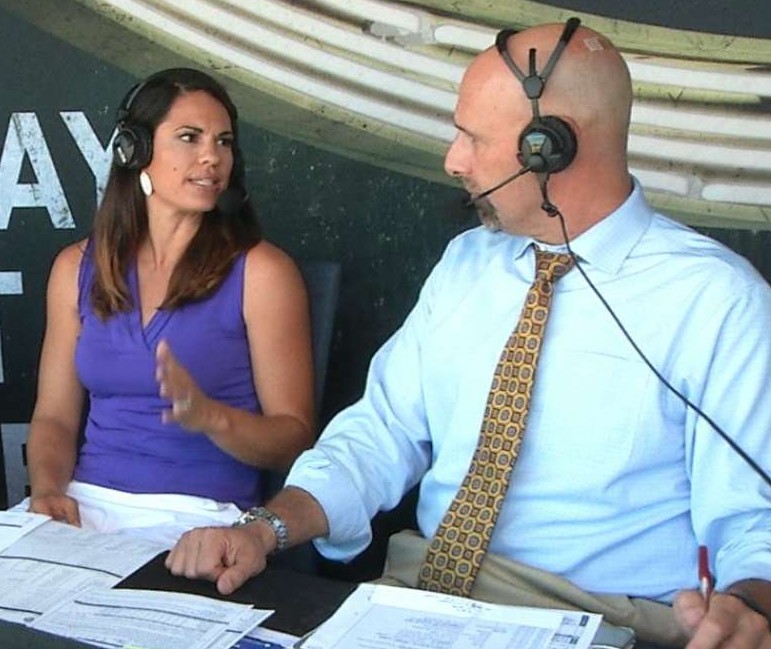
Sam Ryan (TBS and MLB Network)
During a Cubs/Mets NLCS game, TBS reporter Sam Ryan interviewed Mets Manager Terry Collins. Where Ryan missed the mark—she asked the manager about a number of players only mentioning them by their first names.
If you’re a die-hard Mets fan, you knew who they were talking about. For a more casual fan, hearing questions about “David, Noah, Daniel, and Curtis” is utterly confusing and a complete waste of the manager interview.
Why does this matter to you and your station? Because in the battle for ratings you would do anything to get some additional ears on your brand. So don’t blow the opportunity when your town has a hot team. Take these extra steps to make these new listeners feel welcome:
Roll out the Red Carpet: Welcome in new listeners by sticking to the big story or big team (“Play the hits”), avoid inside jokes, explain any regular segments, contributors and benchmarks. Avoid anything that may turn off new listeners to your station.
Reset: Likely more than your hosts are comfortable with. WHO is on the air and WHAT are we covering, HOW we are covering it, and WHEN you can hear the next live report, live guest, etc.
Imaging: You need to have team specific imaging to re-inforce your coverage.
Phone Calls: Encourage new listeners to call in. Have a “First time caller” segment to welcome or reward new listeners. Avoid long calls with station regulars.
If you make the casual fans feel welcome when they check out your station, not only will you enjoy the ratings blip of a playoff team, but you can create more P1’s (hardcore listeners) that will tune in year round!
Matt Fishman has spent over 20 years in Sports radio programming. He has been Sports Director of The Score-WSCR/Chicago, Program Director at 610 Sports KCSP/Kansas City, Executive Producer MLB Home Plate at XM Satellite Radio, and Program Director of SiriusXM College Sports Nation. You can connect with him on Twitter by clicking here or on Facebook by clicking here.
Earlier today I read an article in the Sports Business Journal, and it struck a nerve with me. I’ve talked numerous times about being driven to win, caring about your ratings, and thriving on competition. If the final score doesn’t count, than why exactly are you playing the game?
Well, Jamie Horowitz, President of Fox Sports National Networks, and Sam Flood, NBC Sports’ Executive Producer, offer very different perspectives on their approach to competing.
When asked to describe the NBC Sports Network’s strategy, Flood said “Multi-sport shows, for now, are not a part of our strategy. Instead, NBCSN has chosen to go all-in on the properties it owns rights to, such as “Sunday Night Football,” the NHL, the EPL, NASCAR and F1.”
Focusing on the key play-by-play relationships makes a ton of sense, but the most powerful of those brands (Sunday Night Football) does not air on NBC Sports Network. It airs on NBC.
When you think about the programming choices on the NBC Sports Network, there’s little available to cause you to shift your viewing habits, even if you’re open minded to doing so.
Flood was then asked about the network’s approach to competing against other networks. He said, “We’re not looking to serve everyone in the audience. We’re looking to serve the specific audience that we have. Short-term, you’ve got to be what you are and be in love with the sports you have, and embrace the sports you have. If we’re going to be a buffet restaurant, it’s going to be a lot harder to get the people in there. If people know we’re serving steak, they’re going to come for the steak.”
Wait a second. You’re NOT trying to serve everyone in the audience? You have to love and embrace who you are, be satisfied with it, and not look to offer more choices to get people to sample your offerings? Someone needs to read “Thinking” by Walter Wintle.
Horowitz on the other hand had a much different response when asked about battling other networks, more specifically, the top dog ESPN. He said “We’re here to compete. There’s no doubt about it. It’s a perfectly acceptable business and strategy that NBC is pursuing, but it’s not the one that Fox is pursuing. We’re here to compete all hours of the day, seven days a week. We’re not going to concede any ground to ESPN. Not now, not in the future, and I think that’s represented in the decisions we’ve made recently.”
I don’t know either of these gentleman on a personal basis. I only know their professional reputations, and the networks they represent. However, based on what each of them had to say, I can’t help but be energized by one, and demoralized by the other.
Since joining Fox Sports, Horowitz has made some bold moves to create interest in the brand. He’s added Colin Cowherd and Jason Whitlock, Katie Nolan has received a ton of promotion, and even Bill Simmons made a surprise appearance on the network last week. While the Fox Sports brand still has a long ways to go to overtake ESPN, it’s clear they’re trying.
Meanwhile, the NBC Sports Network doesn’t even receive consideration for my viewing time because they’ve done little to add to the product. I’ll tune in occasionally for “The Dan Patrick Show” or an NHL game, and I’ve even caught a handful of Mike Florio’s shows, but aside from that, there are very few reasons to watch the channel.
What stands out is the drastic difference in mentality. I recognize that knocking ESPN off its perch is a monumental task. Realistically, it’s probably not going to happen, and if it does, it’s probably going to take a decade or two.
One year ago I didn’t have any interest in turning on Fox Sports 1, but now they’ve given me reasons to consider it. I’m still an ESPN viewer first and foremost, and breaking that habit is going to take a ton of time, and work. It’s a strong brand that connects with me, and provides high quality programming and personalities, and live sporting events from the NFL, MLB, NBA and College Football.
That said, I also enjoy opinionated voices like Cowherd, Nolan, and Whitlock, so FS1 has done a nice job of adding some people to force me to think about them as an alternative.
For NBCSN, little has been done to spice up the presentation and programming. If I’m in the mood for NHL action or the DP show, I’ll check them out, but if improvements aren’t going to be made, and they’re satisfied with what they have, then why should I watch?
To use an analogy to wrap this up, Fox Sports has a house, and they’re making renovations to it, in hopes that when they throw their next party, I’ll attend it, have a great time, and want to come back again.
On the other hand, NBCSN needs a fresh coat of paint on its walls, and their siding needs to be washed to make the exterior look better, but they’re not interested in improving the overall appearance to make me or anyone else want to stop by.
It was Andre Agassi who once said “Image is everything” but to NBCSN that’s not the case. Which is why when I drive down the road, and get ready to pull up to the house, I ask myself if I even want to go inside. Ultimately I choose to drive right by.
Based on their responses earlier today, Flood doesn’t seem to care if I attend his gathering or not. He prefers a small circle, and wishes to keep the entertainment to a minimum.
Luckily, Horowitz is throwing one heck of a party down the street, and is insisting I stop by. I think I will. Hopefully the pool water’s warm and the beer is cold!
In the bitter ratings battle between Sportsradio 94.1 WIP’s Josh Innes and 97.5 The Fanatic’s Mike Missanelli, the new fight appears to be over digital listeners.
According to numbers obtained by Philly.com, Innes and co-hosts Spike Eskin and Hollis Thomas beat Missanelli during the October ratings period (Sept. 10 to Oct. 7), finishing 2nd overall in the market with an 8.4 share in the coveted men-25-54 demographic. Missanelli ended up in 3rd place with a 8.1 share.
But Missanelli was able to duplicate the high ratings from digital listeners he received last month, earning an impressive 1.8 share, dwarfing the 0.2 share Innes earned. Combining the two numbers would make put Missanelli in first place among all listeners in the demographic for his time slot.
“More people chose to listen to us. It’s that simple,” Missanelli said. “The people have spoken.”
Traditionally, radio stations only count the terrestrial ratings numbers to determine things like advertising rates and bonus offers. But the growth in online radio is quickly changing the market, and audience trends clearly point to listeners who increasingly want control of when and how they listen to programs.
“Advertisers are after an audience, and they see digital radio as a platform that reaches an engaged user who can be precisely targeted by geography, demographics, social connections, listening behavior and other critical metrics,” was the conclusion of a report by market research firm eMarketer.
Innes doesn’t disagree that digital listeners are important, but thinks streaming ratings estimates are usless.
“You can see how many people listen to a stream at a given time. You don’t need an estimate,” Innes said. “I’m beating him using the same system he used to beat the previous show. He is reaching. Will he hold up his promise to quit if he’s still losing to me after the season?
The Fanatic was able to sustain their impressive digital ratings from last month for all three of their daytime slots, making the ratings battle a closer fight.
For instance, WIP’s Angelo Cataldi earned a 7.9 share during the 6-10 a.m. time slot, good enough for 2nd place in the market. The Fanatic’s Anthony Gargano came in third with a 6.9 share.
But Gargano also earned a 1.0 digital share, compared to Cataldi’s 0.1. So if you combine the two numbers, Gargano is neck-and-neck with Cataldi in terms of overall ratings, giving the ratings champ his first serious challenge during his 20-year tenure at WIP.
Credit to Philly.com who originally published this article
There are a lot of people in the sports radio industry who assume that creating a national sports talk show is simple. How could it not be right?
After all, you can talk about anything you want, you work for a major network and receive tons of promotion, every team and agent gives you every guest you want, your hosts know everything there is to know about sports and need little guidance, and the show is carried all over the country by hundreds of radio stations. and the audience is so large that there’s never any danger of the program failing.
While there are many benefits that come from working on a national program, putting it together, and making it great is a lot harder than you think.
One thing I learned quickly when I worked in network radio between 2004-2006 is that having knowledge of how to do a lot of things in radio is nice, but truly being GREAT at one or two of them is much more important.
I remember arriving at ESPN Radio and when my bosses Louise Cornetta and Dave Zaslowsky wanted me to work with my hosts on creating strong topics, and writing teases, I thought “that’s all you want me to do“?
I had worked in local radio prior to that for 6 years, and during that time I had hosted, booked guests, screened calls, ran boards, cut audio, reported, delivered updates, programmed a station and coached a small staff, and even sold advertising. Heck, there were times when I had to host my show and run the board while also screening phone calls.
I was so used to doing so many things (this occurs in a lot of local radio stations still today) that I felt I could pick up more slack. What I didn’t realize though, was that although I knew how to do many of those things, I hadn’t perfected many of them.
Being honest with myself, I realized that if I was a phenomenal talk show host, I’d be hosting on the network, not producing. I also knew my sound and ability to do updates were nowhere near the quality of incredible anchors like Jay Reynolds, Marc Kestecher, “The Duke” Dan Davis, and John Stashower.
When it came to producing, although I felt I had great instincts, a bulldog mentality to land guests, and a good idea of how to build a show and be creative, I still had yet to figure out what my strengths and weaknesses were.
I followed the advice of Dave and Louise, and started working alongside Ray Necci (who’s featured in this story), and concentrated a lot on improving my topic development, and teases. Ray was a tremendous teacher, and challenged me often, and I enjoyed it because we worked well together, and I could feel myself getting better.
I discovered during this time that I had a knack for landing top notch guests, and I felt it was one way I could make a strong impression on my hosts and bosses. Anytime I produced a show, I wanted to create one moment in the program that was good enough to appear on SportsCenter or be the front page story on ESPN.com. While that didn’t happen every time, it was the goal each time I went to work.
I was also lucky enough to work with some great personalities such as Dan Patrick, John Seibel, Chuck Wilson, Doug Gottlieb, Freddie Coleman, John Rooke and Amy Lawrence who trusted my instincts on guest booking, worked with me on building good topics, and either relied on my teases or took what I gave them and spun it into their own words to make it sound good.
I learned that to produce a national show successfully, you’ve got to be versatile, a great leader, and a manager who’s willing to delegate. Most national shows have a staff assigned to them, and everyone behind the scenes has a role. The producer works closely with the talent to strategize the program, and the support staff report to the producer to make sure they have what they need for the program to succeed.
Unlike local radio where some show plans get thrown together quickly and segments are built off of the audience’s reaction to a host’s monologue, most national programs have a very structured layout that has been created off of hours of discussion and preparation.
There’s conscious thought given to how often a major story gets discussed during a 3-4 hour show, guests are lined up based on what matters most that day, not who is available, and teases are written in advance to support the content and keep listeners engaged. Interviews may even be taped and edited to sound as tight as possible, and everyone is focused on the content and ready to change gears if something develops that warrants attention.
The challenges that many national shows face are something often beyond their control – changing the mindset of local sports radio operators, finding a way to become part of the local station instead of being seen as the show that originates from another part of the country, and having ratings success in certain markets while not performing as high in others.
Nobody has a playbook that can promise success, but when a national show is being added to a local sports radio station, I believe there are a few critical things that have to be analyzed to make sure it’s a good fit.
Do the hosts focus a majority of their content on subjects that appeal to the local audience?
How will the radio station localize the show so it sounds connected, not removed from the rest of the programming? This means using the liners wisely inside the show, having your talent talk about content from the show as if it was created by another local host on the radio station, creating promos that highlight the show’s coverage of local topics, and utilizing the same voice talent on the station that you’d hear during the national content.
What are the national hosts willing to do to strengthen the bond with the station? Will they customize liners? Make client calls? Commit to a local appearance? Call-in to the other local shows? Conduct social media chats with local fans?
How much salary is being saved by using a national program vs. local hosts, and is the ratings/sales end of the business going to benefit or suffer by going this route?
Who is the local market sports radio competitor, where do they rank, and what mix of programming will give the radio station the best chance to win versus the competition?
As someone who’s programmed stations with and without national programs, I can tell you that all of those factors play into decision making. While each station and market has its own unique challenges, network folks are trying to appeal to hundreds of stations, and they have to make calls based on what has mass appeal.
I felt it’d be helpful to gain an understanding of how some top national shows think and operate, and what their challenges are in creating a program that delivers content for the masses, but depends on distribution from local radio stations.
Each of these guys I’ve had the privilege of knowing for quite some time, and they’ve all had experience working with multiple high profile shows and personalities. They’re very good at what they do, and I believe you’ll gain some insight from their feedback below.
Ray Necci – Multi-Platform Content Program Director at ESPN Radio – Also produced Mike and Mike, Tony Kornheiser, Dan Patrick, SVP & Russillo, and many other ESPN Radio shows during his sixteen year tenure with the network.
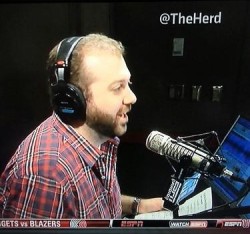
Jon Goulet – Producer of “The Herd” with Colin Cowherd on FS1 and Fox Sports Radio – Previously worked with Colin at ESPN Radio plus served as Executive Producer of 95.7 The Game in San Francisco.
Rob “Stats” Guerrera – Producer of “Pro Football Talk LIVE with Mike Florio” on NBC Sports Radio – Also served as Producer of “The Erik Kuselias Show” for NBC Sports Radio and spent close to seven years at ESPN Radio, including working with Mike and Mike.
What is the most fun part of producing a national sports talk show?
Goulet: I think it’s working with some of the most talented people in the industry. Host, producers, production people and management. They’re all people who bring incredible experience and talent to the show. It makes the show great and allows me to learn from them.
Guerrera: The most fun part of producing a national show is the chance to shape the national conversation about the stories of the day. That isn’t to say that local shows don’t do that as well, but the bigger platform gives national shows a better chance to do that more consistently. I also like the freedom to discuss a wider range of topics rather than being obligated to concentrate on what is going on in any particular area of the country.
Necci: The variety. You’ve got the entire world of sports to choose from, and it’s almost impossible to get bored.
What goes into producing your show each day and how many hours do you spend on it?
Guerrera: Nothing takes up a bigger portion of my day than communication. My host, Mike Florio, broadcasts from his home studio in West Virginia, so it’s like we’re doing a remote broadcast every day. Mike is also working on his website, ProFootballTalk.com, during the day, so we have to make the extra effort to make sure we’re on the same page for the day’s show.
Apart from that, for me it’s topic development. There’s nothing else more important. What are the angles to a story? How does it impact other people? What questions should we be asking the people in power? How does this mesh with what happened or what was said before? Our biggest determinate of success will always be how many people we can get on the end of that line, and how long we can keep them there. Compelling topics are how we do that.
Necci: Putting an amount of time into producing a national show is almost impossible to answer. Part of this depends on the size of the staff involved. Working with Tony Kornheiser, there were two of us on the production team working on topic generation, production, bits, guest booking, sales obligations, etc. Working with Mike & Mike, we have more resources, but also many more obligations. Personally, I believe that you’re always working in some way towards the show. Whether it’s directly related to sports or if it’s elements of your life that could make good conversation on-air, you always have to keep the show in mind.
Most recently with Mike & Mike, I would be in the office 8-10 hours a day. This included prep, show execution, post show meetings, sales obligations, and preparation for future shows. Then in the afternoon/evening, everyone involved with the show would start exchanging guest ideas, stories and possible topics. This continued into the night as games were played. The specific responsibilities are divided between the producer, AP, PA, booker, etc. but it’s the responsibility of the producer to make sure everyone is meeting expectations.
Goulet: My main focus on The Herd is content. Since making the move to FOX, we have a much larger staff so I don’t have to worry about social media or promos. For the three hours leading up to the show I’m more of a writer than anything else. While I do produce some bits, cut audio, get music and do some podcasting, most of my time is focused on content.
How do you determine if a topic has broad enough appeal to a nationwide audience?
Necci: We usually start with what interests the hosts and the people on the show. Your passion will come across, and if your audience knows you’re interested, they may be willing to come along for the ride on something that doesn’t directly play in their backyard. There is also consideration placed on our key markets, and if you’re truly a national show, then that means being aware of the news in major cities across the different timezones.
Goulet: The key is to find things that involve macro issues or teams. Things like major college football, the NFL, or LeBron work wherever you are. In the end it still comes down to how passionate your host is about a topic. If that passion involves something smaller or a less popular team, then we need to broaden that topic out so other fans can relate to it.
Guerrera: To me, there aren’t two separate categories of stories. Most of the time I don’t ask if a topic is broad enough for a national audience. I ask, “How do we make this topic broad enough for a national audience”? I have the luxury of working on an NFL show, which makes this part of the job easier. Fantasy football makes almost anything we do relevant nationally. Odell Beckham Jr.’s health last week wouldn’t have played outside of NY and Philadelphia years ago, but now it’s of great national interest because he’s on fantasy teams from sea to shining sea. That doesn’t mean we spend an entire segment on it, but it does mean the rules are a little different for us.
When creating the rundown for your show, how much of a focus do you place on targeting material that will appeal to your larger markets?
Goulet: It plays a big factor in determining what we discuss. Los Angeles is our biggest affiliate so we will look to find topics that appeal to that audience. You can’t force it though. If nothing is happening in a market you can’t pretend that it’s compelling.
Guerrera: Because we’re less than a year old, our markets are changing a lot throughout the the year. Right now my goal is to always appeal to the broadest part of the audience. If those stories interest the bigger markets, great, but I won’t force feed anything because it wouldn’t be authentic. A wise man once told me, you can’t out-local the locals.
Necci: I like to think it’s something we consider, but we don’t let dictate our content. When the Mets & Cubs faced off in the NLCS, we may have slightly increased the time spent talking baseball, but the action on the field needs to be compelling. A better example may be when the Rangers & Kings met in the Stanley Cup Final. We don’t spend much time on the NHL during the long regular season, but when it’s important for our affiliates and the stakes are raised, we incorporate it into our plans. If there’s a conversation you plan to hit once and it involves the West Coast, we may try to do it later in the show to reach the most people. Also, as with most national shows, not every market takes the full four hour show, so that’s also something to consider.
As it pertains to the creative process, who makes the final decision on what will be discussed and when?
Guerrera: Most of the time, what your talent is interested in is what’s good for the show. People respond to genuine passion. That said, if they’re really in love with a topic that’s out there, the producer must step in. You have to explain why doing, or not doing, a certain topic is good for the audience, and ultimately, good for the show. The hardest thing to get talent to buy into is submission to the listeners. We don’t do the show for our bosses, or our friends in the industry, and especially not for ourselves. We do it for the audience. When you put them first, the rest is easy.
Necci: I’m sure this is very different for every show. If a host’s name is on the show, they obviously feel that they’re putting themselves out there and should have the last word in the process. The most successful shows make those decisions together. I don’t believe in forcing a talent to discuss a topic, because that almost always comes across in the presentation, but there are times when you ask them to trust you and recognize your reasoning. Building that trust is essential. It takes time and often means taking risks. Every time you’re right, you take on more of the responsibility. Equally, when you’re wrong, you have to take the blame, and understand that the next time will be a bigger challenge.
Goulet: Colin will always have final say on topics. He’s very open to suggestions and ideas, but in the end he’s the one who is doing them on the air. He is unique in that he doesn’t have teams of his own that he ends up circling back to, so we don’t have to try and steer him away from topics. He is generally interested in what the majority of the audience is interested in.
With television heavily involved in the reach, branding, and strategy of most programs and personalities, how do you separate what will be best for the radio show vs. what’s best for TV? When conflicts arise, how do you settle them?
Necci: In the past, the simulcasts I worked with were radio content first and TV followed along as much as they were able to. With Mike & Mike, we have made a major transition over the last 18 months towards merging the presentation. This is probably best reflected in my current position, Multi-Platform Content Director. With everything we do, we consider how it will play on all formats. We’ve increased communication, look to merge resources, and try to evolve the daily process to improve the overall brand. Obviously, that means compromise and not everyone involved will be thrilled by the decisions made, but we’re all working towards the same goal.
Goulet: As a radio producer I have to focus on radio. While I’ll make suggestions for TV or try and help with ideas, its not my main focus. There is an entire staff of more qualified people for that. Colin considers his show a radio show first, so radio always has the priority. I look at the TV side as a great way to reach other people. Since our show is new to FOX, we don’t have as many affiliates, so FS1 provides a great way for people in other markets to hear us.
Guerrera: My host has both a popular website and a TV show on NBCSN, so he is definitely stretched pretty thin. I am lucky that most of the content translates across platforms fairly easily. If I start to notice that his focus is taking him too far away from radio, I have always found the best thing to do is have an honest conversation about it. I make sure to offer up a couple of different things that I can do to make radio easier, but it’s important to let your talent know when they need concentrate on the task at hand.
How difficult is it to measure the success of the show when certain local markets respond strongly and others don’t?
Goulet: The best way to figure out if your show is working is if you think it sounds good. On a national show there is no definitive rating that tells you everything. If we talk Lakers our ratings will go up in LA, but might go down in Portland because Blazer fans don’t like the Lakers. If we know the show sounds good, has interesting topics, and is getting a reaction, then that means we’re doing something right. The numbers we get are more indicative of the fundamentals like teasing and clock management.
Guerrera: Our show is so new (less than a year old) that we’re focusing on ourselves more right now. Are we doing things the right way? That said, I do try and check in with the PDs at the bigger stations at least once a month to get their take on the show. I’m always looking for smart people that disagree with me.
Necci: This is obviously difficult because every affiliate you work with (understandably) is only worried about their most recent results. I’ve worked on national shows in the past where one hour in a key market dictated success or failure. It’s infuriating and insane. Few Program Directors are willing to invest time in growing an audience locally for a national show.
Currently we mark our progress with overall impressions. How are we doing on terrestrial radio, television, and various digital medias. I’m still very interested in how we’re doing in individual markets, and want to help and try to assist when I can (communication, localization, TSL contests, affiliate calls, etc.), but the success of a program shouldn’t be decided by a guy who goes on vacation for a week or two and turns off his meter.
How big of a role do guests play in the daily creation of your show? Why is your strategy with guests set up the way that it is?
Guerrera: We operate under a very simple guest philosophy: Having no guest is better than a bad guest, or a guest for guest’s sake. Anyone we bring on has to add something to the conversation. If all they are is simply another person to talk to about a particular topic, you’re wasting everyone’s time.
Necci: I think guests are important for our show because people have come to expect “the biggest names” on ESPN and specifically Mike & Mike. That said, you should always be prepared to do a show with no guests, and many of the best/funniest/compelling moments come directly from the hosts. With our reach, and with the respect our hosts have earned, we offer a unique platform.
Goulet: Guests are an important part of the show. Because we’re national that means bigger name guests are willing to come on. That also raises the bar. We have to think big when we book people because they have to appeal to a national audience. Local writers or analysts don’t always work nationally because rarely do we talk about just one team. In the end guests are still only 25% of a show.
Why do most national shows avoid taking calls? Should there be more/less or the same amount of caller interaction in shows going forward?
Necci: There isn’t one answer here. I’ve always wanted to avoid “opening up the phones” and turning the show over to the audience. To me, it feels lazy. Speaking in a very general sense, I think many feel that they’re paying a national host, and expect him to carry a segment without needing to rack a scripted 3-minute take.
I do though appreciate the value in well screened calls on a specific topic. When I worked with Tony Kornheiser, the audience consisted of regular characters/contributors to the show. With SVP & Russillo, we exploited the idea of “open calls” in a feature called “WHAT?!?” and encouraged intelligent chaos. Currently on Mike & Mike, our calls generally come through our “Chatter Line” where we ask a question and play back the best answers.
Goulet: Calls work much better locally than nationally. They’re great during controversy or a huge news story, but other than that they should be used sparingly. Nationally there are more topics to get into which means we don’t have to drag things out and we can just move on to other topics. I think callers from local markets get defensive about their teams when a national host criticizes them. This apparently causes them to call hosts morons, explain how little they know, and then scream “roll tide”.
Guerrera: Calls are like umpires: You only notice the bad ones. Even if the person screening them does everything right, the caller could still be terrible on the air. More than that, though, when sports talk radio began phone calls were how we interacted with people who weren’t in the same room. Now, with Twitter, Facebook, Instagram, texts, etc., that isn’t the case anymore. We can interact faster and with more people now than we ever could over the phone. Basically, today’s technology has made calls obsolete.
From where you sit, what can local stations do better to make a national program a heavier part of the radio station’s identity? What can your talent do better to make sure local stations succeed?
Goulet: Locals need to treat national programming as an asset not a detriment. They should talk about what the national host said just like they would another local host. Most importantly, don’t cut into national programming when a big local story breaks. A few years ago, “The Herd” got taken off the air in LA when a local team fired a coach. They decided to go with local programming. All that did was tell the audience that Colin wasn’t local. He was covering the story almost wall to wall anyway but nobody in LA heard it.
Guerrera: It takes buy-in from everyone. Stations need to actively make the shows and talent a part of their brand (including their website). The producer has to work with the local PD to create imaging and promos that are authentic to both sides (if you leave that up to the local market you won’t get truly authentic imaging). Finally, the talent has to do their part with liners, customized promos, and even guest appearances on that station’s local shows.
Necci: In general, I don’t think people embrace what they have. Too often, I hear stations (on and off air) talk about their national & local shows. They are ALL your shows. Work with the show unit and the network to increase communication.
Are you willing to work in localization with liners and production? Is there an event that the show should broadcast from? Would calls from the hosts to local shows or important clients help? I’m not saying every national host can do every request, but are you asking those questions?
Also, don’t assume you know a show because you sampled it when it launched several years ago. The best shows are always evolving. The Mike and Mike show you hear now is very different from what the show was 5, 10 or 15 years ago. The Scott Van Pelt Show that grew out of his work with Mike Tirico wasn’t the same show as SVP & Russillo (which was a very different show in its first few years than it was in the final few). The point is, be open to all your options.
I’ve written a few times over the past year about the importance of quality imaging and production for sports radio stations, and it’s a subject that I am passionate about and believe deserves attention.
During the past few weeks I’ve had my ear on sports radio stations all across the country. The one thing I hear taking place in multiple places (that I’m not sure is necessarily a good thing) is a lack of creativity and simplification of messaging. Promos, ID’s and liners which include actualities, funny clips, and big sounds are being reduced in favor of simple short pieces with little activity behind them.
I understand that there are certain expectations for particular brands, and there’s value in keeping things simple. I’m not here to tell you that following the rules and reinforcing a brand’s identity doesn’t have its place. It certainly does. But does that mean that we can’t attempt to find newer ways to add some flavor and create additional excitement for our brands?
In a time where audio consumption is more splintered than ever, and numerous media brands are taking risks to attract larger audiences, is the answer to building bonds with an audience to stifle the creativity of some radio’s best thinkers?
One of the most overlooked and undervalued positions in sports radio is the Imaging Director. A good one can bring an energy to your brand that connects with your talent and audience. A bad one can absolutely crush you and make your brand feel old, stale, and unimportant. Find yourself a great one, and your audience will be speaking the language of the brand without even recognizing it.
If I’ve learned one thing from running brands, conducting research, and interacting with listeners, it’s that great imaging does connect. Sports is fun, and anytime you’re not in content, and have a chance to re-establish that power of fun, it’s important to do so.
As a programmer, I always believed that it was my responsibility to foster an environment which allowed people to be creative. Developing a relationship and understanding with the Imaging Director is critical, because the way they bring the brand to life through your speakers is going to be a reflection of the way you communicate your vision to them.
Let’s be honest, people who work in this industry don’t do it because of the fame and fortune it provides. Sure there are some personalities who are the exception to the rule, but most of the supporting cast behind the scenes choose this line of work because they love it, connect to it, and appreciate the opportunity to have a platform which allows them to showcase their creativity. They walk through the door each day hoping to create something that inspires people, and when it registers with the audience, that’s the cherry on top of the sundae.
The beauty of imaging is that there are no set guidelines for how to do it. We all have opinions about what we perceive to be cool and effective, but what I think we can all agree on is that there’s a stronger chance of an audience remembering your brand, and forming an emotional bond with it, if you make the station sound fun, alive and creative, instead of plain and simple.
It’s a grind sometimes to manage a brand, run a show, and give time and attention to each department, but as challenging as it may be, spending time on your writing, presentation, and which items to highlight, is too important to dismiss. When done right, it can grow your ratings. Done poorly, it can damage your growth.
We lose sight at times of the amount of influence we have on the audience. If you can make a listener think and feel a certain way about your brand and personalities, they’ll remember it and store it deep inside their subconscious. If there’s no call to action beyond reinforcing the radio station’s dial position, brand name, and slogan, then you’re less likely to receive the extra benefits that are available.
As far as promos are concerned, there are many different categories you can use to resonate with your listeners. Some of those options include:
Appointment promos (pieces that highlight when a guest or feature can be heard)
Topical promos (pieces that promote content/storylines being discussed on the station)
Play-By-Play promos (pieces that promote/sell the next local/national game on your air)
Talent/Show promos (pieces from the talent/show that promote when the program airs)
Branding promos (pieces that reinforce the brand & why it’s unique in a fun/serious way)
There are other categories too but the ones listed above usually get the most attention.
What you choose to feature most, depends on what your station’s best assets are, and what connects to the vision for the brand. If you don’t carry play by play for example, then game promos are going to be less important. Instead you’ll be more inclined to push your on-air talent, brand identity, station events, and the other offerings your station provides.
If your station though has the rights to three or four sports teams, you’re going to likely drive that messaging home because live play by play delivers strong ratings and a positive brand association, and it’d be silly not to take advantage of it.
I could spend all day explaining the value of imaging, and how it can benefit a radio station, but rather than listen to me pontificate, I thought it’d be helpful to get the perspectives of a few great Imaging Directors. Each of these guys has had a direct influence on brands that operate in Top 5 markets, and some of their work can be heard nationally too.
Mike Brownsher – Imaging Director of ESPN New York 98.7FM
Jeff Schmidt – Imaging Director of 95.7 The Game and 98.5 K-FOX in San Francisco
Chris Morales – VP/Head of Creative & Imaging for Yahoo Sports Radio. Imaging and Creative consulting for KSPN/Los Angeles, KFNC/Houston & KGOW, KKFN/Denver, KHTK/Sacramento.
Q: How important do you believe it is to be a great writer in order to be a great imaging/production director?
Schmidt: The best imaging directors are a triple threat; great writers, producers and VO actor/artists. Writing is vital but it also comes down to what we’re writing about. If we’re promoting crap, great writing is little more than a disguise, and listeners will sniff it out and repay us with indifference.
Brownsher: It’s certainly important, but it’s not the end all be all, and it doesn’t mean your stuff will sound great if you are a great writer. We’re in the audio business. You still need to make sure your stuff SOUNDS great. If you’re not the best writer (I certainly don’t think I am), find other people on the floor, and get them to help with the process. The product will be better for it.
Levy: Writing is 90% of the job. You can’t do production without a clear and concise way of communicating your message. With production, it’s commercials and marketing. With imaging, it’s about the station brand and marketing. So, being a great writer and knowing your audience, it all plays hand and hand.
Morales: In today’s busy world, often being a “great writer” means being an impactful writer who can make the message cut through with a “less is more” approach. Also, us radio people have a tendency of trying to be too cute at times, without really defining what the singular message is for a piece of imaging/production. We need to ask ourselves “would a listener really get what we are saying“?
Q: How do you keep your personal interests and personality/style in line with the brand’s approach when creating liners and promo material?
Brownsher: For me, it’s been fairly easy to align with the ESPN brand. I’ve been listening to ESPN Radio roughly since its inception, so that has helped. When I started in New York, I assumed I’d be able to be edgier with my writing in our promos but that wasn’t the case. I had to remember that there was a much larger audience listening to ESPN New York as compared to where I had worked before. That meant I had to check myself a bit and figure out how to best reflect the brand.
Levy: It always helps to try and get a job that matches your style and your personality. I know in real life, it’s not always the case to be able to pick a station that can do that (we often take the gigs we can get) but knowing your boss, sharing similar philosophies and an understanding of where they are coming from, makes it easier to find a way to connect with the listener, both emotionally and creatively.
Morales: Sports Radio is the big tent of all that encompasses a guy’s life. Creating a brand is all about creating the fun and sizzle around the “Sports Radio” base. If you have talent that doesn’t embrace movies/music/tv/pop culture on the air, then it is hard pressed to create imaging and branding that involves your personality/style because most great imagers live and breathe anything creative. I think so many imagers out there sometimes want to force their passions into imaging because it is their opportunity to “be on air”.
Much like in a music format, imaging is made to make the station sound hotter than what it is and create a brand that encompases the full presentation of the station. We have to think the same in sports radio. This is a format, not sports. We are here to make our talent shine and seem bigger than life, which means it is vital to know their personal interests, their style, music, etc. That creates imaging that they will play off of when doing show opens, rejoins, etc. The station imaging/branding then needs to be a collection of the talent’s image. Imaging to sports or PBP can be useful but does that really create an image that carries your M-F 6a-7p brand?
Schmidt: In 20 years of radio imaging, the best circumstances have always been a collaboration with programming where we set the course and tone of the stationality. Often times it falls in line with my personal tastes which are fairly broad, but it’s always about making sure the imaging serves the needs of That Station, in That Market, at That Time.
Q: When you’re writing a promo, what is it that you’re hoping it does for the audience?
Levy: Anytime I produce something, I look to execute 3 basic elements.
A) Connect with the listener. Each market, area and region you’re in, connect with them. If it’s crappy weather, use it to relate. If you’re in a big city, use things that people feel such as frustrations with bikers, cabbies, sports teams and things of that nature. That’s the best way to get your listener to perk up and pay attention.
B) Make sure your message has a call to action. If it’s a spot, you want people to get up and buy that car or drink that beer. For imaging, you want them to stay tuned to a certain show, sporting event, download an app or whatever you are promoting for the station.
C) Let them know where they heard it. Make sure the brand is highlighted so people know exactly what it is and how to get more of it.
Morales: Make the listener feel something. Maybe it’s emotion for a piece about “living and breathing the NFL” with highlights, game sound, and NFL Films music. Maybe it’s laughter from a montage promo of the talent being off the wall. Maybe it’s anger from people talking about a loss from last night. The key is for that promo to pull them in, and make them engage for a moment, and feel something.
Schmidt: Some promos are really just announcements in which you want to make sure a piece of information is clearly communicated. If you want listeners to take a specific action it’s best to keep it as clear, clean and concise as possible.
Other pieces are about image building, and this is where I hope to draw on the emotional connection fans already have with their team/players/hosts etc. Those emotions are available and transferable to your brand if you’re careful and respectful with it.
Brownsher: I go into writing/producing promos assuming that the listener isn’t going to listen or hear it. People are busy and doing things when listening to radio, so my hope is that I’ll actually grab them and create some type of emotional connection to the promo.
Q: How do you decide what type of music, actualities and SFX to use in your imaging, promos, liners, etc.? Is it more in line with the audience’s tastes or your own?
Morales: I’m a big user of music. Sometimes spanning multiple genres, but using it to tell the story that I’m trying to accomplish. Andrew Ashwood, my mentor at FOX Sports Radio, used to call imaging the blank canvas, and the music, drops, effects, VO, highlights, were the paint strokes of colors making the final work of art.
Every piece is different. Some can be quick with multiple SFX from a library like Alien Imaging FX, that is fast moving and sounds like something from a CHR/Rock station. Then another promo can have just a song and VO, depending on the message. I love NFL Game sound. When I started 12 years ago, you could only find it on Inside the NFL every week. Now, NFL Network has Sound FX and makes it easy. That behind the scenes audio is full of passion and energy which helps bring a football promo to life. I try to work in my own tastes, but I think about the audience at every step. A piece of music may be great for a promo just for LA, but may not be cool for the network or in a different market.
Schmidt: I employ what I’ve come to call the Sonic Pallet. It’s setting a range of sound styles that are IN and sound styles that are OUT in terms of defining a sonic signature for the radio station. It morphs and evolves over time, but it’s a guide. It’s easiest to do when launching stations because you can start from scratch, but I also do it with re-brands and re-builds too.
Regarding taste, I do believe we have an obligation to reflect the general taste of our audience, but this does not relieve us of our responsibly to smartly lead the audience forward to show them what else is possible. Our tastes should be wider than the general audience, not to be above them, but to use as a source ofinspiration for generating new ideas, and to get a sense of what the audience will consider cool and mainstream 12 months from now.
Brownsher: I think the mood and feel is one of the more important things to decide upon when creating promos. I’ll ask myself a couple of different questions such as “What kind of feeling am I trying to elicit with this bed” or “Does this sound byte actually further the story.” I try and assess the reasons why I’m taking a particular approach.
Generally speaking, I can do what I like with respect to the audience’s tastes, and I’m right in the middle of the ESPN Radio demo, so the work I’m producing doesn’t feel like much of a stretch. However, New York City is a rather diverse market, so I’m always conscious of the many different demos we have that are listening.
Levy: This always goes back to what the station is. If it’s a Rock, Top 40 or a Sports station, you can have a lot more fun in terms of getting crazy with SFX and highlights. Newstalk and hard hitting stations use less SFX and more substance. Whatever your station is, you have to know the audience you’re playing to. Especially if it’s a heritage station. Those brands usually require more thought because you have to know how to get your message across creatively, while staying inside the boundary of your station’s standards. That said, there are ways to throw yourself into it no matter what format you’re working on.
For my AM station, they let me have fun, and be creative, because they know that I’m aware of the station’s heritage, and what the audience expects. If I’m doing a sports promo, that comes easy because I’m a sports nut, and my radio background is rich in sports. I’ll set things up with music, SFX, and highlights, and I know how to build it before I even write the copy. For talk shows, if I’m producing a promo, I like to choose the music according to the subject matter. That’s a good way to put your stamp on something without having to go all out.
Q: How can you tell if your imaging/production is or isn’t connecting with the audience?
Schmidt: I’ve been fortunate over the years to be in a lot of research and perceptual meetings where you’ll hear your station’s slogan repeated back. While a lot of people pat themselves on the back for that, I’ve always believed that’s table stakes considering you repeat the slogan on-air thousands of times. I’m much more interested in hearing if certain campaigns and ideas generated a response or an emotional connection/reaction. But that is a very expensive and time-consuming way to get feedback.
You can also get feedback on social media. I have always believed in making sure at least some of the imaging I create is such that it could be shared by the audience on social platforms. That means it has to get out of a “Just The Facts” approach and try to connect with the audience emotionally, and this almost always means the imaging can’t just be about your radio station.
Levy: The beauty of being an imaging guy is that my work is catered to my boss. He sets the tone for the station and the audience. If I create something and he doesn’t get it, I know that I have to go back and fix what needs fixing. Like anything else, after a month of doing stuff for the boss, you’ll know what they like, and that allows you to create production that is in line with what they want on the radio station.
Morales: In network radio, often the imaging is mainly show opens and rejoins, so you’ll hear a caller or see a tweet that references the imaging. They may not know what to call it, but over the years I’ve heard a lot of “we love that thing that brings on the host and recaps the previous show” or they talk about a certain drop, music, or VO phrase. Sean Pendergast of KILT/Houston (used to be with us at Gow/YSR) used to call it the WWE entrance music effect. My imaging helped set the stage and pump him up to come out and perform.
In my years with the Tony Bruno Morning Show at FOX, my goal was to make Tony laugh every morning with the open. If he was pumped up and laughing out of the gate, and referenced the open and imaging, then I knew it connected with the audience.
On a local level, it sometimes is a little more challenging because a lot of the work is station related branding/promos. But hearing callers reference “you guys have that thing saying you’re #1 in LA”, that thing they are talking about is the imaging. When you hear that, you know your work is cutting through.
Brownsher: That’s a really tough one. I’m honestly not sure if you can or can’t. Obviously feedback is great, but this has always been an areas that’s been tough for me to gauge.
Q: Do you find listeners more likely to consume shorter or longer promos, and why?
Brownsher: I think the shorter the better. If you think a listener is going to sit and consume your promos, that’s not accurate. I especially hate laundry list promos and when I hear them I wonder what the station is trying to accomplish. “We got all this stuff that we wanna tell you about and we know you’re gonna sit here and listen to it and then remember it.” Nonsense! Make it short and impactful.
Schmidt: Obviously with PPM you want to keep everything moving so in general you have to respect that by making your point at concisely as possible. But you have to be able to spot the exceptions, such as when the local teams are in the news, the playoffs, etc. You want to express, reflect and draw on your listeners increased passion in those times even if it goes over :30 seconds! In the past I’ve created the on-air cut down version and the theatrical release version for online.
Levy: This is one that changes like the weather. I don’t think any promo should be longer than 45-60 seconds. I believe any promo can be funny, creative, connect with the audience, and get your point across within 25 seconds or less. In my opinion, that’s all I think listeners can take when hearing any form of creative production. The more time you add to a promo, the more likely people get bored or tune out. Short and concise is the ideal marker.
Morales: When PPM was still relatively new, Craig Larson (YSR PD and Gow Houston) said something very wise when I was referencing another station’s concerns that I had been working with. They were worried about promos being too long. Craig looked at me and said, “If it’s 15 seconds and garbage, then it’s garbage. If it’s 60 seconds and amazing, then isn’t that the goal, to have amazing imaging”?
I’ve been fortunate to be blessed with PD’s like Mike Thompson and Nate Lundy who have my back when I get a little long in painting the picture of what we’re striving for. The ratings and results back up that having a long promo doesn’t hurt the station. I think we need to concentrate on listeners consuming “GREAT” promo messaging that builds an image, sells the station and its personalities, and creates theater of the mind. THAT is what makes imaging part of the magic of radio.
Q: What type of promos do you feel connect best with the audience, and why? (Ex: Appointment promos, Funny bits, straight forward brand builders/slogans, play by play/game promos, etc)
Schmidt: If a listener hears a dry liner over a music bed saying a big guest is coming up in 10 minutes and they remember to check back in, did that connect? PPM says yes. But let’s not forget that “Connect” also means an emotional connection that could deepen a listeners bond with your radio station.
I think station imaging not only has the opportunity but the responsibility to deliver on both fronts. How you do that should be specific to the needs and wants of your listeners, and station.
Morales: I think you have to offer a few different categories in today’s PPM infested world. We know we want cume recylclers, appointment builders, guests, PBP game promos, and those are vital depending on the station and it’s presentation. But, I love “imagers” centered around the talent and the message of the station. I think of them like beat mix/hook promos for a music station. A promo that is a collection of talent drops, with a great music mix, etc. sounds fun and cool, and they differentiate our format from the political spoken word world.
They can also really sparkle amongst the other straight forward imaging we do on the station. To the listener, it makes their choice of our station resonate as a good one in their heads and minds. Who doesn’t want to feel like they’ve made the right choice in something? We want to image that their “fraternity” is our station’s performers.
Brownsher: I believe it’s probably a combination of all of the above. I do value appointment guest promos if the guest is a really good one, or highly topical. I’m not much of a funny bit producer for promos in stopsets, but I do think they can add some value during the actual shows. We carry a lot of play-by-play on the station so we do our fair show of game promos and try to make them feel like a big deal.
Levy: The station itself dictates what promo’s connect best with the audience. The AM station that I image for, we have a lot happening at once. We have HUGE on-air talents hosting shows during the day. We also have Notre Dame football, and now we will be carrying the Chicago White Sox and Chicago Bulls starting next year. The promos I create are catered to the audiences of each of those elements.
Q: When you listen to the imaging/production of other sports stations around the country, what do you hear them doing well, and where do they miss opportunities?
Morales: I hear many pushing the envelope these days with creative writing that makes the station sizzle and seem more edgy than what it may really be. For a format growing rapidly into M18-34, and FM sticks, we want to image being the best MALE station, not just the best sports station. We want to compete with top 5 M25-54 music stations, not just be the #1 sports talker. It’s awesome to hear stations that can capture this.
Where many miss the opportunity, is because they still view our format as something that needs to be imaged simple. A dry liner from Jim Cutler, that is thrown over a bed coming back from break. It’s sad. Cutler is one of the best VO people on this planet, so why would you waste his read? Why would you waste the listener’s time?
This is the old mindset that sports radio is the format that will never get past a 0.5 in the market, and it’s just turn key and all about sports. Sometimes this happens because a station doesn’t have an imaging person or if there is one, they’re stretched inside the cluster. It also starts with the PD. If they don’t care about imaging, then why would their production person? When Dave Shore was the OM of KSPN, he could literally recite every on-air promo back to me. If he didn’t like something, I would get a text at all hours. He understood the importance of imaging, and was as passionate about how the station sounded as I was. That is vital.
Schmidt: In general, great stations take advantage of the fact that imaging has the unique opportunity of being totally pre-planned, where the exact script, actors, music, and sound effects can all be used in full force to create something powerful.
On the missed opportunity side I perceive a calcification in Sports Radio Imaging where “the way it’s done” has already been decided (by whom?) and is senselessly copied. From both revenue and unique programming perspectives, Sports Radio has major advantages that Music Radio doesn’t have, but it isn’t immune from becoming what U.S. AM Talk Radio has devolved into if it stops innovating and just keeps repeating itself.
Brownsher: I’m always impressed when stations are doing very directed specific promos that point to something. Whether they are topicals or teasing to something that’s coming up. In my opinion, it means they’re thinking about what they’re putting on the air and trying to make it easy for the listener.
The opposite would be stations that run promos saying “look at us and how great we are” or “here’s a laundry list of what we’re doing”. The other ones that I reject are giant fluff pieces that don’t push me towards anything and are just taking up inventory.
Levy: Sports radio all across the country is at an awesome level. There are so many great shows and talents that are being featured. I’m a sucker for show promos. I always hone in on how a station market’s and brand’s their lineup, and how long they go with their promos.
Are they only giving me the funny stuff? Are they giving me guys who try to ram stats down my throat? Are the promos providing a great blend of all of those attributes? Most importantly, if they’re making a long show promo, the build up to the ending better pay off. If it doesn’t, my ears will tune out their future promos.
Q: Why is good production, messaging, and branding important for a sports radio station?
Levy: Because sports radio is huge and outlets are everywhere (the internet, social media, sports alerts on my phone). A radio station needs to find a way to separate themselves from this massive pack.
The message that you brand yourself with is the one that listeners will identify you as. Are you the station that is the home for a certain team? Are you the station to turn to and vent your frustrations to after the big game or big sports story of the day? Great imaging and production is essential to building the brand, and that includes on-air, marketing, and the sales side too.
Brownsher: People ultimately come to the radio station because of the personalities. If I can be an effective extension of that and remind them though our promos and messaging of their importance, then maybe it helps them enjoy the experience more. If they enjoy the station and the way it makes them feel, it should help with getting them to listen more.
Schmidt: I’ve been fortunate to be involved in some iconic brands and was able to see first hand how powerful that can be. The best stations are more than the sum of their parts. They have a distinct stationality that ties it all together. If done correctly, it can deepen a fan’s connection to the brand.
Morales: Imaging and good messaging is vital in helping build your P1’s and TSL. It reaffirms that the listener has made the right choice, and that we want them to spend more time with us, showing them the menu of the station and hosts, making them laugh, smile, mad, essentially feeling something.
Think of the legendary “This is Sports Center” promos. It created an amazing brand and image, and made us feel part of something that was on our TV’s every day, even though we weren’t in Bristol. That’s why it matters.
Q: What advice do you want to pass along to other Imaging Directors, Programmers, and Industry professionals who are looking to upgrade the sound and quality of their brands thru good imaging and production?
Morales: Try new something new each week. John Frost said that to me many years ago. Whether a new VO effect, type of music in a promo, grabbing drops from a source you normally wouldn’t go to, etc. Stay fresh. Sometimes it works, and sometimes it’s a colossal failure, but you’ve got to keep sharpening your skills. Listen to as much imaging from others out there as you can. I’ve done sports radio imaging for 13 years, and it may sound cliché but I learn something new every week from listening to the imaging of others.
Also, ask for help and advice. When I was FSR’s imaging director, Bob Schmidt was imaging the Clear Channel affiliate in Syracuse, WHEN. He’d email me every week for drops of Tony Bruno and our talent, and send me his stuff. He was passionate and lived and breathed the talent on his station. He’s now in LA at KLAC, and doing some great work across the country.
His right hand man, is my former right hand man, Vito Violante. Vito was young and new when he started with me, but was hungry and worked his ass off to learn. We came up with ideas, and different approaches, and I bounced stuff off of him and our team daily because I wanted ideas and feedback. He’d be the first to come in with a new DVD to pull drops, or find different songs we could use.
To be a great imaging director you need to listen to feedback, and make the talent, producers, and interns all feel part of the imaging process.
Schmidt: Reach out. I’m happy to help! Seriously, we would all be better served by sharing thoughts and ideas and helping each other develop new ideas. It’s far too easy to sit in our offices and studios doing the same things today that we did yesterday. That’s how stations, brands and formats stagnate.
Additionally, when I got to San Francisco in 1997 I was immediately ushered into regular research and perceptual meetings and it changed how I viewed Radio and the role of imaging forever. It made me really appreciate all that goes into creating and maintaining powerful radio brands. It helped me become a more valuable Imaging Director. I encourage every cluster to include their Imaging talent in those essential meetings.
Brownsher: Be smart about what you’re putting on the air. Write short, keep your ears open, and remember that no one listens to your work more than the people in your own building (keep that in perspective).
Also, don’t waste the listener’s time by patting yourself on the back. Music selection is incredibly important, and can’t be overstated in my opinion. Most of all, try to make the listener feel something.
Levy: Don’t ever be afraid to go outside the box. Great imaging/production talents are everywhere. Maybe an alternative imaging guy is exactly what the sports station needs. Separate yourself from those sports stations that beat their chests and say they’re number 1 at everything. Add some splashes that simply make your station sound good!
Remember, sports is fun, not hard hitting. You’re not breaking down the presidential debate or reporting on ISIS. That said, not everything needs to be funny. If it calls for it, great. Know the audience and keep in mind that we are all competing against video and the internet. So great audio, content and especially production, are essential to gaining back that audience.
There’s an old saying in the media business that you haven’t worked in the industry until you’ve been fired.
The first time that line was uttered to me I thought it was ridiculous. I was naive and believed that if you showed up, worked hard, delivered results, and treated your co-workers well, that would be enough to keep you employed.
Then I learned the hard way why it’s called the radio “business“.
Early in my career, I was working for a radio station in Poughkeepsie, NY. The morning show I was producing and providing news reports for wasn’t producing the numbers that upper management were looking for. After making numerous changes to try and elevate the ratings, our General Manager felt a change was necessary, so he cut ties with my crew, and hired a new morning show.
I had a good relationship with the boss so I figured I’d earn the benefit of the doubt to stick around. I was called into his upstairs office and sat down for an important conversation. Little did I realize entering his room that day that it would be the last time I did so.
He was very direct, and honest and told me that because the morning crew I had worked with did not deliver large enough numbers to command the business that the company needed to succeed, he had to bring in new talent to fix the problem. The challenge was that their addition would cost the company more, and increasing the budget was not an option, which meant having to trim salary in other areas.
I was then told that the only way to offset the added talent increases would be to let me go because my salary was too high. I would be replaced by someone with less experience, who’d make less, and that person would approach the situation with a fresh perspective, and great enthusiasm, which is something I’d not have been able to provide if faced with a major pay cut.
I sat there befuddled, trying to comprehend what was happening, and realized that a decision had been made, and it was now up to me to decide how I would let it define me.
I looked my boss in the eyes, shook his hand, thanked him for the opportunity, wished him the best with the new show, and promised him that he had not heard the last from me. He thanked me for my service, and told me he had confidence I would land on my feet and go on to do even bigger things in the future, and he hoped I’d remember the place where I started once I did.
As I packed up my office and left the building, I couldn’t understand why he’d praise me, and talk about my future being bright. All I could mutter to myself was “If you think I’m destined for bigger things, and recognize I do great work, then why am I heading home right now“?
Once I got into my house, and had a few days to digest what had changed in my professional life, I began to put the pieces together, and figure out where I wanted to take my career. I then started pursuing opportunities that I felt aligned with my goals, and I contemplated relocating for the first time in my career.
It took 2 months to gain employment in another market two hours away, and while that stint was rather brief, it became an important stop gap. The time spent there (Albany, NY) allowed me to detach myself from my previous situation, get my mind right, gain my confidence back, and put my focus into doing great work that would put me on the map and help me make a difference on a larger level.
As luck would have it, less than 6 months after moving to Albany, I was hired by ESPN Radio in Bristol, CT, and everything that I had gone through during the previous year became learning material and a big part of my maturation as a professional.
I remember driving to Bristol prior to my first day of work, and having some time to reflect on everything I had endured during the early part of my career. One of the most memorable and important parts of that journey was being fired. Had I not gone through that difficult period, I’d not have landed in the best situation of my career. Instead I would have remained where I was, doing good work, but not relentlessly pursuing my dreams, and making bigger contributions.
I also was able to step back and appreciate how I was terminated. That may sound crazy, but there is a certain way of cutting ties with someone that determines how they remember an individual and their experiences with a particular company.
What I valued from my discussion when I was let go, was that there was no promise of future possibilities, no smoke blown up my ass before parting ways, and there was no ridicule or sign of disrespect.
I was dealt with man to man, in a respectful but firm way, and that not only helped me gain more respect for my former boss, but it made it easy for me to want to keep open a line of communication with him. I’ve tried to remember that approach and use it when I’ve had to be in the same situation.
Terminating someone is never easy, especially when you form a working relationship with them and respect their work. Although I’ve handled some difficult situations well, I’ve also gone through experiences that I wish I managed differently. I’m proud of the fact that I haven’t mastered the way to let people go, because it’s not an area of the profession that I enjoy or seek to become an expert in.
Unless you’ve been in position to cut ties with an individual, it’s hard to understand what it feels like. People don’t see how it affects you the night before or the days/weeks leading up to it. You may want to be yourself around the office but that’s a lot easier said than done.
Contrary to what some may think, bosses wrestle with the conflict of having to do what’s necessary for business, versus thinking about how it will impact the individual’s future and their family. Most employees forget that the person delivering the message, usually isn’t acting alone in the decision process. They just happen to be the one saddled with the responsibility.
When a boss is charged with being the bearer of bad news, they’re often given instruction of how the company wants something handled. While it’s certainly smart to abide by your employer’s wishes, there are times where you have to step back, and say “screw it, this doesn’t feel right” and get the message across in your own way.
From the receiving end, when you’re hit with news that’s going to change your professional future, it’s impossible to see how it can be a blessing in disguise. Sometimes when we work somewhere, we get comfortable and stop thinking about other possibilities, and it can almost feel like we’re cheating on our employer by even considering other options.
What we lose sight of during those times is that tomorrow is not promised, and the years of service you’ve previously given to a company, don’t guarantee the next few.
As the events of the past two days at ESPN have unfolded, I can’t help but think back on what I went through and offer it as a positive reminder to everyone who is preparing for the next chapter in their careers.
The relationships you’ve created will remain with you, the impact you’ve had on others and the results you’ve produced can not be taken away, and the talents you possess will help guide you to a future opportunity that will make sense for you personally and professionally.
I know it can be difficult to think ahead when you’re focused on today, but if you have talent, confidence, passion, a strong work ethic, a positive attitude, and faith in yourself and your abilities, good things will happen.
If there’s one thing I know for sure, and this has been echoed by numerous people inside the media industry, there is life after ESPN.
Whether it’s been Rich Eisen, Colin Cowherd, Craig Kilborn, Bill Simmons, Dan Patrick, Bruce Gilbert, and Scott Masteller, or Charlie Steiner, John Seibel, Larry Beil, Rob Dibble, Michael Kim, Darren Smith, and Scott Shapiro, there are plenty of opportunities out there.
Your career isn’t over when you leave the four letter network. In many cases it’s just beginning.
Don’t get me wrong, I loved my time at ESPN, and I’m sure many of the people who are experiencing these layoffs feel the same way. It’s a great operation, with a lot of great people, and no company has invested more in sports programming during my lifetime than ESPN. The work that gets done in front and behind the camera and microphone is second to none, and when operating from a position of strength, it can be a very special place.
However, we’re seeing a major shift in the way sports fans consume content, and those changes are making it harder for companies to operate the way they’re used to. We can all sit here and assess blame for why the company has lost viewers and money, but providing solutions to the issues is what will determine if the company rebounds and has future opportunities available to pursue.
Is there some greed involved in this situation? Yes. Have the costs for rights deals for LIVE sporting events gotten out of hand? Absolutely. But expecting a business to not want to generate the largest profit possible, and sports leagues to give their partners a discount because it might impact their personnel head count is unrealistic. It’s also beyond your control and not worth investing your personal energies in.
What you can decide though is how you will learn from the experience, and rebound from it. 10 months ago I chose to leave a great position in San Francisco with no assurances that I’d land on my feet. By taking that risk, I now have my son living with me, my family close by, and I’ve started my own company and am enjoying every minute of running it.
There are many other great stories too of people who have gone on to make a giant impact in sports media after they had been written off at ESPN or another employer. You could be the next, but it starts by building off of your last experience, not dwelling on the past.
If we’ve learned anything over the years from watching sports, movies, documentaries and sitcoms, America loves a good comeback story. Now it’s up to you to create it. The biggest challenge of your career starts now.
When you think of the biggest names in sports radio, Colin Cowherd, Dan Patrick, Mike and Mike, Jim Rome, and Mike Francesa are names that come to mind. There’s a good reason for that, they’ve all been successful, and have performed on brands that are well known to listeners and industry professionals.
While many of these personalities are outstanding, and have received their due for the great work they’ve produced during the course of their careers, there are many others who fly under the radar. Identifying great talent on familiar brands isn’t exactly rocket science, but discovering authentic, unique and entertaining personalities across the country, in unfamiliar territory can be quite the challenge.
For a programmer, the job is similar to that of a professional scout. Anyone can recognize LeBron James in high school and determine that he’ll make an impact on the next level. If you don’t, you should probably stop scouting. But not every scout travels to Baxter Springs, Kansas and discovers Mickey Mantle while initially looking at one of his teammates.
I thought it’d be fun to to shine the light on some deserving personalities who I’ve had a chance to listen to and are worthy of some praise. Some of these hosts are well established in their existing markets, but not necessarily familiar beyond their local regions.
To make sure we’re on the same page, let me state that this is not a Top 15 list. It’s a piece that offers insight into the styles and attributes of fifteen different radio hosts across the country.
Also, if a personality I chose to highlight is involved in a program that includes one or multiple partners, this doesn’t mean that the others on the show aren’t good or don’t play a critical role. This is a subjective analysis based on my own personal tastes, and the objective is to make them and their work more familiar to anyone who enjoys listening to sports radio.
I hope you enjoy the column, and if you follow me on Twitter and wouldn’t mind retweeting it, I’d greatly appreciate it.
Cory “Sludge” Cove – KFAN Minneapolis – Few brands have delivered better than KFAN in Minneapolis. Paul Allen, Dan Barreiro and The Common Man receive most of the credit for it, however discounting Cory and the morning show’s contributions would be a big mistake. Afterall, the program just hit #1 in the market last week!
“Sludge” as he’s affectionately known to Minneapolis listeners, has a great sound, and is a big part of the popular morning show “The Power Trip“. For listeners who prefer a heavy sports focus, and deep level of discussion and analysis, this show won’t likely meet your expectations. In my opinion, it’s a program that wanders through the desert without a compass, and embraces every part of the journey.
The ingredients that make it special, are a heavy dose of guy-talk, laughter, unscripted conversations, and a little bit of sports. The show skews younger, incorporates a lot of funny audio clips, and offers a similar production value to what you’ll hear on top performing FM music morning shows.
Case in point, last week during the span of one hour, the show discussed the Minnesota Wild’s home opener, Madonna and Lady Gaga, Fantasy Football, the new Steve Jobs movie, the upcoming Vikings game, and the different styles of Republicans and Democrats.
You may read that last paragraph and ask “where is this show going“, and if you’re a person who’s used to listening to heavily formatted talk shows, this one may take some time to warm up to. I’m a big believer though in creating content that feels loose, and showcases what personalities do best, and the formula this show uses has registered with the audience, while putting the talent in position to showcase their best attributes.
From an individual standpoint, you can hear how much fun Cory has guiding the morning show. He interacts well with his crew, enjoys discussing all aspects of pop culture, politics, music, sports, and everyday issues, and has a strong ability to shift gears and keep the audience on their toes. He also has no problem presenting an opinion or generating a reaction.
A natural entertainer who’s been a big part of KFAN’s success, Cory earns my praise for the way he conducts the show, and for helping it establish its own identity in the Minneapolis market. To hear Cory’s show click here.
AJ Hoffman – 97.5 ESPN Houston – One of the first things I noticed when listening to AJ’s show with Fred Faour was the production value. It’s excellent. Tons of sound, actualities, current and high energy rock music beds, and it all compliments AJ’s style perfectly. With the show on FM (ESPN 97.5) and competing against two familiar AM brands, there’s a big commitment to the presentation and it works. You often hear the term “Old School Meets New School” in the sports radio format, and Fred and AJ are a great example of that dynamic working well.
What I like about AJ as a talent is that he’s very authoritative, energetic, and unfiltered. His background as an MMA fighter probably factors into that. Last week for example he questioned whether or not Texans Head Coach Bill O’Brien was good at his job, and if he deserved the same type of venom from Texas sports fans that Charlie Strong was receiving.
I’ve also heard AJ call out other media personalities who he believes mail in their performance. He’s gone on record and stated that he feels Jim Rome relies on the same tired shtick and needs to modify his material, and whether you agree with him or not, there’s no disputing where he stands, and he doesn’t back down.
AJ also brings a good sense of humor to the airwaves, and looks for opportunities to create laughter on the show. His chemistry with his partner is very strong too. I find myself immersed in the content when he’s delivering his opinions because they’re easy to follow, and delivered with conviction. To hear some of AJ’s work on ESPN 97.5 click here.
Anthony Stalter – 101 ESPN St. Louis – When you’re working for a successful brand that features Bernie Miklasz, Chris Duncan, Randy Karraker, D’Marco Farr, and Kevin Wheeler, it’s easy to get lost in the shuffle. Make no mistake about it though, Anthony is an intracle part of the station’s success.
Having started with the station as a Producer of the afternoon show, Program Director Chris “Hoss” Neupert saw on-air ability in Anthony early on. When the station lost midday host Bernie Miklasz in 2013 (he’s since returned to host morning drive), filling his void was no easy task. Neupert took a gamble, and moved Duncan off of the afternoon show, and gave Stalter his on-air shot as his partner, and two years later the pairing has paid off.
When you listen to Anthony, you take away a number of things. First, he has an excellent voice, and sets the tone for the program. Second, he has a great sense of what the local audience is interested in, and he leads Chris into good situations.
You’ll also hear someone who takes his preparation seriously. That serves him well when discussing baseball topics with Chris. Sometimes it can be difficult for a radio guy to feel confident when they’re sitting across from a partner who’s played the game at the highest level, but Chris values Anthony’s assessments, and that helps build his credibility with the audience.
Anthony understands when to start the content with his own opinion, and push Dunc to respond, but also when to sit back, and let Chris take over. The energy on the show is high, and there’s no shortage of self-deprecation when they screw something up. Because they share a mutual love and interest talking about sports, and their ages aren’t far apart, they connect as a team, and have a lot of fun on the air. To hear Anthony’s show click here.
Chris Kroeger – 610 The Fan Charlotte – When you listen to Chris, you may come away with the opinion that he’s a homer for his local teams, and that’s ok because he admits that he is. The word “we” comes up often when he’s discussing his local teams, and quite frankly, I like that. If you listen to him, you’ll recognize quickly how invested he is in the market’s local teams.
At only 28 years old, Chris is still coming into his own as a personality, but what he’s put together so far is extremely impressive. His energy, enthusiasm, and relatability are easy to detect, and with the show’s format featuring different contributors, he shows he can be a chameleon and adapt to any situation.
In listening to the banter last week between Chris and Mushin Muhammad, you can tell he appreciates the position he’s in, and works hard to pull out great material from those who contribute to the program.
If you’re looking for a talk show host fueled by negativity, Chris won’t be your cup of tea. He looks to present an informative conversation built around finding solutions, and a show that highlights the connection between the host, its guests, and the audience. The pace is fast, his command of the program is strong and easy to follow, and his discussions with his guests are extended and provide great engaged listening.
I also hear a lot of sound utilized during the show. One particular skill Chris possesses is an ability to react well off of it. He uses audio to set up his points and create emotional responses, and when executed that way, it can pay great dividends. To hear Chris’ show click here.
Jonathan Zaslow – 790 The Ticket Miami – If I could only use one word to describe Jonathan, it would be entertaining! His pairing with Joy Taylor on 790 The Ticket makes for a great listen, and one of the best parts of their show is how willing and comfortable each of them are with putting their lives on display for the audience.
Zaslow will attempt voices when the moment calls for it, he’s been hypnotized on the air, and one of the show’s staples, “The wheel of humiliation” puts members of the show in a position to pay the price if they pick NFL games poorly. A few weeks ago Dan Le Batard and Stugotz asked for permission to steal the bit and use it with their national audience, and Jonathan demonstrated in that moment that he can deliver some bite too.
What I like most about his style is that he has fun, great energy, a strong rapport with his crew, and there are no restrictions on what he’ll discuss. He can get into a detailed conversation about the problems with the Heat, or venture into an area that causes your jaw to drop.
For example, yesterday morning he talked about his preference for candle wax over a tickle feather inside the dungeon at his home. Does he really have one? Is he saying something for effect? Perhaps, but it led to some very funny conversation between himself, Joy, and Brett Romberg, and that ability to keep the audience guessing is a real strength.
If you’re commuting to work in Miami, and looking to laugh and learn a little about sports and the characters involved on the morning show, you’ll love what Jonathan brings to the table. The show cares about the local teams, is comfortable in any setting, lets creative content evolve organically, and each member of the show cares about connecting with the audience. To hear Jonathan’s show click here.
Aaron Goldhammer – ESPN 850 WKNR Cleveland – Aaron has been a fixture of the Cleveland sports scene for close to ten years, and his passion, sense of humor, and sarcasm, serve him well in connecting with his audience on WKNR.
He got his start, and developed his personality by working with one of Cleveland’s best personalities Tony Rizzo, and since leaving Rizzo’s show, he’s more than held his own as host of “The Golden Boyz” with Emmett Golden.
It won’t take you long to notice Aaron taking command of the room when he hosts his program. He’s a high volume, and high energy type of talent, and that’s a great fit in a passionate market such as Cleveland. He’ll intertwine sports and pop culture when opportunities arise, and Aaron won’t hesitate to take the audience behind the curtain and give them a sense of the chaos that unfolds with the staff each day.
The music on the program skews younger, and there’s a heavy content focus on Cleveland sports, which is presented with a “pray for the best, but prepare for the worst” type of mindset. That plays right into the emotional spirit of the local fan base and who he is as a local talent. To hear Aaron’s show click here.
Doug Franz – Arizona Sports 98.7FM – There are few local market shows that have enjoyed the longevity, and success that “Doug and Wolf” have in Phoenix. While Ron Wolfley possesses a big personality, and is one of the most entertaining people I’ve listened to in the format, Doug is an exceptional broadcaster who’s skill can be overlooked if you don’t pay attention.
There’s an art to pulling out the best material from an authentic talent like Wolfley, and Franz does it very well. He’s shown over the years that he’s not afraid to stand up and assert his own voice, but he also realizes that getting Wolf going is critical to the show’s success.
I’ve noticed over the years a growing confidence in Doug to assert himself, and start conversations with his own opinion and put Wolf in the reactor position. Early on in the show’s history, there was a bigger focus in getting Wolf’s opinion first, and reacting off of him. That shows growth, trust and understanding in Doug and Wolf’s relationship.
Another area where I’ve seen Doug improve is with his ability to present himself as the expert. He’s done a great job sharing the insight he gains from working on the sidelines during football games, and there was no better example than this past Monday when the show discussed Steve Sarkisian’s alcohol issues. Hearing Doug offer a firsthand account of what he witnessed during the game while working on the sidelines was must listen radio.
Equally deserving credit are his topic selection, pacing, and preparation. On Monday’s show for example, I listened for a full hour and during that period, three quarters of the content revolved around the Arizona Cardinals. There were plenty of other selections to choose from, but instead they played the hits and provided the content that had the largest audience appeal. When hosts approach their segments with the listener’s best interest in mind, they usually win, and Doug and Wolf have done a lot of it. To hear Doug’s show click here.
Chris Vernon – 92.9 ESPN Memphis – Originally from St. Louis, Chris has been a fixture on the Memphis airwaves since 2004. I became aware of him when I started working in Missouri in 2006. Three years later when I was building 101 ESPN, he was one of the first people I reached out to about possibly joining the radio station.
While that situation didn’t materialize, one of the biggest reasons I was interested is because he always sounds like he’s having fun. Chris has an infectious energy, genuine interest in sports, presents himself as the voice of the local sports fan, and his interviews with high profile guests often sound like conversations between two friends.
A good example of this is when Grizzlies GM Chris Wallace appears on his program. While some shows spend 10-12 minutes with a guest, hit the important stuff and then move on, Chris won’t hesitate to keep a guest for 30-40 minutes if they’re interesting. His chats with Wallace often run longer, and never feel fatiguing.
If there’s another area of his game that stands out, it’s his understanding and willingness to embrace the responsibility of working with clients and helping them earn business. This comes from having worn multiple hats and performed as an on-air talent, and sales person. Personalities who’ve done both jobs develop an appreciation for how difficult it is, and they usually do a better job on the air with helping clients experience success.
I find that Chris is more likely to inform and entertain than divide an audience with his opinions, and he likes to use music throughout the show to add flavor to it. You’ll also hear produced pieces utilized when guests appear, which I think adds a nice touch. To hear Chris’ show on 92.9 ESPN click here.
Grant Paulsen – 106.7 The Fan Washington DC – In sports radio circles outside of Washington DC, Grant is still an unknown commodity, but he might be familiar to you if you were a viewer of the David Letterman Show. As a child, Grant contributed to the late night program, and while that made him familiar to national audiences, it’s the work he’s doing now with Danny Rouhier on 106.7 The Fan that I’m most impressed by.
First, he comes across on the air as a very likeable personality. He’s emotionally invested in the local market’s teams, and his preparation and ability to provide you with something you didn’t know is very strong. As the point guard of the show, he navigates the program smoothly, and keeps a good steady pace. I also enjoy the chemistry that exists between him and Danny.
What I’m even more impressed by is how easy he makes it for the audience to tune in and follow along. His teasing is fantastic, but his ability to pay it off is even stronger. Nothing frustrates audiences more, than sitting through commercials to hear a host provide an answer to something they teased, only to not receive what they were promised.
On Tuesday for example Grant referenced the situation in NY where a caller cried on Mike Francesa’s show. He promised to play the audio, and offer his and Danny’s thoughts on the last time sports made them cry. When the show returned from break, Grant immediately reset the story, played the audio, and discussed the Jeffrey Maier incident during the Yankees-Orioles playoff game in 1996, and how it made them both emotional. They then gave a few more examples, and asked the audience to share their stories, and the result was ten good minutes of radio. The following segment led in with Faith Hill’s “Cry” which demonstrated that the production team is in sync with the hosts, and have a great sense of how to use music, and sound to compliment the content.
While these things may not seem like a big deal to some, it’s that type of execution, and entertainment value that keeps shows winning. When great ability and chemistry are combined with a smart approach to creating good radio, good results follow. To hear Grant’s show click here.
Chris Mueller – 93.7 The Fan Pittsburgh – In 2008 Chris won a competition called “Top Fan” on the now defunct “ESPN 1250” which gave him his radio break. 7 years later, he’s taken hold of afternoon drive on 93.7 The Fan with Joe Starkey, and shows no signs of slowing down anytime soon.
Don’t let the youthful photo fool you. While Chris still has his best years ahead of him, when you tune into his program, he sounds like an experienced pro. He’s got a very strong delivery, and presence, and is well spoken. He lives and breathes Pittsburgh sports, and puts a heavy emphasis on Steelers content which shows he’s in tune with what moves the audience most.
The Starkey and Mueller show comes across as a program which has been together for years, yet has only been in place since February 2013. When you single out Chris, you hear a confident personality who is quick on his feet, brash, unapologetic, and asks the questions that local fans are thinking about. While Starkey may be one of the best and most respected sports figures in the market, Chris doesn’t let that stop him from establishing his own voice.
His opinions often produce the largest response, his energy is excellent, and his emotional connection to the local teams serve him well and are a big reason why The Fan’s future remains very bright. To hear Chris’ show click here.
Brent Dougherty – 104.5 The Zone Nashville – A little known fact is that The Zone in Nashville is one of the highest rated sports stations in the country. The afternoon show 3HL (Three Hour Lunch) which is hosted by Brent Dougherty, Mickey Ryan, and former NFL defensive back Blaine Bishop, is a big reason for it.
What makes it work is the comradery that exists between the three personalities. Ryan joined the mix only thirteen months ago, and prior to his arrival, the multi-talented Clay Travis was part of the program for five years. Regardless of the talent mix, the show has moved along like a freight train and continued to dominate the market.
Although he could pat himself on the back for what the show has accomplished, that’s not how Brent operates. On one of his profiles he states that the daily goal for 3HL is to make sure it is the most fun, fast paced, highly interactive, opinion driven and creative sports talk radio show possible. If you listen to it, you can hear it check those boxes pretty frequently.
Despite the program offering three distinct personalities, Brent does a few specific things to stand out. First, he’s been blessed with an incredible set of pipes. His voice is full and helps him distinguish himself on the show.
Second, he does a really good job of interacting with his partners, and callers, and his warm personality makes him easy to listen to. He presents subjects that suit the audience’s interests, and Blaine and Mickey trust, and follow his lead, especially during interviews.
As it relates to conversations with guests, he asks good questions, and treats those who appear on the show with respect, and makes them feel comfortable. They in turn provide him with good information. I heard three different examples of this working to perfection.
He had Michelle Beadle explain why she wanted to appear on Sharknado. He led Ernest Byner into talking like a pirate, and he got Charissa Thompson to fire a few friendly jabs at former partner Clay Travis, and express her appreciation for Eddie George’s male model looks.
While the show performs well because of the trio, it’s clear that Brent is the engine that moves it along. His influence and ability to direct the show expertly are a big reason for its success. To hear Brent’s show click here.
Danny Parkins – 610 Sports Kansas City – I first became aware of Danny when he was hosting his own program in Syracuse, NY and I describe him as one of those talents who is wise beyond his years. Paired with Carrington “CDot” Harrison on 610 Sports in Kansas City, the duo have an infectious energy and passion that has catapulted their program to the top of the ratings in afternoon drive.
When you listen to him, you can hear a talent who has a great handle on how to run a show. He’s focused with his opinions, and delivers them with confidence, but doesn’t belabor his points. He presents content that has the largest appeal to the local audience, and finds different ways to approach topics and keep himself and his partner engaged. He’ll use additional evidence to help defend his positions, but isn’t afraid to acknowledge when he’s wrong, and make fun of himself.
For example, I caught the opening thirty minutes of the show yesterday to hear how local fans were reacting the day after the Royals knocked off the Astros and advanced to the ALCS. From the opening production piece (which was absolutely brilliant) assembled by producer Ben Heisler, to the opening conversation between Danny and Carrington about how wrong they were about Johnny Cueto, it was some of the best content available in the format, period! If you have fifteen minutes to spare, go take a listen for yourself. Here’s the link.
What I enjoy and appreciate about Danny is how seriously he treats his position. I hear resets inside the content, teases to leave the audience pondering the answer, and a solid understanding of how to get the best out his partner, while still getting his own touches. When you add in the fact that he’s originally from Chicago but has embraced the local market, and made it his own, you can see why he’s had success. To hear Danny’s show click here.
Michael Grady – The Fan Indianapolis – He’s the public-address announcer for the Indiana Pacers, but his soothing tones on Emmis’ Indianapolis sports station “The Fan”, are where he’s making his biggest impact.
What’s impressive about Michael, is that he’s still under thirty years old, yet sounds mature beyond his years. He’s a guy who has paid his dues behind the scenes before getting his on-air shot alongside former NFL player Joe Staysniak, but if you listen to him host his show, you’ll recognize quickly that he was born to be on a microphone.
What I love about Michael is how smooth and upbeat he sounds when hosting his program. He has this certain swagger with his delivery that jumps through the speakers, and he comes across as a likeable and approachable human being. He’s respectful when interacting with his partner and high profile sports figures, but firm when necessary. That approach carries over to the way he interacts with his callers too
One of my favorite segments is when former NFL and College Football Coach Rick Venturi stops by. Rick is a savant when it comes to the subject of football, and Michael does an excellent job of asking good questions, and knowing when to push for more. Their rapport is strong, and I’m sure it leads to an increase in local listening.
When you combine those traits with strong knowledge and a deep passion for Indianapolis sports, you have a winning combination. To hear Michael’s show click here.
Guy Haberman – 95.7 The Game San Francisco – I may be a little biased here because I discovered Guy in Fresno, and hired him at 95.7 The Game, but I believe he’s an incredible talent who’s just starting to hit the prime of his career.
When I scouted him in Fresno I was drawn in by his preparation, maturity, likeability, and polished presentation. My initial reaction was that I was listening to a young Dan Patrick. At that time, Guy was 27, and had only been on the air as a host for a few years, but he sounded as if he’d been doing the job for 10-12 years. I brought him into San Francisco to host evenings, and his skill and work ethic have since led him into middays, pre/post on Sacramento Kings games on Comcast television, play by play for the Pac-12 Network, and play by play duties on Oakland Athletics broadcasts.
What I think makes Guy a special talent on the air, is that he doesn’t talk down to the audience, and his love for sports is genuine and comes across in everything he does. It doesn’t matter what sport is on television and which team’s are playing. If an athletic competition is taking place, he’s likely to watch it and take something away from the experience.
His chemistry and friendship with his on-air partner John Middlekauff also can’t be taught. Their connection off the air is even stronger than the one they share on the air, and that friendship, and understanding of each other is a big reason why the show has gone as high as #1 in the ratings.
Overall you’ll find excellent content selection, good interviews, a smart and informed sports conversation, and a good positive vibe when you listen to him. To hear Guy’s show click here.
Gavin Dawson – 105.3 The Fan – Without a doubt, Gavin is one of the most polished and smooth lead hosts anywhere in the country. He carries the moniker “The General” which perfectly describes his role on the show. You can listen minute by minute and feel the program moving into interesting content areas, and that’s often the result of Gavin’s decision making.
Keep in mind, he drives this show for five hours, and has to control it while working with a large cast. The show includes Chris Arnold, Mike Bacsik, and Jeff Cavanaugh, and Gavin won’t hesitate to pull in other cast members if he feels they can add something of value to the show.
I think the crew do an incredible job of picking their spots, avoiding stepping on each other, and allowing the flow of the conversation to develop. There seems to be a mindset of “we” rather than “me” which is important. I noticed that each host gets their touches, and when they do, the interjections are delivered in short bursts. This keeps the content moving, and prevents the program from becoming fatiguing.
One of Gavin’s best attributes is his ability to decipher when the show needs an in-depth discussion on a serious sports issue, and when a couple of laughs are necessary. As a radio lifer, I respect how committed he is to executing the formatics, and how prepared he is heading in and out of his breaks. For example, I listened on October 1st, and during the final hour of the show, these were his teases:
Dirk Nowitzki doesn’t want one of “those” when he retires…we’ll explain next!
It’s been a couple of weeks but next it’s time for letters from prison with Jeff Cavanaugh
There’s a TMZ story about Dez Bryan’t finances that you’re going to want to hear about
In each situation, he never gave away the answer and kept the audience curious. Then when the program returned from its commercial breaks, they dove into the story within 2-3 seconds. The only time it didn’t occur was during the last segment when Gavin explained that the Dez Bryant story would be covered, but first they needed to call an audible and deal with a breaking news story surrounding a mass shooting at a college in Oregon.
In listening to Gavin’s approach, topic selections, and mixture of proving serious sports talk and light hearted entertainment, it’s no surprise the show has taken the lead in middays in the Dallas market. To hear Gavin’s show click here.
OTHER HOSTS WORTH SAMPLING:
Ronnie Lane – 620 WDAE, Tampa, FL
Nick Bahe – 1620 The Zone, Omaha, NE
Cecil Lammey – 105.5 ESPN, Denver, CO
Rob Long – 105.7 The Fan, Baltimore, MD
Brent Axe – ESPN Syracuse, Syracuse, NY
Mark Zinno – 92.9 The Game, Atlanta, GA
Cam Cleeland – 1080 The Fan, Portland, OR
Phil Mackey – 1500 ESPN, Minneapolis, MN
Matt Moscona – 104.5 ESPN, Baton Rouge, LA
Anthony Rothman – 97.1 The Fan, Columbus, OH
Matt Jones – Kentucky Sports Radio, Lexington, KY
Mike Meltser – Sports Radio 610 KILT, Houston, TX
Carrington Harrison – 610 Sports, Kansas City, MO
Gordon Monson – 1280 The Zone, Salt Lake City, UT
Joe Fortenbaugh – 95.7 The Game, San Francisco, CA
Over the past two years, a rapid interest has developed in podcasting. While it’s actually been available for years, and personalities such as Bill Simmons and Adam Carolla have enjoyed great success in the space, the commitment from advertisers, broadcast companies, and personalities has grown significantly.
One program which influenced a change in perception of podcasting was the show “Serial“. The program focused on an investigation into the 1999 murder of Hae Min Lee, an 18-year-old student in Baltimore, Maryland. Lee’s ex-boyfriend, Adnan Masud Syed was arrested and charged with first-degree murder, but his first trial ended in a mistrial. After a six-week second trial, Syed was found guilty of Lee’s murder and given a life sentence, despite pleading his innocence.
In February 2015, three weeks after the end of Serial’s first season, the Maryland Court of Special Appeals filed a decision allowing Syed to appeal his conviction. The Court also announced that another three-judge panel would address the question of whether new evidence from an alibi of Syed’s, would be admitted.
The interest in the case, and the information learned on the program, pushed Serial’s season one downloads to over sixty eight million. With the rise in popularity came a large amount of mainstream media coverage, which helped the show gain an extension for two more seasons.
Although Serial made a major splash, it isn’t the only program to experience massive success in the podcasting world. Other popular personalities like Joe Rogan, the Sklar Brothers, Shaquille O’Neal, and pro wrestlers “Stone Cold” Steve Austin and Chris Jericho, have taken their talents to the podcasting arena too, and gained strong followings.
Comedian Marc Maron is another personality who delivers a strong audience. To date, his podcast has been downloaded more than one hundred million times. It was also the first podcast to welcome the President of the United States Barack Obama as a guest.
Recently, CBS Money Watch said advertising on podcasts had grown to the tune of thirty four million dollars annually. PodcastOne Chairman Norm Pattiz (who’s company sells ad time for Carolla’s show), believes its closer to fifty million. He said “If it were $34 million, we’d be way over 50 percent of the business, and I don’t believe that we are“.
With advertiser interest growing, more personalities wanting in, and audiences displaying a heavier appetite for the content, is there a stark difference between podcasting and radio? Sometimes in our industry we latch on to new things, or reimage old ones to become excited again, but in this case, I do believe there are some big differences.
In the past week alone, I consumed fourteen different podcasts to gain a sense of what each program’s recipe was for serving their audience. What I found was that each program was different, and that alone fueled my desire to learn more about the platform’s approach.
The programs I listened to were:
The Big Podcast with Shaq and John Kincade
The Adam Carolla Show
The Stinkin Truth with Mark Schlereth
Talk Is Jericho
The Tony Bruno Show
The Ross Report
The Bill Simmons Podcast
The SI Media Podcast with Richard Deitsch
Sklarboro Country
Bernie and Randy
Franco and Kags
Dennis and Callahan’s Breaking Balls Podcast
Radio Stuff with Larry Gifford
The Podcast About Sports Radio with Zach McCrite
In comparison to radio, there were a number of similarities, but there also were some major differences. I put a chart together to outline some of those items.
SUBJECT
SPORTS RADIO
SPORTS PODCASTS
CONTENT & FORMULA
Follows a Clock & Format
Free Flowing & No Rules
SHOW LENGTHS
2-4 Hours
30-90 Minutes
DISTRIBUTION
Everyday
1-2x per week
ORIGINAL PROGRAMS
Set Lineups M-F
Tons of Variety
SPORTS UPDATES
2-3X Per Hour
Rarely any
COMMERCIAL BREAKS
3-4 Per Hour
Rarely any
COMMERCIAL TIME
12-20 Minutes Per Hour
Rarely any
LIVE READS/MENTIONS
Avg. of 2-3X Per Hour
Avg. of 2-3X per episode
REVENUE UPSIDE
High/Lots of opportunities
Low/Limited opportunities
SUCCESS MEASURED
Nielsen Ratings
Total downloads/Time Spent Per Episode
If you’re an audio listener, and you spend two hours, one with a radio program, and the other with a podcast, you’ll receive much more content from a podcast. Commercials are not part of the strategy, and because they don’t consistently interrupt the flow of the shows, it’s a major benefit for the audience.
Some other positives include the show lengths which are usually 30-60 minutes. Most commuters can consume an entire show during a drive to or from work. There’s no feeling of “I’m going to miss out“. It’s more in line with television’s approach to programming. Those who listen to a podcast, are likely to listen to others too.
The opportunity to listen to long segments, unfiltered discussions, and gain a peek behind the curtain are other reasons to listen. This allows the talent to be comfortable and authentic. For example, when I listened to Adam Carolla, he got into some very explicit discussions on sex. If the same show had aired on terrestrial radio, Adam either would’ve avoided the subject or presented a PG/R rated version. If he said what he did on his podcast, he would have been suspended or fired, and his employer would’ve been subject to an FCC fine.
What I really enjoyed hearing was how loose most of the personalities were, and how unscripted the programming was. In certain cases I heard shows welcome guests who I’m positive would’ve been declined on local radio stations because they didn’t play into the strategy of delivering ratings. Certain interviews also provided interesting nuggets of information because the discussions were allowed to materialize, and weren’t trying to fit inside an allotted amount of segment time.
There were three great examples of this that jumped out to me.
First, John Kincade and Shaq had a conversation with Kobe Bryant that was as good as gold. If you haven’t heard it, do yourself a favor and check it out. It was fascinating because Shaq and Kobe were able to relax, and reminisce without it feeling like they were under the microscope, and John had a great sense of when to get involved and when to sit out.
Because the environment was soothing for Shaq and Kobe, the interview entered areas that I don’t believe it would’ve had it taken place on a local radio station. If you have the time to listen, it’s worth it. Make sure also to listen after the interview to the conversation between John and Shaq about “Deez Nuts“. It’s very entertaining.
The second piece to produce a similar result was Richard Deitsch’s podcast with WWE personality Paul Heyman. There was no time limit on the discussion which kept it from feeling rushed, and because Richard does his homework, he’s able to get into certain areas with his guests, and pull things out of them that a listener can appreciate. Hearing Paul discuss how he prepares for his next promo on Raw, why he connects with eloquent people, and how he feels about professional wrestling gaining more mainstream media coverage was very insightful.
The last example I want to highlight was from Larry Gifford’s Radio Stuff podcast. His subject was the rise and fall of Cumulus Media, and he utilized a lot of audio clips in it to help him tell an interesting story. What jumped out the most though was his conversation with Tom Leykis. When I heard Tom say “Cumulus is one of the prime murderers of the broadcasting business” I was intrigued.
Tom then shared his personal account of how Cumulus treated him during negotiations, and how their approach pushed him away from returning to the radio business. While I wasn’t privy to his situation, and am sure there’s another side to it, I felt like I was in the room because of the way he presented it. It was a riveting piece of audio, and one that I don’t believe I’d hear on a local radio show.
While each of those examples above highlights the many benefits being provided by podcasts, I also discovered some negatives.
First, nothing is more aggravating as a content consumer than clicking on a button to hear a show, and then having to wait two minutes for the personality to start the program. This happens because the hosts are reading ads right out of the gate. While I understand the challenge of generating revenue on these programs, this will become a bigger issue for advertisers in the future.
The biggest reason is because every time a program starts with a talent reading a sponsor message, I fast forward past it. One of the great tools of digital listening, is that you have more control over the way you consume it. When you’re in the car, you either endure commercials, and sponsor mentions, or you change the channel, and hope to return to the station, and not miss anything important. When you’re at your computer or listening on your phone, you can skip to the good stuff, and eliminate the bad.
It’s very similar in my opinion to the DVR. If you record a television show and watch it back, you’re more likely to skip past the commercials than sit through them. The same holds true when listening to a podcast. I’m sure advertisers would rather not hear that.
Sticking with business, I did find my recall of advertisers was higher with podcasting than with radio. On podcasts, sponsors are woven into the programming during select times, and because the interruptions are fewer, and shorter, I sat through them, and remembered them.
There’s also a positive vibe you feel towards the client because they’ve invested in a unique show that you listen to. You want to reward them for that association. I also heard many hosts supporting their clients, and providing good strong personalized reads, rather than breezing past them as we often hear on radio shows.
If I can keep my critical cap on for a moment, I’ll add that because the programming is often recorded, and not touching on LIVE events, there is less of a feeling of urgency to consume it. If listeners don’t check back often, and traffic decreases, that could hurt revenue.
Another challenge that can’t be ignored is that podcasts offer less programming than local radio shows. Top flight personalities on radio provide fifteen to twenty hours of content per week, while podcasts deliver one to two hours. If you’re in the advertising world, that means less opportunity on podcasts, and more opportunity on radio.
There was one one other tidbit I picked up on that I felt was worth a mention. It applies to the difference in the way the podcasts are presented. Certain talents like Deitsch, the Sklar Brothers, Jericho, Austin, and Simmons, present their shows differently than Bruno, Gifford, McCrite, and Bernie and Randy.
This stems from some podcasters being radio personalities who are used to delivering content a certain way, and others more focused on talking, and less worried about structure and presentation. I can list the pros and cons for each approach, but the one you’ll gravitate towards is the one that appeals to your personal tastes.
For those personalities I listened to who are working for local radio stations, I appreciate them providing something different on their podcasts than what they treat listeners to over the airwaves. That’s very important.
For example, in the case of Bernie and Randy, they don’t do a daily radio show together. Both men are popular to St. Louis sports fans, and occupy drive time slots on 101 ESPN, and by creating the podcast, it brings them together once per week. This helps the station offer a unique program on its digital platform, which gives listeners an extra incentive to visit.
If there’s one piece of advice I can pass along to those who partake in creating podcasts, make sure you’re providing a different experience online than the one you present on-air. Taking your radio program, posting it online, and calling it a podcast is not accurate. Promoting that the show is available on-demand on the website is fine, but podcasts are different. Based on these numbers from Triton, you can see why it’s important to be in this space, and offer original programming.
Earlier in this column I asked if there was a big difference between podcasting and radio, and in my opinion it’s a complicated answer. From the content standpoint, there’s little difference. It’s still programming built around people sharing opinions, stories, and parts of their lives that make them interesting. The format may be different, but it’s still an audio broadcast.
Where things change is when you analyze the business, and content creation strategies. Are personalities providing too much content on radio by broadcasting fifteen to twenty hours per week? If the average listener in a top 5 market consumes thirty to forty minutes per day, does the additional time matter?
How much of that programming time is spent on creating memorable content versus filling air time with calls, and serviceable material? With attention spans shrinking daily, I wonder if we’ll see a shift towards short-focused programming, and a reduction in long-form content.
As far as business is concerned, if commercials aren’t included, and sponsor reads are limited, then how much more money can the platform generate? Downloads, and time spent listening may increase, and that will help the narrative when requesting higher premiums, but there’s still a lack of inventory, and not enough regular programming. Unless that changes, or listeners start paying to consume the content, I struggle to see how the revenue gains will be significant.
If you’re a listener, that’s not your issue. You should love what’s happening with podcasting. You get to enjoy a lot of great talent, content without disruptions, and insight into situations that don’t have a chance to materialize often on local radio. You can also consume it faster which leaves you time for other things that are important in your daily life, and because the programming is offered weekly or bi-weekly, you typically are treated to something good.
As you can see on the image above, younger audiences are growing up listening this way. If this becomes the future of audio delivery, then media companies better start figuring out how to monetize it better.
From where I sit, I believe podcasting provides enormous opportunity. CBS and Hubbard Radio have already entered the fray by making sizeable investments, and I expect other groups to follow suit in the future.
The only thing debatable in my mind is whether or not the platform can tip the scale for broadcast companies, and become the additional revenue stream they need to pull themselves out of the abyss they’ve been stuck in for the past decade.
Is this a fifty million dollar business that will experience slight economic growth? Or is it a model that’s representative of the future, and will deliver ten to fifteen times it’s current number? That’s radio’s problem to solve, not the audience’s. They’re doing their part by showing up and supporting it.
It’s evening time. You’ve arrived home from work, ate your dinner, and are finally unwinding and getting ready to watch your television. If you work in the sports media business, that likely means watching some form of sports programming.
You absorb the content, and before you know it, you’re reaching for your phone, iPad, or laptop, and logging on to one of your social media accounts to see what others are saying about the program you’re watching.
As you start reading the comments, they get your juices flowing. Soon you have the itch to type a response, and engage in the conversation. After all, you get paid to talk, and interact with people on your show each day, and you have bosses, and the entire media industry telling you how vital it is to connect with the audience outside of your show to build deeper fan loyalty.
And then it happens…..you press send, and offer an opinion that gets the whole world talking, and not for the right reason.
The responses to your opinion start coming in rapidly. Your audience begins sharing and retweeting your commentary, and soon the media industry, one which you make your living in, is now highlighting your opinion, and seeking your removal and/or an apology.
You start to panic, and think “maybe I can delete the comment and this will all go away“. Except, it’s been saved at this point by numerous outlets, and you recognize that it’s going to spread like a virus no matter what you do.
Then you ponder “what if I just apologize, and promise not to do it again“? That sounds good in theory, but the damage has already been done, and the dogs are lined up outside the door, and barking, and not going away until they taste blood.
As you contemplate the chaos you’re involved in, you decide to reach out to your boss, and let them know what’s transpired, so they know the situation, and understand your role in it. Whether you get along great or terribly with this individual is irrelevant, because you know the conversation is necessary.
Together you discuss the next steps for handling the storm, and when you go to sleep that night, you’re hopeful to wake up the next day and have it all be just a dream. Except it isn’t, and the nightmare isn’t close to being over.
Then the phone call comes in. It’s likely your Program Director, or it might even be your General Manager, or CEO, asking for more details on what took place.
You offer your thoughts on the situation, and explain how you were simply taking part in a conversation with the audience outside of the show, and offered an opinion that wasn’t well received. But you do this all the time on your show, so this shouldn’t be any different right?
Your boss listens to you, probably takes some notes, and tells you they’ll be in touch afterwards to discuss what to do next.
At this point you’re stressed out, blaming yourself (or the audience who outed you) for putting your commentary on social media, and you’re walking on egg shells waiting to hear how the company wants to proceed.
And then the phone call comes…..you’ve been suspended or fired.
Instantly you’re asking your employers to reconsider. You’re pissed off at the audience for making a big deal out of what you thought was an innocent comment. You’re feeling embarrassed and uncomfortable about your future because you know this blemish is now going to hang over your head like a dark black cloud.
And as I sit here laying out this scenario for you, I have one simple question I want you to answer – did it make any sense at all to participate on social media?
Some people will immediately say “well if you weren’t stupid and didn’t say those things, you wouldn’t be in this predicament“. That’s true. I often read some personalities social media responses and question their line of judgment because I know that they’re on the verge of unflattering attention for a pointless reason.
I also recognize though that some of the most opinionated people in our business, performers who by the way drive ratings, and command big advertising endorsement rates (and offer similar commentaries on-air that they’re now being attacked for using on social media), don’t always handle things properly. I don’t want to excuse personal responsibility because it should factor into the equation.
But let’s also recognize that people are human, and they do have flaws, and make mistakes.
Here’s a cold reality. In every industry, there are people who’s views, character traits, and decisions, will make you uneasy. You see them as the lowest form of scum, while others see them in a different light.
When it comes to social circles, we gravitate towards those we like, but still we focus our additional energies on people we don’t identify with. As petty as it may be, we spend a lot of time and negative energy analyzing what other people say and do.
That today has become one of the most powerful seductions for Twitter and Facebook. You wake up, read your timeline, and you interact with those you like, and then proceed to talk or complain about a couple of others who posted something that you don’t agree with.
Is it really important? No. But in today’s world, we’re consumed with everyone’s opinion, and we feel an immediate need to dive into everyone else’s conversation.
That doesn’t make social media bad. Instead it calls into question our own abilities to operate with a filter. We want to be ourselves, and speak freely without consequence, and when you’re communicating with people you have established relationships with, that may be acceptable. When you’re presenting your views though to those you share no personal history with, that’s a different ballgame.
It’s our own personal responsibility to assess whether it makes sense to respond, or walk away from certain conversations. Unfortunately, most of us can’t help to stop and look at the car crash, rather than continue driving.
Personally, I enjoy social media, and many of the benefits it provides. But I’m also not on the air, and I don’t command the same attention that an on-air personality does. If I were working in that position, and had every one of my assessments being scrutinized, as much as I love being social, and connecting with people, I’d have to think twice about my level of activity, and what I hoped to gain by being accessible on it.
I know that may sound crazy since every media company today preaches the importance of social media, and why it’s necessary to be active, but let me ask you this – how much money have you or your brand made off of Twitter? How about Facebook?
If your best personalities can’t turn off their emotions (which by the way, you love and push for more of when they’re on the air), and have a rational conversation on social media without torching their own career and your brand in the process, then is it really worth it to be on there in the first place?
These are highly emotional, and opinionated people, and we send them into the lion’s den, but ask them to play nice. Each day they log on to their accounts, and share their personal beliefs, and invite the world in, while enduring public criticisms, and personal attacks. We then expect them not to be brash or irrational with their responses when faced with negativity. While we may want all talent to flip a switch, and avoid confrontation over meaningless drama, not everyone marches to the same beat.
I want to understand this, and approach the conversation strictly from a business point of view for a second, because remember, this is a business, and everything we do comes back to the almighty dollar.
If you make little to no money by being on Twitter, and the same holds true for your presence on Facebook, yet you stand to lose your livelihood if you make a mistake on one of these platforms, then can someone please tell me why it makes any sense at all to be candid, engaged, and heavily involved in these social spaces?
The risk certainly seems to outweigh the reward.
I’ve heard certain personalities who choose not to participate in social media, say that they believe that by sharing their lives and opinions outside their show, it takes away from the mystery of their programs, and could potentially cost them additional audience. While I don’t necessarily agree with all of that (I can make a case that by promoting yourself, and your show on social media it can lead to an increase in tune-ins), I do understand their point, and concern.
A talent makes their money on the air. Their ratings determine whether or not they get to continue doing it. If speaking your mind in other locations takes away from the allure of what you’ll offer on your show, then I can understand why there’d be hesitation to participate. Some managers may frown upon that, but this is why you can’t treat every personality the same.
What I don’t understand though is why we all feel the need to be in these spaces, and why we continue to think that our comments on social media aren’t seen by all, and potentially damaging. I’ve sat back and watched some personalities swear, ridicule and insult listeners, and trash other companies, yet they wouldn’t do most of that on their own airwaves. They’re not being paid by these social media outlets to be outspoken, but still they feel the need to express themselves more candidly here, than they often do on their own radio stations.
Here’s a newsflash for every on-air personality, and public figure, Twitter and Facebook are no different than your radio or television station. When you type a comment, and press send, your opinion enters the social media universe, which is equal to grabbing the microphone, and saying something offensive that leads to the FCC or your own company taking action against you. You may think that it’s this fun little platform where you can be yourself and have colorful conversations, but it’s not.
I personally think Mike made a terrible error, and he said some things that were insensitive and stupid. The station had every right to suspend him, and I applaud them for taking action.
I also think his analysis of Jessica Mendoza was off base. As a Yankees fan, I watched that game, and was curious to see how she’d perform, and I came away from that broadcast extremely impressed. She was sharp, well spoken, easy to follow, made excellent points and counterpoints, and proved that she belonged on that stage.
Yes her involvement as an analyst on a baseball broadcast is foreign territory, and as we’ve seen so many times, change isn’t accepted quickly. The immediate response from most people is to complain, and reject any new idea until it’s proven to be socially acceptable.
What I learned from this story, is that Jessica has a lot of talent, and class, and she lets her work speak for her. If you browse her Twitter account, you’ll find most of her tweets promote something she’s involved in, or she’s retweeting something positive. That’s a smart approach. By steering clear of controversial discussions, it keeps her in control, and unlikely to be in a position to have to explain herself to her bosses, or even worse, the entire country.
On the other hand, there are so many others that can’t hit the delete button, and have put themselves in hot water by using poor judgment on social media.
In the past week alone, Mike Bell was suspended, a social media staffer for the Texas Rangers was fired after posting a remark about Texas Head Football Coach Charlie Strong on the team’s Twitter account, and one of the world’s most powerful media moguls Rupert Murdoch was under the microscope for a tweet where he said “Ben and Candy Carson terrific. What about a real black President who can properly address the racial divide? And much else.”
If you’re keeping score, that’s one media person suspended, another fired, and another publicly embarrassed and likely to face some advertiser backlash, all because they used poor judgment on social media platforms.
So I ask these questions again – why are you on there, and is it really worth it?
If the risk means losing your career, or being publicly embarrassed, and there’s no money or career advancement coming your way from being active on it, then why do it?
What brings this full circle for me is that we focused a lot of attention this week on the Mike Bell-Jessica Mendoza controversy, but it never should have even been a topic of conversation in the first place. If Curt Schilling, hadn’t taken to social media, and performed like Mike Bell, Jessica Mendoza wouldn’t have been in that position to draw a reaction.
Which goes to show that when you follow Mendoza’s example, and use social media in small doses, and for the right reasons, you avoid dangerous situations, make a lot of money, and professionally benefit. Bell and Schilling should be taking notice of that, not just her performance in a baseball booth! Although that too may cause future problems for Curt.