Home Blog Page 707

Why X (Twitter) Dies Without Sports Media Involvement

1

No one wanted what Twitter was trying to push on us last week. A lot of people wanted to make sense of the chaos surrounding the murder of Charlie Kirk. I saw a lot of people looking for answers. I didn’t see anyone demanding graphic, up-close video of the moment of Kirk’s death.

But that is what Twitter not only offered, but made virtually unavoidable.

There was a time when Twitter was a must-have during a breaking news event. I remember refreshing my timeline over and over again on multiple occasions—the attacks across Paris in 2015, the firing of Joe Paterno and the subsequent protest, the death of Kobe Bryant. I refreshed the website once while trying to learn more about Kirk’s shooting and knew immediately I wouldn’t be doing it again.

The platform died the moment Elon Musk bought it and began dismantling everything that made it essential for sports fans and people trying to follow breaking news events. Now, it’s on life support, and I think the sports media is the only thing keeping that EKG from showing a flat line.

Why?

I have my own opinions of Charlie Kirk, but I had no desire to see him killed, and I sure as hell did not want to see what the app put right in front of my face. You know why? Because I am a human being who recognizes that he was also a human being with a wife and kids. That bullet carried real, devastating consequences, but Twitter treated it as just more content. The site is treating the worst of humanity as its P1s.

Do you want your brand associated with that? It isn’t a free speech platform. It’s a cesspool, and it’s time for sports media brands to say goodbye.

There was a time when such an idea was unthinkable, but that isn’t the world we live in anymore.

Shock Without Value

Elon Musk is a loser. Think about everything he does, thinking it will generate outrage that leads to clicks and likes. The chainsaw? The joint? The “salute” (come on, we don’t have to pretend it wasn’t)? The guy is an internet troll, and that’s all Twitter is under his ownership.

In the age of AI chatbots, Musk wanted to make sure Grok was Twitter at its most racist. Why? It triggers the libs, you see!

Try doing a search for any image or video on Twitter. How many graphic, hardcore porno clips did you have to scroll through first?

There are no content filters, and Twitter’s official position is that is what makes it valuable and necessary. I would argue that is exactly what makes it worthless.

There is no content moderation and no fact-checkers. What was once a tool has been flooded with misinformation, AI slop, and hate speech, and all the CEO has to say about it is “I know! Cool, right?”

How can we justify putting content on a platform that asks our audience to sift through the most graphic garbage available on the internet just to see what Nick Wilson has to say about the latest perceived slight to Shedeur Sanders? Why does our industry want to be in business with that?

Are You Talking To Anyone?

The value proposition for Twitter or any other social media platform is reach, right? But what reach does the site really offer now?

Bots—fake accounts built to engage and enrage users—are obviously a problem, but maybe the bigger problem is we don’t have a good gauge on just how prevalent they are. Musk and his staff swear that they have dealt a blow to those practices, but it’s still estimated that these accounts have more than quadrupled since Musk bought the site.

Add to that the reality that Twitter isn’t in the same stratosphere as its top competitors, and I ask you, what real audience is there that we cannot go without?

Speaking of audience, do you know how few of your followers actually see your content? Barrett Media has 16,400 followers. Our last ten original posts have combined for 7,014 views. That’s an average of about 701 views per post. That means everything we post reaches less than 4.3% of our audience.

Twitter’s goal is to keep you on Twitter. Links to podcasts, columns, or live audio are suppressed. If Twitter users are way more likely to see native content than links, why would you not focus on creating native content for more popular platforms?

But hang on. Let’s go back to the beginning of this section. Estimates vary on the percentage of Twitter users that are not real humans, but let’s be generous and say it’s only 10%. That would mean of the 701 people that see an average Barrett Media post, only 630 of them matter. That means we actually reach less than 4% of what we are told is our audience.

If you are stuck generating images or creating videos, the tools are better on Instagram and TikTok, respectively. Plus, those are platforms where users go expecting to find that content. There is a much better chance you find new fans there than on Twitter in 2025.

Is The Whole Model Dead?

In November, Pew Research released a study that said 22% of adults in the U.S. use Twitter, which ain’t nothing, but compare it to YouTube (85% of adults), Facebook (70% of adults), and Instagram (50% of adults), and it’s clear that there are better uses of your time on social media. Even TikTok (33%) dwarfs Twitter at this point.

In fact, there is no subset where the numbers for Twitter show some hidden value. It draws 21% of conservatives and 22% of liberals. It’s slightly more popular with minority audiences (24%) than white audiences (19%). Only 16% of its users are over 30 years old. Men like it more than women, but it’s 25% vs. 17%. Where is the must-have metric?

Sports media may need to have a very uncomfortable conversation. The business thrived on breaking news, right? Twitter was for Woj Bombs and Adam Schefter news dumps. Text-based social media worked because of us. The sports media created an audience and gave it credibility that attracted others.

Earlier this year, Bluesky was having a moment. Downloads were surging, and the site was hitting some user goals, but the reality was that the total number of users was never that big. As of this writing, the official count is just under 39 million.

Gabby Hinslif of The Guardian offers a theory that explains a lot about the falling influence of Twitter and the lack of any real, new competition. She wrote that there was a time when we could think of Twitter as Pangea. Conservatives were there, liberals were there, independents were there. Sports fans were there. Comedy fans were there. You get it.

That era is over. Now liberals are on Bluesky. Conservatives are pulled in a million directions. Sports fans have decreased, but sports is still what is holding that house of cards up.

Why are we doing the heavy lifting for a platform that has become irrelevant?

Twitter has a problem. The lack of content moderation has turned it into an absolute sewer. There’s a reason businesses don’t have a presence on sites like 4chan. They don’t want to be associated with the content, and they don’t want potential customers and users to be exposed to any of it because they were looking to interact with the brand.

I didn’t want to see Charlie Kirk getting shot. I didn’t want the extreme closeup that was served to me, but it was forced on me while looking for a clip from the Carolina Panthers’ loss to the Jacksonville Jaguars. I’m sure there were people that had it show up on their phone while they were looking for a column from Barrett Media.

I don’t think that’s good business for us, and neither does Jason Barrett.

Barrett Media produces daily content on the music, news, and sports media industries. To stay updated, sign up for our newsletters and get the latest information delivered straight to your inbox.

Toast to 10: Sports Television Reflects On Barrett Media’s Impact

0

The Toast to 10 series presented by Premiere Networks, is a month-long series looking back on 10 years of Barrett Media. Throughout the month, you’ll hear from those who’ve shaped the company, managed and created the content, read the site, and partnered with the brand between 2015-2025 to share how they’ve seen it play a role in covering the media industry and educating, celebrating, and challenging the business.

Sports and television put together are like peanut butter and jelly—a mix of lemonade and iced tea on a hot summer afternoon. Two completely different things in structure, but blended, they make sweet theatre together. For the last decade, Barrett Media has strived to cover the sports television business from all angles. This includes feature pieces with the largest personalities on and off the screen. Taking you behind the scenes of how your favorite sports personalities mold their craft to the screen. Plus speaking with executives of all networks on how they craft programming, talent, and media rights agreements alike.

The world of sports television is a dynamic and ever-growing industry with more players in the space than ever before. What used to be tentacles of major networks making the headlines, the insertion of streaming platforms of all kinds has now made up for. Today, the sports television landscape is not just made of high-dollar talent in high-dollar television production studios. Sports television as we once knew it is no longer just major productions. It now comes in much smaller and more cost-effective measure, with talent ranging from experienced professionals to podcasters.

Barrett Media has witnessed sports television’s metamorphosis over the last ten years. So, while we celebrate our tenth anniversary in business, we reached out to a select group of sports television personalities. To see how they’ve followed the industry through the lens of Barrett Media.

Mike Golic – FanDuel Sports Network

The name Golic in sports media circles carries a massive amount of weight. Mike Golic has been a fixture on radio and television for over thirty years. When he signed with ESPN in 1995 following his NFL career, Golic quickly became one of the rising stars at the network. With his ESPN roots on Sunday NFL Countdown, in 2000, when he was paired with Mike Greenberg to form Mike & Mike, the stars aligned.

Golic hosted alongside Greenberg from 2000 till 2017 as the morning voice on nationally syndicated ESPN Radio. The show was also simulcast on ESPN2 and served as an example for sports radio programs to break through on television. Providing a tremendous cross-promotional opportunity for the brand.

Today, Golic says he’s an avid reader of Barrett Media. After being introduced to the brand a couple of years ago. What has kept his attention is the depth of coverage it provides.

“The variety of stories,” said Golic when asked what keeps him coming back for more at Barrett Media. “Feels like all areas of media are covered.”

The current co-host of Golic & Golic on FanDuel Sports Network says the morning and evening newsletters catch his eye every day. Providing the top stories from around the sports media landscape with the most updated information possible.

“They take you about as inside as you can go [at Barrett Media],” said Golic. “Very trustworthy writers.”

While he balances a daily sports talk show for FanDuel Sports Network. Plus weekly appearances on podcasts and radio shows during the NFL season. Golic knows a thing or two about leaning on a trusted source—something he learned throughout his sports media career. Something he looks forward to Barrett Media continuing into its next decade.

“Continued excellent coverage and inside stories in sports media,” noted Golic. “It’s where I go for my info.”

Jay Glazer – FOX Sports

NFL on FOX insider Jay Glazer is one of the more plugged-in personalities with the National Football League. Since 2004, he has become a trusted source of information for sports radio and sports television networks alike. A legacy of building personal relationships with teams, players, and agents all around. Glazer has been a main fixture for the latest information for FOX Sports’ presentation of the NFL on game days since 2003.

In between breaking news regarding coaching hires, player injuries, and franchise signings, Glazer is a fan and student of sports media. Several years ago, he became familiar with the Barrett Media brand, covering all angles of the sports media industry.

“Not sure how I first got onto it [Barrett Media], but glad I did,” said Glazer.

Glazer calls Barrett Media the “industry insider.” Crediting its coverage of sports television and celebrating the growth of personalities within the industry.

“It’s great because I feel it celebrates us rather than tears us down like so many other places or social media,” noted Glazer.

In January 2022, Glazer released the book Unbreakable: How I Turned My Depression and Anxiety Into Motivation and You Can Too. The book chronicles Glazer’s journey in dealing with depression while working the grind of the sports media industry. With his book and voice, Glazer became—and remains—a powerful advocate for many struggling with mental health issues.

Barrett Media honored Jay Glazer with the annual Champions Award at the 2023 BSM Summit in Los Angeles. After he shared his mental health struggles to increase conversation and awareness of a very real and serious issue impacting millions of people.

Glazer embraced being uncomfortable and talking about personal challenges he’s gone through on television, social media, podcasts (in partnership with FOX Sports Radio and iHeartMedia), and as an author.

For Glazer, the honor will never be forgotten.

“They were kind enough to recognize me with an award for speaking up about mental health for all of us. It was the first time I was actually recognized for it, which was big,” said Glazer. “Rather than be shamed for my mental health issues, I was actually being applauded for being of service to others. Huge shift for me.”

Joe Fortenbaugh – ESPN

Joe Fortenbaugh and Jason Barrett go back to their days working together in San Francisco in 2014. The ESPNBet analyst has since gone from local radio to nationally syndicated radio. He then joined ESPN in 2020 during the COVID-19 pandemic. Fortenbaugh co-founded NationalFootballPost.com, where he was a writer and manager from 2008–2014. He hosted several shows as a betting analyst as the sports betting industry continued to grow.

Fortenbaugh latched onto Barrett Media from its beginnings in 2015. Due to his admiration for Jason Barrett and the support he showed over their short time together.

“I grew to have immense respect for him and his knowledge of the industry,” said Fortenbaugh. “The second I found out he was transitioning into a career in which he’d be covering the industry. I knew that was something I was going to want to follow.”

In an industry that continues to grow, Fortenbaugh noted the increase in depth with the content Barrett Media provides. He said it’s a “must-read” for anyone interested in coverage of sports media as a whole.

“The scope of the coverage. I love the insights into how certain television rights deals get done,” noted Fortenbaugh. “I’m fascinated by that world and the negotiations that take place within it.”

Fortenbaugh has attended several BSM Summits in the past as a moderator for panels. The challenge of guiding the conversation was met with the opportunity to network with the best and brightest the industry has to offer.

“The networking was incredible,” said Fortenbaugh. “You truly come away from the experience with a deeper understanding of both the industry itself as well as the trajectory of where things are headed.”

One of the highlights for Fortenbaugh at the BSM Summit was the opportunity to meet the digital mind of Phil Mackey of SKOR North.

“I got a chance to meet Phil Mackey at the Barrett Sports Media Summit in LA back in 2019. We’ve been friends since,” said Fortenbaugh. “The guy is a wizard when it comes to social media, and I’m in awe of what he has built with SKOR North. I’m so happy for him and all his success.”

The goal of the Barrett Media summits is to bring together the best and brightest minds of the industry to address and challenge each other for a better day. Something Fortenbaugh noted he looks forward to attending again in the coming years.

Paul Finebaum – ESPN

Finally, the legendary Paul Finebaum has been a reader of Barrett Media for the majority of the last decade. From his roots as an award-winning columnist and investigative reporter, Paul Finebaum has transformed his career from paper to the microphone. For over 30 years, Finebaum has been a leading voice of college football and the Southeastern Conference. Legions of fans find connection through community every time Finebaum opens his mic, hosting his program the only way he knows how.

Finebaum noted Barrett Media’s importance to the sports television industry as “highly important” and a “must-read” for the latest news and analysis surrounding the field. He noted that “the accuracy, insight, and detailed coverage of the industry” is what guides him to be a continued reader and follower of Barrett Media.

“It’s the best media outlet in the business,” noted Finebaum.

The ESPN veteran attended and was a guest speaker at the 2020 edition of the BSM Summit. Finebaum explained his passion for the radio format and his hopes for its future in an interview earlier this year, referencing his one appearance at the BSM Summit.

“I just hope that the people who run radio will continue to embrace talent that matters, and not try to be so micromanaging,” said Finebaum to Barrett Media in July. “I got in trouble. Jason [Barrett] had me at his BSM Summit a couple of years ago. I was fairly critical of radio programmers and what they were doing wrong—how their interference with talent was over the top. It’s quite ironic; I haven’t been invited back since then.”

Finebaum has built a career on not pulling punches and being honest with the audience. Even when the audience is filled with those he is critical of.

“I have enjoyed meeting Jason, Demetri [Ravanos], and the recent interview with John Mamola was meaningful and enjoyable,” said Finebaum of the sports staff at Barrett Media.

Over the time following Barrett Media, Finebaum noted how the brand has evolved with the time. Moving from just a sports media venture to expanding into news and music. He says the continued growth he’s seen over time promises a brighter future for Barrett Media into its next ten years.

I echo all the sentiments of the esteemed sports television talent who contributed their time to this piece. Ten years is a lifetime for most small businesses, but also should be considered a mark of achievement. While the industry in all its facets faces many challenges of yesterday and today. Barrett Media has supported those in positions of power to think differently, be recognized, and create community for a better tomorrow.

Barrett Media produces daily content on the music, news, and sports media industries. To stay updated, sign up for our newsletters and get the latest information delivered straight to your inbox.

Kevin & Taylor Launch New Era on Star 94.1 After a Quarter Century at ‘The Fish’

0

Twenty five years is a long time. Not simply in broadcast, but in anyone’s quarter of a century.

For scope, in the NEXT twenty five years:

  • The first humans will walk on Mars
  • Flying taxis will be a thing
  • Space tourism will flourish

When the news came that Salem Media Group would shed their fleet of Contemporary Christian Music stations, selling all of them to competitor Educational Media Group late in 2024, this naturally would be the end for reams of talented people.

This included the long-running Kevin & Taylor on Atlanta’s FISH brand (WFSH) which launched the brand in 2000 – twenty five years ago.

The pair held a quarter century tenure in the Atlanta market until their dismissal in January of this year. The duo were smart in maintaining ties with their listeners after their graceful exit. They even held a going-away party where ardent fans could share memories and say goodbye.

Kevin & Taylor are an Atlanta institution. Their brand in the market is solid, which is why they decided to stay until the right opportunity came their way. The astute leadership at Audacy’s Star 94.1 are the benefactors of their talent and Kevin & Taylor signed onto Star 94.1 – just yesterday morning.

Kevin & Taylor’s “Good Clean Fun” show works with simple principles:

  • Authenticity – what you hear on air is the same as if you ran into the pair at the grocery or a soccer game
  • Transparency – their lives are an open book as they often share intimate details about their personal bumps in life
  • Connection – listeners have grown not only to like the show but LOVE their product as ‘can’t miss’ mornings

Our curiosity led us to catch up with Kevin & Taylor with a battery of questions which they kindly responded – below:

Kevin Robinson – What brought you together in Atlanta?

Kevin & Taylor – We had started the Kevin and Taylor Show in West Palm Beach. After 2 1/2 years there, we were offered the opportunity to come to Atlanta and start a brand new station. It was a great 25 year warm-up for what’s coming next!

KROB – You’ve been such a big part of the Atlanta for over two decades – reflect on your time together and what Atlanta means to you.

K & T – We’re both in love with Atlanta; it is home. From the first day on the air, people welcomed us into their lives with open arms. This city and its culture are incredible and we’re fortunate that we get to continue to be a part of the fabric of the community. Plus there’s great weather, all of the sports teams and the vibrant arts scene! We wouldn’t want to be anywhere else.

KROB – Since you were severed in January until today, what have you been up to and what advice would you give to other morning teams in the same situation?

K & T – Circle the wagons, assess the situation and decide what you want your next step to be. If you can afford to wait for the right opportunity, by all means, wait. On the personal side, lean into the relationships that sustain you. We both have incredibly supportive spouses and they stood by us through all of the stages of grief!

KROB – What’s been your very best day in radio as a team so far and why?

K & T – The day that Brand Manager Emily Boldon offered us the morning show on Star 94! When we first came to Atlanta, Star 94 was our measuring stick. We always wanted everything we did to be at the level that Star operated on. So to come full circle and make our show a part of a legendary station; you can’t top that!

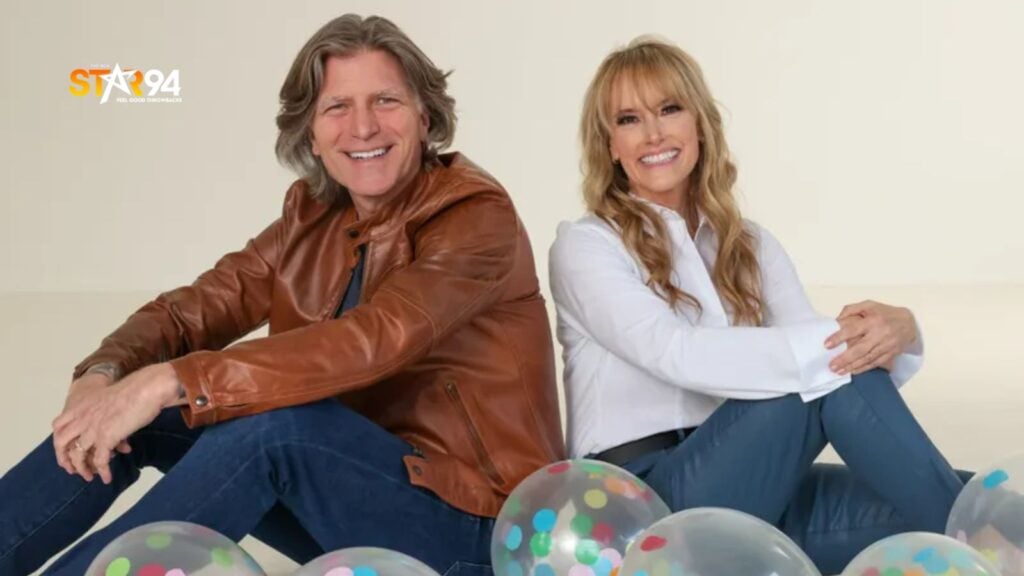
Kevin and Taylor (photo courtesy of Star 94.1)

KROB – Describe your morning show to include the relationship you’ve built with your listeners.

K & T – “Atlanta’s Feel Good Morning Show” is the perfect description of our show. We want everyone that tunes into our show to feel welcome and appreciated. Other shows give off a “cool kids” vibe, we are definitely not the cool kid table in the cafeteria! We’re just like our listeners, getting through the day together with a smile!

KROB – Audio choices and audio on social platforms are competing for attention from radio. How do you keep your show relevant and connected?

K & T – Working to create a relationship with the audience, so that no matter what is happening in culture, they want to know “what do Kevin and Taylor think about this”? It’s about having your own unique camera angle and perspective.

KROB – What’s the Secret Sauce that really makes your show work? Prep – chemistry – longevity?

K & T – Our show has a very simple premise: two friends who have very different life experiences and perspectives, have fun everyday with the listeners. We recognize that life is hard and we want to provide “recess from the world” for 4 hours every day. We also value the chemistry we have, respect for each other and we’re always looking to make each other stand out.

KROB – Emerging talent dreaming of a radio career, what advice would you give them?

Be a sponge! Find a place where you can do and try everything. Learn from promotions, sales, programming, production, engineering, & management. Always be willing to do the extra shift, remote or appearance. Doing these things day after day will give you a solid foundation to build a career from.

KROB – You’ve had incredible success in Atlanta. What do you see as your biggest challenges launching this next chapter at Star 94.1?

K & T – Living up to our own expectations! We’ve had a nice 25 year ramp up to this opportunity. We want to come through for Audacy BIG TIME! So executing the show and getting into the habit of winning is the goal and we are so grateful for the trust and support we’ve been given.

KROB – If you could have a guest – living or not who would it be, and what would you want to discuss?

K & T – We do have our dream guest on our first show! Montell Jordan is a longtime friend and constant source of support. Catching up with him, learning where he is in his battle with cancer and hearing about his international schedule will be a treat!

Kevin & Taylor Fun Facts:

  • Inducted into the Friends of Georgia Radio Hall of Fame last year recognizing their long-term contribution to Georgia radio
  • Their twenty five years in Atlanta morning radio made Kevin & Taylor the longest running personality morning show in the market
  • They have experience success outside of Georgia as their “Good Clean Fun with Kevin & Taylor” was also heard on 60 markets across America including Los Angeles, Nashville and Portland through the Salem Music Network
  • Readers of The Atlanta Journal-Constitution voted Kevin & Taylor “Best Morning Drive Show”
  • Kevin rescues racing greyhounds and Taylor’s future husband proposed to her in a hot air balloon.

Last week, we wrote about prepping for a wave of downsizing in a turbulent media job market. Exiting a long-term position like closing a favorite book—you may have “loved the story – it’s time to put it on the shelf”.

An exit gracefully means you carry the lessons and friendships forward into the next chapter of your life. Kevin & Taylor mapped their transition with perfection.

Are Sports Radio Stations Fully Prepared for the Unexpected?

0

It’s been just under a full week since the tragic event in Utah where conservative activist Charlie Kirk was shot dead at a public event held at Utah Valley University. Putting political leanings aside for the moment, the event left many in all sectors of media shocked, dumbfounded, and worried. An event promoting freedom of expression, silenced just minutes after it began. Sports radio shares a debate similar to political talk radio: public discussion of emotionally charged topics can provoke strong reactions.

While sports commentary isn’t about morality or politics, a heated debate or a hot take can still inflame a listener or follower, sometimes toward harmful actions against talent or stations.

If we set aside political leanings and remember that Kirk was a radio talent himself, the Utah shooting serves as a stark reminder: threats to radio talent can happen anywhere. This is an ideal moment for stations to evaluate the daily risks their on-air talent faces and to consider how they approach planning for the unexpected.

We live in a society where social media amplifies everything said through the megaphone that sports radio provides. The pursuit of wider reach carries inherent risk. While stations cannot control how listeners interpret or react to messaging. They can control how talent are protected.

Talent Security Should Be Priceless

I harken back to my time running a sports radio outlet and the game plan for remote broadcasts. You have the tech, the talent, and maybe a promotions hand. The tech and promotions staff are often part-time and mainly under the age of 40.

Quality engineers are increasingly expensive, and full-time promotions staff are rare, leaving gaps in protection.

Is this enough to protect your talent on the road? Could a rogue fan cause a ruckus at a local establishment with only a couple of part-timers to stand in the way of talent?

If they’re even able to pay enough attention to the broadcast in the first place.

Kirk’s situation prompted internal reflection. College campus, small security detail, no professional guards to monitor—local police were on patrol but not solely focused on the event. Kirk had held similar events before, yet given the volume of death threats he received daily, why not reassess security protocols to better protect talent?

I’m not looking to point fingers; I’m just asking the question. The lesson is clear: you can’t always predict the unexpected—but you can prepare for it. The same principle applies to sports radio.

Talent Face Threats Daily

At the Barrett Sports Summit in May, I hosted a panel with 670 The Score afternoon host Laurence Holmes. We discussed how talent use social media and handle live feedback via chat and text lines. Holmes recounted an incident in which a texter said he should be shot after an opinion on Aaron Rodgers. When Holmes followed up to confirm whether the threat was serious, the texter replied yes.

In any line of work, if a customer tells a worker they should be shot, wouldn’t you consider that a threat?

What’s to say that the next time Holmes’ show broadcasted live from an establishment, there wouldn’t be a similar threat—or even worse? Would the radio station on site be able to prevent an incident, knowing you can’t always plan for the unexpected?

This isn’t about pointing fingers at 670 The Score; the possibility of such incidents exists for any brand, especially in today’s climate.

It’s time for broadcast companies to better educate, plan, and prepare talent and staff for the unexpected.

It’s Time To Reevaluate

There are already several policies that radio stations across this country have in place to protect their talent and employees. That’s something stations have always controlled. What they can’t control is how people’s emotions boil over with words spoken and escalate faster than we can anticipate.

No talent on any format should have to endure or deal with threatening feedback about themselves or their program. We don’t live in the same sports media ecosystem we once did. Discussing quarterbacks or even coaching hires can lead to death threats. Being critical of local teams can bring on emotional and dark feedback in real time from your listening audience.

Social media adds another layer of risk, where trolling can escalate threats and harassment.

If sports radio adapted during COVID to address audience shifts toward on-demand and visual content, it can adapt now to ensure live talent are safe during events. Being in the arena with listeners should remain central to the medium, but protection plans must go beyond relying on part-time staff.

Every employee deserves a safe and secure work environment. For sports radio, this applies both in-studio and on the road. It’s well past time for broadcast companies to reassess protection plans for live events. Ensuring every reasonable measure is taken, regardless of cost.

Ultimately, the Utah tragedy involving Charlie Kirk is a reminder that freedom of expression comes with real-world risks. Sports radio, like all live media, must balance engagement with safety. Thoughtful planning, adequate staffing, and clear policies can prevent preventable tragedies while maintaining the energy and connection listeners expect.

Radio talent should be able to engage audiences without fear for their lives. Stations should prepare for the unexpected, not react to it. The responsibility is clear: protect your talent, secure your events, and never underestimate the consequences of the amplified voice that sports radio provides.

Barrett Media produces daily content on the music, news, and sports media industries. To stay updated, sign up for our newsletters and get the latest information delivered straight to your inbox.
The 7 Essential Steps of Hot AC Radio Imaging

0

Imaging should be the DNA of your Hot AC radio station. It’s what ties together the music, personalities, and overall brand in a way that feels seamless and memorable. Listeners may not always consciously notice your imaging, but it shapes their perception of the station, builds brand familiarity, and sets you apart from competitors.

Hot AC is a format straddling the line between contemporary hits and adult sensibility. The right imaging voice and words can make the difference between sounding polished and relevant versus generic and forgettable.

Hot AC listeners are adults who want current, upbeat, and familiar music. They don’t necessarily live in the same cultural space though as a Top 40 audience. The imaging should reflect this balance.

Personally, I always felt a male/female voice combo worked best. That’s not a necessity, but a preference. You should make every effort as the Programmer to avoid copy that sounds too juvenile or overly edgy. Instead, go for a conversational tone that feels smart, modern, and relatable.

Think of imaging as a friend with a sense of fun! It should never be talking down to the audience, always keeping things lively and approachable. The golden rule of radio imaging is brevity. Writing is re-writing!

Imaging is not a speech, it’s punctuation between the music and content. The goal is to leave a quick impression, not to deliver a monologue. A clever turn of phrase, a quick brand reinforcement, or a punchy hook is far more effective than trying to cram multiple messages into one piece.

 7 Important Steps To Effectively Create and Manage Your Imaging

1. Listeners don’t rewind. If the imaging isn’t instantly clear, the message is lost. Avoid jargon or complicated metaphors. Instead, keep your copy crisp, to the point, and laser-focused on the brand identity. A great test is whether someone driving in traffic for the first time would instantly “get” the vibe of your station from a single sweeper.

2. At the heart of Hot AC is music—the right balance of contemporary pop, recurrent hits, and adult-friendly energy. Imaging should constantly reinforce your station’s music promise. If you’re “today’s best mix,” “hits without the burnout,” or “music that moves your day forward,” those themes need to shine through. The imaging should make clear why your music blend matters and how it fits the lifestyle of the listener.

3. Engaging imaging doesn’t just state facts; it entertains. Listeners love clever wordplay, quick wit, or unexpected humor that makes them smile. In Hot AC, humor should skew smart rather than slapstick—more observational than outrageous. Personality-driven imaging that feels in step with your talent and station vibe deepens listener connection. Be topical, but know that the funnier pieces are, the quicker they burn!

4. Too much imaging in the same rhythm or style can feel stale quickly. Use variety: some sweepers can be dry, others fun and playful; some fast-paced, others more reflective. Consider mixing in different imaging types—positioners, artist drops, listener voices, and situational imaging (weekend, mornings, at-work). This variety keeps the station fresh while reinforcing the brand consistently.

Photo Credit: Canva

5. One of the best ways to engage is to involve the audience directly in the imaging. Listener testimonials, social media clips. Hearing “real people” echo the brand message makes it more relatable and believable than a constant announcer voice.

6. I realize I am listing this as number 6, but it could actually be NUMBER 1! Hot AC imaging needs to evolve alongside the music cycle and listener habits. Rotate copy frequently so the station never feels stale. Even minor updates—seasonal references, new hooks, topical tie-ins—can inject new energy without overhauling the whole package.

7. Think of imaging as storytelling. Every sweeper or promo should have a beginning, middle, and end—even in ten seconds. A well-written piece takes the listener somewhere, whether it’s through a laugh, a music promise, or a reminder of the brand’s purpose. Storytelling—even in micro-form—creates emotional impact that generic tags cannot.

Engaging Hot AC imaging is about balance: short but impactful, smart yet approachable, entertaining while always reinforcing your brand promise. The best imaging doesn’t just identify a station; it makes the station feel alive. Done right, imaging becomes the connective tissue that elevates your Hot AC station from a playlist to a personality-driven brand that listeners trust and enjoy.

Imaging is not an afterthought; it’s a frontline branding tool that shapes how listeners perceive your station. Done strategically, it enhances the music flow, entertains, and reinforces positioning.

For Hot AC, imaging is your differentiator in a crowded market, helping you defend share, grow audience, and create an environment advertisers want to buy into. The investment in sharp, engaging imaging copy pays off in ratings growth, listener loyalty, and ultimately revenue.

Fox News’ Will Cain Rose to the Occasion in Horrible Circumstances of the Charlie Kirk Tragedy

0

Fox News host Will Cain found himself in an unthinkable situation last week. News broke that Charlie Kirk, his friend and frequent guest, had been shot and killed.

For other hosts, the shooting was news. For Will Cain, the news was personal. He had welcomed Kirk to his Fox News show on Tuesday, just one day before the assassination.

The gravity of the moment can’t be overstated. Cain wasn’t just reporting another news story. He was processing — in real time, in front of millions of viewers — the death of someone he knew well. Rarely are those lines between professional and personal more blurred than in moments like this.

It is one thing to report tragedy. It is another to receive the phone call, read the text, or have a producer whisper in your ear that your friend has just been killed. Cain didn’t have the luxury of taking off the microphone and stepping away. He had to keep going.

That’s what made his handling of the situation so remarkable. Cain delivered the news with poise, speaking carefully and deliberately, making sure the audience understood the seriousness of what had happened. His composure shone through. He didn’t rush, he didn’t stumble, and he didn’t break down, though I’m not sure anyone could have blamed him, truthfully. He steadied himself, found the words, and carried the broadcast.

Put yourself in Cain’s shoes. Think about the unimaginable pain he must have felt in that moment. I can’t imagine the overwhelming sorrow that one is overcome with by receiving such devastating news at any moment, let alone being in a well-lit studio, with thousands of dollars of camera and audio equipment designed to capture your every moment, with the expectation that you don’t — or maybe, can’t — break.

Viewers expect news anchors to provide calm in chaotic moments. That expectation is magnified when the news is tragic. You could see the pain on his face. But he never allowed it to cloud his judgment or alter his responsibility. He was transparent about his grief without making the story about himself. That balance is incredibly difficult to strike, yet he managed it with grace.

The fact that Charlie Kirk had joined Cain’s program earlier in the week only deepened the heartbreak. Audiences had just seen the two men discuss the news of the day, exchange laughs, and share perspectives. That segment, in hindsight, felt like a farewell viewers weren’t expecting. Cain, knowing that context, had to carry the weight of that reality while still informing his audience in the moment.

Cain didn’t attempt to mask his emotions or act as though Kirk’s death was just another story. Instead, he allowed viewers to see how much it hurt while never losing control of the broadcast. That combination of authenticity and steadiness is rare, and it deserves recognition.

We ask anchors to be human enough to connect with their audience but professional enough to maintain order. In moments of tragedy, those expectations collide. Cain lived that collision on national television. His ability to navigate it is a testament to both his talent and his respect for the craft.

What also stood out was Cain’s sense of responsibility to the story. He could have leaned into the personal aspect and made the moment about his own loss. He didn’t. He recognized that Kirk’s family, friends, and millions of followers were more important in that moment. That’s exactly what he offered.

It’s easy to take composure for granted until you see it tested. In the Fox News host’s case, the test was one of the most severe a broadcaster can face. He didn’t falter.

The television business often reduces moments like these to ratings, clips, and social media engagement. But what viewers saw from Will Cain was something bigger. They saw a broadcaster serve his audience with integrity, even when his heart was breaking. They saw a man who valued his job, his viewers, and his friend enough to rise above the chaos the situation brought.

Will Cain will likely remember those moments on air for the rest of his life. His viewers will, too. In the hardest of circumstances, he proved that poise and composure are not just broadcasting buzzwords, but essential qualities that separate great anchors from good ones.

Cain didn’t just handle breaking news. He handled heartbreak. For his sake, and so many others, I hope he never has to show that ability on the air again.

Barrett Media produces daily content on the music, news, and sports media industries. To stay updated, sign up for our newsletters and get the latest information delivered straight to your inbox.

For News/Talk Radio, Charlie Kirk Assassination Is a Sobering Wake-Up Call

0

Freedom of speech and thought. Ultimately, this is our reason for existence in news/talk radio. With the assassination of Charlie Kirk, I think our nation needs a frank conversation about tribalism and the labeling of those with differing beliefs as somehow being subhuman.

Charlie Kirk was a guy who went to college campuses and stated his political, cultural, and religious beliefs for all who chose to attend.

A Charlie Kirk event was not a forced presentation by a university, unlike some college professors who make their classes all about their personal political thoughts, with students who must comply to get a good grade. Charlie took on all comers and treated everyone with respect. I have seen a few reels or shorts on social media that take partial statements from Charlie Kirk to make him look like a bigot. For the record, I never met Charlie Kirk. Perhaps you had the honor of interacting with him.

Just because I may disagree with someone does not mean they are subhuman in some way. Blame it on the internet, but part of our micro-tribalism is human nature. Humans love to associate with individuals like themselves. This is probably an instinct that originated with early Homo sapiens. The internet has led people to pursue whatever their interests may be. Most of this is really good. The problem is the development of a myopic worldview. We live in a world with a wide range of beliefs and interests. Confirmation bias may create in some people an aversion to those who see things in a different way.

If you are a talk show host, it is very likely that you have ticked off someone in a very primal way. If you have done this for a while, you likely have received some sort of threat to your physical well-being. We are now at a tipping point where people are seeking to destroy those they hate. This is not winning in ideas but actual murder.

Humans can achieve amazing things. We have put people on the moon. Humans eradicated smallpox. Humans have created countless useful and helpful things. We are also able to destroy. We can blow up the world. Human rights violations are occurring in the majority of the world. In the United Kingdom, of all places, people are being jailed for opinions.

Gov. Tim Walz (D-MN) said this about free speech during last year’s presidential campaign: “There is no guarantee to free speech on misinformation or hate speech, and especially around our democracy.”

Just evaluate this statement. What determines misinformation? We have certainly heard from experts about things that turned out to be completely wrong. Do we publicly arrest those who were wrong? How many wrong predictions on Covid? Is that characterized as misinformation, and do we jail those who were wrong? You have heard the saying that politics and religion don’t mix. I think mixing politics and science is way worse.

Historically, “science” was used to discriminate against Black Americans in the United States. Nazi Germany used science as the reasoning for exterminating the Jews and to confirm the Germanic master race. Jailing those with whom we disagree is a slippery slope that we do not want to slide down.

No one should be assassinated for their beliefs. Yet I have seen some disgusting human beings cheering Charlie Kirk’s assassination. This is evil. If we are at a place where the only way to win a discussion over differing opinions on any subject is murder, we are not in a good place as a society.

Be an advocate for the free expression of ideas. There used to be a group called the American Civil Liberties Union, and their focus used to be free speech. The ACLU was famous for defending speech that would be considered unpopular or even hideous. The organization’s origins surrounded anti-war speech during World War I. Now, the ACLU is focused on immigrant rights, trans justice, and reproductive rights, according to aclu.org.

Charlie Kirk created an atmosphere of questioning popular social trends. This is very good for our society. I think personal exposure to people who think differently from you is a positive and learning experience. We can work on having better positions on our shows by understanding the people who disagree. Charlie Kirk was fearless. This is important for every host in news/talk radio. Charlie Kirk said what was on his mind in a polite and respectful way.

I don’t know how we move past this attitude. How do we get back to considering every individual a child of God who is a precious creation? I don’t know. I guess this starts with the man or woman in the mirror. I think this is something we all must examine ourselves over.

Do you consider those people who disagree with you as subhuman? It is human nature to be drawn to people who see things the way you do. When is the last time you had lunch with a friend who has different ideas? I always try to know people who have different outlooks. I befriend them. My viewpoint has been sharpened by those who see things differently. I have learned much. Perhaps instead of hating people who are not of your or my tribe, it may be time to listen—like Charlie Kirk did.

Barrett Media produces daily content on the music, news, and sports media industries. To stay updated, sign up for our newsletters and get the latest information delivered straight to your inbox.

Katina Arnold Elevated To Senior Vice President, Disney Advertising Communications

0

The Walt Disney Company has tapped a familiar leader for a pivotal role within its advertising business. Katina Arnold has been named senior vice president of Disney Advertising Communications. Joining the leadership team of Rita Ferro, president of Global Advertising. She will report directly to Naomi Bulochnikov, executive vice president of Communications for Disney Entertainment Television & Direct-to-Consumer.

In her new position, Arnold will guide all strategic communications efforts for Disney Ad Sales. Her responsibilities will span sales, product, data and research. Where she will drive corporate messaging, media relations, thought leadership and executive communications. The move underscores Disney’s commitment to strengthening its industry-leading advertising portfolio while positioning its communications strategy for continued growth.

“As Disney Advertising continues to deliver unparalleled value to our clients and audiences across our global business, Katina’s deep expertise and proven ability to elevate brands through thoughtful, strategic communications make her uniquely suited for this role,” Ferro said. “Her partnership will be critical in driving our next chapter of growth and innovation.”

Bulochnikov added that Arnold’s track record across Disney makes her a natural fit for the job. “Katina is an exceptional leader and a gifted communications strategist,” she said. “Her deep knowledge of our business and the strong relationships she’s built across the company will enable her to hit the ground running, and I’m thrilled to have her leading our talented Ad Sales communications team at such a pivotal moment.”

Arnold, who most recently served as vice president of Corporate Communications at ESPN, expressed excitement about her expanded responsibilities. “It’s a tremendous privilege to step into this role working alongside Disney Advertising Sales and to join such a dynamic, forward-thinking team,” she said. “I’m especially grateful to Rita and Naomi for their visionary leadership and trust, and I look forward to collaborating with them to help shape the future of our business.”

Arnold spent more than two decades at ESPN where she oversaw publicity for marquee sports properties. These include the NFL, NBA and MLB, in addition to ESPN Audio, streaming platforms, research and the Talent Office. Her 23-year tenure featured leadership roles in distribution, ad sales, ESPN Deportes, international operations, ESPN Films, the ESPYs and internal communications.

Before joining Disney, Arnold held communications leadership positions with High Speed Access Corp. and AT&T Broadband, formerly Tele-Communications, Inc. She began her career at TCI Media Services in Madison, Wisconsin.

Beyond her corporate career, Arnold chairs the Alliance for Women in Media and serves on its executive council. She also remains engaged with WICT, CTAM’s Communications Steering Committee, the Daughters of Penelope and the Wisconsin Sports Business Conference Alumni Advisory Board.

Barrett Media produces daily content on the music, news, and sports media industries. To stay updated, sign up for our newsletters and get the latest information delivered straight to your inbox.

Scaling Bitcoin: Why Traders Are Watching Bitcoin Hyper Closely

0

Bitcoin is still the market leader in the cryptocurrency segment, acting as a store of value and as a reference point to the larger market. However, its limitations, especially in scaling and speed of transactions, remain a debate among the traders, developers, and investors.

Seeking to address these gaps, Bitcoin Hyper (HYPER) is a Bitcoin-compatible Layer 2 blockchain designed to expand Bitcoin’s functionality beyond simple peer-to-peer payments. Positioned as one of the most promising projects of 2025, Bitcoin Hyper combines innovative technology, strong early investor momentum, and an ambitious roadmap (source: https://bitcoinhyper.com/).

Why Bitcoin Hyper Is Attracting Attention

The primary reason Bitcoin Hyper is generating interest is its use of ZK-rollup technology to scale Bitcoin. At present, Bitcoin can process about seven transactions per second (TPS). That number pales in comparison to Solana, which has reached peaks of 100,000 TPS, or even Visa’s centralized payment network, which handles approximately 65,000 TPS.

To address this vacuum, Bitcoin Hyper proposes a high-speed network that offers a secure environment to run decentralized applications (dApps), DeFi projects, NFTs, and game worlds. More importantly, it is developed as a Bitcoin Layer 2 solution, i.e. it inherits the security of Bitcoin and introduces new features, scalability, practical use, and long-term scalability which will fulfill the requirements of forthcoming developers, institutions, enterprises, and mainstream blockchain adoption globally.

The Role of Layer 2 in Bitcoin’s Evolution

Layer 2 solutions have become essential for scaling blockchains. Ethereum, for example, has multiple L2 platforms such as Arbitrum and Optimism, which significantly expand its capacity without altering the core chain. Bitcoin Hyper brings this concept into the Bitcoin ecosystem, offering a ZK-rollup design that processes transactions off-chain before reporting them securely back to the Bitcoin main chain.

Earlier attempts at Bitcoin L2s, such as Stacks and Rootstock, relied on sidechains that did not fully inherit Bitcoin’s security. Bitcoin Hyper’s approach is different. Using cryptographic proofs and batches, it prevents any action being linked to the security of Bitcoin itself. Additional integration of the Solana Virtual Machine also enables high-speed execution and compatibility with other smart contracts, creating the potential of Bitcoin that it could not do before.

Investor Momentum and Presale Growth

The presale of Bitcoin Hyper has already raised over $3 million, attracting both large and small investors. Individual contributions reportedly reach tens of thousands of dollars, reflecting strong confidence in the project. In line with trends seen in other top presales, early investors can secure discounted tokens and potentially see gains of 100% or more once the tokens list on exchanges.

Market analysts are taking note as well. Some have predicted that Bitcoin Hyper could see significant upside, thanks not only to its technical design but also to its timing. The HYPER presale mania is a good example of crypto sell-the-news actions, where initially hyped markets influence quick investment choices. As Bitcoin continues to gain institutional support, projects that are closely aligned to the Bitcoin ecosystem will be the beneficiaries, and HYPER is an attractive option to traders operating under these dynamic market conditions.

As Bitcoin continues to experience institutional adoption, initiatives that are more aligned with the Bitcoin ecosystem are likely to gain, and HYPER is an attractive option to traders aiming to maneuver through these shifting market dynamics.

Tackling Bitcoin’s Scalability Challenge

Scalability has been a long-standing issue that has restricted the mainstream use of Bitcoin in other areas other than digital gold. To make TPS larger would also reduce decentralization, however, since larger block sizes would need expensive hardware to run, making them less accessible to everyday miners. This stress has rendered on-chain scaling impractical.

Bitcoin Hyper solves the problem via a ZK-rollup model. Off-chain validation of transactions is performed and then aggregated and safely reported back to the main chain of Bitcoin. This enables the network to handle much more transactions per second, and still retains the decentralization and trust that Bitcoin was created upon. 

Under this strategy, Bitcoin Hyper may become a vital element of infrastructure in the widening Bitcoin applicability in the real world.

Implications for Traders, Developers, and Institutions

The potential reach of Bitcoin Hyper is broad. For traders, the project presents a chance to early-get into a Bitcoin-aligned Layer 2 that can appreciate as adoption advances. Developers have new opportunities to develop decentralized apps based on a secure foundation of Bitcoin. To institutions, Bitcoin Hyper offers a solution that is both scalable and secure—qualities increasingly important as cryptocurrency finds real-world applications, from financial systems to evolving media and advertising models.

The network has a potential to create a lively ecosystem by promoting decentralized applications and smart contracts. Within the frames of Bitcoin Hyper, it is possible to run DeFi protocols, trading in non-fungible tokens (NFT marketplace), and blockchain gaming. The power to cancel such activities with the help of Bitcoin can appeal to a large segment of the population who are interested in both innovation and safety.

A Balanced Perspective

As with any early-stage project, investors should approach Bitcoin Hyper cautiously. Presales offer potential upside but come with risks, including significant volatility, regulatory uncertainty, and the competitive nature of blockchain technology. For context, Bitcoin has experienced over eight corrections of more than 50% in its 17-year history.

Nonetheless, there are measures that Bitcoin Hyper has taken to instill a sense of trust. Smart contract audits of the project have been conducted by reputable firms, which guarantee that the code satisfies security standards. This, together with the transparency of its presale and the clarity of its technical roadmap, makes HYPER stand out in a saturated altcoin market.

Conclusion

The effort to address Bitcoin’s scalability shows that innovation around the cryptocurrency is ongoing. If successful, Bitcoin Hyper could reshape how developers and institutions build atop Bitcoin. Presale momentum reflects growing confidence, but the true test will come once the network proves its speed, security, and adoption. 

Either way, it offers a glimpse of Bitcoin’s potential beyond digital gold.

JD Vance: Best Way to Honor Charlie Kirk is ‘To Shine the Light of Truth Like a Torch in the Very Darkest Places’

0

Vice President JD Vance hosted The Charlie Kirk Show on Monday afternoon, days after the news/talk radio and podcast host was killed by an assassin at Utah Valley University.

The Salem Radio Network program airs from 12-2 PM ET, with the Vice President helming the program in honor of his longtime friend.

During the broadcast, Vance spoke with Trump administration officials Stephen Miller, Caroline Leavitt, Robert F. Kennedy Jr., and Susie Wiles. Kirk’s contemporary and friend Tucker Carlson appeared as well.

Vance didn’t mince words towards media outlets which he says have shared half truths to further their agendas. He also took issue with those celebrating Kirk’s death, urging Americans to call them out and alert their employers. The VP added, “we don’t believe in political violence, but we do believe in civility. There is no civility in the celebration of political assassination.”

As he concluded the program, Vance shared an emotional plea for those listening and interested in honoring Charlie Kirk’s memory to follow in the footsteps of the now-departed Turning Point USA founder. He called on listeners to get involved, volunteer for the local political party, write an op-ed in local newspapers, or to run for office.

“I can’t promise you this is going to be easy,” Vance said. “I can’t promise you that all of us will avoid Charlie’s fate. Can’t promise you that I will avoid Charlie’s fate. But the way to honor him is to shine the light of truth like a torch in the very darkest places. Go do it. We owe it to our friend to ensure that his killer is not just prosecuted but punished. And the worst punishment is not the death penalty, but the knowledge that Charlie’s mission continues after he’s gone.”

Barrett Media produces daily content on the music, news, and sports media industries. To stay updated, sign up for our newsletters and get the latest information delivered straight to your inbox.