

There’s a moment in every great radio shift where the jock has no idea what’s coming next. No net. No map. Just instinct, momentum, and the hope that the audience is along for the ride. Tim Virgin has been chasing that moment for thirty years. These days, he’s catching it in two cities at once.
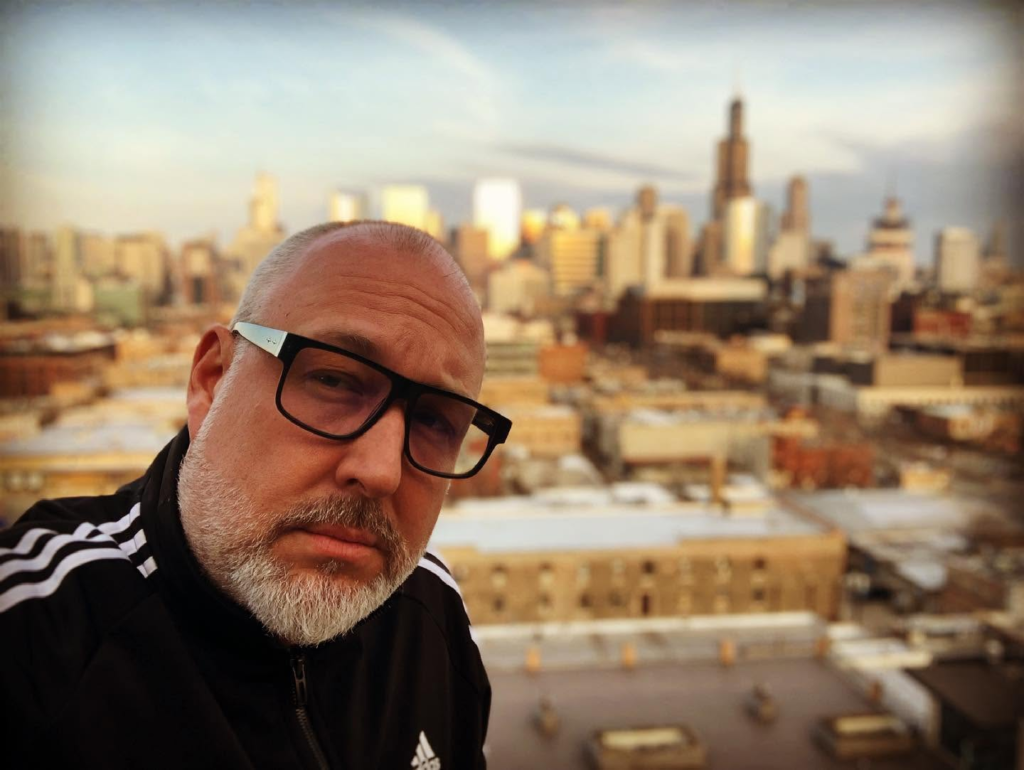
Virgin does afternoons at K-SHE 95 in St. Louis — one of the oldest rock stations in the country — while also handling afternoons at The Drive in Chicago, where Keith Hastings and Keith Lawless oversee operations. It’s the modern version of radio survival: be versatile, be essential, be everywhere. Yet in person, Tim Virgin is completely at ease with the chaos of it all. He doesn’t seem stressed by the juggling act. He doesn’t look burned out. Instead, he looks like someone who finally figured out what he was supposed to be doing all along. The reason became clear the moment I brought up motorcycles.
The Ride That Explains Everything
When Virgin lights up talking about bikes, you understand him as a broadcaster almost instantly. “Having nothing around you when you’re moving — it’s like the no-net thing,” he said. “And I think that’s what I love about radio. I can go down the road and not know what’s about to happen. It’s a freedom.”
He grew up watching his uncles — bikers both — and absorbed something that never left. Going fast without a guaranteed destination isn’t recklessness. It’s a philosophy. On radio, it’s a competitive advantage. Virgin doesn’t script his shifts. He doesn’t believe in exhaustive show prep for its own sake. Instead, he thinks two or three songs ahead, calls audibles fifteen minutes before the break, and relies on instinct to find the story. He admits that when he tries to over-prepare, the magic disappears.
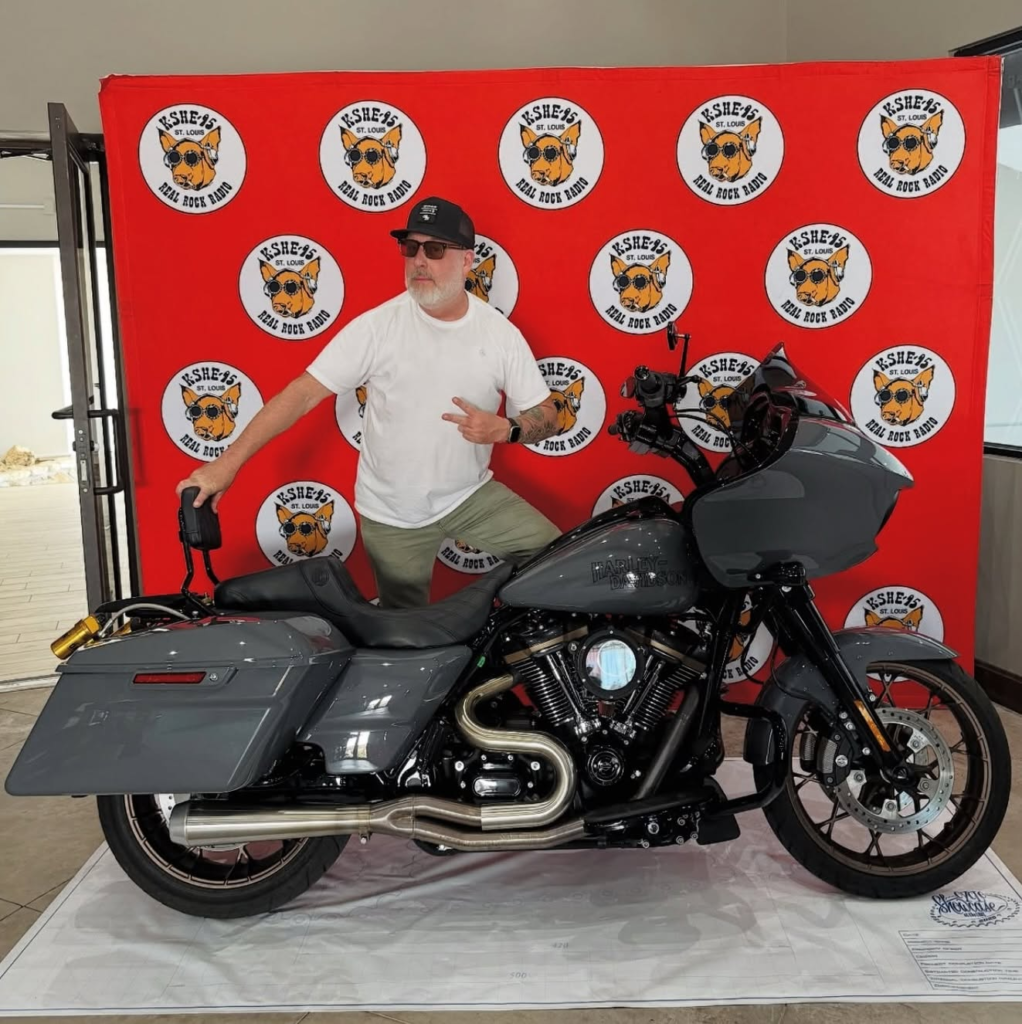
“When I do that,” he said, “I become too… it just sounds like it’s not what I do.”
What he does instead is organized chaos — and he thrives in it. Not many people can do that. Most people’s delivery is so tied to one format’s cadence that changing the channel means changing the person. Virgin changes the channel and stays himself. This distinction sets him apart from countless others in the industry.
“Every station has its own cadence,” he explained. “And your delivery on different kinds of music has to change. But you keep Tim Virgin the same way.”
Navigating Format Changes Without Losing Your Voice
He acknowledged that the adult hits detour cost him something. His rock fans didn’t quite know what to do with him. He didn’t love the format. However, he never stopped being a broadcaster — and when he landed back in rock, the rust came off fast. There’s something to be said for a jock who’s willing to move between formats without losing his voice. Virgin sees it as an advantage rather than a liability. It forced him to understand how music shapes delivery, how audience expectations shape content strategy, and how to adapt without abandoning who he is.
“I think I’m blessed,” he said, “because I did a lot of different formats. I think it’s kept me alive.” Most personalities get locked into one box early in their careers. Rock or top 40, morning drive or afternoons, syndicated or local — Virgin has refused that box. He’s played adult hits and heritage rock. He’s worked mornings and afternoons. Importantly, he’s navigated market changes and format shifts without disappearing. That flexibility has value that extends far beyond any single station or format.
Program director Marty Link and group oversight from Tommy oversee K-SHE now. Virgin credits them — and the entire St. Louis cluster — with giving him permission to be himself again after years of playing it safe.
“I’ve never been this happy in radio,” he said. “I’ve never felt it come so true — if you just show people that you’re the same cool guy they want to have a beer with, it’s funny how that works.”
The numbers back it up. He’s been pulling 25 – 54 male numbers that he describes simply as “wild.”
The Sales Component Nobody Wants to Talk About
Here’s where Tim Virgin says something that every talent in this business needs to hear — and that most program directors are too polite to demand. The motorcycle passion isn’t just a personality quirk. It’s a revenue driver. When Virgin arrived in St. Louis, a Harley dealership — Green Mount Road Power Sports — was already a station relationship, but it wasn’t clicking. A couple of sales reps had taken runs at it. The account was going nowhere.
Virgin went in himself.
“I grabbed a salesperson, Lori, and I said, just let me do this,” he told me. “And I said to the client: I’m not here to sell you. I’m here to be a person who’s asking for a collaboration with you. I want to collaborate. I want to place a home where I can talk about bikes.”
Done. Sold. On the spot.
“You listen to me do those commercials,” he said. “Even I listen back and go, man, I want to go buy a Honda. And it doesn’t even have to be a Harley.”
That’s the power of authentic passion in a live endorsement read. It cannot be faked. A salesperson can describe what a jock is passionate about. The jock can actually make you feel it. And in 2025, in a room where revenue justification is louder than ever, the difference between those two things is an account saved or lost.
Redefining Talent as a Revenue Asset
Virgin is blunt about what that means for air talent broadly: “Personalities really need to get over not going on calls. I gotta sell myself now. A salesperson can’t sell you as good as you can sell you. Eight times out of ten, if I’m there, we get it.”
That’s not a brag. That’s a template. And it’s a conversation that doesn’t happen nearly enough in programming meetings across the country. Too many program directors treat talent as purely on-air assets. Virgin treats himself as a revenue partner. He understands that in 2025, when format fragmentation has made every listener a choice rather than a default, a personality who can walk into a dealership and close an account isn’t just making that station money — he’s making himself indispensable.
The lesson extends beyond automotive. It applies to any client relationship where authenticity matters. It applies to any revenue conversation where a personal connection beats a media kit. Virgin has built a career on understanding that fundamental truth, and he’s willing to put in the work that most talents won’t.
Social Media, Brand Integrity, and Knowing When to Say No
Virgin admits he’s not a natural at social content. He’s working on it. He’s getting help. But what matters more to him is not chasing every trend that crosses his feed or saying yes to every brand deal that hits his inbox just because there’s a check attached.
“I’m very conscious of my brand,” he said. “I’ve turned down money. I’ve turned down a lot of money. Because if it doesn’t feel authentic, it doesn’t matter what the number is. The audience will know.”
That’s harder than it sounds. In an era where every on-air personality is expected to be a personal brand first and a broadcaster second, where Instagram becomes a revenue stream and TikTok becomes a career necessity, the discipline to say no feels almost radical. Virgin has watched colleagues get caught in the trap of chasing sponsorships instead of chasing excellence. He’s watched the quality of their on-air work slide as a result.
Protect the Brand
“If I’m doing something on social that doesn’t align with what people hear in the afternoon, it confuses things,” he explained. “The brand has to be one thing. It has to be clean. It has to make sense.”
His approach is straightforward: be the same person on TikTok that you are on K-SHE 95. If that’s boring to some people, fine. If that doesn’t get a million followers, fine. The audience that matters — the ones tuning in at 2 p.m. on a Thursday, the ones buying Harleys because they believe Tim Virgin believes in Harleys — that’s the only metric that counts.
It’s a philosophy that runs counter to the industry’s current obsession with viral moments and algorithm optimization. But it’s also one that might be exactly what the format needs right now.
Barrett Media produces daily content on the music, news, and sports media industries. Sign up for our newsletters to stay updated and get the latest information right in your inbox.
