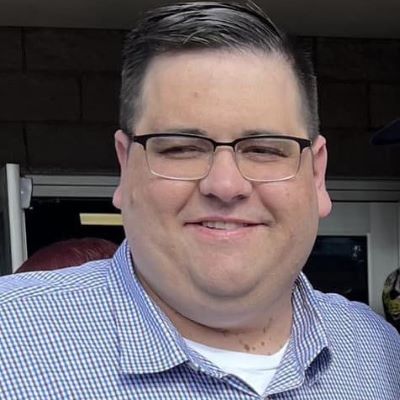
In a news/talk radio landscape crowded with political talk, Our American Stories offers listeners something different. Host Lee Habeeb has spent a decade proving that audiences still crave a good story. Premiere Networks distributes the show, which debuted in 2016. Since then, it has told about 1,300 stories across sports, music, business, history, and more.
Habeeb didn’t start in storytelling, though. He built his career in political talk radio, and he still serves as the Vice President of Content at Salem Media. Even so, he saw something missing.
He said the show was built out of a need to do more than just Republicans versus Democrats.
“I did politics all the time,” said Habeeb. “I love politics. But there was a day when we all had a common vocabulary. There were stories that we agreed with: good stories, hero stories, courageous stories. I thought very often that people, conservatives and liberals, didn’t know anything about George Washington, let alone how NASCAR started. These origin stories of so many things that we Americans take for granted were probably worthy of a show. I also had a real admiration for This American Life. It was very well done.”
A Show Built for Everyone
Habeeb also saw a practical advantage in the format. Because Our American Stories is pre-produced, his team can shape every story in the editing suite. As a result, guests can correct themselves and tell it better.
“I thought, wow, pre-produced storytelling, not live,” Habeeb said. “You get to do better things. We can interview an author of a book, and they’ll talk for an hour and a half or two hours. They get to correct themselves and say, ‘I didn’t get that right. Let me say it again.’ Then we can go into the editing suites and figure out whether that should be eight minutes or 20 minutes.”
Meanwhile, Habeeb wanted the tone to welcome everyone. In his view, most Americans don’t tune in to hear political arguments.
“We also wanted to have a show where people would feel welcome, particularly non-political people,” said Habeeb. “I think overwhelmingly the American people don’t wake up every day wanting to watch political talk or news. They want to just hear a good story.”
Indeed, the response has been overwhelming.
“I can’t tell you how many emails we’ve gotten,” the Our American Stories host shared. “It’s probably in the low thousands now. People write, ‘We listen to you every night, and it helps us rest.’ It takes away that daily drumbeat of negativity. Those algorithms are practically programming you to get high blood pressure, to click something and get mad at something. So we wanted to go the opposite direction, and we did.”
What 10 Years Has Taught Him
After a decade behind the microphone, Habeeb has spotted clear patterns. Specifically, the strongest stories hinge on emotional turning points.
“What we’ve learned is that there are turning points in people’s lives,” said Habeeb. “They’re emotional, and they ultimately explain what happens many years later. Orville Wright got this terrible injury when he was young. He was playing hockey, and all of his teeth got knocked out. Embarrassed and humiliated, he didn’t go to school for years. Homeschooled and immensely curious, he learned so much about so many things. We learned that a lot of the stories have to do with overcoming a hurdle.”
That discovery has reshaped the show’s approach.
“We spend more time in those spaces now,” Habeeb said. “The reason for the story, the story behind the story, the motivating factors. And then, of course, good old-fashioned luck, because that happens too. Good timing helps a lot.”
Moreover, Habeeb has found that stories outlast facts in memory.
“Wherever I go, someone will say something, and I generally have a story,” said Habeeb. “Facts are hard to remember, but the human mind is hardwired for stories. You remember a narrative.”
Why Listener Stories Matter
Finally, Habeeb takes special pride in the listener-produced stories. Without callers, he found another way to invite the audience in.
“One of the last redeeming features of our show is that about 5% of our catalog is listener-driven,” Habeeb said. “I really missed callers, but we don’t have callers. So I pitched people: ‘If you have a story, click the button and send it.’ We’ve got a couple of amateur storytellers who’ve reached a dozen stories. They’re so good at telling stories about their region.”
Those local tales often carry universal appeal.
“Faulkner only wrote about one county in Mississippi, but it had universality,” said Habeeb. “So that’s a joy, to be able to let the listeners become a part of our show, the way talk radio allows callers to be a part of the show.”
Barrett Media produces daily content on the music, news, and sports media industries. Sign up for our newsletters to stay updated and get the latest information right in your inbox.