

Home Blog Page 1016

Who Replaces Dan Bernstein At 670 The Score?

13

Love him or hate him, Dan Bernstein and his 29-year career at 670 The Score was impactful and legendary. From his humble beginnings as a Bears beat reporter in May of 1995 to his final show less than two weeks ago, few voices have experienced as much success and earned as much respect as Bernstein’s in the ‘second city.’ Dan Bernstein’s Score career began as Mike Greenberg’s ended, and his voice has echoed throughout the windy city roaring louder and longer than legends named McNeil, Buffone, Boers, and North.  

670 The Score had to make a call, and it was the right one. The brand should have and did part ways with Bernstein following a social media incident where a line was crossed. In response our own Jason Barrett wrote a fine column on how talent should approach interactions on social media, but that isn’t what I’m aiming for today. Isn’t of focusing on the past, the task now for 670 The Score is next person up.

Since Bernstein’s firing, I reached out and spoke with several current and former Audacy employees with ties to the brand and the market. The lone question I asked all was, “Who should replace Dan Bernstein?”  

The Impact Of Boers And Bernstein

For reference, my personal radio career began interning for 670 The Score in August of 2002. A young John Mamola took the morning shift for his internship working for both Murph and Fred in the morning, and Boers and Bernstein in the late morning. Boers and Bernstein program was three years old at the time I began my internship with the CBS Radio brand, but its legacy became one of legend.  

I may have been a co-worker of Dan Bernstein’s for my nearly eight years at 670 The Score, but I would be lying if I said I wasn’t a fan. I was a big fan of the Boers and Bernstein brand. How couldn’t you be?  

It was the perfect combination of sports conversation, mixed with political satire and goofball humor always striving to have a laugh or two along the way. The program was a ratings juggernaut in a massively competitive daypart, and a successful revenue stream for nearly two decades. As a young broadcaster, Dan and Terry were the standard for how to inform and entertain to a mass audience demanding the very best every day. 

Following Terry Boers retirement, Bernstein’s path on the station took many paths in multiple dayparts with a rotation of co-hosts ranging from Leila Rahimi to Laurence Holmes to his most recent co-host Marshall Harris. 

In asking the question of who replaces Dan Bernstein, it was tough task for the select group I asked for their feedback. The steps he walked are hard to follow, and his shoes will be big to fill. 670 The Score’s program director Mitch Rosen has a tall task to once again shape the future of the radio station meeting the demands of its audience. Here are the top five names which were submitted from the select group. 

Top Five Suggestions For Who Could Replace Dan Bernstein

Leila Rahimi – A Texas native who worked her way up from a reporter and anchor on 1310 The Ticket in Dallas in 2001 to stops in Austin, San Diego, Houston, Philadelphia and eventually Chicago. Leila has worked for the local NBC Sports Chicago before being laid off in 2020, then joining 670 The Score as Dan Bernstein’s co-host in 2021. Rahimi then took a full-time position with NBC 5 in Chicago leading her to depart her full-time role with 670 The Score, but unfortunately her time at NBC 5 in Chicago came to an end in October of 2024.  

Rahimi has a radio background not only in her experience in other markets, but also 670 The Score. She seems like the odds-on favorite to land the position with Marshall Harris. Leile has developed name equity and a strong relationship with The Score’s listening audience over many years and was the fill-in for Bernstein the week following the social media incident.  

Of everyone who provided their feedback, Leila was the only name to surface from everyone who provided their suggestions for the position.  

Jason Goff – Another very familiar name with 670 The Score’s massive following. Jason was a caller as a child to The Score and turned himself into one of the more beloved members of The Score family. Goff has had a number of stints with the station already. He left The Score in 2012 as a producer with Boers & Bernstein to take a full-time on-air role with Audacy’s 92.9 The Game in Atlanta, while also hosting on the Atlanta Hawks radio network. Goff returned to Chicago in 2015 to 670 The Score working alongside Matt Spiegel and then Dan Bernstein, only to be cut from the station in March of 2018.  

Goff currently is hosting his own Full Go Podcast for The Ringer and serves as studio host for Chicago Sports Network’s Bulls game coverage. Last September when Danny Parkins left The Score to take a full-time role with FS1, Goff was rumored to be the leading candidate for the position. In the end a dispute, according to Goff, with Audacy over continuing the podcast with The Ringer was a number of issues that led to Goff choosing not to return for a third time to the station. 

Could time heal wounds and squash previous issues between Audacy and Goff where he could make a splash return to work alongside Marshall Harris? Time will only tell, but it would be a major impactful add if Audacy brought Jason Goff back to his Chicago radio home. 

Mark Grote – Known for his witty humor and impeccable comedic timing, Mark Grote has been a small part of so many “Score Moments” since he joined CBS radio in 2002. Grote has served as a reporter with The Score since officially joining the station from sister station WBBM in 2010 covering World Series, Stanley Cups, and Chicago Bears attempts at quality seasons. Grote has also served as Chicago Cubs pregame and postgame for three seasons, and the sidelines for the Chicago Bears radio network for five seasons before the franchise came to an agreement with Good Karma Brands.  

Internally there has been hopes shared by some that Grote will get more of a look for the position this time as opposed to previously with other roles The Score needed to fill. As a member of The Score team for over 15 years, it will be interesting to see if Grote gets an opportunity to showcase his humor and chemistry with Harris in the timeslot before a final decision is made. 

Adam Hoge – Currently host of the CHGO Bears Podcast for the ALLCITY Network. Hoge did work previously at 670 The Score from 2009 till 2014 in many roles including as a reporter, host, writer and producer. Since departing The Score in 2014, Hoge went on to work several jobs for Tribune broadcasting including WGN television as a sports anchor, and sideline reporter for Northwestern Football games on WGN Radio. Hoge has been with ALLCITY since its inception in March of 2022, and has appeared regularly on The Score since providing his in depth Bears analysis during the NFL calendar.  

Anthony Herron – The Chicago-area native and former Iowa Hawkeye only played a single game in the NFL although being a member of four different franchises. Herron took his football experience and began a broadcasting career beginning with the Big Ten Network in 2008. “Big Ant” as he’s known across Chicago has made stops with ESPN, Pac-12 Network, NBC Sports Network, SiriusXM, and has made a plethora of appearances on The Score over many years. Although never cracking the daytime lineup, Herron has been a fixture on the station and does have a professional football background which could benefit the station as currently there is no ex-athlete on the daytime lineup. 

While these are the top five suggestions, others included current Score fill in host Ramie Makhlouf; Chicago Sun-Times Bulls beat reporter Joe Cowley; former ABC7 Chicago sports anchor Mark Giangreco; SiriusXM host Chris Childers; and current Q101 Chicago radio personality Brian “Sludge” Haddad. 

The Immediate Pressure To Perform Following Bernstein’s Exit

While the options may seem plenty to replace Bernstein at 670 The Score, the pressure to perform will be felt immediately for whomever is chosen. According to the Chicago Sun-Times, Bernstein & Harris drew a 9.1 rating in the key demo of men between the ages of 25 and 54. That finished at number one in the market by almost three full rating points, according to the publication. There also will be the pressure from clients as Bernstein yielded several high dollar partners which will now be looking for a new member of The Score team to attach themselves to. 

Marshall Harris was right in saying “no one host is bigger than the station and the institution itself” on Monday following Bernstein’s exit. Harris may be right, but the decision of who steps in following Bernstein’s exit is a key question there may not be a correct answer to. Love him or hate him, you have to respect the legacy and success of Dan Bernstein’s career at 670 The Score. 

So… who should replace Dan Bernstein? We’ll all find out soon enough. 

Barrett Media produces daily content on the music, news, and sports media industries. To stay updated, sign up for our newsletters and get the latest information delivered straight to your inbox.

Seeing The True Value Of What Radio Does As An Art Form

0

I was recently on a cruise, and as I have done on virtually all the cruises we have been on, I went to the art auction and purchased some paintings. I only purchase art that I love versus treating it as an investment.

What I have learned is that it’s only an investment for those who want to sell it one day. I’ll never sell what I purchased. To me, the work’s value rests in my heart. My dad was a wonderful painter and sculptor, and he taught me that value should never lie in price alone.

I’ve always looked at radio talent and all the creative it encompasses as a form of art. Radio can also be appreciated for what it offers. Even commercials are often a work of art (although not often enough), yet they are rarely viewed that way by anyone other than those who created them.

Art, in general, has long been a part of our common experience – expressing some sort of emotion, creativity, and exploration. I have never known anyone who isn’t captured by at least one form of art. While many simply love it, the question of value goes well beyond that. Value comes in various forms: culturally, emotionally, and intellectually.  

Loving art is personal and subjective. Loving it can be as simple as enjoying a piece on a wall, the melody of a song, or the personality on the radio. It might evoke nostalgia, comfort, or joy, which enriches life.

The beauty of any art, including radio, is accessible to anyone, regardless of background or education. The pure act of enjoyment can be an incredibly fulfilling experience, one that connects individuals with the aesthetic or emotional elements of the work.

When I was growing up, more people appreciated our industry as an art form. Nowadays, we tend to dismiss the value of the art from both the listener’s and advertiser’s perspective.  

I believe that there is a distinction between appreciating art and truly understanding its value. Appreciating its value goes deeper than just the initial enjoyment or affection it provokes.

Great morning shows and personalities are able to carry historical and cultural significance. Like many forms of art, they serve as a mirror to society, reflecting thoughts, struggles, hopes, and aspirations. Is that not what makes a show or personality “great?”  

It’s odd that we look at musicians as artists, but we don’t attach the same honor to radio talent. The best air talent, podcasters, and social media influencers truly create abstract masterpieces of the modern era and communicate ideas, beliefs, and emotions across multiple platforms.

That’s what I believe the coaches of today must be able to instill in today’s talent: to be artists… to create works of art when the microphone opens. Just look at paintings, sculptures, and songs of past civilizations that offer insight into their world. In this sense, we have the same opportunity.

I have learned that the best radio talent can also challenge, provoke, and inspire. Whether painters, musicians, or media personalities, they use their work to offer perspective on everyday life.

The value of what we do, like other art forms, can be based on intellectual value that goes far beyond their visual appeal; they compel us to think, reflect, and even change.

Do we fully appreciate the value of what we do as an art form? Do we encourage and empower talent to create something that our advertisers can easily see has true value?

If you’re a fan of Ted Lasso on Apple TV, you know how he inspires his players to worry less about winning and focus more on being the best person they can be and use their talents to stimulate and excite.  

If art galleries, theaters, and music festivals attract tourism and bring economic benefits to cities and countries, then we should encourage our radio stations to do the same and attract advertisers who appreciate their value – and pay a premium for it. Wouldn’t it be great if we touted radio as the necessary part of the community and social fabric that we know it should be – and it was valued as such?

Understanding the value of any art, including radio, requires looking at it as more than a pleasurable object to be admired from afar. We, as an industry, represent a powerful vehicle for expression, communication, and economic growth, and we hold historical, cultural, emotional, and economic value.

We would be best served by looking at our talent in this way and attaching that type of value to them rather than placing all the monetary value on the spots that surround them – and, in the end, making everything, including the spots, more valuable.

 Barrett Media produces daily content on the music, news, and sports media industries. To stay updated, sign up for our newsletters and get the latest information delivered straight to your inbox.
Crisis Management in Media Sales: Navigating Controversy Around On-Air Talent

By now, you have all seen the news about 670 The Score host Dan Bernstein, who was let go after 30 years with the station following a recent incident involving a follower on X. What is rarely discussed in these crisis situations is the impact on salespeople, who must pick up the pieces with advertisers left behind by the host.

In the media sales world, few challenges are more difficult than dealing with a high-profile on-air host—one who has driven strong ratings and advertiser revenue—suddenly finding themselves at the center of a controversy. Regardless of the cause, bad press can send advertisers into panic mode, making them question whether they want to continue their association with the brand.

For media salespeople, this creates the difficult task of reassuring advertisers, protecting revenue streams, and maintaining long-term relationships while navigating the fallout.

When situations like this arise, time is of the essence. The first step is to gather as much information as possible. Ensure you clearly understand what actions the company is taking so you can accurately explain the response to advertisers.

In the case of Dan Bernstein, where there has been a complete separation, advertisers will want to know both the short- and long-term plans for the station. Even if these plans are not immediately clear, do not speculate—be honest. Let them know you are still awaiting details and will share updates as soon as possible.

Proactively reaching out to key partners before they make hasty decisions is crucial. Acknowledge the situation rather than ignoring it. Advertisers’ primary concern is brand association, and sellers in Chicago should leverage the station’s overall reputation to position this as an isolated incident rather than a pattern of behavior.

In these situations, salespeople must be flexible. Some advertisers may prefer to temporarily pause campaigns rather than sever ties completely. If they push for cancellation, suggest a short-term pause instead, giving them time to reassess once things settle down. At the same time, use your marketing expertise to highlight the potential downsides of pausing a campaign.

Advertisers ultimately invest in results, so reinforcing strong performance metrics can help ease concerns. This is where strong client relationships are invaluable. Some advertisers may take a moral stance, while others will approach the situation more pragmatically. Knowing where each client stands will allow you to tailor your conversations accordingly.

Not all advertisers will make immediate decisions; some will take a wait-and-see approach, monitoring public sentiment before choosing whether to stay or pull out. For these clients, maintaining open communication is essential. Provide regular updates on how the controversy is evolving and keep them engaged with insights and potential solutions.

With personalities like Bernstein, long-standing relationships with clients have been built on trust and audience loyalty. Who else on your station can step in as a suitable replacement? Have that pitch ready. Being prepared with alternative hosts or programming options can make the transition smoother for advertisers.

No matter what you do, some advertisers may still decide to sever ties. While this can be frustrating, professionalism is key to preserving the possibility of future partnerships. Keep the door open—once the controversy dies down, many advertisers may be willing to re-engage. Some brands may even see an opportunity to step in when others pull out.

While it is impossible to fully prepare for situations like these, they underscore the importance of not putting all of your endorsement eggs in one basket. I have seen many sellers become too closely attached to particular talent, often because that talent delivers excellent results for their clients. However, over-reliance on a single personality can become a liability.

The bottom line in crisis situations is to stay informed, communicate proactively with clients, offer solutions, and maintain long-term relationship strategies. Controversies will come and go, but strong relationships, strategic thinking, and adaptability will always keep you ahead of the storm.

Barrett Media produces daily content on the music, news, and sports media industries. To stay updated, sign up for our newsletters and get the latest information delivered straight to your inbox.

New Country 96.3’s Hawkeye And Michelle Entertain While Giving Back

0

New Country 96.3 Dallas/Fort Worth’s morning show, “Hawkeye In The Morning,” is the longest-running morning show in the Metroplex. It is hosted by Mark “Hawkeye” Louis and Michelle Rodriguez.

Hawkeye is a 2020 Country Radio Hall of Fame inductee and was recently presented with the Tom Rivers Humanitarian Award at the Country Radio Seminar. He is known for his charity work in the metroplex, including auctioning his lifelong collection of 17,000 baseball cards, which raised funds for charity.

Michelle has joined Hawkeye in raising millions of dollars in support of Cook Children’s Hospital and supporting veterans with their Pet For A Vet campaign.

Hawkeye joined the station, working alongside a market and radio legend.

“It started in ’88 with Terry Dorsey. I was brought on to be his sidekick, so it’s been a continuation of that story where Terry left. It’s very hard to replace Terry Dorsey. He taught me everything I needed to know, and we tried a couple of different things. Finally, they asked me who would you like to try the show. And I said Michelle, who did middays at the time, and I are friends, and we have a lot of chemistry because she would help out during vacation time.”

Initially, Michelle was not entirely on board with the idea. “Can you believe that? Waking up at 3:30 in the morning did not sound appealing to me. It’s been so much fun joining Mark. It’s like he says, we’re friends off the air, and we’re neighbors too.”

Country radio is a big tent party, and Hawkeye and Michelle keep the show family-friendly and understand that their listeners are the show’s stars.

“I’ve learned from Mark over the years that the listener is the star. The listener comes in with a comment and makes the segment what it is. We’re just there to navigate the situation.”

“You tailor all that to what your audience expects from you. Our show is for adults, but it’s a show that you can listen to with your kids and not ever feel like you need to turn the radio off. That’s the personality of our show, so everything we do goes through that filter. We love it when kids participate in the show, and often they do. But it’s a show for adults, and it’s really for the whole family, but our humor is through that filter for adults,” said Hawkeye.

Michelle added, “They are like an extension of our family, so when they comment or talk about things on the air, sometimes we forget if we had the conversation on the air or off the air. That’s how transparent we are with our life. We’re like, did we have that discussion on or off the air? But it’s what the people expect. They have become part of our family, and they know our personality, and that’s like Hawkeye said: we want to welcome everyone.”

“Can I piggyback something Michelle said? Because we talk throughout the day, if someone sees something like an idea or something, we’ll send it to each other, texting along with our producer. Then the next morning, this happens so often, I’ll tell Michelle, hey, someone was telling me this, and Michelle will go, yeah, that was me yesterday. I told you that. That happens all the time.”

I asked Michelle about the key to working with Hawkeye and what she had learned over the years.

“Just letting him do his thing, I can bring up an idea, and he takes it. It could be a story that everyone’s talking about, but Mark takes it to a different level, and it’s the creativity and, of course, the experience of having done this for so many years. We find the different angles together, and it turns into something so much bigger. He could go on for an hour or two hours out of something that was not even that big of a story.

“He has this creativity and just this angle of getting a story and making it grow. It’s something very unique to him, and it’s missed when he’s on vacation.”

And for Hawkeye, working with Michelle?

“One thing I like about working with Michelle is, so often, I’ll have an idea, and I think, hey, what about this, and then with Michelle, it’s almost like an improv thing. What if we did it this way? Then, that was where somebody would go, and then we did this, and then she’ll take it back. By the time we’ve hashed it, it’s grown from a simple idea to something much bigger. It was very complimentary what she said about my ideas, but she takes it to another level. I don’t think she recognizes that it’s both of us working together, and we take something to another level.”

The show is known for taking something in the news and seizing the moment, like its recent egg giveaway.

Michelle said, “We did the egg giveaway, we did a diaper drive, where we collected diapers, and we also gave away trees—this kind of stuff. Even today, Mark says, ‘ What else are we going to do? ‘ We’re always trying to think about what else there is a need for in the community that we can step in and help out.

The duo has a reputation in the industry for giving back to the Dallas/Fort Worth area.

Hawkeye said, “We’re glad we have that reputation. I would say we’re lucky to have management that not only encourages it but also supports it. When we came up with an idea last year. I said, hey, you know what? Because I’m a passionate supporter of trees and planting trees, I’d like to give away kind of trees on Arbor Day,

I worked on that for about three or four months to coordinate with the Arbor Day Foundation and get everything scheduled, and everyone was on board with that. Then, the year before that, Michelle did something with a group called Feed the City; she came and said, ‘This group’s amazing; we should really see if we can help them out.”‘

“With our platform, we’re always looking for ways to help the community and people who are already doing something so we can take it to the next level because we have this gigantic blowtorch. I would say that every community probably has something, and radio stations are a great opportunity to use your storytelling powers to help that organization; it’s a win-win for everybody,” said Hawkeye.

I asked what advice the team would offer to morning teams in the early stages of their careers.

“I guess the answer to your question is to listen to different programs, and you can find anybody online now and see what they would do. Then don’t steal from them; take what they do and tailor it to fit you. If you’re in a smaller market, there’s not much of a farm system anymore. If you can do well in your market and improve your act and show, you can move up pretty quickly because there are not many people doing local shows anymore.”

I asked if there was anything else they would like to mention.

Michelle joked, “I want to mention that Hawkeye’s a humanitarian. We should all acknowledge that.”

Hawkeye explained, “That’s the biggest joke. My wife makes a joke about this because after the CRS Humanitarian Award, whenever anything goes awry at the house, she goes, oh, great, the humanitarian scores.”

Michelle said, He really is. He does a lot of good for our community and continues to do so.”

Hawkeye added, “It’s a station-wide effort here, So even that award, as I said, is a team effort. Everything we do is a real team effort here, so we’re very lucky that we have support from management and we’ve got a good support staff.

Barrett Media produces daily content on the music, news, and sports media industries. To stay updated, sign up for our newsletters and get the latest information delivered straight to your inbox.

Cleveland Guardians’ Broadcaster Tom Hamilton Got the Call to the Baseball Hall of Fame in the Most Unlikely of Times

0

Although Tom Hamilton was named a finalist for the prestigious Ford C. Frick Award given by the National Baseball Hall of Fame and Museum, he did not expect to be enshrined in this heralded home of baseball immortality. Upon discovering that he had made the 10-person cut, he received a message to be available on the morning of December 11 to potentially field a phone call, a dispatch that, upon receipt, would mark earning one of the highest honors in the sports media business.

Hamilton had been through this cycle in three previous occurrences to no avail, and he was not genuinely thinking about winning the award that December morning. On the contrary, he and his wife were preparing their home for the holidays while the MLB Winter Meetings were underway in Dallas. Hamilton’s wife had lunch planned with a friend that afternoon and asked if she should go, to which he replied that they would have obtained a phone call by that point if anything was to transpire. From there, Hamilton boarded an elliptical machine to begin a workout, and suddenly, what he perceived to be an unlikely outcome rendered itself true learning that he had garnered the distinction.

“They called right around 11:40, and so, again, it’s just kind of one of those [instances where] the phone rings, you look at it,” Hamilton explained. “Normally I wouldn’t pick up because I didn’t know the number, but ‘Cooperstown’ came across the front of my phone. I was like, ‘Oh my God.’”

Dashing upstairs to share the phone call with his wife, Hamilton was utterly shocked to be selected as the award recipient. Twenty minutes later when the news became public knowledge, he was able to call his children and celebrate the victory with his family. Having been the radio voice of Guardians baseball for the last 36 years, Hamilton has built a reputation as someone who is able to make sense of a surreal moment. In this case though, he struggles to find the words to properly encapsulate what it means to receive the accolade.

“I’ve worked for incredible people, which is why you never want to leave, and we’ve been lucky enough that they haven’t forced us out [and] that they’ve kept us,” Hamilton said. “It’s still stunning to me to even think about it and it’s hard to wrap your arms around it, and it’s becoming more and more realistic as you get closer and closer to it.”

Hamilton is in the process of compiling his speech for the ceremony, which is slated to take place in July, and he hopes not to get another phone call informing him that his selection was an accident. On top of that, he is preparing for the Guardians season as the team looks to leverage its consistent postseason appearances to snap a 76-season World Series championship drought. Broadcasting from the corner of Carnegie and Ontario, Hamilton is gracious to work in an industry that aligns with his passions and strives to accurately depict the action.

“You’re live for however many hours, so the old adage, ‘You’re walking on a tightrope with no safety net,’ that’s live play-by-play, and you make mistakes and it just happens,” Hamilton said, “but I think hopefully as you gain more experience, you’re able to kind of take a deep breath when you can kind of feel a moment coming, not that it’s necessarily going to happen.”

A Spontaneous Moment Serves the Audience Best

As Cleveland was trying to win a World Series championship in 2016 against the Chicago Cubs, outfielder Rajai Davis hit a game-tying home run with two outs in the eighth inning. While the team fell short of capturing baseball’s ultimate glory, Hamilton narrated the moment with conviction and vivacity as the team mounted its comeback effort. In fact, he affirms that it represents an instance where he could evince the apex because of the surrounding drama, but he nonetheless did not presage the sequence. Moreover, he does not listen back to these big moments out of fear of being his own worst critic and an impossibility of being entirely content.

“I may have certain calls that I do the same on certain home run calls, but I don’t wait to do a home run call because that’s how you set yourself up for failure because you’re in your home run call and the shortstop makes a leaping catch and you look like an idiot,” Hamilton said. “So spontaneity is still the best tool that you have, and that’s why it either comes across natural or chances are you’re going to be in line for a different job.”

As Hamilton broadcasts throughout the season, he aims to accurately portray his outgoing and ebullient personality without embellishing or deceiving the listening public. Conveying passion, persistence and an unwavering will to perform at his best, he views himself as lucky to call Progressive Field his workplace. While his inaugural season with the team was delayed by a lockout, he eventually had the chance to pair with Herb Score, who forewarned him against demonstrating conceit or apathy about the sport.

“One of the things he always used to say is, ‘Be careful. The longer you’re up in the booth, the more you feel like you can become God, judge and jury,’ and he goes, ‘You want to always be careful of that,’” Hamilton recalled. “Yes, we have to tell fans what’s going on. You have to point out as the bad as well as the good, but you’re not up there being judgmental, and you try to always make sure it’s not personal.”

Working Relationships Behind the Mic

Hamilton has worked with several broadcast colleagues over the years, the last 15 of which have been alongside Jim Rosenhaus. Throughout their partnership, Hamilton has emphasized that the arrangement is not a soliloquy and encourages him to speak when he wants to jump into the broadcast. The broadcasters have become more accustomed to one another over the years and effectuate a stellar radio call of Guardians baseball throughout the season on Newsradio WTAM 1100.

 “I’ve never had to deal with, ‘Okay, you’re not going to be on a radio station anymore’ or anything like that,” Hamilton said. “We’ve always been, for the most part, on the top station in Cleveland and the clear channel and all of that, so that really hasn’t impacted me or how I do the job or anything else like that.”

Hamilton remembers discussions surrounding the conjectural death of the radio medium from the moment he started working in the profession. He refutes such a claim and feels optimistic about innovation in the digital age. For example, he and Rosenhaus frequently receive messages from listeners in Europe consuming the radio broadcasts digitally and can discern the augmented reach. Technological breakthroughs and innovations render it possible for consumers to access local radio broadcasts from virtually any location and stay attuned to games.

“Modern technology has really helped the radio play-by-play end of it, and really I think in a lot of ways you could say the same thing about TV,” Hamilton said. “The younger generation is – they’re not consuming television like us old people are – they’re streaming on their phones.”

Local Matters to Baseball Fans

Hamilton contends that the presence of the local broadcast is vitally important, and he believes the ratings are high because of the gelid winter temperatures and fluctuation into the summers. Cities in the Midwest region of the United States endure a similar phenomenon, he explained, which leads to patrons usually being on the move spending time outdoors during the baseball season. From listening on a golf course to a boat in the middle of Lake Erie, Hamilton is a trusted voice for fans and has successfully adapted to a shifting paradigm with the introduction of the pitch clock and other alterations.

“I’m still bringing the same amount of research and notes to a broadcast, but a lot fewer of them are getting into the broadcast because of the pace of play, and that’s good,” Hamilton said. “That’s good because people want to hear baseball – they don’t need to hear me droning on and on.”

Although he admits that some aspiring broadcasters may not want to hear it, gaining repetitions behind the microphone is how announcers traditionally hone their craft and develop distinctive approaches conducive to success. Hamilton grew up on a dairy farm and later moved to Waterloo when his father began work at the Perry Printing Company, which is when he started listening to sports broadcasts on the radio. With a penchant for the profession, he attended Brown College and practiced calling games into a tape recorder, after which he would elicit feedback and seek to improve.

“I don’t think any different from a player,” Hamilton explained. “They always talk about, ‘How many reps does it take to become a good hitter?,’ or the amount of hours guys put in the batting cage or whatnot, and it was really no different than that for me, and then it’s just kind of trial and error.”

Upon joining a station in Columbus, Hamilton offered to work for free on Columbus Clippers baseball games with play-by-play announcer Terry Smith while also contributing to morning drive sports and studio coverage of Ohio State Football. The circumstance gave him consistent repetitions and positioned him to apply for the Cleveland job when it opened, although his wife is the person who ultimately pushed him to take the leap after having their newborn son.

“That was such a great time in our life to have our first child, but I think sometimes you do need encouragement from somebody to tell you that, ‘Well, how do you know you can’t this job?,’” Hamilton recalled, “and I think I felt like, ‘Well, they’re not going to hire a guy that isn’t even the lead broadcaster for Columbus,’ but at that point, it was kind of like, ‘Well, why not?’”

Honoring the Craft of Play-By-Play

Hamilton remembers discovering that he landed the job and values his radio broadcasting position, but he was also offered opportunities to move to television during his career. While he called games for The Baseball Network, ESPN+ and the Big Ten Network, he has remained loyal to radio and proven to be among the longstanding masters in the craft. Since some of the regional baseball jobs spanned both mediums, Hamilton wanted to ensure that he would be versatile enough should he ever decide to make the move.

“As much as I enjoyed doing television basketball, the camera does the play-by-play, and so that’s what I loved about getting back into radio because there is no camera,” Hamilton said. “You’re the camera for your listener, and that’s where you do your craft of painting the picture so to speak, so as much as I enjoy doing television, I much more enjoy radio. You feel like you’re your own boss more than anything.”

While the Guardians commence the race to capture a third division title in five years, Hamilton will keep fans informed and entertained as he demonstrates his proficiency and proclivity for the game. As he retains his credibility as a broadcast professional, he looks to keep things in perspective while being in a state of disbelief about his summer trip to Cooperstown. In the end, he is going to continue doing the job and working hard, taking stock in the process and extemporizing the monumental benchmarks that engender jubilance, despondency and the spectra of emotions interspersed therein.

“Once the game unfolds, to me, the work is done, and that’s the most enjoyable part of the game,” Hamilton said. “I get the best seat in the house and we’re not paying a nickel to watch these guys perform every day, so again, I know maybe it’s redundant, but you sit around there every night, whatever ballpark you’re in, and again, you just kind of go, ‘How did this all happen?’”

Barrett Media produces daily content on the music, news, and sports media industries. To stay updated, sign up for our newsletters and get the latest information delivered straight to your inbox.
The Watch: Fox & Friends on Fox News

I do not envy the hosts of Fox News’ morning show, Fox & Friends.

For a multitude of reasons, but mostly because of the situation that arose earlier this week after a report from The Atlantic claimed that the outlet’s editor-in-chief Jeffrey Goldberg was inadvertently added to a group chat on an unsecured messaging app as the United States military discussed plans to attack a terrorist organization in Yemen.

When former Fox News host Pete Hegseth was tabbed to serve as the Secretary of Defense, it was an inevitability that this situation would come up. No one — no matter the political affiliation — is perfect. Mistakes happen. And it was inevitable that Fox News was going to be in a position where it would have to report on an uncomfortable situation related to Hegseth.

I’m guessing that they didn’t believe it would be this early and to this magnitude, though.

In full disclosure, I didn’t watch the full, entire three-hour show. I am just focusing on the portions of the show dedicated to the coverage of the report from The Atlantic. Also worth noting that usual Fox & Friends co-host Ainsley Earhardt was not on the show on Tuesday. Kayleigh McEnany was in her place.

In the 6 AM ET hour of Fox & Friends, Brooke Singman joined the show to lay out the story from The Atlantic and the response from Hegseth that argued that Goldberg is a “highly discredited” journalist and that “no one was texting war plans” in the group. Goldberg has maintained that there was highly confidential information shared in the group thread that he was accidentally added to. The introduction included sound from President Trump saying he was unaware of the story on Monday afternoon when asked for his reaction.

Steve Doocy took the reins after Singman’s appearance to lead the discussion. He said he spoke with several sources who all said they had not known national security leaders to utilize the Signal — — the app used by Vice President JD Vance, Secretary of State Marco Rubio, and Hegseth, among others — for communication purposes. He then turned to McEnany to ask about her experience utilizing more secure communication vessels from her time as the White House Press Secretary.

I thought this was a masterful job by Doocy to, first, showcase his connections in the political sphere by sharing information he had independently gleaned from national security sources. But to also utilize the expert on the panel. McEnany has deep knowledge and experience in government communications, and tossing the ball to her and letting her run with it in this instance was the wise choice. She’s obviously going to be able to lend more credence to this story than anyone else. He set up his teammate to shine, and she did.

McEnany explained the communications protocols from her time working in the White House. It gave more insight to viewers who likely didn’t have an intricate knowledge of the technology, the government policies, and why this is an issue. She admitted “This is an obvious mistake” by the national security team, which is as unambiguous as you can be about the situation.

She didn’t leave it, there. She made the case that the national security team had “eaten their crow hot” and accepted responsibility, which feels a bit disingenuous after playing a clip of Secretary Hegseth failing to take any responsibility or accountability for the incident. She echoed the statements made by her former Fox News colleague — who worked on the weekend edition of Fox & Friends — by stating the she didn’t trust Goldberg’s assertion that war plans had been shared in the group message.

Jones interjected by stating that his only question was how Goldberg was added to the chain. He said government officials aren’t supposed to use it, but they use it. When Doocy pushed back by saying they don’t use it for top-secret communications, Jones asserted himself again by stating “They use it.”

It was an interesting exchange. Doocy at one point made a face as if to insinuate “That’s not a great rebuttal,” but allowed Jones to continue, who added that he uses Signal to communicate with government officials. The next point made by the Fox & Friends host was that those involved in the group message shouldn’t have been communicating with Goldberg in the first place, which led to agreement from McEnany.

Later in the show, the hosts asked questions of Senate Intelligence Committee Chair Sen. Tom Cotton (R-AR). The questions of Cotton were fantastic. McEnany asked what he thought the upcoming committee meeting would focus on as it was slated to meet in mere moments. Brian Kilmeade asked Cotton what questions he had to ask about of the national security team. Those are fantastic questions that viewers want the answers to. And when you have the leader of the upcoming Senate committee that was going to continue to advance the story, utilizing that time to get answers for your viewers is always an A+ move.

Now, that interview did devolve into partisan politics later. Lawrence Jones asked Cotton about Signal and how prevalent its use is among those in the national security world. Jones justified his question by stating that he “knows for a fact” that many in that realm utilize the messaging app.

That’s as leading a question that you can ask. Literally, the question was “Is that not correct?” It was an attempt to give Cotton the chance to normalize and trivialize the clear blunder and to avoid accountability for the national security team. Which he willfully accepted. Cotton’s answer — in my words, obviously, not his — equated to “Well, you ever read a recipe and it said to use a teaspoon but you used a tablespoon? It was sort of like that.” Not exactly the defense you’d ever hope to hear from a United States Senator about a mistake made by our military and national security leaders, but here we are.

The interview with Sen. Cotton lasted just over five minutes. It was a classic example of “get them on, get what you want out of them, and get them out.” It was quick work nearing the end of the show, where each host go to ask their one question to someone who would undoubtedly be impacting the news of the day.

Overall, I was impressed with the way the network handled the situation. Now, could that be because my expectations were so low? Maybe. But I thought it was interesting for Kayleigh McEnany to flat-out say “This was a mistake.” Because of the hyperpartisan world in which we live, neither side is ever willing to give an inch out of fear that a mile will be taken. But, she was right. This was clearly a mistake made by the national security team. Attempts to downplay it or explain it away shouldn’t be acceptable.

It certainly felt as if there was some disagreement on the couch between Steve Doocy, Lawrence Jones, Kayleigh McEnany, and Brian Kilmeade on how to handle this story. But that’s likely only perceptive to someone like me who isn’t as focused on the content of the show as much as the presentation of the show. But I found that conflict interesting and believe the hosts did a good job of masking those feelings on the air and to the audience.

This wasn’t an easy situation to navigate for a variety of reasons, most especially because hosts are deeply familiar with many of the players involved in the situation. I’m sure they, like me, hope this is one of the few or only times they have to cover a situation involving their former colleague.

It was bound to come up eventually. Could Fox News have done a better job covering this? Absolutely. But they also could have done a significantly worse job, too. And perhaps that’s lending too much benefit of the doubt. Maybe giving credit for not being as terrible as some would have expected might feel incorrect, but if you’re supposed to reinforce the good things, I think this was an overall good job done by the Fox & Friends group that likely wished they could have been talking about literally anything else on a Tuesday morning.

Barrett Media produces daily content on the music, news, and sports media industries. To stay updated, sign up for our newsletters and get the latest information delivered straight to your inbox.

One Year After Key Bridge Collapse, WBAL NewsRadio PD Jeff Wade Reflects on Coverage

At 1:28 AM on March 26th, 2024, a shipping boat in the Baltimore Harbor collided with a support pier for the Francis Scott Key Bridge, collapsing the longstanding structure. Despite the late hour, WBAL NewsRadio — led by Program Director Jeff Wade — leaped into action.

Every news/talk station has a plan for breaking news. But not every station is equipped to handle breaking news at any given time, especially in the literal wee hours of the night.

But WBAL NewsRadio had a plan in place that it executed. And after having a year to digest the coverage, Jeff Wade remains happy with that execution.

“First, given the timing of the story, the one piece of our plan that worked as I expected was communication with our talent,” said Wade. “I was dead asleep when the call came in after 2 AM about the collapse, but my staff was quick to respond and recognize the urgency to get me involved—and to get moving. Ultimately, much of the planning in breaking news situations happens beforehand — by assembling the right group of talent and instilling a breaking news mentality throughout the organization. You have a team you trust to get the story out, not just quickly, but correctly.” 

The story made national headlines for days as the viral video of the ship heading directly for the structural pier of the bridge was released. But the first news brand to file a live report from the scene of the incident was WBAL NewsRadio, which is a great source of pride for Wade.

Jeff Wade is the Director of Programming and News at WBAL NewsRadio in Baltimore. He oversaw the station’s breaking news coverage after the Key Bridge collapse in 2024. (Photo: Hearst)

“I was proud that our morning reporter that day was the first broadcast reporter in Baltimore to file a live update from the scene at 4 AM, which speaks to the breaking news mentality I mentioned before,” said Wade. “It was also a day I was proud to be part of the Hearst team. Our colleagues at WBAL-TV are great collaborators during breaking news situations. Both our teams shared information with each other to help develop the story, and Skyteam 11 — who provided aerial camera shots throughout the crisis — called our newsroom for custom reports during the day.

“It’s also a huge advantage to have access to their live camera feeds so we could air multiple press conferences throughout the day,” added Wade. “I often tell people who ask about Hearst that they’re not a radio company, they’re a news company. And the treatment we get as one of only two radio stations in the portfolio allows us to be as successful as we are.”

When asked what advice he would give to a program or news director who was put in a situation similar to this, Jeff Wade said being the captain of the ship — pun intended — goes a long way in helping manage the coverage.

“Beyond the execution, it’s an important time for you as a leader,” he shared. “Your team is under a lot of stress and they need your support. I think I learned from the experience that good communication and maintaining supportive relationships with your staff go a long way, especially in a hectic situation like those first few hours. 

“I don’t think we would have been as successful had the staff not felt they were working together as a team towards a common goal, and that comes through your own engagement, leadership, and example,” concluded Wade. 

The WBAL NewsRadio Director of Programming and News added that the day was, obviously, a productive one for the station. It was the biggest streaming day of the year, with a huge spike in digital metrics between social media platforms and digital video efforts from the brand.

“That’s the way it should be, but it’s because of our commitment to news content that still makes us a destination that holds its own with our print and TV counterparts,” Wade said.

Barrett Media produces daily content on the music, news, and sports media industries. To stay updated, sign up for our newsletters and get the latest information delivered straight to your inbox.

How News/Talk Radio Hosts Should Prepare For Local Election Season

0

Local, local, local. Many radio hosts are struggling with how to navigate the proper amount of attention to local elections. I am with you. But let us focus on reality: most people don’t care.

I personally believe that all general elections should be held on the same day. But we need to discuss these ratings turkeys to a certain extent. I can assure you that people are mad as hell about crime, traffic, blight, and wasted tax dollars.

There is a reason that these local elections are held at weird times. It is a power move. Depending on your state, your local government has a lot of strings for their job. Local communities receive a large percentage of their funding from federal, state, and sometimes county money. Your city or town authorities look at any money from these sources as free money. Federal and state money generally comes with huge strings attached.

During the Obama administration, local funding for street repair or expansion came with the mandate of bike lanes. This idiocy was a way to provide people with a safe place to ride their bicycles while they commute to and from work. If your community is like mine, that does not happen. Why didn’t communities rebel from the federal government’s overreach? It’s because it was easier to accept the money than turn it down and figure out how to repair or expand streets without assistance. Thus, it is so much easier to take the federal cash.

How do we handle this? I think that local governments have a couple of things that they still have a great deal of control over: crime, business recruitment, and economic development. These issues are perfect for news/talk radio stations. I am going to give you questions that are imperative for your local community.

Does the city have 5, 10, and 30-year growth plans? These should be clearly defined. If the city is playing catch up to unanticipated growth, it becomes very expensive quickly. Poor planning for growth leads to lifestyle problems. Heavy traffic, poor water service, overcrowded schools, and expensive real estate to support the growth. Building after this fact creates more mayhem. If the mayor says that the city does not have a formal growth plan, the follow-up is: why not? Isn’t that important?

What is the plan for new business recruitment? In our smaller cities and towns, there is a cornerstone business that employs a significant percentage of residents. What if that business moves? It is easier to recruit when your community is doing well. It becomes very difficult if your community loses that big employer. There are many communities across the USA that will offer substantial tax incentives to attract that business. Where is your city on that? If you hear the mayor, say that the big employer owes it to the community. Your mayor is a fool.

Real estate costs are spiking in many places. Where is your city on development of new housing? Housing costs are tied directly to supply and demand. If these costs are rapidly rising, how can this be fast-tracked?

Road Planning. In my hometown, the state and cities cooperated on the development of I-494 and I-694. My dad used to joke that this loop was the road to nowhere. This loop is 10–20 miles away from the downtowns of Minneapolis and St. Paul. On a recent trip home, I drove it. There is development everywhere on it. I bet that the community wishes that they would have built another loop 15 miles further out.

Do your local schools suck? If the community is more interested in the quality of their prep sports than educational excellence, you are in trouble. I was speaking with a parent whose child attended a school that had terrible rankings. I asked her if she wanted to get her kid into a different school. The mother looked at me and said, “I know that the school is terrible, but my kid’s teachers are excellent.” This is a real problem. I have observed schools fire a coach with a losing record but are perfectly happy to support terrible schools.

Part of providing a listener-focused experience is understanding the concerns and frustrations of your audience. Your local elections have a lot to do with the happiness of your audience.

Sadly, if you focus too closely on these elections, you will chase away your audience. So, think that through.

Barrett Media produces daily content on the music, news, and sports media industries. To stay updated, sign up for our newsletters and get the latest information delivered straight to your inbox.

Doug Jossem Named by MSG Sports, MSG Entertainment as Executive Vice President of Global Sports and Entertainment Partnerships

0

Doug Jossem has been named executive vice president of global sports and entertainment partnerships by Madison Square Garden Sports and Madison Square Garden Entertainment, as announced by the companies on Tuesday. Under his new position, he will be responsible for developing and leading global partnerships across these companies while also supporting the sales efforts for MSG Networks. Jossem will seek to align global partnerships strategies with the business objectives of the companies in order to foster growth and drive a “multi-channel approach” with new and existing partners. Jossem is going to be based in New York for the position, and he will report to MSG Sports chief operating officer Jamaal Lesane.

“The MSG Family of Companies’ assets include some of the most iconic brands in professional sports, entertainment, and media,” Lesane said in a statement. “With Doug’s extensive experience in sales and marketing across various industries, we look forward to driving innovative solutions that leverage the full depth and breadth of our portfolio to create unique platforms and unrivaled exposure for our partners.”

Jossem joins the MSG family of companies after a stint at Walmart where he worked as the head of food for its Walmart Connect division. Before that time, he was with Twitter as the head of international content partnerships and was responsible for driving growth through creating new products and conducting research studies.

Jossem also previously worked with Vice Media as its chief revenue officer where he was responsible for leading revenue and strategy efforts across digital, television and studio efforts in the North American marketplace. Prior to this role, he worked in sales positions with organizations including Comedy Central, CNN and Yahoo. Bossem is a graduate of the University of Rhode Island with a communications degree where he also serves on its board of advisors.

“Throughout my career I have been focused on building high-performing, results-driven organizations that foster innovative partnerships,” Jossem said in a statement. “The diversity of assets under the MSG Family of Companies’ umbrella is unparalleled, and I look forward to working with my colleagues across the organization to not only drive business results but also create compelling opportunities for consumers around world-class brands.”

Barrett Media produces daily content on the music, news, and sports media industries. To stay updated, sign up for our newsletters and get the latest information delivered straight to your inbox.
Elizabeth Murphy Burns Steps Down As Morgan Murphy Media CEO

0

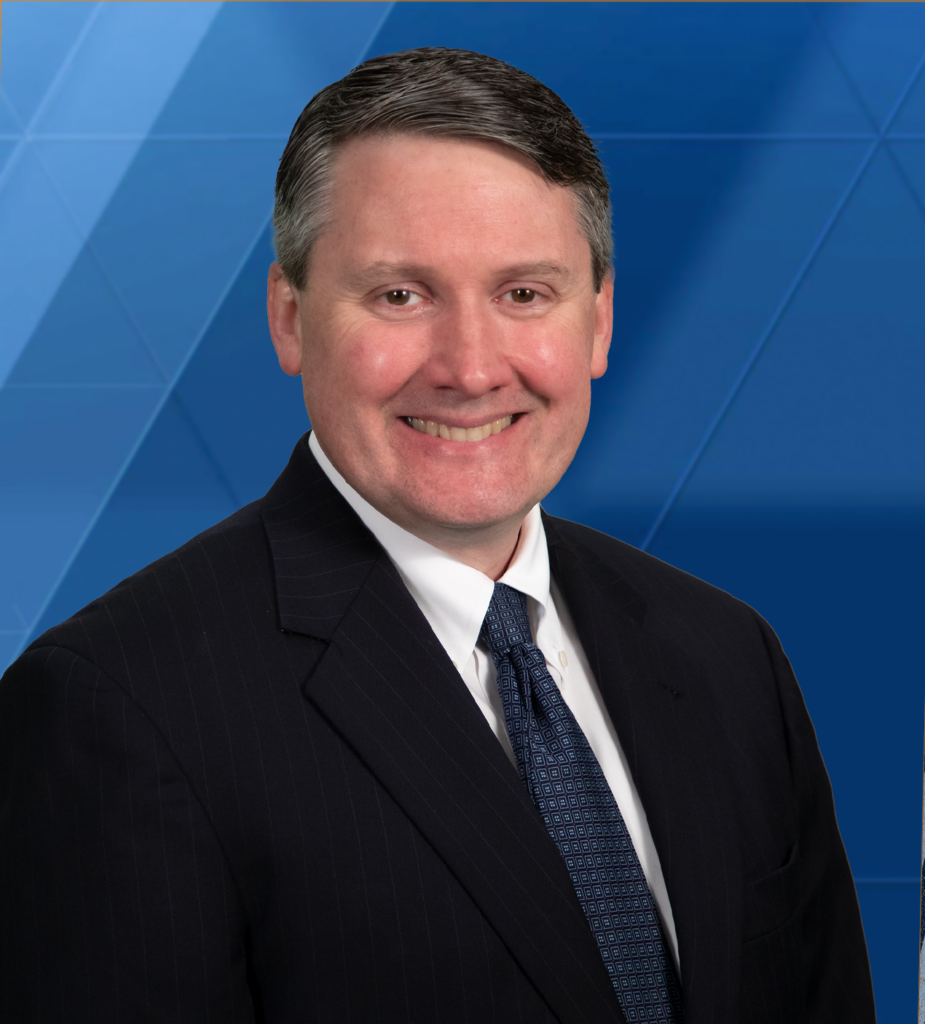
Elizabeth Murphy Burns is stepping down after 43 years as CEO of Morgan Murphy Media. Brian Burns, who previously served as EVP and COO, will take her place.

The company stated that with Burns as the new leader, it is “ensuring Morgan Murphy Media will be led by a member of the family, as it has been since its founding in 1890.”

Murphy Burns began her run as co-leader of the company with her brother, John Murphy. She stated, “The time is right for me to pass this torch to the next generation. We might be small, but we are mighty, and with the help of all the wonderful people I’ve worked with over the years, I’m incredibly proud of what we’ve accomplished.”

“I see so much promise for the future of our company if we remain committed to principles of community service and localism,” Murphy Burns said. “It’s what we do.”

Burns becomes the fifth president of the company’s 135-year history. He began his career at age 12, reporting for the company on election night.

“Liz’s legendary leadership of this company won’t soon be matched,” Brian Burns said. “Her standard of professionalism, innovation, community service, and commitment to the hundreds of people working in our company is something I think about every day.”

Morgan Murphy Media operates 18 radio stations in Wisconsin, Michigan, Washington, and Idaho.

Barrett Media produces daily content on the music, news, and sports media industries. To stay updated, sign up for our newsletters and get the latest information delivered straight to your inbox.