Comedian and TV personality Kathy Griffin recently revealed that CNN president Jeff Zucker fired her after she asked for a raise just ahead of the network’s 2016 New Year’s Eve show.
According to the New York Times, the incident occurred ten days ahead of the show. Griffin was asking for more than the $80,000 that she was contracted for.
“He started yelling at me, and he literally said something like, ‘Who do you think you are calling here demanding a raise?’ And then something came over me. And I just lost it. I just started screaming,” Griffin recalled.
Griffin said Zucker eventually rehired her following a 20 percent cut in her pay.
“It sounds like she is acknowledging that, insofar as Kathy Griffin acknowledges she has ever done anything wrong,” Zucker told the New York Times.
Griffin reportedly said that she would “feel a lot more comfortable showing up if I got paid what I deserve,” a statement that Zucker allegedly took as a threat to quit the show.
In response to Griffin’s statement, Zucker “got very offended,” and the conversation devolved into a shouting match.
A question should be constructed to get the best answer possible.
This was the guideline I learned as a newspaper reporter, which makes sense. You don’t hear the questions in a story. You don’t usually read them. The questions operate off-stage, the unseen lever that pries out the good stuff from the subject.
The dynamic changes when the interview is conducted in public, though. I learned this first-hand when I transitioned from reporter to radio host in 2013. Suddenly, my questions were part of the content being consumed. This is increasingly becoming the reality for anyone covering pro sports now. Not only have the press conferences themselves become a part of actual sports programming, but those press conferences are increasingly the only access to professional athletes, given post-pandemic locker-room restrictions.
But any time I start to think that it’s important to consider how a question sounds to the audience, instead of focusing on the answer it gets from the subject, I will inevitably be reminded of where that thinking leads. This week, it was Jim Matheson, a veteran Canadian hockey reporter in Canada, confronting the Edmonton Oilers’ Leon Draisaitl over being non-cooperative.
On the one hand, this kind of tension has existed for decades in pro sports. It’s inevitable, really, that the people paid to play the games will at times be at odds with the people paid to critique their performance. The difference now, as Ian Casselberry pointed out here at BSM yesterday, is that the tension is increasingly visible.
Personally, I love these moments. Seeing someone get sensitive in public is catnip to my shallow sensibilities. But professionally, there is something to be learned here by going back to the question that started each impasse. Let’s start with Matheson.
“Lots of reasons for why the Oilers are playing the way they are, in terms of winning and losing,” Matheson said. “What do you think is the number one reason for the losses now? Is there one thing, in your own mind, that you’re saying, ‘We’ve got to get better at that’?”
It’s a bad question for two reasons, the first being that it is actually two questions. “Double-barreled” is the term used by John Sawatsky, a Canadian journalist, an absolute prince of a man, and an unrivaled expert in improving interview skills. In two days, John taught me more about good interview tactics than I’ve learned in 20 years of weekend workshops and workday brownbags. This won’t be the last time I mention him in my posts here at BSM.
The best piece of advice John offers is also the easiest to institute and provides the most immediate results: Ask one question. Just one. If you add a second question — either out of nervousness or because you try to phrase it better — it will confuse even a cooperative subject. If you have an uncooperative subject, it provides an out. An opportunity to answer the less difficult question and then stare right back at you to indicate it’s your turn.
That is exactly what happened to Matheson. Here was Draisaitl’s response: “Yeah, we have to get better at everything.”
Matheson asked if Draisaitl was willing to expand; Draisaitl was not, adding a sarcastic aside that Matheson could add to it because he knew everything. Jameson then asked Draisaitl why he was so “pissy.”
“Hmmmm,” Draisaitl said, raising his eyebrows as if he hadn’t heard.
“Why are you so pissy?”
“I’m not,” Draisaitl said. “I’m just answering your–” at which point he was cut off by Matheson.
“Yeah, you are,” Matheson said. “Every time I ask a question.”
Now, it’s likely that Draisaitl’s issue has nothing to do with the question Matheson asked. It’s possible that no question Matheson asked was going to get a good answer. But because that question was poorly constructed, it left Matheson cornered into the choice of accepting Draisaitl’s terrible answer to his poor question or creating a confrontation. He chose the latter, and while I don’t think it was wrong, per se, or crossed any lines, Matheson looked like the aggressor. And I suspect that will be the last piece of useful content he ever receives from Draisaitl.
This is the point where my column was initially going to end. Then I saw Ian’s post, which included an exchange between Gary Washburn, a reporter at the Boston Globe, and Celtics guard Dennis Schroder, who was every bit as uncooperative as Draisaitl. It provides the perfect example to see how a better question changed the nature of the impasse.
Let’s go to Washburn’s first question: “Dennis, in Philly, you had one point, but the game before in Indiana, you had 23. It seems like you’ve been up-and-down a little bit. Are you starting to feel comfortable? You had the COVID protocol, you had a lot of things happen this week, are you starting to feel a little bit of comfort in the offense?”
Washburn’s question wasn’t perfect. There are technically two queries, though I’d argue he really just restated his question about being comfortable. It was also a yes-no question, which doesn’t tend to be as powerful as a question that seeks an answer about how or why something has occurred. I’m nitpicking, though. The strength of this question was revealed when Schroeder bristled.
Schroeder: You with us or you with Philly?
Washburn: No, I’m just asking.
Schroeder: You with Boston? You work for us?
Washburn: I cover the Celtics. I’m just asking if you’re feeling any more comfortable over the last couple games.
Schroeder: It’s just a stupid question.
Washburn: My fault. Are you feeling any more comfortable? How did you feel like you played today?
Schroeder: Not good enough for you, huh?
Washburn: No. I’m asking about the bounce back.
Schroeder: We won, so that’s all that matters. I’m a team player, so end of the day if I’ve got 40 points or one point and win the game, I’m going to be happy with it. So end of the day, I’m a team player, trying to win some games. And in Philly, we didn’t come out right, we played right, and that’s it.
Washburn: Thank you.
At no point in that back-and-forth does Washburn have to do anything other than restate his question: Are you feeling more comfortable? Schroeder has the choice whether to answer it, and ultimately talks around the quesrion without addressing it.
Washburn never has to say he was dissatisfied with the answer or call out Schroeder for being uncooperative. He never has to assume an antagonistic stance or role. He’s courteous and even accepts responsibility for a question Schroeder doesn’t like. In the end, Schroeder’s defensiveness speaks for itself. And that is important given how many people are now watching not just the answers that athletes provide, but the hearing and in some cases seeing the questions that provoke them
When Ian wrote about these situations on Thursday, he concluded with a very poignant observation: “Tensions are now out in the open, when they might have previously happened in a corner, away from everyone’s attention. And when these dialogues become public, people feel the need to take sides with the reporter or the athlete. Which side you’re on as a fan likely depends on your perception of the media.”
He’s absolutely right, but I would provide one addition to that. A well-constructed question is your best defense against not only an ornery subject, but also those audience members predisposed to blaming you for antagonizing the athlete.
Fox News is launching two new weekend programs hosted by Lawrence Jones and Brian Kilmeade. The changes announced Thursday by CEO Suzanne Scott mark the completion of several modifications to their programming, which began when Jesse Watters was named as the network’s new weeknight host last week.
The new programs begin on Jan 29 and will affect the start time for Dan Bongino’s show called “Unfiltered,” which will now air at 9 PM/ET. Kilmeade’s show will air at 8 PM/ET, and Lawrence Jones’ new program, called “Lawrence Jones Cross Country,” will start at 10 PM/ET.
The move means that Jones will become the youngest Black solo host of a program in cable news.
“I am incredibly grateful for the opportunities that Suzanne has provided me over the last four years, encouraging me to travel the country and seek out the stories of everyday Americans, many of whom have been overlooked by the rest of the media,” Jones said in a release.
Suzanne Scott called Jones an “impact player” at the network, adding Fox News was thrilled to add his talents to the weekend lineup.
“Whether reporting from the border or diners across America to hosting primetime specials, his perspective has added depth to our programming while resonating with the audience,” added Scott.
Kilmeade will remain a co-host of FNC’s FOX & Friends while also hosting the three-hour daily Brian Kilmeade Show on FOX News Audio.
“I am truly honored that Suzanne has given me another incredible opportunity at FOX News Media,” said Kilmeade. “My ultimate goal is to create a program that will always seek solutions rather than sow division.”
Kilmeade joined Fox News as a sports reporter in 1997. His nationally syndicated radio program is heard on 250 radio affiliates nationwide.
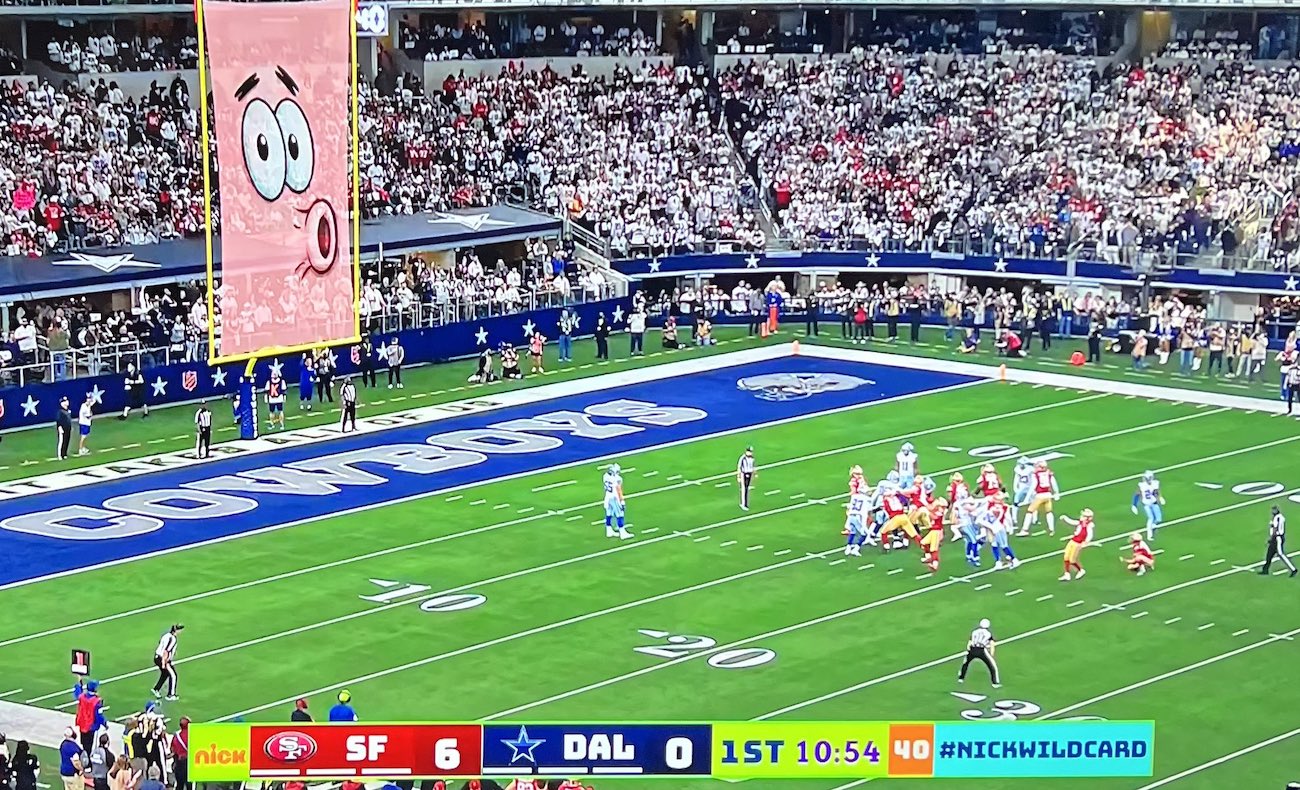
No matter how you look at the results, the NFL has hit a home run with a playoff game getting kid friendly packaging on Nickelodeon each of the last two seasons. Parents are watching with their kids, it’s driving an online conversation, and the league is letting a creative group of people have fun.
The NFL Playoffs on Nickelodeon work! So what do you do when something works?
You start to think about what the next step is. Those are conversations both the NFL and CBS/Viacom, Nickelodeon’s parent company, should be having.
To me, the next step for the NFL is pretty obvious. Give us a package of kid-friendly games during the season.
It doesn’t have to be a full 18-weeks, but think of it like ET with Reese’s Pieces. If the idea is that you are using the caché of Nickelodeon characters and graphics to get kids to watch football, doesn’t it benefit you to do that, or something like it, five or six more times during the season? Isn’t that the trail of Reese’s Pieces that could get the little ETs watching football more regularly?
It could be a revenue generator too. Something like the kid-friendly NFL package really does seem tailor-made for a bidding war. After all, every streaming service needs content. You could absolutely see the NFL going to Disney to see if they wanted to counter with something Marvel or Star Wars themed, right?
I think it would be a mistake to put this package of games on the open market. CBS has assembled the right duo in Noah Eagle and Nate Burleson and Nickelodeon has created the right aesthetic for the game. It is goofy. I enjoy watching Patrick Star’s face go from concerned to elated when a kick goes through the uprights just as much as my kids do. I don’t know that I would be as invested in trying to defeat Thanos with football or whatever the counter would be.
Make it worth CBS/Viacom’s to up their spend. Take care of the company’s other TV properties somehow. Give them priority for the next Super Bowl bidding.
I don’t know the exact right answer. What I know is the NFL has a GREAT thing here and it should be focused on cultivating it.
So that brings us to the next obvious question: what is the next evolution of this model for CBS and Nickelodeon?
Oh man, some of y’all are gonna hate this shit!
PUT SLIME ON EVERYTHING!
I am serious! Give me a kid-friendly version of The Final Four. Dump slime on the winner of The Masters. Every week the SEC is on CBS, have Young Sheldon pop up to explain to the audience what a bag man is.
Obviously, I am giving you the extreme version of the plan, but you get the gist, right? We just ran a guest piece from Joe Ovies that discussed how leagues are learning to meet the needs of younger fans. Well, here is a chance to do that with the help of a network partner.
Golf is looking for a way to bring back the fans that used to tune in on Sundays to see Tiger Woods close out a big win. It is a shame The Masters is the least likely to let CBS and Nickelodeon help, because it is the event that could use it the most.
CBS is way more likely to get the cooperation of the NCAA Tournament. You would probably have to limit Nick’s involvement to the Final Four, or even just the Championship game, but it would be worth it. Basketball is popular with kids. Those games are played in cavernous domes with plenty of space for an extra broadcast crew. Plus, the players are young enough to be excited about a project like that.
Broadcasting and sports are both built on innovation. When an idea comes along that can truly change the trajectory of how business is done, you have to embrace it. That is what we are looking at here.
The NFL and Nickelodeon are a perfect marriage. An expanded package of games is the ideal next step. If the NFL isn’t interested though, CBS/Viacom cannot let this thing go to waste. It has created something sports-loving parents can do and watch with their kids that aren’t entertained by competition alone. That describes most kids now.
One side, hopefully both, recognize that this is a chance to invest in their respective futures. Not every kid-targeted game or broadcast can look the same, but you have a proof of concept. You know your formula works.
Sometimes, salespeople need a new twist on an old idea to close the deal with a client. Here are five bold, down and dirty, ideas to beat out the competition and stand out in your market:
1. Sell an endorsement
Make sure you sell the sponsorship in 13, 26, or 52-week increments. There is no way you want to burn your talent on a category because the client didn’t run long enough.
Start selling spring advertisers right now. Patios, pools, and landscaping makeovers. Maybe sell an advertiser on a community makeover for a prominent retired community person and have the on-air person lead the effort. Sell a crypto or NFT sponsorship to a host and let them learn all about it on the air.
Make sure the talent also posts on social for the client.
2. Update your copy!
Sell copy changes as a benefit to the client. Tie into the local team and have two ads ready to go. One if they lose and one if they win. Your traffic person will hate you, but it can happen!
Produce bad weather spots now. Insert them at a moment’s notice. Buy your traffic person dinner because they will have to re-con the logs. So what. Think “in the moment.” Your listeners do that and it’s the best way to relate to them.
3. Do you have several car dealers, heating and cooling, roofing, or restaurants on the air?
Help them stand out on the station by branding them on weather, traffic, or top-of-hour IDs. This is a great way to pound the advertiser into the listener’s consciousness and separate them for the pack. Consider bonusing them the IDs if they committed to an annual.
4. Sell some NIL
If you have a famous college athlete in your market and a local NIL deal, suggest adding a radio campaign. Dr. Pepper did it. Or sell one to a local sports bar and have the player go there after the game and do an appearance on your post-game show on site.
This concept works well when sold with your CHR or New Rock stations. The rules have changed and you can do a lot more now. Schools, in some cities, are even more than willing to help you! They are doing anything to show other recruits how much love they will get in their town.
5. Super Bowl bet
Get two non-competing advertisers to take sides for the big game coming up. Set it up so if one team wins, listeners get a discount and vice versa. A Heating and cooling guy vs. a plumber could work well. You know how to say “Big Game,” “green and gold” for Green Bay, and the “red team” for Kansas City.
Just find the clients who care about the game. See if your shows would let them do a call-in. Let them cut up a bit and give them some promos, make them part of the Super Bowl hype.
President Joe Biden offered a scathing critique of cable news networks during an hours-long press conference Wednesday.
According to Deadline, Biden took questions from a total of 22 reporters representing different television and print outlets.
After being asked about his own poor polling data, Biden turned the attention back to the demise of cable news network ratings which fluctuate depending on what network you’re watching and what time of day you’re tuned in.
“One of the things I find that is fascinating that is happening, and you all deal with it every day is that a lot of the speculation and the polling data shows that the cables are heading south,” Biden said. “They are losing viewership.”
Biden said the American public is trying to decipher what is “real and what is fake” when it comes to cable news.
“I have never seen a time when … the choice of what political coverage the voter looks to has had as much impact on as what they believe,” Biden added.
Atlanta’s WSB-TV announced some personnel changes Wednesday. Traffic reporter Mike Shields will take over morning traffic duties for Heather Catlin.
According to the Atlanta Journal-Constitution, Catlin will return to the news and sports departments to cover feature stories and the Georgia Bulldogs.
Catlin, who also hosts a weekend show on WSB-TV called “Hot Topics,” told the paper she was “ecstatic” about returning to cover the news.
“It was fun,” Catlin said, referring to her traffic reporting stint. Catlin began anchoring traffic last year when Mark Arum left television to host an afternoon talk show on 95.5 WSB Radio.
Shields, who joined Channel 2 Action News and WSB radio in 2018, announced on social media this morning. He will continue to do traffic for radio stations 97.1/The River and B98.5.
Comedian and talk show host Jon Stewart will receive the prestigious Kennedy Center’s Mark Twain Award for lifetime achievement in comedy.
The organization announced the news on its website, saying that for more than two decades, Stewart has “challenged minds and brightened lives.”
“For me, tuning into his television programs over the years has always been equal parts entertainment and truth,” Kennedy Center President Deborah F. Rutter said in a statement.
Stewart will become the 23rd recipient of the award which is presented to individuals who have had an impact on American society in ways similar to Mark Twain, according to the organization’s website.
“In these often divisive and challenging times, someone like Jon, through his undaunted advocacy for first responders and veterans, also demonstrates that we all can make a difference in this world through humor, humanity, and patriotism,” Rutter added.
Stewart will be presented with the award during a gala ceremony on April 24 at the Kennedy Center in Washington, D.C.
All Access is reporting that Nielsen has alerted its clients of potential difficulties due to the COVID-19 surge. The measurement company which works with the majority of the radio broadcasting business has also relayed details of how it plans to handle the situation in order to deliver accurate and consistent audience estimates.
In the letter, Nielsen says it will continue executing in-person field work while using its established multi-mode recruitment and remote installation and maintenance procedures. However, the company cautioned that some delays in recruitment and slight volatility in intab levels could occur over the next month.
Nielsen further shared that it expected to have intab levels stabilized and back to current levels by the end of February or early March, depending on Omicron recovery rates. In-tab levels are expected to be closely monitored and field resources will be evaluated and adjusted if necessary.
Being able to rely on accurate radio measurement is important to radio stations and their advertisers. Though Nielsen says it is actively monitoring COVID infection rates in key panel markets, and any possible impact to its PPM inventory due to global supply chain challenges, the admission of potential challenges in executing as expected is likely to give radio executives and sales professionals a few extra headaches. The company says that it is confident that its contingency plans will mitigate risk, allowing it to move swiftly to ensure the accuracy and representativeness of its audience estimates. Whether that holds true or not will be depend on a myriad of factors over the next month.
The Viewco-host Joy Behar told her audience during Tuesday’s broadcast that if Republicans regain power they would begin to censor journalists.
“I read a lot about what’s going on in the world and you know Hungary and Poland, and they’re doing very badly with freedom of speech,” said Behar.
Co-host Whoopi Goldberg said this is part “of the big plan to control what happens in America.”
“Next thing comes the women,” Goldberg said. “We’re going to take your rights away just like we have taken X, Y, and Z because there will be nothing you can do.”
“That will happen here I think if the Republicans are back in power,” said Behar.
“You can see that they’re intractable right now. You cannot reason with these people. They are shameless, and they will destroy us. It sounds like it’s hyperbole, but I have been around a long time, and I’ve seen what can happen.”