Look around the country today and you’re sure to find former football players invading your sports talk radio dial. This wasn’t always the case but over the past 10-15 years the list of former athletes doing talk radio has grown leaps and bounds and in most cases, the formula has worked very successfully.
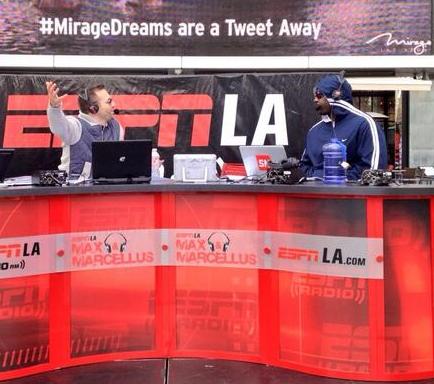 I took a look around in as many markets as I could and I found all of these former professional football players doing local sports radio over the past year. Click here for the list.
I’m sure I missed some so if I didn’t list someone, don’t shoot me. What I think this list shows though is how popular this formula has become for sports talk programmers and listeners alike. It also shows that athletes are more interested in the media business as a second career than ever before.
So why is it attractive? Well as someone who has hired 3 former athletes as weekday hosts (2 of them being former football players) and had success with them, there are a few reasons why I believe it works.
 1. They’re instantly identified and liked by listeners in your market – half the battle is getting people to the dial, these guys do that!
2. They’re very coachable – These guys were under the microscope every game and used to receiving coaches feedback; they carry it over to our business and can handle being challenged.
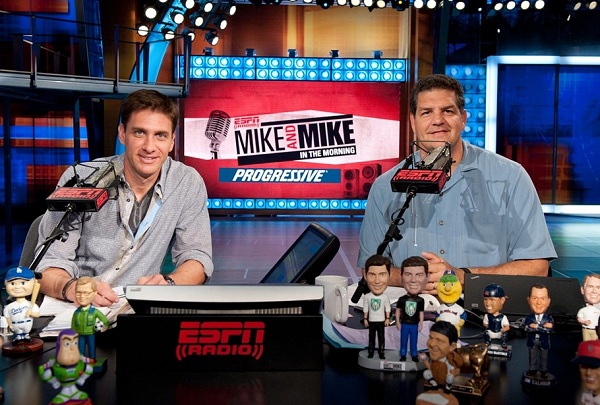 3. They study and know how to relate – Most former athletes study to fill in the blanks where they’re weak. They also try to relate their past experiences to current subjects. It’s not about who knows the most, it’s about who can explain it well, share a well informed opinion and make it easy for the audience to understand.
 4. They are extremely marketable and attractive to advertisers – Getting exposure and making $ is a big part of our business. If I walk into a client’s office, they’re not blown away but they may do a deal. If a host who’s won a Super Bowl or World Series ring walks into the room, client’s are instantly engaged and thinking about how they can be closer and more connected to your brand and that particular individual.
I could list many more reasons why I think they’ve connected so well but one thing that often gets lost is how hard some of these guys work. Walking off of a football field and into a radio studio can be intimidating for a lot of guys especially when they’ve only been focused on one particular sport for 10-15 years. Most of the players that I’ve worked with have understood that preparation and being receptive to criticism are an important part of this business and they put the time in to improve.
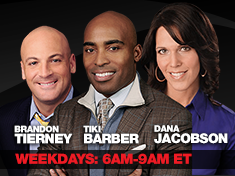 To every broadcaster who’s spent time learning this craft, there are certain things that are natural and you just pick them up as you go along. That’s what football players think when they take on the best athletes in the world. But introduce a former player to the word re-set or tease or ask them to fill 45-minutes of air time with compelling storytelling, identified headlines and strong payoffs and they’re likely to look at you like you have 5 heads. It’s no different than a broadcaster walking into an NFL locker room and being given a playbook and being asked to run a play.
 Today in sports radio, the combination of the local radio personality and the ex-athlete is growing and I believe it’s because athletes draw a large amount of revenue and attention to the show/station, while the radio pro guides the programs and presents the view of the audience. Having a view from the seats and a view from the field creates a unique blend and plenty of differing viewpoints and that leads to numerous content opportunities. The tandems that find their groove, often deliver strong results for their respective brands.
A few guys who have made the transition from professional football into the sports talk radio universe were kind enough to share some thoughts with me on a number of subjects. If you’ve ever wondered about the mindset of an athlete as it applies to working in this medium, I think you’ll enjoy this conversation.
Our 3 Featured Experts:
- Ron Wolfley – Arizona Sports 98.7 FM – weekdays 6a-10a
- Sean Salisbury – Yahoo Sports Radio – weekdays 4p-8p
- Brock Huard – 710 ESPN Seattle – weekdays 7a-10a
Q: What was the hardest part of transitioning from the football field into the broadcast studio?
 Sean: The hardest thing was being precise. Hitting your points and moving on and realizing my football career was natural. The studio wasn’t. Double time is needed in preparation.
Brock: Starting over. Having to swallow hard and know that the value of my time and talents was going to start at the ground floor. Even if early media assignments paid less than the babysitter rate at home, you have to humble yourself and start anew.
Wolf: Making sure I didn’t make the game seem easy to play. There seem to be a lot of broadcasters that make player or coach failure sound like it should never happen. I had to remember how tough it was to compete at the highest level our species can generate.
Q: How intimidating or challenging has it been to get into deeper discussion on other sports you haven’t been as familiar with? What have you done to catch up and prepare yourself for those subjects?
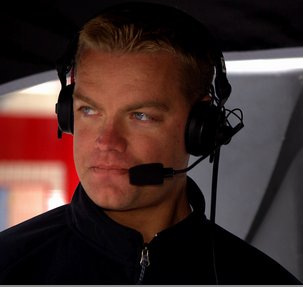 Brock: Not that difficult, but you must be curious, willing to ask questions and admit when you do not know. Transparency and honesty pair pretty well with humility too.
Sean: It wasn’t intimidating for me. I didn’t play football until high school. I was into baseball, hoops and hockey first. They came natural to me and I prepared as if it was a weekly game plan. Make sure I know everything about a defense and what’s happening in all sports. My focus is on over preparing and then having an opinion. My biggest asset though has always been my strength in other sports. At times they’re even better than my football material.
Wolf: I was a three sport student-athlete. Although I have to work harder at baseball, basketball and hockey, the commonality of competition remains the baseline no matter what sport you’re talking about.
Q: What’s your approach when it comes to being critical of your former team, teammates and front office friends or acknowledging something you did during your career that might ruffle some feathers?
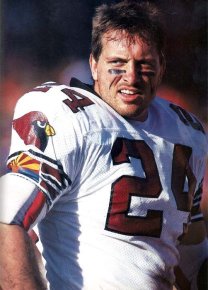 Wolf: My approach will never change: I speak what I believe to be true – good or bad. It doesn’t make me rught or wrong it just makes it my opinion. There is a way to say a guy isn’t getting it without saying the guy “sucks.” I can have an opinion, but I make sure I don’t editorialize that opinion. And the reason why I don’t editorialize that opinion can be found in never forgetting how difficult it is to compete at the highest level.
Brock: Be willing to say anything on the air right to the face of that former colleague or friend.
Sean: My approach is always honest. Whether I compliment or criticize, players respect a real answer. I’m not worried about being liked. I’m concerned about respect. If you study and speak the truth, players may not like it but they will always respect it. I study the same that they do so they respect the truth and I always make myself available if they want to discuss. I’ve never believed in hiding behind a studio desk and I keep my comments centered around their job not their private lives. Having an opinion is what I get paid to provide. No opinion equals no respect.
Q: How comfortable are you with interviewing former friends, colleagues and/or opponents? Are they easier or tougher to interview than someone you don’t know as well? How do you prepare for those on-air conversations?
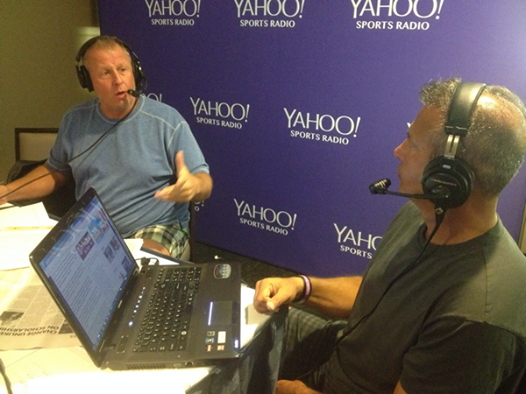 Sean: It’s easier because they are more comfortable. Relationships get friends and those you know to open up more because they trust you. I don’t do softball interviews. If you make them laugh early in interview they will always tell you more. Comfort is information and I use the the question why often. They will talk when questions are short and precise. They like being the star.
Brock: Separation is in the preparation. I don’t think it’s difficult at all, and from our first guest (Matt Hasselbeck) to our regular guests (Damon Huard and Drew Bledsoe), you must be able to leverage those relationships for depth, quality and sounding connected and big.
Wolf: Broadcasting starts and ends with being real. Therefore, interviewing somebody that I know has never been a problem. I typically say something early in the conversation that he will recognize and laugh at. That typically sets the table and tone for the conversation.
Q: How comfortable/uncomfortable are you with handling critical listener feedback on the phones, in-person or via social media? How do you deal with it?
Brock: I tend to block a lot of that out, maybe the positive of playing QB where you just can’t be distracted. I have come close to hitting “send” on a few tweets or emails to disgruntled listeners, but I often remind myself, “what’s the upside?” Usually very little.
Sean: Early in my career I was concerned about everyone’s opinion and critics hurt a bit. I learned though that opposition is a golds star in this business. I also learned that many fans are very smart. We never know it all and self deprecation makes fans feel like they know us. It makes them feel as if they are in the room with us. I can take hard criticisms as long as they’re respectful. If it’s presented that way, we may learn something. If the President can win an election 51-49% then far be it for me to ask for more.
Wolf: Ignore it. You can’t please everybody all of the time.
Q: What advice do you want to pass on to other athletes who are retiring and thinking about entering this line of work?
Wolf: Study the English language and, if possible, brush up on history. History can be analogues to many athletic endeavors and it also sets the context for every conversation you will ever have – no matter who you’re talking to. What has been is why things are the way they are and every story/topic has a starting point. Also, I would tell them to make sure they pull every story through the prism of their personality. Don’t be afraid to show listeners who you are. Authenticity is the great mediator of broadcast brilliance.
Brock: Humble yourself, get up earlier and work harder than you ever have before
Sean: The biggest piece of advice I can give is to call on your strength. You made it in sports because you out worked others and this business requires even more because it’s not just your own sport. Fans are privy to bullshit. They are too smart. A big piece of advice is to be careful not to alienate the listener by feeding them the “when I played” cycle. Bring them into your career but not every day. And also, tell me something I can’t read in a paper or online. Use your access and connections to get special information.
You can listen to Brock Huard weekday mornings from 7a-10a on the “Brock and Salk Show” on 710 ESPN in Seattle. Follow him on Twitter by clicking here. Ron Wolfley is part of the “Doug and Wolf” show, weekdays from 6a-10a on Arizona Sports 98.7FM in Phoenix. He’s also on Twitter. Click here to follow him. Last but not least, Sean Salisbury is one half of the show “Prime Cut”, weekdays from 4p-8p on Yahoo Sports Radio. He too is on Twitter. Click here to follow him.