Meet The Leaders is a special 8-week series created in partnership with Point to Point Marketing. Today’s feature is on the Chief Operating Officer of the Locked On Podcast Network, Carl Weinstein. Follow along with the series and revisit former conversations by checking out the entire category.
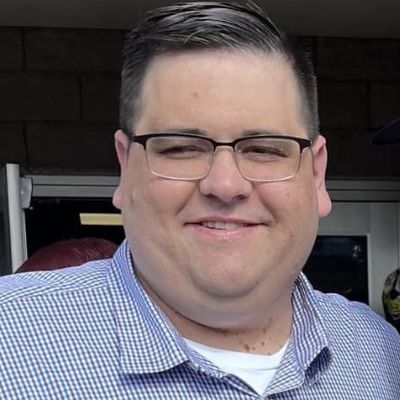
Chad Lopez is president of Red Apple Media and 77 WABC in New York. He’s led the company alongside owner and CEO John Catsimatidis since March 2020. Lopez has more than 25 years of experience in broadcast and digital media. Before joining Red Apple, he served as Vice President of Cumulus Media’s New York cluster.
Red Apple Media is a subsidiary of Catsimatidis’ Red Apple Group, and it bought WABC from Cumulus Media in 2020. The flagship station is a news/talk powerhouse in the nation’s largest market. Under Lopez, the company has grown well beyond a single AM signal. Red Apple Audio Networks syndicates programming to affiliates. The company also runs a podcast network and distributes video content across digital platforms. This year, it launched the Worldwide News Network to fill a gap left by CBS News Radio’s closure.
In this Q&A, Lopez looks back at 2026 for WABC and Red Apple. He explains how the Worldwide News Network came together and how it’s performing after nearly six months. He also discusses why Red Apple invested in local talent while other companies trimmed. Lopez shares his thoughts on Sid Rosenberg’s induction into the New York State Broadcasters Hall of Fame and why a morning flamethrower matters. Finally, he previews the company’s priorities for 2027.
Editor’s Note: Answers have been edited for clarity and length.
Garrett Searight: What do you think have been the standout moments for 77 WABC, Red Apple Media, and Red Apple Audio Networks so far this year?
Chad Lopez: This year, it’s the way we’ve been able to update our technology. It’s interesting, having been at CBS, Cumulus, and all these major groups, and now working with John (Catsimatidis) through Red Apple Media. It’s not just a radio station anymore. We’re a media company. We built our podcast network. We built our internal syndication network, Red Apple Audio Networks, which is doing really well. And we also launched the Worldwide News Network, because there was a need in the market for news with CBS (News Radio) going out. Every day it’s growing with affiliates. We also have our video, audio, podcast, and YouTube distribution, using all of our channels to amplify our content through technology.
For an AM station, whenever anyone walks in, they say, “Wow, I can’t believe this is WABC.” It seems like a TV, radio, and media company. We have green screens, and we have a young staff. Last time I did this interview, we talked about how young the staff was. About 65% of our staff is 30 and younger, which is incredible for an all-news station. I think that’s how we’ve adjusted to what’s going on with media in the market.
GS: You talked about the Worldwide News Network. How did that come together so quickly for you?
CL: John (Catsimatidis) has always wanted to have a news network. Once he saw how we built the syndication network, he said he wanted to do news. Then, with the announcement from CBS (News Radio), and with Lee Harris, — obviously, and Lee’s no longer with us, — but when I met him, we were looking for someone to help us in that news arena. We built so fast from 2020. It’s incredible. The billing has almost quadrupled since John bought it. However, when you’re building other revenue streams, there are expenses. So the goal is to keep building and growing revenue. We’re in a good place now, where we’re starting to see the rewards of everything we’ve built.
The news network came along because we said, “Let’s just do it. We already know the infrastructure from building a syndication network.” It was finding the right people and getting the talent in there. With CBS letting go of a lot of professional broadcasters, anchors, and reporters, it made it easy for us to identify talent really quickly and bring them in.
GS: Now that you’ve had almost six months with the Worldwide News Network, and you’ve gotten through the crawl-walk-run stage, how would you evaluate it?
CL: We’re really happy with the way they’re delivering the news, the way we’re aggregating news, the technology we’re using, and the professional voices we have behind it. The news environment on its own is very challenged, with all this technology, journalism, AI, and everything else going on. The Worldwide News Network was built to stay down the middle. It has nothing to do with the WABC side. We are reporting news the way it should be. We aren’t swaying one way or the other. We’re just reporting the facts, and that matters when you’re coming from an all news/talk station, where there’s a lot of opinion and controversy about topics.
The Worldwide News Network is completely separate from the WABC product. They’re not even in the same area. It’s on the other side of the building. It’s been exciting to see us keep it right down the middle. Some of our listeners will agree with the reports. Some will disagree. And, to me, that’s what news is about. News is there to deliver the facts, not fabricate them from either side. John and I are very happy with the way that team is staying consistent in keeping it right down the middle. Because that’s what everyone deserves: just the facts, not opinions.
GS: That goes hand in hand with billing. You’ve zigged where others have zagged. You’ve added local talent and local shows and created the Worldwide News Network when so many others have cut, trimmed, or focused more on national syndication. How have you been able to make it work when so many others haven’t?
CL: Having someone like John, who is passionate about the product, makes a world of difference. When a decision needs to be made immediately, or if we want to zig and zag, like you said, this is where the rubber meets the road. In larger organizations, which I’ve been part of, you can send an idea up. And it may take a whole year before you get an answer. By the time you get the answer back, the competition is already doing the idea we had.
Here, the zigging and zagging is going up and presenting a business plan to John. He’s a businessman. If it doesn’t work — and we’ve had things we started that didn’t work, though not too many, or I probably wouldn’t be here — that’s on the record. But for the most part, the majority of them have worked. Because we’re able to move and identify opportunities where the major groups aren’t investing in their local product. WABC is local but has now gone national. I think it’s easy for New York to do local and still have it accepted as national, because whatever happens in New York is still considered national.
By investing in the product, we went against what we had known. It’s no secret we walked away from $2.7 million of revenue when we came here on the weekend, which was paid block programming. We put live talent in. We don’t have a board to answer to and we don’t have shareholders.
The board and the shareholders are John, really. He loves this product. And he loves getting the truth out. He says it every day: “truth, justice, and the American way.” He loves stating the facts and the issues and having people weigh in on them. That’s why a news/talk product works really well with someone like John. He wants to report what’s happening and then have people talk about it. He likes to bring in both sides. We’ve had Andrew Cuomo on. We have Mark Levin. We go from extremes to just people to talk. That zigging and zagging has paid off for us because he has the means and the wherewithal. But how do you become a billionaire? You don’t lose a dime. You don’t do anything that’s going to lose money. So everything we do has to work and pay off for itself.
GS: You’ve got a powerhouse in Sid Rosenberg in morning drive. He’s going into the New York State Broadcasters Hall of Fame on Thursday. How important is it to have that flamethrower in morning drive in New York?
CL: Sid is the flamethrower. And he is incredible. I brought Sid back when I was at Cumulus. Everyone knows that story, right? Having him there as a friend is what New York radio is about. That’s what the morning shows in New York were about. I think we’ve gone away from that as an industry. You have to have that personality who gets up in the morning and is passionate.
Sid is great. Just ask him, and he’ll tell you how great he is. He tells everybody how great he is. I don’t mean that negatively, and he has the right to tell everyone, because he’ll talk about the ratings. But it’s not just that. He has the confidence, and right now, what we need is someone who’s not afraid to say what’s really going on. Is he right 100% of the time? No. Is he wrong 100% of the time? No. But he has a way of saying things that gets people to think and makes them want to engage. I think that’s what radio is designed to do.
We always say radio is theater of the mind. “Who’s telling the story? What do they look like? What are they wearing? Who are they? I want to be part of their lives.” They talk about their lives and their personal stuff. It brings the listener in, and it creates that one-to-one relationship.
Everybody always says radio is one-to-many. No, it’s a one-to-one relationship. That relationship is with individuals who gets them to engage. When we get them to engage, they may see it on social media, and then they say, “I have to listen tomorrow morning. What’s he saying now about this?” There’s a lot going on right now in the world and in the country. There’s a lot that people want to say, and some are afraid to say it, some want to hear him say it, and some are angry that he’s saying it. That’s what I think makes a great morning show.
GS: The last question I wanted to ask you: as we look ahead toward 2027, what will be high priorities for you once the calendar turns?
CL: Obviously, we have an important election coming up again. That’s very important for us. In 2027, I think the world is changing so fast that we want to make sure we have accuracy in what we’re talking about. We have to get news and journalism back to where there’s credibility in it, and that’s what we’re focused on: getting credibility back in the news product for the country and for the world.
Barrett Media produces daily content on the music, news, and sports media industries. Sign up for our newsletters to stay updated and get the latest information right in your inbox.