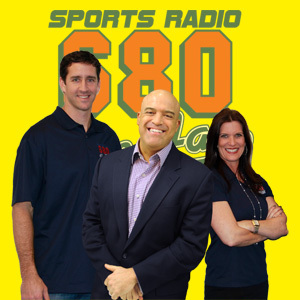
The approach of football season boosted KILT (610 AM) back to a secure lead in the August radio ratings in Houston, but the Astros continue to provide a strong nighttime push for KBME (790 AM).
This monthly rundown on the Nielsen Audio ratings for Houston sports radio covers the period July 16-Aug, 12, including the start of Texans training camp but no games.
As always, we start with 6 a.m. to midnight (Monday through Sunday) among men 25-54, which is the key demographic for sports radio. KILT once again led the weeklong numbers over KBME and KFNC (97.5 FM), but KBME continued to show good year-to-year growth.
ESPN 1000 in Chicago, has reached an agreement with award-winning Chicago sportscaster David Kaplan, who will have a new show, Kap & Co. The program will air weekdays from noon to 2 p.m. CT on ESPN1000, ESPNChicago.com and the ESPN app beginning Wednesday, Sept. 16.
“Adding Kap to ESPN1000, the number one sports station in town, shows our audience the dedication we have to serving Chicago sports fans anywhere, anytime,” said Adam Delevitt, program director, ESPN 1000. “Kap is by far one of the most recognizable voices in Chicago and few in the city have the breadth of knowledge and passion for sports and relationships with the people here that he has.”
Kaplan, an established sports authority in Chicago, is the host of CSN Chicago’s Sports Talk Live and formerly co-hosted Kap and Haugh with the Chicago Tribune’s David Haugh. He has won several awards for his work in television, radio and print, including Emmy Awards for his work on CSN Chicago and the sports memorabilia television show, A Piece of the Game. Kaplan began his radio career at local station WMVP-AM, and then joined WGN-AM’s sports staff as a reporter in 1995. He is the only person in Chicago media history to concurrently host a daily television show, a daily radio program and write a regular column in a major newspaper.
With the inclusion of Kap & Co., ESPN 1000 will add to an already strong lineup that includes some of the most experienced and notable sports personalities in the Chicago sports landscape. Carmen & Jurko, hosted by NFL veteran John “Jurko” Jurkovic and longtime broadcaster Carmen DeFalco, will move to the 9 a.m. – Noon slot, after ESPN Radio’s Mike and Mike. Kap & Co. will follow, with Waddle & Silvy – hosted by former Bear wide receiver Tom Waddle and Marc “Silvy” Silverman from 2 – 6 p.m. Gamenight with Jonathan Hood will air 6 – 10 p.m., with ESPN Radio’s The Freddie Coleman Show closing the night. Sarah Spain will continue to deliver SportsCenter updates throughout the day.
If you’ve ever listened to Josh Innes on the radio, chances are you have a strong opinion about him. He’s forceful with his opinions, not afraid to enter uncomfortable territory, and thrives on being in the middle of intense conversations.
Those traits have propelled him to be one of sports radio’s best over the past 5 years. While he’s certainly developed his legion of critics along the way, and earned a few industry enemies, he’s also delivered an impact in two top-10 markets – Philadelphia and Houston.
Consider me one of those people who appreciates what Innes does. While I may not agree with every one of his tactics, I recognize his commitment to creating great radio, and I find it refreshing when talent are willing to put their lives on display for the whole world to see. In today’s world where opinions are second guessed, criticized, and passed around social media like a hot potato the moment they’re uttered, Josh speaks with force, endures the avalanche of negativity that comes with it, and does so without wavering.
When I listen to Josh, I hear someone who understands how to entertain, and take control of the airwaves. In some ways he’s like an infection that infiltrates the brain and sinks deeper and deeper inside, until it fully owns the mind. If you’ve seen the movie “Private Parts“, then you remember the scene, where the Program Director is irate because the ratings are in, and they verify that people who hate Howard Stern listen to him longer. Josh has a very similar effect.
That’s also evident by the way people respond and interact with him on social media. Not a day goes by where Josh isn’t engaging with listeners, sharing his personal life, posting photos, and diving into dialogue about things that may make some executives cringe. Heck, his Twitter profile photo is a photoshopped picture of his head on the Iron Sheik’s body, putting rival afternoon host Mike Missanelli in a camel clutch.
Interesting enough, the man who brought Innes to Philadelphia, Andy Bloom, was also the one to put Stern on in Philadelphia during his dominant reign on terrestrial radio. It’s easy to see from afar why Bloom brought Josh to Philadelphia, and he’s dipped into his old playbook, and is providing some tricks and wisdom to his new protege to help him gain traction in the market. And it’s working.
Josh’s arrival though in the city of brotherly love, hasn’t exactly led to a lot of warm and fuzzy feelings among media members. He’s publicly sparred with his rival Missanelli, and former WIP host turned 97.5 The Fanatic morning man Anthony Gargano is also not a fan. Josh has also drawn the ire of the city’s most passionate sports fans, many who have a parochial view, especially when it comes to the people they listen to on local sports talk radio. Ironically, Innes went through a similar love-hate relationship in Houston with media members and listeners.
None the less, he’s created quite a storm, and that buzz has catapulted his afternoon show to the top of the ratings. However, the success in afternoons was also created with Tony Bruno, who has since left the show to focus on his podcasting work. Will the same success continue without the popular Bruno? That’s the challenge that WIP and Josh face going forward.
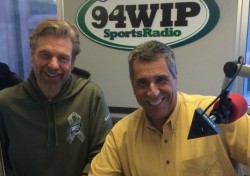
To move in that direction, WIP has rebuilt the afternoon show into a 3-person program. The show now features Innes, former Eagles player Hollis Thomas, and Program Director Spike Eskin, who is the son of one of Philadelphia’s most successful talk show hosts, Howard Eskin. While the show is brand new and hasn’t had a full month together on-air, there’s no doubt of who the show’s master of chaos is, it’s Innes.
The one thing I’ve learned during my career is that the ones who emerge in this format, have no issue taking tough positions, enduring the wrath of people internally and externally, and their entire lives revolve around the show. Because they’re open and transparent with the audience, and don’t let anyone or anything dictate the way they deliver their content, they gain the respect and loyalty of their listeners, which often leads to strong ratings.
As an example, Angelo Cataldi, Mike North, Dennis and Callahan, Paul Finebaum, Mike Francesa, Colin Cowherd, Howard Eskin, and even Innes’ competitor Mike Missanelli, have all taken that approach during their careers, and its led to a lot of money and success, for themselves and their employers. You can agree or disagree with their opinions and styles, and approve or disapprove of their methods to generate reaction and interest, but their formula works.
In that way, Innes is a throwback. He’s not reinventing the wheel, he’s simply giving it a modern day adjustment. In a crowded marketplace with a whole lot of bravado among personalities, Innes has entered the room, planted his flag, and made sure everyone is aware he’s present. While opinions on him differ, they all realize he’s there and a legitimate threat.
As someone who has watched the Philadelphia situation from afar, and has followed Josh’s rise from Baton Rouge, to Houston, to now Philadelphia, I’m not surprised by his success. He’s continued growing as a talent and individual, and Gavin Spittle (PD at 105.3 The Fan in Dallas, previously PD at 610 KILT in Houston), and Bloom, deserve credit for their role in his development. They’ve taken the risk to bring him into their cities, push him when necessary, but also let him be himself. They stuck by him during tumultuous times, which isn’t easy to do when you’re dealing with public and corporate pressure, and you’re unsure of whether or not it’s deserved.
I remember being in St. Louis programming 101 ESPN, and Innes was on my short list of candidates of people I’d consider if we had an opening. He was from Missouri, a lifelong Cardinals fan, and he had a great sound and lot of talent. While he was young, and still figuring out his path, and did a couple of things that made me scratch my head, any smart programmer could tell he had great ability, and the potential to do great things. It’s why a number of major market programmers had him on their lists too.
What some people don’t know, is how much he studies radio. One of our first conversations revolved around my station in St. Louis. Josh reached out, not because he wanted to tell me why he was the next big thing and needed to be on my airwaves, instead it was to offer praise because he had listened to the station, and was impressed with its presentation. While I wasn’t seeking validation for my work, what stood out were the details of his assessment. Despite not living in my market, he correctly analyzed how I liked to operate my brand, and he had a great respect and understanding of the talent, imaging, formatics, and content.
Josh remained on my list of considerations in San Francisco, and when some changes took place at my former station 95.7 The Game, I gave him a strong look. By the time discussions began though, he was already deep into the process with WIP, so the timing didn’t work. Judging by the way he’s impacted the Philadelphia market, he made the right decision for his career.
Recently I caught up with Josh to get his views on a number of subjects including the transition to Philadelphia, his time in Baton Rouge and Houston, his views on the state of sports radio today, and the reasons behind his approach on-air and on social media. I think you’ll find the discussion interesting and entertaining, two words that best describe my guest, Josh Innes.
Q: Your father Scott spent 30 years in radio and was the cartoon voice of Scooby Doo so entertaining has always run in the family. At what age did you know that you wanted to follow in his footsteps and work in the radio industry?
A: I think I was about 13 or 14. Prior that I wanted to direct movies. My dad bought me a video camera and I’d focus my energy on recreating movie scenes. I would learn how to edit them and add music before it was possible to do that from your cell phone. I wanted to be Alfred Hitchcock. I read books about him and watched his movies. I was addicted to horror movies. I used to attempt to recreate the shower scene from “Psycho” with my best friend. It was odd having a guy in the scene. I wish I still had some of the old videos. In one instance I’m filming the shower scene and in the background my dad walks in and says “What in the hell are you idiots doing?”.
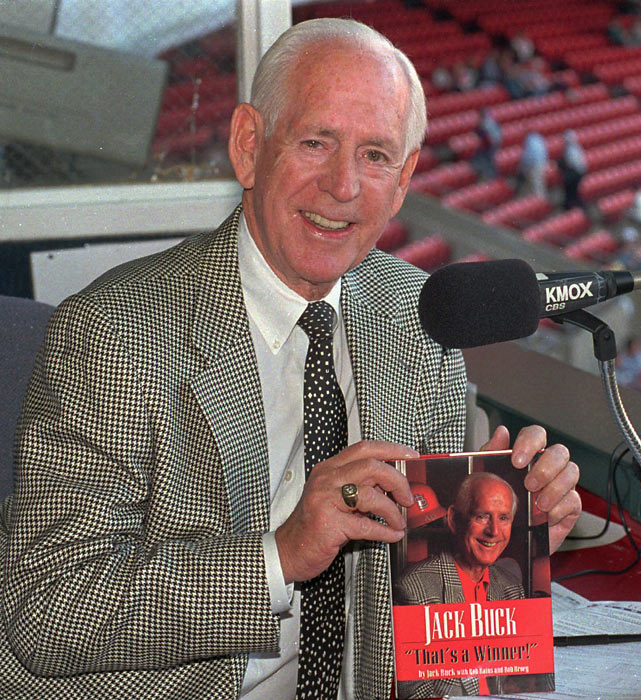
I think it was the summer of 2000 when I decided I wanted to be the voice of the St. Louis Cardinals. My grandpa was a dumpster diver and he found a Talk Boy recorder in someones garbage can. You may remember the Talk Boy from “Home Alone 2”. I would visit my relatives in Missouri and watch the Cardinals games and call them into the recorder. I wanted so badly to be Jack Buck. I read his autobiography countless times, and I watched old Cardinals highlight tapes that featured radio play by play. I would watch them on loop. I am obsessive when it comes to things I enjoy. I lived in Louisiana but I’d listen to the Cardinals games on KMOX which could be heard across the country at night. I’d sit in my dad’s truck and go up and down the driveway. At times I’d sneak the truck to the end of the road and hold the recorder up to the speaker and record the games.
Q: Who were some of the broadcasters you listened to growing up that influenced your desire to pursue this industry?
A: I have such a strange list of influences. My initial influence was Jack Buck. In my opinion he is the best baseball play by play man ever. I know that most will say Vin Scully is the best, but Jack was my guy. I have a picture of him and I at Busch Stadium when I was a baby.
When I was 14 I caught a batting practice home run ball at Busch Stadium. I waited outside the old press box for Jack to come out and sign it. At this point in his life he had very advanced Parkinson’s and a litany of other health issues. He walked out of the booth and I approached him. “Mr. Buck, Mr. Buck” I yelled out. “Could you please sign my ball?“. He has my grandpa and I get into an elevator with him and he signs it. “I’ve read your book 100 times” I tell him. “Did it put you to sleep?” he replied with a grin. We got out of the elevator, he disappeared and I realized I didn’t get a picture with him. The next day I go back to the booth. “Mr. Buck, Mr. Buck…can I get a picture?“. He walks up to me and says “I signed yours yesterday” and walks off. I was crushed at the time but settled for a picture with Al Hrabosky.
If I wanted to I could have focused on being a play by play guy, but I chose to go into sports radio. My radio influences are mostly from formats outside of sports. Howard Stern is an obvious one. He’s the king. I admire guys like Scott Shannon. Scott’s the greatest programmer of the 20th century. I love old FM jocks. I admire them because what they did was an art. I watch old video air checks of all these guys. I’m a dork.
Q: Your first jobs in the business were in the Baton Rouge market (if that’s wrong let me know). You worked for WJBO and WSKR. What were your responsibilities and what did you like/dislike about the job?
A: This will sound lame but I loved everything about those jobs. I was 19 at the time and my job at JBO was originally part time. I’d run SWAC Football and High School Football shows on Saturday mornings, and I’d do the shifts no one wanted to. I worked all the holidays for maybe $6.50 an hour. People assume because my dad worked in the building that I was given these jobs and that they were glamourous, but I earned them by going to the station during Hurricane Katrina and telling Matt Kennedy that I’d do anything they needed me to do.
That night he had me call all of the offices of emergency preparedness to find out about school closings. The next day I’m at the governors press conference with a mic in her face. I was too stupid to know any better. I just did it. When I got the full time job at JBO and Score, I did morning sports updates on the news/talk station. I also babysat 6 radio stations from 3p-11p every day. My job was to do anything they needed me to do, and make sure that if World War 3 broke out that the phone would be answered. I hosted an hour sports show from 3p-4p daily with Matt Moscona who is now the #1 host in Baton Rouge and one of my best friends.
I should point out that before I ever got the part time job at Clear Channel, I did play by play for the Baton Rouge Kingfish of the ECHL and the Baton Rouge Riverbats of the Southeastern League of Professional Baseball. The Kingfish gig came when I was 15. I think they did it as a publicity stunt, but it turned out I was decent and they kept me on for 2 years. I did the 2nd period play by play for home games. I also made some road trips. The Riverbats gig was the time of my life. I thought I had made it. Imagine being a 16 year old kid traveling to Pensacola, FL and Macon, Ga calling games. I set up the whole broadcast. I was such a nerd. I learned everything about engineering broadcasts.
Q: They say you haven’t worked in radio until you’ve been fired and you gained that experience when WJBO parted ways with you in 2009 due to budget cuts. Where were you when you got the news? What was your reaction? And what did you learn from the experience?
A: I was at the station preparing to go on the air and my email wasn’t working. I was naive. I walked into my PD’s office and told him I was having email issues and he said “Me too. I’ll look into it“. A few minutes later I hear an announcement over the intercom, “Josh Innes please come to Dick Lewis’ office“. Dick Lewis was the main guy at Clear Channel Baton Rouge. He called me in and honestly I don’t remember what he said. I remember walking to my car as my dad pulled up to do his shift. I was pretty crushed but I assumed I would be alright. I tried to get a gig on a rock station in town. The demo I put together was so dreadful. I still have it and it’s the one thing I’m actually embarrassed to play on air. Strangely enough they hired me back in August but in November I got the job at KILT.
Q: So you make the move to Houston, where you’re brought in to anchor updates in morning drive and host a solo hour from 10a-11a on Sports Radio KILT. How did the opportunity come about and what made you believe it was the right next step for your career?
A: I used a site called STAA.com. Jon Chelesnik was a real believer in me. He sent my material to a few stations. One was 790 in Houston and the other was 610 KILT in Houston. I was scheduled for an on air audition at 790 followed by an interview with Gavin Spittle at 610, but a few days before I was to drive there, 790 rescheduled. I told Gavin I still wanted to meet with him so I did and he hired me on the spot. What made it seem like the right next step? It doubled my salary and I went from market 80 to market 6. Plus, Gavin had great vision for entertaining sports radio.
Q: After only a few months in Houston, you were chosen to do some fill-ins for Jim Rome. How did that situation come about, considering you weren’t yet hosting a 3-4 hour daily show?
A: Rome used a lot of local guys to fill in. I think Gavin really pushed for me to get that fill in opportunity. It fell on the day after Lebron’s decision. Jason Stewart of the Rome show really liked it and asked me back 8 more times. I also think part of it was that other than Los Angeles, Houston was the biggest market for Rome and they wanted to save the show locally. I choose to believe I was good. Ha!
Q: The station then elevated you to work afternoons with Rich Lord, one of the most popular talents in Houston. Together you had a lot of success, but the relationship between the two of you at times was strained. What made it difficult for you guys to get on the same page?
A: He was an old school guy. At times we really had fun and it was a good show. I just don’t think he liked my style. I think he liked the benefits of being on the show but didn’t really care for my style. I didn’t like a lot of the stuff he did. I think it eventually became a personal thing for both of us.
Q: Despite some personality differences with Rich, your stay in Houston put you on the map, and you had a lot of success. When you reflect back now on the entire Houston experience, how would you summarize it?
A: When you are in the moment it seems a whole lot worse than what it actually was. I met many people who I consider best friends there. When the station was really cooking it was a great radio station. Gavin is the best sports radio programmer in the country. That isn’t a slight against anyone else that I’ve worked for but he gets ratings in markets that he has no business getting ratings. I was young. I had fun. I met my girlfriend. I made a little money. If Gavin wouldn’t have left for Dallas I may still be there. I had a 3 year offer at the end of 2012. Gavin left in January of 2013 and I never signed it.
Q: Next you moved to your current home, Philadelphia. WIP brought you in to host nights and immediately, your arrival was met with mixed reviews among local media people. Why do you believe there was such a divide when you hadn’t even spent a full month yet in the market?
A: Fear. I was met with some of the most ridiculous criticisms from people. When I got to Houston there were long time local talents like Barry Warner who took me under their wing and wanted to teach me about the market. They wanted to help me succeed.
In Philadelphia, no on really wants to help anyone else. That’s not to say that the people are bad. It’s just a different vibe among media people. The local afternoon guy never liked me and told people behind the scenes that I would not make it in Philly. He chirped behind the scenes and I made fun of him on air. That’s my style. That said, it’s not like I had wars with everyone. Angelo Cataldi is the best in the market and I never had any issue with him. Michael Barkann and Ike Reese were very good to me. Steve Trevelise liked me from the jump and has been openly supportive which I appreciate.
Q: Your evening show started to create some buzz, and in February of this year, you were moved into afternoons with Tony Bruno. The show had strong ratings success out of the gate but ended in less than 6 months, when Bruno decided to leave terrestrial radio. How would you characterize the entire experience and your relationship with Tony?
A: I considered Tony to be a buddy. We didn’t run the roads together or double date but I liked him and I still do. We had fun. We went to Vegas for a fight and had a blast. We went to spring training in Florida and had a blast. He’s a good guy. I read everywhere that Tony had issues with me and the way I do things on air. He never told me that. He never once said he disliked anything I did. He laughed all the time on the show. For whatever reason he decided to retire. I wish he would have stayed because we were kicking ass.
Q: One very public item is your well documented opposition to your competitor Mike Missanelli. You’ve referred to him on-air as “Bitchanelli” and the two of you had to be separated at Eagles training camp a few weeks ago. Where does the tension between the two of you come from?
A: He’s my competitor. I’m not a local guy that has long standing friendships with the other guys. I don’t want to have friendships with people from other stations. I have heard stories about how he trashed Howard Eskin when he was trying to overtake him. I know that he treated Bruno like garbage. He punched a producer and got fired. I’ve heard he’s an overall bad dude and I have no reservations about trying to destroy him. I want to win. I was brought here to win. I think his show is boring, lazy and stale. That said, we didn’t almost fight. We had a conversation and he stepped towards me but he’s a 63 year old built like my grandma. He wasn’t going to swing.
Q: With Bruno gone, the afternoon show has been adjusted and you’re now hosting a 3-man show with former Eagles player Hollis Thomas, and the son of one of Philadelphia’s most successful talk show hosts (Howard Eskin) Spike Eskin. How does your approach change working with them versus working a two man show with an established personality like Bruno?
A: My approach is the same. It’s a little different with 3 people but the guys I work with have an understanding of their roles. Spike is a great radio guy. He gets his role. Hollis is learning the business but he’s a sponge. I believe in making people around me better.
Q: One area you’ve made quite an impression in is social media. You’re as active as any talent out there but with that activity comes mixed responses. You’re known to engage in exchanges at times with listeners and even re-tweet some of their hate filled messages which some love and others don’t. What’s your reasoning for taking the approach that you do?
A: My main reason for retweeting hate is that it gets my fans riled up. When people like you they rarely call or tweet to say it. They follow and listen but they don’t really respond. When a fan sees someone hating on the show they are compelled to respond. I use the same approach on air. Rarely do I take the call that says “I love the show“. If the call screen says “Josh is a loser and doesn’t belong in Philadelphia” I take that call. I’m probably screwed up in the head. Eric Bogosian in “Talk Radio” said it best “There’s nothing more boring than someone who loves you“. Retweeting a positive makes you look self serving. That said, I adore my listeners and fans.
Q: I’ve read before that you’ve enjoyed some professional wrestling storylines, and see a natural connection between them and sports radio. How would you explain it to someone who’s not aware?
A: It’s really the WCW/WWE storyline. Eric Bischoff said “competition creates controversy and controversy creates cash“. I don’t look to create controversy in terms of my sports opinions. The WIP/WPEN battle is like a wrestling storyline. My battle with Missanelli is not only good for us but it’s good for sports radio in the market. It’s been front page news for months now.
Q: As it applies to being an on-air talent, how important do you believe it is to play an on-air character and carry a stigma about yourself in order to be successful in sports radio?
A: I am myself on the air. I think it’s important to create an enemy in your own mind. It drives me. Its no different than athletes. They have to create the idea of an enemy.
Q: How much of what the audience hears and reads on social media is the real Josh Innes vs. the radio personality Josh Innes?
A: It’s 100% me. Every opinion is my own. It’s probably too much of me. I don’t have much of a filter. I’ll go on twitter rants about my life and get made fun of the next day. Obviously I’m performing on air and ham it up. However, when you meet me you see that everything I say on the air is real. That’s the key to relating to people.
Q: As someone who has had great success in two top-10 markets despite not being from those cities originally, what would you say is key for being successful as an out of town talent?
A: Be honest. Gavin didn’t like that I would tell people I am a Cardinals fan. I had to. That’s who I am. I also believe in respecting the history of the local teams and learning the market. I may be a fan of the Cardinals but I don’t hate the Phillies. I embrace the teams and root for them. I try to do it in a way that isn’t phony. It’s clear I can’t be a diehard of the teams because I haven’t been around long enough. It doesn’t mean I don’t want them to win. My audience wants them to win. My ratings will be better if they win. I think it’s important to be 100% honest with people. They may hate it at first but they’ll eventually respect it.
Q: On the subject of success, some talents believe that ratings matter and others don’t. Where do you stand on the issue?
A: It may be a flawed system but it is the system we go by. If I don’t win I’m fired. Period. It’s like asking Bill Belichick if winning matters or if it’s how you play the game. If Belichick has back to back 5 win seasons he’s probably fired. Usually the people who say ratings don’t matter are the ones that don’t have them. In TV you can have great shows that don’t have ratings. They can survive. “Parks and Rec” had lousy ratings but made it 6 years. The same can be said for “30 Rock“. In radio there is no Emmy Award that can save a show. You have to have ratings. I eat myself up thinking about ratings. I obsess over it.
Q: If there’s one aspect of your performance that you think needs improvement, what is it?
A: This may shock you but I think I suck. I never listen to a bit of mine and say “boy that was killer“. I listen to bits and think of all the stuff I did wrong. My mental makeup won’t allow me to think I can make it better. I will always judge myself harshly. It’s a sickness really. I judge myself on an unfair scale.
Q: You keep your eyes and ears on the industry and take a lot of pride in it. When you look at the state of sports radio today how would you describe it?
A: Thriving but largely boring. Too many shows sound the same. Too many J-School stiffs. Everyone wants to sound like ESPN. Not enough unique personalities. Toucher and Rich in Boston is a great show. Listen to that. It’s two rock guys who have crushed sports radio. Why? Because they are funny and different. They don’t focus on sounding like everyone else.
Q: Who would you say are the 5 best talents performing in the sports radio format today?
A: Toucher and Rich, Michael Felger, Craig Carton, Angelo Cataldi, Gavin Dawson. Nationally it’s Colin Cowherd. Everyone else is a bore. These are the people who I actually seek out.
Q: For someone who’s considering entering the industry or is trying to make the jump from a small market to a bigger stage, what advice would you pass along to them?
A: Be different. Stand out. Talk Hard. Steal The Air.
BONUS Q: Given your Missouri roots and passion for Cardinals baseball, how come you never pushed harder to come home to St. Louis?
A: Why didn’t you stay in St. Louis?
Josh Innes can be heard weekday afternoons from 2pm-6pm on Sports Radio 94 WIP in Philadelphia. You can also follow him on Twitter @JoshInnesRadio.
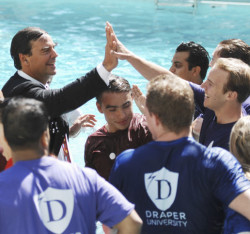
Last week I was introduced to a new television program. The show is called “Startup U” and it features a number of students and young entrepreneurs who spend 7-weeks at a place in the Silicon Valley called Draper University. Each person introduces an idea for their own business, and is then tasked with developing their product and skills, working with instructors on ways to pitch themselves and their company, and enduring the wrath of many highly successful business leaders. At the end of the season, each person pitches their idea to billionaire venture capitalist Tim Draper, who chooses one person to invest in and help launch their product.
Similar to every other reality show, the cast are put through various challenges, forced to live together, and with each passing week you see the best and worst in people emerge. What made this show different though was that many of the ideas, strategies, reactions and coaching techniques were very similar to what I’ve endured during my career in radio. Even the final goal (winning Draper’s confidence and money) is no different than what broadcasters and radio companies must do each day (win over listeners and advertisers).
One particular challenge got the juices in my brain flowing. Two teams were asked to take part in a game of Volleyball, except Draper wanted them to change the game and make it better. Many involved in the game immediately questioned the purpose of the challenge, and others seemed unsure what to do because the concept of the original game had been permanently planted inside their heads. When new ideas were introduced, they included serving with both hands, serving multiple balls at once, and serving with your head.
While certain ideas were better than others, it got me to thinking “isn’t this the same exact challenge we face with radio“? I quickly recalled driving across the country in June from California to New York, and each time I reached another major city and flipped on a sports station, I heard a lot of the same things. Break times nearly identical. Voice talent, imaging and sports updates in sync with the companies who were running the format. Callers and Guests filling up each hour around a Host’s opinion on the local teams in the market. In a nutshell, there wasn’t much different between one station and the next, besides the personalities.
Draper challenged the people involved in the volleyball game that day to “break the rules, and make things better” and it got me thinking about whether or not enough of us in radio today care to do the same. There seems to be a lot of “if it’s not broken, don’t fix it” thinking and that’s the type of mindset that eventually gets you caught. You can’t operate a winning brand with a narrow view of the present. If you’re not willing to embrace new ideas, take calculated risks and introduce new voices, styles, and concepts into your presentation, eventually it becomes stale, and when the audience tires of it, and drifts away, good luck getting them back.
I look around and I see an entire industry worrying about earning credit from a PPM meter, more than focusing on the importance of creating killer content that can’t be missed. I know, I’ve been guilty of it myself. But what about the world that awaits us? Are you prepared for the challenge that awaits from podcasting platforms? What about when digital dashboards overtake cars and many of the transplants in your market start listening to their favorite stations back home? How about when the age of your audience changes, and you find that today’s youth between the ages of 12-24 care about brands like YouTube, Spotify, Instagram, SnapChat, and Twitter and don’t even listen to radio?
Sure we have to keep our eyes on the current marketplace too and not be irresponsible, but those who develop great brands and hire talented people, can afford to break the rules, think different and challenge themselves to do things better. If you’ve earned the audience’s trust, they will stand by you while you introduce a few new ideas. If we’ve learned anything over the course of history it’s that people like new things.
I started racking my brain about the numerous things I hear on sports radio today, and what crazy ideas I would’ve come up with if Tim Draper had issued that challenge to me about improving sports radio instead of a game of volleyball. While I can’t say they’d all generate ratings, make more money, or even make sense, I know I wouldn’t have to be asked twice to break the rules to try and make things better. And after all, isn’t that why we do this job in the first place?
Here are some crazy things to think about. We can agree or disagree on their viability, but if you’re not thinking about what you’re going to do to make your product better and challenging yourself to do it, don’t be surprised when the day comes when your employer is looking for someone who does.
Commercial Breaks:
Scan any sports station and you’re going to find the majority of them running 3 or 4 breaks per hour and the commercial inventory usually between 12 and 20 minutes per hour. That doesn’t include sports updates, traffic reports, weather reports, station promos, or recorded liners that lead a show in and out of a break. This is done because stations want to spread out the amount of minutes in a commercial break to not overload the audience, and because they’re trying to gain as much content time inside of a quarter hour to try and gain credit for listening from Nielsen.
However, Nielsen also recommends that stations take as few breaks as possible, as disruptions can often lead to tune outs which don’t return. So what would happen if a station ran one break during an hour during the quarter hour that produced the least amount of listening? For example, if listening was less between :45-:00, is a station better served trying to win the first 45 minutes of the hour and concede the final quarter hour or stick with it’s current formula?
What if the station went with two breaks per hour? Maybe 15 minutes of spots in a row is insane, but what if it’s 7 minutes instead? Is there much of a difference to the audience between a 5 minute break and a 7 minute break? Are you better served with 2 long breaks or 3 semi-long breaks?
If you’re not a fan of long breaks, what about shorter ones? Is it more beneficial to hit the audience over the head with 3 breaks that are 4 minutes long apiece, or give them 6 breaks that are each 2 minutes long? You can also argue, is your talent better delivering focused content for 6 segments which are shorter in length, or 3 which are a lot longer.
I recognize that radio stations want to sell all the commercials they can, but reducing the total amount of minutes per hour and charging premium dollars for ads is where the world is going. I’m sure doing that would lead to a short-term loss in revenue, and no operator or company wants to hear that, but I can watch a YouTube video or listen to a few songs on Spotify with only a :15-:30 second distraction. I can listen to a podcast with a few verbal plugs in content and no disruptions, and I can watch a show on HBO without commercials because I pay for the channel (SiriusXM). You can only force the audience to stomach long commercial breaks for so long. Once they go, then what are you going to tell your advertisers?
Not to mention, if people are coming to you for sports, why are you bombarding them with weather reports, stock reports and traffic reports? Are those items sports related? When was the last time you put on SportsCenter, NFL Live, Baseball Tonight or any other sports show and said “damn, I really want to know the weather”? If it’s strictly about attaching a client to a benchmark, create something different – maybe a team related report, a host commentary, a :60 debate between two personalities, or attach them to your products through social media or website. Your air time is precious and shouldn’t be cluttered.
Imaging Voices and Presentations:
I love Jim Cutler and Paul Turner, and think they are the very best voice talents in our industry today. What I wish we had though were more Jim Cutler’s and Paul Turner’s. Too many stations sound the same, and that’s because a lot of us do what others do, and we seek out those who we already know. If the format looked for on-air talent that way, we’d all be screwed.
I hired Steve Stone to be my voice guy in San Francisco, and I think the work he’s done in making 95.7 The Game sound unique is excellent. I also know how incredible Dawn Cutler is and I wonder “why aren’t more stations utilizing her full-time“?
It raises the question about creating unique brand identities. What I love about television is how so many brands are different. I can turn on ESPN, Fox Sports 1, CBS, NBC or my local sports channels and I won’t hear the same thing. I can watch HBO, FX, TNT, USA and Showtime and the graphics, writing, imaging and voice talent will all be original. If it can be done on that level, then why can’t it be that way in radio?
Must every ESPN sports station and CBS sports station have the same uniformed sound and layout beyond the personalities? And it’s not just the voices, the bells and whistles with much of the imaging are laid out similarly too. I understand the reasons why certain brands do it, but I can equally call into question how it makes them predictable, and we can debate all day about whether or not it generates ratings.
Maybe I’m naive, but I believe there are some outstanding imaging directors and program directors out there who have the ability to make their brands sound distinctive. Each market and group of people are different, yet the same company formula exists. If a connection is made with the audience, and the brand name isn’t compromised, then does it matter if the people on the front lines take a different approach? Why must hundreds of sports stations have the same look, feel and sound, and stifle creativity?
Sports Updates:
While they were important to the audience 10-15 years ago, today many of them are filled with the same stories you hear the talent talking about. They also are often behind the pace of social media, which is where sports fans are seeking out their content first. I’ve always enjoyed them for one reason, it introduces another voice into the show, which provides room for extra creativity, but the update itself has become white noise in many cases.
Once again, if you turn on an ESPN or CBS sports station though, you’ll hear the same exact approach. ESPN brands will give you SportsCenter updates 2-3x per hour, and CBS brands provide 20/20 Sports Flashes 3x per hour. Does the listening audience really seek out this content and value it?
I believe the update is beneficial if it’s going to feature audio in it from other points of the broadcast day to try and engage the listener and give them reasons to listen more, or seek out the content later on the station’s website. I also believe it has value to advertisers since they can get a :10 tag included in them, and when done multiple times per hour, that can lead to numerous messages for the client. But what about the listener?
If we really value the audience, I’m not sure this content is vital. I’d rather see a radio station take their update anchor and put them into a position where they’re writing more content for the website, producing videos on the website, engaging more thru the station and their own personal social media pages, and sending them out to appearances and games to help the station gain something of larger value. I believe the anchor who has the ability to interact with a talk show host and take on more of a personality role in a show is a great thing, but I don’t believe that 3-6 minutes per hour of content time rehashing scores, game times, injury updates, and other lesser news, has great importance to the audience.
Show Lengths:
Based on economics, companies today will usually put a personality on the air for 3-4 hours per day. Hosts like it because they get to talk a lot and try out a number of things, and overall the approach makes sense because there are only so many hours in a day and you can’t employ 40 personalities per day or expect a host to be sharp doing a 6-8 hour daily show.
The one problem though is when it comes to judging its effectiveness. How many personalities really evaluate each of their hours, their content selections, their interview performances, the gains/decreases in caller activity, and whether or not they were better skilled at providing a 1-2 hour show versus a 3-4 hour show?
Most of sports radio today functions with people doing what they think and feel, and there’s no reason for them not to do that. But that’s because there’s not a lot of analysis being done on what does and doesn’t work. We usually give a personality their ratings, tell them if they gained or decreased month to month, and give them a pat on the back and tell them to keep moving forward. Rarely is the focus placed on “why” the numbers grew or dipped, or how to best take advantage of each hour of broadcasting time.
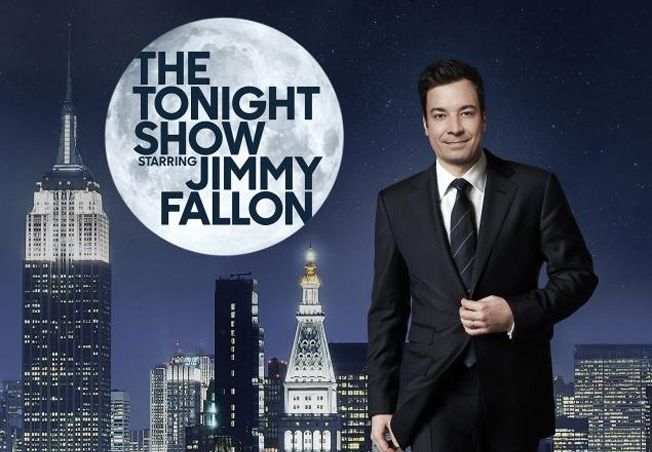
If you look at the best televison programs that deliver massive audiences, they usually involve a large cast, and are either 30 or 60 minutes in length. They maximize every single second of those programs with incredible content, and put hours upon hours into the presentation, including a lot of writing. For example, Jimmy Fallon delivers a 1-hour nightly show, yet he and his writing team will spend all day and night, making sure the product is crisp before it hits the air.
If radio employed Jimmy Fallon, it would expect him to deliver the same quality bits, interviews, punchlines and storytelling, yet throw him on the air for 4 hours per day with minimal preparation time, let alone surround him with a cast of 1 to 2 people. When the performance suffers, the blame shifts on the individual, the audience or the meters, not the process or support towards producing dynamic content.
I’m not sure it makes financial sense for radio stations to deliver 30-minute shows or 1-hour shows versus 3-4 hour shows but podcasters are doing this and growing larger and larger because they provide content which is often polished and shorter in length. People don’t have 3-4 hours of time to give to us, and they’d rather hear 1 great hour, instead of 3-4 good ones.
Show Styles:
Look at the rundown for most sports shows across the country and you’ll see the following hourly layout: 2-3 topics discussed, 1 guest, calls and tweets from the audience. Even when personalities promote their shows, it’s usually the same way – “Can’t wait to discuss last night’s game + guest A at ___ time and guest B at ____ time.”
If the show is built around the personality tweeting out the promotional message, shouldn’t it start with what they care about? If it’s a big guest I get that (EX: Podcast One last week had an exclusive sitdown with Shaq and Kobe – that you promote all day and night), but if you don’t provide some suspense in what you’re going to discuss, and just rely on the appointment times of a guest, you’re not leading the show.
That said, there are better ways to lay out a show too. If a host is great at taking calls but bad at interviews, why book guests on their show in the first place? If the situation is reversed, maybe it’s better to feature 6-7 guests and keep the host away from engaging with callers. The key is concentrating on their strengths and keeping each day interesting, not formulaic.
Have you ever considered making one day of your week only a football day? Only a baseball day? Only a day where interactions come from Facebook, Twitter, Email, Text or Calls? Maybe you create a day where you’re offering a series of 1-hour in-studio panels on themed subjects (EX: hour 1 = the host and 2 guests talking non-stop NFL, hour 2 the host and 2 guests talking non-stop baseball, etc.).
Some of this may work, some of it may not. Much of that depends on the host, producer, program director, and audience habits, but the point is that different things can be done, if you’re willing to open your mind to them. Not every day needs to feature the same layout, with the only difference being your topics.
Promos:
A good friend of mine Scott Masteller refers to promos as “content advancers“. While the word “promo” is seen as a commercial given to the station’s programming team to tout messages of their brand’s greatness, “content advancers” portray a message that the best content will be highlighted and discussed throughout the broadcast day. That makes sense to me.
However, if you listen to a lot of CBS sports stations, they put less stock in promos. While you can question why they wouldn’t use their time to promote things more, I recall attending a sports radio conference and hearing Jim Cutler say it best “A promo to the listener is a commercial disruption“. If the goal is to stay in content and eliminate interruptions, you can make the case that promos aren’t necessary.
If they’re going to be utilized, then shouldn’t the writing, imaging, and frequency of them be analyzed? Some stations try to promote 10-15 things during a given week rather than concentrating on 3-4. Think about this, if you were running CBS Television during the week of the Super Bowl, you’d promote the game again and again. Sure you may have other shows on the air, and they’ll be promoted through other channels (social media, email, newsletter, website, text clubs, etc.) but priority #1 on the air would be the promotion of the Super Bowl.
Look at your radio station and ask yourself “which of my brand items is my Super Bowl“? Do you have 3-4 of them? If you’re not creating promos that stand out, offer something of value, and sound big, then ask yourself if they really need to occupy :30 seconds of air time.
Additionally, do you need 1 promo per hour? 2 per hour? 10 per hour? If a message is pushed enough and carries with it something of substance, it can be branded into the listener’s brain. The question is, how much is enough?
Often station programmers implement clocks and in them come set times for promos, usually a few times per hour. The only problem with that is predictability. While it may be a pain in the ass, mixing it up isn’t a bad thing. If you have higher audiences during two hours of morning and afternoon drive, you may want to push the messaging hard, and not run anything during the lighter times. It’s all about getting the most value, and utilizing your time wisely.
Liners:
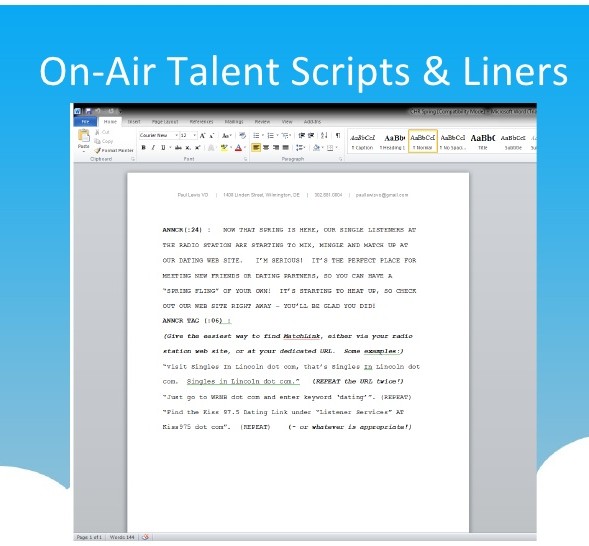
I hear some stations go in and out of breaks with music beds. Some do it without any music or production. Others meanwhile have produced liners voiced by the station’s voice talent or a local athlete, which identify the name of the show, station, a slogan, etc.
There’s no right or wrong, but if you look at it from the standpoint of “is this worth airing 3-4x per hour, and taking up :30-:60 seconds of my broadcast time” then you should have a better grasp of whether or not it’s valuable. If you’re not going to use the liner to reinforce your brand position or offer something creative or memorable, get it off the air. They’re denying your best asset (your on-air talent) more content time, which could make a stronger impact with the audience. If you can’t put some time into the writing and imaging, and use them effectively, then save yourself the extra minute. It will only hurt you if it’s not done well.
The only question I have here is whether or not they serve a purpose even when they are done well. I can watch a show without liners leading into segments and it never takes away from my experience of enjoying it. Secondly, does a station need to have them in place every segment? Can you use them 1x per hour leading in or 1x per hour bumping out? Why must it be “always leading into segments“, “always bumping out of segments” or “not at all“. Once again, unpredictability keeps an audience engaged, and maximizing our seconds is necessary for having success.
Conclusion:
There are a number of things about sports radio that could easily be better. The most important one in my opinion is eliminating its predictability. The point of this article wasn’t to suggest that everything we’re doing needs an overhaul because that’s not the case at all. However, we should be thinking about whether or not we’re taking advantage of everything we have at our disposal, and if we’re testing ourselves as best we can. If we’re doing things because they’re simple and it’s how they’ve always been done, then that’s a bad reason to do it. Especially when the future depends on our ability to adapt and create.
When I watched “Startup U”, I found myself thinking of the sports radio format, where it ranks, how it operates, what challenges it faces from other media platforms, and whether or not we have enough operators with the skill necessary to reinvent and make the format cooler. If our industry’s future was on the line, and we had to deliver a winning pitch to a room full of investors, how do you think we’d do? I’d like to believe we’d emerge victorious, but I’m not so sure we would. I guess that answer was predictable though.
To say the Pittsburgh sports radio market has changed over the past 7-8 years would be a massive understatement. Much of that for the local sports community is a good thing though as the format has blossomed. There’s been a strong migration of sports listening to the FM dial, which has fueled the success of the market’s leading sports talkers, but it’s also left open questions about the current competitive landscape.
Before we look at the current climate, it’s important to get a sense of where things were and what’s changed. Let’s start in 2008 where one of the first major changes occurred.
Mark Madden was hosting afternoons on ESPN Radio 1250, and he had built a massive following on the radio station. He was the ratings leader in the format, and the radio station’s top asset. ESPN recognized that and inked him to a long-term contract in 2007.
Then in May of 2008, everything changed. Madden made comments about U.S Senator Ted Kennedy that created a firestorm. He said on-air “I’m very disappointed to hear that Senator Ted Kennedy of Massachusetts is near death because of a brain tumor. I always hoped Senator Kennedy would live long enough to be assassinated. I wonder if he got a card from the Kopechnes.”
ESPN executives were furious with the commentary, and despite Madden apologizing for his remarks, they elected to fire him. This led to Madden being on the sidelines for a few months, before 105.9 The X, operated by iHeartMedia, entered the fold and sought to bring the controversial talk show host on to their airwaves. After some back and forth discussions between ESPN and iHeart, a deal was reached, and Madden was moving to the FM dial in October 2008 to host afternoons on The X.
The next major situation to impact the market took place in 2010. Two sports talkers, 1250 ESPN and 970 Fox Sports Radio, battled for bragging rights as the format’s best local brand. 1250 often led the ratings race, but they struggled financially. For 970, while they were behind in the numbers, they spent less on local programming which likely helped their bottom line.
But then a third party decided to enter the picture. CBS announced they were dropping B94 on the FM dial, and flipping it to Sports Radio 93.7 The Fan. With an FM talker on the scene, and a firm commitment from CBS to go Live and Local throughout the entire day, this put the AM operators in an even tougher position, one which ESPN quickly looked to explore an exit from.
As 2010 came to a close, ESPN did indeed exit out of the format, dropping their sports programming on 1250AM in favor of Radio Disney. This left the market with 93.7 The Fan and 970 Fox Sports Radio. Sensing an opportunity to improve their own product, 970 reached an agreement with ESPN to allow the station to re-brand as 970 ESPN, and give ESPN market clearance for some of their shows which had been previously well received in the market, but were now unavailable due to the 1250 format change.
Eventually ESPN would sell its ownership of 1250AM to Salem Media, leaving the local sports radio scene to feature two full service sports stations, 93.7 The Fan and 970 ESPN. 105.9 The X wasn’t focused entirely on sports, but did have Mark Madden in afternoons delivering a sports program, as well as Tim Benz in the morning offering a mixture of sports and entertainment.
Fast forward to today, and The Fan and 970 ESPN remain the market’s full service sports stations, and 105.9 The X still has Mark Madden delivering a sports focused show in afternoons. The remainder of The X is built around music, but the station also carries Pittsburgh Penguins hockey.
Additionally, the Pittsburgh Tribune newspaper entered the sports audio space in 2011, and have stuck with it, and done a nice job of adding quality local programming. However, it’s hard to measure their performance due to not being included in the Nielsen ratings.
I was curious to see how the Pittsburgh market was performing and how things have changed during the span of the past 12 months when The Fan made some programming changes. The focus of the ratings discussion is on Men 25-54 which is the demographic that matters most to sports talk radio stations.
Here’s a look at the last 3-months as well as the performance year-to-year.
STATION
TIMESLOT/SHOWS
2015 May
2015 June
2015 July
2014 July
Mornings 6A-10A
93.7 THE FAN
The Fan Morning Show
5.1
4.2
4.5
6.6
970 ESPN
Mike and Mike In The Morning
0.9
0.7
0.5
2.2
Mid-Days 10A-3P
93.7 THE FAN
Cook & Poni 10a-2p, Starkey & Mueller 2p-3p
8.8
5.9
6.4
9.6
970 ESPN
ESPN Radio 10a-12p & 2p-3p, Stan Savran 12p-2p
0.8
0.6
0.6
2.1
Afternoons 3P-7P
93.7 THE FAN
Starkey & Mueller 3p-6p, Paul Zeise 6p-7p
7.5
7.1
6.8
7.5
970 ESPN
ESPN Radio 3p-4p, David Todd 4p-7p
0.5
0.5
0.3
1.1
105.9 THE X
Mark Madden
14.2
11.3
13.1
10.1
Evenings 7P-12A
93.7 THE FAN
Paul Zeise 7p-10p, Pittsburgh Pirates Baseball
12.2
13.1
14.4
14.8
970 ESPN
ESPN Radio
0.1
0.4
0.1
0.4
Monday-Sunday 6A-Midnight
93.7 THE FAN
All Shows, Ancillary Programming and Play by Play
8.1
6.9
7.2
8.9
970 ESPN
All Shows, Ancillary Programming and Play by Play
0.4
0.4
0.2
1.4
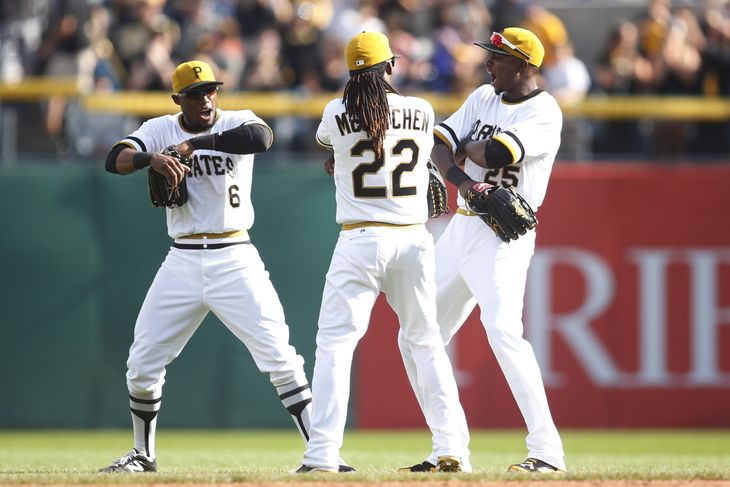
There are many takeaways from this data, but the three things that stand out are that Mark Madden is the undisputed king of Pittsburgh sports radio, The Fan own the marketplace as the city’s premier sports radio station, and winning teams in a local market lead to additional excitement and listening.
When you analyze the year to year performances, it’s interesting to see that The Fan is down nearly two full ratings points and 970 ESPN has also lost a point. It’d be understandable if the Pirates were bad this year, but they’ve remained strong so that begs the question, is there less interest in the programming, or did a few meters get away?
While meter changes can take a station from the outhouse to the penthouse in a matter of 30 days, Madden’s show is up three full points year to year, so interest in sports radio didn’t decline on his dial. Plus, Pirates baseball and The Fan’s afternoon show held pretty steady during the past 12 months.
When you look deeper, you can find some stories that make sense, and get a better idea of what’s happening with each brand, and where their challenges and opportunities lie. The good news for The Fan, they’re doing incredibly well and are at this point prisoners of their own success. When you can measure yourself against your past performances because you’ve taken control of the scene, that’s a good thing.
Looking at morning drive (6a-10a) which is hosted by Colin Dunlap, Josh Miller and Jim Colony, The Fan delivered a 5.1, 4.2 and 4.5 over the past 3 months. That performance placed them 7th each of those months, and while it’s a healthy number, I’m sure folks internally would like to see it register higher. Why do I say that? Last year in July, the morning show was producing a 6.6, which was two full points higher. That’s a 31% drop over the past 12 months.
While that’s a big dip, bear in mind that the show was different last year. Gregg Giannotti hosted the program, alongside Paul Alexander and Jim Colony. Alexander is no longer with the station, and Colony is still on the show, but Giannotti has since moved to New York where he now hosts CBS Sports Radio Network’s morning show with Brian Jones.
Losing Giannotti hurt, but the new morning show has a lot of talent and has performed very well, despite being together less than a year. If the Pirates continue winning, and the morning show keeps developing, the station will see improvement in morning drive. The only question is whether or not they can gain back two full ratings points, which is what they need to enter the Top 5, and compete against the market’s dominant rock stations.
The next area to look at are middays (10a-3p), and much like mornings, they perform very well. During the past 3 months, they’ve finished between 4th and 6th, and that result is one they should be very satisfied with. Making up the station’s middays are Ron Cook and Andrew Fillipponi from 10a-2p, and afternoon hosts Chris Mueller and Joe Starkey who impact 1-hour of the performance (2p-3p).
Where there is concern is when you look at the results from year to year. The station during that time has gone from a 9.6 to 6.4 which has taken them from a tie for 2nd to 5th, which represents a 33% dip. Additionally, the current programming delivered a fantastic 8.8 rating in the May 2015 book but is down to 6.4 in July 2015, so they’ve lost more than two full points in the past 90 days. Given that Pittsburgh has a strong appetite for football, I’m sure the May book was heavily impacted by the NFL Draft.
Next up is afternoons and this is where things are very interesting. Let’s start with The Fan. Overall they are doing an outstanding job. The time slot which features Chris Mueller and Joe Starkey from 3p-6p and Pirates Baseball Pre-Game/Paul Zeise from 6p-7p has delivered a 7.5, 7.1 and 6.8 over the past 3 months, good enough to place them between 4th and 5th. This is The Fan’s highest rated timeslot, Pirates baseball aside.
Where the story gets interesting though is when you look at what happens when a competitor exists who also shares the FM dial and has market recognition. That comes in the form of Mark Madden who hosts afternoons on The X and is #1 with a dominant 13.1 share. Madden’s program outperforms his entire station by 4 to 5 ratings points, and it’s clear that when he’s on the scene, he’s still seen as the authority for Pittsburgh sports conversation, even if he’s not on a full-time sports station.
Over the past 3 months Madden has been #1 every month, and his ratings were as high as a 14.2 in May. He’s also grown from a 10.0 to 13.1 over the past year, which is a 31% gain in audience. While The Fan should feel great about its own performance, Madden’s presence affects their ability to grab a larger piece of the pie.
The final time slot I want to examine are the nights (7p-12a). This is largely occupied during the spring/summer months on The Fan by Pirates baseball, and with the team performing well, you can see how its benefitted the radio station. For the past 3 months the Pirates have led The Fan to 1st place finishes at night each month, producing shares of 12.2, 13.1 and 14.4.
To put it in perspective, The Fan was 3rd in the April book with an 8.8 in the April book, which was right before the Pirates returned, so you can see that the station has gained 4 to 6 ratings points thanks to the return of baseball.
When the Penguins were in season, they too helped drive large audience numbers for their rights holder 105.9 The X. Pens hockey produced a 14.3 for the April book which placed the station 1st in that demographic, but that number has since dropped to 5.5 in July. Clearly Play by Play programming is a major difference maker in the Pittsburgh market.
While the majority of this conversation has revolved were around The Fan and 105.9 The X, I do also want to shed light on 970 ESPN. Their numbers are very low which makes it a tougher discussion but there are a few items worth noting.
First, the station is under 1 point which is not good, and with other brands performing incredibly well on the FM dial, it raises questions about the ability to perform on the AM band.
Secondly, with so much of its programming time dedicated to national shows, you can see that it doesn’t connect. The local audience wants Pittsburgh personalities talking about Pittsburgh stories, and this hurts 970 for sure.
That story is even more evident when you go deeper inside the numbers. Stan Savran who hosts a show from 12p-2p on 970 ESPN, produced a 1.7, 1.3 and 1.3 during his show the past 3 months. That number is 6x higher than the station’s overall rating and 2.5x higher than the morning show. This means that he is a destination for local fans, and they will seek out his content, even if he’s on AM, and surrounded by national shows.
This makes me wonder, would iHeart Pittsburgh entertain a move full time into the sports radio space on FM? Is there enough audience, and revenue in the market to make an impact?
Consider this, iHeart owns both 105.9 The X and 970 ESPN. Between those two brands, they have Mark Madden dominating afternoons, Pittsburgh Penguins hockey performing strong during the evenings, and Stan Savran on 970, a local fixture who many people love and respect, and who despite the challenges around him, outperforms his station.
They also have the association with ESPN, a proven programmer in Gregg Henson, plus the company has the rights to the Pittsburgh Steelers. Those games air on flagship station WDVE (also iHeart owned and operated) and 970 ESPN. If ever there was a company with the assets to make a run and give The Fan a major battle, it would be iHeart Pittsburgh. That said, there are also larger costs associated with running sports programming, and the company may not want to tinker with 105.9 The X in its current configuration, given its success.
For The Fan, while the station itself sounds great and they offer a lot of talent, the challenge they face is regaining their massive momentum from last year. If they can find those extra 2 to 3 ratings points, they’ll become an even bigger force to be reckoned with, and can then start measuring their performance opposite The X, WDVE and WRRK, music brands which traditionally do well. There’s no question they’ve built an identity as the market leader for sports radio, and the lineup they’ve established is impressive, so now it’s a matter of living up to their past performances, and hopefully exceeding them.
One very important thing to remember with regards to these performances, this is what they look like in May-July. Results are different during other points of the year. Luckily, the Pirates have been strong the past 2 seasons, but if they don’t play winning baseball, you can bet that has an impact on local programs. When the fall rolls around, and the Steelers become the focus of conversation, and the Pirates likely advance to the post-season, don’t be surprised to see many of these shows driving even higher numbers. The key then becomes converting those casual listeners into loyal fans.
In its current climate, the Pittsburgh sports radio scene belongs to The Fan. Mark Madden is the only local host who prevents their total dominance. If iHeart Pittsburgh elects to enter the sports format full time on FM in the future, this could be a very different conversation.
Tim Spence is on his way to Connecticut where he will join iHeartMedia and oversee the company’s sports and news brands in Hartford and New Haven. Spence replaces Dave Zaslowsky who moved home to Chicago and joined WLS-AM 890.
Spence built his programming profile in the Denver market. He oversaw programming for ESPN 102.3 and ESPN 105.5 for the Front Range Sports Network from 2010-2014, and spent 15 years with Lincoln Financial and Jefferson Pilot, most notably serving as the Program Director of 950 The Fan!
Among the stations to fall under his watch will be 97.9 ESPN Radio in Hartford and ESPN 1300 New Haven. Former MLB player and ESPN and Fox Sports Radio personality Rob Dibble hosts locally on those stations. He will also program two news talkers, News Radio 1410 WPOP in Hartford and News Radio 960 in New Haven. His first day will be September 1st.
Bob Agnew has left the building at Angels Radio AM 830 KLAA in Los Angeles. Agnew had served as the station’s Program Director since February 2013. He confirmed the departure Saturday on his Facebook page.
This has kept me going forward with a smile and joy for family and work . Since 2005 when I “left” KNBR, Cindi and I took on new jobs from SF to Las Vegas to Oakland and Irvine. We are looking ahead to a new challenge.
With Cindi, Alicia & James, Natalie & Zach and 4 wonderful grandkids…I look forward to new opportunities along with sharing the new adventures with our grandkids : Owen, Zachary, Kiana and Charlotte. Life is too short to look back and dwell on the past! We strive to enjoy each day with PMA.
Prior to joining KLAA, Agnew’s last programming position was in Las Vegas, where he oversaw programming for News Talkers 100.5 and 840 KXNT. He’s best known for his sixteen year stint in San Francisco from 1989 to 2005 where he built, developed and led KNBR 680 to becoming one of the sports format’s most successful sports stations.
It’s unclear why a change occurred at KLAA, but according to sources, budget cuts were a factor. No word yet if his position will be replaced.
Did you know that the first voice ever heard on an all-sports radio station was a woman’s?
The date was July 1, 1987. WFAN in New York City was the radio station, and Suzyn Waldman was the first voice to be heard when she delivered a sports update at 3pm, right before giving way to Jim Lampley who hosted the first show on the station.
At the time nobody knew whether or not the format or its personalities would last, but twenty eight years later, Waldman is still going strong. Not only has she covered all New York teams during her illustrious career, but she is now one half of the New York Yankees radio broadcast team opposite John Sterling.
If Suzyn could stand out, and make a difference in the number one market in the country, clearly it should be easier for other women who followed in her footsteps right?
Well it certainly seemed to be going that way, when the Fabulous Sports Babe (Nanci Donnellan) burst onto the Seattle scene in 1991, as a weekday talk show host on 950 KJR.
The station’s programmer at the time was Rick Scott, and he believed that Donnellan brought something unique to the table, which was more important than her gender.
“Nanci “got it” and knew how to push buttons and generate audience reaction” said Scott. “When I brought up the idea of having a woman do mid-days, they thought I was joking. We flew Nanci to Seattle, and went to lunch with the GM, and she had him laughing so hard he was crying. That helped the cause, but there were still plenty of challenges, especially during the first year.”
Donnellan would make a major impact during her three years at KJR, and her success was noticed by ESPN Radio who brought her to Bristol, CT to take on the challenge of doing a national show in 1994. She started with only 29 affiliates, but two years later, had built the show’s affiliate list to more than 170.
By 1997 though Donnellan was facing challenges from her bosses, some of them stemming from public criticisms she shared in a book titled “The Babe in Boyland“. “Every person on the planet seemed to complain about what I was doing and how I was doing it,” said Donnellan in her book. “But I stood my ground and told all the suits to please get out of my airstream.”
Eventually the marriage between ESPN and Donnellan would dissolve, and she’d move to the ABC Radio Networks in 1997. That move would be short lived, as ABC would part ways with her a little more than a year later.
While her time at the top had come to an end, what was undeniable was her impact. Nanci Donnellan proved that women could not only share the stage with men in the sports talk radio space, but they could excel in it too.
So that should’ve opened up doors for so many more women to have success in the format right?
Not exactly.
Today, sports radio stations are measured by their ability to connect with Men 25-54. If a station delivers in that demographic, all is right in the world. But what does that say about people who are younger or older than the desired demo? Does their listening not matter?
Furthermore, what does it say about women? Are we naive to think that females don’t also enjoy sports, listening to sports radio and talking about it with their friends? Do their dollars not matter to a station’s advertisers?
Go to a sporting event today, and the stands are not 80-90% full of men. Yet sports talk radio listening according to the Nielsen ratings is fueled by heavy male listening. If those numbers are accurate, it puts programmers and radio companies in a tough spot. The goal is to deliver content which satisfies the listening audience, and produces high ratings, and larger revenues. If 4 out of every 5 listeners are men, and they respond favorably to male voices and the way men discuss sports, then it becomes much harder for women to earn a break!
Amanda Gifford who is a Program Director for the ESPN Radio Network shared her views on the situation: “The demographics of the format have a lot to do with how many women come on as hosts. It’s still completely dominated by men – 85 or 90% of audiences are male. As we see some of the “pioneers” for women who have strong opinions in the media continue to flourish – like Michelle Beadle, Jemele Hill, Sarah Spain, Kate Fagan, etc. – they will help blaze the trail of opportunities for girls/young women interested in this type of career path.”
Ratings numbers aside, there are other reasons as well contributing to the lack of females working as sports radio hosts. First, not as many women pursue a path in the radio industry. If a woman can watch other women cover sports on her television, but can’t hear a female talk about it on the radio, it’s likely to influence her decision of which medium to pursue. The better financial opportunities in television also factor in.
The other part of the issue revolves around programming philosophies and radio ratings measurement. While I know a ton of great programmers around the country who take risks and make smart, and inspiring decisions, there are still many who are creatures of habit, and unlikely to change, especially if the formula is working.
As it pertains to ratings, the data provided to radio stations is often very inconsistent. PPM meters which are used to measure local listening and audience characteristics, have been proven to have major flaws, and the sampling sizes in many local markets are tiny. That puts radio operators and talent in a difficult spot, because they can’t draw a firm conclusion, on whether or not the programming they’re providing is working.
While I want to trust the data that says 80-90% of listening to sports stations is done by males, I’ve seen too many inaccuracies to treat it as fact. I do believe men have larger interest in listening to the format than women, but whether it’s 65&%, 75% or 85% is debatable. Even then, that’s where the numbers stand right now. They won’t grow, and become even more attractive to advertisers if the same strategy and execution continues.
When you look at the world today, women are making an impact and effecting change in all areas of society. There’s no better example than in the political arena, where women now run and receive serious consideration for President of the United States of America.
If a woman can run for the most high profile office in the nation, and gain the trust of males in leading our country, then she should be able to find a place inside of a sports radio station’s lineup right? It may seem like a no-brainer but it’s still an issue in sports radio.
During the mid to late 2000’s, Jennifer “The Little Ball of Hate” Engel hosted a radio program for ESPN 103.3 in Dallas. She started with the station as a contributor before earning a spot as a full-time weekday host. The belief was that she’d break through and disrupt the marketplace. Unfortunately, the audience wasn’t ready for the change, and although she was skilled, the show underperformed.
I spoke with a former Dallas personality about the situation: “Jen was one of the guys, and she had strong, accurate and well thought out opinions and was respected by listeners and other members of the media. However, when the radio station opted to make her the center of her own show, perceptions changed. There was a a lot of feedback from listeners about not wanting to hear “my wife” complain or lecture listeners about sports. That information was learned through professional panels and companies hired to do local market research. The station tried different marketing concepts, and supported her, but to no avail. In the end the show had to be cancelled due to poor ratings, and the market’s unwillingness to embrace a female led sports talk show“.
What I found surprising is that when I asked this same person if they still felt a woman could succeed in the format as a weekday talk show host, they remained supportive: “No question it can work. The Dallas situation hasn’t altered my belief that our format is ready for more female hosts to prosper. Having said that, it still has to be the right woman. Women in the format have to build more credibility than their male counterparts, and can make fewer mistakes. They must also be more thick skinned and determined than men. Let’s also not be naive, it depends greatly market to market. Some markets simply aren’t open minded enough to get it.”
Let’s be honest, most people who run companies, prefer the safer path. The unknown is scary, especially in today’s world where instant success is necessary, or it could cost you your job. But with great risk comes great reward. However, most groups are less likely to endure criticisms, questions, and backlash from local market listeners, advertisers, and other media partners, and risk their bottom line, for an out of the box hiring decision.
They say it usually takes 18-24 months to judge a show and whether or not it will work in a local market. I’m not sure that same courtesy applies for a local show led by a female talent, and that’s unfair. It’s also a big reason why it’s so important for those who do get an opportunity to make it count.
Kate Scott who works for KNBR 680 in San Francisco, notes that when it comes to perceptions in the industry, there definitely are double standards: “Externally, there’s no doubt we’re treated differently. If I mispronounce a player’s name I’m a no-nothing idiot who only got hired because the station was looking for some diversity. If a male colleague does the same thing, aww shucks, he was out late the night before or ha, there goes so-and-so again, he sucks at those tough names.”
But should there be different rules for men and women in sports radio? Sandra Golden of 680 The Fan in Atlanta makes an interesting point: “There are 12 people working at my station as full time hosts. NONE of the dozen are treated the same. We aren’t measured the same, and nor should we be. We all have different resumes, are paid differently, and some are more popular than others. I might add, that’s just like any other office in Pick-a-Town, USA.”
While sports radio may indeed be a fun industry to work in, it is still a business, and it’s not one built on satisfying quotas, or personal agendas. The focus is on employing dynamic, compelling, and highly entertaining personalities who possess the ability to provide thought provoking content and develop a connection with a local audience, most of which is made up of white males between the ages of 25 and 54.
Any talent who hosts a sports radio program must be able to connect with advertisers, and sell their products to the audience, and of course, generate ratings in the Men 25-54 demographic. Until the rules change, that’s what station’s require to command larger dollars.
The one area though that deserves larger discussion, is why aren’t women a bigger part of the solution? We often assume that a female on the air talking about sports, doesn’t have the same ability as a male to keep a male audience listening, but we don’t seem to have any objections when a female personality talks about rock music, sex or movies. Those issues can be largely targeted to Men too.
And what about politics? If you turn on Fox News, MSNBC, or CNN, you’ll find plenty of talented women talking about key issues, and they don’t seem to have trouble keeping male viewers watching. And those men don’t watch just because the female host looks good either. Oprah Winfrey, Barbara Walters and Katie Couric proved you don’t have to be a supermodel to be an excellent broadcaster, and connect with an audience.
So if women can be accepted talking about music, lifestyle, sex, politics, and every other part of our daily conversations, then why is it so difficult for them to earn a heavier presence in the sports radio industry? And I’m not just talking about the Sports Update Anchor, Traffic Reporter, or Morning Show Sidekick role either. I’m talking about being the face of a talk show and radio station, much like the Fabulous Sports Babe was in the 1990’s for KJR and ESPN Radio.
Maybe I’m wrong but I think Michelle Beadle and Katie Nolan have the talent to deliver a highly entertaining talk show. I also think Rachel Nichols pulls information out of guests equally or better than many male broadcasters. I also scan the country and see numerous women in local markets building strong personal brands and proving they can connect and win. Yes there are many females who aren’t ready for the spotlight, but the same can be said about some men.
As I did my research for this piece, I uncovered some things that may make a few people uncomfortable. I looked at the makeup of the 5 national sports radio networks (ESPN, Fox, CBS, NBC, Yahoo), who broadcast nationwide, and target their content to Men 25-54 audiences. In reviewing the Monday-Friday lineups of all 5 networks, I found only 1 woman, featured as a Monday-Friday talk show host. That female was Amy Lawrence, who’s hosting currently for the CBS Sports Radio Network.
Let this sink in for a second, between 5 national networks, there are 34 white males holding positions as Monday-Friday talk show hosts. Only 10 personalities who were female or non-white, held spots as Monday-Friday talk show hosts. That means nearly 71% of on-air personalities delivering weekday national talk shows are white males. If you look across the country on local sports stations, those percentages are even higher.
While I believe in people earning opportunities based on talent, and fit, not on their race or gender, there’s also something to be said for employing broadcasters from different backgrounds, because the audiences who we serve are diverse, and deserve to hear differing viewpoints.
I reached out to some of the best women in the sports radio industry to get their views on the challenges they face, the way they’re measured, and what needs to happen for the format to evolve and include more females. I think that as you read their answers, you’ll gain a stronger perspective, and deeper appreciation for what they provide, how they think, and what they’ve experienced, while trying to effect change in the sports talk format.
Special Guests:
Sarah Spain-ESPN Radio Network and ESPN 1000 in Chicago
Gianna Franco-95.7 The Game in San Francisco
Joy Taylor-104.3 and 790 The Ticket in Miami
Kate Scott-KNBR 680 in San Francisco
Anita Marks-98.7 ESPN NY
Michelle Smallmon-ESPN Radio
Jessamyn McIntyre-710 ESPN in Seattle
Amy Lawrence-CBS Sports Radio Network
Amanda Gifford-ESPN Radio Senior Director of Daytime Programming
Why do you believe more women are taking larger interest in sports radio?
Spain: It’s hard for women to dream of doing a job they don’t see other women doing. For so long certain jobs were almost off limits to women, so wanting to go after them seemed unrealistic. The more women are given a chance, the more women will want a chance. And that isn’t just the result of talented women pushing for jobs but also the decision makers and front office folks being forward-thinking and open-minded. As for listeners, as society becomes less rigid about gender roles, women are free to like whatever they like. Title IX was also huge. Women are now free to participate in sports, and women who play sports as kids grow up to be sports fans.
Lawrence: Women with an interest in working in sports radio are definitely emboldened by the success of those who’ve gone before. Now and then, I hear from women in local radio markets who tell me I’m their role model and they want to get to where I am in the business. A door that was previously locked tight has been kicked open, and that encourages other women to try their hand at radio. At the same time, sports radio is still dominated by men far more than TV. Popularity in radio has nothing to with what you look like and how attractive you are. It’s not as “glamorous” nor does it pay as well across the board. Listeners are extremely tough on their hosts, even tougher on women, so while you SEE more and more women in lead roles on sports television, it’s still relatively uncommon in radio.
Scott: I think a lot of things factor into it. Title IX is the foundation. My generation – as opposed to those before us – grew up being told “yes you can”, which we applied to more than just playing sports. I also think that’s tied into the growth in female listenership. More women had the opportunity to play and fall in love with sports as a result of the law, and thus, you’ve got a larger number of women in the radio demos that now want to keep in touch with their teams.
McIntyre: I think that women are finding more opportunities in places other than TV and the sidelines. The industry is changing, as are attitudes about women in the industry. I think it’s indicative of the change we’re seeing in society, rather than just in sports media. More young girls are studying sports communications, and entering male-dominated industries. I’d like to think it’s a sign of the times, where there is more equality across the board in many areas both in and out of the sports communications world.
Marks: I believe it’s simply a case of more opportunities presenting themselves. The biggest change is that General Manager’s and Program Director’s are feeling there is stronger value in having a female voice on their station or network, and providing the platform.
How do you convince a predominantly male 25-54 audience to keep an open mind towards you and judge you by your content rather than your gender?
Lawrence: I make it a priority to know what I’m talking about, inside and out. I understand a good chunk of the target audience will start listening to me with a bias, whether overt or subconscious. But when I know my material cold, when I’ve watched the same games, when I can answer their questions and back up my strong opinions, many of them will eventually come to respect me. Humor helps, too. Listeners want to relate to their radio hosts. They want to know you’re like them, so while my sports revolve around the top sports stories and topics, I’m not afraid to dive into music, superheroes, lawnmowers, travel, or food in small doses. The last and most important quality as a female host is confidence. No one is going to agree with me 100% of the time, and I welcome dissenting opinions. I’ll debate with anyone as long as it’s done semi-respectfully. When challenged, the worst thing I can do is back down or become wishy-washy. If you do that you’ll get eaten alive.
Taylor: Being authentic is the best way to win the male sports fan over. I think I’ve been accepted because I’m not trying to constantly prove I should be there. I’m there because I worked hard, took the same path my peers took and paid my dues. I grew up in a sports city, Pittsburgh, in a sport family, and played sports my whole life. Then I went to school, started as an intern, worked a few part-time jobs, and worked my way to on-air as a producer for several years. All of those experiences have helped me earn the audience’s trust and respect.
Gifford: Just be you. Talk sports. Have a personality. Have fun. Have an opinion. Make me think. Don’t wave the “I’m a female flag.” It doesn’t matter what gender you are as long as the content is compelling. Also, don’t take things personally and stay far away from your social media mentions – there are a lot of not nice people out there!
Franco: I don’t pretend to be a stat expert or sport’s almanac. I’m a fan, like the listeners, and I focus on staying knowledgeable, offering a smart opinion and staying authentic. The second you try to pretend to be something you’re not, it comes across on the air. I also try to keep in mind who my audience is. I grew up with a dad and brother who are diehard sports fans, so I have insight into that perspective, and always ask myself would this content matter to them? I also don’t lose sight of the fact that I am a voice for the local female listeners as well.
McIntyre: You’ve got to be tough and grow thick skin. Getting defensive never helps. The best advice I got was from Dan Patrick. He told me I had the ability to make it in this business, but to ‘not be just another cute chick‘. He explained that you can get away with a lot as ‘a cute chick‘ and probably actually maintain a job, but you’ll never truly succeed to your potential. I’ve taken that with me for almost ten years now and am grateful he took the time to point that out to me. I’ve always considered myself a hard worker, but it gave me perspective I could truly appreciate.
Do you believe women and men who perform in the sports radio format are treated the same and measured by the same rules internally & externally?
Smallmon: Unfortunately, no. There have been times when I was overlooked for positions that were given to males who were less qualified than me. I’ve gotten the ‘you never played the game, you can’t understand football’ attitude, when a man who never played football probably wouldn’t face similar questions about participating in an NFL broadcast. Also, any time there was a photo posted of me on our station’s website, there would be comments about my appearance. Radio is auditory and not visual, yet the main thing many people cared about was my physical appearance. That’s something men are lucky they don’t have to deal with as often. The double standard will probably be there for a long time, but I hope we continue to chip away at it until it’s gone.
Spain: The decision makers at newspapers, radio and TV studios and websites are still predominately white men hiring other white men. They need to understand the benefits of diversity, and bringing in different voices and backgrounds in order for new people to be given a shot. A change in the mindset of those folks, an increase in the number of women seeking jobs in the industry, and the continued hard work of the women who have made it will all combine to help change the climate. And, again, the longer people see women in jobs the less shocking or noteworthy it will become.
Franco: No, not really. I think all stations want a variety. It’s attractive to listeners, and offers a different perspective, but that also means you have to work that much harder for respect and job advancement. It’s very easy for some male hosts to not take you seriously, and use you for only fun or frilly topics, so I learned to not be afraid to speak, crack the mic, and be aggressive. You have to do that if you want to be seen as more than just the token girl on the sports station.
Gifford: Unfortunately I think we have a little ways to go here. Because sports talk radio is mostly dominated by males, it still is a little surprising to the audience when they hear a female voice. I think similar to the way people react to female play-by-play announcers during men’s games (like Beth Mowins or Pam Ward, for example, who have called CFB games for ESPN, or Doris Burke in the NBA as a color analyst), there is not the same benefit of the doubt that male hosts are given. I think women have to work harder to make sure they don’t lose credibility with the audience even if they only make one mistake. It’s not fair, but it’s reality.
Taylor: No, I do not. Just because the industry is changing does not mean it’s an equal playing field. Women have to be better, funnier, smarter, more professional, etc. Fans want to know you’re legit, rather than just accepting that you’re the new host on their favorite station. Overall, my experience has been great, but there are always moments when I know there is still work to be done.
Despite the growth, why do you believe women are still largely under-represented in the format? What needs to change for the growth to become even larger?
Scott: Women are under-represented in our industry for the same reason they’re underrepresented in a variety of industries. Growing up, we didn’t see anyone that looked like us working those jobs, so we just didn’t think they were an option. Thankfully, I had family, friends, mentors, and school advisors who told me otherwise, which – in my opinion – is where things need to start. I also think it’s important for those of us in the industry to realize the impact we can have on the future. Every time a little girl comes up to say hello at a remote broadcast, I ask her when she’s going to take my job. I think it’s our responsibility to plant that seed or, if it’s already been planted, reaffirm the fact that we believe that they can do it. Case in point, ESPN’s Linda Cohn (who also started in radio) was my favorite SportsCenter anchor growing up. I wrote her a snail mail letter my freshman year in college and about eight months later, got a short, email response from her thanking me for my support and encouraging me to intern to get into the industry. I printed that puppy out, framed it, and had it on my wall all thru college, and I’ve been working my tail off to get to work with her ever since. It’s up to us to be that person for the next generation. Hopefully, with so many more women in sports radio these days, that will lead to even MORE women working in sports radio down the road.
McIntyre: There’s always going to be some level of divide, based on the fact that more men play the sports we talk about than women. While we want to cater more and more to a greater audience, the bottom line is that, more men are interested in football/baseball/etc. than women. That’s not to say women won’t be interested, just like some men won’t be interested, but it says that the content itself is geared more toward men. I think the continued encouragement of women who want to get involved at a younger age will do a ton for growth. I feel as though a lot of road blocks have been taken down throughout the last ten years and that women have all the opportunities in front of them. It’s now a matter of using them to their full advantage.
Lawrence: Yes, women are still the severe minority in sports radio. But there is no easy “fix” or formula to make the genre more balanced. The doors are definitely open for women who want to work in the business, but women have to be willing to put in the work and pay their dues, understanding both the business and the audience. It’s NOT the same as TV where the segments are much more controlled and physical appearance can go a long way. But knowledge, preparation, and dedication can lead to opportunities in this day and age of sports media.
Marks: Sports talk radio can be intimidating. As a host, you’re out there on an island, and with listeners calling in, you need to have every T crossed and i dotted, because you never know where the show may take you. It’s like a magic carpet ride and it can be overwhelming. Right now most women in the sports broadcasting arena are primarily hired as reporters and TV hosts. As society becomes more accepting of women having opinions on sports, I believe more will venture into sports radio.
Taylor: I think that it’s a reflection of the fan base. Sports fans are still mostly male, so it makes sense that there would be mostly men speaking to them. Over the next 5-10 years as more women become vocal about their love for sports, and more women are accepted into the industry in more than the stereotypical roles, and the fan bases change their opinions of female personalities, this will change.
What advice would you give to a young woman who’s trying to make it in sports radio today but is having a difficult time breaking thru?
Marks: Hit the web! Dominate social media! Create your own podcast! Create your own YouTube channel! Intern at sports radio and TV stations – and go above and beyond what they ask of you. Build a following, be strong with your opinions, allow your personality to shine through, be persistent in sending samples of your work to stations, and don’t ever stop believing in yourself!
Spain: Find out what separates you from the pack and own it. For me, that’s always been my comedy background. For someone else it might be a great mind for statistics, a passion for baseball history, an interest in longform writing or breaking news coverage. Whatever it is, lead with it and show why you’re different than the many others who want a gig. Also, be as genuine as possible. People can see through you if you’re not yourself, and listeners and viewers above all else want authenticity. Also work very hard, be easy to work with and don’t have a thin skin.
Taylor: Be as active and as hard working as possible. Women in the industry start at a disadvantage, so they need to work harder, show up earlier, be more educated and more prepared. They aren’t given the benefit of the doubt and that’s something that will only make you better in the long run. Also, be willing to take the job that doesn’t pay well or may not be what you want to do long term. You have to work your way up and pay your dues in the media industry. There is no way around it, and it will only help you grow your talent. So many people get out of school and expect to walk right on to a set or get behind a microphone, and it doesn’t work that way. Don’t give up or get discouraged though, the hard work is worth it.
Smallmon: If you can, intern anywhere that will have you. This business is hard to break into for both genders, so get involved as early and often as you can. Find a mentor. Ask questions and learn from their experiences. The first thing I do every morning is read for an hour and a half. Be prepared, because if you aren’t, someone else will be. Speak up. Have a strong opinion and stick by it. Radio is very transparent, and listeners will identify a phony pretty quickly. You’re more than what you look like; so don’t let others reduce you to that. Social media can be your best friend and your worst enemy. Take what strangers say, both negative and positive, with a grain of salt. Have fun! Like any job, this one will come with its challenges, but at the end of the day, you’re being paid to talk about sports. Never forget that you’re one of the few lucky ones who get to do this for a living.
Gifford: Find something that differentiates your content from anything else that’s out there. If you’re female, that’s a little easier because there aren’t a ton of women in this format. So right there you’ve got something different. Then, the “rules” are the same – have an opinion, make me think, have some fun, and stay off social media! Reach out to people in the industry to provide feedback/thoughts on what you’re doing. And practice, practice, practice.
In the city of Portland, there are now three radio stations offering full-time sports talk programming. Considering that the market’s population is just above two million people, and the commitment to programming has been filled largely by network shows, I was curious to see how the format was being supported by local fans.
While at first you may flinch and say “three stations offering full-time sports programming isn’t a lot“, keep in mind that large markets such as New York City, Chicago, Washington DC and Philadelphia don’t offer that many choices, and comparable markets such as Baltimore, St. Louis, and Tampa don’t either.
Throughout the years I’ve found that the Portland market does a great job in launching the careers of some excellent radio talent. It’s also been the home to some of the industry’s finest programmers. For example, Colin Cowherd, Gavin Dawson, John Lund, Dave Shore and Chad Doing are just a few who have hosted local shows in the market. Scott Masteller, Allan Davis and Dennis Glasgow have all programmed while calling Portland home.
The city is known for its incredible passion and love for Trail Blazers basketball, and after experiencing it myself last season, I can tell you that the support is as strong as anywhere in the country. That same enthusiasm and interest is also felt on the college football circuit, as the Oregon Ducks and Oregon State Beavers not only occupy the headspace of Portland sports fans, but also the entire state of Oregon!
I wanted to take a look under the hood to see what is happening in the market, and whether or not the market’s appetite for sports, was enough to support three full-time sports talkers. As you’ll see in the examples below, there are many positives for each brand to hang their hat on, but there are also some challenges as well.
When you analyze the three brands, it’s clear that Portland sports radio revolves around 1080 The Fan (KFXX-AM)! They are the market leader, with the firmest commitment to local sports programming, and they’ve been the established brand since 1990. The success of the market starts with them!
Led by programmer Jeff Austin, 1080 The Fan employs many of the biggest local names in the market. Isaac Ropp and “Big Suke” Jason Scukanek are a force locally, not only dominating afternoon drive on radio, but they’re also simulcast locally on television by Comcast Northwest.
Rounding out 1080’s local lineup are “Dirt & Sprague”, which features Anthony “Dirt” Johnson and Brandon Sprague, and “Dusty & Cam” which is hosted by Dusty Harrah and former NFL Tight End Cam Cleeland. The station also features Colin Cowherd in morning drive, a show that has even larger appeal in the market given Colin’s previous local success working for The Fan!
When you look at the other two local brands, 750 The Game (KXTG-AM) and Rip City Radio 620 (KPOJ-AM), it’s a much tighter battle, and there are different parts of the story that make it compelling.
First, for “The Game”, they’ve had an interesting change in philosophy over the past few years. The station was put on to the FM dial in May 2008, and appeared primed for a big run against The Fan. After three years though, and a healthy investment in local content and play by play, the station was returned to the AM dial in May 2011, and re-branded as “750 The Game”.
In making the move back to AM, the station also elected to make some changes to its lineup. Currently the station features national talents Dan Patrick and Jim Rome, as well as local personalities John Canzano and Mike Ragz.
For Rip City Radio 620, they’re only one full year into the format, and clearly they’re banking on their association to the Trail Blazers, the market’s lone professional franchise, to help them drive larger ratings and revenue growth. Even the station’s moniker revolves around the team, which is smart, given the fan base’s affinity towards it.
It also provides the radio station with an opportunity to create strong marketing campaigns inside and outside of the Moda Center, with a brand name that people should recall.
The lineup on 620 also features a mix of local and national. Taylor Danforth, Andy Bunker and Blazers Play by Play voice Brian Wheeler host local programs on the station, and Rich Eisen and Jay Mohr’s national shows round out the remainder of the station’s programming.
In analyzing the ratings, I wanted to take a look at how the three stations matched up, and how each of their approaches were being received in the local market. The data you’re looking at is for the 2015 Spring Book (April-May-June) so the Blazers play by play advantage wasn’t as big of a factor, which means this is a time when it’s largely about the lineups, and to some extent, national and local topics. These are the Men 25-54 numbers, which is the demographic that sports radio stations covet most.
STATION
TIMESLOT/SHOWS
RATING
Mornings 6A-10A
1080 THE FAN (KFXX)
Mike & Mike 6a-7a; Colin Cowherd 7a-10a
3.7
750 THE GAME (KXTG)
Dan Patrick 6a-9a; Jim Rome 9a-10a
2.7
RIP CITY RADIO 620 (KPOJ)
Bunker & Danforth 6a-9a; Rich Eisen 9a-10a
1.2
Mid-Days 10A-3P
1080 THE FAN (KFXX)
Dirt & Sprague; Dusty & Cam
1.7
750 THE GAME (KXTG)
Jim Rome 10a-12p; John Canzano 12p-3p
0.8
RIP CITY RADIO 620 (KPOJ)
Rich Eisen 10a-12p; Jay Mohr 12p-3p
1.2
Afternoons 3P-7P
1080 THE FAN (KFXX)
Primetime w/ Isaac & Suke
4.3
750 THE GAME (KXTG)
In The Huddle with Ragz
1.0
RIP CITY RADIO 620 (KPOJ)
Wheels at Work 3p-5p; JT The Brick 5p-7p
1.1
Evenings 7P-12A
1080 THE FAN (KFXX)
ESPN Radio
2.6
750 THE GAME (KXTG)
NBC Sports Radio
1.3
RIP CITY RADIO 620 (KPOJ)
Fox Sports Radio; Trail Blazers Basketball
2.2
Monday-Friday 6A-7P
1080 THE FAN (KFXX)
Colin, Dirt/Sprague, Dusty/Cam, Isaac/Suke
3.1
750 THE GAME (KXTG)
DP, Rome, Canzano, Ragz
1.3
RIP CITY RADIO 620 (KPOJ)
Bunker/Danforth, Eisen, Mohr, Wheeler, JT
1.2
Monday-Sunday 6A-Midnight
1080 THE FAN (KFXX)
All Shows, Ancillary Programs & Play by Play
2.6
750 THE GAME (KXTG)
All Shows, Ancillary Programs & Play by Play
1.2
RIP CITY RADIO 620 (KPOJ)
All Shows, Ancillary Programs & Play by Play
1.2
As I mentioned above, 1080 The Fan clearly owns the market right now, and local fans are loyal, especially to brands who continue to do good things for a sustained period of time. Because The Fan has stayed true to their commitment, and continued to recruit and support strong local talent, the local audience has rewarded them.
Let’s take a deeper look though into what all of these numbers mean, and how each station can use them to their benefit.
In mornings, Colin Cowherd performs really well, which is probably why 1080 The Fan has had some anxiety over the past few months, when Colin was wrestling with his future at either ESPN or Fox Sports Radio. I’m sure the station is going to want to hold on to a program which delivers the second highest overall number in the market.
While that isn’t known yet, I’m assuming they’ll maintain the relationship and continue to offer Colin’s Fox show on the station, considering that Colin is making an in-market appearance later this month to promote his new beer, which just so happens to be brewed in Oregon.
Not far behind Colin though is Dan Patrick, who delivers the highest performance on The Game, and the third best overall ratings performance in the market. That’s a very good story for The Game to use to their advantage. It also demonstrates Dan’s lasting power in the Portland market.
What’s interesting here in morning drive, is that the only local program, “Bunker and Danforth“, is a distant third. However, before you jump the gun and assume that Rip City Radio has morning problems, you need to understand the morning show didn’t start until March 2015. That means this is their first full book, and you never judge a show’s performance by only three months.
If they’re performing this way in 12-18 months, then Rip City Radio executives will probably have a deeper conversation, but this is a brand new product, in a crowded marketplace, and it takes time for people to find a show, listen to it, and become loyal to it. It also takes time for the talent to gel, and build the identity of their program. Making it even harder is the fact that the audience hasn’t had a local option in morning drive for the past few years.
If you’re at 1080 The Fan, you’re loving the fact that you own morning drive, and you’re focused on retaining a successful partnership with Colin Cowherd. For The Game, you’re thrilled with Dan Patrick, and looking at ways to capitalize during the rest of the day.
For Rip City Radio, you now have actual data to measure your morning show, and you now need to further support them, coach them, and market them. The upcoming NBA season will tell you a lot about the local audience, and if they’re willing to adjust their listening patterns in morning drive.
When you shift to the mid-days, you can see that the overall listening goes down, but once again, 1080 The Fan has a solid lead. There are though a few interesting items to focus on.
First, for The Game, they’ve got to be a little disappointed because they were given a strong lead-in with Dan Patrick, and yet middays gave a lot of it away. Jim Rome and John Canzano are usually well received in the Portland market, and I’ve listened to Canzano before myself and can tell you he’s an exceptional talent, so to lose nearly two full ratings points off of morning drive is a tough blow. It could be a one time problem, a sampling issue, or something else, I’m not sure at this time, but it’s something for folks at the Game to keep an eye on.
If you’re at Rip City Radio, you’ve got to like the consistency between mornings and middays, especially when you take into account that you’re switching from local programming into national content. One way to spin this is by analyzing it from a business point of view.
While people on the programming end live for the ratings to justify their success and connection to the local market, there is also a business side to examine. Along that line of thinking, what makes more sense, spending a ton on money on local talent to be a half of a ratings point better, or coming in a half point lower, yet having no expenses due to using national programming? That’s what Rip City Radio can use to their advantage in this daypart.
For The Fan, they’re in front once again, but they too are only one full book into their new mid-day offerings. That means it’s way too early to analyze the impact of their strategy, but if you’re in their shoes, you’ve got to feel good about coming out of the gate in front. The challenge now is to build on it, and grow that lead even higher, because right now, Rip City is not far behind. When you take into account the strong number Colin Cowherd is providing as a lead-in during morning drive, there’s room for improvement.
As we shift to afternoons, this is where The Fan makes their money. “Primetime” with Isaac & Big Suke, dominates. Not only are they the highest rated show in the market, they’re local celebrities due to their years together on radio, and their visual presence on television. When you deliver 4x higher than your competition, and double the collective performance of two radio stations, that’s called making an impact. The Fan I’m sure is making a lot of money with this afternoon show crushing it the way that they do.
For The Game and Rip City in afternoons, they’re in a dead heat, but what’s worth looking at is the fact that Rip City has the advantage of utilizing Blazers Play by Play man Brian Wheeler in afternoons, however he’s only working half of the daypart. That means the other half belongs to national programming courtesy of JT The Brick.
On the positive side, Wheeler’s name value should continue to help Rip City Radio make some inroads, especially when the Blazers return. On the negative side, that momentum gained between 3p-5p will be cancelled out if JT isn’t on topics that have local appeal. I’d love to see how the Game and Rip City would rate if they were going head to head locally for the entire daypart but right now that’s not an option.
For The Game, there’s two ways to look at this. First, you’re even in the ratings with Rip City’s afternoon show, which is hosted by one of the most popular voices in the community in Wheeler. The Game’s Mike Ragz has also only been in the market since last August, so for a relative newcomer to be in the conversation with an established talent like Wheeler is a pretty solid story.
The downside of it is that while the show’s numbers are equal to Rip City, you’ve had a longer period of time operating the format, and building a connection in the market. Your competitor is also producing half local programming and half network programming, which means you have an advantage in building local connectivity due to offering four hours of local content.
In both The Game and Rip City’s cases in afternoons, the numbers are very low, and unless they can cut into Isaac and Suke’s lead, it’s going to be a rough road ahead. There is more money to be earned from advertisers in afternoons, but you need the numbers to be higher to justify getting your fair share.
For our final look we head to evenings, which for the most part were filled by three national networks. Rip City did gain some help due to the Blazers playing during the early part of the book, and it’s possible some national play by play offerings were provided by one or two of the brands, but in any case, The Fan has the lead, and they use ESPN Radio programming, while their competitors offer Fox and NBC.
If you’re on the outside looking in at the Portland market, here’s the moral of the story – The Fan owns the sports radio space, and The Game and Rip City are battling to see who will emerge as the clear number two. Given Rip City’s ties with the Blazers, and Brian Wheeler, and the addition of a new morning show, it’ll be interesting to see if the upcoming basketball season gives them the boost they need to present a bigger in-market challenge.
For The Game, they have something strong in mornings with Dan Patrick, but their other dayparts need higher performances. Adding Colin Cowherd would be excellent, and instantly create some local audience shifting, but it doesn’t look like they’ll be able to make that happen. That means they’re going to need to take a deeper look to figure out how they can build off their mornings, and deliver stronger in mid-days and afternoons.
For The Fan, right now it’s about protecting your turf, and that starts with retaining Colin Cowherd. You’re also looking to further develop your midday shows, let Isaac and Big Suke continue their ratings dominance, and utilize some play by play, network shows and additional local content to keep the brand on track.
Barring a major slip up by The Fan, the results should remain similar in upcoming months in the Portland market. The challenge for 750 The Game and Rip City Radio 620 is to figure out a way to make sure they aren’t.
Turn on a sports radio station today, and you can’t go an hour without being reminded of the station’s slogan. Over and over again you’re beaten across the brain with a fancy message that tells you how great your local radio station is, and which city they operate in.
But do they matter? Do they make a difference? Are they necessary?
Well that depends on who you ask.
Some of the most opinionated, right-seeking people on the planet, work in the sports talk format. Line up 10 people and ask them to weigh in on this subject, and you’ll get 10 different answers, and they’ll all be pretty convincing, and interesting.
Except nobody is right. It’s simply a matter of personal preference. What we often forget, is that there are multiple ways to create a brand, and communicate the radio station’s position, while developing an identity and delivering winning results.
For example, listen to a local CBS sports radio station and then listen to a local market ESPN radio station. You’ll notice a stark contrast between the two.
On a CBS sports talker you’ll hear a lot of calls, a looser content flow, and commercial breaks without programming promos. Instead the station’s use liners in and out of segments to promote special broadcasts, games, giveaways and other special events.
When you turn on an ESPN sports radio station, you’re likely to hear a lot more production, a tighter format, less calls, more audio clips, and commercial breaks usually include at least one or two programming promos.
While CBS prefers to use their inventory time during breaks to focus solely on commercials, and return to content, ESPN prefers to mix it up between commercials, and promote programming benefits that occur on the radio station.
In both cases, it works because there’s a different strategy for each product. If the on-air presentation reflects the station’s vision, and it’s producing results, that’s all that matters.
So after listening to a number of sports stations this week, and the different ways they position themselves, it got me to thinking about whether or not slogans are really critical.
For example, when you listen to a music station, you’re going to endure an avalanche of messaging. The stations usually are programmed so strongly with songs, and commercials, that when that little bit of time is available to them to say something, they reinforce who they are.
The difference with sports talk is that we have opportunities to promote our messages during commercial breaks, AND during content, whereas songs restrict a music format’s ability to do both.
Rather than approach this strictly from a radio point of view, I want you to think about some of the world’s best brands, and the way you view and talk about them.
If I said to you, Nike – chances are you’d know the slogan “Just Do It“.
If I asked you to name a slogan used by Geico, McDonald’s and Budweiser, you’d likely recall “15 minutes could save you 15% on car insurance, I’m Loving It and the King of Beers or This Bud’s For You“.
When a message is promoted heavily, and it represents the brand in an accurate way, it can have a major impact. No example is better right now than Donald Trump’s “Make America Great Again“.
While you may like or dislike Trump and his positions, everywhere you turn that message is reinforced. He’s wisely worked it into every interview he conducts, and every press conference he holds, and it reflects what he wants to do if he’s elected President of the United States of America. Whether he can deliver on his slogan’s message is another story for another time.
As an industry, radio isn’t necessarily strong when it comes to creating powerful slogans. That’s scary because we’re often tasked with writing commercial copy, promos, liners and on-air mentions. If anyone should be skilled at writing and creating strong positions, it’s us but there aren’t a lot of companies who analyze the writing, and effectiveness of a message created by the programming and production departments. There’s also a lack of coaching and training available to radio professionals as it applies to improving as writers.
One other aspect of slogans that I see radio stations miss on, is that they’re often built around telling listeners what to think, how to feel and why the brand is so great. The focus gets put on the brand’s view of itself, not the benefits or connection it provides to the audience. I’m not sure how you feel about it, but I like to form my own opinions. I don’t need a packaged liner playing every 15 minutes to help me decide how to feel about a product.
People who listen to sports radio want to feel important to the brand they spend time with, and they want to believe they carry a little bit of influence in determining how the brand operates. When the message is built the needs and desires of the audience, the listener will spend more time helping you spread it.
As someone who has written a lot of promos, liners, on-air mentions, and bits, throughout the years, I’ve certainly delivered my fair share of clunkers, so I know how challenging it can be. While we all want to be creative, and produce an amazing message, our strengths are often in verbal communication, not written form.
Even when we do create something powerful, and effective with our words, it takes a lot of time, and patience. Unless you’ve been part of the process of creating a brand message, people on the outside fail to understand that being creative is a process, and it can’t be scheduled. Ideas come to you when you least expect them, and you can’t put a 30-minute writing session on your calendar, and expect that you’ll come out of it with the world’s best slogan. It doesn’t work that way.
When you try to operate that way, you usually come away with something terrible like this:
“(Name of City), home for the best local sports talk, (Station Dial Position)”
You can put the voice of Jim and Dawn Cutler, Paul Turner or Steve Stone behind it, and they’ll make it sound as good as humanly possible, but even they can’t turn turds into diamonds.
Are we really convinced as programmers, talent and executives that if we don’t create a slogan for our brand, that the audience won’t know what it is? Isn’t the audience smarter than that?
When was the last time you had a conversation about a sports talk radio station with a friend, or family member, and said “I listen to WFAN, because it’s my Flagship Station for New York Sports“? That’s not how people talk when describing your brand, and why they enjoy it.
If they’re talking about your product, they’re going to recall three specific things – the personalities on the air, the station’s dial position, and the name of the brand. The conversation sounds more like this – “I listen to 98.7 ESPN NY because I like the Michael Kay show“.
Slogans may feel necessary in the conference room, and they may look great on a white board, but unless they’re powerful, focused on the listener, and important to the identity of the brand, you can do without them. The time that gets spent in trying to create clever messaging for a :10 second legal ID, station liner, or station promo, can make your head spin.
Is this critical to what we do? Is it where our time is best spent? Would the station you work for suffer tomorrow if the audience wasn’t aware that you were their city’s destination for sports radio?
In researching this topic, I found a few messages that impressed me, and some which didn’t. Bear in mind, these are my opinions, and yours may be different, so take it for whatever it’s worth.
Here are the three slogans that didn’t register with me.
“Real Sports Talk”
“Sports Radio With Balls”
“All Sports, All The Time”
“Real Sports Talk” implies that nobody else in the market talks about sports in a serious way, and it suggests that the brand never deviates from that plan, which isn’t true. It also doesn’t create a sense of power for the audience, or something memorable to identify with. If other brands in the market also talk about sports, how does this make the station unique?
In the case of “Sports Radio With Balls“, I’m guessing that the station is trying to play off of the fact that they carry LIVE play by play except, they don’t have the rights to the market’s only major professional sports team. This particular message is one that is going to come out of the mouth’s of every on-air talent. While it may feel, and sound natural for some, it won’t for others. Also, as sports radio adds more women listeners, do you think they want to hear this? It comes across very male-focused, and while I understand it, especially when considering the competitor they’re up against, and the Men 25-54 focus, I think there’s room for something else that represents the brand, and gives the talent more pride when they say it.
The final one, “All Sports, All The Time” is actually pretty solid, but if you know the brand I’m referring to, it’s not at all accurate. The content experience, and personalities on the radio station, focus much of their material around guy-talk, and they’re outstanding at it, and the audience loves it. Yes they talk sports too, but they’re built around entertainment, and lifestyle so if the message isn’t going to reflect what the brand represents, why use this approach?
When a slogan is created well, it can register and make a difference. For example, ESPN bills itself as “The Worldwide Leader In Sports” which many would say is exactly who they are. I also liked Apple’s “Think Different“, TNT’s “We Know Drama“, TBS’ “Very Funny” and Outback Steakhouse’s “No Rules Just Right” because I believe they provide an accurate description of each brand.
Looking at those last few examples, notice anything similar? Each of them is short, sweet and in line with their brand’s presentation. If you can’t describe the brand, what it does, and what it stands for in 10 words or less, make adjustments. The more you need to explain, the more confused people become. There’s a reason why these companies, and the others I listed earlier in this column, stand out. They say a lot with very little.
In listening across the country, I did hear a number of brands that I thought were very good. In each case, I noticed that they weren’t only strong performers in their respective markets, but they also keep the message very simple. This made it easy to recall, and that’s important when trying to invade a listener’s head space.
Arizona Sports 98.7FM (the brand name, dial position, frequency)
The Mighty 1090 (focus is strictly on the brand name/dial position)
Rip City Radio 620 – Portland’s Blazers Station (highlights the brand name which plays off of a term that local people are proud to be associated with, dial position and the relationship with the city’s only professional franchise)
I noticed that many CBS Sports Stations keep it simple, and focus solely on the brand name and dial position which is similar to what Arizona Sports and the Mighty 1090 are doing, and I think that is smart. ESPN Radio stations that I listened to highlight the four letters, and cities which they operate in, which is part of their operational philosophy, and also makes sense.
There was one slogan I liked a lot, but learned is no longer being utilized. Sports Radio 810 WHB in Kansas City used to use the position “Powered By Fans“, which was excellent because it gave the audience a sense of pride, passion, and ownership in the radio station. They’ve since switched to “The Power of Sports” and I’m sure there was a reason for it, but I personally preferred the original one.
I don’t claim to be right on all of this, but I’m simply making the point that the format can thrive without the use of a slogan. There are a lot of things that we do in this business, simply because someone else before us did it. That doesn’t mean it’s right, needed or valuable.
If you look at sports radio and the way it has grown over the last 30 years, it’s very different. Yet we continue to do some of the same things that we originally did because we’re creatures of comfort. We preach about the importance of change, taking risks, and introducing new ideas, but as soon as someone does, they’re met with resistance.
As our format faces new challenges, and enters unchartered waters during the next 30 years, we can’t afford to be one track minded, and stuck in our 1990’s views. That mentality will cost us listeners, and a whole lot of revenue.
If you can show me a radio station being weakened with its audience, or a station’s ratings suffering due to the loss of a slogan, I’ll gladly adjust my line of thinking. But there is value in my point of view, and I believe failed performance goes a lot deeper than the loss of one simple brand message.
If you’re going to use a slogan on your radio station, make it mean something. Otherwise you’re cluttering your airwaves with additional white noise, and taking away time from your best asset – your on-air talent!
I once read a quote from former Florida State Football Coach Bobby Bowden which stuck with me and it fits perfectly for this subject. Bowden told his sons when they were considering entering the coaching profession “If you can live without coaching, don’t get into it. But if you can’t live without it, go right ahead“.
Now give that some thought, and ask yourself “Would my radio station’s slogan be missed if it was pulled off the air tomorrow“? The answer you come up with should determine what you do next with it!