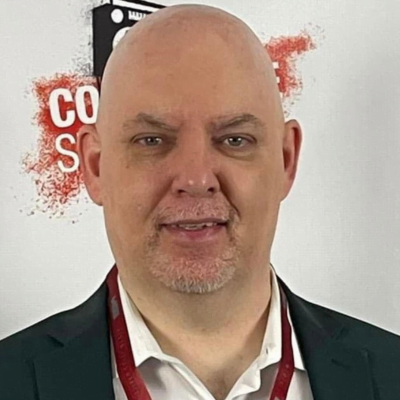
If you’ve ever listened to Josh Innes on the radio, chances are you have a strong opinion about him. He’s forceful with his opinions, not afraid to enter uncomfortable territory, and thrives on being in the middle of intense conversations.
Those traits have propelled him to be one of sports radio’s best over the past 5 years. While he’s certainly developed his legion of critics along the way, and earned a few industry enemies, he’s also delivered an impact in two top-10 markets – Philadelphia and Houston.
 Consider me one of those people who appreciates what Innes does. While I may not agree with every one of his tactics, I recognize his commitment to creating great radio, and I find it refreshing when talent are willing to put their lives on display for the whole world to see. In today’s world where opinions are second guessed, criticized, and passed around social media like a hot potato the moment they’re uttered, Josh speaks with force, endures the avalanche of negativity that comes with it, and does so without wavering.
When I listen to Josh, I hear someone who understands how to entertain, and take control of the airwaves. In some ways he’s like an infection that infiltrates the brain and sinks deeper and deeper inside, until it fully owns the mind. If you’ve seen the movie “Private Parts“, then you remember the scene, where the Program Director is irate because the ratings are in, and they verify that people who hate Howard Stern listen to him longer. Josh has a very similar effect.
That’s also evident by the way people respond and interact with him on social media. Not a day goes by where Josh isn’t engaging with listeners, sharing his personal life, posting photos, and diving into dialogue about things that may make some executives cringe. Heck, his Twitter profile photo is a photoshopped picture of his head on the Iron Sheik’s body, putting rival afternoon host Mike Missanelli in a camel clutch.
 Interesting enough, the man who brought Innes to Philadelphia, Andy Bloom, was also the one to put Stern on in Philadelphia during his dominant reign on terrestrial radio. It’s easy to see from afar why Bloom brought Josh to Philadelphia, and he’s dipped into his old playbook, and is providing some tricks and wisdom to his new protege to help him gain traction in the market. And it’s working.
Josh’s arrival though in the city of brotherly love, hasn’t exactly led to a lot of warm and fuzzy feelings among media members. He’s publicly sparred with his rival Missanelli, and former WIP host turned 97.5 The Fanatic morning man Anthony Gargano is also not a fan. Josh has also drawn the ire of the city’s most passionate sports fans, many who have a parochial view, especially when it comes to the people they listen to on local sports talk radio. Ironically, Innes went through a similar love-hate relationship in Houston with media members and listeners.
None the less, he’s created quite a storm, and that buzz has catapulted his afternoon show to the top of the ratings. However, the success in afternoons was also created with Tony Bruno, who has since left the show to focus on his podcasting work. Will the same success continue without the popular Bruno? That’s the challenge that WIP and Josh face going forward.
 To move in that direction, WIP has rebuilt the afternoon show into a 3-person program. The show now features Innes, former Eagles player Hollis Thomas, and Program Director Spike Eskin, who is the son of one of Philadelphia’s most successful talk show hosts, Howard Eskin. While the show is brand new and hasn’t had a full month together on-air, there’s no doubt of who the show’s master of chaos is, it’s Innes.
The one thing I’ve learned during my career is that the ones who emerge in this format, have no issue taking tough positions, enduring the wrath of people internally and externally, and their entire lives revolve around the show. Because they’re open and transparent with the audience, and don’t let anyone or anything dictate the way they deliver their content, they gain the respect and loyalty of their listeners, which often leads to strong ratings.
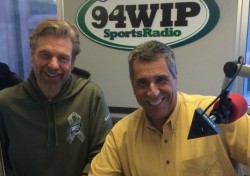 As an example, Angelo Cataldi, Mike North, Dennis and Callahan, Paul Finebaum, Mike Francesa, Colin Cowherd, Howard Eskin, and even Innes’ competitor Mike Missanelli, have all taken that approach during their careers, and its led to a lot of money and success, for themselves and their employers. You can agree or disagree with their opinions and styles, and approve or disapprove of their methods to generate reaction and interest, but their formula works.
In that way, Innes is a throwback. He’s not reinventing the wheel, he’s simply giving it a modern day adjustment. In a crowded marketplace with a whole lot of bravado among personalities, Innes has entered the room, planted his flag, and made sure everyone is aware he’s present. While opinions on him differ, they all realize he’s there and a legitimate threat.
 As someone who has watched the Philadelphia situation from afar, and has followed Josh’s rise from Baton Rouge, to Houston, to now Philadelphia, I’m not surprised by his success. He’s continued growing as a talent and individual, and Gavin Spittle (PD at 105.3 The Fan in Dallas, previously PD at 610 KILT in Houston), and Bloom, deserve credit for their role in his development. They’ve taken the risk to bring him into their cities, push him when necessary, but also let him be himself. They stuck by him during tumultuous times, which isn’t easy to do when you’re dealing with public and corporate pressure, and you’re unsure of whether or not it’s deserved.
I remember being in St. Louis programming 101 ESPN, and Innes was on my short list of candidates of people I’d consider if we had an opening. He was from Missouri, a lifelong Cardinals fan, and he had a great sound and lot of talent. While he was young, and still figuring out his path, and did a couple of things that made me scratch my head, any smart programmer could tell he had great ability, and the potential to do great things. It’s why a number of major market programmers had him on their lists too.
What some people don’t know, is how much he studies radio. One of our first conversations revolved around my station in St. Louis. Josh reached out, not because he wanted to tell me why he was the next big thing and needed to be on my airwaves, instead it was to offer praise because he had listened to the station, and was impressed with its presentation. While I wasn’t seeking validation for my work, what stood out were the details of his assessment. Despite not living in my market, he correctly analyzed how I liked to operate my brand, and he had a great respect and understanding of the talent, imaging, formatics, and content.
 Josh remained on my list of considerations in San Francisco, and when some changes took place at my former station 95.7 The Game, I gave him a strong look. By the time discussions began though, he was already deep into the process with WIP, so the timing didn’t work. Judging by the way he’s impacted the Philadelphia market, he made the right decision for his career.
Recently I caught up with Josh to get his views on a number of subjects including the transition to Philadelphia, his time in Baton Rouge and Houston, his views on the state of sports radio today, and the reasons behind his approach on-air and on social media. I think you’ll find the discussion interesting and entertaining, two words that best describe my guest, Josh Innes.
 Q: Your father Scott spent 30 years in radio and was the cartoon voice of Scooby Doo so entertaining has always run in the family. At what age did you know that you wanted to follow in his footsteps and work in the radio industry?
A: I think I was about 13 or 14. Prior that I wanted to direct movies. My dad bought me a video camera and I’d focus my energy on recreating movie scenes. I would learn how to edit them and add music before it was possible to do that from your cell phone. I wanted to be Alfred Hitchcock. I read books about him and watched his movies. I was addicted to horror movies. I used to attempt to recreate the shower scene from “Psycho” with my best friend. It was odd having a guy in the scene. I wish I still had some of the old videos. In one instance I’m filming the shower scene and in the background my dad walks in and says “What in the hell are you idiots doing?”.
I think it was the summer of 2000 when I decided I wanted to be the voice of the St. Louis Cardinals. My grandpa was a dumpster diver and he found a Talk Boy recorder in someones garbage can. You may remember the Talk Boy from “Home Alone 2”. I would visit my relatives in Missouri and watch the Cardinals games and call them into the recorder. I wanted so badly to be Jack Buck. I read his autobiography countless times, and I watched old Cardinals highlight tapes that featured radio play by play. I would watch them on loop. I am obsessive when it comes to things I enjoy. I lived in Louisiana but I’d listen to the Cardinals games on KMOX which could be heard across the country at night. I’d sit in my dad’s truck and go up and down the driveway. At times I’d sneak the truck to the end of the road and hold the recorder up to the speaker and record the games.
Q: Who were some of the broadcasters you listened to growing up that influenced your desire to pursue this industry?
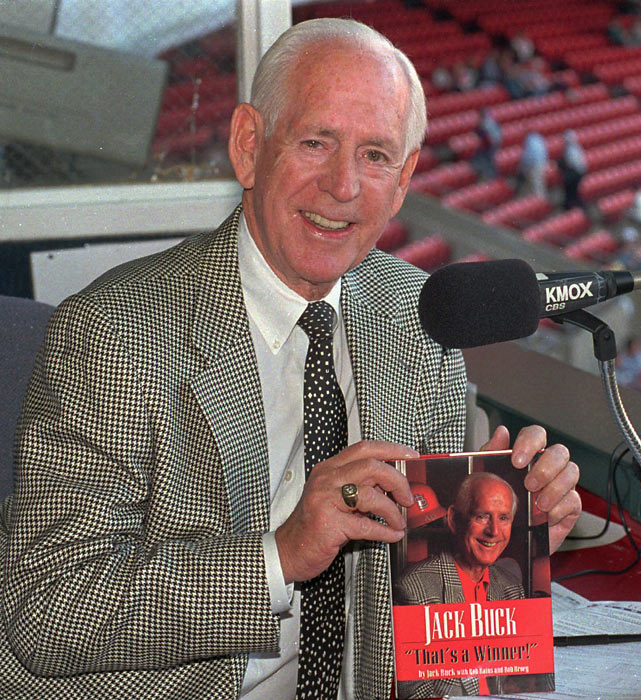 A: I have such a strange list of influences. My initial influence was Jack Buck. In my opinion he is the best baseball play by play man ever. I know that most will say Vin Scully is the best, but Jack was my guy. I have a picture of him and I at Busch Stadium when I was a baby.
When I was 14 I caught a batting practice home run ball at Busch Stadium. I waited outside the old press box for Jack to come out and sign it. At this point in his life he had very advanced Parkinson’s and a litany of other health issues. He walked out of the booth and I approached him. “Mr. Buck, Mr. Buck” I yelled out. “Could you please sign my ball?“. He has my grandpa and I get into an elevator with him and he signs it. “I’ve read your book 100 times” I tell him. “Did it put you to sleep?” he replied with a grin. We got out of the elevator, he disappeared and I realized I didn’t get a picture with him. The next day I go back to the booth. “Mr. Buck, Mr. Buck…can I get a picture?“. He walks up to me and says “I signed yours yesterday” and walks off. I was crushed at the time but settled for a picture with Al Hrabosky.
If I wanted to I could have focused on being a play by play guy, but I chose to go into sports radio. My radio influences are mostly from formats outside of sports. Howard Stern is an obvious one. He’s the king. I admire guys like Scott Shannon. Scott’s the greatest programmer of the 20th century. I love old FM jocks. I admire them because what they did was an art. I watch old video air checks of all these guys. I’m a dork.
Q: Your first jobs in the business were in the Baton Rouge market (if that’s wrong let me know). You worked for WJBO and WSKR. What were your responsibilities and what did you like/dislike about the job?
 A: This will sound lame but I loved everything about those jobs. I was 19 at the time and my job at JBO was originally part time. I’d run SWAC Football and High School Football shows on Saturday mornings, and I’d do the shifts no one wanted to. I worked all the holidays for maybe $6.50 an hour. People assume because my dad worked in the building that I was given these jobs and that they were glamourous, but I earned them by going to the station during Hurricane Katrina and telling Matt Kennedy that I’d do anything they needed me to do.
That night he had me call all of the offices of emergency preparedness to find out about school closings. The next day I’m at the governors press conference with a mic in her face. I was too stupid to know any better. I just did it. When I got the full time job at JBO and Score, I did morning sports updates on the news/talk station. I also babysat 6 radio stations from 3p-11p every day. My job was to do anything they needed me to do, and make sure that if World War 3 broke out that the phone would be answered. I hosted an hour sports show from 3p-4p daily with Matt Moscona who is now the #1 host in Baton Rouge and one of my best friends.
I should point out that before I ever got the part time job at Clear Channel, I did play by play for the Baton Rouge Kingfish of the ECHL and the Baton Rouge Riverbats of the Southeastern League of Professional Baseball. The Kingfish gig came when I was 15. I think they did it as a publicity stunt, but it turned out I was decent and they kept me on for 2 years. I did the 2nd period play by play for home games. I also made some road trips. The Riverbats gig was the time of my life. I thought I had made it. Imagine being a 16 year old kid traveling to Pensacola, FL and Macon, Ga calling games. I set up the whole broadcast. I was such a nerd. I learned everything about engineering broadcasts.
Q: They say you haven’t worked in radio until you’ve been fired and you gained that experience when WJBO parted ways with you in 2009 due to budget cuts. Where were you when you got the news? What was your reaction? And what did you learn from the experience?
 A: I was at the station preparing to go on the air and my email wasn’t working. I was naive. I walked into my PD’s office and told him I was having email issues and he said “Me too. I’ll look into it“. A few minutes later I hear an announcement over the intercom, “Josh Innes please come to Dick Lewis’ office“. Dick Lewis was the main guy at Clear Channel Baton Rouge. He called me in and honestly I don’t remember what he said. I remember walking to my car as my dad pulled up to do his shift. I was pretty crushed but I assumed I would be alright. I tried to get a gig on a rock station in town. The demo I put together was so dreadful. I still have it and it’s the one thing I’m actually embarrassed to play on air. Strangely enough they hired me back in August but in November I got the job at KILT.
Q: So you make the move to Houston, where you’re brought in to anchor updates in morning drive and host a solo hour from 10a-11a on Sports Radio KILT. How did the opportunity come about and what made you believe it was the right next step for your career?
 A: I used a site called STAA.com. Jon Chelesnik was a real believer in me. He sent my material to a few stations. One was 790 in Houston and the other was 610 KILT in Houston. I was scheduled for an on air audition at 790 followed by an interview with Gavin Spittle at 610, but a few days before I was to drive there, 790 rescheduled. I told Gavin I still wanted to meet with him so I did and he hired me on the spot. What made it seem like the right next step? It doubled my salary and I went from market 80 to market 6. Plus, Gavin had great vision for entertaining sports radio.
Q: After only a few months in Houston, you were chosen to do some fill-ins for Jim Rome. How did that situation come about, considering you weren’t yet hosting a 3-4 hour daily show?
 A: Rome used a lot of local guys to fill in. I think Gavin really pushed for me to get that fill in opportunity. It fell on the day after Lebron’s decision. Jason Stewart of the Rome show really liked it and asked me back 8 more times. I also think part of it was that other than Los Angeles, Houston was the biggest market for Rome and they wanted to save the show locally. I choose to believe I was good. Ha!
Q: The station then elevated you to work afternoons with Rich Lord, one of the most popular talents in Houston. Together you had a lot of success, but the relationship between the two of you at times was strained. What made it difficult for you guys to get on the same page?
 A: He was an old school guy. At times we really had fun and it was a good show. I just don’t think he liked my style. I think he liked the benefits of being on the show but didn’t really care for my style. I didn’t like a lot of the stuff he did. I think it eventually became a personal thing for both of us.
Q: Despite some personality differences with Rich, your stay in Houston put you on the map, and you had a lot of success. When you reflect back now on the entire Houston experience, how would you summarize it?
 A: When you are in the moment it seems a whole lot worse than what it actually was. I met many people who I consider best friends there. When the station was really cooking it was a great radio station. Gavin is the best sports radio programmer in the country. That isn’t a slight against anyone else that I’ve worked for but he gets ratings in markets that he has no business getting ratings. I was young. I had fun. I met my girlfriend. I made a little money. If Gavin wouldn’t have left for Dallas I may still be there. I had a 3 year offer at the end of 2012. Gavin left in January of 2013 and I never signed it.
Q: Next you moved to your current home, Philadelphia. WIP brought you in to host nights and immediately, your arrival was met with mixed reviews among local media people. Why do you believe there was such a divide when you hadn’t even spent a full month yet in the market?
 A: Fear. I was met with some of the most ridiculous criticisms from people. When I got to Houston there were long time local talents like Barry Warner who took me under their wing and wanted to teach me about the market. They wanted to help me succeed.
In Philadelphia, no on really wants to help anyone else. That’s not to say that the people are bad. It’s just a different vibe among media people. The local afternoon guy never liked me and told people behind the scenes that I would not make it in Philly. He chirped behind the scenes and I made fun of him on air. That’s my style. That said, it’s not like I had wars with everyone. Angelo Cataldi is the best in the market and I never had any issue with him. Michael Barkann and Ike Reese were very good to me. Steve Trevelise liked me from the jump and has been openly supportive which I appreciate.
Q: Your evening show started to create some buzz, and in February of this year, you were moved into afternoons with Tony Bruno. The show had strong ratings success out of the gate but ended in less than 6 months, when Bruno decided to leave terrestrial radio. How would you characterize the entire experience and your relationship with Tony?
 A: I considered Tony to be a buddy. We didn’t run the roads together or double date but I liked him and I still do. We had fun. We went to Vegas for a fight and had a blast. We went to spring training in Florida and had a blast. He’s a good guy. I read everywhere that Tony had issues with me and the way I do things on air. He never told me that. He never once said he disliked anything I did. He laughed all the time on the show. For whatever reason he decided to retire. I wish he would have stayed because we were kicking ass.
Q: One very public item is your well documented opposition to your competitor Mike Missanelli. You’ve referred to him on-air as “Bitchanelli” and the two of you had to be separated at Eagles training camp a few weeks ago. Where does the tension between the two of you come from?
 A: He’s my competitor. I’m not a local guy that has long standing friendships with the other guys. I don’t want to have friendships with people from other stations. I have heard stories about how he trashed Howard Eskin when he was trying to overtake him. I know that he treated Bruno like garbage. He punched a producer and got fired. I’ve heard he’s an overall bad dude and I have no reservations about trying to destroy him. I want to win. I was brought here to win. I think his show is boring, lazy and stale. That said, we didn’t almost fight. We had a conversation and he stepped towards me but he’s a 63 year old built like my grandma. He wasn’t going to swing.
 Q: With Bruno gone, the afternoon show has been adjusted and you’re now hosting a 3-man show with former Eagles player Hollis Thomas, and the son of one of Philadelphia’s most successful talk show hosts (Howard Eskin) Spike Eskin. How does your approach change working with them versus working a two man show with an established personality like Bruno?
A: My approach is the same. It’s a little different with 3 people but the guys I work with have an understanding of their roles. Spike is a great radio guy. He gets his role. Hollis is learning the business but he’s a sponge. I believe in making people around me better.
Q: One area you’ve made quite an impression in is social media. You’re as active as any talent out there but with that activity comes mixed responses. You’re known to engage in exchanges at times with listeners and even re-tweet some of their hate filled messages which some love and others don’t. What’s your reasoning for taking the approach that you do?
 A: My main reason for retweeting hate is that it gets my fans riled up. When people like you they rarely call or tweet to say it. They follow and listen but they don’t really respond. When a fan sees someone hating on the show they are compelled to respond. I use the same approach on air. Rarely do I take the call that says “I love the show“. If the call screen says “Josh is a loser and doesn’t belong in Philadelphia” I take that call. I’m probably screwed up in the head. Eric Bogosian in “Talk Radio” said it best “There’s nothing more boring than someone who loves you“. Retweeting a positive makes you look self serving. That said, I adore my listeners and fans.
 Q: I’ve read before that you’ve enjoyed some professional wrestling storylines, and see a natural connection between them and sports radio. How would you explain it to someone who’s not aware?
A: It’s really the WCW/WWE storyline. Eric Bischoff said “competition creates controversy and controversy creates cash“. I don’t look to create controversy in terms of my sports opinions. The WIP/WPEN battle is like a wrestling storyline. My battle with Missanelli is not only good for us but it’s good for sports radio in the market. It’s been front page news for months now.
Q: As it applies to being an on-air talent, how important do you believe it is to play an on-air character and carry a stigma about yourself in order to be successful in sports radio?
 A: I am myself on the air. I think it’s important to create an enemy in your own mind. It drives me. Its no different than athletes. They have to create the idea of an enemy.
Q: How much of what the audience hears and reads on social media is the real Josh Innes vs. the radio personality Josh Innes?
A: It’s 100% me. Every opinion is my own. It’s probably too much of me. I don’t have much of a filter. I’ll go on twitter rants about my life and get made fun of the next day. Obviously I’m performing on air and ham it up. However, when you meet me you see that everything I say on the air is real. That’s the key to relating to people.
Q: As someone who has had great success in two top-10 markets despite not being from those cities originally, what would you say is key for being successful as an out of town talent?
 A: Be honest. Gavin didn’t like that I would tell people I am a Cardinals fan. I had to. That’s who I am. I also believe in respecting the history of the local teams and learning the market. I may be a fan of the Cardinals but I don’t hate the Phillies. I embrace the teams and root for them. I try to do it in a way that isn’t phony. It’s clear I can’t be a diehard of the teams because I haven’t been around long enough. It doesn’t mean I don’t want them to win. My audience wants them to win. My ratings will be better if they win. I think it’s important to be 100% honest with people. They may hate it at first but they’ll eventually respect it.
Q: On the subject of success, some talents believe that ratings matter and others don’t. Where do you stand on the issue?
 A: It may be a flawed system but it is the system we go by. If I don’t win I’m fired. Period. It’s like asking Bill Belichick if winning matters or if it’s how you play the game. If Belichick has back to back 5 win seasons he’s probably fired. Usually the people who say ratings don’t matter are the ones that don’t have them. In TV you can have great shows that don’t have ratings. They can survive. “Parks and Rec” had lousy ratings but made it 6 years. The same can be said for “30 Rock“. In radio there is no Emmy Award that can save a show. You have to have ratings. I eat myself up thinking about ratings. I obsess over it.
Q: If there’s one aspect of your performance that you think needs improvement, what is it?
A: This may shock you but I think I suck. I never listen to a bit of mine and say “boy that was killer“. I listen to bits and think of all the stuff I did wrong. My mental makeup won’t allow me to think I can make it better. I will always judge myself harshly. It’s a sickness really. I judge myself on an unfair scale.
Q: You keep your eyes and ears on the industry and take a lot of pride in it. When you look at the state of sports radio today how would you describe it?
 A: Thriving but largely boring. Too many shows sound the same. Too many J-School stiffs. Everyone wants to sound like ESPN. Not enough unique personalities. Toucher and Rich in Boston is a great show. Listen to that. It’s two rock guys who have crushed sports radio. Why? Because they are funny and different. They don’t focus on sounding like everyone else.
Q: Who would you say are the 5 best talents performing in the sports radio format today?
A: Toucher and Rich, Michael Felger, Craig Carton, Angelo Cataldi, Gavin Dawson. Nationally it’s Colin Cowherd. Everyone else is a bore. These are the people who I actually seek out.
 Q: For someone who’s considering entering the industry or is trying to make the jump from a small market to a bigger stage, what advice would you pass along to them?
A: Be different. Stand out. Talk Hard. Steal The Air.
BONUS Q: Given your Missouri roots and passion for Cardinals baseball, how come you never pushed harder to come home to St. Louis?
A: Why didn’t you stay in St. Louis?
Josh Innes can be heard weekday afternoons from 2pm-6pm on Sports Radio 94 WIP in Philadelphia. You can also follow him on Twitter @JoshInnesRadio.