Turn on a sports radio station today, and you can’t go an hour without being reminded of the station’s slogan. Over and over again you’re beaten across the brain with a fancy message that tells you how great your local radio station is, and which city they operate in.
But do they matter? Do they make a difference? Are they necessary?
 Well that depends on who you ask.
Some of the most opinionated, right-seeking people on the planet, work in the sports talk format. Line up 10 people and ask them to weigh in on this subject, and you’ll get 10 different answers, and they’ll all be pretty convincing, and interesting.
Except nobody is right. It’s simply a matter of personal preference. What we often forget, is that there are multiple ways to create a brand, and communicate the radio station’s position, while developing an identity and delivering winning results.
 For example, listen to a local CBS sports radio station and then listen to a local market ESPN radio station. You’ll notice a stark contrast between the two.
On a CBS sports talker you’ll hear a lot of calls, a looser content flow, and commercial breaks without programming promos. Instead the station’s use liners in and out of segments to promote special broadcasts, games, giveaways and other special events.
When you turn on an ESPN sports radio station, you’re likely to hear a lot more production, a tighter format, less calls, more audio clips, and commercial breaks usually include at least one or two programming promos.
 While CBS prefers to use their inventory time during breaks to focus solely on commercials, and return to content, ESPN prefers to mix it up between commercials, and promote programming benefits that occur on the radio station.
In both cases, it works because there’s a different strategy for each product. If the on-air presentation reflects the station’s vision, and it’s producing results, that’s all that matters.
So after listening to a number of sports stations this week, and the different ways they position themselves, it got me to thinking about whether or not slogans are really critical.
 For example, when you listen to a music station, you’re going to endure an avalanche of messaging. The stations usually are programmed so strongly with songs, and commercials, that when that little bit of time is available to them to say something, they reinforce who they are.
The difference with sports talk is that we have opportunities to promote our messages during commercial breaks, AND during content, whereas songs restrict a music format’s ability to do both.
Rather than approach this strictly from a radio point of view, I want you to think about some of the world’s best brands, and the way you view and talk about them.
If I said to you, Nike – chances are you’d know the slogan “Just Do It“.
 If I asked you to name a slogan used by Geico, McDonald’s and Budweiser, you’d likely recall “15 minutes could save you 15% on car insurance, I’m Loving It and the King of Beers or This Bud’s For You“.
When a message is promoted heavily, and it represents the brand in an accurate way, it can have a major impact. No example is better right now than Donald Trump’s “Make America Great Again“.
While you may like or dislike Trump and his positions, everywhere you turn that message is reinforced. He’s wisely worked it into every interview he conducts, and every press conference he holds, and it reflects what he wants to do if he’s elected President of the United States of America. Whether he can deliver on his slogan’s message is another story for another time.
As an industry, radio isn’t necessarily strong when it comes to creating powerful slogans. That’s scary because we’re often tasked with writing commercial copy, promos, liners and on-air mentions. If anyone should be skilled at writing and creating strong positions, it’s us but there aren’t a lot of companies who analyze the writing, and effectiveness of a message created by the programming and production departments. There’s also a lack of coaching and training available to radio professionals as it applies to improving as writers.
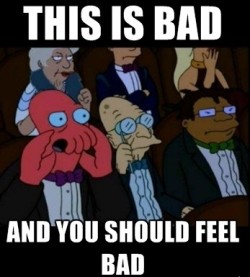 One other aspect of slogans that I see radio stations miss on, is that they’re often built around telling listeners what to think, how to feel and why the brand is so great. The focus gets put on the brand’s view of itself, not the benefits or connection it provides to the audience. I’m not sure how you feel about it, but I like to form my own opinions. I don’t need a packaged liner playing every 15 minutes to help me decide how to feel about a product.
People who listen to sports radio want to feel important to the brand they spend time with, and they want to believe they carry a little bit of influence in determining how the brand operates. When the message is built the needs and desires of the audience, the listener will spend more time helping you spread it.
As someone who has written a lot of promos, liners, on-air mentions, and bits, throughout the years, I’ve certainly delivered my fair share of clunkers, so I know how challenging it can be. While we all want to be creative, and produce an amazing message, our strengths are often in verbal communication, not written form.
 Even when we do create something powerful, and effective with our words, it takes a lot of time, and patience. Unless you’ve been part of the process of creating a brand message, people on the outside fail to understand that being creative is a process, and it can’t be scheduled. Ideas come to you when you least expect them, and you can’t put a 30-minute writing session on your calendar, and expect that you’ll come out of it with the world’s best slogan. It doesn’t work that way.
When you try to operate that way, you usually come away with something terrible like this:
“(Name of City), home for the best local sports talk, (Station Dial Position)”
You can put the voice of Jim and Dawn Cutler, Paul Turner or Steve Stone behind it, and they’ll make it sound as good as humanly possible, but even they can’t turn turds into diamonds.
Are we really convinced as programmers, talent and executives that if we don’t create a slogan for our brand, that the audience won’t know what it is? Isn’t the audience smarter than that?
 When was the last time you had a conversation about a sports talk radio station with a friend, or family member, and said “I listen to WFAN, because it’s my Flagship Station for New York Sports“? That’s not how people talk when describing your brand, and why they enjoy it.
If they’re talking about your product, they’re going to recall three specific things – the personalities on the air, the station’s dial position, and the name of the brand. The conversation sounds more like this – “I listen to 98.7 ESPN NY because I like the Michael Kay show“.
Slogans may feel necessary in the conference room, and they may look great on a white board, but unless they’re powerful, focused on the listener, and important to the identity of the brand, you can do without them. The time that gets spent in trying to create clever messaging for a :10 second legal ID, station liner, or station promo, can make your head spin.
 Is this critical to what we do? Is it where our time is best spent? Would the station you work for suffer tomorrow if the audience wasn’t aware that you were their city’s destination for sports radio?
In researching this topic, I found a few messages that impressed me, and some which didn’t. Bear in mind, these are my opinions, and yours may be different, so take it for whatever it’s worth.
Here are the three slogans that didn’t register with me.
- “Real Sports Talk”
- “Sports Radio With Balls”
- “All Sports, All The Time”
“Real Sports Talk” implies that nobody else in the market talks about sports in a serious way, and it suggests that the brand never deviates from that plan, which isn’t true. It also doesn’t create a sense of power for the audience, or something memorable to identify with. If other brands in the market also talk about sports, how does this make the station unique?
In the case of “Sports Radio With Balls“, I’m guessing that the station is trying to play off of the fact that they carry LIVE play by play except, they don’t have the rights to the market’s only major professional sports team. This particular message is one that is going to come out of the mouth’s of every on-air talent. While it may feel, and sound natural for some, it won’t for others. Also, as sports radio adds more women listeners, do you think they want to hear this? It comes across very male-focused, and while I understand it, especially when considering the competitor they’re up against, and the Men 25-54 focus, I think there’s room for something else that represents the brand, and gives the talent more pride when they say it.
The final one, “All Sports, All The Time” is actually pretty solid, but if you know the brand I’m referring to, it’s not at all accurate. The content experience, and personalities on the radio station, focus much of their material around guy-talk, and they’re outstanding at it, and the audience loves it. Yes they talk sports too, but they’re built around entertainment, and lifestyle so if the message isn’t going to reflect what the brand represents, why use this approach?
 When a slogan is created well, it can register and make a difference. For example, ESPN bills itself as “The Worldwide Leader In Sports” which many would say is exactly who they are. I also liked Apple’s “Think Different“, TNT’s “We Know Drama“, TBS’ “Very Funny” and Outback Steakhouse’s “No Rules Just Right” because I believe they provide an accurate description of each brand.
Looking at those last few examples, notice anything similar? Each of them is short, sweet and in line with their brand’s presentation. If you can’t describe the brand, what it does, and what it stands for in 10 words or less, make adjustments. The more you need to explain, the more confused people become. There’s a reason why these companies, and the others I listed earlier in this column, stand out. They say a lot with very little.
In listening across the country, I did hear a number of brands that I thought were very good. In each case, I noticed that they weren’t only strong performers in their respective markets, but they also keep the message very simple. This made it easy to recall, and that’s important when trying to invade a listener’s head space.
- Arizona Sports 98.7FM (the brand name, dial position, frequency)
- The Mighty 1090 (focus is strictly on the brand name/dial position)
- Rip City Radio 620 – Portland’s Blazers Station (highlights the brand name which plays off of a term that local people are proud to be associated with, dial position and the relationship with the city’s only professional franchise)
I noticed that many CBS Sports Stations keep it simple, and focus solely on the brand name and dial position which is similar to what Arizona Sports and the Mighty 1090 are doing, and I think that is smart. ESPN Radio stations that I listened to highlight the four letters, and cities which they operate in, which is part of their operational philosophy, and also makes sense.
 There was one slogan I liked a lot, but learned is no longer being utilized. Sports Radio 810 WHB in Kansas City used to use the position “Powered By Fans“, which was excellent because it gave the audience a sense of pride, passion, and ownership in the radio station. They’ve since switched to “The Power of Sports” and I’m sure there was a reason for it, but I personally preferred the original one.
I don’t claim to be right on all of this, but I’m simply making the point that the format can thrive without the use of a slogan. There are a lot of things that we do in this business, simply because someone else before us did it. That doesn’t mean it’s right, needed or valuable.
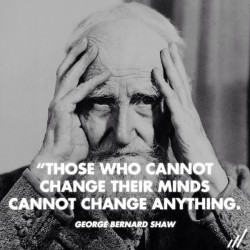 If you look at sports radio and the way it has grown over the last 30 years, it’s very different. Yet we continue to do some of the same things that we originally did because we’re creatures of comfort. We preach about the importance of change, taking risks, and introducing new ideas, but as soon as someone does, they’re met with resistance.
As our format faces new challenges, and enters unchartered waters during the next 30 years, we can’t afford to be one track minded, and stuck in our 1990’s views. That mentality will cost us listeners, and a whole lot of revenue.
If you can show me a radio station being weakened with its audience, or a station’s ratings suffering due to the loss of a slogan, I’ll gladly adjust my line of thinking. But there is value in my point of view, and I believe failed performance goes a lot deeper than the loss of one simple brand message.
If you’re going to use a slogan on your radio station, make it mean something. Otherwise you’re cluttering your airwaves with additional white noise, and taking away time from your best asset – your on-air talent!
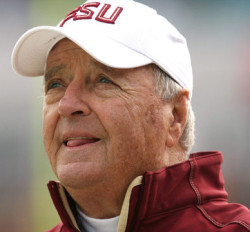 I once read a quote from former Florida State Football Coach Bobby Bowden which stuck with me and it fits perfectly for this subject. Bowden told his sons when they were considering entering the coaching profession “If you can live without coaching, don’t get into it. But if you can’t live without it, go right ahead“.
Now give that some thought, and ask yourself “Would my radio station’s slogan be missed if it was pulled off the air tomorrow“? The answer you come up with should determine what you do next with it!