In Seattle’s music scene, collaboration and community serve as the heart pumping blood all over. Since 2006, Lou Rawk has placed his stamp on the Rain City as a DJ in the flesh and on the airways.
As a kid, he always had an instrument in his hand, so it was only a matter of time before he’d get around to the turntables. Of course, a rich palette of ‘90s hip-hop helped him hone his craft even better!
Today, Lou Rawk is the official DJ for the Seattle Kraken! Away from the ice, you can catch him spinning here and there at various gigs and parties. However, his radio days began at 104.9 KUBE—the premier hip-hop station in Seattle.
“When KUBE 104.9 was in its heyday, I got the call from DJ Supa Sam, because he was one of the judges for a battle I won when I was at U Dub (University of Washington) in college. KUBE was putting a mixtape together for a Saturday show, and that’s how I got my foot in the door.”
“I didn’t think I was making waves, but because the program director never called me, never sent me an email saying, ‘Hey, good job,’ or anything like that. But one day, I got a call from the program director, and his boss was on the phone too. I was thinking I had messed up, like, ‘did I accidentally play some curse words on the radio?’ But it turned out to be a good thing! They wanted me to be on the air live, mixing for the wake-up show!
“Supa Sam was on his way out and dropped my name as a potential replacement. So, they called me up to the live show, but I was going to Japan the next day! I got back from Japan on February 9th. They told me on February 10th to come in at 5am so I could meet everybody and they could show me the ropes.”
“I was on the ‘Wake Up Show’ when it was KUBE 93 again. I was with Strawberry, Lisette, and Jenna. They wanted somebody they could trust when it came to mixing live and could deliver results. Everybody else pre-records and sends in their mix. I’m glad I got to put in my time there and got to meet a lot of cool people. Strawberry and I are really cool now, and we still work together. He’s the in-game announcer for the Kraken.”
Dylan Fleming: Why is KUBE special in Seattle?
Lou Rawk: KUBE 93 has always been the main hip-hop station in Seattle since 1982. Mix 92.5 played some hip-hop, but that’s more of a Top 40 open genre format. KUBE 93 has always really stayed true to hip-hop. I miss when they would let people call in and freestyle on Fridays. I was with KUBE for about 2-3 years, then the pandemic hit.
At that time, I was DJing full time, and so that wiped out my income stream. That’s when I started branching out. I had to get a regular day job because I was too proud to ask my mom to pay my rent during the pandemic.
I was working both ends of the clock. I’d work days, and then I worked nights for a funeral home chain. I would transport dead bodies. (Whoa, yeah, I know, pretty crazy icebreaker.) But then in the morning, right after my shift, I’d head to the station, do the mixes and then sleep during the day.
DF: Are there still opportunities in radio for independent artists, DJs, or people looking for jobs?
LR: With the uptick in streaming services, I feel like a radio station can push the envelope and go completely digital. Let go of the old school notion of music program directors [that could happen]. When I was DJing for the radio, I had all my indie artist homies asking me if I could play their track.
I would sneak their tracks in here and there, but I always got in trouble with the PD. I think if a radio station is really community-focused and doesn’t care about the marketing numbers or the ratings, it would do a lot better in today’s environment. Especially when you have all these creators with all these digital avenues, making YouTube videos and such. If a radio station approached it in the same way, they’d make some waves.
How did you become the official DJ for the Kraken?
LR: Another one of the judges from the battle I won in college was DJ Side, who’s the music director for the Kraken. Ever since he saw my battle, we became friends and would do gigs together.
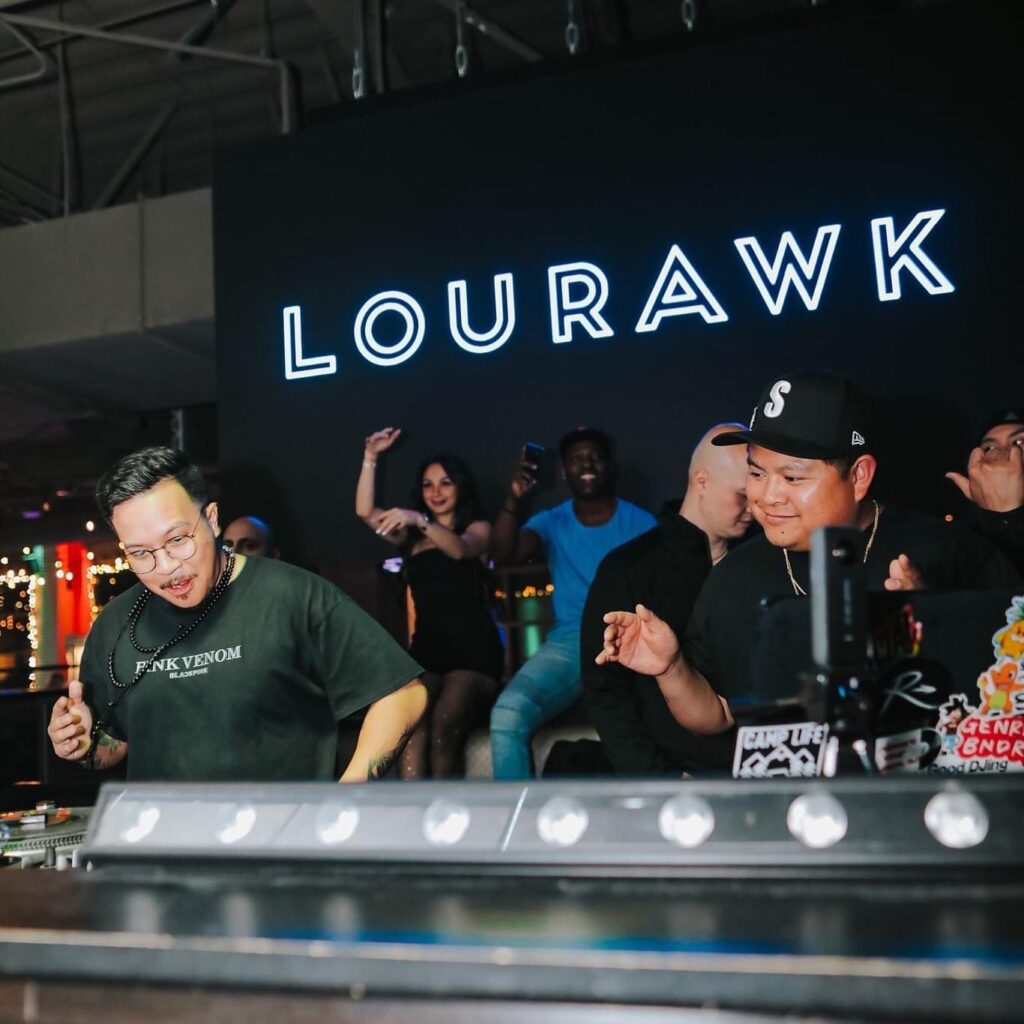
DF: What is your typical week like nowadays?
LR: On a heavy-stacked weekend, I have a club gig on Friday and a wedding all day on Saturday. If there’s a Kraken game in town, like a Sunday afternoon, or you switch the days. If I get a Saturday game at the Kraken, I work the pre-game, sometimes even the post-game at the same time. That would be a pretty, hectic week.
I still freestyle a lot now when I mix, just because I feed off the room’s energy that the people are giving me. I’ve still got these routines and sets in my back pocket, just in case. I don’t really know where the room is going, and I know that there’s some stuff I kind of revert back to the stuff I know works, just to get things rolling again.
Recently, you were on a YouTube series called Spin the Block Radio. Can you speak on that?
LR: Yeah, that’s my boy Dolo Beats show! We go way back; we were in a youth group together! It’s funny because a lot of the new school cats that he’s friends with asked him how he knew me. He told them we’re church brothers, straight up!
What’s funny is that I didn’t even ask him to be a guest on his YouTube series. I just saw his first episode when he was spinning in his car. His production value, the [camera] angles, everything was on point. I texted him just to tell him to keep doing what he was doing. He said it would be an honor to have me as his first guest.
DF: I love how Seattle’s KEXP would do in-studio live performances from bands. They were among the first radio stations to bring that to YouTube, along with NPR Tiny Desk concerts. I became aware of what they were doing without even listening to the station.
LR: I love KEXP for that too! And their team is super cool. I met a few of them in my radio days.
DF: If you could establish something on the radio, either in Seattle or anywhere, what would you do?
LR: I would throw back the mix shows and get my boys who are really keeping true school DJ stuff alive, and not just be dancing behind a controller. What would be fun, too, is that we used to have a podcast where we talked about DJ stories and experiences we’ve had at different venues, events, and even DJ weddings. There are tons of stories from DJing weddings alone.
DF: Do you believe a radio station still has to compete with YouTube, streaming, and podcasts?
LR: Yeah, for sure. I’m surprised at how many people recognize me from the radio. I didn’t even think people listened when I was on it. I believe the traditional radio infrastructure, where executives had to please labels or endorse payola, has largely stopped.
If the radio station was really focused on the music and not the money or the ratings, I think that would make a huge difference, right? The audience for radio is still out there; we just have to change the face of it.
Barrett Media produces daily content on the music, news, and sports media industries. To stay updated, sign up for our newsletters and get the latest information delivered straight to your inbox.