

AI music is no longer an experiment happening on the fringes of the industry. It is sitting at the center of a major commercial push. The audiences radio serves every day are about to feel its effects whether the industry is ready or not.
ElevenLabs has officially launched ElevenMusic. The platform designed to transform passive listeners into active music creators, and Billboard recently covered the story in detail. The implications stretch well beyond tech circles. This touches artists, audiences, and anyone in the business of connecting people to music. It forces a question the industry has been slow to confront. When AI music helps fill a playlist, a chart, or a streaming feed, should the listener know?
AI Music Is Changing the Fan Relationship
Streaming reshaped how people consumed music, but ElevenMusic wants to go further and change how people actually experience it. The platform lets users create original songs from simple prompts, remix existing tracks, and adjust tempo, genre, and overall feel. A fan can start with a lyric, a mood, or a melody, and the system builds a full track from there.
ElevenLabs describes this as moving fans from “passive listeners into active participants,” and radio programmers should recognize that language immediately. Call-ins, requests, and listener contests have always chased the same goal. ElevenMusic simply updates that strategy with tools that would have seemed impossible a decade ago. The more AI music enters the ecosystem, though, the harder it becomes to distinguish human artistry from machine output. At a certain point transparency stops being a preference and starts being a responsibility.
The Platform at Launch
ElevenMusic launched with approximately 4,000 human artists on board. Almost all of them emerging acts looking for exposure and a new path to audience connection. That detail reframes the narrative away from pure disruption and toward something more nuanced. A new discovery platform where independent artists gain access to new audiences while fans gain access to a creative process they never had before. But a fan generating AI music from a prompt and a professional songwriter crafting a track from lived experience are not the same thing. Even when the output sounds similar. The origin matters, and audiences deserve to understand it.
The Licensing Question AI Music Cannot Avoid
AI music and the broader music industry have a complicated history, and the tension almost always comes back to the same question of who gets paid and how. ElevenLabs addressed this directly at launch by securing licensing deals with Kobalt and Merlin, while also working with SourceAudio for synchronization rights. Building that infrastructure before controversy forced the issue is a meaningful distinction in a space littered with platforms that moved fast and cleaned up the mess later.
Artists receive a pro-rata share of a royalty pool based on how much their work contributes to the system, with popularity metrics across digital platforms factoring into the calculation. The model is imperfect, but the structure exists and that matters. Labeling requirements could strengthen it further. If listeners understand that a track is AI music with significant machine involvement, the compensation conversation becomes more honest and the royalty math becomes easier to defend to skeptical artists and their representatives.
Should AI Music Have Its Own Chart?
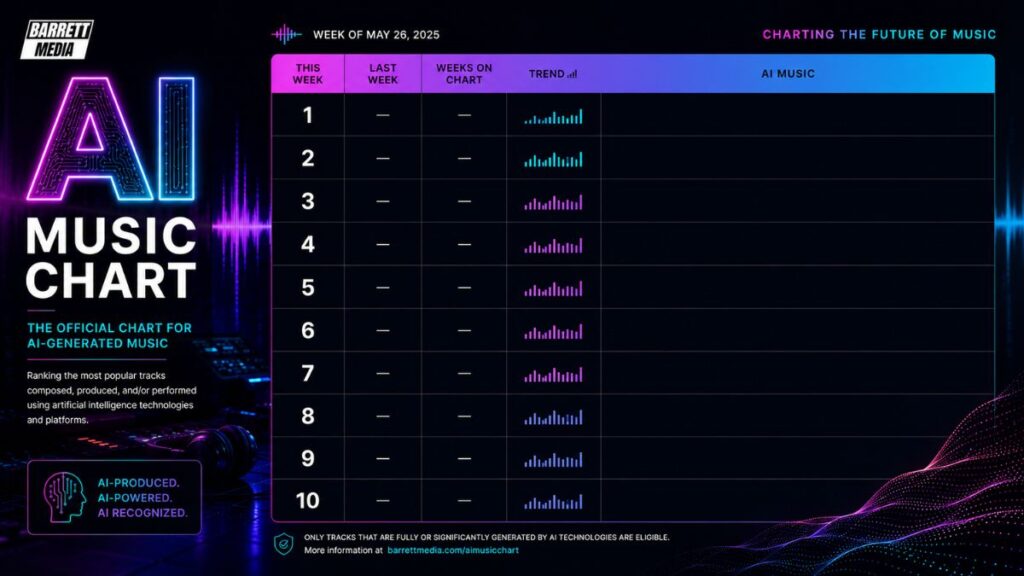
If AI music continues growing at its current pace. The question of whether it should compete directly against fully human-created work on mainstream charts becomes harder to avoid. A dedicated AI music chart would create both a fair competitive space and genuine transparency. Giving listeners, programmers, and industry professionals a clear understanding of what they are actually evaluating.
The counterargument draws on the history of rap. Which some believed needed separate commercial tracking when it emerged, only to integrate into mainstream charts and transform them entirely. But that comparison only goes so far. Rap was made by human beings finding their audience within a system built for other genres. AI music is produced by a machine that can crank out thousands of songs before a human artist finishes their morning coffee. Putting both on the same chart without distinction is not really a level playing field. it is more like slowly pushing human artists out of the room without anyone officially announcing it. The industry should ask itself honestly whether that is the outcome it actually wants.
The Artist-First Case for Labeling AI Music
Skepticism toward AI music runs deep and for understandable reasons. Artists have watched their work scraped, replicated, and monetized without consent, and that history creates distrust that press releases alone cannot overcome. ElevenLabs is trying to get ahead of it by positioning the platform as “artist-first by design,” a message reinforced directly by Derek Cournoyer, the company’s music strategy lead. “We’re building with the artist and songwriter communities, not around them,” he said.
That is the right framing, and mandatory disclosure requirements would actually help platforms like ElevenMusic make that case more convincingly over time. When the AI music label is built into the system by default, the conversation shifts from suspicion to structure. Artists see accountability embedded in the platform rather than promised in a quote, and that builds trust at a pace no marketing campaign can replicate.
Where Does AI Music End and Human Music Begin?
The labeling argument is straightforward in concept and genuinely difficult in execution, because the threshold question has no obvious answer. A song that uses AI for mastering is a fundamentally different thing from a fully generated AI music track where the machine wrote the lyrics, composed the melody, and produced the vocals entirely. Drawing a clear line between those two endpoints requires more precision than the industry has managed so far.
The streaming platforms are beginning to move on AI music labeling, but every one of them is moving differently, and that inconsistency is itself the problem. Spotify adopted the DDEX disclosure standard in September 2025. Apple Music launched Transparency Tags in March 2026. TikTok issues immediate strikes for unlabeled AI content. Deezer tags it and pulls it from algorithmic recommendations. Bandcamp banned it outright. Five platforms, five different standards, which means listeners cannot rely on any of them consistently and artists cannot plan around them intelligently. Deezer’s own research found that 80% of people believe fully AI-generated music should be clearly labeled, and 52% believe it does not belong in main charts alongside human-made music. The audience has already reached a conclusion.
Radio’s Advantage in the AI Music Era
Radio still owns something AI music platforms cannot manufacture quickly, and that is trust. Listeners believe their favorite stations, return to their favorite personalities, and rely on curated experiences that took years to build. That relationship becomes more valuable, not less, in an environment where the origin of content grows increasingly difficult to determine.
If radio does not address the AI music transparency question proactively, platforms will define the standard by default. Stations that get ahead of this — that tell listeners clearly when and how AI music touches their content — reinforce the trust they already hold and turn a potential vulnerability into a real competitive advantage.
The Road Ahead for AI Music
A full, usable AI music track now takes seconds to produce. And that single fact changes more about this industry than most people have fully processed. It changes workflows, expectations, and what the word production means inside a radio facility or recording studio. It also means the supply of music entering the market is becoming effectively unlimited, which is exactly why labeling matters so much. Without transparency, that abundance creates noise. With clear labeling, listeners and programmers have the signal they need to make meaningful choices.
ElevenMusic’s success will ultimately depend on whether ElevenLabs delivers on its promises around licensing, royalty fairness, and user experience. But the broader challenge for AI music extends well beyond any single platform. Without clear labeling standards and a serious conversation about chart classification. The lines between human and machine creativity will blur beyond the point where the distinction feels meaningful to most listeners.
The audience has already moved toward participation and co-creation. The industry now needs to move with equal urgency toward accountability. Labeling the AI music, defining the threshold, and deciding whether a dedicated chart serves the ecosystem better than the current ambiguity does. The core obligation has not changed. Be straight with the audience about what they are hearing and where it came from. That has always been the job, regardless of who — or what — made the music.
Barrett Media produces daily content on the music, news, and sports media industries. Sign up for our newsletters to stay updated and get the latest information right in your inbox.
