

Few executives in sports media share a legacy similar to the one crafted by David Roberts. The ESPN Executive Vice President and Executive Editor of Sports News and Entertainment confirmed in May that he was retiring at the end of August. After nearly 50 years in media, Roberts decided now was the right time to close this chapter of his career and begin a new one.
The decision to walk away is never easy, no matter what level of achievement you earn over a career. However, Roberts believes every position in every line of work has a beginning, middle, and end. With every ending comes an opportunity for a new chapter to begin.
“You just know when you know,” says Roberts on how he made the decision to retire from ESPN. “You’re always planning for the next chapters in your life and career. You can’t work forever… I’m just appreciative that this company allowed me to be who I am.”
The identity Roberts built was one defined by guidance, drive, and mentorship. He has mentored some of ESPN’s biggest names and hired a diverse group that will help guide the network’s future. With a keen eye for identifying talent, Roberts has assembled an impressive mix of personalities across every program he oversees, placing the best people in each role while ensuring opportunities for individuals of all backgrounds.
When news of his upcoming retirement became public, many celebrated Roberts’ accomplishments. They celebrated a career built on staying true to the mission while helping elevate ESPN to a new standard of excellence.
“It was a nice feeling. It made you appreciate the group of people that we work with. But also take stock of what was accomplished and who you accomplished it with,” said Roberts. “Working at ESPN, you’re working with arguably the best people in the industry. Because of that, a great deal of our goals were accomplished through collective effort and teamwork. It’s nice to sit back and reflect on the things we accomplished as a team together.”
A Diversity Mission
Roberts’ career story has many chapters. Before his rise at ESPN, he began his career as a reporter for WGPR-TV in Detroit, the first African American-owned television station in the country. In addition, he became news director at WDTN-TV in Dayton, Ohio in 1987, where he became the first African American news director in the state’s history. He then moved to WBAL-TV in Baltimore in 1991 as news director before joining WXIA-TV in Atlanta in 1996 in the same role. Once again, he became the state’s first African American news director.
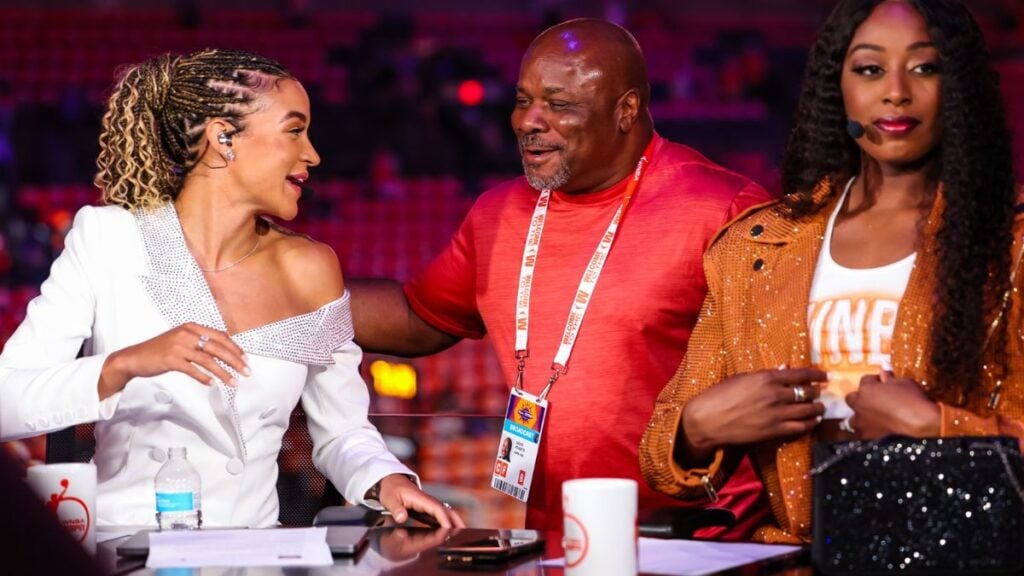
Roberts joined ESPN in 2004 as a coordinating producer and will leave overseeing one of the largest news operations in sports media. Yet his greatest impact on the industry will likely be his commitment to building a diverse and talented roster, both on camera and behind the scenes.
“The lack of diversity is still a problem in the industry. The fact that I was put into some very important positions and allowed to have the kind of input I had in a lot of the major decisions at ESPN is representative of the kind of positive diversity that is sorely necessary across the industry,” explains Roberts.
Even after a nearly 50-year career in media, Roberts remains optimistic the industry will continue moving toward a level playing field. Most importantly, he believes diversity is good for business. Moreover, that successful organizations thrive through representation, varied perspectives, and a deep understanding of their audience.
Roberts credits the executive leadership at The Walt Disney Company and ESPN President Jimmy Pitaro for embracing that philosophy and allowing him to create a level playing field in his talent acquisitions.
“We have Malika Andrews, Monica McNutt, Amina Smith, Chiney Ogwumike, Andraya Carter, and Christine Williamson. Those names represent where we are right now at ESPN. They’re all going to have an impact long into the future. That’s a big part of the legacy that I’m really proud of,” said Roberts. “There’s also Rich Eisen, JJ Reddick, and Bob Myers as well. Those people brought a diversity of thought, but also different types of talent that made us better. At the end of the day, it’s recognizing who your audience is, and recognizing who’s talented and who’s not.”
Belief In Journalism
When Roberts made the pivot from news to sports in 2002, he never imagined his run at ESPN would include the level of success and longevity it ultimately produced. Before making that career move 24 years ago, he noticed local television news was receiving less commitment and investment.
He says the transition to ESPN was a natural one. Moreover, Roberts viewed ESPN as a credible news organization that consistently adapted to the platforms where sports fans consumed news.
Over the years, ESPN’s operations have grown dramatically. Most recently, the network reached an agreement with the National Football League to acquire NFL Network in exchange for the league receiving a 10 percent stake in ESPN. Critics have questioned how the NFL’s ownership stake could affect the independence of ESPN’s award-winning investigative journalism.
Even in his final days with the network, Roberts pushed back on concerns that ESPN’s NFL coverage could become compromised.
“All of our league partners, we have great relationships with them. They understand what we do. The commitment to journalism should never be questioned in a serious way,” said Roberts, who referenced ESPN’s recent hiring of six Washington Post reporters who were laid off by their former employer. “The commitment to journalism at ESPN is as strong as it’s ever been. The NFL Network is now part of the fabric of what we are here at ESPN. That will not change [our approach at ESPN]. I can assure you of that.”
ESPN Strength In Numbers
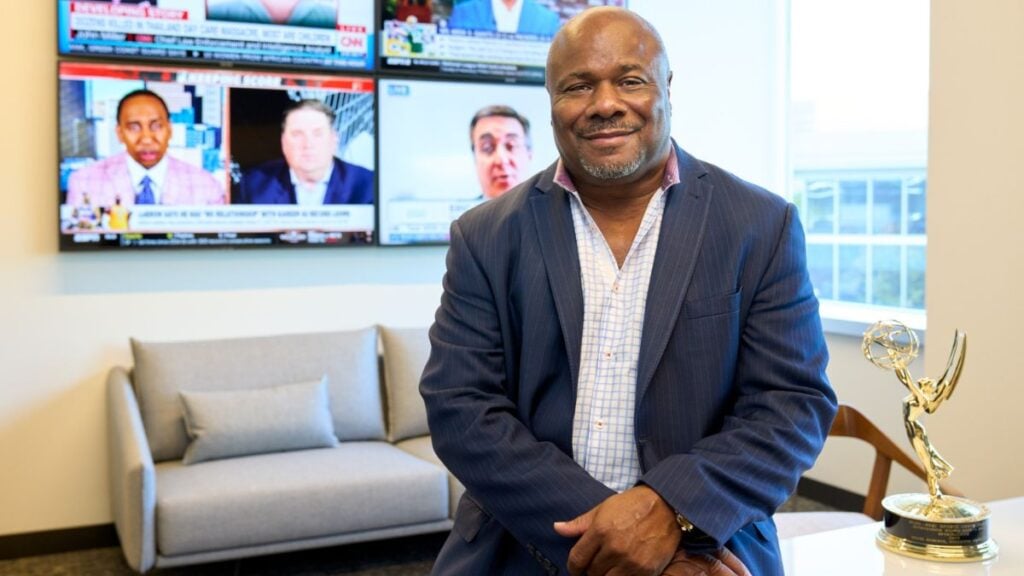
Currently, Roberts has ESPN in a strong position. Viewership for many of the network’s studio programs is at levels not seen in years. He credits those results to a clear vision from ESPN’s leadership and a talented staff that continues pulling in the same direction.
“People are not afraid to take chances. There’s a big push for innovative thinking, and smart risk-taking underway,” said Roberts. “ESPN has the best events on television. That makes it pretty easy for any studio show to come on before and afterwards. That speaks to the strategy of the company leadership top to bottom. I’ve never worked with more talented people in my career.”
That momentum will likely continue building toward ESPN’s first Super Bowl broadcast in February 2027. Roberts noted he has helped plan for that moment over the past several years. However, he isn’t sure whether he’ll be enjoying it from the sidelines in Los Angeles or at home alongside hundreds of millions of viewers.
As Roberts departs ESPN, he’s excited to watch his successor grow into the role. For the past seven years, Mike Foss has served as Roberts’ right-hand man. Roberts believes Foss is the ideal choice to lead one of the network’s most important departments into its next chapter.
“Without question, his strengths will help continue to grow this operation. It’s going to be fun to watch him in action as he takes on this even bigger challenge,” said Roberts. “He knows what he’s doing. He’s more than prepared to do what he has to do to continue to evolve the product and the people who work on the product. He’s a winner, and I already know he will continue to win.”
Roberts says he doesn’t expect to serve ESPN in an advisory role after his final day on Aug. 31. Instead, he plans to enjoy celebrating the accomplishments of a nearly 50-year career as a trailblazer in media before deciding what comes next.
“I don’t know if I’ll be doing anything outside of the media business. The one thing I can tell you is I’m not going to be sitting around playing golf five days a week,” said Roberts.
The Final Days….
For nearly five decades, David Roberts has helped shape the way audiences experience sports. Not by appearing in front of the camera, but by identifying the people who should. His fingerprints are on countless broadcasts, careers, and editorial decisions that have defined ESPN for a generation of viewers.
When he walks out of the company’s Bristol headquarters for the final time on Aug. 31, he’ll leave behind more than an executive title. He’ll leave behind a culture that values journalism, embraces innovation, and understands the strongest teams are built through diversity of talent, thought, and experience.
Retirement may close Roberts’ chapter at ESPN, but it won’t lessen his influence. The anchors he hired, the executives he mentored, and the standards he established will continue shaping the network long after he’s gone. Moreover, in an industry often measured by ratings and headlines, David Roberts’ greatest accomplishment may ultimately be the people and principles he leaves behind.
“The last day at ESPN will just be like every day,” pondered Roberts. “The one good thing about this business is you never really say goodbye. I’ll be around somewhere, no matter how the next chapter unfolds.”
Barrett Media produces daily content on the music, news, and sports media industries. Sign up for our newsletters to stay updated and get the latest information right in your inbox.
