Home Blog Page 13

Black Box Group Offers Free Halloween Edition of The Drop

0

Black Box Group is giving radio shows a free Halloween content package. The special edition of The Drop offers five daily content anchors and more than 10 bonus segments for Halloween week.

What We Know: The one-page edition is free to any station or show, with no subscription required. Each day features a different anchor. For example, Monday’s Horror Victim Auditions gives callers ten seconds to perform a horror-movie death scene. Meanwhile, other days feature No BS Ghost Stories, Ask A Witch or Gravedigger, Costume Court, and a debate over trick-or-treat rules.

Additionally, the package includes quick-hit topics, games, and features like Candy Corn Court and Candy Jeopardy. Each segment comes with a setup and execution direction so shows can add their own personalities.

Black Box Group founder Keith Cunningham curates The Drop. He also writes the RockTernative column for Barrett Media. Previously, he spent more than a decade leading KLOS in Los Angeles. He also handled national Rock programming and talent development for Cumulus and Jacobs Media.

What They Said: “Talent doesn’t need another list of Halloween facts or links to 30 scary stories. They need something worth putting on the air right now. Today’s talent are covering multiple jobs, and critical prep time gets squeezed.” –Keith Cunningham

What Remains Unclear: Black Box Group did not disclose pricing for regular editions of The Drop. It also hasn’t shared how many stations currently subscribe.

What It Means: Prep services are nothing new in radio. However, leaner staffs have made ready-to-execute content more valuable. As a result, a free sample gives Black Box Group a low-risk way to win over new shows. Stations can request the Halloween edition at keithblackboxgroup@gmail.com.

Barrett Media produces daily content on the music, news, and sports media industries. Sign up for our newsletters to stay updated and get the latest information right in your inbox.


Buzz Knight’s Podcast Interviews Join Rock & Roll Hall of Fame Collection

0

A second batch of Buzz Knight podcast conversations is headed to Cleveland. The Rock & Roll Hall of Fame Library and Archives added new episodes to its permanent collection.

What We Know: The donation adds new Takin’ A Walk and Music Saved Me episodes, building on a first donation in 2024. Knight’s Takin’ A Walk lineup includes Joe Satriani, Steve Vai, David Duchovny, Lukas Graham, Nigel Dick, and Chuck Nowlin. It also features AdLeen Rose, with Tina Rose and Amy Nelson, daughters of Leon Russell and Willie Nelson, respectively. Meanwhile, Lynn Hoffman’s Music Saved Me contributed episodes with Ben Kweller and Reimagine founder Brad Wolfe.

What They Said: Buzz Knight: “Every one of these conversations captures an artist reflecting on the moments that shaped them — the risks, the breakthroughs, the songs that mattered. To have them preserved permanently at the Rock & Roll Hall of Fame, alongside the history of the music itself, is something I don’t take for granted. This one means as much to me as the first donation did.”

What Remains Unclear: However, the announcement didn’t say how many episodes made the second batch. There’s also no known timeline for when the new material becomes available to researchers.

What It Means: Ultimately, the archive gives these conversations a permanent home. According to BKMP, it preserves audio interviews and transcripts tracing artists’ personal and professional journeys. That record spans rock, pop, country, and indie music. As a result, researchers, historians, and fans can revisit those stories long after they first aired.

Barrett Media produces daily content on the music, news, and sports media industries. Sign up for our newsletters to stay updated and get the latest information right in your inbox.

ESPN Posts Second-Best College Football Viewership Start Since 2011

0

College football viewership on ESPN is near record levels. The network posted their second-best start since 2011, and College GameDay is on pace for its most-watched season for the third straight year.

What We Know: ESPN networks (ABC, ESPN, ESPN2 and ESPNU) are averaging 2.2 million viewers across 120 games. That’s up 15 percent from 2024, but slightly below last year’s record pace. ABC is averaging 6.8 million viewers across 23 games. Its Saturday primetime window leads the way at a record 9.0 million. Meanwhile, ESPN and ABC have aired eight of the season’s 10 most-watched games. The September 12th matchup between Ohio State and Texas topped the list with 14 million viewers, the most-watched on ESPN networks since 2016. College GameDay is also thriving, averaging 2.8 million viewers through Week 7. Six of the show’s nine most-watched regular-season episodes ever came this year.

What the Data Says: (via ESPN PR)

ESPN Networks Avg.ESPN GamesESPN vs. 2024ABC Avg.ABC GamesABC vs. 2024Total Minutes Watched
2.2M120+15%6.8M23+26%93B (+3% YoY)

ESPN College Football Viewership — 2026

Ohio State–Texas (Sept. 12)Georgia–Alabama (Oct. 10)LSU–Ole Miss (Sept. 19)Texas–Oklahoma (Oct. 10)Texas–Tennessee (Sept. 26)Notre Dame–BYU (Oct. 17)Ole Miss–Florida (Sept. 26)
14.0M12.2M11.0M9.8M9.7M9.2M8.3M

College GameDay Viewership — 2026

Week 1 (Baton Rouge)Week 2 (Austin)Week 3 (Oxford)Week 4 (Knoxville)Week 5 (Iowa City)Week 6 (Tuscaloosa)Week 7 (Provo)
2.8M2.7M2.8M2.8M2.9M2.8M3.0M

Source: ESPN Press Room, October 23, 2026. Nielsen Big Data + Panel. 

What Remains Unclear: ESPN hasn’t clarified how streaming viewers count toward its overall totals. Moreover, the network hasn’t disclosed whether stronger ratings are translating into higher advertising revenue or how much marquee matchups are driving viewership.

What It Means: ESPN’s strength shows up in both the games and the pregame show. The network’s strong college football ratings suggest its strategy of investing in premium matchups, expanding ABC’s coverage and building programming around College GameDay is paying off. Furthermore, Pat McAfee’s presence appears particularly valuable for attracting younger viewers and generating engagement. As a result, it reinforces ESPN’s position as a leading destination for college football and could strengthen its appeal to advertisers. 

Barrett Media produces daily content on the music, news, and sports media industries. Sign up for our newsletters to stay updated and get the latest information right in your inbox.

The Barrett Media Summit Returns to New York City in 2027

0

2027 is shaping up to be a big year for Barrett Media. We’re preparing to produce more video. Making adjustments to our newsletters to better serve specific audiences. And the Top 20 in Radio Awards Show is being launched to recognize the industry’s best on Thursday, February 11, 2027 in Hollywood, CA. Now, today, we have another big announcement. Shout out to Dylan Barrett for the outstanding work on the video below.

I’m excited to share that the 2027 Barrett Media Summit will return to the SVA Theatre in New York City. The show will take place July 13-16, 2027. Tickets go on sale Monday, November 30, 2026. Interested speakers can submit requests to Jason@BarrettMedia.com.

Our 2026 Summit in New York City was our best event to date. The speakers were fantastic. Attendance was excellent. The agenda was strong. And sponsorship support was incredible. If you didn’t attend or have a chance to watch it on YouTube, go here.

When the show ended on July 2nd, I was certain the Summit would move to a new city in 2027. We asked attendees and partners for feedback on where to host the next show. Many offered the same input: “It has to be in NYC.” “Don’t leave NYC.” “Why would you move it away from New York?” For every note suggesting a new location, five asked us to stick with a successful formula. When I asked “Why NYC?” professionals cited the speakers, venue, access, hotels, restaurants and bars, and transportation.

Stephanie Eads and I listened. Because the response was so strong, we decided to run it back in 2027. Except this time, we’ve steered clear of the July 4th holiday. The week we chose is the MLB All Star Week, which means sports brands have little going on besides SEC Media Week. It also takes place 2-weeks after the midway point of the calendar year. That gives us the first six months of business to examine.

What to Expect

If you know how we execute our events, you know I don’t like doing the same thing. Speakers, topics, schedules, visuals, segment lengths, parties, etc. have to change. Otherwise, shows get stale. Routines can be positive in everyday life but in business, predictability sounds the alarm on complacency. I believe the Summit must be fresh, interesting, and topical. It must also prioritize content and business across numerous spaces with the people who know the issues best.

With that in mind, the Summit is expanding to four days. We’ll feature individual days for sports media, news media, music radio, and business/advertising. The business/advertising day is brand new. I plan to bring more advertising players into the room for important conversations. Over one full day, we’ll explore issues regarding audience research, results, budgets, technology, podcasting, measurement, revenue, investments, and more. That beats wedging those topics into other days and disrupting the flow.

We built this conference to be a meeting place for accomplished people to have real, honest, and substance-driven discussions. We run and fund it independently. Professionals come to better understand their business, where it’s going, and what they must do to remain valuable. Too often in our line of work, people view things through a single lens. They think only about their employer. The content they create. Their ratings or digital numbers. How they’re growing local and national advertising revenue. As a result, they become specialists in one or two key areas and only know one way forward.

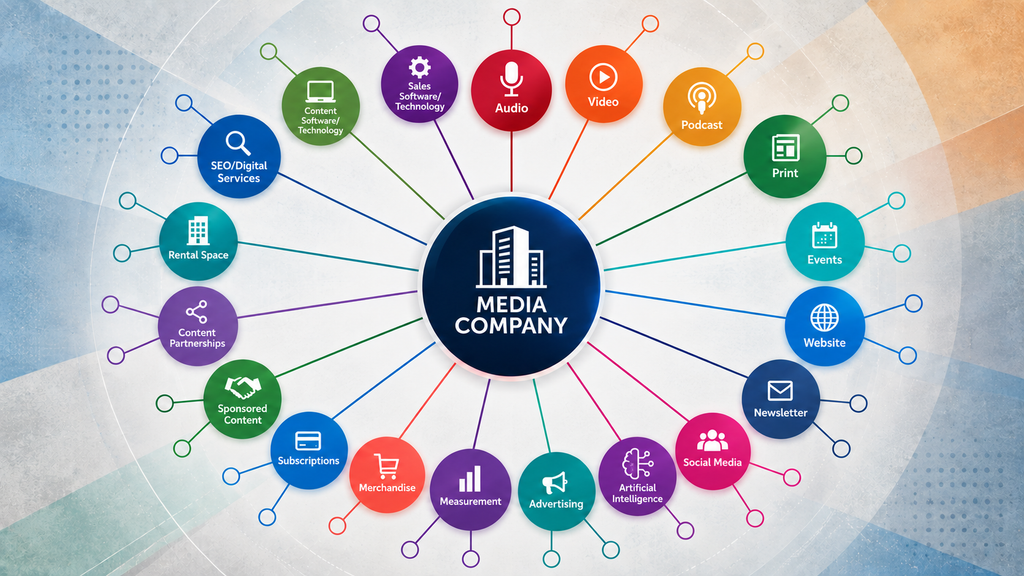
However, there are many different spokes of a media company’s wheel. What worked in 1997, 2007, and 2017 might have been great for that time. But that doesn’t guarantee success in 2027. You can cling to the past or be part of the future. The best way to do that is to be in the room, absorb the information, expand your relationships, and apply what you learn. The more you know, and the quicker you adapt, the better off you’ll be.

Still to Come

The first group of speakers will be announced on Monday, November 30, 2026. We will also reveal our hotel partner that day. Similar to last year, attendees will have the option of purchasing a one-day, two-day or three-day pass. The business day will be a separate pass. For planning purposes, here is how the four days will lay out.

  • Tuesday, July 13, 2027: Business
  • Wednesday, July 14, 2027: News Media
  • Thursday, July 15, 2027: Sports Media
  • Friday, July 16, 2027: Music Radio

The Premiere Networks awards ceremonies will close out the sports, news and music shows once again. After parties will follow each night too to allow folks time to network, celebrate, eat and drink. In addition, another post-show musical performance is planned for the Music after party. Labels interested in pitching performers can inquire at Jason@BarrettMedia.com.

Over thirty partners were involved in the 2026 Summit in NYC. The creation of the Summit, its expansion to four days, and the amount of people we hire to cover the business confirms our commitment to re-investing in it. If you run a company and wish to be involved, email Stephanie Eads at Stephanie@BarrettMedia.com. She can share details on sponsorship opportunities for the 2027 Summit.

The mission moving forward is to create the media industry’s blockbuster event of the summer. I appreciate that many attend the show and desire to speak at it. However, the right expertise on the right issues is critical to the event’s success. If you request to speak and I’m not able to include you, please understand that.

Now, it’s time to get to work and start building! Look for the next big announcement on Monday, November 30th.

Barrett Media produces daily content on the music, news, and sports media industries. Sign up for our newsletters to stay updated and get the latest information right in your inbox.

ESPN’s Troy Aikman Dilemma: Three Options Before the Super Bowl

0

Troy Aikman is offering something you don’t often see from top performers in any business. Knowing his days with his current employer could be numbered, Aikman has balanced professionalism with an openness to what the future might hold. So far.

Yet the situation surrounding Aikman and Joe Buck is becoming increasingly fascinating. One of the top analysts in sports broadcasting isn’t shying away from discussing his uncertain future publicly. In a year when ESPN is preparing to broadcast its first Super Bowl, it begs the question: How long can the network allow this situation to unfold without some sort of resolution? ESPN has options, if it chooses to use them.

Let’s be clear: No one looks particularly good in this situation. Buck has signed a multiyear extension, yet when asked about Aikman’s future, he punted to the familiar “above my pay grade” response.

“I’m obviously hopeful to say the least, that something gets done. But that’s kind of his world and ESPN’s world. I’ve got to kind of mind my own yard in that stuff. I think that’s the best way to be,” Buck said in an interview with 97.5 The Fanatic.

Aikman told Richard Deitsch in September that he hoped to have something resolved before the season but wasn’t going to put additional effort into the matter.

ESPN, meanwhile, told The Athletic that its focus would remain on football coverage and its first Super Bowl in February. The network offered no indication that it was working toward an agreement with Aikman, despite just signing Buck.

Yet, here we are. Instead of focusing solely on the NFL season, ESPN now faces an additional storyline. That became even more complicated following a report of an altercation between the longtime broadcast partners in which Aikman reportedly told Buck, “You f****d me over.”

Buck has largely remained silent publicly about the situation since, while Aikman has continued discussing his uncertain future.

“As I’m into my last year at ESPN, I’m realizing that this is something that could very well be taken away from me,” Aikman told Dallas podcaster Mike Fisher.

With 11 more Monday Night Football broadcasts remaining, plus the playoffs and Super Bowl, ESPN still has time to determine its next move. But what are its options?

ESPN Options For MNF

The first is to push forward. ESPN could avoid public statements, limit Buck’s media appearances and allow the season to continue without ever addressing the situation. However, Aikman doesn’t have to do the same. Expecting local affiliates and other media outlets to ignore Aikman’s contract status is unrealistic. Every interview presents another opportunity for the subject to surface.

Could ESPN reach an agreement with Aikman to stop discussing the matter publicly? Possibly. But given how events have unfolded, that may be difficult to accomplish.

The second option is to find an internal replacement. ESPN could negotiate a mutual separation with Aikman and lean on its existing talent pool until it secures a permanent replacement in the offseason. Greg Olsen is possibly the network’s top target for a permanent replacement. But why not lean on Kurt Warner, Jason Kelce and Louis Riddick for the season as additional options. ESPN could also consider Peyton and/or Eli Manning for the booth if their availability permits.

The network has talent with broadcasting experience and could showcase the depth it gained through its acquisition of NFL Network. It also would be a test to see if Aikman’s value is still as high as many believe for his next steps.

The third option is the most unconventional: Make Olsen’s ESPN debut the Super Bowl.

Olsen’s availability would depend on FOX Sports’ postseason schedule and any contractual considerations, but the timing presents an intriguing possibility. ESPN could negotiate an agreement with Aikman that allows the network to move forward without him before the Super Bowl, then bring Olsen aboard for its biggest broadcast in the weeks between the final broadcast and the game itself.

Olsen knows what it takes to work on that stage. He called a Super Bowl for FOX Sports and earned rave reviews for his performance.

His path to that opportunity was in itself unusual. Olsen was FOX Sports’ top analyst until the network signed Tom Brady in 2022, designating the future Hall of Fame quarterback as its top broadcaster before he had ever called a game from the booth. Olsen continued working the next two seasons knowing Brady would eventually replace him.

Could ESPN now make a similarly unconventional move by introducing Olsen during its first Super Bowl broadcast? It would be a bold decision, but it would also give the network an opportunity to showcase its next lead analyst on the biggest stage.

Taking A Stand

ESPN has options. None comes without complications, but each offers a potential resolution to a situation that is increasingly becoming a distraction. The bigger question is how much longer ESPN is willing to let this play out publicly. Every week without clarity gives the story another opportunity to grow, threatening to shift attention away from what should be the biggest moment in the network’s NFL broadcasting history.

ESPN has spent years building toward this opportunity. It shouldn’t have to share the spotlight with uncertainty surrounding the future of its lead broadcast team. There is still time to make a decision. But the longer ESPN waits to determine its course of action and communicate that decision, the greater the risk that the Aikman situation will overshadow the Super Bowl.

At some point, ESPN has to decide whether it wants the conversation surrounding its first Super Bowl to be about the broadcast it has assembled or the one it might be losing.

Because the closer February gets, the harder it will be to make the former the story.

Barrett Media produces daily content on the music, news, and sports media industries. Sign up for our newsletters to stay updated and get the latest information right in your inbox.

Why the 2026 Midterms Haven’t Inherited ‘The Podcast Election’ Label

0

The 2026 midterm elections haven’t generated the same buzz that made 2024 “The Podcast Election.” Presidential candidates packed their calendars with long-form interviews last cycle. This year, that energy has largely disappeared.

Signal Hill Insights President/CEO Paul Riismandel believes novelty fueled the original hype. He also sees a simple reason for this year’s quieter conversation.

“One of the reasons the 2024 election was deemed the podcast election is because we’ve never before seen a presidential candidate give so many long-form interviews like that,” said Riismandel. “It was new, and it was fresh. So that’s at least part of it.”

Hype Before the Data

Moreover, the buzz started well before researchers measured anything. Signal Hill Insights later surveyed podcast-listening registered voters in partnership with Vox Topica.

“All of the conjecture about it being a podcast election was done before anyone had done any research about it,” said Riismandel. “We did that research in collaboration with our partners at Vox Topica in 2025, retrospectively asking podcast listeners who are registered voters if podcasts had an influence on their voting decision in 2024. And we found that it had. But all the press about it being the podcast election was really just observational, if you will. Seeing, hey, look, Donald Trump is doing these long-form interviews.”

“Then there was this controversy about Joe Rogan inviting Kamala Harris onto his podcast, but she would have to go to Austin,” Riismandel shared. “He wasn’t going to go to her and things like that. So there was a lot of drama to report on, but it wasn’t based upon any known data at that moment. It wasn’t really until we did that research in the fall of 2025 that you could hang some facts on what was otherwise more conjecture.”

A Crowded Ballot, a Quieter Conversation

Meanwhile, the 2026 cycle offers no single, easy storyline for podcasts. Riismandel says the lack of a presidential race explains most of the silence.

“I think it’s because it’s not a presidential election,” said Riismandel. “We have hundreds of seats up right now across the United States for Congress, and it’s tough to track that many candidates. But when we go back to 2024, Donald Trump was making lots of podcast appearances. That was easy to watch and monitor. It was very easy to compare his appearances with those of his opponent, Kamala Harris. That’s one of the reasons we’re probably not seeing as much hubbub about it this year.”

In addition, the podcast audience has shifted politically over the past four years.

“Between 2022 and 2024, we started to see an increase in the number of podcast listeners who said they were Republican,” Riismandel shared. “In 2022, that number sat at 26%. By 2024, it sat at 30%. It’s always hard to draw a direct causal line. So to some extent, we can draw an inference that part of that growth in the overall podcasting audience was more people who were leaning or identify as Republican coming in as podcast listeners or viewers.”

What It Means Heading Into 2028

Today, the audience looks more like America as a whole. As of Q3 2026, 39% of podcast listeners identify as independents, which mirrors Gallup’s general population data. The Vox Topica research also showed what those listeners want.

“What people really were looking for from podcasts was more balanced viewpoints rather than strictly partisan viewpoints,” said Riismandel. “There seems to be some real hunger for that. Whether that ends up being more popular podcasts that serve that purpose, it’s hard to say. I can’t predict what producers are going to do. Certainly, we’ve seen some demand for partisan podcasts, whether it’s MeidasTouch, Crooked Media, Tucker Carlson, or things like The Bulwark.”

Ultimately, Riismandel expects podcasts to keep influencing voters. However, he can’t say which party benefits. He also wonders whether the novelty will fade.

“I think what we can say is that podcasts will continue to have influence,” the Signal Hill Insights executive shared. “I just wonder whether that stops being news. We’re not going to talk about the podcast election because, well, we had that one, and now we just take it for granted that podcasts are a source of political news and information. So whether it goes from being exceptional for a presidential candidate to give a long-form, unprepared interview to a podcast, or that just becomes part of the usual media circuit, that’s hard to predict. We’ll probably start to see signs as 2027 starts to wrap up, I suppose.”

Barrett Media produces daily content on the music, news, and sports media industries. Sign up for our newsletters to stay updated and get the latest information right in your inbox.
Steve & Gina Win CMA Honors by Simply Being Themselves

0

Steve Lundy and Gina Melton have shared a microphone in Omaha for more than two decades. Earlier this month, the country music industry made it official. The partnership works.

The Country Music Association named Steve & Gina in the Morning its Medium Market Personalities of the Year, the duo’s second win in the category in three years. At the same time, KAT 103.7 (KXKT) was named CMA Medium Market Station of the Year. That’s a rare double for any station, and it’s a big moment for the iHeartMedia Omaha cluster.

“Winning one CMA Award is an incredible accomplishment. Having KAT 103.7 and Steve & Gina both recognized in the same year is truly extraordinary,” said Jennifer Stocker, Area President for iHeartMedia Nebraska-Iowa. “Steve and Gina have built an incredible relationship with their audience, and the entire KAT 103.7 team continues to demonstrate what great local radio is all about.”

Talk to Steve and Gina about why the show connects, and one word keeps coming up. Authenticity. These two have spent 20 years proving that being real still beats being clever.

An Accidental Start and a Fourth-Grade Dream

Like a lot of great radio careers, Steve’s started almost by chance.

“I got into radio almost by accident. While I was in college, I took a radio internship to earn an easy credit,” he said. “I’d always been fascinated by radio as a kid, but once I stepped inside a station, I was hooked. What started as an internship quickly turned into a passion and ultimately a career.”

Gina’s road was a little different. She grew up in Chicago, soaking in some of the city’s legendary stations and pretending to be a DJ with her best friend. But she wasn’t the outgoing kid you might expect.

“The funny thing is, I was actually very shy as a kid. A teacher named Mrs. Craig encouraged me to use my voice, and that confidence boost changed everything,” Gina said.

She went on to study broadcast journalism and interned at several television stations. Then a radio opening came along, and she jumped.

“When I saw an opening in radio, I decided to take a chance, even though I was terrified and had no idea what I was doing,” she said. Her love of country came from home. “My grandmother introduced me to country music through artists like Dolly Parton, and that’s where my love for the format began. Today, I get to do what I’ve dreamed of doing since fourth grade.”

Finding the Rhythm

The pairing came together when Gina’s previous partner left the show. Her manager at the time, Tom, brought Steve in as a potential co-host. Gina already knew the name.

“I was thrilled because I’d listened to him on the original Sweet 98 and had always been a fan,” she said.

For Steve, the move meant leaving a long run in a completely different format.

“After spending 13 years in talk radio, I was ready for a new challenge,” he said. “I’ve always loved country music and had even written country songs, but I’d never worked at a country station. The opportunity was exciting, and I felt it was the right next step in my career.”

The show started as a three-person team before eventually becoming a duo.

“Like any partnership, it took some time to find our rhythm,” Gina said. “When the show eventually transitioned to just the two of us, we had to adapt. Looking back, those changes helped shape the chemistry we have today.”

Two Decades, Very Few Disagreements

Every long-running morning team needs a willingness to let the other person win once in a while. Steve and Gina have figured that part out.

“In more than 20 years of working together, I can count on one hand the number of times we’ve truly disagreed,” Steve said. “And if we’re being honest, Gina usually gets her way. The best part is that I genuinely enjoy coming to work every day. She’s authentic, thoughtful, and one of the easiest people you’ll ever work with.”

Gina doesn’t dispute the scoreboard.

“We don’t disagree often, but when we do, I’d agree with Steve… I usually get my way,” she said, laughing.

The admiration runs both directions. “One of the things I admire most about Steve is that he’s exactly the same person off the air as he is on it. That authenticity is rare,” she said. “Working alongside someone you respect professionally and genuinely like as a friend is a gift.”

Listeners can hear that. You can’t fake two decades of liking each other at 6 a.m.

The Family You Actually Like

Country radio has always lived and died on its relationship with the audience. For Steve and Gina, there’s no secret formula behind it.

“Honestly, we just show up as ourselves. We’ve never felt the need to be anything other than who we are,” Steve said. “Our listeners have invited us into their lives for many years, and we try to do the same by sharing our stories and experiences. That authenticity creates a connection that feels genuine.”

Gina puts it in terms every country listener will recognize.

“We treat our listeners like extended family, the family we actually like,” she said. “They’ve been with us through so many milestones: marriages, children, celebrations, and challenges. Because we’re authentic about our lives on the air, listeners feel comfortable sharing theirs with us too. That’s what creates such a strong bond.”

Off the Air, Still Showing Up

Off the air, both hosts stay active on social media, host concert pre-parties, and show up at community events across Omaha.

One effort stands out. The KAT 103.7 Book Tour sends Steve and Gina into local schools, where they read to kids and hand out free books.

“Connecting with listeners doesn’t stop when the show ends,” Gina said. “Those connections are incredibly important to us.”

For Steve, it’s a way of life. Both hosts are involved with schools, churches, and nonprofits around town.

“Staying connected isn’t something we turn on and off; it’s simply how we live our lives,” he said. “Those everyday interactions help strengthen the relationships we’ve built over the years.”

Why It Still Works

So what makes a show worthy of CMA hardware after all these years? Steve keeps it simple.

“I think the show works because we’re authentic and approachable. We focus on creating a positive experience for our listeners, treating them with respect, and making sure they know how much we appreciate them,” he said. “Every morning, I look forward to the opportunity to be a small part of someone’s day and, hopefully, make it a little better.”

For Gina, the early alarm is the easy part. The audience gets the rest of their lives, too, from Steve’s golf game and his quest for the best lawn in the neighborhood to her own ballet classes and book club.

“Radio is something we’ve both loved for as long as we can remember, so getting up early is easy when you’re doing what you love,” she said. “Our listeners get to share in our lives. That’s what makes this job so special. We wouldn’t be here without them, and we’re grateful for that every single day.”

Stocker summed up why the moment matters beyond one station. “Radio is at its best when it creates meaningful connections, delivers great entertainment, and gives listeners a reason to come back every day,” she said. “This team does exactly that.”

There’s a lot of talk about where radio is headed. Steve and Gina are a reminder of what it does best. Two people who like each other, who like their audience, and who show up every morning ready to make somebody’s day a little better. That still works. And now they’ve got a second CMA Award to prove it.

Barrett Media produces daily content on the music, news, and sports media industries. Sign up for our newsletters to stay updated and get the latest information right in your inbox.

If Rock Bands Were Halloween Candy, Who’s the Full-Size Bar?

0

Got your costume ready for this weekend? More importantly, whatcha got in the candy bowl? For serious candy hunters, Halloween means developing a war plan. Map the neighborhood. Know every house. Which to hit. Which to skip. Who’s home but pretending not to be. Identify the houses offering “king size” and the land mines to avoid — the dentist handing out toothbrushes, the well-lit home that thinks Halloween means fruit and the scary place on the corner with 37 cats.

But every neighborhood has one high-value, must-hit Halloween target. The house worth bringing a second costume for and knocking twice, because their candy bowl is the best in town. It’s the Candy Superhouse.

THE CANDY SUPERHOUSE

A great Candy Superhouse is like a great RockTernative music library. It’s loaded with king-sized hits like Snickers, Reese’s and Hershey’s. But just when you think the seventh Twix is about to hit your bag, out come Nerds, Candy Cigarettes or Junior Mints — and you’ve never been happier.

Dump the bowl onto the table, and categories immediately appear. The dependable full-size bars. The sugary stuff. The sour candy. The hard or weird stuff. Even the polarizing pieces people either grab immediately or leave for someone else.

In programming terms, they’re like categories and sound codes. So, let’s haphazardly imagine if rock bands were Halloween candy …

THE FULL-SIZE HEADLINERS

Their logos are plastered on the outside of the Superhouse, and running out of stock means someone’s getting fired.

  • Metallica is Snickers: heavy, filling, crunchy and internationally recognized.
  • The Foo Fighters are the Hershey’s bar: familiar, dependable and welcome anywhere.
  • Linkin Park would be Reese’s: two different ingredients that become more powerful together.

Those are the big hits people expect. Nobody walks extra blocks unless they’re getting some.

THE SUGAR RUSH

Hard to miss. Bright, poppy, always decorated, occasionally hyperactive.

Let’s say Fall Out Boy is Skittles. Panic! at the Disco is Pop Rocks, and Weezer is obviously Nerds. Twenty One Pilots is Starburst, and Tame Impala is the psychedelic candy that makes the wallpaper move.

Too much sugar can make anyone twitch. But this rush gives your candy bowl youthful energy, color and tempo — and a break from all that heavy chocolate.

THE SOUR PATCH

Blink-182, Green Day, Sum 41, The Offspring.

Abrasive on the outside, strangely sweet on the inside and still loved by adults who discovered them as teenagers. It isn’t for everyone, but its superfans will walk past homes handing out Reese’s Double Cup Family Size just to get it.

THE HARD STUFF

Let’s agree that Tool is the world’s leading Jawbreaker. Dense, time-consuming and requiring a plan to take on and finish. And its fans will explain how they knew the band first and why you’re listening to them incorrectly.

System of a Down is a Warhead.

Rage Against the Machine is an Atomic Fireball — minus the political science degree.

This stuff belongs deeper in the bowl, not right on top — like snipers waiting to support the other troops. Casual visitors may never reach it, but the devoted diehards will keep digging until they find it.

THE CANDY CORN DIVISION

Nickelback, Imagine Dragons, Coldplay.

The bands everyone claims to hate while devouring every piece until it’s all gone. Just grab some while no one is looking, and continue lying to your friends.

BACK TO WORK

A great station doesn’t hand out the same candy every 10 minutes just because research says it’s safest. It needs full-size powers, sugar, sour, hard stuff, surprises and even a few polarizers people will fight over. Familiar enough not to cause alarm, consistent enough that people come back, but varied enough to keep listeners digging through the bowl for the treasures.

And every bowl needs a few unfamiliar wrappers. Some of these may become new favorites. Others get spit back into the bowl. But that’s what discovery is all about. And if we’ve lost that desire to discover a new piece of candy once in a while, well … the terrorists have won.

This Halloween, dump your music library onto the table. Are you the Candy Superhouse people will walk extra blocks to find? Or the house handing out raisins and calling them gold?

This Halloween column is powered by Uncle Randy’s: Discount Candy, Loose Cigarettes & Emergency Top Hats.

Barrett Media produces daily content on the music, news, and sports media industries. Sign up for our newsletters to stay updated and get the latest information right in your inbox.

Numeris Radio Local+ Explained: How Canada’s New Radio Measurement Really Works

0

Last week, I covered the motivation behind the new measurement system, Radio Local+, introduced by Numeris in non-PPM Canadian markets. This week, let’s dig into the details of how it works in a post-diary world with input from Dr. Derrick Gray, the chief of research and operations.

Unlike Nielsen, Radio Local+ is a hybrid system, meaning data comes from multiple sources. Nielsen is either PPM or diary. Yes, the Nielsen diary service now includes both paper and MSurvey (online), but those are the same instrument used in different modalities.

Radio Local+ incorporates data from StatsRadio, based in Quebec City. The company measures streaming from log files, much like Triton does here. However, StatsRadio goes a step further to create overall listening estimates.

How the Hybrid Model Works

StatsRadio conducts phone surveys in the relevant markets to collect “day-after” audio listening. Per Derrick, the survey design is solid, and asking for one day of listening is likely to be more accurate as well as a much lighter burden for the respondent. Some of the respondents are drawn from panels, and some are random dialing.

Using phone interviews to understand the ratio of streaming to over-the-air listening allows you to gross up the streaming data to get to a total listening estimate. Well, sort of. Through some modeling and adjustments, you have a summary-level database of audio listening by station. The data has daypart-by-daypart data for various demos, just as we’re used to seeing today. But there’s a fly in the ointment.

To do reach and frequency calculations for ad schedules, you need respondent-level data. Meters and diaries supply that information because these are collected at the individual level.

Virtual Respondents and the Role of Modeling

That brings us to the concept of “virtual respondents” or a “synthetic population.” Derrick says Numeris uses Bayesian probabilistic models to assign listening to virtual individuals. Once completed, the aggregated respondent-level data will match the summary data. But that’s not the end of it.

Numeris adds more “special sauce” to the mix based on the PPM data in the five largest Canadian markets, mainly for co-listening. This helps to improve the model even more.

Derrick went on to explain, “The role of modelling is not to replace measurement, but to enhance it. By extrapolating listening from Radio Local+ to virtual respondents, we can provide better insight into reach and frequency, resulting in better value for the radio industry.”

Why Costs Drive the Change

If I lost you at “Bayesian,” let’s consider what’s going on here. First, as I wrote last week, keep in mind that Numeris is a JIC, not a private company like Nielsen. Their “shareholders” are broadcasters, agencies, advertisers, and a streamer or two, in other words, the entities that use the data. Costs had to be reduced, and Radio Local+ does just that. Less data collection, less respondent burden, and more statistical manipulation.

If you think this isn’t happening today in the US, just look at how video is measured. Nielsen and their competitors use high-level statistical machinations. The local TV diary has been gone for eight years.

As part of the larger audio strategy, Derrick also explained how Numeris expects to stabilize PPM estimates, which the organization is testing now. This gets statistical, but let’s just say that if you make a couple of reasonable assumptions, at least for statisticians, you can create a “synthetic” population of PPM panelists. Put as simply as possible, if you take the listening from PPMs with the variance of the streaming data, you can generate estimates that combine the best of both worlds. You’ll get the minute-by-minute PPM data with the stability of the census-level streaming information.

This is being tested in one market to see how it works in practice. The concept makes sense.

Lessons From Arbitron

When I was at Arbitron, any sort of modeling would raise hackles with the radio clients. “You’re making up data” was the typical refrain, and to some extent, that was true. It wasn’t as if we were throwing darts or rolling dice, although we were accused of that.

In today’s very complicated and cluttered media environment, it’s a matter of taking available information and using it in ways to effectively measure audiences while keeping costs down. The days of measuring everything via surveys (meters, diaries, phone calls, in-person) are numbered. We can’t get large enough sample sizes at a reasonable price.

Yet we still have the radio diary in this country. Numeris debuted its online diary in 2016 and killed it this year at approximately the same time Nielsen Audio decided the time was right to introduce an online diary. What’s wrong with this picture?

A Look Ahead

Numeris is showing us one path to the future of audio measurement. If Nielsen isn’t already working on a similar system or talking to Numeris and other JICs and companies, I’d be shocked. It’s far cheaper to model a limited number of datasets than to collect data everywhere, which means lower costs to broadcasters and a future for Nielsen. The first reports for Radio Local+ will be released in December, and the results should be interesting.

To see the future, we can paraphrase Horace Greeley: “Go North, young man.”

Let’s meet again next week.

Barrett Media produces daily content on the music, news, and sports media industries. Sign up for our newsletters to stay updated and get the latest information right in your inbox.

Radio’s Eight Scariest Halloween Costumes for 2026, Ranked

0

Radio people already know fear. We face ratings books, budget meetings, and a market president who “has a few thoughts.” So, this year, skip the store-bought vampire. Instead, raid the building for ideas. Halloween is Saturday, so start planning now. Here is a countdown of the top eight radio costumes for 2026. First, a warning. The last one may ruin your party.

  1. The Human Prize Wheel

First, turn your torso into the most disappointing wheel at the remote. Cut a big circle from poster board and split it into slices. The options include “Free Sticker,” “Koozie,” “Try Again,” and “Meet the Overnight Jock.” Meanwhile, invite guests to give you a spin. Almost everyone will land on the sticker. Still, the line at your booth will grow. Also consider just falling over out of nowhere. That’s what prize wheels do best.

  1. The Puker

Next, meet the costume every cluster with a Top 40 station understands. He is the night guy who talks about Olivia Rodrigo as if she’s his actual friend. And he would be the first one to post a pic on IG with a dead celebrity. Start with a t-shirt that says, “Worth it for the Facebook views.” Make sure your haircut is about 20 years too young for you. In the end, just remember he did it for the audience. However, the audience never asked him to.

  1. Dead Air

Now for the quietest costume at the party. Dress in all black and wear a headset. Then stand perfectly still and say nothing. Hold the pose longer than feels comfortable. Soon, guests will whisper, “Is she okay?” Meanwhile, a former board op will start to sweat.

  1. @ShittyRadioJock2

Next comes the costume that creates real panic. Print the poop emoji logo on a paper bag to wear over your head, only cutting out eye holes. Then wander the party and quietly pull out your phone. Immediately, every radio person in the room will wonder if the Instagram account that roasts the industry will feature them. As a result, you will watch grown adults delete old promo photos in real time. Plus, nobody will make eye contact with you again.

  1. The AI DJ

Meanwhile, the robot has arrived, and it has a great attitude. Put on silver face paint and a name tag that reads “Al Gorithim” or “Elle Gorithim.” Then speak in a flawless, cheerful tone with zero feeling. For example, say “That was a song. Up next, another song.” In addition, mispronounce the name of every town within thirty miles. The eerier you sound, the more you’ve nailed it.

  1. The Funkmaster Flex at a Knicks Game

Now for the costume that is still trending. Grab a Knicks jacket and a bucket hat. Queue up a sound effect for bomb drops on command. Ask everyone, “Did anybody get that on video?” Put up your dukes and moonwalk backwards. Have a friend in a security shirt walk you toward the exit. Even so, keep the bomb drops coming.

  1. The Consultant with Ideas From the 1980s

Then comes the man with a plan from another decade. Wear shoulder pads, huge glasses, and a skinny tie. Carry a flip chart that says, “The Answer: Morning Zoo.” Still, he charges a very modern fee. In fact, he swears the strategy will “move the needle.” Therefore, nobody dares to say no.

  1. The Corporate HR Zoom Request

Finally, the scariest costume of 2026. Wear a blazer and a headset. Next, hang a poster-board Zoom frame around your face. Then pin a calendar invite to your chest that says “Quick Chat, 4:30 PM, No Agenda.” Last, carry a folder marked “Confidential” and ask everyone, “Do you have a minute?” As a result, the room will go quiet. Even the open bar will look nervous.

Happy Halloween

So, pick your costume wisely. Above all, remember that radio people can survive any scare except one. Happy Halloween week, and if you get an unexpected calendar invite with no agenda, call out sick.

Barrett Media produces daily content on the music, news, and sports media industries. Sign up for our newsletters to stay updated and get the latest information right in your inbox.