

Home Blog Page 137

Would Scott Jennings Really Leave CNN and Radio Behind for the White House?

0

As speculation grows around who should — or will — be the next White House press secretary, my message to those intrigued by the brightest lights this side of Hollywood: be careful what you wish for.

The idea of being one of the most recognizable people in the country is going to be appealing to a wide swath of highly motivated individuals.

But for people who already have a big audience and following, there is little upside.

Why Hosts Already Have the Bigger Platform

I laughed when I saw Scott Jennings‘ name come up. Not because Scott would not be excellent at the job — he would be. But if you’re Scott Jennings, why would you take a sizable pay cut to say what someone else wants you to say, whether you believe it or not, when you already have several hours every day on radio and TV, nationwide, to share with your audience exactly what you think?

And let’s not forget, when you’re the host of a show, you control the narrative. You study the topics you and your audience care about for the following day. As a source noted to CNN about the position, “I don’t think people grasp how much studying is required to do that job, how much reading, how much thoroughly understanding every topic you could possibly be asked — I don’t think everybody recognizes how much work that is.”

And that’s where I think many people misunderstand the appeal of the position.

The public often confuses visibility with influence. A White House press secretary may become one of the most recognizable people in America, but recognition and influence are not always the same thing. The press secretary delivers the message. The people who often shape public opinion are the hosts, commentators, and analysts who interpret that message for millions of Americans every day.

The Career Calculus Has Changed

Twenty years ago, a job like White House press secretary may have been one of the quickest paths to national prominence. Today, that’s not necessarily true. Someone like Scott Jennings is already reaching millions of people every week on television and radio. In many respects, he’s already sitting in the seat many former press secretaries eventually hope to occupy.

Yes, there’s great recognition, and the post-career opportunities can be tremendous. However, most press secretaries ultimately end up in media anyway.

To be clear, this isn’t an argument against the job itself. For an up-and-coming political communicator, White House press secretary can be a career-defining opportunity. It can take someone from relative obscurity to national prominence almost overnight.

But if you already have a wildly visible and lucrative platform, what exactly would be the end game?

Scott Jennings isn’t trying to become a national voice. He already is one.

The Risk-Reward Math Doesn’t Add Up

That’s why the risk-reward equation feels completely upside down for someone in Jennings’ position. The downside is relentless scrutiny, daily controversy, and taking ownership of every decision made by the administration, whether you personally agree with it or not. The upside often amounts to a bigger perch in the media business after your time in government.

For someone who already has a national television presence, a successful national radio platform, and a loyal audience, that destination has already been reached.

I would also argue that Scott Jennings’ voice is more valuable in front of millions on TV and radio with regularity. The press secretary, whoever he or she ends up being, is going to have the talking points of the boss — that’s the job.

But then, it gets filtered through those in the media landscape who have sizable audiences.

And the icing on the cake: does anyone really want to have to spend time defending this Iran War? The gig doesn’t pay enough for that.

Barrett Media produces daily content on the music, news, and sports media industries. Sign up for our newsletters to stay updated and get the latest information right in your inbox.

How the WNBA Proved Me and Everyone Else Wrong

0

In the summer of 1997, I was a young sports reporter in Salt Lake City and got an assignment that, at the time, didn’t exactly feel like covering the Super Bowl. I was a sideline reporter for the Utah Starzz during the inaugural season of the WNBA. Yes, Starzz. With two Z’s. It was Utah in the ’90s. Apparently, everything needed to rhyme with Jazz.

I remember standing in the arena during that first season. Looking around some nights at what felt like a few hundred people scattered throughout a building designed for thousands more. The official numbers were better than my memory makes them seem. Utah averaged 7,611 fans that first season, but the Starzz still ranked dead last in attendance in an eight-team league.

I remember thinking something that, almost 30 years later, I can safely admit. This thing isn’t going to make it.

Great call, John. Thankfully, social media didn’t exist yet to preserve that take for eternity.

30 Years To Success

The WNBA began in 1997 with eight teams and a 28-game schedule. I respected the players and the basketball, but I certainly didn’t see what was coming. I’m pretty sure nobody standing next to me in Salt Lake City was whispering, “Just wait 30 years until these franchises are worth hundreds of millions of dollars and Amazon is fighting for streaming rights.”

Yet here we are.

I work in the Bay Area, where the Golden State Valkyries are only in their second season and have already been valued at $1 billion. The first women’s sports franchise to reach that mark. The average WNBA franchise is now valued at roughly $460 million. That’s an incredible business story. But the sports media story may be even better, because networks don’t pay for good intentions.

They pay for eyeballs.

Go back to 2023, the season before Caitlin Clark entered the league. WNBA games on ESPN platforms averaged roughly 440,000 viewers. Then Clark arrived. In 2024, ESPN’s regular-season WNBA audience jumped 170%, averaging nearly 1.2 million viewers. The WNBA Draft averaged 2.4 million, up 328% from the previous year,. The All-Star Game drew 3.4 million, the largest audience in the event’s history. ESPN’s social engagement around WNBA content increased 413%. Video views exploded 642%.

Those aren’t participation trophies. Those are media numbers.

Caitlin Clark

It would have been easy to dismiss 2024 as simply the Caitlin Clark phenomenon, and let’s be clear: Clark changed the business. Pretending otherwise is like saying Tiger Woods didn’t change golf television ratings. She brought millions of people through the front door who weren’t watching before. The bigger question was whether they would stay.

Then 2025 happened. Instead of retreating from that enormous 2024 jump, ESPN’s WNBA regular-season audience increased another 6%, to 1.3 million viewers. Its postseason averaged 1.2 million. The most-watched WNBA postseason on ESPN platforms ever, while the Finals averaged 1.5 million. Even WNBA Countdown increased its postseason audience by 30%. That’s when a moment starts looking more like a market.

Television executives apparently agree.

The WNBA’s new national media-rights agreements kicked in this season and run through 2036. The primary package with Disney, NBCUniversal and Amazon has been reported at roughly $200 million per year. That’s about four times what the league had been receiving.

This season, the WNBA has a record 216 nationally distributed games and events across a collection of broadcast, cable and streaming platforms. Think about that compared with the league I covered in 1997.

Back then, the question was whether anybody would watch. Now the problem may be figuring out which remote to use.

Maybe that’s the biggest change of all. Women’s basketball doesn’t have to constantly make the argument anymore that it deserves media coverage. ESPN isn’t putting games on ABC because somebody in Bristol wants a pat on the back. Amazon isn’t buying rights because Jeff Bezos suddenly became sentimental about pick-and-roll defense. They believe people will watch. Sports media follows eyeballs. Always has. Sometimes we’re just slow figuring out where those eyeballs are going.

What fascinates me most is how wrong my younger self was about where this could go.

Believe In ‘The W’

In 1997, I saw a fledgling league trying to establish itself in an already crowded American sports landscape. I saw empty seats, a product searching for an audience, and something that looked vulnerable. Nearly 30 years later, WNBA franchises are worth hundreds of millions of dollars. National television audiences have more than doubled in just a few years. In addition, some of the biggest media companies in the world have committed to showing the league through 2036.

Maybe the lesson isn’t only about the WNBA.

Maybe it’s about sports media and our tendency to decide far too quickly what people will and won’t care about.

We love declaring things dead. Baseball is dead. Radio is dead. Linear television is dead. Nobody will watch women’s basketball. Young people don’t watch sports. Then the audience has this annoying habit of making its own decisions.

I had mine made in Salt Lake City in 1997: This league doesn’t have a future. Thirty years later, WNBA teams are worth hundreds of millions, television networks are fighting for the games, and the Golden State Valkyries are worth a billion dollars.

Good thing nobody asked the sideline reporter.

Barrett Media produces daily content on the music, news, and sports media industries. Sign up for our newsletters to stay updated and get the latest information right in your inbox.

Can This CNN Innovation Help Reach Younger Audiences?

0

CNN’s The Arena with Kasie Hunt has leaned on an on-screen “text chain” during its run, and the graphic keeps drawing attention every time it pops up. The on-air visual displays real-time thoughts and reactions from CNN contributors, styled to look exactly like a group text thread scrolling across the screen while Hunt works through whatever topic dominates the hour. It’s not subtle, and it’s not meant to be.

This isn’t a new wrinkle for the show, either. The Arena has featured the text chain graphic for quite a while now, and it hasn’t gone away. But watching it evolve has been genuinely interesting, mostly because it feels like a deliberate swing at engaging a younger audience that doesn’t necessarily default to cable news.

The logic tracks. Younger viewers grew up on text chains, group messages, and firing off spontaneous reactions to whatever’s happening in real time. Meeting them where they already live — inside a scrolling thread of opinions — isn’t a bad instinct, even if it looks unusual next to a traditional cable news set.

Why It Works — And Why It Might Not

Do older viewers hate it? Probably, and that’s a fair guess given how change usually lands with legacy cable audiences. Traditional viewers tend to want their anchors delivering information in a straight line, not sharing screen space with a stack of scrolling text bubbles. Still, that reaction doesn’t necessarily mean the format is wrong for CNN’s broader goals.

Because here’s the thing: virtually any organization worth a darn is focused on the future and on acquiring new customers, not just protecting the ones it already has. Networks that only cater to their existing base tend to shrink over time as that base ages out. Consequently, if a scrolling text chain is what it takes to pull younger eyes toward CNN’s programming, that’s a trade worth making.

Hunt also feels like the right person to test this on. She’s spent her career building credibility across platforms, from print journalism to podcasting to television, and she carries an ease with digital-native formats that a lot of longtime anchors simply don’t have. The text chain doesn’t feel forced when she’s hosting; it feels like an extension of how she already communicates.

Could This Spread Beyond The Arena?

The bigger question is whether CNN expands this beyond one show. If the text chain graphic continues pulling in the audience the network wants, it wouldn’t be surprising to see similar formats show up elsewhere on the schedule. Additionally, other networks chasing the same demographic shift could start experimenting with comparable tools of their own.

That said, execution matters here more than the concept itself. A scrolling thread of contributor reactions only works if the comments add something — context, humor, a counterpoint — rather than just cluttering the screen for the sake of looking modern. Hunt’s show has generally managed that balance, which is likely why the format has stuck around this long instead of getting quietly phased out.

Ultimately, this is a small piece of a much larger conversation about how cable news survives the next decade. Younger audiences aren’t tuning into linear television the way previous generations did, and networks know it. Experiments like this one won’t single-handedly reverse that trend, but they at least show CNN is willing to test something rather than standing still.

Whether The Arena ends up as the blueprint or just a one-off remains to be seen. Either way, it’s worth watching where CNN takes it next.

Barrett Media produces daily content on the music, news, and sports media industries. Sign up for our newsletters to stay updated and get the latest information right in your inbox.

Angela Yee Day Returns Sunday With Free Brooklyn Celebration

0

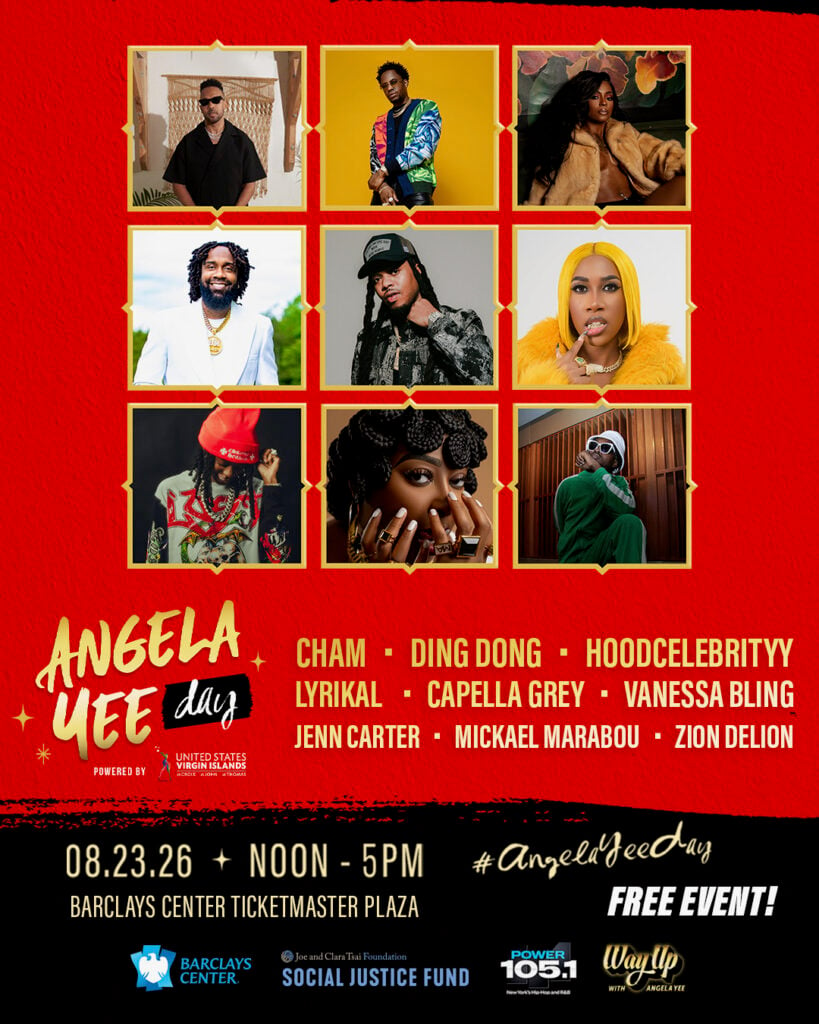
Angela Yee Day returns this Sunday outside Brooklyn’s Barclays Center. The free family event celebrates community impact and social justice.

What We Know The event runs 12-5pm and marks the fourth annual celebration since Mayor Bill De Blasio designated the day in 2018. Therefore, organizers packed the schedule with resource-focused activations. Kids get free hair braiding from sponsor Libaci. Additionally, a mobile barber shop brings free haircuts for students heading back to school. Mesador distributes massive gift baskets to expecting and new mothers—filling a critical community need.

What They Said “It’s nice that people look forward to it,” Yee told us during a recent conversation. She continued: “If there’s anything I can do where I can provide resources or just provide some entertainment for people where they don’t have to come out of their pocket for anything—that goes a long way.” Her commitment reflects a deeper philosophy about business responsibility during economic uncertainty.

What Remains Unclear First, the exact artist performance schedule hasn’t been confirmed. Meanwhile, organizers promised a Broadway musical performance from the upcoming show “Wanted.” Also, the full reggae and dancehall roster—including artists like Ding Dong and Sham—deserves expanded promotion.

What It Means Small business owners facing genuine financial pressures still prioritize community investment. Moreover, Yee’s coffee shop partnership with the Social Justice Fund demonstrates how commerce and social responsibility intertwine. Ultimately, this event models sustainable community giving during challenging economic seasons.

Barrett Media produces daily content on the music, news, and sports media industries. Sign up for our newsletters to stay updated and get the latest information right in your inbox.

iHeartMedia’s SportsTalk 790 Announces Lineup Swap Beginning Monday

0

A Houston lineup shuffle just landed, and it’s a big one. SportsTalk 790 announced sweeping changes to mornings and middays, effective Monday.

What We Know: Matt Thomas and Ross Villarreal move from middays into mornings, hosting Matt & Ross In The Morning from 6 to 10 a.m. starting Monday. Dan Matthews shifts the other direction, taking over middays from 10 a.m. to 2 p.m. Joshua Jordan also gets a promotion, moving from producer to co-host of The Dan Matthews Show. Meanwhile, The A-Team with Adam Clanton and Adam Wexler stays in afternoon drive, 2 to 6 p.m.

What They Said: Dan Matthews on moving to middays (via X): “Excited about it. I am pumped that I don’t have to wake up at 430 anymore. But I’ve loved doing the mornings. It’s been amazing. It’s been awesome.”

Dan Matthews on his approach to the new show in middays (via X): “Every day that’s what we’ll do. I’ll take you all to lunch. Not literally, but you know, send you on your way. Then when you go get that midday cup of coffee, why don’t you come join me?”

What Remains Unclear: No additional staff shifts accompany this announcement so far. Still, it’s unclear whether producer or support roles shift alongside the on-air changes.

What It Means: This move signals confidence in Matt Thomas and Ross Villarreal as a morning duo. Consequently, SportsTalk 790 is leaning into Dan Matthews’ relaxed, listener-first energy for middays. Meanwhile, elevating Joshua Jordan shows the station values homegrown talent. The announcement comes just a week after crosstown rival SportsRadio 610 flipped to FM and rebranded as 95.7 The Fan.

Barrett Media produces daily content on the music, news, and sports media industries. Sign up for our newsletters to stay updated and get the latest information right in your inbox.

WaterStone Acquisition of Salem Media Complete, Now Officially Private

0

Salem Media is officially under new ownership after WaterStone completed its acquisition of the Christian and conservative media company. The transaction takes Salem private and sets the stage for long-term growth.

What We Know: WaterStone, operating as The Christian Community Foundation, acquired all outstanding Salem Media common stock for $1 per share. That price represented approximately a 250% premium over Salem’s trading price before the deal’s announcement. As a private company, Salem will continue operating its radio, digital, streaming, podcasting, television, and publishing platforms. Meanwhile, WaterStone plans to support investment and expansion across the company’s media properties. The partnership also brings together organizations with a shared commitment to Christian ministry and stewardship. Salem enters the deal following continued momentum across its national radio, streaming, and podcast platforms.

What They Said: “This is an exciting day for Salem and the beginning of an important new chapter for our company. Salem enters this partnership with strong momentum, an extraordinary portfolio of talent and brands, and more ways than ever to reach audiences across the country. With WaterStone alongside us, we are positioned to invest for the future while remaining firmly committed to the mission that has guided this company from the very beginning.” -Salem Media CEO David Santrella

“Today is not about changing what Salem is. It is about giving Salem an even stronger foundation to build on what it does best. What excites us about Salem is not only what the company has built, but how much opportunity remains ahead.” WaterStone President and Salem Media Board of Directors Chair Richard von Gnechten

“When Stuart Epperson and I founded Salem more than 50 years ago, we could not have imagined the reach and impact it would have today. Knowing Salem’s mission will be carried forward by a partner that shares our values gives me tremendous confidence in what comes next.” -Salem Media co-founder Edward Atsinger III

What Remains Unclear: The company hasn’t detailed specific investments, programming changes, or expansion plans following the acquisition. Salem also hasn’t indicated whether WaterStone will pursue additional acquisitions or strategic partnerships.

What It Means: The transaction gives Salem greater flexibility as a private company while preserving its existing media footprint. For WaterStone, the deal provides control of a major Christian and conservative media operation with national reach. Now, Salem can focus on growth without the same pressures associated with operating as a publicly traded company.

Barrett Media produces daily content on the music, news, and sports media industries. Sign up for our newsletters to stay updated and get the latest information right in your inbox.
San Francisco Giants Approve KNBR Beer Special Idea To Kick off Fan Appreciation Weekend

0

The San Francisco Giants and KNBR are pouring out a frosty promotion. Moreover, one which originated from KNBR morning show Murph & Markus. Team CEO Larry Baer confirmed a beer special for a Wednesday’s home game against the Minnesota Twins with prices matching KNBR’s radio signals.

What We Know: The Giants host the Twins on Wednesday, September 23, at Oracle Park. KNBR and the Giants will run a beer special that afternoon. Moreover, KNBR serves as the Giants’ longtime radio broadcast partner. Murph & Markus first pitched the promotion to Baer earlier this season to team CEO Larry Baer. After many months, Baer confirmed that the organization has signed off on the concept. That afternoon, Coors Lights will be $6.80 while Corona beers will be $10.45 in honor of KNBR’s AM and FM signal.

What They Said: (All quotes from KNBR):

San Francisco Giants CEO Larry Baer announces KNBR Beer Night: “We have breaking news. Halt the halt the presses. Fan Appreciation Weekend is Friday, Saturday, Sunday against the Dodgers, 25th, 26th, 27th. We are going to usher in fan appreciation weekend on September 23 with the KNBR special.”

San Francisco Giants CEO Larry Baer credits KNBR’s Murph & Markus for the idea: “You had a good strategy, guys. I got to say, you guys are no dummies. I mean, you started on opening day with the commissioner pushing this. You had the mayor, the commissioner. Did you have the Pope on board?”

Brian Murphy thanking Baer for the opportunity: “I know asking a Major League Baseball team or any professional sports franchise to reduce prices is a big ask. I get it. We all like money. It’s like you saying to me, “Hey, Murph, you want to take a pay cut? Hey, Marcus, you want to take a pay cut?” Nobody’s looking to take a pay cut. But what we’re looking for is maybe a just a reasonable, harmonious gesture in a tough season. I think you guys have done that once again. I’m going to applaud this, Larry. It’s tremendous.”

What Remains Unclear: Official details on access points for the special are unknown. Also, KNBR’s broadcast plans that afternoon have not been fully revealed.

What It Means: Moreover, the deal deepens ties between the Giants and their flagship radio partner. Despite reports that the relationship between the two are at odds with one another. In addition, it rewards fans amid a tough season, as Murphy noted. It also shows local media pitches can shape real ballpark promotions. If turnout impresses, it possibly could turn into more events where the two parties work in concert to drive more fans through the turnstiles.

Barrett Media produces daily content on the music, news, and sports media industries. Sign up for our newsletters to stay updated and get the latest information right in your inbox.

ESPN Reportedly Close To Separate Monday Night Football Alt-Cast Featuring Pat McAfee

0

ESPN reportedly wants even more Pat McAfee on Monday nights this NFL season. The network is pursuing NFL approval for a McAfee alt-cast on Monday Night Football.

What We Know: McAfee will join ESPN’s Monday Night Countdown panel this season, the network announced Wednesday. That adds to his daily show and College GameDay duties. Meanwhile, ESPN is negotiating a broader deal with McAfee reportedly worth $60-65 million annually, according to The Athletic. If approved, McAfee’s team would likely cover games on ESPN2 during weeks the Manning brothers’ alt-cast isn’t airing.

What’s At Stake: If McAfee’s concept is approved by the league, this will lead to McAfee being presented on ESPN or ESPN2 on some weeks for more than ten hours of the broadcast day on Monday nights. Following the success of the McAfee show alt-cast models from the College Football Playoff, ESPN may be looking for consistency this season in providing viewers more options every week.

What Remains Unclear: The NFL hasn’t decided whether to approve the McAfee alt-cast, and no timeline has surfaced. It’s also unclear exactly how many games McAfee would cover, though reporting suggests around eight.

What It Means: ESPN is chasing consistency across its alt-cast lineup, since the Mannings don’t appear every Monday. Adding McAfee would fill those gaps and could stretch his Monday workload. Ultimately, the move reflects how central McAfee has become to ESPN’s football strategy — and how much the network is willing to pay to keep him there. But ESPN is also running a risk of oversaturation with McAfee. Whether or not viewers will gravitate to a McAfee alt-cast over the proven entity of Joe Buck and Troy Aikman is unknown. Also, how this would affect the network’s relationship with Omaha Productions, if any, is also unknown.

Barrett Media produces daily content on the music, news, and sports media industries. Sign up for our newsletters to stay updated and get the latest information right in your inbox.

ESPN Debuting MLB Little League Classic Alt-Cast This Weekend

0

Once again, ESPN heads back to Williamsport this weekend. The network will present its ninth MLB Little League Classic Sunday, August 23. For the first time, ESPN2 will present MLB Little League Classic – Alumni-cast on ESPN2 presentation of the MLB Little League Classic.

What We Know: ESPN’s Braves-Brewers broadcast begins at 7 p.m. ET from Historic Bowman Field. Karl Ravech, Eduardo Pérez and Buster Olney call the main telecast. Meanwhile, ESPN2 debuts an alternate Alumni-cast, with Mike Monaco calling play-by-play alongside Todd Frazier and Devon Travis, all Little League alumni. Guests include Andrew McCutchen, Jason Marquis, Lance Lynn and Ray Ferraro, while Baseball Tonight opens coverage at 6 p.m. with Kevin Connors and Tim Kurkjian, and ESPN Radio carries the game.

What’s At Stake: This is a new and innovative way to provide another option for viewership enhancing the event’s experience. How the viewership trends may depend on if this approach will change moving forward.

What Remains Unclear: The release doesn’t say whether more Alumni-cast guests could join later.

What It Means: The dual telecast gives ESPN two ways to tell the same story. Meanwhile, traditional play-by-play airs on ESPN, while nostalgia anchors the ESPN2 alternate. For alumni-turned-broadcasters, Sunday doubles as a personal homecoming. Overall, the format signals ESPN’s growing bet on character-driven sports storytelling.

Barrett Media produces daily content on the music, news, and sports media industries. Sign up for our newsletters to stay updated and get the latest information right in your inbox.

Sports Radio’s Past & Present Celebrate National Radio Day

0

National Radio Day returns every August 20. This year’s observance marks 106 years since radio first found its voice in Detroit. Several past and present sports radio personalities shared their memories in celebration on social media.

What We Know: National Radio Day traces to August 20, 1920, when station 8MK signed on in Detroit as the Detroit News Radiophone, now WWJ. Radio itself emerged from decades of invention, including Heinrich Hertz’s wireless research and Guglielmo Marconi’s pioneering transmissions. Meanwhile, Reginald Fessenden aired the first entertainment broadcast in 1906. Communities have marked the August date since the early 1990s.

What Remains Unclear: No organization claims official credit for founding National Radio Day. Some historians point to WWJ, while others credit KDKA’s 1920 election-night broadcast as radio’s true commercial first.

What It Means: For each broadcaster, the significance of the day means something different. National Radio Day gives a pressured industry a moment to pause and reflect on the individual journey but also the impact of the medium. Radio ownership climbed from two in five homes in 1931 to four in five by 1938. Today, more than 15,000 licensed stations still operate nationwide. That reach still underpins why executives call radio a trusted lifeline for listeners.

What They Said: Many sports media personalities of the past and present shared their celebration of National Radio Day on social media. Here’s a sampling of just a few.

Barrett Media produces daily content on the music, news, and sports media industries. Sign up for our newsletters to stay updated and get the latest information right in your inbox.