BZZR has named Brett Weitz as its new Chief Executive Officer. The verified all-sports social media platform is positioning itself as a unified destination for live sports and fan conversation.
What We Know: Weitz brings substantial media experience to the role. He most recently served as Global Head of Content, Talent, and Brand Sales at X, where he built content strategies for 600 million monthly users and secured premium partnerships with the NFL, NBA, MLB, and NHL. Before that, he led TBS, TNT, and truTV at WarnerDiscovery, reaching nearly 200 million viewers. BZZR, which launched in April 2026, already counts over 700 creators on its platform and has established notable influence in the sports content space.
What They Said: Brett Weitz, CEO of BZZR: “Social media and sports content are at a cultural inflection point and fans want more than just highlights. They want connection, community, and conversation, without the noise and distractions that come with most platforms. BZZR is the first all sports platform built entirely around that reality. I’ve spent my career at the intersection of sports, culture, and content, and couldn’t be more excited about the opportunity to help grow this platform into an All Sports/No Noise destination.”
Jeff Bookout, Founder and Chairman of BZZR: “As the industry shifts from the traditional regional sports network model toward direct-to-consumer streaming; Brett brings the rare combination of platform expertise, content vision, and media relationships needed to capitalize on that shift. Under his leadership, BZZR will accelerate its expansion into live game streaming. Not simply as a media product, but as a powerful driver of fan acquisition. Also engagement, and creator growth across the platform.”
What Remains Unclear: Specific league and streaming partnership deals have not yet been announced. It’s also unknown how quickly BZZR’s proprietary AI platform — the Sports Graph — will scale. The platform’s planned investment in women’s sports is unknown as far as timeline. Whether BZZR can meaningfully compete in an increasingly crowded sports media landscape remains an open question.
What It Means: Weitz’s hire signals BZZR is ready to accelerate. His deep relationships across leagues, social media, and network & streaming platforms give BZZR credibility it needs to grow. This move puts the very young platform firmly on the industry’s radar.
Barrett Media produces daily content on the music, news, and sports media industries. Sign up for our newsletters to stay updated and get the latest information right in your inbox.
Jesse Garcia is adding a second market to his programming portfolio. Federated Media has named him Program Director of country station K105 (WQHK) in Fort Wayne, Indiana.
What We Know: Garcia takes on the K105 role while retaining his programming duties at sister country station B100 (WBYT) in South Bend. He has led B100 for more than 16 years, building it into one of the region’s strongest country brands. He also hosts weekday afternoons there. A Southern Illinois University graduate in Radio & Television Broadcasting, Garcia has worked across Illinois, Wisconsin, Kansas, Massachusetts, and Colorado.
What They Said: Kyle Guderian, Federated Media’s Director of Operations, made clear this move was deliberate. “Jesse has built an incredibly strong country brand in our South Bend market, and he’s earned this opportunity in Fort Wayne,” Guderian said. “He knows the format, he knows our company, and he knows how to connect with listeners.” Garcia called the assignment energizing, saying he looks forward to getting connected with the Fort Wayne community.
What Remains Unclear: Federated Media has not announced whether Garcia will eventually take on a full-time presence in Fort Wayne. It is also unclear how his dual-market responsibilities will affect his afternoon on-air shift at B100.
What It Means: This move signals Federated Media’s confidence in Garcia’s ability to manage multiple markets simultaneously. Rather than hire externally, the company promoted from within — a telling sign of organizational trust. For K105, it means continuity and stability under a proven country programmer. Fort Wayne listeners should expect a sharper, more defined brand direction ahead.
Barrett Media produces daily content on the music, news, and sports media industries. Sign up for our newsletters to stay updated and get the latest information right in your inbox.
One of hockey’s most dedicated podcasts just got some hardware to show for it. Barstool Sports’Spittin’ Chiclets was one of 13 shows worldwide recognized with Spotify’s Bronze Creator Milestone Award for Q1 2026.
What We Know: The Bronze award acknowledges podcasts that have surpassed 100 million all-time streams on Spotify — or 50 million in emerging markets. Spittin’ Chiclets joins a diverse global class of honorees for Q1 2026. This includes The Tim Dillon Show, The Basement Yard, and Modern Wisdom, among others. Meanwhile, Spotify’s Silver Creator Milestone — earned at 250 million streams — went to just two shows this quarter: Diary of A CEO with Steven Bartlett and German comedy Dick & Doof. Notably, no podcast earned a Gold Award this quarter; only six shows have ever hit that 500 million stream threshold.
What Remains Unclear: Exact final figures were not released for the quarter.
What It Means: The Creator Milestone Award program, launched by Spotify last year, is quickly becoming a meaningful benchmark in podcasting. Beyond the plaque, honorees receive placement in a curated Spotify spotlight hub and inclusion in an out-of-home campaign in Los Angeles. For Spittin’ Chiclets, the recognition further cements hockey audio content as a legitimate force in global streaming.
Barrett Media produces daily content on the music, news, and sports media industries. Sign up for our newsletters to stay updated and get the latest information right in your inbox.
Paramount’sseven-year UFC media rights deal is already reshaping the streaming platform’s audience composition. According to a Paramount executive, early data reveals UFC viewers on Paramount+ skew significantly younger than the platform’s existing base.
What We Know: Paramount and UFC reached a landmark seven-year media rights agreement, bringing live events to Paramount+. The deal represents one of the most significant sports streaming partnerships in the platform’s history. Paramount has been actively monitoring viewership data since UFC content launched. Notably, Paramount+ has not yet released specific subscriber figures tied to UFC programming.
What They Said: Efrain Miron, head of content strategy and licensing for Paramount direct-to-consumer (via The Hollywood Reporter): “One of the things that’s been really cool about seeing this UFC audience show up — which again is not a monolith, but it’s the audience so far that has shown up — is that we have found that on average, the folks watching UFC on Paramount+ are 15 years younger than our average audience before UFC, so for us that’s a massive unlock.
We also then observe what they are watching when they show up on the platform. So far, some of those signals have been really interesting. You have a lot of crossover with the South Park audience, so that’s been interesting for us. So then we take all that information and we say, okay, how do we make sure that when this audience shows up so they’re getting the right recommendations on the service?”
What Remains Unclear: Paramount has not disclosed how many new subscribers UFC content has directly generated. Additionally, long-term retention of this younger audience remains an open question. Whether UFC viewers will migrate beyond combat sports and South Park (as noted) into broader Paramount+ content categories is still emerging.
What It Means: It should not be so surprising that younger viewers watch UFC content. The sports tends to skew to a younger audience with it’s toes dipped in marketing from many influencers online. The biggest question that remains is does the UFC have sustained staying power to draw more people to the product on Paramount+. With events such as the UFC Freedom 250 coming up at The White House, these type of events provide unique opportunities to do that. For Paramount, this early data validates the long-term investment.
Barrett Media produces daily content on the music, news, and sports media industries. Sign up for our newsletters to stay updated and get the latest information right in your inbox.
The May cable news ratings period has concluded. Fox News, as has become tradition, was on top of the overall landscape.
What We Know: Fox News finished the month as the top cable network in both primetime and total day ratings. It also finished May as the highest-rated May during a midterm election year in its history. The Five remained the top-rated show in all of cable news. It finished the month with 3.6 million viewers on average. Jesse Watters Primetime was second with an average of 3.1 million viewers. The top show for MS NOW during the month was The Rachel Maddow Show, which earned an average of 2 million viewers. Erin Burnett OutFront led CNN with 738,000 total viewers. Newsmax was led by Rob Schmitt Tonight‘s average audience of 320,000. NewsNation’s top program was Cuomo, with 235,000 total viewers.
What the Numbers Show:
May 2026 Cable News Primetime Total Viewership
Network
May 2026
Fox News
2.4M
MS NOW
942K
CNN
633K
Newsmax
194K
NewsNation
146K
May 2026 vs. April 2026 Cable News Primetime Total Viewership
Network
May 2026
April 2026
Change
Fox News
2.4M
3.2M
▼ -25.6%
MS NOW
942K
1.5M
▼ -37.2%
CNN
633K
929K
▼ -31.9%
Newsmax
194K
230K
▼ -15.7%
NewsNation
146K
192K
▼ -24.0%
May 2026 vs. May 2025 Cable News Primetime Total Viewership
Network
May 2026
May 2025
Change
Fox News
2.4M
2.4M
▼ -1.4%
MS NOW
942K
803K
▲ +17.3%
CNN
633K
405K
▲ +56.3%
What Remains Unclear: We don’t know what led to the ratings downturn in May compared to the prior month. It is also unclear how the changes in Nielsen measurement affected the overall ratings from May 2025 to May 2026.
What It Means: Despite the month-over-month declines, the news is still largely positive for Fox News. The figures are also very positive for MS NOW and CNN compared to the prior year. However, the dominance of Fox News is on display in those numbers. The fact that it more than doubles the next closest competitor can’t be overlooked.
Barrett Media produces daily content on the music, news, and sports media industries. Sign up for our newsletters to stay updated and get the latest information right in your inbox.
Last night on social media I mentioned that we had a big addition to announce this morning. I’m sure this guy is still riding high following last night’s New York Knicks Game 1 NBA Finals victory. He spoke at our sports summit in 2024 and was fantastic. This time, he’s entering the news media arena on Tuesday, June 30th. More on that in a second.
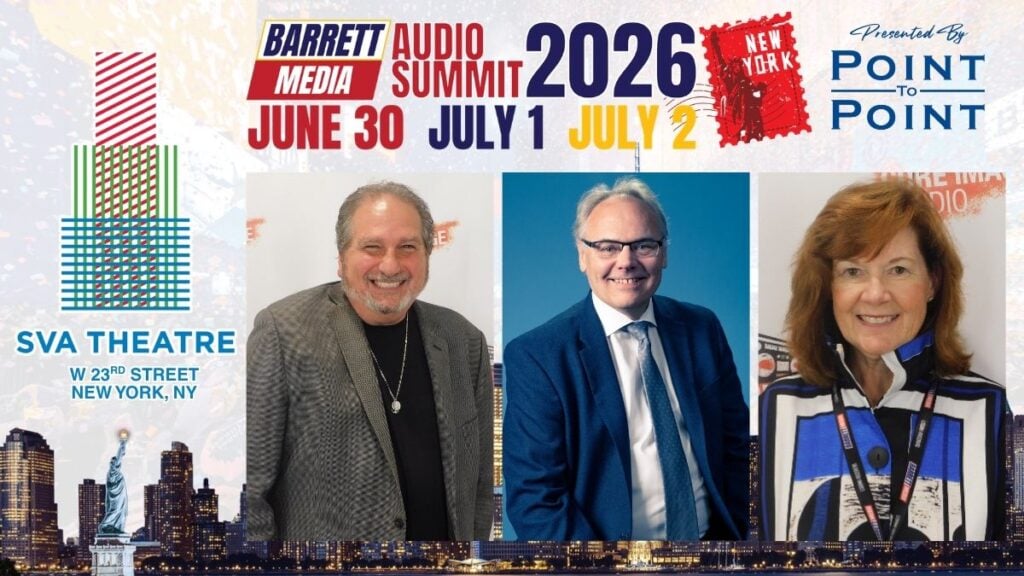
The full schedule for the 2026 Barrett Media Audio Summit presented by Point to Point Marketing is now available. Visit the Summit section and you’ll see it directly above the Speakers. I have a few final announcements still to make but this shows you what’s planned for all three-days. Putting this event together has been challenging but to do great things, that’s usually what’s required. My thanks to every single speaker who is making time to be a part of the show. If you haven’t secured a ticket yet, support the show and your industry, and come learn with us. Go here to secure your seat.
Today’s speaker announcement is a big one. It is my pleasure to welcome Stephen A. Smith to the 2026 Barrett Media Audio Summit. Stephen A. will sit down for a 1 on 1 conversation on Tuesday, June 30th at the SVA Theatre in New York City. He takes the stage from 3:50 to 4:30pm — the final session prior to the Premiere Networks Awards ceremony.
Stephen A. needs no introduction. He’s been highly successful on sports television, radio, in print, and as a business owner. Since branching out into politics, he’s generated massive amounts of buzz and attention digitally, on radio at SiriusXM, and as a contributor on NewsNation. His brand has grown so strong that he’s even been encouraged to run for President, though he’s said that’ll have to wait. Stephen A. Smith is no longer just a sports media personality. He is one of the most significant voices in American media — period.
For news media radio professionals, this session will give you a lot to think about. Stephen A. will discuss extending his reach into news, the risk-reward of doing so, managing pressure and high expectations, finding your voice, handling criticism and scrutiny, what he sees/hears working in news/talk, and where he believes the industry is heading — including his own career.
Building sustainable individual authority isn’t easy, but Stephen A. Smith has done it well. Understanding how he did it — what it takes to do it — is worth the price of admission on its own.
Some of the strongest voices and executives in the business are taking part in the News Media Summit on June 30th. Closing it with Stephen A. Smith is what I had in mind when we started building this year’s show. A special thank you to Stephen A. for making time to be a part of it.
But That’s Not All
The 2026 Barrett Media Audio Summit is also excited to welcome Audacy New York’s VP of News and the Brand Manager of 1010/92.3 WINS, Ben Mevorach. In addition, WJR Program Director Ann Thomas, Hubbard Minneapolis VP/Market Manager Dan Seeman are joining the lineup. Additional names will be revealed later next week. Then we’ll wrap up announcement season with our final awards recipients.
I want to welcome Skyview Networks as our News and Music registration partner for the 2026 Barrett Media Audio Summit. My thanks to Steve Jones, Andrew Kalb and Renee Smith for their support. 27 companies are now supporting this year’s conference. We could not pull this off without every single one of them.
The Summit runs June 30-July 2 starting with the news media show on Tuesday, June 30th. Sports media is the focus on Wednesday, July 1st. Music radio then takes us home on Thursday, July 2nd. Tickets are still available but hotel rooms at Hotel Hayden are full. For additional nearby options, go here. We look forward to seeing you in New York City this summer.
Barrett Media produces daily content on the music, news, and sports media industries. Sign up for our newsletters to stay updated and get the latest information right in your inbox.
The Radio Mercury Awards held its 35th annual ceremony Tuesday night at Sony Hall in New York. Progressive Insurance and Arnold Worldwide took home Best of Show honors for “Truckers Unite the World.”
What We Know: The Radio Mercury Awards recognized excellence across broadcast radio, streaming audio, podcasts and integrated audio campaigns. Liberty Mutual Insurance earned the 2026 Radio Marketer of the Year distinction. The award celebrated the brand’s iconic “Liberty, Liberty, Liberty, Liberty” jingle and its sustained commitment to radio advertising. CMO Jenna Lebel accepted the honor on behalf of the company.
What They Said: Chief Judge Danny Gonzalez made clear what separated the best work from the rest. “Great radio creative begins with great writing,” he said. “It’s the foundation that gives sound its power, and it’s ultimately what made it clear to our final-round jury which work deserved to rise above the rest.” Gonzalez added that the writing across this year’s entries was sharp, inventive and emotionally resonant.
What Remains Unclear: Details on exactly how many total entries competed this year have not yet been released. It’s also unclear whether Arnold Worldwide’s Progressive campaign will drive broader industry momentum around long-form audio storytelling.
What It Means: Attention fragments daily across countless platforms and screens. The creative side of broadcasting must shine brighter to cut through. These winners don’t just get the job done — they redefine what doing it well looks like.
Barrett Media produces daily content on the music, news, and sports media industries. Sign up for our newsletters to stay updated and get the latest information right in your inbox.
Approaching The Summit is a series of special interviews created in partnership with Point to Point Marketing featuring speakers at the upcoming 2026 Barrett Media Audio Summit in New York City. Follow along with this series as prominent names surrounding the event June 30-July 2 share their insights and expectations for what’s to come in the big apple. The Summit takes place at the SVA Theatre on West 23rd Street. For tickets and hotel room reservations, click here or visit the Summit section at the top of the website.
As radio professionals prepare to gather for another industry conference, few topics are more relevant than the value of continuous learning, collaboration, and adapting to a rapidly changing media landscape. Justin Johnson, Program Director of Baltimore’s legendary 98 Rock (WIYY), believes radio’s future belongs to brands willing to evolve beyond simply playing music and instead focus on personality, content, community, and culture. In this Q&A with Barrett Media, Johnson shares his thoughts on the importance of industry events, the challenges facing rock radio, the value of learning from peers, and why taking risks may be more important than ever.
*Editor’s Note: Answers have been edited for clarity and length.*
David Hill: Why is it important to attend events and learn?
Justin Johnson: It’s important because none of us has the whole answer. You can get tunnel vision very quickly. You’re focused on your station, your ratings, your market, your talent, your fires — and suddenly you realize you’ve been solving the same problems with the same tools. There may be other ways to solve your problems. The best programmers — workers in general — I know are still students. The second you think you’ve got radio figured out, everything changes, and you know nothing.
David Hill: What is the value of connecting with peers and competitors?
Justin Johnson: The value is huge, because we’re all fighting similar battles even when we’re competing against each other. The truth is, a good conversation with another programmer can save you six months of mistakes. I think the best value of the bigger companies is the wealth of knowledge and accessibility to smart people. That’s why it’s a shame to see the big companies devalue the humans on the ground. That’s your wealth, and they are throwing it away.
David Hill: Biggest challenge facing rock radio?
Justin Johnson: For rock, the biggest challenge is making sure the format feels alive, not preserved in amber. The music matters, obviously. But in 2026, listeners can get every song ever recorded from a device in their pocket. So our job can’t just be “play the right songs.” That’s table stakes. The real job is giving the audience something they cannot get from an algorithm — attitude, context, companionship, local connection, humor, chaos, community, and a reason to care. In short, programmers are the biggest challenge to the format. The old trope of the PD that’s afraid of his own shadow is as true as it’s ever been. Being afraid to be fired in 2026 is going to kill your station quickly. Danger is the friend of the format. Get in trouble and risk it when necessary — if you get fired, at least it’s for a vision you believed in.
David Hill: Favorite moment from past shows?
Justin Johnson: I love the moments where radio people drop the armor a little bit. We all act like we’ve got it completely figured out, but then you get into a real conversation and realize everybody is trying to solve the same puzzle with fewer pieces than they used to have. Those are the moments where you walk away better.
David Hill: Speaker you want to hear most?
Justin Johnson: Lee Abrams is one I’d really want to hear. That’s someone who helped shape the language of rock radio, but I’m less interested in nostalgia than I am in hearing how a mind like that looks at the next version of this business.
David Hill: View of the industry, present and future.
Justin Johnson: I think radio’s future is strong, but only for brands willing to evolve. We can’t just be music delivery systems anymore — the audience already has those. We have to be personality companies, content companies, community companies, and culture companies — with a transmitter as one of our biggest weapons. The stations that understand that are going to be fine. The stations that don’t are going to sound like a museum with commercials.
Purchase your tickets to the 2026 BSM Summit here, and for more information BarrettMedia.com
Barrett Media produces daily content on the music, news, and sports media industries. To stay updated, sign up for our newsletters and get the latest information delivered straight to your inbox.
The NBA couldn’t ask for a better situation than the one it currently enjoys. The New York Knicks are in the NBA Finals for the first time since 1999. They face the San Antonio Spurs, another historic franchise led by international superstar Victor Wembanyama. It’s a conclusion to the first year of the league’s new media rights agreements that couldn’t have been scripted any better.
For ESPN, this season also marked a first. It was the debut of the 21-time Emmy Award-winning program Inside the NBA on the network’s airwaves. For more than two decades, the program has helped shape conversation and sparked controversy around the league. Its bold personalities built a reputation by offering unfiltered opinions on the game, its players, and sometimes even each other.
For years, Inside the NBA was must-see television. This season, however, felt different.
You can’t question the program’s history. Inside the NBA has spent more than two decades succeeding by doing things differently. It bucked conventional wisdom, took risks, and often became as much a part of the NBA conversation as the games themselves.
Some viewed the panel as a reflection of what fans truly thought about the league. Others criticized the show for being too negative and argued it wasn’t always beneficial to the NBA’s growth. Regardless of where you stood, one thing was undeniable: people talked about it.
This season, they talked about it far less.
Are You There?
The reason may have had less to do with the show’s content and more to do with its availability. Which more than likely affected the impact of the program’s content.
Inside the NBA aired just 20 times during the NBA regular season on ESPN. Four of those appearances came between Opening Night and Christmas Day. Despite ESPN describing the schedule as “robust” when the partnership was announced, the show’s footprint was dramatically smaller than what viewers had become accustomed to during its years on TNT Sports.
At times, the show felt almost invisible.
"ESPN has a great relationship with the NBA, and they said, ‘We’ll bring that show over, you won’t see it as much.’ Put it on the shelf a little bit." – Colin Cowherd on 'Inside the NBA' pic.twitter.com/72E4szDL2z
Earlier this year, FOX Sports Radio host Colin Cowherd suggested that Inside the NBA once felt enormous but now felt invisible. He’s not wrong. By January 23, when Cowherd made those comments, the show had aired only five times on ESPN.
The biggest issue is scheduling.
ESPN’s calendar is crowded with college football, the NFL, college basketball, and countless other programming commitments during the fall and winter. Finding space for a studio show that traditionally thrives on consistency and repetition isn’t easy.
Less Time, Less Opportunity
Yet consistency is exactly what made Inside the NBA special.
The show wasn’t built on a once-a-month appearance. It was built on habit. Fans knew where to find it. They knew the personalities. They knew there was a good chance that something entertaining, controversial, or completely unexpected would happen.
What made Inside the NBA special was never just the personalities. It was the freedom. The freedom to go long, argue, and create moments no producer could script and no focus group could predict.
This season simply offered fewer opportunities for all of it.
Did Inside the NBA create many national talking points this year that grabbed the attention of the sports world? Were there moments that dominated sports debate for days? Did anything approach the type of widespread reaction the show routinely generated in previous years?
The answer is largely no. That’s not necessarily because the panel changed, because it didn’t. It’s because the circumstances changed.
Less airtime creates fewer opportunities for memorable moments. Fewer appearances mean fewer chances to generate conversation. Reduced postgame windows shorten discussions before they have a chance to develop.
When you reduce the opportunities for a show to be itself, you naturally reduce its impact. Even ESPN appears to recognize the issue.
ESPN President of Content Burke Magnus recently told John Ourand on The Varsity podcast that he’d like to see the schedule spread across more of the regular season.
“If I could change something, it’s really unrelated to how the show appears onscreen,” Magnus said. “I would like to spread the shows over more of the regular season. It’s quite back-loaded at this point. We didn’t really get going until Christmas Day.”
Would ESPN Allow More?
Magnus isn’t wrong. In fact, the schedule isn’t fully all under his control. He toldThe SI Media Podcast with Jimmy Trainia in November that he hopes to work with TNT Sports on “more flexibility and more regularity throughout the season from beginning to end.”
However, the question isn’t whether Inside the NBA should return next season. Of course it should. The more important question is whether the program will gain enough opportunities to matter once again.
Inside the NBA remains one of the most successful studio shows sports television has ever produced. Its chemistry can’t be replicated, its legacy is secure, and its place in basketball history is undeniable. But even great shows require visibility.
If ESPN can find a way to expand the program’s footprint next season, it may create more opportunities for memorable moments. It may restore some of the relevance that felt absent during many portions of this season. It may remind viewers why the show became appointment television in the first place.
Because the biggest lesson from Inside the NBA’s first season on ESPN isn’t that the show suddenly became less talented, less entertaining, or less insightful. It’s that audiences can’t engage with a show they rarely see.
Inside the NBA didn’t lose its entire voice this season. It simply wasn’t given enough opportunities to use it. And if ESPN truly wants the program to remain one of the NBA’s most valuable studio properties, finding it more room to breathe would be a good place to start.
Barrett Media produces daily content on the music, news, and sports media industries. Sign up for our newsletters to stay updated and get the latest information right in your inbox.
Let’s go commercial free 4th of July weekend. While you’re at it, do the same for Labor Day weekend. The programmers may be cheering. The other side of the building — from the new AE to the Chief Revenue Officer — is saying that Ryan guy is an idiot.
Let me take you back in time. My first radio memory as a kid was a trip to the beach on a holiday weekend. Literally everyone had their radio on WABC. You heard the same song from one end of the beach to the other. On air, Dan Ingram would tell everyone to “roll their bod” so the beach tanners on their blankets would get the perfect even tan.
Go to the beach today, it’s all personal playlists. I like to tell young programmers I’m so old, I remember when radio listening actually went up on the weekend and holidays. Now, for many stations, it’s dismal. Why not make a serious attempt to go back in time and help get some people back to radio on a holiday weekend? If you can’t clear the spots from the entire weekend, how about at least the entire afternoon? Commercial-free beach afternoons would sound awesome.
July 4th weekend and Labor Day weekend fall on the first weekend of the month, when the spot load is light already. I’d bet that if your traffic person told you the revenue number for that first Saturday, you would be embarrassed anyway.
Live Talent and Listener Interaction Can Save Your Holiday Weekend
If you want to make that commercial-free afternoon even better, ask your best talent to go on the air and do the shift live. Add some listener interaction with phone calls, app messages, and talent reading texts, and you’ve given your audience a reason to listen. Don’t forget to promote it every hour each weekday leading up to the weekend.
If your audience has abandoned your station on holiday weekends, it may be because you’re getting back what you put in. Is your commercial log a bunch of low dough and bonus spots? Did your talent cut tracks for a Monday holiday on the Friday before the weekend? Is your weekend programming just songs, sweepers, and spots?
I Was Guilty of This Too. Don’t Repeat My Mistakes.
Let me be the first to admit that I was guilty on all charges when I programmed day to day after COVID. My weekend talent never came back to the studio after 2020. As a programmer, I was conditioned to look at share of audience — which was fine — while average quarter-hour persons declined. Don’t let my failure deter you from doing the right thing. Weekends are special for your audience. Make them special on your radio station.
When you get your Nielsen numbers for the period that included Memorial Day, compare the AQH persons from that day to the Thursday that started the Nielsen week. If the AQH numbers were 30% lower or more on Memorial Day, I suggest a meeting with your sales manager before the 4th gets here.
Barrett Media produces daily content on the music, news, and sports media industries. Sign up for our newsletters to stay updated and get the latest information right in your inbox.