I met Scott Shannon backstage during The Rolling Stones “Steel Wheels” tour 36 years ago at the LA Coliseum. As Guns N’ Roses took the stage, Scott and I waited for the Mick and Keith photo op and talked radio. To be more accurate, Scott talked radio and I listened. Scott was programming Pirate Radio in LA while I was up the coast in Portland. I was stunned by how graciously Scott shared his time and ideas. When the Stones walked in, disappointment hit me — I knew the conversation was over.
An Unexpected Invitation
A few years later, Scott was at WPLJ, and I came east to look at diaries at Arbitron and flew up to New York. I called Scott’s office to request an appointment and the receptionist quickly rejected me.
A few minutes later, the phone rang. The voice on the other end said, “instead of trying to listen and steal our programming, just come over and hear it from me.” I spent the next couple of hours with Scott in his office, absorbing ideas from the master.
Why the Scott Shannon Award Matters
I was not special. Scott always took time with others, sharing ideas and giving inspiration. That’s why the Scott Shannon Award at the Barrett Media Summit means so much to the industry. Scott has seen it all.
Most people only remember the worst-to-first story of Z100, but there is so much more. He did not have to give his valuable time to people like me, but he always did.
From Radio Rivals to Golf Competitors
I moved on to program WLTW opposite Scott’s WPLJ in 1996. Our relationship shifted from radio to golf. If you think Scott was competitive in radio, you’ve never teed it up with him. Winning a five-dollar Nassau meant just as much to Scott as the Spring book.
Bringing Scott to WCBS-FM
When WPLJ and Scott parted ways in 2014, I was at CBS Radio. I was fortunate to work for a team that understood Scott’s value. The great Don Bouloukos was market manager, and Dan Mason and Chris Oliviero were at CBS corporate.
After a tough budget meeting, Chris assured me we would get it done. On March 3, Scott Shannon took over mornings and transformed the image of WCBS-FM.
We had the greatest ringmaster in morning radio history starting each day.
Building a Dream Team
Scott assembled a great show: Joe Nolan on traffic, John Elliott from Channel 2 on weather, Patty Steele with news, Kermit the Wonder Frog — now Trevor Marden on WAXQ — and Brad Blanks with Louis Pulice producing. I was lucky enough to have an office outside the studio to watch the magic happen.
Looking Ahead at Barrett Media Summit
My good fortune continues at the Barrett Media Summit in New York, where I get to introduce a packed room to Scott and other radio luminaries.
I hope to see you there.
Barrett Media produces daily content on the music, news, and sports media industries.Sign upfor our newsletters to stay updated and get the latest information right in your inbox.
Fox News Audio Senior Vice President John Sylvester isn’t interested in talking about survival. As CBS News Radio shutters operations, Sylvester sees the situation differently than others. Not as turbulence to weather, but as a runway his team had already been building toward for years.
For Fox News Audio, the meeting of growth and opportunity has arrived right on schedule.
That positioning didn’t happen by accident. Sylvester describes a deliberate, long-running transformation that predates the CBS News Radio exit. Built on a foundational belief that streaming, podcasting, satellite, and smart speakers weren’t threats to traditional radio, but simply different access points for the same content.
“We look at it as we’re not really filling a vacuum. We’re offering a trust advantage through the multi-platform ecosystem that we created,” said Sylvester. “We’ve really bridged the gap between traditional AM/FM and digital-first consumers. So, with another radio network going away, it’s just opened up a ton of opportunity, and we’ve seen a lot of growth, so it’s been tremendous.”
Building for Every Receiver
That multi-platform mindset — what Sylvester calls a “no-fear philosophy” — shaped how Fox News Audio built its infrastructure. Well before the competitive landscape shifted.
Rather than treating digital distribution as a threat to broadcast relationships, the network leaned into the idea that the same high-quality content could serve audiences regardless of how they chose to receive it.
“We never really saw that as a threat for us when we were servicing AM/FM radio,” Sylvester said. “We looked at it as there are different receivers for the same high-quality content. So we’ve always thought of creating an ecosystem for us at Fox News Audio where we looked at satellite, podcasting, smart speakers, syndication, streaming, and social as opportunities for us to work closely, even with AM/FM radio.”
That ecosystem now spans over 3,200 affiliations. Fox News Audio’s syndicated portfolio is up 10% and has added more than 300 net-new affiliations in the past year alone. It’s a number Sylvester attributes directly to the team’s affiliate-first operating philosophy — one that includes dedicated bureaus in Los Angeles, Chicago, Miami, London, and Washington, D.C., plus more than 100 audio professionals still based at 1211 Avenue of the Americas.
“We spent the last decade building an affiliate-first newsroom, which means we’re incredibly data-driven,” stated Sylvester. “We use high-level tools and automation, and we create efficiencies while making sure we’re getting the best product out there for our affiliates.”
The Rundown Effect
Perhaps no single product better illustrates the Fox News Audio strategy than the Fox News Rundown — a morning podcast that now doubles as a syndicated radio show on 176 stations. The program has posted 40% year-over-year growth in affiliations, with several iHeartMedia news/talk stations taking the show. It is now heard in major markets including New York, Houston, Boston, Cleveland, Salt Lake City, and Nashville.
“We had a really good morning podcast that showed a lot of growth, and we thought it would be a great entryway into syndicated morning radio,” the Fox News Audio executive shared. “I didn’t want to take that morning podcast and force it into a traditional radio format with rigid breaks. I created the format clock with our team here at Fox to give affiliates opportunities to do 10-second billboards and 15-second billboards and change the inventory levels a bit.”
That kind of creative formatting flexibility has resonated with program directors who need content that’s both saleable and locally adaptable. Sylvester frames it as something larger than a programming decision — it’s about positioning Fox News Audio as a default resource when news breaks during morning drive.
“We don’t just provide content — we provide a trust advantage for local broadcasters,” shared Sylvester. “When news breaks, we want to be the default choice for the American commuter. Morning drive is an important piece of that.”
Podcasting as a Multi-Genre Engine
Beyond the Rundown‘s success, Sylvester pushed back on any notion that podcasting is peripheral to Fox News Audio’s core mission. The network’s podcast operation has evolved into what he describes as a “multi-genre engine,” with snackable news updates, business content, weather, and tech offerings — plus newer serialized formats, including true crime podcasts and a daily games podcast called The Quiz.
“From April 2025 to April 2026, we’re up 13% year over year, which has been great,” Sylvester said. “We’re also being aggressive about video integration and moving a lot of our talent onto video for podcasting.”
Fox News Audio’s hourly newscast has consistently ranked at or near the top of Podtrac’s charts for several years, and Sylvester points to that product as a cornerstone of the broader distribution strategy. The top-of-the-hour update is now available on all major platforms and has become a reliable fixture for affiliate stations that have built programming around it.
“I’ve always looked at it as: if you’re streaming it, watching it, or hearing it on your local station, we’re going to be there,” Sylvester said. “I’m really proud of what the podcast team has done over the last few years as we continue to evolve.”
That evolution has continued for Fox News. Last year, it expanded its New Media division, under the guidance of Porter Berry, to feature video podcasts like Hang Out with Sean Hannity, Ruthless, and Will Cain Country, among a plethora of other shows.
Barrett Media produces daily content on the music, news, and sports media industries. Sign up for our newsletters to stay updated and get the latest information right in your inbox.
For years, the knock on SiriusXM was that it treated talk radio like an afterthought. Music channels got the marquee real estate. Sports had its own dedicated universe. Talk? It had Howard Stern — and that was largely the conversation. But something has shifted, and it’s shifting fast.
The company isn’t tiptoeing into the talk space anymore. It’s planting a flag.
Recent moves make that unmistakably clear. SiriusXM launched a dedicated Megyn Kelly Channel, giving the former Fox News anchor her own branded home on the platform. It locked up Stephen A. Smith — arguably the most recognizable voice in sports media — for a show on P.O.T.U.S. Then it turned around and added Chris Cuomo to that same channel. That’s not a coincidence. You don’t just stumble upon adding high-profile talents.
That’s a strategy.
Building a Roster, Not Just a Lineup
What makes this interesting isn’t any single signing. It’s the pattern. SiriusXM already had credible voices in the talk space — Julie Mason, Dan Abrams, and Michael Smerconish have all carved out real audiences on P.O.T.U.S. Those aren’t filler names. They’re established brands with loyal followings.
Adding Smith and Cuomo doesn’t replace what was already there. It amplifies it. Suddenly, P.O.T.U.S. looks less like a supplemental news channel and more like a genuine destination — a place programmers at terrestrial stations might actually look at with some envy.
That matters, because the competition for talk talent has never been more intense. Podcasting has blown the doors off the old gatekeeping model. Anyone with a mic and an audience can build a show. So for a platform like SiriusXM to compete, it can’t just offer distribution — it has to offer status, resources, and reach that independent creators can’t replicate on their own.
The Podcast Connection Changes Things
Here’s where the business logic really snaps into focus. SiriusXM has quickly become one of the largest podcast companies in the world. Its portfolio includes properties that reach tens of millions of listeners. That infrastructure doesn’t just super serve music fans or sports bettors — it’s tailor-made for talk.
Podcasting and talk radio have always been cousins. The formats feed each other. A host who builds an audience on satellite radio can extend that relationship through on-demand audio. A podcast star can step into a live, structured show and find a new layer of audience engagement. SiriusXM can now offer both lanes — and that’s a genuinely powerful pitch to talent.
The Stern model proved that satellite radio could turn a talk host into a cultural institution. The question was always whether SiriusXM would invest in building the next tier of that kind of presence. For a long time, it didn’t — at least not with the same urgency it brought to music or sports. Now, it appears the company has decided the talk space is worth fighting for in the same way.
That’s a smart call. Personality-driven audio is arguably the most durable format in the business. Music trends come and go. Sports rights deals fluctuate. But a host with a genuine connection to an audience? That relationship can last decades. SiriusXM seems to finally understand that talk radio isn’t just a complement to its bigger properties. It’s a major pillar worth building on its own terms.
The next few years will reveal whether these investments translate into the kind of cultural footprint Stern has held for so long. But the direction is clear, and the commitment looks real. SiriusXM isn’t dabbling in talk anymore. It’s going all in.
Barrett Media produces daily content on the music, news, and sports media industries. Sign up for our newsletters to stay updated and get the latest information right in your inbox.
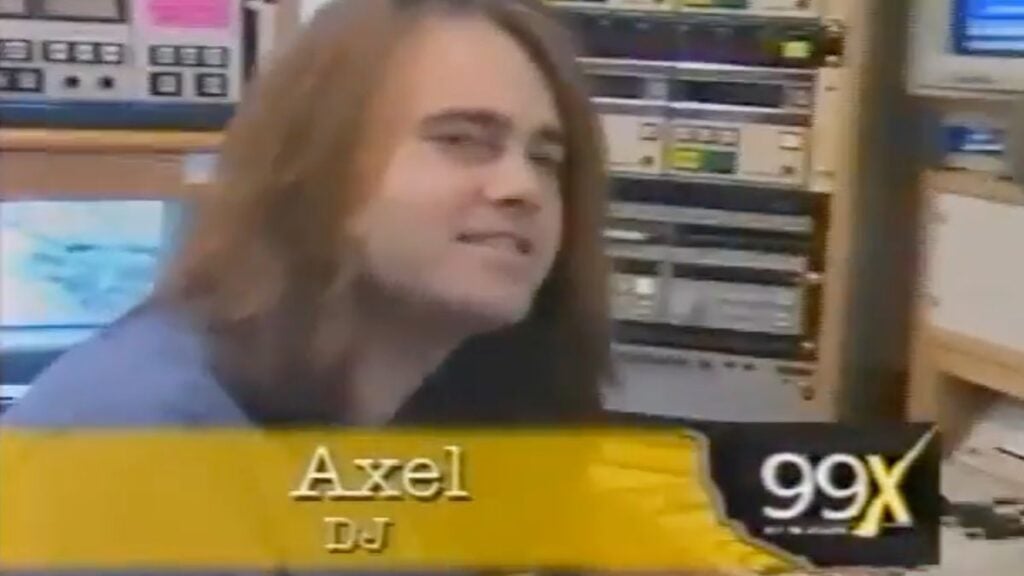
Some radio careers span a single format. Axel Lowe‘s has spanned an era. From the earliest days of alternative radio at Power 99 and then 99X in Atlanta, to active rock, to classic hits on 97.1 The River — where he now hosts the morning show — Lowe has quietly accumulated one of the longest continuous runs in Atlanta broadcasting history. Thirty-four years on air in a single market. The guy with the long hair who never expected to be in radio has become, in his own words, a warm blanket for the city he never really left.
The name came first, before any of the rest of it. Andrew — that’s his real name — walked into Power 99 as an intern and walked out as Axel. Program director Rick Stacey simply refused to call him anything else. “He goes, ‘No, you’re Axel. It’s just easier to remember,'” Lowe recalled. When 99X launched out of the ashes of Power 99, Stacey wanted him on air. He asked whether to go by Andy or Drew. The answer, delivered without ceremony: “No, dipshit, you’re Axle.” The name stuck because he had long hair. He looks nothing like the Guns N’ Roses singer. It didn’t matter.
The Accidental Radio Man
Lowe never planned on radio at all. He was studying music business management at the Art Institute of Atlanta — where, he noted, one of his classmates was Speech from Arrested Development, who was putting that band together in those very hallways — and had landed a coveted internship at Arista Records. He spent his senior year working the label’s roster. He was miserable. “I hated Whitney Houston and Tony Braxton,” he said flatly. “I was like, I picked the wrong label.”
A lifeline came from Arista’s country division, a Nashville partnership then home to Brooks & Dunn, Diamond Rio, and Pam Tillis. Country people, Lowe found, were his kind of people. He was set to go into regional promotion. Then the timeline slipped. His boss, Linda Alter, told him the full-time job would take two months to materialize. In the meantime, she had a friend named Leslie Fram over at Power 99 who could use some help on a morning show. Go learn a little radio, she said. We’ll have your job waiting.
Three weeks into the internship, Power 99 flipped to 99X and Stacey came looking for warm bodies to put on the air. Lowe had no idea what he was doing and still had the Arista offer in hand. Stacey told him to at least give it a shot. “That’s what took me off my country course,” Lowe said. “And I feel like I still have a little bit of country I need to do in my lifetime.”
The 99X Years: More Consequential Than Anyone Knew
The 99X years weren’t just a job. They were, in retrospect, something more consequential than anyone in that building fully understood at the time. I sat in those music meetings alongside Lowe, Brian Phillips, Sean Demrey, and Leslie Fram, week by week, as we helped define what alternative rock radio would become nationally — though none of us recognized it as it was happening. Looking back on it now, I told Lowe, none of us understood what was going on at that point. We were just in a meeting and told to be there. But what was happening is we were starting to craft what would become a trend nationally.
Lowe credits Phillips in particular for shaping his instincts about how a radio station should behave in a market. “When Brian Phillips came in to really set the overall tone on everything — how the station interacts on the streets, the songs we’re playing, the messages we’re saying on the air — I absorbed all that,” Lowe said. It wasn’t just music selection. It was attitude, street presence, the entire identity of the station. Those lessons traveled with him to every stop afterward.
Cincinnati and the Value of Autonomy
The move to Cincinnati in 2014 was a deliberate step outside the Atlanta ecosystem. Cumulus needed someone to revamp a struggling active rock station, 96 Rock WFTK, and Lowe took the job. It was his first true autonomous PD role — no corporate fingers in the pie, no Atlanta market politics, just a station to build. “It was truly 100% autonomy where I could do whatever I wanted,” he said.
He found Cincinnati to be a different kind of radio town. “Atlanta is a very metrosexual town. Cincinnati — man, they sell more hoodies there than anywhere in the world. Everybody just wears hoodies and they’re angry at their sports teams and they want to hear hard rock.” The competition was WEBN, a heritage station that had owned Cincinnati rock for decades. His team nosed ahead of them in certain monthly and quarterly ratings periods. He called it earning a stripe.
Four years later, Cumulus called him back to Atlanta. The time away had done something useful: it made him miss the city and fully appreciate what it meant to be embedded in a single market for that long. “It gave me a chance to get outside of Atlanta and then truly appreciate and miss all things Atlanta,” he said.
The River and the Audience That Grew Up With Him
The move to 97.1 The River could have felt like a step sideways — classic hits rather than the alternative and active rock that defined his identity. But Lowe says it felt right almost immediately. The River approached him while he was still at 99X, right as that station was preparing to relaunch. He sat with the offer and made a call. The Van Halens, the Guns N’ Roses, the Mötley Crües — that was the music he grew up on, he reasoned. The station was also incorporating more nineties content. And there was a demographic fit he found genuinely compelling.
“The River has a 65-35 male-female audience. I’m not one of those dudes that’s so rock it’s not going to be appealing to women. I’m a guy that’s got a wife and two daughters. I know how to connect with women.” He looked around at the colleagues he was joining — Kaedy Kiely, English Nick, voices that have meant something to Atlanta listeners for decades — and felt the weight of the lineage rather than the pressure of it. “It doesn’t give me an ego stroke. It just makes me feel really connected to the Atlanta audience.”
Morning Drive, Localization, and the Art of the Phone Call
Lowe works the morning show solo, without a co-host, and has developed a clear philosophy about how to fill that space. The audience is the co-host. He picks up phones constantly, not just to reward listeners with prizes but to fish for material — a welder who’s an apprentice, a young dad spending his contest winnings on his daughter’s first birthday party, a guy who’s going to take his wife out to dinner. “I like to put those things on the air,” he said, “and not overpopulate with people that are retired or the 50- and 60-year-olds. I like to have the mixture.”
His two morning segments, Classic Rock News, are built on the same principle: find the contemporary hook in the classic story. A Billy Joel song isn’t just a Billy Joel song — it’s a story about the lawyer fight over an unauthorized documentary. A Whitesnake reunion isn’t a nostalgia act — it’s an Adrian Vandenberg tour that just announced an Atlanta date. He weaves in younger producers, contemporary connections, current events. “Any chance I can bring up something relevant and topical and weave it into something from our format that’s 40 years old,” he said, “it makes it sound current and not dated.”
He’s also attentive to the format’s format evolution itself. The River has moved from a seventies- and eighties-heavy playlist to incorporating one nineties cut per hour and then deepening that library. The shift wasn’t universally embraced at first — roughly ten percent of core listeners pushed back on Pearl Jam appearing on a classic rock station, despite the song being over three decades old. Those listeners, Lowe noted, don’t think twice about it now. “A car is classic at 25 years. So, you know.”
What Comes Next
Ask Lowe what format he’d want to tackle if given the chance and the answer comes fast: country. The road not taken in the early nineties, the Arista Nashville chapter that almost defined his career instead of radio, still has a pull. He’s earned his stripes across four formats and three cities over 34 years. A cowboy hat and some boots, he figures, are not entirely out of the question.
For now, Atlanta mornings on 97.1 The River are where he is, doing what he has always done: connecting people to the music they grew up on, to each other, and to the city itself. “I’ve known this person for 35 years,” he said, describing a listener who called in to remember hanging out with him at a now-gone Atlanta venue. “So it’s kind of a family feeling.”
Thirty-four years in. The warm blanket is still on the air.
Barrett Media produces daily content on the music, news, and sports media industries. Sign up for our newsletters to stay updated and get the latest information right in your inbox.
The exciting world of the creator economy means there are no limits on content. Growing up, we became accustomed to basketball players only working on basketball programs and baseball players only joining baseball programs. Today, the world is more blended than ever, with creators navigating ways to expand their reach and audience through different verticals. That’s why Bussin’ With The Boys announcing that they’re beginning a NASCAR vertical didn’t come as a shock to the system.
Years ago, some may have scoffed at the idea of football personalities with a football audience attempting to branch into NASCAR. However, times have changed. The announcement also shows that more leagues are becoming increasingly dependent on the creator economy.
It’s been seven years since former NFL players Will Compton and Taylor Lewan began their independent content journey in the back of a bus. Literally. If you don’t know the story, check out this video.
Since then, the podcast has grown into partnerships with Barstool Sports and FanDuel. The brand has expanded into other verticals, including The Locker Room and For The Dads. Lewan and Compton have interviewed athletes and celebrities from sports and entertainment. They also partnered with ESPN this past football season for weekly guest appearances on several studio shows.
Business is good for the Bussin’ team. They continue to honor their community by blending authenticity with adaptability. Their focused approach and willingness to remain curious continue to drive engagement with their audience.
Now, NASCAR is the next venture — the brand’s first major branch into another sport. You could say there’s a lot of crossover between college and professional football and NASCAR. It’s a safer transition for a first move outside of football than basketball, hockey, or even baseball. Without a doubt, the move is significant for the Bussin’ team. However, it’s an even more significant play for NASCAR.
Can NASCAR Save Itself?
If you’ve followed viewership figures over the past year, many sports have benefited from updated measurement methods. With the adoption of Big Data + Panel, nearly every sport has posted near double-digit viewership increases year over year.
Except NASCAR.
According to the latest data, NASCAR on FOX Sports and FS1 is averaging 3.3 million viewers, down 1% from its points races at this stage last year. Even though NASCAR saw an 11% leap in viewership for the Daytona 500 in February, nearly every other race has delivered flat or declining viewership.
The situation has become concerning enough that NASCAR is shifting away from the Big Data + Panel measurement system and moving back to a panel-only model. That’s the older measurement system the sport used for years. According to NASCAR, the concern centers around issues tied to the sport’s data sets, particularly among select demographics and metered markets.
Even this weekend, Dale Earnhardt Jr. implored his social media following to turn on the All-Star Race at Dover International Speedway to “inflate the numbers.”
It’s not just viewership. Attendance has become an issue as well. That same race Earnhardt Jr. begged fans to watch featured a noticeable number of empty seats. By the way, that was during an All-Star Race.
Was the Dover All-Star Race a good race? 34.2% said Yes.
— Ranks No. 9 of 11 All-Star Races in the poll (2017 Charlotte got 18.7% and the infamous 2022 Texas got 11%, the lowest of any race in poll history)
NASCAR driver Kyle Busch said last year that he believes NASCAR is battling a “culture problem.” Other fans have argued there’s not enough star power, while some believe the sport has lost its way because of too many technological advances.
Make no mistake, there are plenty of concerns surrounding the future health of the sport. Dwindling interest, declining viewership, and attendance issues are not a recipe for long-term success. Even moving back to an older measurement model won’t revive interest in a sport that once commanded far greater attention across the sports landscape.
NASCAR Hops On The Bus
That brings us to Bussin’ With The Boys, NASCAR’s latest attempt to try something new. The sport is opening its doors to the creative team at Omaha Productions alongside Taylor Lewan and Will Compton. The question is whether a 14-episode run can create momentum for a sport that desperately needs more attention while network television continues to overlook it.
At the end of the day, this partnership feels far more like a test for NASCAR than it does for Bussin’ With The Boys.
Lewan, Compton, and the Omaha Productions team already have proof of concept. They’ve built a successful brand, cultivated a loyal audience, and shown they can expand beyond traditional football conversations without losing their identity.
The greater uncertainty rests with NASCAR and whether the sport can still create meaningful cultural momentum outside of race day itself.
That’s not a knock on Bussin’. If anything, it’s recognition of the impossible expectations often placed on creators entering legacy sports spaces. A single podcast, even one with a passionate audience and strong reach, cannot reverse years of declining interest overnight. It also cannot solve attendance concerns, fractured fan sentiment, and changing consumer habits.
Fourteen episodes won’t magically restore NASCAR to the level of relevance it once enjoyed during its peak years.
What this partnership can do is give NASCAR another opportunity to reconnect with younger audiences through a more authentic voice than traditional television coverage often provides. However, if the sport is expecting one creator-driven collaboration to serve as a cure-all, it’s chasing the wrong solution.
Fixing NASCAR’s long-term issues will require far more than adding one successful podcast to the ecosystem. It will take stronger storytelling, bigger personalities, greater cultural relevance. More than anything, and a clearer understanding of what made fans fall in love with the sport in the first place.
Barrett Media produces daily content on the music, news, and sports media industries. Sign up for our newsletters to stay updated and get the latest information right in your inbox.
This past March, Jeff Passan signed a new multi-year contract with ESPN. In this day and age of questionable money changing hands in big-time media, this one was a no-brainer. Since joining ESPN in 2019, Passan has established himself as one of sports’ truly great reporters.
It’s tough to make a name for yourself as an insider when you work at the same network as Adam Schefter, but Passan has done just that. His easy-going style and supreme intelligence have placed him at or near the top of baseball news breakers.
Passan has an easy-going on-air manner and speaks the language of a baseball fan. He has become a regular contributor on The Pat McAfee Show, SportsCenter, Get Up, Pardon the Interruption, ESPN.com, ESPN Radio, and the network’s social media platforms.
Passan not only breaks stories, but he also excels at breaking them down. The Syracuse University graduate made a name for himself during a 13-year stint at Yahoo Sports. He also wrote the best-selling book The Arm: Inside the Billion Dollar Mystery of the Most Valuable Commodity in Sports.
Passan is not just a TV personality. He is also a writer and raconteur. That is especially evident on his podcast, Sources Tell Jeff Passan, an ESPN and Omaha Productions collaboration.
This week, Passan featured interviews with Aaron Boone and former MLB umpire Joe West. The trio discussed a variety of topics, beginning with the decline in player and manager ejections.
A Relaxed Approach
This episode of Sources Tell Jeff Passan had me at hello. It opened with 1970s and 1980s footage of diamond arguments, including the San Diego Chicken battling legendary umpire Ron Luciano, along with classic clips of Tommy Lasorda, Earl Weaver, Billy Martin, Whitey Herzog, and other iconic managers. This represents a major part of Passan’s appeal. He not only stays on the cutting edge of baseball news, but he also possesses a deep appreciation for the game’s history and lore.
During his many ESPN appearances, Passan cuts an almost bookish figure. He is well-versed in the game’s analytics and usually appears dressed in a coat and tie.
On Sources Tell Jeff Passan, however, he loosens up a bit. The suit is replaced by a hoodie, and he adopts a more conversational, relaxed style that adds depth to his on-air persona. On ESPN, it’s all business with reports, updates, stories, and rumors. The podcast feels more like a few guys talking baseball in a cool, entertaining way.
West and Boone were excellent guests for a discussion about on-field arguments. As the conversation unfolded, graphics appeared with inside information on the guests and related topics, similar to the old Pop-Up Video series that aired on VH1 from 1996 to 2002.
West shared several great memories about dust-ups with managers and players. Sources Tell Jeff Passan is equal parts stats and storytelling. It truly serves as Passan’s playground, giving him the chance to gleefully jump on the swings or seesaw while enjoying baseball conversation.
As the episode progressed, the discussion shifted to the declining frequency of brushback pitches and all-out baseball brawls. Passan spoke with Boone as a pop-up graphic revealed that Boone’s brother, Bret Boone, father, Bob Boone, and grandfather, Ray Boone, all played in the Major Leagues. That led to a really nice exchange about Boone literally being born into the game.
This is one of the things I enjoy most about the podcast. On ESPN, Passan usually serves as an information source. The network brings him on to discuss trades, breaking news, and injury updates. On Sources Tell Jeff Passan, however, he gets to showcase his impressive interviewing skills.
Storytelling at Its Best
With recent rule changes and a bevy of talented young players, Major League Baseball is experiencing something of a reboot among fans of all ages. The sport is attracting younger viewers because of its youthful superstars while maintaining its grip on older fans because of its rich history. Heck, even the powder blue uniforms of the 1970s are making a triumphant return for many teams.
Passan effectively walks the line between the game’s past, present, and future.
On ESPN, Passan is often limited to quick-hit segments that race through several stories. The time and space provided by Sources Tell Jeff Passan allow for longer-form narratives and anecdotes.
West shared an amusing story about David Ortiz. Early in Ortiz’s career, West jokingly told him, “I hope you play in this league long time. Because as long as you’re in this league, I won’t be the ugliest guy in it.”
Years later, during his final season, Ortiz returned the jab by saying to West, “Next year, you’ll be the ugliest guy in the league.”
Another interesting tidbit from the conversation revealed that umpires once had the authority to issue fines to players instead of ejecting them from games. The free-flowing, extended exchanges create opportunities for previously unknown stories and information to surface.
As the discussion continued, Boone made a strong point by stating that there is little reason to be ejected in today’s game. Replay reviews and ABS strike-zone technology have reduced heated debates. Passan referenced this while asking Boone whether managers ever get ejected intentionally to motivate their teams. Boone said he has never tried to get tossed simply to fire up the club. West sarcastically chimed in that with the game’s best pitching staff and the ABS system, Boone should never lose another game.
A Different Side
Sources Tell Jeff Passan not only offers a different side of Passan, but also of Boone. The embattled Yankees manager has taken significant criticism in New York and nationally. During games, viewers often see cutaways of Boone wearing a frustrated or pensive expression. His appearance alongside Passan and West provided a different perspective, showcasing both his personality and his deep knowledge of baseball.
The final few minutes of the show featured a pre-recorded interview with Passan speaking to Dave Roberts and John Schneider. The trio reflected on last season’s World Series and several key managerial decisions and calls.
Other than the pop-up graphics and the retro-style opening, the production does not rely heavily on technical wizardry. The show primarily features a three-shot of Passan and his guests communicating remotely, and that proves to be more than enough.
Sources Tell Jeff Passan is not designed to dazzle viewers with lights and lasers. Instead, it succeeds by entertaining audiences with knowledge, storytelling, and insight.
Barrett Media produces daily content on the music, news, and sports media industries. Sign up for our newsletters to stay updated and get the latest information right in your inbox.
There is no doubt Fox & Friends Weekend host Rachel Campos-Duffy loves the United States of America.
There is also no doubt the soldiers who made the ultimate sacrifice over the last 250 years loved this country.
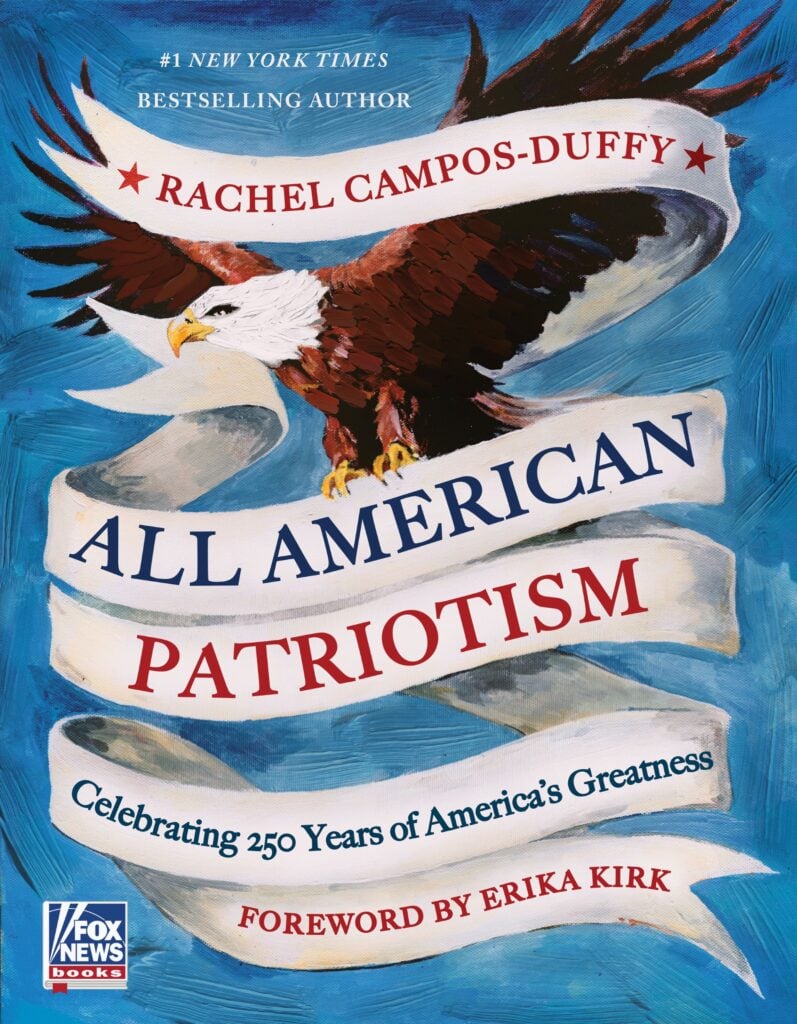
With this love in mind, Campos-Duffy — along with some friends from Fox — found a new way to honor those who made the ultimate sacrifice by reminiscing about why they love America in her new book, All-American Patriotism, which was released just in time for Memorial Day.
A Fox News Family Affair
“It’s a compilation of chapters written by all the different friends of mine at the network,” the Fox & Friends host said. “Each chapter is very different because each writer is different. They all come from a different part of this country and have a different experience with America. But what they share is this deep, deep love and affection for the country and for all that it’s done for them and their families.”
From descendants of Revolutionary War heroes to living the American dream, Campos-Duffy’s book has it all. And it beautifully showcases the many different perspectives of what makes America great. It wouldn’t be possible without the ultimate sacrifice.
“I just think that we don’t think enough about how lucky we are to live in this country,” Campos-Duffy said. She later added, “I think we’re coming out of some years where we were actually told to be ashamed of who we are, who our country is, and our founding and our history. And I’m really hoping that we’re turning the page on that.”
The book features an impressive roster of contributors. “We have a real-life hero — Joey Jones is in it. Dana Perino, Harris Faulkner, Trace Gallagher, Charles Payne, Jimmy Failla, Emily Compagno, Benjamin Hall. I mean, the list goes on and on and on.”
An American Dream, Lived
Her personal story is truly an American dream come true. “My father is first-generation born here, but his parents came from Mexico, and my mother is an immigrant from Spain. My father met her when he was stationed in Spain as a young airman. They met and fell in love, and they started this family.”
She recalled, “My father came from very, very poor beginnings. He was a shoeshine boy in a little town in the mountains of Arizona, where everyone worked in the copper mines.”
Today, all four Campos children have become successful. “My sister is an ambassador in the Dominican Republic. My brother is an extremely successful lawyer. Another one is a successful businessman. And we’re all kind of doing all these great things. And we truly believe we couldn’t accomplish this in any other country.”
Campos-Duffy is hoping her book inspires all who read it to “start thinking about their own proud American stories and how important it is for us to pass that down to our kids, because they’re just not getting that love and appreciation taught to them in a lot of our public schools.”
The cover of Rachel Campos-Duffy’s new book, All American Patriotism (Photo: Fox News Books)
Passing the Torch
Sole responsibility for instilling patriotism in our children does not rest on the schools alone. “Parents and grandparents and aunts and uncles have a responsibility to counter those messages that our kids are getting in the culture,” Campos-Duffy affirmed, “and tell the story of how America and freedom and liberty and all those rights that are secured to us because of this country, because of our constitution. Because it’s the first place on earth that said our rights come from God and not the state or a monarch.”
One great way Campos-Duffy suggests families can celebrate America 250 and also honor the great patriots who came before is to visit “some place really beautiful and wonderful just a couple hours away that you’ve never gone to — that maybe other people travel across the states to see, but you don’t because it’s in your backyard.”
For Campos-Duffy, who grew up in Arizona, that place was the Grand Canyon. “I think it’s one of the most remarkable places to visit in the world. It is one of the seven wonders, after all. But Arizona has done a phenomenal job of keeping the experience the same as it was back in the ’50s and ’40s when people used to visit. It’s just a must-see place as an American.”
In addition to the Grand Canyon, she believes all Americans should see Yellowstone, the nation’s capital, and Philadelphia. “We have just the most beautiful country. There’s just so much to see everywhere. But if you live near the beach, go to the beach — or take your kids up to the mountains if you live near the mountains.”
The mother of nine believes seeing these places virtually won’t do. “I really encourage people to get their kids off the couch and off the screens, load them up in a car — just like we did in the ’70s and ’80s — and take them somewhere. Not only will they learn something about the country, but I think the family will be better for it.”
Finding Your Path in Media
For those who want to follow in Campos-Duffy’s footsteps and work in media, she has one clear suggestion: get an internship.
“Dig in, see if you like it. The most important thing is to know if it really is your jam.” For a while, Campos-Duffy believed she wanted to be a diplomat, but all that changed with an internship.
“I got an internship with the State Department in Venezuela. While I had a great time in Venezuela — it was not the Venezuela that we know of now. It was a different time. I did realize I didn’t really enjoy the sort of bureaucratic nature of the State Department.” She noted, “It just wasn’t for me.”
This is why she believes interning is “a wonderful thing to figure out who you are and if you really like something.”
All-American Patriotism is Fox News Books’ 19th title. While it was released in time for Memorial Day, Campos-Duffy believes it’s a great read any time of year for those who love this country.
Barrett Media produces daily content on the music, news, and sports media industries. Sign up for our newsletters to stay updated and get the latest information right in your inbox.
The days of a single dominant screen are gone. U.S. audiences now move fluidly between connected TVs, smartphones, tablets, and laptops, often within the span of a single news cycle or sporting event. For media professionals, this isn’t an emerging trend to prepare for. It’s the operating reality they’re already managing every day.
The expectation of easy access is what has changed most. Viewers no longer tolerate being tied to a broadcast schedule or a single app. They expect content to follow them. The organizations that have figured out how to deliver on that expectation are pulling ahead of those still treating digital as a secondary distribution channel.
Audiences No Longer Live on One Screen
Streaming now accounts for 44.3% of total U.S. TV viewing, nearly matching the combined share of broadcast and cable at 45.3%. Compared to just one year prior, that streaming figure represents a 15% increase in usage.
That kind of growth doesn’t happen incrementally. It reflects a fundamental change in how people structure their media time.
The practical implication is that no single platform can claim to “own” an audience anymore. A sports fan might watch the first half of a game on a connected TV app, catch a halftime highlight reel on social media, and check the score via a mobile push notification, all within 90 minutes.
Other digital industries adapted to this behavior years ago. For example, casino sites in Texas increasingly operate across desktop, mobile, tablet, and app-based ecosystems with synchronized accounts and payment systems. Users expect to move between devices without losing progress, account access, or functionality. Streaming and media companies are now chasing that same level of cross-platform continuity.
News audiences behave similarly. People move between push alerts, short-form video, live streams, podcasts, and long-form newsletters depending on how much depth they want at a particular moment.
How Sports and News Media Adapted First
Sports broadcasters were among the first to recognize that distributing a single linear feed was no longer sufficient. The response has been deliberate simulcasting, carrying major events across broadcast and streaming simultaneously to capture complementary audiences rather than forcing viewers to choose.
NBC’s approach to Sunday Night Football, distributed across both its broadcast network and Peacock, is a clear example of this strategy playing out at scale.
Around 55% of fans say their interest in a show, artist, or franchise leads them to follow that content across multiple platforms. This includes streaming services, traditional television, social media, and live events. The percentage rises even higher among millennial audiences.
News organizations have followed a similar path. Breaking stories now travel simultaneously as push alerts, social clips, live blogs, and newsletter dispatches.
The old model of a single editorial home base, a cable channel or a website, has given way to a distributed architecture where each platform gets a version of the story tuned to its consumption pattern.
What Multi-Platform Dominance Means for Media Executives
For program directors, executives, and content strategists, the challenge is no longer reaching audiences. It’s maintaining coherent brand identity and measurement infrastructure across five or six simultaneous touchpoints.
The organizations navigating this most effectively are building unified audience identity systems that connect behavior across live viewing, apps, social, and subscription products.
PwC’s 2026 sports industry outlook frames this shift clearly. Leagues and media companies are no longer just selling media rights windows. They’re building always-on digital ecosystems that link live viewing with archives, fantasy participation, commerce, and personalized content recommendations.
That’s a different business than running a broadcast network or a cable channel, and it demands different organizational capabilities.
The executives who will lead in this environment are those who stop thinking in terms of primary and secondary platforms. They will start designing content as a multi-platform experience from the outset. Audience fragmentation isn’t a problem to be solved.
Harry Kane is an English forward known for his goal-scoring ability and leadership skills. He was born in 1993. Since 2023, the footballer has played for Bayern Munich. A reliable bookmaker accepts bets on their matches. The company also operates a casino with a wide variety of gambling entertainment for every taste. Kane started playing soccer at age 11. His parents enrolled him in the Tottenham academy.
In 2011, Harry signed his first contract with this club. It was the “Spurs” who became the main team in the Englishman’s career. It’s easy to bet on their matches at a trusted bookmaker, which also operates the best casino on the market. Due to fierce competition, Kane was unable to break into Tottenham’s starting lineup. To gain experience, he was sent on loan to the following clubs:
“Leyton Orient”;
“Millwall”;
“Norwich City”;
“Leicester City”.
In 2014, the forward returned from loan and secured a spot on Tottenham’s roster. The very next season, he scored 21 goals, earning the title of the league’s top scorer in the process. You can watch every one of Kane’s highlights on the field in Premier League matches at 1xBet, where nearly all league games are streamed.
Kane made his debut for the national team in 2015. Since then, he has played in numerous matches. In 2024, Harry set a record for the number of goals scored in the knockout stages of the World Cup and European Championship. He surpassed legends such as Ronaldo and Platini. Will anyone be able to surpass Kane? 1xBet accepts bets on such events. The odds on the platform are always among the best.
The move to Bayern and a new stage in his career
Kane devoted many years to Tottenham. But every footballer needs new challenges. That is why, in 2023, the player decided to join the German club Bayern. In his very first season, the player scored 21 goals. This shows that he has no intention of slowing down. Fans can bet on his stats with a reliable bookmaker. And if you want to spice up your leisure time, Aviator free games or choose another game. All you need to do is register to enjoy all the benefits.
It was with the Munich club that Kane began winning the first trophies of his career. Specifically, we’re talking about the Bundesliga title. Harry Kane continues to inspire young people. He is a model of professionalism and dedication to his profession. When Kane is on the field, it means the match is likely to be high-scoring. He regularly proves this in matches for both Bayern and the England national team.
If you want to do more than just bet on sports, play free games, such as Aviator or other entertainment options. Join us to experience thrilling excitement and boost your bankroll.
The Daily Wire is experiencing another change at the top. CEO Caleb Robinson is out, and President Mike Richards is rising.
What We Know: Caleb Robinson has announced his resignation as CEO of the company. Robinson became co-CEO in 2019, before taking the title completely by himself in 2025. He previously shared the title with the outlet’s co-founder, Jeremy Boreing. Mike Richards, the former Executive Producer of Jeopardy!, will ascend to the role of CEO. He previously served as President of the digital media entity. He joined the organization exactly one year ago on Wednesday.
What They Said: “Stepping down as CEO of Daily Wire. Effective immediately, my new title is ‘guy on the board who still owns a lot of the company.’ Pay cut in stress. Raise in the important things. Handing the keys to Mike Richards … 5x Emmy winner. Hollywood expat. Eats, sleeps, and drinks content. Never makes a deal unless the price is right. Built something special here over a decade. We’re the largest and most impactful digital media company for people who love this amazing country. And now we make it even bigger. Thank you to our audience of millions. Yes, millions.” -Caleb Robinson
What Remains Unclear: What motivated Robinson to exit the organization now? It is also unclear if anyone will replace Mike Richards in his previous role as President of The Daily Wire.
What It Means: The announcement of Robinson’s exit won’t do anything to quell rumors of issues at The Daily Wire. His exit comes just over one year since Boreing departed the organization. The departure comes after the company enacted a round of layoffs earlier this month. Co-founder Ben Shapiro shared that the outlet has laid off 13% of its workforce since the start of the year.
Barrett Media produces daily content on the music, news, and sports media industries. Sign up for our newsletters to stay updated and get the latest information right in your inbox.