ESPN enjoyed a massive ratings surge over the weekend as both College GameDay and its slate of high-profile college football broadcasts delivered some of the strongest viewership numbers in many years.
According to Nielsen, Saturday’s College GameDay from the University of Miami became the second-most-watched regular season episode in the show’s history, while ABC and ESPN posted the two most-viewed games of Week 4.
The Miami edition of College GameDay averaged 2.8 million viewers from 9 a.m. to noon ET, marking a 33% increase over the same week last season. The program’s final hour jumped to 3.4 million viewers, tripling its head-to-head competition.
The broadcast of College GameDay also peaked at 4.4 million viewers, underscoring the enduring strength of the pregame tradition. Through four weeks, GameDay is pacing 37% ahead of 2024, a sign the show’s on-site energy and storylines are resonating with fans at a record clip.
On the game side, ABC claimed the weekend’s top two matchups. Florida’s clash with Miami drew 6.5 million viewers, peaking at 7.4 million. Auburn’s meeting with Oklahoma wasn’t far behind, averaging 6.1 million viewers with a peak audience of 8.2 million. Both matchups gave ABC its best four-week start to a college football season since 2006, averaging 7.1 million viewers across the stretch—an increase of 40% year-over-year.
ESPN also produced strong results outside of ABC. The network’s broadcast of Syracuse-Clemson averaged 3.4 million viewers, peaking at 3.7 million, even with portions of the game shifted to ESPN2 due to a post-rain delay.
That performance further solidified the momentum across ESPN platforms, which have combined for their best start to a college football season since 2009 with 2.7 million average viewers, up 37% compared to last year.
For the third straight week, @CollegeGameDay delivered its 2nd most-watched reg. season episode EVER 🔥
🏈 2.8M avg. viewers, up 33% from '24 Wk 4 🏈 3.4M final-hour viewers, tripling the competition head-to-head 🏈 4.4M full show peak
Barrett Media produces daily content on the music, news, and sports media industries. To stay updated, sign up for our newsletters and get the latest information delivered straight to your inbox.
The NFL may not wait until the end of the decade to renegotiate its record-setting media rights deals. Commissioner Roger Goodell told CNBC in an exclusive interview the league could begin talks as soon as 2026 — four years before its current opt-out clause.
The league signed an 11-year, $111 billion media package in 2021 that runs through the 2033 season for most partners, with Disney’s ESPN holding an extra year of rights. The agreement included a league opt-out after the 2029–30 season, but Goodell hinted the NFL may look to accelerate discussions if it benefits both sides.
“I think our partners would want to sit down and talk to us at any time, and we continue to dialogue with them,” Goodell said. “Obviously it’s not going to happen this year. But it could happen as early as next year. That could happen.”
NFL games remain the most valuable programming in television. That dominance continues to give the league leverage in negotiations, even as the broader media landscape shifts rapidly.
Goodell emphasized the importance of flexibility in the current rights deals.
“The reason why we felt so strongly about the option is the landscape is changing. It could be a long-term deal with the benefit of having that stability and security of it. But I think the reality of it is it changes so quickly that you want to have the ability to move,” he said.
Recent media rights deals in other leagues have raised eyebrows across the industry. The NBA and NHL both struck lucrative new agreements within the past year, significantly boosting their annual revenue. Goodell admitted those numbers caught his attention, acknowledging the NFL may be leaving money on the table.
Any accelerated talks would include Amazon, ESPN, Fox, NBCUniversal, and Paramount-owned CBS. Representatives for those companies declined comment.
However, regulatory complications could loom in 2026, as ESPN’s pending deal to sell a 10% stake to the NFL may complicate timing. Renegotiating rights while that transaction remains unsettled could create conflicts of interest.
Another factor could be the league’s consideration of an 18th week of regular-season play. Expanding the schedule requires approval from the NFL Players Association, which is currently led on an interim basis. The timing of that decision could affect when new rights packages are finalized.
Streaming partners could also play a larger role. YouTube carried a Week 1 game this season, while Netflix has established a Christmas Day tradition with NFL games. Goodell’s comments suggest future agreements will leave room to expand with new platforms.
The ripple effects of an accelerated NFL negotiation could reach Major League Baseball, which is scheduled to revisit its media rights in 2028. If the NFL cashes in early, it may tighten budgets for other leagues — or strengthen their case for bigger fees.
Barrett Media produces daily content on the music, news, and sports media industries. To stay updated, sign up for our newsletters and get the latest information delivered straight to your inbox.
In woodworking, the choice between hand and power tools depends on the task. While power tools offer speed and efficiency, hand tools provide precision and control. Understanding when to go manual can enhance your craftsmanship and ensure you achieve the best project results, with high-quality tools available at your local wood carving shop.
Pros and Cons of Hand Tools
Woodworking and crafting tools have been used in woodworking and general craft for centuries, with hand tools combining precision control and personal stake in the work of those ancient creations. They mean you can get a level of detail that no machined component can match, though they also take more time and physical effort than hand-operated power tools. In a wood carving store you have an opportunity ti find the best tools for your needs. Here, we shall discuss the pros and cons so that you can decide when the best way to perform your projects is.
Advantages of Hand Tools:
Precision and control.
No electricity is required (great for off-grid workshops).
Lower cost of entry for beginners.
Disadvantages of Hand Tools:
Require more physical effort.
Slower than power tools for large-scale projects.
Pros and Cons of Power Tools
In woodworking and crafts power tools are great for speed and efficiency (among others). They will help you to finish your projects faster with less physical effort, which is best for large jobs. However, power tools also have disadvantages; they are prone to more blunders, loud, and are expensive. Understanding the benefits and cons of power tools can help you figure out when, in fact, they are the best choice for your project. At Forged Steel Tools company, you can purchase all the necessary tools for your projects.
Advantages of Power Tools:
Speed and efficiency.
Ideal for repetitive tasks and mass production.
Easier for beginners to get smooth results.
Disadvantages of Power Tools:
Less precision for fine details.
Higher cost, plus ongoing maintenance.
Requires electricity, limiting portability.
When Should You Use Hand Tools Instead of Power Tools?
For projects that need to be delicate and precise, such as carving or whittling, you need hand tool control. You can do more delicate work with them, and they are generally best for smaller, finer projects than a power tool would be too aggressive for. It is also handy in small spaces or intimate, artisanal work that you cannot get with power tools. Power tools, that you can find at a wood carving store, are, however, much better for broad strokes and huge rough cuts or if you have tons of time to waste.
Projects That Benefit from Hand Tools:
Fine detail work like chip carving and relief carving.
Traditional joinery techniques (mortise & tenon, dovetails).
Restoring antique furniture with minimal damage.
Projects That Benefit from Power Tools:
Cutting large sheets of wood.
Mass-producing identical pieces.
High-speed sanding and finishing.
The Best of Both Worlds – Combining Hand and Power Tools
While power tools are good for the initial rough cuts and shaping, finishing with hand tools ultimately lets you drill in to the details and deliver that nice smooth coat. Hand tools remove material slowly, while power tools are great for that initial cut and more accurate edge work (especially on the small stuff). Find a woodcarving store near me to make profitable purchase.
Taking control of hand tools first bestows basic skills in dexterity and technique. In short, knowing how to use them helps a woodworker work with intention and maximize the power tools in whatever projects he may get.
Winning that jackpot feels amazing, but what if it were a win with free play? That’s even better! The allure of reaching the goal without risking your own money gets more players to play casino games. Online casino providers offer a variety of free play offers that smart players can leverage to get the most out of their gaming experience and even reach a potential jackpot.
How Does Free Play Work at a Casino?
In basic terms, free play at a casino is a wagerable offer. The value of the free play is the amount of wagers you can make with it before exhausting it. You may use the money you earn from those bets however you choose, whether it’s to play more or pay out for actual money.
Free play is most commonly offered by casinos as a part of promotions meant to get players to resume their game. Your past gaming history and anticipated losses are taken into account when determining the amount. This computation usually depends on the house advantage of the game you’re playing, how much you stake, and how long you play. Slot games tend to have a higher house advantage compared to others. Slot players get more free play, meaning they get rewarded more.
Maximizing Your Chances with No Deposit Bonuses
Once you know what is free play, the next step is finding the best way to use free slot play. One of the first steps to maximizing your win is to choose the right casino games. Some games offer more chances of activating bonus features or winning within a limited number of spins. You need to focus on high RTP (Return to Player) games, as they offer more odds to win. Make sure you choose games that offer free spins or multiplier features for a better experience.
When choosing online casino games, experienced players often look for generous promotional offers that provide meaningful winning chances. Platforms offering 50 € no deposit bonus packages give players substantial credits to pursue major jackpots without risking their own money. These significant bonus amounts allow for extended gameplay on high-payout slots that improve the overall gaming experience.
Many online casinos offer a variety of promotions that can be added to your initial no deposit bonus. These can be weekly challenges, monthly offers, themed daily free spins, and more. That gives you additional chances of earning all available benefits within a specific game.
Progressive Jackpots and Bonus Funds
Jackpot hunters often ask what are the odds of winning a slot machine jackpot with free play. The truth: they are slim, but not zero. It’s good to note that many online casinos will not let you play on games that have what are known as a Wide Area Progressive jackpot.
There are some logistical and practical reasons for this, but ultimately, many casinos will require you to play on machines that don’t have these over-the-top jackpots. Often, these jackpots will be the six and seven-figure ones, or games like Megabucks that go even bigger.
Slot Selection Strategy for Jackpot Hunting
In order to optimize bonus cash toward jackpot-style wins, it is essential to select slots with high RTP (Return to Player). When your bankroll is limited by bonuses or free credit, games like Blood Suckers (≈ 98% RTP) or Mega Joker (≈ 99%) provide superior long-term payoff potential. Low to medium volatility slots provide more consistent winnings that assist in satisfying wagering requirements, whereas high volatility slots can pay out large amounts but seldom, which is dangerous when utilizing free credits.
While simple fixed jackpot slots may have larger maximum jackpots, feature-rich games (free spins, scatter multipliers, bonus rounds) typically provide more jackpot “moments.” Examples include progressive jackpot slots that mix features with payout possibilities, such as 88 Fortunes (≈ 96% RTP with numerous jackpots). Since many operators restrict contributions or eliminate bonus dollars from progressive jackpots, look for jackpot slots that specifically allow bonus or free credit play. It’s crucial to review the bonus terms here.
Wagering Requirements: The Path to Real Money
The number of times you must wager the bonus (and occasionally the bonus plus deposit) before you may withdraw your earnings is determined by wagering or playthrough multipliers. For instance, if a $10 bonus has a 30x wagering requirement, you have to bet $300. Large multipliers are not overcome by high RTP alone, but it does assist. The percentages that games contribute are also highly important. While many slots give 100%, table games and other jackpot/progressive slots may contribute very little or not at all.
One tactic is to save “bonus only” games for heavy play and spend bonuses or free spins on games that both take bonus credit and have a high wagering contribution. Playing banned games, going over time limitations, violating bonus rules (such as maximum bet restrictions), or failing to verify account information can all result in earnings being voided. Before using bonus monies to chase large jackpot winnings, always read the requirements.
Real Success Stories and Case Studies
On October 6, 2015, Jon Heywood (UK) earned £13,209,300, which is $20,062,600, the greatest jackpot payment in an online slot machine game. This is a record sum for an online casino, which was added to Guinness World Records. He was playing Microgaming’s Mega Moolah on the Betway website.
There are many players who share their success with no deposit bonuses online. Usually, these wins are smaller; however, given that no real money was used for that win, it’s quite a big deal.
Legal and Technical Considerations
Regulatory compliance is crucial since casinos that operate in regulated areas have to abide by rules pertaining to anti-money laundering and promotional gaming. Bonus-funded jackpot winnings are frequently more closely monitored. Another important technical consideration is the fairness of the Random Number Generator (RNG); trustworthy casinos are examined by outside testers (GLI, eCOGRA, etc.) to guarantee that results are random and unpredictably generated.
Large bonus-funded victories often undergo the following verification procedures: identification verification (photo ID, utility bill), potential funding source, and confirmation that all bonus requirements have been met.
The Reality Check: Odds and Expectations
Ultimately, what does free play mean in practice? It’s entertainment first, profit second. Stats show that the chances of winning a large jackpot with bonus credits or free play are very low. Wins on short-term play are not guaranteed, even with high RTP slots; many jackpots require unusually rare symbol combinations. Players often overestimate their chances because marketing often downplays wagering limits, game exclusions, or time restrictions. That’s why they should view bonus play as an opportunity rather than expecting consistent wins, since the house edge and bonus terms ensure profits for operators over time.
It’s been two weeks of bad news that just doesn’t stop. Charlie Kirk was assassinated, setting off a maelstrom of vitriol and hate across the media landscape. And Jimmy Kimmel was “indefinitely” taken off the air after a threat by the FCC in what some argue was an attack on free speech.
The nastiness is enough for me to grab the remote, turn it off, and cocoon into a peaceful and chaos-free life with my friends and family, in a home we’ve made for ourselves that is comfy and secure.
I wake up in the morning and, as I always do, reach for my iPhone and hit all of the apps. I read The Wall Street Journal, Washington Post, New York Times, X, Facebook, and Instagram, just to name a few. I flip from Fox News to CNN and MSNBC to catch up on what I missed from the night before. And then I tackle my inbox, which overflows with more bad news. I take notes for my column. And then I sit back, depressed and frustrated with the state of our discourse and slanted news coverage.
And apparently I’m not alone.
There’s a growing feeling of fatigue. Younger generations are statistically less likely to engage with mainstream media or watch live TV. And many local and national anchors have acknowledged how heavy and depressing the news feels.
In May, Jessica Tarlov, a prominent liberal star on Fox News, apologized to the “entire world” for what cable news has become. “TV funnels what’s selling on social media, I think, more than the reverse. That makes me rage.” She called for meaningful reporting, acknowledging her anger against sensational news practices.
Other anchors have called out the emotional toll, reacting with exasperation at the nonstop negativity. It’s not just prominent people with a platform, but many in my social circles feel the exact same way, and tell me they’re pulling the plug on the news “to keep their sanity.”
There was wall-to-wall coverage on Sunday for Charlie Kirk’s memorial service, with President Trump, JD Vance, and others praising him as a martyr. But some viewers were put off by Trump saying he hates his opponent – and that kind of rhetoric is what many former news addicts are trying to avoid. At the same time, there are liberals who are so depraved that they are celebrating Kirk’s death.
Now that Jimmy Kimmel has been reinstated after a week’s suspension, the coverage was wall-to-wall on CNN and MSNBC. But anger is still palpable over what many saw as Disney and ABC bowing to the administration.
The American Psychological Association says: “Media overload is hurting our mental health…psychologists are seeing an increase in news-related stress.” And that was from 2022. Imagine the damage now. This saturation causes “headline anxiety” and “headline stress disorder.” The solutions are practicing “dietary media restriction” and “rightsizing” the news in their personal life.
According to a report by the Reuters Institute just last year, 39% of people worldwide said they sometimes or often avoid the news, compared with 29% in 2017.
I find myself turning to stories of hope to break the pattern. In the Optimist column for the Washington Post, I read about an Oregon dog who befriended a crow. The crow fell from a tree, and his owners made a makeshift nest. Now they are best buddies, “running around together” and” taking naps” with each other.
The dog’s owner said, “There’s an important lesson there, you know, about everybody coexisting and getting along, even if you are completely different from someone.” How fitting.
Then there was the D.C. man who saw a burning building, stopped his car and ran in to help. He found a husband calling out for someone to help his wife, who was bedridden. The bystander carried her out to safety before the fire trucks even arrived.
And probably my favorite upbeat story was of a man in a Batman onesie who woke up from his home security camera, and captured a burglar who was rummaging through his truck and a neighbor’s car. He held the thief in his garage until the police came. The picture with Batman and the cops made me laugh out loud. (What grown man wears those pajamas to bed?)
But, dialing back from hard news isn’t a license to be uniformed. And it’s especially difficult for a journalist who writes a TV column. But the pros say to take breaks when you can and limit your exposure to a set amount of time.
Guidance is always helpful, but extricating ourselves from the flood of awful news is not easy. Now we have to do it.
Barrett Media produces daily content on the music, news, and sports media industries. To stay updated, sign up for our newsletters and get the latest information delivered straight to your inbox.
I grew up, like many in my generation, playing and following baseball. Born in the early 1980s, it felt like a rite of passage to pick a team based on your father’s preference. It was a bonding moment between parent and child—common then, but rare today. Sunday, ESPN said goodbye to Sunday Night Baseball. The program aired for 35 years on the network, which seemed more of a destination during my childhood but less of an appointment today.
When news came out about the “agreement in principle” with Major League Baseball and NBC Sports moving the legacy broadcast to their network beginning next year, I was curious how ESPN would frame the news.
Would ESPN honor the show’s legacy? Would they promote the final broadcast as such? The network did neither, leaving this fan puzzled. TNT Sports celebrated the end of Inside the NBA. NBC Sports marked its NHL exit. Why didn’t ESPN give Sunday Night Baseball its due?
It would help to remind you of the background of why we’re here.
Earlier this year, MLB and ESPN engaged in a very messy back-and-forth separation. It was labeled a “mutual opt-out” of their current agreement, but emotions ran high between the two parties—especially from MLB and Commissioner Rob Manfred.
If you recall, Manfred was direct about his disappointment in his league’s network partner. In a memo to team owners obtained by The Athletic, Manfred said it wasn’t right for the league to accept a smaller deal from ESPN.
He called the network “a shrinking platform,” despite rising television ratings in 2024 for Sunday Night Baseball games. The commissioner also stated he was not “pleased” with ESPN’s “minimal coverage” of Major League Baseball over the past several years outside of live game broadcasts.
This season, Sunday Night Baseball viewership (as of early August) was on pace to be the highest since 2017. A feather in the cap for MLB, as their product drove audiences to an outlet the league’s commissioner considers shrinking.
ESPN Had To Adjust
Has ESPN changed its approach to covering Major League Baseball? Considering they became partners for the first time in 1990, of course there has been change. Since then, The network now carries massive rights deals with the NFL, NBA, and NHL. Monday Night Football alone demands year-round coverage, from the combine to the draft. The NBA continues to grow globally, while NHL games on ESPN, ESPN2, and ESPN+ require steady promotion.
The network also has a massive rights agreement with the NHL. Games on ESPN, ESPN2, and ESPN+ demand more focus and attention throughout the regular season and playoffs. ESPN is also very invested in the NBA, a league that continues to grow worldwide and has surpassed MLB in popularity.
So, no, I don’t fault ESPN for evolving. You can’t put all your eggs in one basket when you own the whole supermarket. How does ESPN plan for growth through traditional metrics like viewership and ratings while also balancing growth in the metrics that matter for the next generation? On a normal evening, how often do you see anything trending in MLB on social media compared with the NBA, NHL, or the NFL on Thursday, Sunday, or Monday nights?
Rob Manfred’s comments weren’t shocking at the time. He was simply defending his house. The most complicated rights agreements of the four major sports lie in his hands, and he’s just attempting to get the most squeeze for his product with all his partners.
A Swing and a Miss
With all that being considered, ESPN dropped the ball on the finale of a 35-year run with Sunday Night Baseball. Jon Miller and Joe Morgan were the voices that captured a generation. Dan Shulman and Bobby Valentine alike. Other names like Orel Hershiser, John Kruk, Curt Schilling, Aaron Boone, and Alex Rodriguez brought baseball to life for audiences across the country.
The current booth of Karl Ravech, David Cone, and Eduardo Pérez has carried the mantle of the legacy program since 2022. Sunday Night Baseball gave viewers the KayRod Cast, Jessica Mendoza, the K Zone, and games from army bases and Williamsport, Pennsylvania. It provided moments that showcased epic pitching duels, historic feats, and walk-off heroics.
Is there a hint of legalese in why ESPN decided not to celebrate a grand finale of Sunday Night Baseball? For sure. MLB hasn’t formally announced the new rights agreement yet with NBC Sports, which will move the Sunday Night Baseball property across the street. Why would ESPN spoil MLB’s announcement when the ink isn’t dry?
There could have at least been a nod, a wink, and a handshake. Possibly a guest appearance or two from names of yesteryear. How about reliving epic moments in Sunday Night Baseball history? Yet nothing of the sort happened, almost giving the feel that Manfred was right all along about his broadcast partner.
Maybe that was Manfred’s plan all along—knowing that ESPN wouldn’t make plans for a celebration of the 35-year run before baseball itself made the announcement.
Either way, Sunday Night Baseball as a franchise deserved better. Most talent in media don’t get the goodbye show, but ESPN had an opportunity to draw in audiences for a final send-off. Surely ESPN will have some MLB package arranged for the beginning of next season, but the finale of this year’s regular season was a strikeout.
You can’t hit the mark if you don’t swing the bat.
Barrett Media produces daily content on the music, news, and sports media industries. To stay updated, sign up for our newsletters and get the latest information delivered straight to your inbox.
Tucker Carlson is not shy about saying he’s done working for other people.
After his departure from Fox News, he’s been clear that his media future is built around his own projects, his own voice, and his own rules.
But after listening to him fill in on The Charlie Kirk Show last week, it’s hard not to think about what might be possible if Carlson ever decided to give news/talk radio a serious try.
Hosting Kirk’s program, Carlson felt like a natural. That shouldn’t come as much of a surprise. His podcasts are often long-form conversations that could easily be mistaken for radio interviews if you didn’t know better. The rhythm is the same, the pacing is familiar, and his ability to make guests comfortable while still steering the conversation is something talk radio listeners crave. The transition from cable news host to talk radio personality would not be a leap for him—it would be a step sideways into a format he’s already been practicing.
Radio has long been the home of personalities who aren’t bound by the rigid structure of television segments. Instead of a five-minute block broken up by commercial interruptions, talk radio rewards hosts who can build a relationship with their audience hour after hour, day after day. Carlson has the skill set to thrive in that environment. In fact, the conversational style he’s leaned on since leaving television seems tailor-made for a medium that values intimacy and authenticity.
There’s another reason why Tucker Carlson on radio makes so much sense: the void left by Rush Limbaugh’s death. It’s been more than three years since Limbaugh passed away, and while plenty of talented hosts have stepped in to fill parts of the gap, no one has taken over the mantle of being the singular voice of the format. Limbaugh didn’t just dominate his timeslot. He set the tone for the entire industry, and the entire conservative aisle of the political world, too. His influence stretched across stations, networks, and generations of broadcasters.
Carlson has the potential to be that kind of figure. He already has the notoriety, the audience, and the name recognition. People know who Tucker Carlson is, even if they’ve never watched a single episode of his show. He commands attention, and in a medium that depends on attracting ears every day, that’s invaluable. Like Limbaugh, Carlson has a worldview that resonates deeply with a large segment of the population, and he delivers it in a way that blends conviction with entertainment. That’s a powerful combination for talk radio.
Some might argue that Carlson doesn’t need radio. He has his own digital platforms, his own audience, and more than enough clout to drive conversations without a single AM or FM signal. But there’s a unique power in radio that streaming alone can’t quite match. The live, local feel of talk radio builds communities in a way on-demand podcasts rarely do. Being a part of someone’s daily routine — whether on the drive to work, during lunch, or at the end of the day — is a kind of relationship few mediums can replicate. Carlson could thrive in that environment while also expanding his reach beyond his digital base.
Of course, all of this may be moot. Carlson has said repeatedly that he has no interest in working for someone else ever again. His brand, his platform, and his financial independence mean he doesn’t need to sign with a network like Salem Radio or Premiere to be successful. And yet, if he ever wanted to test the waters, Salem would certainly be a logical landing spot.
Charlie Kirk vacated a timeslot that Salem would — one would think — love to fill with another marquee name. Carlson stepping into that role would give the network an immediate boost in relevance. For the format as a whole, it would represent the return of a true star to transcend daily news/talk radio — a figure who could elevate the medium and drive ratings the way Limbaugh once did.
For Carlson himself, it would be a chance to connect with audiences in a more personal and sustained way than even cable news allowed.
Tucker Carlson probably won’t take that step. He’s enjoying the freedom of charting his own course, and it’s hard to blame him. But after listening to him behind the mic on Kirk’s program, it’s impossible not to think about what might be. He sounded at home. He sounded like he belonged.
And in a medium still searching for its next singular voice, that’s exactly what news/talk radio needs.
Barrett Media produces daily content on the music, news, and sports media industries. To stay updated, sign up for our newsletters and get the latest information delivered straight to your inbox.
He’s a radio trendsetter looking to advance the quality of what you hear. “If you want trusted news, you listen to the radio,” Talk Media Network CEO Josh Leng told Barrett. Leng is not just talking about content, but the amplification of kilohertz from your voice to the listener’s ear.
Leng started his career at TV station WKTV, which he called “one of the best-run community TV stations in the country,” but thanks to a friend and baseball, he quickly made the transition to radio.
“My best friend’s younger brother [and I] were calling some baseball games together, you know, color and play-by-play,” Leng recalled.
While calling a baseball game, Leng criticized the ‘ins’ and ‘outs’ of a show run by the station his friend worked at. “They’re just really worn out,” Leng said. “And [my friend’s younger brother] goes, ‘Oh, really? You think so? Well. Write me some new ones, and I’ll give them to my program director.’”
Leng did, and the following week, the young Leng was meeting with the station’s PD. “That’s kind of how it all started,” Leng humbly remarked.
In the last 15 years, the outlet has grown to encompass talk, news, and weather. “We can send someone a satellite receiver box, and whether they take the shows via satellite or via streaming,” Leng, a former U.S. Air Force Officer, noted. “It’s really a one-stop solution, and great for anybody considering a format flip in a news talk.”
TMN began offering weather services after the outlet assumed operational control of the Radio Forecast Network, following the death of Larry Usner. “There are 250-plus radio stations that are affiliates of RFN, but we’ve rebranded it as the Weather Forecast Network,” Leng said.
As for their news product for both talk and music formats, TMN is celebrating one year anniversary of the full ownership relaunch of USA Radio News.
The outlet had acquired half of USA Radio News back in December of 2021, and after some litigation and a judicial agreement, TMN restaffed USA Radio News last year “with John Summers as our morning anchor, Lance Pry, our news director, in afternoons, and Anthony Lucero, at night,” Leng said.
“Our [news] product is based on trustworthiness and unbiased news coverage,” Leng said before noting almost every piece of news that comes across the wire services “needs to be rewritten so that the bias is removed.”
USA Radio News is now celebrating their 40th anniversary, and TMN’s CEO believes the outlet “Sounds better than ever.”
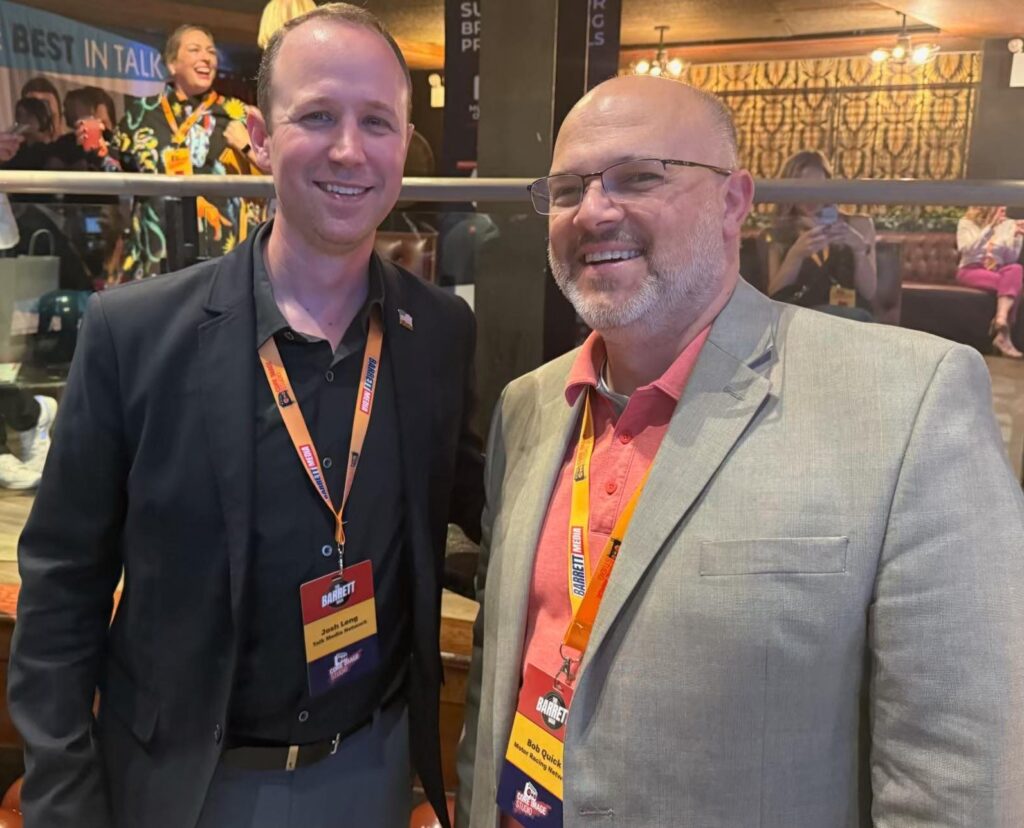
Josh Leng and MRN Radio’s Bob Quick at The Barrett Bash in NYC
Making sure his outlets sound good is a large part of Leng’s original goal when starting TMN. “[My original goal when starting TMN] was always to share great content with a wider audience, and that hasn’t changed.”
Leng is not only dedicated to connecting great people to the world, but also to ensuring they sound good across various radio platforms. “Our primary focus, loyalty, [and] responsibilities are to our terrestrial radio affiliates,” Leng said before noting all programs are also available via podcasting.
What the CEO is really looking for is to help lead the industry in better sound. “My hope is for the betterment of the industry that they would go back to distributing at least at 64K.” Leng explained, “A CD-quality sound is approximately 44K, and [when] you start to get lower than that, the human ear can hear the difference.”
He added, “You can hear the difference on these talk shows now.”
For those looking to follow in Leng’s footsteps, he said, “Syndication is a marathon, not a sprint.” An avid runner, Leng has often repeated the quote since he launched the TMN in 2010.
“It starts with audio quality, first of all. So, [good talent has] to have the right technical setup. Two, they have to do the right preparation,” he added, “Three, they have to have the right delivery. All of those need to be at the highest professional level for a show to be worthy of being syndicated, and not all shows achieve that.”
For those looking to develop on the talent side, Leng is always on the lookout for good talent. “[What makes good talent] is usually a combination of the personality of the talent, a unique expertise or life experience they have. And their ability to deliver the content in an entertaining manner.” Leng said. “Which usually means they’re a great storyteller. Storytelling is what talk radio does best.”
“Great storytellers have huge opportunities within talk radio,” he said, “And if I were to give anyone advice on how to improve their odds, to start a syndicated show, or have success in syndication, it would be to hone your storytelling skills.”
I’ve been spending time listening to live and local radio. It’s not always easy to find it on urban radio stations, even in major markets—particularly in drivetime dayparts. It’s been an interesting exercise leaving my programming hat in the closet to see what’s most appealing from a listener standpoint.
First, let me admit, it’s also not easy to not put that hat on and dissect what I’m hearing. But I made a conscious effort to focus on the music, the personalities, and the topics of conversation from a listener POV. Did the conversations hold my attention? Did I, without realizing it, make an appointment to tune in when asked? Was there a “Howard Stern effect” happening, where going into work had to wait because I was still in the car, waiting for the payoff? That’s asking a lot.
The differences between the shows were obvious to me. One team felt more connected than the other. The less-connected team came across as forced and overly scripted, almost like they weren’t even in the same room. This was especially concerning, since the show only had two members, while the other had four. Surprisingly, the larger group impressed me more because they didn’t push to have everyone on mic at once. Some breaks featured one or two voices, others had three or all four, but it never felt chaotic or cluttered.
I was genuinely excited to hear live efforts in the drivetime slots from both stations. I’m hopeful that this is a glimpse of what’s ahead for the urban format. It was refreshing to have a choice of local personalities. I also enjoyed hearing the thought process in their features and how they selected stories to discuss between the music.
Now, I didn’t listen long enough to offer an overly critical review. But as a new listener, that’s not really the point. A first impression is everything. You only get a small window of time to earn a spot in someone’s listening rotation. Honestly, at first listen, the only thing you can ask for is that the audience hears enough to give you another chance. That doesn’t always come from deeply compelling content. Sometimes, it’s the small things—the early stages of connection, how the team relates to each other, and the vernacular they use to connect with the audience. Even quirks or distinct personality traits can help build that bond.
I’ve had my own experiences with this. At one station, I had a morning show team that just wasn’t gelling. Two of the personalities had worked together before, while the other two were new additions. One of the newer members was fresh to the market and simply wasn’t connecting with one of the veterans. That team member didn’t appreciate the contributions of one of the veterans, thinking they were, let’s say, rough around the edges. But here’s the thing: that roughness was actually part of the show’s appeal.
Not every personality is going to be everyone’s favorite. Think of it like a boy band. Some fans are drawn to the “nice guy,” while others are all about the “bad boy.” Each personality should bring something unique to the table. How those personalities interact with each other is often a deciding factor in whether listeners adopt your show.
At the end of the day, if you love programming radio, these are the kinds of problems you want to solve. They’re challenges that keep the format alive, fresh, and connected to the community.
I’d love to hear your thoughts.
Barrett Media produces daily content on the music, news, and sports media industries. To stay updated, sign up for our newsletters and get the latest information delivered straight to your inbox.
The Toast to 10 series, presented by Premiere Networks, is a month-long look back at 10 years of Barrett Media. Throughout the month, you’ll hear from those who have shaped the company, managed and created content, read the site, and partnered with the brand between 2015 and 2025, sharing how they’ve seen it play a role in covering the media industry and educating, celebrating, and challenging the business.
A staff of nearly 20 writers contributes columns, features, and daily industry news items to Barrett Media each weekday.
That small army of folks writes in a variety of fields, focusing on the news media industry, music radio, sports media, and the media business as a whole.
The Barrett Media moniker has been to celebrate, educate, and challenge the broadcasting industry through its content. These writers are the ones who help accomplish that mission.
We asked several of our current writers to share what drew them to the brand, how they became affiliated with Barrett Media, what their favorite columns or features have been, and what has received the most pushback, conversation, or intrigue within the industry.
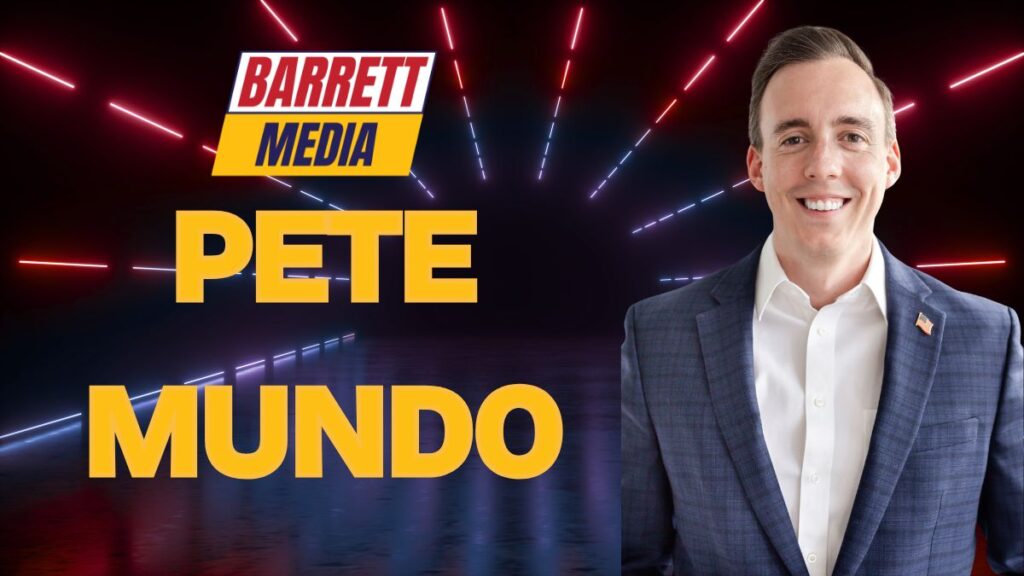
Mundo has been aware of Barrett Media since before the brand launched. He and Jason Barrett were friendly when Barrett was still working in the sports radio format, while Mundo was cutting his teeth in a variety of freelance roles.
The two met for lunch, with Barrett explaining the vision of the brand.
“It was our first time visiting in person after years of exchanging emails,” Mundo said. “When I was starting my career in Oklahoma and pestering hundreds of program directors around the country looking for feedback on my audio, Jason was one of a handful to actually respond and give me the critiques I desperately needed.”
In addition to writing a news/talk radio column for Barrett Media, Pete Mundo is also the Program Director and morning show host at 95.7 KCMO Talk Radio in Kansas City. Additionally, he was recently elevated to the role of Vice President of News/Talk for Cumulus Media.
He said writing for Barrett Media has helped his profile in the industry increase.
“When Jason first asked me to contribute for what was formerly Barrett News Media, I was the APD and morning host at KCMO in Kansas City,” he shared. “Hearing from some of the top people in our industry on my columns has been rewarding, insightful, and beneficial for my own growth as a talent and programmer. I’m grateful and love the feedback, the positive and the constructive criticism, whenever it comes.”
When asked what his favorite piece he’s contributed to the website during his tenure has been, Mundo said it was sharing a special story that taught him a valuable lesson.
“Sharing my story of legendary WFAN program director Mark Chernoff telling me I hosted the worst show in WFAN history when I walked out of his studio doing a sleepy overnight shift as a young broadcaster in my mid-20s,” Mundo shared. “While I’ll never concede it was the worst show in FAN history, his overall points were absolutely correct. I did too much lifestyle, pop culture, etc., and not enough game breakdown.
“While I was distraught in the moment, he did me a tremendous favor in making me realize talking games every day was not going to be in my future. It was the unofficial start of my transition away from sports talk and into news/talk.”
Perry Michael Simon was synonymous with AllAccess, serving as the talk radio czar for the venerable radio trade publication.
So when that platform shuttered, it was a natural evolution for him to join our team at Barrett Media.
He joked that he often receives an even number of favorable and unfavorable reactions to his opinions about the industry.
“I think I’ve attained the status of someone who can say anything and people just shrug and say, ‘there he goes again,'” he shared.
He added that the work at Barrett Media is a “continuation of what I developed for over 25 years at All Access. Staying on the industry’s mind is the main thing, and that’s where I am.”
When asked what his favorite piece has been that he’s written for the brand, he had a succinct, Perry-like answer.
“No favorites. I can barely remember them once I’ve written and submitted each one as it is,” he said.
John Mamola serves as the Sports Editor for Barrett Media, joining the brand earlier this year.
He said that in his time with the brand, there has been plenty of reactions to what he’s written and the stances he’s taken.
But that doesn’t mean it’s always bad.
“Reaction doesn’t always have to be positive or negative,” said Mamola. “I’ve gotten some pieces that get lots of feedback, and some that get little. I would say the best feedback that I cherish the most is the feedback from Mike McVay that I received following my piece on Lee Corso’s retirement from ESPN. I got that email saved forever because it meant so much to get that kind of reaction from one of the more respected names in our industry.”
He added that he’s now aware of just how laser-focused in his past job, that he neglected portions of the professional development and growing his profile inside the industry.
“I’m finding in my short time with the brand that working inside a building for so long siloed me from gaining knowledge and perspective from the outside world. So from that standpoint, yes,” he said. “I think my experience should shed light on how important a site like Barrett Media is to connect with those from around the industry in all sections of it.
“I didn’t know nearly as much about the podcast world as I do now, same for television. I’m still a novice in some aspects, but have gained knowledge because of the platform I now represent,” he added. “I encourage people in positions of power to reach out to people in industries that you have questions about. Because while we all have challenges, the answers to those questions are relatively similar in every aspect.”
Mamola concluded that he’s appreciated the opportunity to work both with Barrett Media and its founder, to help push the entire industry forward
“Jason Barrett loves this industry and is a driven leader,” he shared. “He truly cares about finding new avenues in which the media industry can come together and evolve into a new day. I value his knowledge and his willingness to be open to ideas and conversation, and I’m looking forward to continuing to support his brand for the next decade plus in any capacity.”
Lauren Ashburn is a veteran television news anchor, reporter, and contributor, with places like Fox News, PBS NewsHour, USA Today, and The Wall Street Journal, among others, on her resume.
Ashburn said the brand has been in her ecosystem for several years.
“Barrett Media has been on my radar for a long time, mostly from social media exposure, and I was immediately struck by the range of coverage, from well-written columns to industry news. I was also impressed by the elite audience the newsletter reaches in the sports and radio space.”
She shared that she’s overjoyed to have the ability to share her thoughts, feelings, and best practices with both the growing site and the ever-changing media sphere.
“I’m delighted to be among some of the first columnists to analyze media coverage from a television perspective,” she said. “Looking forward to seeing what the company does in the next ten years!”
Keith Cunningham, outside of his duties with Barrett Media, is tasked with leading one of the most legendary brands in all of radio, 95.5 KLOS in Los Angeles.
He says that having the decades of experience in the industry — especially in rock radio — gives him a unique perspective and sharing it has been one of the most rewarding parts of his time.
“Showing my battle scars in an effort to help others, who love Radio like I do, learn from my many years of doing the grind,” Cunningham said when asked what hte most enjoyable part of writing for the brand has been. “Along with the freedom to choose whatever topics I want and use my real voice without the worry of an editor clamping down if I sometimes talk like a rock guy who just got off tour.”
Cunningham shared that he has a specific goal in mind when crafting his columns.
“I try to frame pieces that not only help the front line warriors, but also have something in it for the upstairs team that might create some thought or a POV that might not be on their everyday scroll,” he shared. “There’s no shortage of people who can write about rotations, formatics, chart positions, and the general stuff — and that is important — but I challenge myself to find ‘outside angles’ and relate them to Radio, whether it’s the NFL, Sydney Sweeney or something as random as finding the parallels of running a 7-Eleven and programming a Radio station. That’s what I like most, and it’s also the most challenging aspect.”
He added that he was attracted to the brand because he saw it “filing a critical need with news, of course, but more importantly it was the relevant , wide-ranging commentary and opinion delivered with some with punch. Whether right or wrong with a take, and we’ll all be wrong sometimes, the writers can truly call it as they see it, and that attracted me well before I started writing my nonsense for the site.”
One of radio’s top talent coaches, Kevin Robinson says he is “honored to have a voice on Barrett Media,” after joining the brand as it evolved to cover music radio in 2024.
He said there’s a specific item that has been most rewarding since joining.
“The feedback has been robust and humbling,” Robinson said. “I took a hiatus from writing and presenting (those close to me know the reason) for a few seasons, and the exposure to pros outside the music bubble has been gratifying.
“To hear peers tell me they missed my previous contributions through The Robinson Report made my day – even my year!” he continued. “As other media outlets and annual events have cut back and even shuddered their efforts, Barrett Media has quickly emerged as a media force to all of radio!”
He said his goal is to always try to share what programmers and talent can put into action in three minutes or less.
“While I write for adult music formats, the hurdle is providing enough of my personal experience that appeals to all readers, no matter where they are in their growth journey,” he concluded. “I do quite a bit of research to make each column dense with information. I want to get all the details correct. It takes time. Finally, it’s difficult to connect and resonate with readers in all markets – from New York to New Bedford.”
Few know the rock format — whether it’s classic rock, AAA, AOR, or alternative — as well as Mike Stern.
Since joining Barrett Media, Stern shared that it’s always challenging to find “interesting angles on the same topic” week after week.
But the chance to be involved and share his opinions on the format he loves is a welcome occasion.
“The opportunity to be part of a growing platform in the radio industry was really attractive to me,” Stern said of what drew him to Barrett Media. “Plus, it’s been a long time since my work for Radio and Records and Billboard, so the chance to dust off my keyboard and share thoughts about the industry again was exciting.”
Stern added that the most rewarding aspect of writing for Barrett Media has been the both the rekindling of friendships and the introduction to new folks.
“Whether that’s talking to them for the pieces I’m writing or hearing from them after I publish a column, it’s been really great to be in touch with so many people,” he said.
Jim Ryan is a pop/hot AC radio expert, which means he was the perfect columnist candidate for the expansion of Barrett Media’s coverage into music radio.
He noted that he was a “fan long before writing” for the brand, but that the opportunity to “share my thoughts on radio programming philosophies” was too great to pass up.
Ryan said one of the most rewarding aspects of his work is helping introduce new music to the format’s leaders.
“I really enjoy finding music that Programmers should have their ears on,” he said. “I think that music discovery needs to be more of a focus for music radio stations!”
He joked that the most challening part of writing a weekly column for Barrett Media is “trying to be really aware of not repeating myself too much in articles with content, or points that I make.”
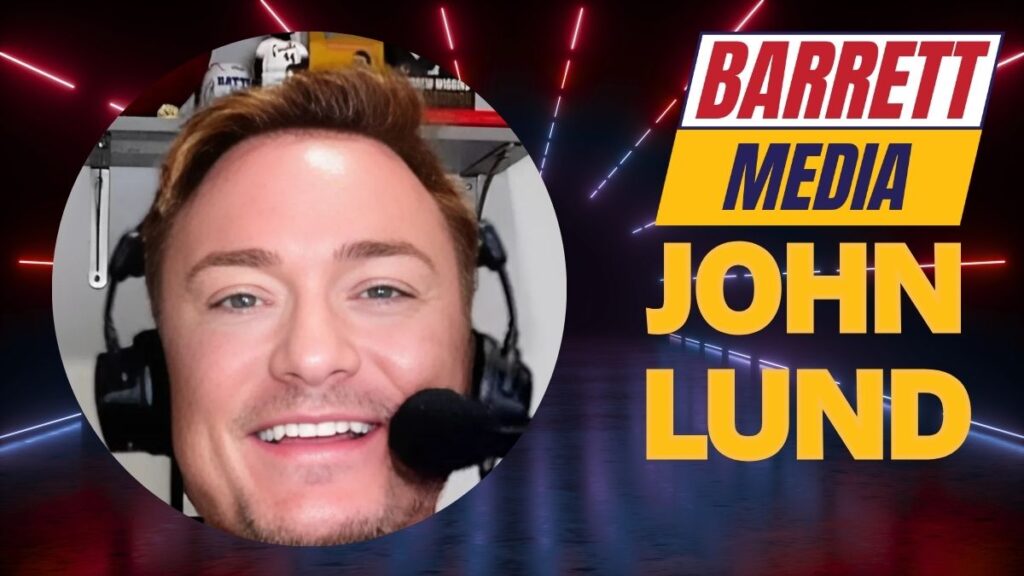
John Lund is a Bay Area sports radio legend, working at both 95.7 The Game and KNBR during his illustrious tenure in the market. He’s also spent time in Detroit and Dallas, as well as on ESPN Radio among a bevy of other stops.
He joined Barrett Media earlier this year, and said he’s already seen his profile inside the industry grow by sharing his weekly column.
“Absolutely. Being on a national stage like this, I’ve gotten tons of feedback from industry people and fans alike,” Lund said. “The reaction has been the strived for 50/50, love and hate.”
In his short time writing for the brand, John Lund said he already has a favorite piece he’s written.
“I would say my view on the dust-up between Peter Schrager and Ryan Clark,” he shared. “The piece hit home for me as a long-time talk show host who tried to find the balance between respecting and propping up my former athlete co-host and earning my own respect and viewpoint through years of experience.”
Lund added that he was attracted to the brand due to his relationship with the company’s founder, Jason Barrett.
“I have respected Jason and his style since he was my ‘boss’, and have been incredibly impressed by what he and the entire Barrett Media team have put together and accomplished in the last 10 years.”
Barrett Media produces daily content on the music, news, and sports media industries. To stay updated, sign up for our newsletters and get the latest information delivered straight to your inbox.