

One of the most difficult tasks in sports radio is to build, grow, and fortify a partnership with a professional franchise. Where station and team work together, coming to an agreement to enhance each other’s brand. Much like any marriage, it takes mutual trust, communication, commitment to collaboration, respect for each other’s strengths, and the ability to navigate challenges together.
That’s what defines a true and lasting partnership.
Last week marked the end of one of the longest partnerships in professional sports as ESPN and Major League Baseball announced a “mutual” end of their broadcasting agreement. This means at the conclusion of the upcoming 2025 MLB season, ESPN and ESPN Radio will no longer broadcast a package that includes Opening Day games, Sunday Night Baseball, the Home Run Derby, and the Wild Card round of the postseason. ESPN Radio also will cease carrying the entire LDS, LCS, and World Series radio broadcasts following a new crowning of baseball champions later this fall.
A partnership beginning in 1990 is now over after 35 years, and the divorce was messy.
MLB Commissioner Rob Manfred released a note to owners around the league stating that ESPN was trying to reduce the current $550 million it spends with MLB per season, citing the other agreements baseball reached with streaming properties such as Apple and Roku as reasons for the request. Manfred then went on to cite how MLB was displeased with the “minimal” coverage that baseball received on ESPN’s platforms over the past several years outside of the games themselves, plus the network’s “dwindling” subscriber base.

ESPN released a statement following the news becoming public, saying they were grateful for the longstanding relationship with MLB. The network said they applied the “same discipline and fiscal responsibility that has built ESPN’s industry-leading live events portfolio” when coming to their decision to part ways with MLB. ESPN closed out their statement by saying they are open to exploring new ways to serve baseball fans across all platforms beyond 2025.
Looking at the way those two statements were presented, it goes without saying there were two very different ways in how both the network and baseball approached the messaging of the news. One side was thankful for the 35-year marriage and looking forward to moving on, while the other took a hammer, looking to do damage to the reputation of their partner.
It doesn’t take a rocket scientist to figure out that there was trouble in baseball paradise.
Observing how the two sides handled the news of the divorce, what can sports radio brands relate to with what happened between these two scorned lovers?
In my previous experience as a brand manager for over thirteen years, I dealt with building, growing, and fortifying partnerships with both professional and collegiate sports franchises. For sports radio brands, these franchise partnerships bring listening cume, brand marketing, exclusive access, and rights to use the franchise’s marks as assets for revenue generation.
Every successful sports radio brand needs to have some partnership with a professional or collegiate franchise in order to survive in an ever-changing landscape of how the consumer absorbs content. Just looking over the recent Barrett Media Top 20 for major and mid-market radio stations, there wasn’t one brand in either ranking without a college or professional sports team broadcast partnership.
While sports radio partnerships may not cost the likes of television partnerships, the cost is still quite pricey for most sports radio brands. The luxury for the franchise is that their broadcast assets are not going away anytime soon and are in demand more than ever before. Franchise values continue to rise, and revenue projections are skyrocketing each and every year.
Can you say that about sports radio or broadcast radio in general? Probably not.
The challenge for most sports radio brands is how much more they are willing to ‘give up’ in order to secure the rights to survive. It’s a constant battle of ‘who needs who more’ when deliberating moves within your partnership and the costs you’re willing to pay.
We see the headlines every year as broadcast companies find ways to cut costs, cut people, and cut investment in local brands due to declining revenues and consumption. Radio continues to innovate much slower than competing digital brands, and the shift of the advertising dollar shows it. Digital revenues continue to rise, while broadcast radio does not.
With that said, less local programming, lumped with less revenue generation and the desire to keep listening cume, forces sports radio brands to negotiate from behind the eight ball in most media rights discussions. Broadcast radio companies are essentially surrendering leverage to sports franchises more and more each and every year.
Looking at what ESPN did with MLB, they surrendered nothing and stood by the strength of their brand as they continue to innovate with their DTC product ‘Flagship’ set to debut this fall. ESPN didn’t need MLB within the parameters of its current agreement, but MLB will need ESPN to promote the franchise. ESPN will survive without their former franchise partnership and is in good standing to find a new deal with baseball in the coming months.
You can’t say the same about sports radio. Without partnerships, it’s nearly impossible for sports radio stations to survive and advance.
So how does sports radio adjust to ‘stay together for the kids?’
Programmers lose their lunch over the term ‘added value.’ What are brands willing to sacrifice in unused inventory or programming assets instead of fitting the full cost of a rights agreement? How many minutes of commercial time will the brand ‘add value to’ a partnership so the franchise can line their pockets with advertising revenue instead of the brand cutting a check every year to the team?
In some instances, franchises will sell this ‘added value’ to competitors of their own partner’s advertisers, leading to some very interesting conversations between the radio seller and the client.
How about programming ‘assets’ such as a weekly, franchise-produced and sold broadcast featuring dignitaries of the franchise discussing the week that was? A franchise considers this type of programming ‘exclusive access,’ whereas many brands would consider it an extended advertisement for the team. It’s also likely that the franchise would not just own the content in the programming but would own the inventory as well.
Speaking of the digital space, would sports radio brands be willing to sacrifice their own digital platforms to be an added marketing arm for the franchises themselves? Digital real estate and following are becoming the most valuable assets any sports radio brand can own as the consumer flocks to more digital consumption over the traditional method. Would brands be willing to offer posts for team ticket deals and merchandise, which the brand wouldn’t make any revenue on?
These examples may seem very one-sided in favor of the franchise, and you may question why any sports radio brand would even consider items like this in the first place. The sad reality is these concepts are now more the norm than the exception in sports radio.
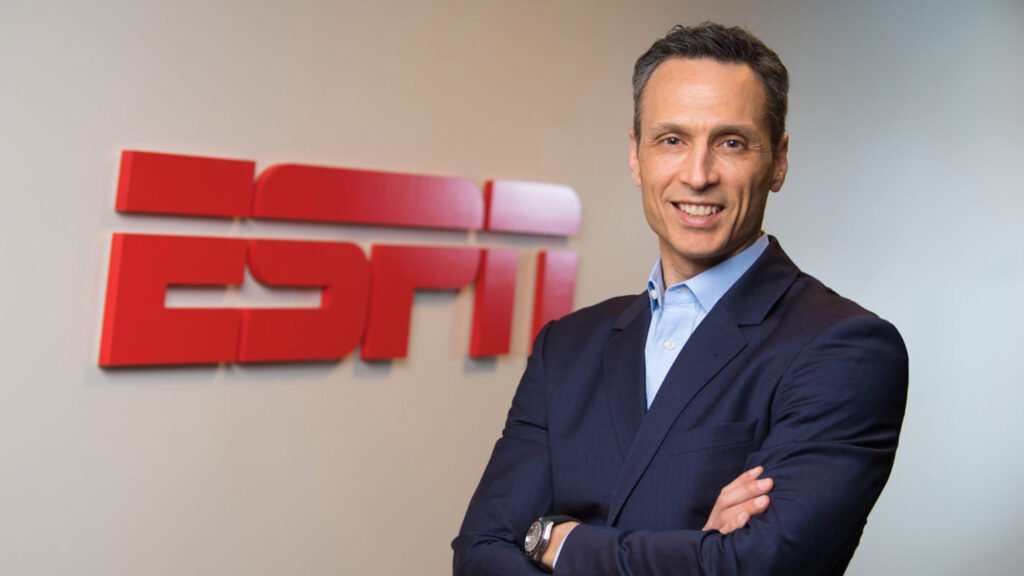
You have to give a lot of credit to ESPN chairman Jimmy Pitaro’s forward vision to continue innovation and constantly find avenues to build on the network’s brand value in the sports media landscape. By following his vision, ESPN has set the foundation for dynamic programming content, emerging business opportunities with ESPN BET, industry-leading social media engagement, and soon the launch of ‘Flagship’ as the network’s direct-to-consumer product. ESPN has been, still is, and is looking to forever be the sports leader.
I challenge any radio broadcasting company with any media rights partnership to attempt to replicate how Jimmy Pitaro built and positioned ESPN and show that you believe your brand’s value is worth more than any sports rights partnership.
I won’t hold my breath.
It’s very simple. Baseball needs ESPN now more than ever. ESPN doesn’t need baseball like it once did, hence why Manfred took the path he did with his statement. Typically, the one who cries foul reveals a lot more about themselves than the one against whom it is being used.
Sports radio brands need franchise partnerships for survival and will continue to ‘bend the knee’ a little more every day to the opportunities that franchises bring to stay alive. It’s unfortunately no longer about building, growing, and fortifying partnerships.
It’s about keeping the lights on.
Barrett Media produces daily content on the music, news, and sports media industries. To stay updated, sign up for our newsletters and get the latest information delivered straight to your inbox.

Only point of contention here (and this is a good parable for radio) is that (especially) with baseball coverage, locality matters. As a longtime Mets fan, I can attest that the local broadcasts via SNY are far superior to any national coverage on ESPN. Because baseball is the most “conversational” of the major sports, the bond established between fan & broadcaster is among the most strong. Just look at the recent passing of Bob Uecker in Milwaukee. No national feed of a baseball game should touch what the local team can do.