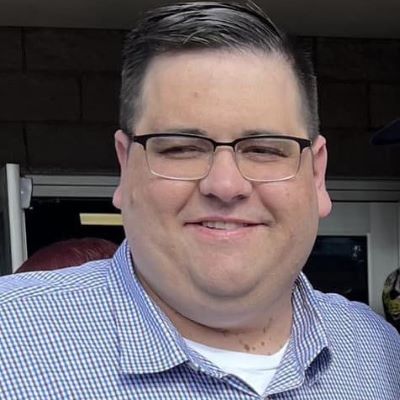
Earlier this month, WBBM Newsradio Political Director Craig Dellimore called it a career after spending 42 years with the Audacy Chicago all-news brand.
Craig Dellimore originally joined WBBM as a general assignment reporter before rising through the ranks. In 2001, he was named the station’s political director — covering City Hall and other political assignments — and held that role until he stepped away.
In addition to his long tenure at WBBM, Craig Dellimore also previously worked at WCBS 880 in New York, as well as at the Associated Press Radio Network in Washington, D.C.
As you might expect, Craig Dellimore believes that the news media industry has seen substantial changes during his long, illustrious career.
I sat down with him to ask about what changes he’s seen, whether that makes being a reporter today harder or easier, and what he plans to do in the next phase of his life.
*Editor’s Note: Answers have been edited for clarity and length.
Garrett Searight: What makes now the right time for you to step away?
Craig Dellimore: Well, you know you can never be sure when’s the right time. But my wife has been retired for four years, and she’s been fine with me continuing to work. I think at some point, you look around and see if you’re having as much fun. And I have been mostly. I want to be able to travel and do some other things around the house.
The other thing that was important to me was that I was seeing a new generation of journalists — broadcast or otherwise — coming up that gave me some hope that the tradition will continue. I’ve always been interested in seeing other people, younger people, get into this business. Especially at City Hall. Chicago — City Hall, where I work, or have been, at least that’s where I’ve had my desk — that particular crew right now is very good. There are people who all want to do it and do it the right way.
So I felt very comfortable stepping back.
GS: What are the qualities of those people working in City Hall that made you think, “You know what? We’re in good hands if I leave”?
CD: First, it’s the energy. The excitement at doing it and being journalists. And the idea that these are people who feel that they are informing the public, not just showing off themselves, but doing something that helps people understand what’s going on around them. The integrity you look for. People who do an honest job, who are okay with maybe whatever perceptions they may have had going into a story being changed by the facts that they uncover or learn. And people dedicated to research. This is a generation of people who are into data. They have tools that we didn’t have when we were starting out, and they use them properly. That’s the kind of thing.
GS: Piggybacking off those tools that you didn’t have — I recognize that this can be a wholly overarching question — but what have been some of the biggest technological changes from when you first began to today?
CD: I have a colleague who retired a couple of years ago who actually compiled a list of things that other people used to do for broadcast journalists that we now do for ourselves. That technology has, if anything, put more of an onus on us. When we started out, our reports were taken in by other people. You would either call it in, or if you had a broadcast line, say it, and somebody else took it in and edited it.
There was a time, way back when, when even a sound person went out with a broadcast journalist. That hadn’t happened in ages. But now we do our own editing. We are using digital tools. For someone younger, people may not remember when we didn’t edit on their own computer. But some of us can remember when we didn’t have computers.
The other change has been information. Before, if you wanted to find a story or find a background on a story, you could go and view — especially in the newspapers — a library of clips and look up the background. Now, the internet has so much more that you can look up, assuming you’re looking in the right places.
GS: So does that make it easier or harder to be a broadcast news journalist today?
CD: Oh, absolutely easier. Because you now don’t have to rely on your own memory of things. There are times when, even when I’ve covered a story in the past, I might go back online to either our own libraries or my own for that matter. Just to make sure that I’m remembering things correctly. It helps us to do the job better.
It also helps us to broaden our — stable is the wrong word — but our stable of experts, that people who are subject matter experts. Before it would be you’d go back and back to the same people that you’ve used before, and now you can see people who may have very specialized areas of expertise, and know how to find them and be able to find them about the technology than you would before.
GS: How has the city changed since you’ve been there?
CD: I grew up in New York, so I was in a world-class, cosmopolitan city, and then moved to Washington, and then to Chicago. I visited Chicago a couple of times before I was offered a job here. The running joke was it was a cleaner New York. But it’s it’s more than that. It is a cleaner New York, but it has more to do with the fact that Chicago has alleys where people can put out the garbage and New York does not. That is just a fact of life for the way the city runs.
But it’s always been a little slower paced than New York. But still, the city has always been an international place. But I noticed that things like in terms of lifestyle, restaurants have become more of a thing here. they always were, but it’s the Chicago power As a culinary destination has increased. I think the energy level and the interest in being a world class city, has increased.
Politically, the city has always in a big political town. It just has a different energy for the politics. Growing up in New York, I didn’t know who — I did know who my city council member was — but they weren’t integral to my life.
In Chicago, your Alderman is a factor. You need to know your Alderman. There will be some things that you have to go to that person for to get things done. So the Alder people have really a good role. And of course, Chicago politics is the Chicago politics. I covered the state legislature for a while and it has always been high energy. Those things have only amplified as we’ve gone on. The Chicago city council has become a more deliberative body than it was. So those kinds of things have been interesting to watch.
GS: As you approached your last day, what were the emotions that you felt?
CD: It’s been a very busy time with budget questions, changes with the school system, and with what’s going on in national politics. So I told a dear, dear friend of mine, who we sit back to back to each other on in the the City Hall press room, and I said to her — because she asked that very question — I said, “Some days, I think about how much I’m going to miss it and being able to do this every day. And some days, it can’t come fast enough.”
GS: When some people retire, they are, “That’s it.” They’re done. There’s no chance they’re ever coming back. Some people get out of it for a few months and then go, “You know what? I gotta do something.” Which side of the coin do you fall on?
CD: Well, we’re going to find out. I’ve never retired before [laughs]. I would never go back to a full-time job, that’s for sure.
My reputation up to this point has been someone who would always be fair to all sides. That doesn’t mean I wouldn’t be hard on either side or multiple sides, if that was necessary. Because you have to make sure people are giving you facts, and if you have facts that run counter to that, you have to call them on it. But I’ve always felt that my job was to make sure that people understand everyone involved in the issue and understand where they’re coming from. So because of that, I would probably not ever work on a political campaign.
But as someone who can observe things, and if somebody called and said “Can you give us your analysis or something?” Yeah, I might do that. But otherwise, there’s life. We like to travel. So we’ll do that.
I have a comic book collection that has never been cataloged, and I’m absolutely going to do that. Here’s a technology change. There’s now software right to make that a whole lot easier than it was when I was typing lists in the early days. And now, if I wanted, you could buy a scanner and click on a barcode on the back of a comic and put that into a computer program.
Well, I now have software that will make that a little easier. I’m not getting the barcode scanner. So there’s that. Maybe I’ll do some writing, maybe even fiction. I grew up reading and liking fiction, so maybe I’ll do something else. I’m not sure what I’ll do.
Barrett Media produces daily content on the music, news, and sports media industries. To stay updated, sign up for our newsletters and get the latest information delivered straight to your inbox.