

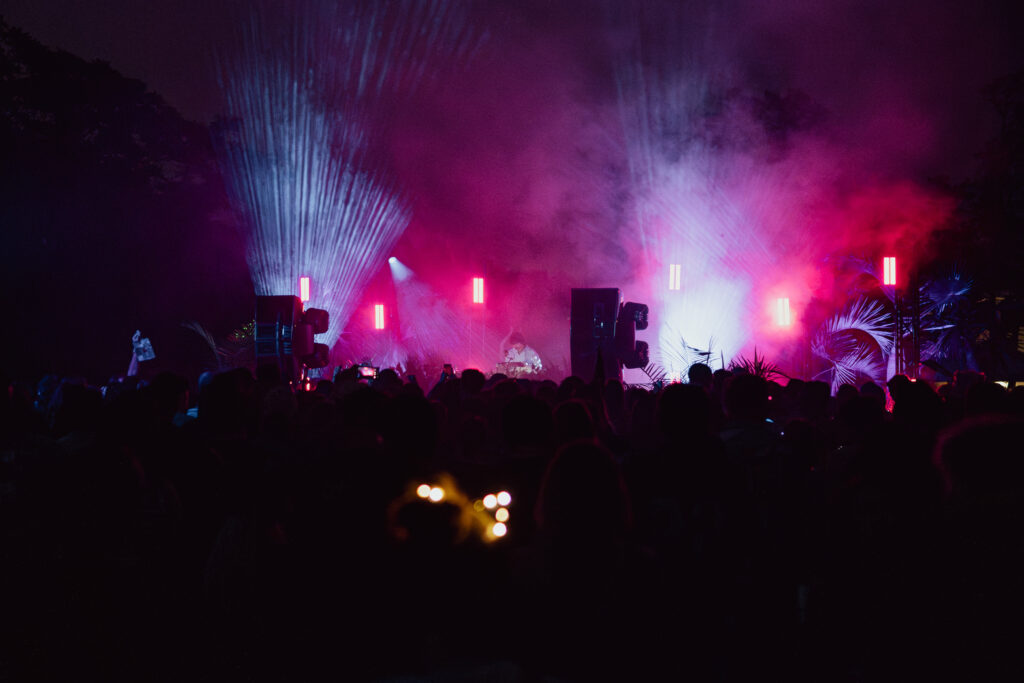
Last weekend I ended up at an EDM festival called Habitat inside the Kansas City Zoo. I know. Bear with me.
Thousands of people descended on the place. And here’s the thing — the zoo was still open. The aquarium was still running. The animals were still there. Nothing about the physical environment had changed. But everything else had.
For one night, a zoo became a cultural event. A community. A temporary world built entirely around music and shared experience. And somewhere between the laser lights and the bass drops, I started thinking about what radio used to be and, in too many places, isn’t anymore.
The music was never the product.
The EDM scene understands something parts of our industry have quietly forgotten: the music is not the product. The feeling of belonging is the product.
Nobody drove to the Kansas City Zoo on a Saturday night because it was convenient. Spotify is convenient. YouTube is convenient. Staying home in your pajamas is extremely convenient. People showed up because they wanted to be part of something larger than themselves.
That is what great radio stations used to manufacture (and some still do) better than almost anyone.
The best stations were never just signal and playlist. They were ecosystems. They had language, attitude, and shared identity. Listeners wore station shirts like jerseys. Morning show bits became inside jokes across entire cities. Big events felt less like concerts and more like reunions. You did not just listen to those stations. You belonged to them.
Walk around any serious EDM festival and you see that same energy alive and thriving. Fans travel for these events. They dress for them. They build real friendships around them. The audience becomes part of the show. The experience does not work without the people.
What struck me about Habitat specifically was the crowd. It was not some narrowly defined demographic slice that a researcher carved out of a focus group. It skewed all over the place. Younger fans. Older fans. Different backgrounds, different energy levels, different everything. All of them there for the same shared moment.
This isn’t a obituary for radio — it’s a reminder of what it’s still capable of
That was always radio’s real competitive advantage combined with its localism. Some stations still have it. This is not a eulogy. But somewhere along the way, pieces of this industry made a quiet pivot. We started thinking about distribution instead of culture. We optimized for efficiency and let identity become optional.
The transmitter stayed. The songs stayed. The personalities stayed. The culture became negotiable.
That is a dangerous trade. Culture is the moat. Culture is the thing an algorithm genuinely cannot replicate. Spotify can tell you what to listen to next. It cannot make you feel like you are part of something. It cannot give you an inside joke with a hundred thousand strangers who all heard the same morning show bit at 7:35 this morning.
A great radio station should feel like a place
Think about what 99X in Atlanta or KROQ in Los Angeles meant to their listeners during their peak years. Those stations were not just playing records. They were building scenes. Creating tribes. Giving people a cultural home.
The EDM world still knows how to do that. And honestly, there is a broader lesson buried in this too. While the rest of media obsesses over audience segmentation and chasing the narrowest possible demographic slice, Habitat drew thousands of people from completely different walks of life and gave them a unified experience. That is not a niche product. That is mass appeal built around emotion. Which sounds a lot like what radio looked like when it was at its best.
The question for every programmer, PD, and market manager right now is simple: are we giving people something worth connecting to?
Radio had what EDM has now. The question is whether it can get it back.
Because song delivery is table stakes now. Every platform does that. The stations and personalities that actually win going forward are going to be the ones that rebuild real emotional connection and community around what they do. That does not require a massive budget or a stadium event, either. Culture starts with smaller things. Local identity. Shared language. Inside jokes. Listener interaction. Personalities who sound like actual human beings instead of something that came out of a compliance meeting.
People still want to belong to something. An EDM festival inside a zoo on a Saturday night proved that to me all over again. Probably not the insight I expected to walk away with. But here we are.
Barrett Media produces daily content on the music, news, and sports media industries. Sign up for our newsletters to stay updated and get the latest information right in your inbox.
