

Thank you for checking out The Industry According To. Every Tuesday we speak with a different expert or leader from somewhere in the vast music industry — label executives, artist managers, programmers, talent, artists, consultants, and beyond. To be considered as a future guest, email me at keithblackboxgroup@gmail.com.
Today we sit down with a veteran whose career is essentially a doctorate in label marketing, artist development, catalog strategy, and promotion, Jill Weindorf. She has led major campaigns for Paul McCartney, Nathaniel Rateliff, Ghost, and countless others.
Jill is currently the EVP of Marketing of Concord Label Group, which includes running the Active Catalogue team. She works directly with artists and their teams in a modern, 360° role, spearheading long-term brand management for active artists with depth of catalogue — including John Fogerty, CCR, The Offspring, Seether, The Revivalists, and more. Next year will mark her 20th year at the label group. Prior to Concord, she spent time at Elektra, EMI, Blue Note, and Verve.
So, let’s dive in.
*Editor’s Note: Answers have been edited for clarity and length.*
The Artists-Are-Brands Era
Keith: You’re known for building marketing strategies with artists, not just for them. We’re at the point where it feels like an artist’s brand — their storylines, partnerships, affiliations, image — is now almost as important as the music itself. Do you see it that way? Tell us your view on artists also being viewed as brands.
Jill: “That’s absolutely the way I approach marketing. Everything starts with the artist’s vision for the music, and supporting that vision through every aspect of their career is essential. Everything is connected, and there is always an overarching brand to cultivate and protect. The story and how we navigate that brand development is central to how we build an active and authentic audience for the music.”
The Artist’s Lifespan
Keith: When you first got into this business, artist development was “long-term,” but the industry is obsessed with short-term spikes. What’s the smarter strategy today — building gradually for the long game, or going all-in on an early spike?
Jill: “There isn’t one answer to this question because there are so many variables to consider. But longevity is always a top consideration. Sometimes an artist goes viral for songs that are anomalies, or there is something within the virality that isn’t aligned with the long game. That can affect how we respond.
Other times, spikes have created entire marketing activations. Sometimes you get a sync placement that completely ignites a song. Moments like that are amazing, and we might go all-in — but those are rare instances. That’s why we don’t wait for those moments; we work with the artist to create our own. This makes evaluating what to lean into and what to let burn out only part of our equation. We avoid reacting to virality that requires jumping onto trends without context. It’s fine to be part of a trend intentionally, but if it’s off-brand, it’s also fine to sit it out. The best part of marketing in the current landscape is that we have so much more immediate connection with fans, and they give us so much direction. We listen, and that’s how we win.”
Radio’s Role
Keith: Concord still heavily invests in radio promotions. From your POV, what does radio do best for your artists that other platforms can’t or don’t do as well?
Jill: “It depends on what radio we’re talking about and how we choose to work together. Overall, radio helps contextualize the artist. It creates cultural awareness, drives more curated exposure, and can help build community. Radio also impacts touring, which is essential to supporting our artists holistically.
When I built the promotion team over a decade ago, radio was in a markedly different place — and so was Concord. We weren’t a contemporary hit-driven promotion department; we were in niche formats with less mainstream artists. We always strategized our campaigns with an artist development and marketing-driven approach. Today, that same ethos is in place. Our team has always worked beyond the charts, so they’ve been able to navigate the current marketing landscape very quickly and successfully. It’s the combination of having relevant artists, the right music, and a promotion team that understands how to execute using the complete value proposition radio presents. When you have that deep understanding, you know how to maximize your marketing.”
Marketing Across Many Labels
Keith: You’re responsible for marketing efforts across several labels with different audiences, genres, and cultures. Once the music is great, what’s the most important next step in building a marketing plan that works?
Jill: “I always talk to A&R about why they signed the artist. Signing an artist is a big commitment — it comes with a passionate point of view. I want to hear it and understand it. Whenever possible, I’d try to meet with the artist and ask them what’s important to them and what they want from the label. When I ran cross-label marketing, I worked with the individual marketing leads at every label, weighing in on marketing strategy and then helping them execute through Concord’s central marketing team. The next step, regardless of the genre or label, is audience analysis. Who is the audience, and how active are they? Where is the opportunity to build more audience? Combine that with the artist and A&R vision, and the plan really starts to take shape. Then it’s about the internal sale to the team (this was my specialty 😉), identifying the path to the market, and executing along the way.”
The “Middle Class” Artists
Keith: There’s a growing “middle class” of artists who may not be household names but have developed real careers from a strong touring and merch structure. How do you build models for these artists differently than you would for those on a superstar trajectory?
Jill: Artists have so much choice when it comes to finding the right label partner, and I’m always mindful of keeping the marketing commitment elevated no matter who the artist is or where they are in their career. With touring artists, we do a lot more hand-to-hand combat and micro marketing. The touring artist attracts the most dedicated fans.
Think of the last time you went to a show. There is so much competition for time and money, yet you choose to show up because live music is an exhilarating, communal rush. When we have artists who tour consistently, we make sure we’re seizing that present audience and the opportunity audience that’s just outside the funnel. Those are our superfans. First-party data capture for those fans is essential, as is strong advertising for every element of the artist’s business.
Are these fans following? Are they aware of the new music? Did we serve them, and did we serve the opportunity audience around them — that is, did we set up the local radio interview, create local meetups, and bring in more audience? If the answer is no, we’re failing. Our touring artists are the backbone of our business. Though the marketing around a tour as a main driver can be more micro-focused, it doesn’t stop us from doing all the legacy, new, and opportunity marketing, too. Tours create motion, and an artist in motion requires constant marketing support — and we’re here to provide that.
Catalogue Mania
Keith: Concord has a deep catalog, and it seems every month we see news of another big catalog transaction. How do you market catalog in a way that feels modern, not just nostalgic?
Jill: Concord has launched a new department — Active Catalogue — and I’m proud to run it. It’s the most fun job I’ve had in my almost 20-year tenure at Concord. We serve Concord artists who are actively releasing new music but also have depth of catalogue, publishing, film, or theatrical ties under the Concord umbrella.
We offer these artists full support for their brand. I work as closely as possible with artist and management teams, agents, and publishers to be deeply engrained in their day-to-day business so we can actively promote everything the artist does. By way of example, I oversee the entire catalogue for John Fogerty — both from a solo perspective and from the CCR assets. This past year, we orchestrated a plan around John’s 80th birthday, his reclamation of his publishing rights, and the release of his new LEGACY album. We didn’t take a “catalogue” approach to the campaign, even though the repertoire was all classic songs.
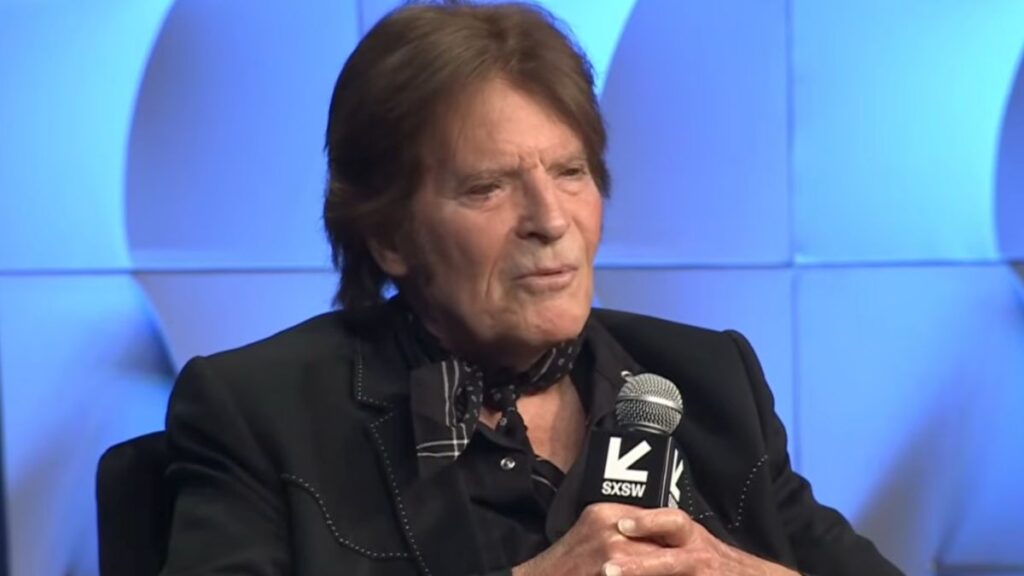
John was the keynote speaker at SXSW, he took over SXM for a weekend, and he headlined the iHeartRadio Fest in Vegas. He appeared on Joe Rogan, Trackstar, and Dan Patrick. He played on NPR’s Tiny Desk and The Colbert Show. We doubled his social media following and his previous streaming numbers across his entire catalogue. Concurrently, we launched a new collaboration with Eric Church and NASCAR, plus a new remix with The Outliers. We also released the entire CCR catalogue on colored vinyl and partnered with the NFL to create a new NFL Draft Mix of “Proud Mary.” It’s not nostalgia marketing when the artist is plugged into the cultural conversation. That’s what new mixes, collabs, videos, and brand partnerships can do to reinvigorate a catalogue artist. What other 80-year-old artist had a year-plus of massive looks like these? Next week, John will receive the Songwriter’s Hall of Fame’s highest honor. Let’s gooooooo!
Data Tricks and Traps
Keith: Parts of the music industry have become very transactional, with data leading the way. What data matters most to you when you’re making decisions, and what metrics matter far less — the numbers where your gut still wins?
Jill: “I look at all the streaming data. What really informs my marketing decisions is when I see a ‘lean forward’ audience. When searches, saves, and on-demand streaming are rising — that’s actionable. Instagram and TikTok song creates are also part of my regular review. YouTube analytics offer a wealth of fan behavior there to analyze. From how they consume on YouTube, I can tell a lot about what the audience wants. Additionally, when Shazam is lit up from a sync or strong radio play, I know I need to move. Another strong metric to monitor is ticket sales and merch demand. You can’t manufacture any of that, so you know you’re connecting authentically. Radio call-out data means less to me these days — except for SXM, which can really give a good early read on a record.”
What If IG and TikTok Just… Went Away
Keith: Data shows the younger audience is facing real social media fatigue and craving different societal and music experiences — for example, vinyl. If Instagram and TikTok vanished tomorrow — no clones, no replacements — what would that mean for labels, for artists, and for your job?
Jill: “Music is about connection. There is no replacement for it. The mechanism for discovery evolves, but what music gives to the world doesn’t go away. That will never change. If social fatigue sets in and there is total backlash, we adjust our tactics accordingly. That’s the beauty of being a true, always-on, contemporary marketing team. We have an extremely well-balanced, brand-forward marketing mix, and we aren’t so naïve or arrogant to think we know it all. We listen to the artist, and we listen to the audience. I don’t know what it would mean for other labels, artists, and music execs — but we’re evolving every day, and we’d simply pivot, because our artists are counting on us to be adaptable.”
The Marketing Mix
Keith: With everything from radio, sync, digital, brand partnerships, and creative all under your umbrella — what’s the most undervalued or underappreciated marketing lane in 2026?
Jill: “I wouldn’t call it undervalued or underappreciated, but I’d say the most misunderstood marketing function is sync. There is a real lack of understanding about how hard the creative sync game can be. Everyone wants sync because it creates exposure and revenue. But what goes into landing great sync placements is a lot of tedious work.
There are times when our team works on something for months — creating new music, sourcing a remix or a collab, getting the artist to buy in, and negotiating the rates. They get everything done, quoted, pitched, and then at the last minute, the director comes back and says they chose another song. It’s brutal, and everyone’s disappointed — and nobody knows how much went into it all. Then there are other times when I’ve seen our team do all of this and successfully land a sync that launches full-on marketing activations. I always tease them by saying they are the new promo guys — ‘heroes or zeros’ depending on the day.”
The One Situation
Keith: You’ve worked on campaigns for some of the biggest and most unique artists in the world. What’s that one situation you look back on and think, “I can’t believe we pulled that off” — or — “How did we ever make it out of that crisis?”
Jill: “So many come to mind, but two that stand out involve McCartney. We shut down the street in New York for Paul’s first underplay when we released his album Memory Almost Full*, and we did it again in LA when he did an in-store at Amoeba around his* NEW album. Both events were absolutely wild. Another artist that everyone said would never break through to the mainstream is Ghost, whose last record debuted at #1 all over the globe — and they now sell out arenas, which is awesome. I Prevail, The Revivalists, and Nathaniel Rateliff are all tied to moments where I just knew we’d break through, and we grinded to make sure they became career artists — not just artists who had a song or two. That’s what I love to do: artist and career development. It’s a rush, and that’s why marketing across active artist catalogue is so fantastic. There is always so much to do when you’re working with career artists.”
The Blank Slate
Keith: Last question — blank slate — say anything you want to any sector of the music industry. What do you want them to hear?
Jill: “Everyone fell asleep already, no more comments!!! 😉”
Barrett Media produces daily content on the music, news, and sports media industries. Sign up for our newsletters to stay updated and get the latest information right in your inbox.
