

Gregg Swedberg is a bit of a radio unicorn. The Twin Cities native has spent the entirety of his career in Minneapolis/St. Paul. He is Senior Vice President of Programming for iHeartMedia Minneapolis and the Program Director of Country K102, which is today’s featured brand.
When K102 launched, there was still Country on AM radio in Minneapolis, and only one FM Country Station. The landscape changed when K102 arrived in 1983
“K102 flipped to Country in ‘83 and had a pretty aggressive marketing campaign to get people to know that Country was really on FM, even though it already was. And it took off pretty good and built its way up through the ‘80s and was sneaky good. I don’t think anybody really kind of realized how well it was going. Then, when Country boomed in the early ‘90s, everybody realized how good it was, and it has been dominant all the way through.
“When the Country boom of the 90s hit, we had two competitors and took them both out and have been doing Country since.
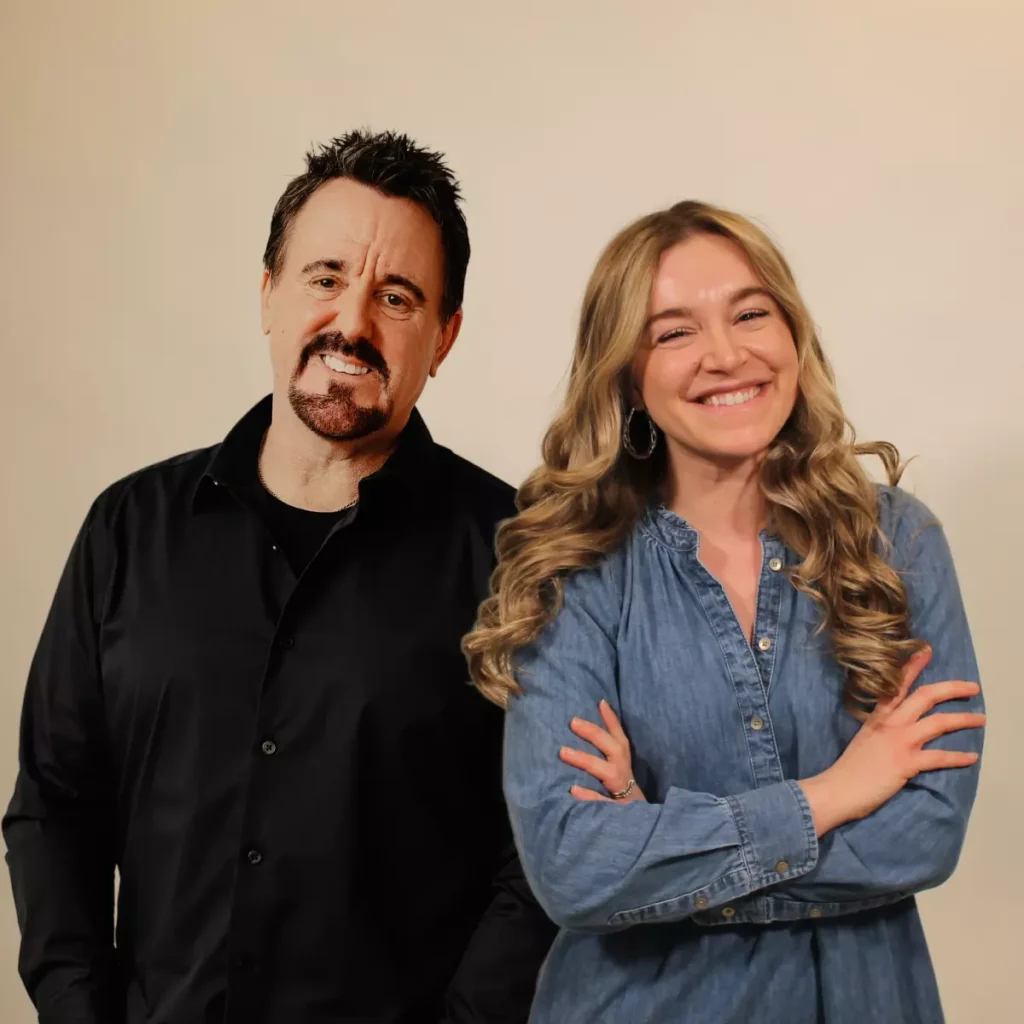
“Chris Carr & Company” hosts the station’s morning show, which remains local despite growing syndication.
“There are reasons why stations use national programming. Sometimes, it’s financial; sometimes, it’s because what they’re doing just isn’t working. I also think the good part about working for iHeart is that iHeart’s not going to ever blow up all their morning shows. Maybe someday Bobby wants to be the governor of Arkansas or something.”
“We’re not a national brand like Bobby is. For all stations that don’t have the national brand, I think we have most streams inside iHeart Country, and we’re doing really well. Some of it is just this commitment.”
“I’m pretty stubborn. I want everybody in Minneapolis. It doesn’t matter what station you’re on, I want personalities. I want someone that someone’s going to care about because that’s the only way radio stations or brands are going to survive.”
”If everybody can play Morgan Wallen and Luke Combs, then you better be something other than playing Morgan Wallen and Luke Combs. You’d better have a personality.”
“Something that’s bigger. Otherwise, when the time comes, you’re just going to be left behind. I try to do that with all the radio stations. Another thing is that it’s something people can sell. Endorsements are a big part of our strategy in Minneapolis, and you can’t do endorsements if you don’t have the people.”
How important is being on the street and brand activations to K102?
”It’s essential. It’s so funny because there aren’t as many people in radio as there were before. And we’ve tried to get clients to do more digital sorts of remotes and more things digitally. But I don’t think the clients have necessarily gotten that memo, and they still want people to show up at their place.”
“We do a bit on Fridays, ever since Mike came back, where the morning show goes out to sometimes a hot zip. Sometimes it’s just a zip where there are a lot of meters that we’re not getting or that we’d like to get. Where the listeners are, and we’ll do a ticket giveaway.’
“Even with the possibility that you’ll win tickets, not like we’re giving tickets to everyone that shows up. And we get lines around the block. And lines up and down the highway. When people see that they can say, Hey, radio works. I can gather a crowd of a couple of hundred people at your location at six thirty in the morning.”
“That proves it works. You have to be there and be a part of the community.”
While discussing the K102’s music mix, I asked about the significance of currents and gold, especially ‘90s Country.
“ It’s always tricky. Because you can’t really specialize in anything. You just have to combine songs that we know people want to hear. With WOW moments that will keep them coming back.”
“I’ve always been a proponent of the two things I want to hear. A song I haven’t heard in a while. Or a new song that somebody tells me is really good, maybe by one of my favorite artists. Those things are super important. The other stuff is there to keep people from tuning out. You’ve got to balance it all.”
“We might be a little bit more aggressive than other stations and markets our size. But if you spend 30 years training your audience to like new music, then maybe we can get away with a little more than other people do.”
“That’s what’s great about what ‘The Highway’ has done on SiriusXM. They’ve made listening to new music like a virtue.”
“You are smarter than everybody else because you like new music. Yeah, that’s right. I’m smarter than everybody. They’ve done a masterful job of taking something that a lot of programmers view as a scary liability and turning it into like the number one thing for them.”
So, how tight does Swedberg feel the artist separation should be on an artist like Morgan Wallen?
”I’m a little different than other people. I don’t think you should do it too much. This format, when I got into it, was the ’90s boom. Then you played a lot of Garth Brooks and George Strait. We played a lot of Brooks and Dunn and Reba. They could easily sell out arenas here.”
“We’d get calls from listeners saying, hey, you’re not being fair to this artist. You’re only playing Garth Brooks. And this was when you played him every hour and a half. This is the only format where there’s this egalitarian sort of thing for the listeners.”
“There’s this belief that everybody deserves a chance. Yeah, you should play a lot of Morgan Wallen because he’s hot. I think that you should play a lot of everything. That’s the one thing about Country. If you ask them, Hey, do you want more new music? Yeah. You want more old music? Yeah. You want more female artists? Yeah. They literally will tell you yes to everything, and then it’s up to you to balance it.”
Swedberg is a member of the class of 2025 inductees into the Country Radio Hall of Fame. He credits the people he has worked with for his success.
“I’ll say thank you. That’s kind of where I’m at. I’m not comfortable with it. It’s so funny because I have to write this speech. I get about a paragraph in. I say, I don’t even like talking about myself this much. I can’t imagine talking about myself. I think mostly it’s just a reflection of all the people I’ve worked with.”
“Everybody’s a byproduct of the people they’ve worked with, and I’ve been really lucky to work with good people.
Barrett Media produces daily content on the music, news, and sports media industries. To stay updated, sign up for our newsletters and get the latest information delivered straight to your inbox.
