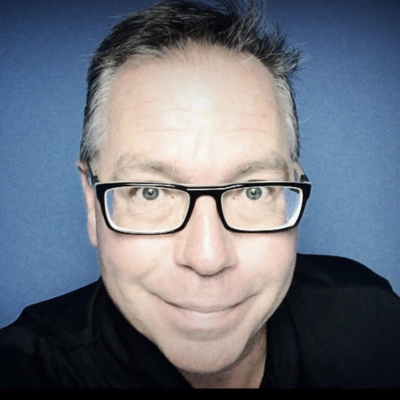
Radio is full of rapid changes. Hard to keep up some days. However, there is a rare breed of air talent. A “diamond in the rough” if you will, that has chosen to anchor itself to the craft for a lifetime. Their voices have become as familiar as family. The legacy they built is as enduring as the stations they helped define.
Legends like Scott Shannon, Eddie Volkman—better known to listeners as “Eddie” from Eddie and JoBo—and Ron Parker represent a lifelong commitment to radio, regardless of ratings and trends. All of these giants could have signed off long ago, taking with them a lasting legacy. Instead, their passion behind the microphone has kept them in the game longer than some readers of this column have been alive.
Then, there’s Jack Diamond. Few voices in radio are as generational as his. Jack built his career on a genuine love for the craft.
When he left radio in his hometown of Washington, D.C., he could have parked his headphones as he approached 60 years old. Nope. He’s still hosting mornings in Frederick, Maryland, without any sign of letting up.
We sent probing questions to Jack last week, and he delivered robust answers—the true mark of a great storyteller. Let’s explore this legend’s journey, the evolution of radio through his eyes, and the legacy he will eventually leave behind.
*Editor’s Note: Answers have been edited for clarity and length.*
Kevin Robinson – Tell us about you and your radio path from the beginning to where you are today.
Jack Diamond – I feel like WKRP and I had so much in common early in my career.
I was very lucky to meet some people who worked in radio when I was 14, and I got to hang out with them. We visited some radio stations and met Don Dillard, who owned WDON, a daytimer in Wheaton, Maryland. The station was located in a strip mall right next to a Dunkin’ Donuts.
My dad was an eye doctor, and I went into work with him one Saturday morning right before Christmas. He stopped in at Dunkin’ Donuts, and the line was long. I asked if I could go visit the radio station next door. Don Dillard not only let me in, he said, “Come into the production studio and help me out. This is a tape cartridge. I just put a Coca-Cola commercial on it. When the red stop light comes on, push the start button and make sure it sounds OK.”
When I pushed that start button, the most amazing Christmas Coca-Cola jingle came out of those speakers. I was hooked. Don [Dillard] introduced me to his morning guy, Tom Cat, who was kind enough to let me hang around every Saturday morning for months.
When I was 16, I got a part-time job in radio over the summer on the day I got my driver’s license. I drove to Annapolis, Maryland, and was lucky enough, along with sheer enthusiasm and a can-do attitude, to land a part-time job at WNAV.
When the summer job ended, I was heartbroken.
Then I heard that Terry Steel was leaving our big local radio station, WINX. I called him on the request line and asked what advice he could give me to have a shot at getting a part-time job there. He said, “part-time, you should apply for my shift, 7 to midnight!”
This guy was so nice. He not only invited me to the radio station, he put me in the production studio to cut an audition tape using station copy, liners, and jingles. I got the job. Amazing!
I worked 7 to midnight during my junior year of high school, and in my senior year, I did afternoons from 3 to 7. I am so grateful to Terry and Pierre Eaton, the owner and general manager of WINX. Pierre said just go in there and have fun. I did, and I still am.
Then, Jay Clark at WPRO in Providence called and wanted to see if I wanted to do afternoons on a brand-new radio station they were putting on the air, WPRO-FM. I packed up my car, got a U-Haul, and headed north.
Gary Berkowitz was kind enough to make me the first jock on PRO-FM, 3–7 p.m. Then I headed to the West Coast.
I just had to get to Southern California, and my van blew up outside of Denver. So, I hitchhiked into town and got a part-time job at KIMN. Great companies—Capital Cities and Jefferson Pilot.
No full-time openings at KIMN came along, so I continued my radio odyssey. I headed back to the East Coast to program WDJQ in Baltimore. While there, I was offered an opportunity to program WJTO in Maine and to put a new 50,000-watt FM on the air.
I picked call letters and went to Dallas to do jingles at PAMS. WIGY and Y106, was born and became a real passion project.
I left to join WACQ in Boston to do mornings and was thrilled to get a phone call from Marc McKay to do 6 to 10 p.m. at the Big 68 WRKO. It was a wonderful experience working with some amazing talent. That included Charlie Van Dyke and someone you guys talked to recently—and I absolutely love—Dennis Jon Bailey!
After WRKO, Drake-Chenault offered me an opportunity to do mornings on KYNO and work on their automated national services. I met Bill Drake and Gene Chenault there and received a master class from the experience.
I also programmed WYRE after Steve Kingston left and helped the owner, Syd Able, put a new FM on the air, WBEY, Bay Country.
I had a close relationship with Vince Faraci of Atlantic Records. During this time at WYRE and WBEY, Vince and I talked about me joining Atlantic to handle mid-Atlantic promotion. It was a cool experience seeing the business from the other side and working with the legendary Ahmet Ertegun.
After a year, though, radio called loudly, and I joined program director Robert John at Infiniti Broadcasting, WIVY Y103 in Jacksonville, Florida. This marked my first big success as an air personality. I took everything I learned along the way—especially from guys like Jay, Gary, Drake, and others who were kind enough to guide me.
While in Jacksonville, I also started working in television part time doing TV weather and feature reporting. Then I hosted a daily late-morning show that proved to be a wonderful and symbiotic relationship throughout my career.
I liked Jacksonville so much that I decided to buy a radio station there. You know how you make a small fortune in radio? Start with a large fortune… I wisely moved back to being on-air.
Ray Quinn offered me mornings at Magic in San Antonio, where I also worked in TV for KENS. Then Rick Seidel at KNBR in San Francisco invited me to do afternoons.
I absolutely loved working for NBC. I might have stayed there forever, but the station—in fact, all NBC stations—were put up for sale. So when Don Benson called about joining 94Q and WQXI in Atlanta, I was thrilled.
Atlanta led to another amazing opportunity doing mornings at KSON for program director Mike Shepard and GM Clarke Brown.
Just as my two-year deal was ending in San Diego, Don Benson, Norm Schrutt, and Maureen Lesourd offered me an opportunity to come home to Washington and do mornings at ABC’s WRQX. It became an incredibly wild and wonderful 30-year run.
During that time, Jimmy Alexander joined our show, replacing Bert, whom I brought with me from San Diego. Jimmy and I became fast friends and partners. We’ve spent 30 years together and have been through everything in life together. Weddings, divorces, deaths, and the birth of wonderful children.
Jimmy is family and always will be a tremendous talent.
This was followed by mornings at Lite FM in Miami and mornings at WLS-FM in Chicago. It was truly an honor to work alongside this team. I’m grateful and thankful for their friendship and support: Greg Brown, Danny Lake, Robert Murphy, John Records Landecker, Dick Biondi, and an incredible producer and air talent, Dan Wolfe.
We returned to Washington, D.C., when Cumulus decided they wanted to put Mix 107.3 and the Jack Diamond Morning Show back on the air.
After Cumulus sold WRQX, WPLJ and others right at the start of COVID, Fred Manning of Manning Media invited me, Jimmy, and Lisa Anne to come up and help him out for perhaps six months or so.
Six years later, we are still here and having a blast!
The station is 106.9 The Eagle. We work out of studios in Frederick, located in a historic red barn, along with sister station Key 103. Fred believes in live, local talent, and both stations are very well staffed.
Kevin Robinson – How long have you been in the D.C. area, and what’s special about it for you?
Jack Diamond – I was born and raised in Washington, D.C., and the suburbs. Being in the middle of the east coast, with three major airports, every possible sports team and concert venue, plus close proximity to the ocean and the mountains makes it a pretty perfect place to live.
Sure, the traffic can be absolutely dreadful but that’s true of most places. We are living in Frederick, home to incredible restaurants, beautiful scenery, rich history, and truly nice people. It’s a short drive to downtown D.C. or anywhere else in the Washington metro area we’d like to go.
Kevin Robinson – What’s your best day in radio—and why?
Jack Diamond – Here’s one true highlight and a reason to answer the phones, read every social media ‘comment’, and your text line.
One day during our show at Mix 107.3, a high school acquaintance called the request line and asked if we could talk for a few minutes. We weren’t really friends, just acquaintances, but I knew his name. He told me the story of how his son has cancer, and the medical community said there was nothing more they could do for him and sent him home.
He was 17 or 18 years old, and obviously it was heartbreaking to hear his story. They took him to Make-a-Wish, and he was grateful for the trip they offered, but he told his dad he didn’t want to “go on vacation and come home and die”.
So, he asked his son what he’d like to do, and his son said; “I’d like to rebuild a car with you like we did when I was younger.” His Dad asked me if I could help out.
I asked exactly how could we help, and he said; “Ideally we’d like to find a 68 Camaro to fix-up. Maybe convertible, in any shape. We’d like to try and get one that we can work on together, and get it pretty fast.” I told him we would be happy to do all we could if he would go on the air and tell his story.
The next day, he joined us on the air and told his story. Almost immediately, the phones rang. Someone had a frame. Someone else had a body, and someone thought they could locate a transmission. We did this for about three weeks, and we had every single part necessary to not only build a ’68 Camaro, but put it in concourse condition.
Several months later, they took the car on the road and entered it in car shows—most of which they won—all over the country. My high school friend called a few months later and said his son’s cancer was in complete remission. The doctors weren’t sure how, but they believed this project and that time with his dad had everything to do with it. The last I heard, he got married and had a child.
The power of listening, asking, and genuinely involving your audience. The power of purpose and love.
Kevin Robinson – Give us something that makes you successful. This could be prep, longevity, or behind-the-scenes of your show.
Jack Diamond – Never taking a listener for granted, always responding to them, and talking about things that are top of mind all play a big role. It’s also important to ensure that a large portion of what you do on the air and on social media is hyperlocal.
It makes a big difference. Involving listeners in your on-air discussions and posts strengthens that connection.
Having a cover band that opened for national acts and played club gigs, and fundraisers—especially outdoor, family-friendly ones—gave us the opportunity to perform the music we play on the radio.
It also gave us a chance to say hi to people during band breaks. Take pictures, talk, and hang out. It’s priceless. We also hosted sold-out New Year’s Eve parties every year, all-inclusive.
I will say that being on the air during September 11, the sniper shootings, and other unforgettable events—both happy and sad—gave us the opportunity to provide true companionship.
We became a voice of reason and a resource for listeners and businesses. During COVID-19, we created an “Open for Business” directory, inviting any business that was open to tell us about it on the air. We compiled all of the information online. Every restaurant offering curbside pickup, open pharmacies, service providers, doctors, and hospitals.
It was so successful that we are still doing it today. That’s local radio.
Kevin Robinson – What would you say or advise emerging talent or your role with getting into radio today?
Jack Diamond – Be absolutely curious about everything. Read, watch, listen to all of it and and ask a ton of questions. Find a way to create content that reflects you and push it on social media as much as possible.
Start a podcast or your own online radio show—even if that means eliminating music because of the cost. Try to find a local radio station and offer your unique content. Start on the street team. Offer to fill in. Get involved. Develop voice-tracking skills. Learn how to talk with a listener one-on-one and invite them to listen and participate. It’s worked for us. Perhaps it’ll work for them.
Jack Diamond is a living, active testament to a life dedicated to radio and the power of local radio.
Today, playlists are automated and attention spans are fleeting. Talent like Jack Diamond serves as a steady reminder of why radio still matters. It’s not just about the signal—it’s about the soul behind it.
For decades, Jack has enriched lives across America. As long as there’s a microphone in front of him and a local community to keep company, he’ll be on your radio.
For Jack Diamond, since his teenage years, radio has always been home.
Barrett Media produces daily content on the music, news, and sports media industries. Sign up for our newsletters to stay updated and get the latest information right in your inbox.