

Home Blog Page 118

Jason Goff Isn’t Recreating the Past by Going ‘Unscripted’ With 312 Sports

1

It’s been just over a year since the creation of 312 Sports, the Chicago-based digital podcast platform dedicated to sharp, personality-driven sports coverage rooted deeply in Chicago’s fan culture. Its launch coincided with the return of Dan Bernstein and Matt Abbatacola. Over the past year, the platform added Cody Delmendo and Jason Bernstein to its roster. Last month, another familiar voice joined 312 Sports when Jason Goff rejoined the Chicago sports media landscape.

“Dan Zampillo [Executive Producer, Gamut Podcast Network] joined the team at 312 Sports. He and I have a connection where he’s put me in positions before that he thought was best for me. I trust what his vision and direction would be best for me to go,” said Goff. “I congratulated him on getting the role with 312 Sports earlier this year, and he wanted to talk about things.”

The timing couldn’t have been better for Goff. In March, he announced that he would depart his role as host of The Full Go podcast on The Ringer. After 600 episodes and four years, the Chicago-based podcast ended when the company chose not to renew Goff’s contract.

Over the next four months, Goff had conversations with a number of different suitors inquiring about his services. Both in radio and digital media.

“I wanted to figure out my enjoyment when it came to podcasting opposed to terrestrial radio. It’s just a different vibe with podcasting,” said Goff. “It took a little bit longer than I was comfortable with because I’m used to things happening in rapid succession. But after some more meetings with Gamut, we signed the deal. I’m just glad to be back behind a microphone.”

Leaving The Ringer

Reflecting on his four years with The Ringer, Goff was thankful for the opportunity he received. He says it was the first place in his career where he felt supported enough to share his true, authentic self with the audience while having full control over the content on The Full Go.

Goff says he was disappointed when his contract expired, but he no longer laments departures like he once did.

“I was appreciative for the opportunity they gave me. I got a chance to do some fly s**t with The Ringer. Plus, I got a chance to live in a different zone with something that was foreign to me at the time,” said Goff. “The challenges it presented, it felt like an accomplishment. It was just the next stage, and I answered the bell.”

What The Full Go provided Goff was a roadmap for how to approach Jason Goff Unscripted with 312 Sports. The foundation will always be local sports, local teams and local flair. However, Goff also wants to add elements that separate the present from the past.

“I’m planning on discussing things that are more locally important. With The Full Go, it was more a Chicago vibe but more for a national point of view with Spotify,” noted Goff. “I’m going to have local lobbyists and comedians on this show, but more often. It’ll be more about what I’m interacting with on a day-to-day basis without even blinking… I’ve been sitting on things for months; I want to have some fun creatively.”

The Rear View Mirror

Because of his success with The Ringer, Goff had discussions about a number of different options during his time away. Those possibilities ranged from starting his own platform with Patreon to conversations about a potential return to his original radio home at 104.3 The Score.

Goff worked at The Score from 2000 until 2012 as a producer and host. He returned to the station three years later, but the company laid him off in 2018.

Goff says The Score will always be a special place for him, from his childhood spent listening to the brand to his days representing it across the city. However, as he navigated his search for the next step following The Ringer, Goff came to a realization he couldn’t comprehend before.

“Understanding that place [104.3 The Score] was not the end for me was the best thing that happened to me, to be honest. History has a decent chance of making me feel good about how I handled things,” said Goff. “At this point in my life, it [rejoining 104.3 The Score] really would have been me settling something inside me. Instead of it being the best decision for my new life and the new me.”

Despite the amount of time since Goff last hosted at The Score, he continues to be mentioned as a potential candidate for a return.

In 2024, Goff revealed that he was preparing to join Matt Spiegel in afternoons following the departure of Danny Parkins for FOX Sports. That opportunity fell through after Audacy prohibited Goff from hosting The Full Go, along with other points of contention. Despite the fallout from two years ago, conversations continued until this summer.

“Each time those conversations happened over the last couple of years, especially this last one. I’m not going to lie. There was a sour taste left in my mouth in some of the information that was or wasn’t received,” explains Goff. “I talked with my wife after it was settled that I was going to jump in with Gamut. She told me she was glad that part was over for me. It needed to be that way.”

Despite no longer having the same connection with The Score that he once had, Goff still roots for the success of some of his friends at the station. That includes new morning show co-host Jarrett Payton, with whom Goff has a long-standing relationship.

Reuniting With Dan Bernstein

However, Goff doesn’t fully run from his Score past in Chicago. He understands that his experience in the city created connections that have followed him throughout his career. Goff explained that he hopes to focus on what’s next. Keep things fresh and play as much new music as he can. Yet, he also remained connected to Dan Bernstein through that bond with the listening audience.

Goff grew up listening to Bernstein and eventually produced and co-hosted alongside him for a number of years at 104.3 The Score as a professional.

“Dan Bernstein is one of the most talented people I’ve ever heard. To get a chance to produce his show and then host with him, but also learn how nasty the business [can be] right next to him,” noted Goff. “I got him back in my rotation with this situation. Hearing him doing something new, you hear the jolt in his voice. There’s stuff I genuinely missed about hearing him that I got back with this situation at 312 Sports.”

Following Bernstein’s exit from 104.3 The Score, Goff believed it was a humbling moment for the long-standing host. It also gave Bernstein an opportunity to step back and survey the larger possibilities available outside of what terrestrial radio provided.

Goff sees a different person today than the one he knew previously and feels Bernstein’s adaptation to digital content has reinvigorated him for a lasting second act.

“If you’re anywhere too long, that means you’re saying just the right things. But after a while, I’m not interested. You having to pop up and put on is impressive to me. Especially when it isn’t part of the DNA of people. Now you’re having to grab new ears. Dan Bernstein is fucking terrific at this,” explained Goff. “I’m looking forward to hearing this new Dan Bernstein. He has a different energy and vibe to him.”

For Goff, that evolution is part of what makes his return to Chicago sports media feel different this time around. He isn’t returning to recreate what he had at The Score, nor is he attempting to duplicate what worked at The Ringer. He’s entering a new chapter with the freedom to take everything he has learned along the way and build something that feels uniquely his.

That may be the opportunity 312 Sports provides best. Familiar voices are returning to a familiar market, but they aren’t being asked to recreate the past. Instead, Goff sees a platform where he, Bernstein and the rest of the roster can experiment, evolve and find out what comes next.

“I’m now to a point in my life where I realize how okay it is for me to be exactly who the f**k I am,” says Goff. “In the end, the things you have, you may not have them for a long time. I don’t know how long I’ll be doing this, but I want to enjoy the s**t out of it.”

For Goff, that next thing begins with a microphone, a new audience to reach and the opportunity to have some fun again. After spending years navigating the expectations of terrestrial radio and national digital media, he has arrived at a place where the destination matters less than the freedom to create.

And perhaps that is the biggest difference between Jason Goff then and Jason Goff now. He isn’t looking backward at what he lost. He’s looking forward to what he can build once again.

Barrett Media produces daily content on the music, news, and sports media industries. Sign up for our newsletters to stay updated and get the latest information right in your inbox.

How Streaming Platforms Became Radio Without Knowing It

1

I used to make the annual pilgrimage to South by Southwest. Free drinks, free barbecue, and I got to convince my boss it was a business necessity. It was a pretty good gig.

One year I pitched something different: forget the music side. Let me go check out the digital and interactive convention instead. I had been watching the money and the excitement slowly drain from traditional music and flow toward the tech world. The same artists were showing up in both rooms. Music and technology were clearly crashing into each other.

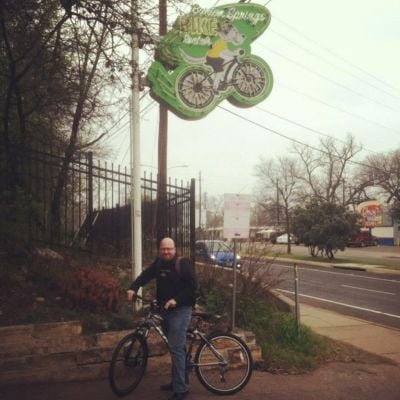
So my digital initiatives manager, John Laur, and I rented bicycles and started pedaling between panels in Austin.

And I kept thinking the same thing over and over: Radio already does this. They were talking about discovery. Building audiences. Creating community. Connecting artists with fans. Giving people reasons to show up every single day.

The technology was different. The problems weren’t.

Now, I wasn’t dumb enough to raise my hand in a room full of tech people and announce that radio had all the answers. We were already getting looks that said, “Why are the radio guys even in this room?” But sitting there, I recognized something. These companies were trying to solve problems radio had already figured out decades ago.

What’s Happening Now

Fast forward to today, and here’s what’s interesting: Spotify and Apple Music have slowly stopped being about unlimited music libraries. Don’t get me wrong — that was huge at first. On-demand anything, anytime. Personalization. Data. Those were real advantages.

But lately? They’re building radio.

Spotify has personalities now. Curation. Artist relationships. Apple Music has radio shows. Live performances. Curated programming with actual humans talking about why something matters. They’re adding context. They’re trying to build an experience around music instead of just a jukebox.

The funny thing is, I don’t think they were studying old broadcast radio manuals and saying, “You know what we need? We need to be more like terrestrial radio in 1995.” They probably had the same insight we all had: people don’t just want songs. They want somebody to help them understand why they should care.

And that’s always been radio’s thing.

Radio had personalities. Not just playlists — actual people with opinions, taste and perspective who could take a song and make it matter. Radio had curation. A program director wasn’t just hitting shuffle; they were thinking about flow, about what came next, about what the audience needed to hear. Radio had artist relationships. We didn’t just play the song; we understood the artist’s story. Radio had something that’s harder to build: trust. When the air talent said, “You’re going to like this,” there was actual credibility behind it.

The Distraction

The challenge was that we got distracted.

Digital music platforms showed up with obvious superpowers: unlimited libraries, perfect personalization, no geographic constraints, data on everything. And radio spent years — still spends years — trying to copy what they do. We built websites. We added streaming. Then added social media. We’re still chasing their metrics.

And that’s not dumb. You can’t ignore technology. You have to compete. But somewhere along the way, maybe we stopped noticing what we were actually good at.

A playlist is easy to duplicate. Any algorithm can make one. What’s harder is building a relationship. Anyone can recommend a song. Not everyone can make somebody care about it.

The Advantage

Radio’s advantage was never that we had more music. We didn’t. Our advantage was that somebody was there helping listeners make sense of the music. We were the filter. The trusted voice. The person who said, “Yeah, I know there’s a million songs out there, but this one matters, and here’s why.”

Streaming services have figured out that problem is worth solving. So they’re hiring people. Creating personalities. Building shows. Adding context. They’re becoming, essentially, radio companies that also happen to have streaming technology.

The question I keep wondering: Do we recognize what we’ve already got? There’s a lot of hand-wringing in radio right now about consolidation, about technology, about formats, about whether terrestrial radio still matters. And yeah, those are real problems to solve.

But I think the bigger problem might be that we spent so much time looking at what digital had that we didn’t, we forgot to notice that what we already had was something they’re still trying to build.

Streaming platforms built themselves on algorithms. That was the whole deal. But now Spotify’s uses music editors as personalities because they figured out an algorithm can’t make you care. On-demand sounded like freedom, but it turned paralyzing. Unlimited choice? Turns out people don’t want that. They want someone they trust saying, “This matters.”

Radio knew that already. Radio is that.

The real lesson is simpler than all that. People haven’t changed nearly as much as technology has. They still want someone they trust helping them find something great. They want context. And they want to belong to something. That’s just how people work.

Moving Forward

Here’s what I think matters: This isn’t nostalgia. It’s not about looking backward or pretending the past was better.

It’s about recognizing that radio had a full toolbox. We had personalities. We had relationships. And we had the ability to make music matter to people. Those were real tools.

And here’s the thing — we still have those tools now. We still have the capacity to build community, to create trust, to help people discover things that matter. The difference is that we need to actually recognize what we’ve got and figure out how to use it moving forward.

This isn’t about going back. It’s about looking honestly at our assets and understanding what radio can still do better than anybody else.

The streaming platforms figured out that personality and connection are worth building toward. They’re learning lessons that radio already knew. The question isn’t whether radio is relevant anymore. The question is whether we’re going to double down on the things we’re actually good at and keep building on the greatness of what radio can be.

I don’t think it’s too late. We just need to have a strong look at what we’ve got in that toolbox and use it.

Barrett Media produces daily content on the music, news, and sports media industries. Sign up for our newsletters to stay updated and get the latest information right in your inbox.
What Trump TV Means for the Future of Political Media

1

The White House didn’t wait long to answer its press credentialing fight with action. Just days after banning CNN, MS NOW, and Politico from White House grounds, the administration launched Trump TV, a 24/7 YouTube livestream branded “The Essentials Station.” And while plenty of media critics are calling it state-run television, I’d argue the bigger story is what it says about how little leverage traditional outlets have left.

But it really does make sense when you think about it. If you’re unhappy with your coverage, it’s never been easier to go around the gatekeepers entirely. You don’t need a cable deal. You don’t have to hope the nightly news or talk radio spends time on the topics you want them to speak about. Today, you just need a camera, a YouTube account, and a willingness to skip the middleman. That’s the calculation the White House made, and from a pure distribution standpoint, it’s hard to argue with the logic.

Earlier this year, I asked Sen. Ted Cruz (R-TX) if he were surprised that his colleagues hadn’t really adopted the podcast strategy he’s enacted. Because it’s never been easier to go right to constituents. It makes sense for Cruz and I think this make sense for Trump.

Will Trump TV actually be must-watch content? Probably not. I can’t picture the president sitting down for fireside chats on this platform, trading barbs with a co-host or building out a rundown the way Fox & Friends does every morning. What I can picture is a loop of rally speeches, administration wins, and greatest-hits moments — content built for supporters who already agree, not for anyone trying to be persuaded. That’s not a bug in this model. It’s the whole point.

The Cable News Playbook, Minus the Cable

Trump TV isn’t inventing anything new so much as it’s stripping out the parts of cable news that require negotiation. News/talk radio and prime-time cable have spent the better part of a decade proving there’s a durable audience for ideologically aligned, personality-driven programming. Hosts don’t chase the undecided middle anymore, and haven’t for quite some time. They serve the base, and the base shows up.

Trump TV simply cuts out the network executives, the ad sales teams, and the affiliate relations departments that used to sit between a political figure and that audience.

That’s also why comparing this to a traditional network launch misses the point. Nobody at the White House is worried about Nielsen numbers or upfront pricing.

They’re worried about narrative control, and a livestream gives them full control over the footage, the framing, and the timing — no reporter cutting away mid-sentence, no chyron they didn’t approve. For an administration frustrated with its coverage, that’s worth more than any ratings book.

A Shortsighted Bet, but a Smart One

Here’s where I’ll push back on the “genius” framing a little. Launching Trump TV sends a clear signal to CNN, MS NOW, and every other outlet still fighting for access: we don’t need you. That’s shortsighted, because massive swaths of voters still get their news from local affiliates and cable bundles, and they wouldn’t know how to find a standalone YouTube stream if their re-election depended on it.

Still, for the audience that does live on streaming and social platforms, this is a smart, low-cost way to reach them directly, without a single note from a network standards department. Even people who can’t stand the administration should be able to admit that much. The lawsuit filed by CNN, MS NOW, and Politico over the access ban will play out in court, and it might even succeed.

But it won’t undo the bigger shift already underway: political communication is moving further away from the press pool and closer to platforms the White House fully owns.

That’s the real headline here, more than any single livestream. Access battles used to be existential for outlets covering the White House, because there was no alternative path to the audience. Now there is, and every administration going forward — regardless of party — has watched this one prove it works. Trump TV might never crack the top of YouTube’s trending page. It doesn’t have to. It just has to prove the model. And I’d bet decent money that it will.

Barrett Media produces daily content on the music, news, and sports media industries. Sign up for our newsletters to stay updated and get the latest information right in your inbox.

Manischewitz’s Gen Z Playbook Holds Lessons for Classic Rock Radio

0

This past Monday marked Yom Kippur, which, for those of you not in the tribe, is the end of the Days of Awe and, according to the Hebrew calendar, the start of a new year. If you are interested, the proper greeting is Happy New Year or “Shanah Tovah.”

It’s probably not a coincidence that, at the same time Jewish people everywhere are celebrating the new year, Fast Company published an article about the brand Manischewitz and its efforts to attract younger consumers.

If you’re not familiar (and why would you be?), Manischewitz is a 138-year-old brand that was launched out of the need Jewish immigrants in America had for kosher products — wine and food that met their dietary guidelines.

This is where I stretch an analogy and talk about how Classic Rock is a more than 40-year-old brand that was launched because people needed the Rock that fit their personal guidelines. And while you can consider that a reach if you like, many of the challenges Classic Rock stations face today are not that different from what marketers at Manischewitz are facing.

A New Generation, a Different Approach

The article notes that younger Jewish consumers today are very different from their parents and grandparents. Very much like how new generations of music fans are discovering Classic Rock in a very different way than fans from previous generations did.

According to Manischewitz Senior Vice President Matt Shalvi, “We’re not trying to convince Gen Z and other younger generations to experience Manischewitz the way previous generations did. We’re giving them opportunities to make Manischewitz their own.”

So, let’s explore how they are doing that. A list of their efforts to reach younger consumers includes:

  • Launching new products that appeal to younger consumers through convenience, including frozen challah bread and matzoh balls that are easy to warm and eat.
  • Overhauling their digital efforts with a new website, improved social media content and even a YouTube channel with a dating show called Manischewitz Matchmakers.
  • Partnering with a food truck to create a Deli on Wheels that serves kosher comfort food.
  • Starting a merchandise line of T-shirts and aprons with clever — or cheesy — phrases.
  • Hosting an art exhibition called “SOUP” that displayed images and photography examining Jewish cuisine.
  • Cutting a headline-getting NIL (Name, Image and Likeness) deal with BYU quarterback Jake Retzlaff, the team’s first Jewish starting quarterback, affectionately known as the BY-Jew. They have since expanded that program into a search for the most successful Jewish NCAA athletes, with qualifications that include both athletics and community involvement.

Beyond the Packaging

The interesting part is, it’s working. The company has grown more than 12% in the last two years, with core products up over 40%, driven by growth in purchases from younger consumers.

While some of their efforts could be adapted almost directly for a Classic Rock station, what stands out to me is this quote, which sums up the spirit of what the managers at Manischewitz are doing: “Our evolution has gone far beyond packaging… we’re finding new ways for people to participate in the Manischewitz brand.”

There’s the real crux of the challenge as we start into a (Jewish) new year. Without ruining our core product, which Manischewitz has not, how can we find new ways for younger fans of the music to engage with Classic Rock through our brands?

Ideas for Classic Rock Stations

Here are a few thoughts:

  • Start by reviewing whatever digital and social elements are within your control. Consider whether the color scheme and visuals are contemporary enough to draw the attention of a younger fan. Visuals that are up to date will not scare off your core listeners but might help attract new ones.
  • A strong merchandising program is another thing that won’t bother your existing fans but could grab some attention if your designs are unique and intriguing.
  • Get involved with places in your market that cater to younger music fans. Stations can’t afford an NIL deal like Manischewitz’s, but you can still partner with places that attract younger audiences to create mutually beneficial promotions.

I have no doubt that combining the creativity of the people at your station with knowledge of the music and the local market could lead to even better ideas that reach the same goal as Manischewitz: giving younger listeners a chance to experience our brands in ways that make sense for them.

Maybe it can help lead your station to a happy, healthy new year. Shanah Tovah.

Barrett Media produces daily content on the music, news, and sports media industries. Sign up for our newsletters to stay updated and get the latest information right in your inbox.

FOX Sports Leads NFL Average Viewership In Week Two Sunday Results

0

FOX Sports topped Week 2 NFL Sunday viewership, drawing an average of 27.2 million for Cowboys-Commanders. Meanwhile, NBC and CBS followed with historic numbers of their own.

What We Know: FOX averaged 27,212,000 viewers for Dallas’ 37-20 win over Washington, 8% above last season’s America’s Game of the Week average. Meanwhile, NBC and Peacock averaged 24.3 million viewers for Kansas City’s 33-30 overtime win over Indianapolis. That marks Sunday Night Football’s most-watched Week 2 game since 2015. Finally, CBS’s Steelers-Patriots singleheader averaged 19.345 million viewers, its best Week 2 on record, up 29% year over year.

What The Data Shows: NFL WEEK TWO AVERAGE VIEWERSHIP

NetworkTeamsAverage Viewership
Prime VideoDetroit vs. Buffalo18.60 million
CBS (Early Window)Pittsburgh vs. New England19.345 million
FOX (Afternoon)Dallas vs. Washington27.2 million
NBC (Evening)Kansas City vs. Indianapolis24.3 million
ESPN (MNF)New York Giants vs. Los Angeles RamsTBA

What Remains Unclear: ESPN’s viewership figures are set to be released on Tuesday. Peak audience figures for FOX Sports were not released.

What It Means: Ultimately, Week 2 delivered records across all three broadcast partners with new methodology and audience measurement. Despite the dramatic drop in scoring offense from week to week, the viewership figures continued to be strong to start the new NFL season over last year. FOX owns bragging rights for now, but NBC and CBS each claimed a piece of history. Moreover, marquee brands like Dallas and Kansas City continue driving massive tune-in. As a result, networks and advertisers alike have reason for optimism heading into Week 3.

Barrett Media produces daily content on the music, news, and sports media industries. Sign up for our newsletters to stay updated and get the latest information right in your inbox.

Stephen A. Smith Reportedly Making More Upcoming Appearances On ESPN’s Monday Night Countdown

0

Stephen A. Smith is back on ESPN’s Monday Night Countdown. The First Take star will reportedly appear on three or four episodes this season, according to Front Office Sports.

What We Know: Smith first joined Monday Night Countdown last season, appearing three times with Scott Van Pelt and company. On Monday, he made his season debut in Los Angeles ahead of the New York Giants Los Angeles Rams telecast. Notably, it was his first Countdown appearance alongside Pat McAfee, who joined the show this season.

What’s At Stake: This is ESPN’s first year hosting the broadcast of the Super Bowl. With the added focus of the big game in February, Smith’s inclusion in Monday Night Countdown should have been expected with the network ramping up its all in approach on football content with the biggest stars of ESPN involved.

What Remains Unclear: Exact dates in which Smith appears on Monday Night Countdown are unknown. Whether or not First Take will travel to the host city for the Monday Night Football broadcast dates could be also in the mix as well.

What It Means: Ultimately, Smith specifically considered additional Monday Night Football work in his 2025 extension. Now, the request is paying off, uniting arguably ESPN’s two biggest stars on one desk. Conversely, he left NBA Countdown last season after ESPN licensed Inside the NBA from TNT Sports. Looking ahead, it will be interesting to see how fan reaction to ESPN’s two biggest stars sharing the stage together plays out. Also, whether there could be some additional cross pollination between the two on each other’s ESPN studio programs as well.

Barrett Media produces daily content on the music, news, and sports media industries. Sign up for our newsletters to stay updated and get the latest information right in your inbox.

TKO President Mark Shapiro: Netflix Lagging Engagement Is “Getting Blown Up” By Media

0

TKO Holdings President and COO Mark Shapiro believes Netflix has become a destination for sports. In fact, he told CNBC that stories about the streamer’s lagging engagement metrics are overblown.

What We Know: Shapiro sat down with CNBC’s David Faber alongside TKO CEO Ari Emanuel last week. Meanwhile, Netflix members watched roughly 97 billion hours in the first half of 2026, up only about 2%. However, the stock price continues to drop as Netflix’s recent engagement trends are “worrying,” Wells Fargo told clients in a Friday note, citing an 8% drop in viewership time per subscriber per day in the first half of this year compared to the same period in 2023. Despite the metrics, Shapiro credited the platform and it’s growing slate of sports related events as reasons to remain positive.

What They Said: (All quotes via CNBC):

Mark Shapiro feels that Netflix has become the first destination for sports content: “They have great premium quality content. In the same way, you’re going to go to ESPN or you’re going to go to Paramount Plus. If you’re looking for sports, you’re going to go to Netflix first and foremost when you turn on the tube. It’s long form. Now they’re getting into the influencer space, podcast space, talk space, and the sports space. They really have it all, and they’re making the investment. Spending more money, and they’re listening to their viewers. We think the engagement is incredibly strong, and they’re willing to experiment with new models and new creators and new models. It’s really first stop for us.”

Mark Shapiro feels the lower engagement stories about Netflix are being overblown: “They’re growing their business with the AVOD platform. They’re continuing to commit to more premium content. They’re getting significantly into the sports space. I think the engagement thing is getting blown up. Yes, YouTube’s a great player. Yes, YouTube’s mostly short form, by the way. It’s creator economy. What they’re doing is completely different from what Netflix is doing.”

What Remains Unclear: Still, Wall Street isn’t fully convinced. HSBC and Wells Fargo both downgraded Netflix recently, citing YouTube competition and a weaker original slate. Netflix’s sports lineup now includes select NFL games, MLB events and the Women’s World Cup. Executives have also stated interest in the FIFA men’s World Cup in 2030. However, it’s unclear whether those events can lift everyday viewing, not just sign-ups.

What It Means: For TKO, Netflix’s health matters directly. After all, the streamer is paying roughly $5 billion over 10 years for WWE Monday Night Raw. Consequently, TKO has every reason to champion Netflix as sports fans’ first stop. However, the lagging engagement numbers that the platform shares does potentially pose a risk for future media deals if the platform cannot produce more engagement around the events they buy.

Barrett Media produces daily content on the music, news, and sports media industries. Sign up for our newsletters to stay updated and get the latest information right in your inbox.

NewsTalk 98.9FM, 1400AM KFRU Adds Pete Mundo to Morning Drive

0

KFRU is adding Pete Mundo to its morning lineup as Cumulus Media expands Mundo in the Morning across its stations. The Columbia, Missouri, station will carry the KCMO Talk Radio program following recent local staff cuts.

What We Know: Mundo in the Morning originates from KCMO Talk Radio in Kansas City, where Mundo hosts the weekday morning program. The show also airs on 102.9 KTOP in Topeka, which began simulcasting KCMO programming in June. KFRU and KCMO Talk Radio share Cumulus Media ownership, allowing the company to extend Mundo’s program into another Missouri market.

What’s at Stake: The addition gives KFRU a familiar Cumulus personality while reducing the station’s reliance on locally produced morning programming. Mundo’s show covers local and national news, culture, sports, and other topics during its morning run. Meanwhile, the move follows August layoffs that included former KFRU morning host David Gaines and local host Simon Rose.

What Remains Unclear: Cumulus hasn’t disclosed whether the station plans to add another locally based host to its weekday lineup.

What It Means: Mundo’s growing footprint gives Cumulus a consistent morning product across multiple markets. In addition, the KFRU move continues the company’s strategy of using KCMO programming beyond Kansas City, following the 102.9 KTOP launch earlier this year.

Barrett Media produces daily content on the music, news, and sports media industries. Sign up for our newsletters to stay updated and get the latest information right in your inbox.

77 WABC’s Sid Rosenberg: Some Days, I Consider Going Back to Sports Radio

0

Sid Rosenberg says he sometimes considers returning to sports radio after another politically charged day in New York. The 77 WABC morning host made the comments while discussing the latest developments in the city.

What We Know: Rosenberg currently hosts Sid & Friends in the Morning on 77 WABC, where he regularly mixes political commentary with sports discussions. His latest remarks suggested that the current political climate has made him reconsider his career direction. Rosenberg has a long history in sports radio, including work in South Florida before returning to New York.

What They Said: “Days like today make me consider going back to sports. Sad but true. What good is the fight if we are not all in this together. You might as well refer to my city now as New Yorkistan! That terrorist scumbag Mahmoud Khalel is at a Yom Kippur break fast in Brooklyn? And my president is complimenting that Jihadi terrorist rat (expletive), Zohran Mamdani? This is the new New York, and it’s coming to a theater near you. Chag Sameach!” -Sid Rosenberg

What Remains Unclear: Rosenberg didn’t indicate that he’s pursuing a return to sports radio or considering an immediate change to his role at 77 WABC. Instead, his comments framed the possibility as something he thinks about during particularly contentious moments. His current show continues to feature sports segments alongside its broader political coverage.

What It Means: For now, Rosenberg’s comments appear to reflect frustration rather than a programming announcement. Still, his remarks highlight the different paths available to a broadcaster with experience across both sports and political talk.

Barrett Media produces daily content on the music, news, and sports media industries. Sign up for our newsletters to stay updated and get the latest information right in your inbox.

Westwood One Sports Adds Pete Sousa As Co-Host Of The Drake Toll Show

2

Westwood One Sports has added an additional voice in morning drive. Pete Sousa is joining Drake Toll as full-time co-host.

What We Know: Toll signed on as the new network’s morning host in late December following the merger between the Infinity Sports Network and BetMGM Network. Since then, he has hosted the morning show solo. Sousa now joins the program on a full time basis following several appearances on the program in the past weeks. Sousa has called college football, basketball, softball and baseball for ESPN since 2022. Before that, he spent nearly a decade in NBA PR with the Charlotte Hornets and Philadelphia Sixers.

What They Said: Ryan Maguire, VP Affiliate Sales Westwood One Sports: “Pete brings a unique mix of sports experience and personality to the show as an ESPN and NBC play-by-play announcer covering college football, basketball, and baseball, as well as host of the Big 12 Conference’s Inside the 12. His career has also included nearly a decade in the NBA with the Hornets and 76ers and time as a television news anchor.”

What Remains Unclear: The announce did not state any name change with the Drake Toll Show with Sousa’s addition. How Sousa will continue to balance his work with ESPN, Inside The 12, and The Pete Sousa Show remains unknown.

What It Means: For Toll, the move ends his run as a solo host. Toll told Barrett Media in March that early discussions between Westwood One Sports included the concept of a co-host. It looks as though those early discussions has provided him and the network that support. Sousa provides a more traditional name from traditional sports outlets for the listening audience. As Westwood One Sports nears it’s first year of airtime, it will be interesting to see if there’s more changes ahead.

Barrett Media produces daily content on the music, news, and sports media industries. Sign up for our newsletters to stay updated and get the latest information right in your inbox.