FOX Corporation and the NFL have agreed to a new multi-year deal bringing football to FOX platforms in Mexico. Starting with the 2026 season, Mexican viewers will gain access to live games, original programming, and season-long NFL content.
What We Know: The agreement covers a full slate of NFL programming. Specifically, this includes Thursday Night Football, Sunday games, Thanksgiving matchups. Plus, all NFC Playoff games, the Pro Bowl, and the Super Bowl. In addition, content will air across FOX and FOX+ on linear TV, FOX One streaming, and select programming on Tubi. Beyond game coverage, the network will also produce four weekly original NFL shows. This includes two fantasy football editions each week. Meanwhile, in the U.S., FOX holds a long-term NFL media rights agreement that runs through the 2033 season.
What They Said: Carlos Martínez, EVP FOX Latin America: “For FOX, this alliance with the NFL reinforces our historic relationship with one of the most exciting leagues in the world and our commitment to bringing the best sports content to our viewers. Mexico is a market with an enormous passion for football, and we are proud to offer fans a sizeable NFL package in the country, with a robust content experience, designed to engage audiences throughout the entire year.”
Arturo Olive, NFL Mexico Director General: “We are excited to strengthen our relationship with FOX and expand access to NFL content for fans in Mexico. The passion for football continues to grow in the country, and this alliance will enable us to connect with audiences through broad coverage, original content and a compelling season-long experience.”
What Remains Unclear: The financial terms of the deal have not been disclosed.
What It Means: FOX is aggressively expanding its NFL footprint beyond U.S. borders. Consequently, with Mexico representing a fast-growing football market. The agreement positions FOX Latin America as the primary destination for NFL coverage in the region.
Barrett Media produces daily content on the music, news, and sports media industries. Sign up for our newsletters to stay updated and get the latest information right in your inbox.
Midland, Texas has a new Spanish format on the dial. ICA Radio has converted CHR “103.3 Kiss-FM” KCRS-FM to Regional Mexican gold brand La Lupe 103.3.
What We Know: The flip targets Regional Mexican gold, spotlighting legends including Los Tigres Del Norte, Vicente Fernandez, and Joan Sebastian. La Lupe 103.3 also functions as a flanker to ICA sister station Que Buena 106.7 KCHX in Midland. Meanwhile, KCRS-FM exits the CHR format, where it previously aired Elvis Duran mornings via Premiere Networks. The station ranked seventh in the Midland/Odessa market with a 4.3 share in Fall 2025 Nielsen Audio.
What’s at Stake: La Lupe 103.3 enters a competitive Spanish-language arena. It now faces Permian Basin Broadcasting’s La Caliente 101.3 KMMZ, Jerry Benavides’ La Raza 105.9 KXQT, and Stellar Media’s Q108 KQLM. As a result, ICA strengthens its Spanish presence while absorbing increased competitive risk. Whether La Lupe can carve distinct positioning alongside Que Buena 106.7 remains a key challenge.
What Remains Unclear: ICA has not yet announced morning talent or local programming plans for La Lupe 103.3. Furthermore, it’s not known whether Que Buena 106.7 will shift strategy in response to the flanking move.
What It Means: The Midland/Odessa CHR lane now belongs entirely to others. Townsquare Media’s Rhythmic CHR B93 KZBT and Hot AC Mix 97.9 KODM stand as the only remaining current-intensive stations in the market. Consequently, ICA is betting on Spanish Classic Hits growth while leaving a gap that no competitor currently fills.
Barrett Media produces daily content on the music, news, and sports media industries. Sign up for our newsletters to stay updated and get the latest information right in your inbox.
Scott Pelley sat down with The New York Times‘ Lulu Garcia-Navarro to discuss his exit from 60 Minutes. He shared his insight into why he ultimately berated network leadership.
What We Know: Pelley was fired last week after lambasting new 60 Minutes executive producer, Nick Bilton. Pelley questioned his qualifications, as well as Editor-in-Chief Bari Weiss’. His exit came after the firing of a bevy of colleagues connected to the show were also let go. In The Interview, Scott Pelley stated he had an issue with Weiss’ “incompetence” as much as her interference with the program.
What They Said: “The interference is a problem. Especially when it’s a story that has been approved by the top editors. But the bigger problem, frankly, is not any kind of political influence. The problem was the incompetence. You don’t miss a deadline. This was four hours after that episode of 60 Minutes came within 19 minutes of not making air. The entire hour of 60 Minutes almost didn’t make it to broadcast. It was the night of the Grammys, and 60 Minutes was the lead-in to the Grammys. We almost didn’t have a broadcast. Nineteen minutes. I can’t imagine that’s ever happened before. I pledged to myself at that time that, no matter what Bari Weiss wanted to do in a story, I would never miss a deadline again because we put the entire network in jeopardy.” -Scott Pelley
What Remains Unclear: Whether or not Pelley intends to sue Paramount Skydance and CBS News over his firing. There were times throughout the interview when Pelley stated he intended to choose his words carefully. It is unknown if he is considering litigation after he was fired for cause. It is also unclear if Weiss will respond to the comments made by Scott Pelley.
What It Means: This is the first time Pelley has spoken at length publicly about the situation behind the scenes. His comments reveal his frustration with the situation. They also provide a behind-the-scenes look at the feelings of those inside the network.
Barrett Media produces daily content on the music, news, and sports media industries. Sign up for our newsletters to stay updated and get the latest information right in your inbox.
In mid-April, I exchanged texts and emails with 15-20 radio executives whose opinions I respect and trust. I asked them to share their Top 5 of music radio’s greatest and most important programming leaders from the past 3-4 decades. They did not know why I asked, though I’m sure some suspected it was for the Barrett Media Audio Summit.
The feedback I received was excellent. Many of the answers included detailed feedback of why 4-5 people really stood out. As I looked through the responses, I kept seeing one name appear – Mike McVay.
Mike and I have known each other a long time. We’ve become good friends over the past decade. He’s a frequent speaker at our Summits and always advances conversations and makes the room smarter. Most know him as the most connected person in the room or the sharp dressed guy with the pocket square.
As I was making this decision, I wanted to make sure my personal affinity for Mike wasn’t the deciding factor. I re-read every piece of feedback I received by email and text to make sure I wasn’t missing anything. Many notes stood out, but I especially liked one message in particular. It shared why Mike’s influence and impact set him apart. It referenced his rise up the industry ladder early on, followed by a shift to running an independent consultancy, and then to operating as a corporate executive. That range of experience has allowed Mike’s reach and scale to extend further than most.
If you look around, you’ll see Mike’s fingerprints on thousands of radio stations and individual radio and music careers. His work has earned him a spot in the National Radio Hall of Fame. He was also recognized with the 2025 NAB National Radio Award. Now today, I am thrilled to announce the introduction of ‘The Mike McVay Award‘, an annual honor that will be presented to a rising music radio program director at our annual music summit. Nominations for this award will come from executives across 10+ radio companies. Mike and I will then review the feedback and make the choice.
I called Mike on Friday to share the news. We spent 15-minutes talking shop before I finally got to the point haha. He is a man of integrity and humility, whose knowledge and relationships have helped many improve and grow their businesses. He has dedicated his life to the radio industry, and remains actively involved in it. I am excited to have him with us in NYC for this special occasion.
After processing the information from our call, Mike shared a quote to summarize what the honor means to him. He said, “The acknowledgment of an up and coming Program Director, a rising star, unto itself is noteworthy. Recognizing those on the rise who practice the craft of content creation and programming by presenting them with an award that bears my name is truly amazing. I am forever grateful and look forward to the ceremony in New York.”
Mike McVay’s broadcasting career started on-air before transitioning into programming and management. He worked his way up from stations in Moundsville, Wheeling, and Charleston, West Virginia to positions in Mobile, Louisville, Los Angeles, and Cleveland. In 1984 he founded McVay Media, a consulting company that has advised hundreds of radio stations, music artists, and music labels. The company is still producing excellent results more than 40 years later.
His career has included working with some of the most recognized names in broadcasting and entertainment including Stephen A. Smith, Soledad O’Brien, Reba McEntire, Hall & Oates, Robin Meade, John Tesh, and Delilah. Alongside Delilah Renee, Mike co-created the nationally syndicated radio show Delilah. He was also instrumental in the launch of The John Tesh Show as a daily syndicated program.
Additionally, Mike served as EVP of Content and Programming for Cumulus Media and Westwood One for 8 years. He is a member of the board of directors for Country Radio Broadcasters, the Board of Directors for the Alliance for Women in Media foundation, the Co-Chair for the Alliance for Women in Media’s Gracies Awards and serves on the Board of Directors for the Library of American Broadcasting Foundation. He is also a voting member of both the Country Music Association and the Academy of Country Music.
The Mike McVay Award will be presented on Thursday July 2nd during the Premiere Networks Awards ceremony at the 2026 Barrett Media Audio Summit in New York City . To see the full schedule and join us at the show, visit the Summit section at the top of BarrettMedia.com.
Speaking of Top 5’s
Building the Summit has my undivided attention but I wanted to weigh in on five items this week.
We cover news media here, which means we discuss people and brands in the space. I personally don’t care if someone leans left or right. If they work in the news media business, we cover them. Period. The Scott Pelley–CBS saga is a huge topic of conversation, amplified further by yesterday’s New York Times article. I understand the criticism of Bari Weiss’ television credentials, and also why CBS hired her to shake things up. Regardless of who you side with, a broadcaster can’t trash a new manager in front of an entire staff, and accuse the lead executive of trying to murder the operation and expect to stay employed. Scott Pelley may be an exceptional journalist, but he’s not bigger than the brand. He’s also not David Ellison, the final decision maker. Scott used bad judgment in this situation. He will be just fine though professionally.
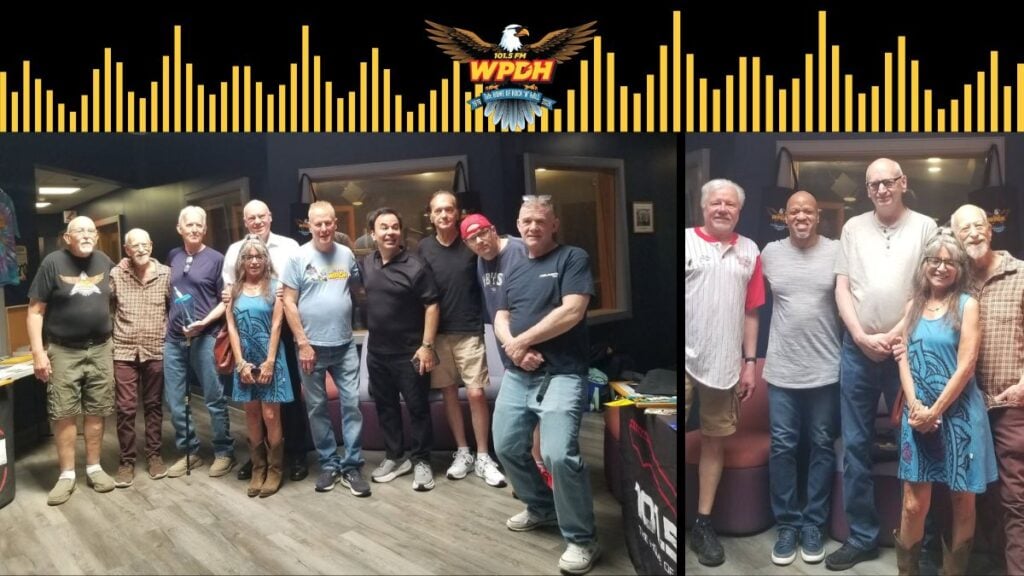
Congratulations to Anthony Verano and the staff at 101.5 WPDH. The Hudson Valley Classic Rock station celebrated its 50th anniversary by inviting back former DJ’s and staffers for alumni weekend. I listened to some of it and thought it was a cool trip down memory lane. Hearing Bob Wolf, Rockin’ Steve, Greg O’Brien, Freddie Coleman and others was a nice touch. I spent less than two years at the station earlier in my career working with Marc Cooper and Mikey Colvin. They are a huge part of the station’s history. Both passed away years ago. Coop’s wife Nona and son Thomas did make an appearance as did Mikey’s brother Steve, which was great.
101.5 WPDH Alumni Members return to their former stomping grounds
I’ve loved the band Shinedown for 20+ years. Their new album EI8HT is highly recommended. Safe and Sound and Three Six Five were immediate favorites when I heard them prior to the record’s release, but Burning Down the Disco is catchy as hell too. Outstanding work by Brent, Zach, Eric and Barry. I’m looking forward to catching the band live on Saturday, July 18th in Albany, NY.
A tip of the cap to Rich Eisen for the “This Was SportsCenter” series. It is fantastic. If you grew up on SC like I did, check it out. The opening episode with Dan Patrick was excellent and shared things you likely didn’t know especially DP’s friction with Stuart Scott.
Josh Hart of the New York Knicks probably pissed off upper management, but his remarks were spot on. Ticket prices for the NBA Finals are out of hand. Most fans are not paying $11,000 for the worst seat or $60,000 for the best seat to one game, no matter how exciting it is. I’ve loved the Knicks for more than four decades. I want to see them win a title but my mortgage and son’s college loan matter more than attending a basketball game. The out of control pricing is embarrassing for the NBA, though I doubt they will see it that way.
Barrett Media produces daily content on the music, news, and sports media industries.Sign upfor our newsletters to stay updated and get the latest information right in your inbox.
Scott Pelley made sure everyone knew exactly how he felt on his way out. His departure from 60 Minutes wasn’t quiet, and it wasn’t subtle — it was a public indictment of CBS News leadership that reverberated across the industry. Whether you admire his candor or cringe at his delivery, one question lingers above all others: what happens to Scott Pelley now?
The TV business has a long memory. Executives talk, networks compare notes, and reputations travel faster than any press release. So when a broadcaster of Pelley’s stature exits with a microphone hot and grievances aired, the industry doesn’t just move on. It takes notes.
Pelley’s final words on 60 Minutes weren’t just a farewell — they were a flare gun fired directly at CBS News management. That move might have felt cathartic in the moment, but it comes with a cost he’ll be paying for a while.
The Executive Question
Here’s the uncomfortable truth: most TV executives don’t care who’s right. They care who’s manageable. And once a broadcaster earns the label of “difficult,” it’s nearly impossible to peel off.
The questions that’ll follow Pelley into every future meeting are predictable. Will he go rogue if he disagrees with editorial decisions? Is he willing to air grievances publicly if something doesn’t go his way? Is he more trouble than he’s worth? These aren’t unfair questions — they’re the exact ones any network president would ask before signing someone to a contract.
It’ll take an executive who’s supremely confident in their company’s standing, their own political capital, and their ability to manage a strong personality to make that bet on Pelley. That narrows the field considerably. The networks most capable of absorbing that risk are also the ones least likely to rock their own boats.
Furthermore, this isn’t just about Pelley’s relationship with management. Talent also affects the morale of a newsroom. If colleagues wonder whether he’d go public with internal frustrations, that dynamic creates friction before he’s even been assigned a story.
The Audience Problem
Pelley’s path also runs into an audience that’s already divided. Some viewers see him as a journalist who stood up for editorial independence — a truth-teller pushed out for refusing to play ball. Others view him as a partisan figure who steered 60 Minutes toward a particular ideological lane for years. Neither camp is entirely wrong in its own mind, and that’s precisely the problem.
Credibility is the currency of serious journalism. It’s the one asset that, once damaged, doesn’t easily return. Even if viewers who weren’t regularly watching 60 Minutes believe Pelley tilted left, perception becomes reality fast in this business. A potential new employer has to weigh whether his presence attracts a loyal audience or triggers an immediate backlash.
However, time does tend to soften even the sharpest edges. Careers have been rebuilt from tougher spots. Pelley’s résumé still carries real weight — he’s a former anchor of the CBS Evening News and a longtime face of the most-watched newsmagazine in television. That’s not nothing.
He also brings versatility. Pelley could fit in a long-form documentary role, a streaming platform’s news operation, or even a podcast environment built around serious journalism. Whether a traditional network takes the leap or a newer player rolls the dice, the story of what comes next for Pelley is one worth watching closely.
The window isn’t closed. But it’s definitely smaller than it was a week ago.
Barrett Media produces daily content on the music, news, and sports media industries. Sign up for our newsletters to stay updated and get the latest information right in your inbox.
We’re less than a month away from the country’s 250th birthday. Hence, America 250 as it’s being marketed to audiences. If you haven’t seen the themed commercials, you likely have seen the content insertion on your television screen. America 250 logos on the glass behind the net at the Stanley Cup Final. Overlay graphics on nearly every live sports event, and more. In a climate where people prefer fewer commercials and advertisements, the next three weeks will be an overload of messaging, marketing, and branding, all in the name of celebrating our patriotism.
Few things unite a country like sports. The FIFA World Cup will rally feelings of nationalism, just like we felt earlier this year when Team USA won gold over Team Canada in ice hockey. However, sports radio looks, sounds, and feels very bare when it comes to America 250. For example, simply scanning social media, very few stations are changing logos or branding from the same old, same old to recognizing the red, white, and blue. Even scanning radio stations from across the country, very little promos or station branding recognizing America 250 in less than a month.
It makes me wonder about the level of planning and creativity on a local level for once-in-a-lifetime moments like America’s semiquincentennial birthday. Especially in a year when the country is hosting the world’s biggest sporting tournament and welcoming the eyes of the globe to the United States.
It doesn’t have to be over the top, and it must be more than just a company wide cash contest theme.
Why It Matters
Simple subtitle changes for the next few weeks could go a long way. With advances in AI and design tools, is it really difficult to adapt a station logo to represent the country’s colors? Maybe some more patriotic feels in the station imaging. How about a special advertising campaign saluting local heroes who have defended and continue to defend our independence?
How you look and sound matters. Especially when moments demand it. Branding matters. Presentation matters. Showing that you’re part of a larger cultural moment matters.
Look around your local communities. You’ll see an endless list of events, tributes, festivals, and partnerships welcoming the moment as a shared experience. What’s a more shared experience than sports and the content hubs surrounding teams, games, and players within local communities?
I’m not ignoring the current landscape of our political divides. It’s no secret that it’s become harder than ever to find commonality when most issues are divisive. Yet for more than a century, radio has informed communities, entertained generations, and connected Americans through moments of celebration, challenge, and change. From fireside chats and wartime broadcasts to moon landing coverage, breaking news, and local storytelling, radio has always had a unique ability to bring people together.
Historically, the goal of sports radio has been to be the voice of a community. The format serves as both defender and challenger of local teams. Nothing unites a city quite like rallying behind a sports franchise.
Look at what’s happening in New York City right now. Have you ever seen that town come alive for a single team in recent memory? If the Knicks win their first NBA Championship since 1973, the celebration may never end. If you’ve paid attention to what WFAN and ESPN New York have been doing throughout the postseason, they’re all in. That’s what great local sports radio brands do. They embrace the moment when a celebration is at hand.
Sports Radio Defines America
Sports remains one of the few places where communities still gather around a common identity. Fans may disagree on politics, economics, education, or virtually every issue dominating today’s headlines. Yet they can still sit side-by-side at a game, wear the same colors, celebrate the same victory, and feel connected to something larger than themselves.
That ability to create connection is exactly why America 250 should matter to sports radio.
The industry often talks about being local. It talks about serving communities. It talks about building meaningful relationships with listeners. America’s 250th birthday presents an opportunity to demonstrate those values rather than simply talk about them.
For sports radio brands, this isn’t about becoming a history station or replacing sports content with patriotic programming. It’s about recognizing a major cultural moment and finding authentic ways to participate in it.
Maybe that means asking listeners to share their favorite local sports memories. Maybe it’s producing short features on the athletes, coaches, broadcasters, and teams that helped shape a city’s identity. It could even be spotlighting moments that united a fan base and became part of a community’s history.
Maybe it’s partnering with local organizations, museums, veterans groups, or community leaders participating in America 250 celebrations. Or creating a digital series highlighting the most important sports moments in a market’s history.
Those are all great ideas. But it could be as simple as refreshing logos, imaging, websites, social graphics, and station liners to acknowledge a once-in-a-generation milestone. The execution matters less than the effort. What listeners notice is whether a brand is paying attention.
One of the biggest challenges facing sports radio today is standing out in an environment where scores, highlights, opinions, and breaking news are available everywhere. Every station has access to the same headlines, and reacts to the same stories. Every social account is competing for the same audience attention.
The brands that separate themselves are the ones that create emotional connections. America 250 offers a natural opportunity to do exactly that.
Listeners are going to spend the next several weeks surrounded by messaging tied to the country’s semiquincentennial celebration. They’ll see it on television, online, at sporting events, festivals, parades, and community gatherings. When sports radio ignores the moment, it risks appearing disconnected from the communities it serves. When it embraces the moment, it reinforces its role as a local companion and community leader.
The timing couldn’t be better.
America’s 250th birthday arrives during a summer when the United States is hosting the FIFA World Cup. International attention is focused on the country. National pride is amplified. Conversations about American culture, history, and traditions are naturally becoming part of the public dialogue.
Sports radio should have a seat at that table.
The Last Shared Experience
After all, sports have helped tell America’s story for generations. From baseball becoming the national pastime to football evolving into the nation’s dominant entertainment property, sports have consistently reflected America’s growth, challenges, successes, and aspirations.
Those stories are radio’s sweet spot. They create engagement. They create emotion. Most importantly, they create memories.
For an industry that routinely searches for new ways to deepen audience relationships, America 250 provides a blueprint. The opportunity isn’t simply to wrap a logo in red, white, and blue. It’s to remind listeners that your station is part of the community’s story. That you’re paying attention to the same moments they are. That you’re participating in something larger than a ratings period, a quarter-hour, or a social media impression.
That’s why America 250 shouldn’t be viewed as another marketing campaign or corporate initiative. It should be viewed as an opportunity to remind audiences what great local sports radio does best.
It celebrates communities, tells stories, and brings people together. And if there was ever a moment that called for all three, it’s the 250th birthday of the United States.
The stations that embrace it won’t just look patriotic for a few weeks. They’ll demonstrate that they’re actively participating in one of the most significant cultural moments their listeners will ever experience.
Barrett Media produces daily content on the music, news, and sports media industries. Sign up for our newsletters to stay updated and get the latest information right in your inbox.
Taylor Swift is getting married. This much we know. And as Barrett Media’s resident Swiftie (you didn’t think it was Mamola, did you?), I am obliged to “clown” and at least pretend to believe the latest wedding timeline could be true. TMZ and Page Six are reporting that Swift and Travis Kelce will exchange vows at Madison Square Garden on July 3rd — in front of over 1,000+ guests — in the middle of one of New York City’s busiest holiday weekends.
The city will simultaneously host Fourth of July celebrations, the Sail 250 maritime event, and a FIFA World Cup match across the river at MetLife Stadium. Most markets have a similar situation of multiple major events happening that weekend.
But for radio, and especially pop radio, the Swiftie wedding tops even the 250th anniversary of our nation. I said what I said.
This, my friends, is a programming gift. Radio doesn’t get moments like this very often. The question isn’t whether to engage. The question is whether stations will engage well — or squander it with generic countdowns and lazy content. Maybe it won’t happen until a random day months from now, and maybe it will even end up being in my home state of Rhode Island after all. But just in case we’re only weeks away from America’s royal wedding, let’s get prepared!
Here’s some thoughts on how to do it right.
Build a Listener Game Around the Mystery
The secrecy surrounding this wedding is part of the story so make it part of the fun. Reports indicate Swift has avoided physical invitations entirely, communicating with guests only by text. There are even suggestions she’s sharing slightly different details with different guests to identify leaks. This all could be made up but also does track with Swift’s long history of meticulously planned “Easter eggs” throughout her career.
Turn it into a listener game. Call it the Tay-Wedding Pool, Tay Day Predictions, The Speak Now or Forever Hold Your Peace Pool… you get the idea, just be punny. Let listeners submit predictions — the dress silhouette, the designer, the first dance song, which celebrity guest is the first to post a pic online from the wedding, whether Jason Kelce cries during the vows or takes his shirt off at the reception. Award points throughout the week as details leak. Keep a running leaderboard on your station socials. This is multi-day engagement built around something listeners already care about. That’s not filler. That’s strategy.
Use Your Clients & Partnerships
iHeartRadio’s Z100 has a standing relationship with the Empire State Building. July 2nd or 3rd would be amazing to activate it. Coordinate a light show synced to Taylor’s music. Give listeners a reason to look up — literally. That’s the kind of visual moment that lives on social media long after the broadcast ends.
Local stations in other markets shouldn’t sit this one out either. If your city has a skyline landmark, a public space, or an outdoor venue partner, this is the weekend to call in a favor and make something happen. Once the wedding has happened and details come out surrounding things like the cake, do you have a local bakery client who could replicate it for your morning show to taste test it on-air?
Play It Across Formats — Including Sports Radio
This isn’t just a pop radio story. Travis Kelce is one of the biggest names in the NFL. Sports stations have legitimate standing here.
Pair a morning show sports host with a pop counterpart for a cross-format segment. Talk to your radio buds across the hall. Run the debate: “Best man speech — heartfelt or chaotic?” or “How many times does Jason Kelce cry?” Sports radio listeners will engage with this. It’s summer. The NFL season hasn’t started. Give them something fun.
Build a Long Weekend Programming Arc
Don’t treat this as a one-day event. Start the build on Monday, June 29th. This could be morning show topics for the entire week counting down to July 3rd. Each day, focus on a different element — the guest list, the venue, the music, the fashion. Call it “The Era of I Do” or something your brand can own. By the time the actual day arrives, your audience is already invested.
The July 4th fireworks give you a natural button on the whole weekend. Frame Taylor as America’s own royalty for the holiday. Position your station as the soundtrack to Taylor Swift’s summer wedding.
Don’t Miss the Moment
Radio has sometimes been slow to seize cultural moments in the streaming era. We can be our own worst enemy. That’s part of why audiences drift. Events like this one — massive, emotional, celebrity-driven, location-specific — are exactly where broadcast has an advantage over an algorithm. No playlist on Spotify is going to send a boots-on-the-ground morning show “reporter” to Midtown Manhattan on July 3rd, but I could see New 102.7’s Karen Carson In The Morning doing it. No streaming service is running a listener contest around the wedding vows. And no one can have as much real-time fun with this as we can.
This is radio’s sweet spot. Don’t miss it.
Barrett Media produces daily content on the music, news, and sports media industries. Sign up for our newsletters to stay updated and get the latest information right in your inbox.
A lot of Classic Rock/Hits programmers tend to think of nostalgia as a dirty word. They constantly focus on contemporizing their radio stations, making sure the content between records feels current — even if the music being played is older.
That’s an excellent golden rule, and I would never say we should give up on that pursuit. But maybe we should also think about ways to take more advantage of the nostalgic feelings our music provides. Regardless of where you stand on the political spectrum, many people are uncomfortable with how things are today and appreciate harkening back to easier times.
If you know me, it won’t surprise you that my inspiration for this idea starts with pizza. According to an article on Quartz, Pizza Hut is going retro at over 150 of its sit-down restaurants across the country. As a kid, going to Pizza Hut for dinner was a treat. Not only was there a total Italian eatery vibe — checkered tablecloths, a salad bar — but there was always an arcade game if you could get your parents to hand over some quarters. All of that is included in the refit, along with the return of Pizza Hut’s Book It program, which rewards students with a free personal pan pizza for hitting monthly reading targets.
When Research Proves the Point
This is different from radio, where we rarely research a concept before it hits the air. But Pizza Hut’s parent company, Yum Brands, evaluated the retro concept at several stores, and the response was overwhelming. The locations were drawing visitors from far outside the local area.
But here’s the part most relevant to our world. The company says the appeal to consumers is emotional. What draws people in is recapturing the feeling of eating dinner with family and friends they love. I find that fascinating — helping people recapture positive feelings from the past is right in our wheelhouse.
Heinz Bottles Up the Same Feeling
While pizza is still my favorite food, my father would probably tell you that growing up, what I really liked was ketchup. I put it on everything. And, strangely enough, it’s my second example of companies outside of radio embracing nostalgia.
Heinz is bringing back the iconic eight-sided, 14-ounce glass ketchup bottle that was a staple in homes for years. It’s been available at restaurants, but not for individual consumers — until now. According to an Adweek article, it’s getting a limited-time engagement at Walmart stores. Keep in mind, this is the same bottle that sits in the Smithsonian and was immortalized by Andy Warhol. There’s also a tie-in to Classic Hits — Carly Simon’s “Anticipation” still gets an occasional spin at a few stations, having served as the ketchup’s commercial theme song for years.
Todd Kaplan, the company’s chief marketing officer, says Heinz understands that plastic squeeze bottles fit people’s lifestyle today. But the quote says it all: “they can’t recreate the distinct experience of glass — the weight in your hand, the familiar look on the table, and the ritual of tapping the iconic ’57’ sweet spot to get the perfect pour.”
What Radio Can Do That Brands Can’t
The examples keep coming from outside the radio world. They tell me injecting some nostalgia into our Classic Rock/Hits approach might be the right move. Not living completely in the past — but finding ways to embrace it.
The low-hanging fruit might be as simple as having hosts occasionally focus their content on what else happened the year a song was released. A step further could be an updated version of the audio montages that used to run in the syndicated Flashback show, spotlighting a certain year. C’mon — admit it, nearly every station used to pirate those and use them elsewhere. If it resonated with listeners then, there’s no reason a similar approach wouldn’t work today.
The Localization Advantage Only Radio Has
And the best part is that your station can do something Yum Brands and Heinz can’t — localize. They can’t tailor each retro pizza location or ketchup bottle to your market like a radio station can. Finding a local way to embrace the times people are longing for could be a great way to get attention and maybe even generate some word-of-mouth that goes beyond your existing cume.
Completely abandoning the present isn’t a good plan for any brand — including your station. But finding ways to embrace the past as part of your overall appeal to listeners might prove to be as satisfying as seeing that last drop of ketchup slide out of an eight-sided glass bottle.
Barrett Media produces daily content on the music, news, and sports media industries. Sign up for our newsletters to stay updated and get the latest information right in your inbox.
Many programmers have felt it. That quiet unease that settles in after a rough ratings period, or after a conversation that didn’t quite add up. Sometimes it’s nothing more than paranoia. Sometimes it turns out to be something much more significant.
The reality is that radio stations rarely wake up one morning and decide to flip formats. Major changes leave clues. They surface in meetings, in budgets, in body language, and in the questions that suddenly start getting asked. By the time the new logo appears and the press release goes out, the decision was almost certainly made weeks — if not months — earlier.
Understanding the warning signs won’t always change the outcome. But it gives you the chance to make your case, protect your team, and approach uncertainty with clear eyes instead of blind optimism.
1. Revenue Has Become a Bigger Problem Than Ratings
Programmers are wired to focus on ratings. It’s how we keep score. It’s how we measure whether the work we’re putting in is actually connecting with an audience.
Owners focus on revenue. Always have. Always will.
When budget conversations start happening more frequently than ratings conversations — when the topic dominating every leadership meeting is sales performance rather than audience growth — it’s a signal that management is asking harder questions about the station’s future viability. A format can survive a bad book. It can survive two bad books. What’s far more difficult to survive is a revenue trend that keeps moving in the wrong direction year after year, with no realistic path to recovery.
2. Closed-Door Meetings Suddenly Become Common
Every company has private conversations. That’s normal. What’s not normal is when those conversations suddenly multiply, and programming is consistently the last department to know anything.
Pay attention when the station manager starts disappearing into conference rooms more than usual. And when attention when regional or corporate executives show up with no clear agenda. Pay attention when conversations that used to happen in the open suddenly shift behind closed doors. Leadership teams evaluating major strategic changes don’t always announce what they’re considering. But they almost always telegraph it through their behavior long before any formal announcement.
3. Research and Competitive Analysis Suddenly Increase
There’s a big difference between a company that regularly studies the market and a company that suddenly wants to know everything about it. When management starts commissioning additional research, asking pointed questions about competitor performance, and having detailed conversations about audience opportunities and format gaps in the market, it rarely happens in a vacuum. Companies don’t invest time and money studying alternatives unless they’re at least considering making a move. The research itself is often the first visible step in a longer decision-making process.
4. Budgets Tighten and Hiring Stalls
The open position that doesn’t get filled. The marketing spend that keeps getting delayed. The contest budget that quietly disappears. The equipment upgrade that gets kicked to next quarter, and then the quarter after that. When ownership is genuinely uncertain about where a station is headed, discretionary spending almost always slows down while decisions are being evaluated. It’s difficult to invest aggressively in something that may soon look very different. A frozen budget isn’t always a sign of financial trouble at the company level. Sometimes it simply means the people holding the checkbook aren’t sure what they’re building yet.
5. Leadership No Longer Believes the Station Can Win
This is the one that matters most.
Stations can survive poor ratings. They can survive weak revenue periods, talent departures, format adjustments, and economic downturns. Radio history is full of comebacks that happened when the odds looked terrible. What stations rarely survive is the moment leadership stops believing the format itself has a future. Once ownership reaches the conclusion that a different format gives them a better chance to succeed in that market, the conversation fundamentally shifts. It’s no longer about fixing what exists. It’s about replacing it.
You can often sense this change before anyone says it out loud. The passion is gone from discussions about the station’s potential. The pushback you used to get when you asked for resources disappears — not because things got easier, but because nobody is fighting for the same vision anymore.
No Final Vote
Perhaps the hardest part of being a programmer is accepting that we don’t always get the final vote.
Most of us believe in our brands. We should. We’ve invested years building them, defending them in meetings, and spending countless hours trying to make them better. That commitment is real, and it matters. But it doesn’t always determine the outcome.
Sometimes the clock simply runs out. Market conditions shift. Revenue realities become impossible to ignore. And sometimes the people elsewhere in the building have arrived at a different conclusion about where the station needs to go.
That doesn’t mean they’re right. It doesn’t mean you’re wrong. It means the business has reached a crossroads, and someone with authority has decided to take a different road.
The best programmers understand that most business decisions aren’t personal, even when they feel that way. Be passionate. Fight for your format. Present your case as clearly and compellingly as you can. But if the decision ultimately goes the other way, recognize it for what it is — a business call made by people who are accountable for results you may never fully see.
Every station eventually reaches a crossroads. Some survive it. Some reinvent themselves completely. And some become the next format on the dial. The ones who navigate it best are usually the ones who saw it coming and chose to stay clear-eyed all the way through.
Barrett Media produces daily content on the music, news, and sports media industries. Sign up for our newsletters to stay updated and get the latest information right in your inbox.
The radio diary service, whether Arbitron or Nielsen, has been “currency” for over 60 years. Think about that — what can you think of that’s around today, essentially unchanged for over six decades? Sure, the diary’s design has been updated from time to time and the method of recruiting potential respondents went through a major upheaval thanks to the demise of landlines and the near-universal penetration of cell phones. Still, the use of a paper diary to measure seven days of radio listening has survived, which is a tribute to how well it works. But all good things must come to an end someday.
On May 28th, Nielsen held a webinar to talk about potential changes to the diary service, some of which can be considered radical. This week, I’ll set the stage and next week’s column will offer my thoughts on the specifics of Nielsen’s proposed changes.
Consider how we arrived at this point. Long ago and far away, diary service response rates, after adjustments, were in the 30-40% range. Other than government surveys, which have now dropped to that level, that was excellent despite what the Media Rating Council said. Today, response rates are typically in the single digits.
The world has moved online. While there were attempts around 2006-07 that I’ve noted previously in this column, Nielsen has implemented an online version of the diary, named mSurvey, this year. Per Nielsen’s disclosures, about 10% of the sample will be using the mSurvey, at least for now.
A Brief History of Diary Service Competition
For so many years, radio was a powerful medium. Operators made plenty of money and while they would gripe about the price that Arbitron charged, if the dollars rolled in and margins stayed high, they could deal with it. Competitors came and went. Some arrived around 1980 and for those of you in my demo group, names like RAM, Burke, and Trac-7 might trigger a brain cell or two.
Then there was Birch, which was probably the strongest competitor that Arbitron ever faced. I was part of Birch in South Florida when the announcement was made in late 1991 that the company was shutting down. Later, Nielsen took on Arbitron with an ill-fated diary service before eventually buying the company in 2013. Frankly, the diary has a hell of a track record.
But it’s 2026 and times have changed. The webinar spoke about profound methodological changes that will be here very soon. Nielsen can talk all they want about testing, but barring complete disasters, these changes are a foregone conclusion. And while the proposals are grounded in methodological issues, like any company, it also comes down to money. The diary service costs more to run every year while the radio industry continues to contract.
What Nielsen Is Proposing — And What’s at Stake
Today, Cumulus is out while the company challenges Nielsen’s sales policies on antitrust grounds. Sure, the judicial issue is the accusation of “tying” the purchase of local markets to accessing Nationwide at a reasonable price, but Cumulus stated that the ROI on Nielsen data doesn’t work financially in more than half of their markets. Other companies, such as Good Karma, have walked away from Nielsen, but iHeart and Audacy continue to subscribe.
What Nielsen is proposing is both radical and evolutionary at the same time. For non-PPM metros, changing the seven-day paper diary is big. Moving a proportion of the sample to a two-day online questionnaire — 15-20 minutes at one sitting — with modeling to build a seven-day cume is radical. Using sample from different vendors rather than a probability sample is even more radical. However, modeling and non-probability sampling have been around for a long time. Nielsen, and Arbitron before them, didn’t feel comfortable going in that direction and became laggards — but probably in a good way — so what might have been evolutionary over the last two decades or so is now a radical shift.
I say “good way” because the industry prizes consistency over just about any other ratings outcome. Walt Sabo has harped on the industry’s dependence on AQH audiences — small — against cume audiences — large — and he’s right. I’ve said the same thing for years. Regardless, the industry’s currency has been one that is subject to fluctuations, sometimes wild ones, based on a couple of diaries. With radio’s slow but consistent declines in audience, a couple of diaries — or meters, for that matter — can kill a station or even a cluster for months with sometimes dire financial consequences.
There is a bigger issue to consider: the more Nielsen makes the measurement system simpler for respondents, the more they invite competition. If Nielsen says they can get a seven-day cume from two days of listening — similar to the Birch system of 35 years ago — and use convenience samples with acceptable results, anyone can do it. Hire a couple of good statisticians to build the models or train an AI model. And if anyone can do it, a new competitor can charge less than Nielsen, perhaps a lot less. Just roll that around in your mind for a moment.
Let’s meet again next week.
Barrett Media produces daily content on the music, news, and sports media industries. Sign up for our newsletters to stay updated and get the latest information right in your inbox.