Julie Ertz and Kealia Watt are launching a new women’s soccer podcast as Sinclair’s AMP Sports debuts Style of Play on June 2. The weekly series plans to feature insight, storytelling, and analysis from two of the game’s most accomplished players.
What We Know: Sinclair’s AMP Sports is launching Style of Play. A weekly women’s soccer podcast hosted by Julie Ertz and Kealia Watt. The show premieres June 2 on all major podcast platforms, with full video episodes on YouTube. For both women, this marks a significant media pivot. Ertz, a two-time World Cup champion, extends her legacy beyond playing. Meanwhile, Watt — who debuted as an NWSL analyst on Amazon Prime in 2024 — deepens her growing broadcasting footprint.
What They Said: Rob Weisbord, COO and President of Local Media at Sinclair: “The growth of women’s soccer is undeniable. Style of Play gives us an opportunity to connect fans with the voices and perspectives of athletes who have competed at the very highest level.”
Julie Ertz: “As we move closer to the Women’s World Cup in 2027, there’s never been a more exciting time to be part of the conversation. Celebrating the continued rise of women’s soccer and women’s sports.”
Kealia Watt: “We want to create a space where athletes can speak authentically, from the biggest moments on the pitch to the stories, challenges, and perspectives that happen behind the scenes, and we’re excited to help shape and elevate that conversation with Style of Play.”
What Remains Unclear: The debut episode and any guest appearances involved with it are currently unknown. It’s also unclear how the show could expand heading into the 2027 Women’s World Cup cycle. Though that buildup appears central to the strategy.
What It Means: Women’s sports media continues gaining serious momentum. This launch reflects a broader industry push to build credible, athlete-driven content. It also helps that both Ertz and Watt are more familiar to male audiences through their family history in sports. That could lead to more tie ins potentially down the road with content or brand collaborations with the podcast. Since moving into podcasting in 2022 and developing AMP Media, Sinclair has continued to build a multi-pronged approach to capitalizing on digital content generating revenue and audience growth.
Barrett Media produces daily content on the music, news, and sports media industries. Sign up for our newsletters to stay updated and get the latest information right in your inbox.
What We Know: Beasley Media Group confirmed the trio’s departure after a remarkable 22-year run in Charlotte. Together, they earned 17 ACM and CMA Award nominations and won two ACM Awards. Additionally, Catherine Lane separately hosted middays on the station for 27 years. Traffic reporter Captain Jim stays on with Beasley and continues his morning duties across all stations.
What They Said: “Charlotte and the Carolinas welcomed us like family,” Tanner said. “I’ll always be grateful for the friendships, memories, and incredible experiences along the way.” Program Director Cameron Moore added, “What began as a radio show has become a daily tradition shared with generations of listeners.”
What Remains Unclear: Beasley has not yet named a replacement morning show for WSOC-FM. The company says further details about the future lineup will come soon. Meanwhile, no timeline exists for that announcement. Listeners are left wondering what direction the station takes next.
What It Means: The Tanner team’s exit continues a broader industry trend of veteran morning talent stepping away from the mic. Across radio, long-tenured personalities are choosing retirement over reinvention. Therefore, stations must increasingly decide between developing new local voices or importing established talent. For Beasley and WSOC-FM, the answer to that question will define the next chapter of mornings in Charlotte.
Barrett Media produces daily content on the music, news, and sports media industries. Sign up for our newsletters to stay updated and get the latest information right in your inbox.
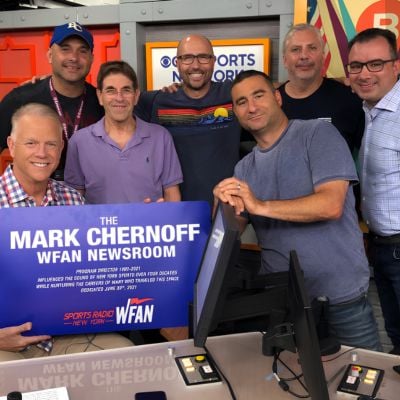
The world of sports radio is much different than it was in the very early beginnings of the format. Last week, a member of sports radio’s original fraternity decided the time was right to walk away. His name is Eddie Scozzare, and he served in multiple capacities behind the scenes at Audacy’s WFAN since 1989.
I was eight years old when Scozzare began his journey through the halls of the New York City sports talk mecca. By the time I began my career in sports radio, Scozzare was in his 14th year of service. Now, after 37 years working as the last line of defense before sound hit radios and streams across the country, Scozzare was celebrated in a sendoff many never receive.
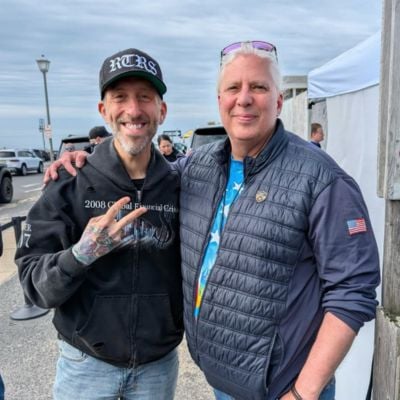
However, for Scozzare, it was another day on the job. Instead of sitting back and enjoying the adoration directed at him, he continued fulfilling his role through his final shift. During Friday’s Audacy Kickoff to Summer live broadcast on the Jersey Shore, Scozzare was seen meeting and greeting dedicated WFAN listeners, both new and old.
Signing autographs. Taking selfies. Reinforcing the bond that tied the dedicated listenership to WFAN throughout his 37 years of service to the brand. What’s unique about Scozzare is the distinctiveness of his legacy at WFAN. He was never an on-air talent. Instead, his voice was heard through music, drops, montages, and the consistent quality of the audio delivered to so many people over the years.
Every talent will tell you the importance of a solid producer. During Scozzare’s tenure at WFAN, he worked with many talented personalities while also mentoring countless others. Throughout many conversations about what made Scozzare special to the WFAN brand, I received a thousand different answers to the same question.
Following Scozzare’s final day at work, I reached out to many members of the WFAN family, past and present. Each had a unique story to tell about their interactions with Scozzare. Together, those stories illustrated how his calm and focused approach to the role earned him the legacy he now leaves behind.
While the book has officially closed on Scozzare’s career at WFAN, I asked if there was a singular characteristic he possessed that producers around the country could use to enhance their own role.
WFAN Celebrates Eddie Scozzare
*Editor’s Note: Answers have been edited for clarity and length.*
Mark Chernoff (Former WFAN Program Director) – “Eddie was always able to get along with everyone. He always figured out the best way to deal with each show he was involved with.
Getting along with people is a real key to being a successful producer. A good producer should also know what the hot topics are and be able to keep the hosts on track. Plus, of course, change on a dime if necessary.”
Sal Licata (Former WFAN Host/Producer) – “Eddie was much more than just a producer. He was the glue to the entire WFAN “locker room.” His greatest skill set was his kind & caring nature.
He made everyone there feel important. He knew how to handle all different personalities. Got along with everyone.
He also cared about the on-air product. He was the best on the board because he listened and paid attention to the show. Eddie understood what’s funny, and has incredible timing because he listened and knew what clicked.
It sounds simple but 95% of producers and board ops I’ve worked with, including myself, don’t listen or pay attention to the show. That part people can do if they want. The other stuff is what made Eddie Scozzare special & impossible to replace.”
Shaun Morash (WFAN Producer ‘Evan & Tiki’) – “Nobody cares about your sports opinions at a station until you’ve established yourself with your work ethic.
No truer words stuck with me and helped me grind for a couple years. Thanks to Eddie.”
Zach Gelb (Former CBS Sports Radio Host/WFAN Fill In Host) – “Treat people the right way. This business can be stressful and filled with egos, and sometimes it can create an awkward work environment.
Eddie was a friend to all, with a calm presence, and truly looked out for everyone.”
Brandon Tierney (Former WFAN Host) – “An absolute master at his craft with impeccable timing and instincts.
Over the years, producing has changed so much. Eddie was never reluctant to chime in and add to a bit, but he wasn’t chasing a microphone. That is not necessarily the case today, perhaps as much as it used to be.
So many young people in the business get their first true break behind the scenes. That constant juggle of trying to do a good job while also climbing a station’s depth chart is tricky. I get that dynamic, but it’s a tough balance.
Eddie truly understood the art of his role. A great producer can make a decent talent sound good. A good talent sound great, and a great talent sound all-time. He never crossed wires, and it’s a testament to his focus and true grasp of the business. Legend!!”
Ryan Hurley (WFAN Program Director) – “Dependability. Eddie is always there and always brings it. That show is amazing, and he’s been a huge part of it for many years in that room. You know that control room with him and Al [Dukes], and you feel great knowing you have one of the best in the business there.
The care he puts into the shows he affects. He helps some of the younger people who come on staff because he makes time for them. Me included. He’s someone who, from day one, was helpful with anything and made me feel at home.
You want a producer to be creative. He did an incredible job adding to the creative side of every program he ever worked on.”
Chris Carlin (Former WFAN Host) – “Patience and kindness. Eddie is an incredible teacher because he leads with both. I learned so much from him — editing, board operation, producing — largely because of the patience he showed while bringing along younger people. He treats everyone with the same warmth, understanding, and respect, and that’s why so many people speak about him with such admiration. Eddie genuinely cares about people, and that comes through in everything he does.”
Evan Roberts (WFAN Midday Host) – “Do your job incredibly well without complaint. That’s what defined Eddie Scozzare.”
Pat Boyle (Westwood One Sports / WFAN Fill-In Host) – “Listen to what made Eddie so successful/famous (incorporating audio drops into the show). You should be trying to add that into your skill set.
Listen to what makes the show great, pick your spots, and don’t be afraid to toe the line.
Eddie was daring, but he was a genius. He knew how to get a reaction from the hosts he worked with while understanding that timing was everything. It’s an art.”
Spike Eskin (Former WFAN Program Director) – “People always talk about what a good guy Eddie is, which is true. But being nice doesn’t let you keep your job for nearly four decades.
Eddie’s greatest skill was understanding that his job was to make everyone else look good. That is a hard job. It requires an understanding of what makes each person around you great and how to make that happen more often.
I think his kindness probably made those around him more receptive. Ultimately, though, it was his ability to thrive in his specific role that made him great at what he did.”
Craig Carton (WFAN Host) – “Eddie was the best listener we ever had, he never missed a thing and that ability made him an important part of our success. Specifically in his ability to hear something and immediately know that it would be a great soundbite at some random time in the future.
He was so much more than just a board-op or producer. He had never played a single sound effect or drop before he became the Boomer and Carton board op in 2008. As our show grew more and more in popularity and he understood the ethos of what we did I asked WFAN to give us instant replay machines so that we could incorporate sound effects and drops etc to add to what we did content wise. Eddie quickly started to build his own library of sound effects and drops and became not just an expert at it but a third voice on the show many days.
What’s amazing to me is the level of mutual trust we had. I never discussed what he should and shouldn’t play and he never told me what sound bites he had. I simply trusted his instinct to do it. He wound up adding an on air dynamic that became like a 3rd voice to whatever we were discussing. All these years later that 3rd voice became like a soundtrack to everything we did and it helped keep us accountable for everything we did and said.
Eddie was the board op of the show in title only, in truth he was as responsible for the sound and success of the show as any of us and that continued long after I left mornings right up until last week when he retired.”
Barrett Media produces daily content on the music, news, and sports media industries. Sign up for our newsletters to stay updated and get the latest information right in your inbox.
Veteran TV reporter Bill Carter is pointing fingers at the White House over the cancelation of The Late Show with Stephen Colbert. Carter told MS NOW that he believes President Trump played a direct role in ending the CBS program.
What We Know: The Late Show aired its final episode on May 21. CBS cited financial losses — reportedly $40 million annually — as the reason for cancellation last summer. Colbert publicly and repeatedly disputed that explanation. President Trump shared a video to his social media accounts following Colbert’s last program which featured Trump dumping Colbert into a trash can.
What They Said: Bill Cater (via MS NOW’s ‘The Weekend’ program): “It’s not a good development for the country, obviously. Certainly the idea that he throws a man in the dumpster at the end of it indicates that he was personally involved… I think CBS, when they capitulated in the lawsuit that Trump filed against ‘60 Minutes,’ was sending a signal. They’re not going to be the independent journalism outfit that they should be. And not just giving up Colbert, but wiping out the time period. They basically said, we’re not even the same business anymore. We’re backing away. We’re giving up on this because maybe it would be too hard to hire somebody who wasn’t going to make jokes about the president.”
What Remains Unclear: Carter’s assertions are just that. The White House has not responded to Carter’s allegations. Furthermore, it remains unknown whether internal CBS communications will ever surface to signal anything other than what’s been said by the network already.
What It Means: Whether or not Carter’s assertions have any fact are simply unknown. Stephen Colbert’s late-night exit ends a legacy brand that CBS revived after bringing over David Letterman in the 1990s. If there is any truth to Carter’s accusations, it would be interesting to see whether the President confirms them.
Barrett Media produces daily content on the music, news, and sports media industries. Sign up for our newsletters to stay updated and get the latest information right in your inbox.
Laura Rutledge is leaving SEC Nation after nearly ten years as host on the SEC Network. She announces today was her final day with the SEC Network in a emotional letter for fans and colleagues alike.
What We Know: Rutledge helped build SEC Nation into one of college football’s premier pregame shows. Her departure, however, is not an exit from ESPN. She continues as a daily presence on NFL Live, serves as a sideline reporter on Monday Night Football, and remains part of major college football broadcasts. Furthermore, her role expands as ESPN gears up for its 2027 Super Bowl broadcast. Matt Barrie will be Rutledge’s successor at SEC Network.
What They Said: SEC Commissioner Greg Sankey praised her legacy directly: “Laura Rutledge has been a cherished part of the SEC Network since it started. Playing a key role in making SEC Nation the top pregame show in college football. Her work ethic, warmth and deep knowledge of the SEC created a strong bond between fans all over the country. Truly capturing what makes our Conference special. We’re so thankful for everything she’s done and wish her all the best as she continues her amazing career in broadcasting. We’re looking forward to seeing Laura on the sidelines at SEC football games this fall!”
ESPN content president Burke Magnus: “For more than a decade, Laura has been a beloved and integral member of the SEC Nation family. Combining her love of college football with her passion for storytelling. As Laura continues to expand her NFL assignments in ESPN’s Super Bowl year, we’re incredibly grateful for everything she has contributed to SEC Network and for the lasting impact she’s made.”
What Remains Unclear: The full scope of Rutledge’s expanded college football duties heading into next season remains unannounced. As well as any additional duties with her continued role on NFL Live and Monday Night Football. Barrie’s official start date on SEC Network also remains unknown.
What It Means: This transition signals ESPN’s confidence in Rutledge at the highest level. Instead of stepping back, she moves toward the NFL’s biggest stage. Meanwhile, Barrie — an 11-time Emmy winner with deep SEC footprint experience — arrives well-positioned to carry the show forward. Ultimately, SEC Nation gets a proven talent, and Rutledge gets a bigger platform.
Barrett Media produces daily content on the music, news, and sports media industries. Sign up for our newsletters to stay updated and get the latest information right in your inbox.
NewsNation is expanding aggressively beyond cable. The network just unveiled four new original podcasts, a brand-new Chicago studio, and a clear strategy to chase audiences living on YouTube and on-demand platforms.
What We Know: NewsNation launched its YouTube channel in May 2020. Yet it already ranks #74 among the Press Gazette’s Top 75 publishers, with 2.7 million subscribers and nearly 2 billion views. Now, the network is doubling down with four new shows. These include Hot Take with Jesse Weber, NewsNation’s Unreported with Meagan Medick, Prove it with Batya!, and The Scoop with Paula Froelich.
What’s At Stake: NewsNation continues to invest in added studio production along with digital first programming. NewsNation recently developed a state-of-the-art podcast studio in Chicago, complementing its existing operations in New York and Washington, D.C. The space features advanced production capabilities to enhance both video and audio storytelling across multiple platforms. Including a four-camera set-up and dual microphone configuration.
What Remains Unclear: It is still unclear whether the added studio components will lead to more products. Also, how quickly new podcasts could emerge. It also remains unknown whether the new Chicago studio will replace or simply support operations in New York and Washington, D.C.
What It Means: NewsNation is sending an unmistakable message: cable alone won’t define its future. By investing in original podcasts and a state-of-the-art production facility, the network is competing directly for the on-demand audience. It is doing so while still serving its cable audience. For a channel that only entered the digital space five years ago, the growth trajectory remains strong. More content is being created to satisfy the demand for engaging programming.
Barrett Media produces daily content on the music, news, and sports media industries. Sign up for our newsletters to stay updated and get the latest information right in your inbox.
iHeartMedia Mansfield/Marion Market President Margie Tasseff is stepping away. The iHeartMedia Mansfield/Marion Market President has announced she will retire on June 1.
What We Know: Tasseff’s career spans nearly four decades with one company. She launched her radio journey in Akron at WDBN and WNIR before joining WMAN/WYHT Mansfield as an account executive in 1987. From there, she steadily climbed the sales ranks. She officially became Market President in 2011 and later expanded her role to include Marion in 2021.
What They Said: Margie Tasseff on the decision to retire: “Spending 39 years with one employer is truly uncommon. I’m deeply proud of what we’ve built together over the years — from the friendships and partnerships to the impact we’ve made through local radio. I’ve been fortunate to grow professionally while working with outstanding colleagues and serving a community that has meant so much to me. These stations will always hold a special place in my heart.”
iHeartMedia area president Matt Bell: “Margie’s passion for this business, her commitment to the Mansfield and Marion communities and the relationships she built over nearly four decades have left an incredible mark on our company and everyone fortunate enough to work alongside her. She has been a trusted leader, mentor and advocate for both our employees and our partners. Her presence will truly be missed. We are deeply grateful for everything she has contributed to iHeartMedia and wish her nothing but happiness and success in this next chapter.”
What Remains Unclear: No successor has been announced yet. It’s unknown whether iHeartMedia will promote internally or conduct an external search. The transition timeline beyond June 1 also remains unaddressed.
What It Means: Tasseff’s departure marks the end of a defining era for two Ohio markets. She built something lasting — loyalty, community ties, and a culture of mentorship. For iHeartMedia, replacing that kind of institutional knowledge won’t be easy. Her retirement is a reminder of how much local radio still depends on relationship-driven leadership.
Barrett Media produces daily content on the music, news, and sports media industries. Sign up for our newsletters to stay updated and get the latest information right in your inbox.
TEGNA has a new leader. The broadcasting company has appointed Patrick Paolini as its Chief Executive Officer, effective June 1, putting a 30-year broadcast veteran at the helm.
What We Know: Paolini arrives from FOX Television Stations, where he served as Executive Vice President of Advertising Sales since 2023. Before that, he led WTTG and WDCA in Washington, D.C., driving that duopoly to the market’s top spot. The hire comes as TEGNA navigates significant legal turbulence. A federal judge recently issued a temporary injunction blocking its pending $6.2 billion merger with Nexstar Media Group. Thus preventing Nexstar from operating TEGNA’s stations while litigation continues. Mike Steib, who became CEO of Tegna in 2024, stepped down after the announcement of the merger’s close in March. He has remained with the company in a non-CEO role but will officially step away this Friday.
What They Said: TEGNA’s Board of Directors offered a collective statement: “Patrick is an ideal choice to lead TEGNA. He brings deep expertise in the broadcast television industry, major-market station management, and high-quality local news, along with a proven track record of driving revenue growth across linear and digital platforms. He is an innovative thinker and a proven leader with an established history of success. We look forward to Patrick’s leadership of this great company.”
Patrick Paolini on accepting the role with TEGNA: “I am honored to be joining TEGNA. I have tremendous respect for the TEGNA brand, for the outstanding local news delivered across its 64 local television stations and hundreds of digital platforms, and for the company’s dedicated employees and local journalists.”
What Remains Unclear: The Nexstar merger situation looms large over this hire. Courts have blocked the deal, and bipartisan Senate scrutiny of the FCC’s approval adds further uncertainty. It’s also unclear how Paolini’s revenue-first background fits into that unresolved picture.
What It Means: TEGNA is signaling stability despite being in an unstable position with its intentions to merge with Nexstar. Bringing in a proven sales and operations leader suggests the company intends to move forward — with or without the Nexstar deal resolved. Furthermore, Paolini’s major-market track record positions TEGNA to compete aggressively on both linear and digital platforms.
Barrett Media produces daily content on the music, news, and sports media industries. Sign up for our newsletters to stay updated and get the latest information right in your inbox.
The 52nd American Music Awards aired Monday from Las Vegas. BTS walked away as the night’s biggest story.
What We Know: BTS won Artist of the Year, Song of the Summer for “Swim,” and Best Male K-Pop Artist. They also opened the show with a high-energy performance of “Hooligan.” Meanwhile, breakout artist sombr earned three wins, including Best Rock/Alternative Song and Album. Queen Latifah hosted the ceremony at MGM Grand Garden Arena.
What’s at Stake: The AMAs remain a key cultural barometer for measuring mainstream music momentum. BTS winning the night’s top prize signals K-pop’s continued dominance in American pop culture. Additionally, sombr’s three-award sweep suggests rock and alternative music is gaining renewed commercial traction. The show’s expanded category list also reflects shifting audience interests across genres.
What Remains Unclear; Taylor Swift led all nominees with eight nods but left empty-handed. Whether that signals a broader shift in fan voting patterns remains to be seen. It’s also unclear how the AMAs’ newer categories — like Breakout Tour and Best Throwback Song — will be received long-term by fans and the industry.
What It Means: his year’s AMAs delivered a clear statement about where music is headed. BTS claimed the top prize while Taylor Swift, the show’s all-time leader with 40 career wins, had an off night despite leading all nominees. Meanwhile, emerging artists like sombr proved that fresh voices are breaking through in a big way. For broadcasters and programmers, the night’s diverse winners signal a prime opportunity to broaden music coverage strategy.
Barrett Media produces daily content on the music, news, and sports media industries. Sign up for our newsletters to stay updated and get the latest information right in your inbox.
There are people in the media business who talk about being ahead of the curve. Then there is Adam Carolla — who actually did it, in a way nobody had done before.
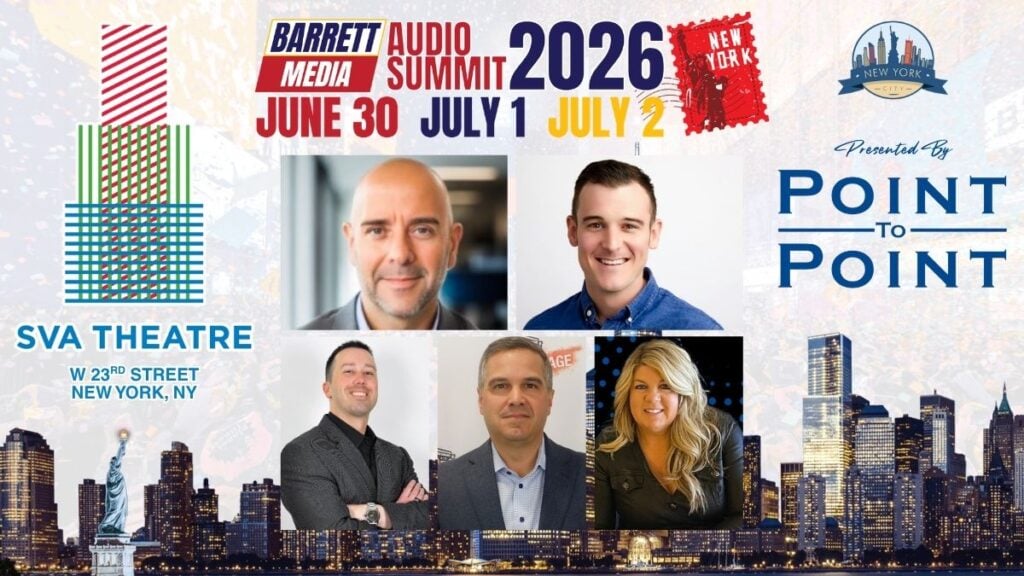
It is my pleasure to announce that Adam Carolla will join us for the 2026 Barrett Media Audio Summit on Tuesday, June 30th in New York City.
Carolla co-hosted Loveline with Dr. Drew for eleven years, reaching millions of listeners across syndicated radio. He co-created and hosted The Man Show on Comedy Central. He is a two-time New York Times bestselling author. His career has moved fluidly across radio, television, film, and digital audio in ways that most personalities never manage. In addition, he was one of two hosts picked by CBS Radio to take over mornings after Howard Stern left terrestrial radio to move to SiriusXM.
When his radio show ended in 2009, Carolla took the leap into podcasting. Many were initially surprised, and questioned if it was the right move. Seventeen years later, Carolla has proven that it was. Today, The Adam Carolla Show delivers more than 30 million downloads a month. All-time downloads for the show are over 700 million across more than 4,000 episodes.
Carolla went from recording episodes in his garage when podcasting wasn’t a mainstream option to becoming the main attraction for PodcastOne. His program receives additional promotional support across all social platforms and a radio partnership with Megyn Kelly’s channel on SiriusXM. In addition, Carolla makes occasional television appearances on Fox News, and continues to perform standup comedy across the United States.
Carolla’s arc — from a local to syndicated radio host to a Guinness World Record to a SiriusXM distribution deal — is exactly the kind of career trajectory that every media professional in the room is trying to understand. How does a broadcaster navigate disruption, platform shifts, and audience fragmentation and come out stronger on the other side? Carolla didn’t just survive those transitions. He created a blueprint for others to follow, helping define what the new landscape looked like.
The session on June 30th featuring Adam Carolla, Jimmy Failla, and Buck Sexton will a candid conversation about all of it. Content strategy, brand building, business instincts, media coverage, and the kind of creative thinking that turns a taxi driver, CIA officer and podcast host into successful media stars. Whether you’re a talent, executive, manager or advertiser, — be in the room for this one. The insights and laughs will be well worth your time.
Plus 5 Additional Speakers
The additional firepower to the Summit lineup doesn’t end with just Adam Carolla. I’m thrilled to welcome FOX News Audio’s SVP John Sylvester, Ramsey Network VP, Hank Fuerst, Audacy Regional VP Michael Spacciapolli, Lotus Broadcasting Las Vegas VP and Market Manager, Natalie Marsh, and WFLA Tampa and WIOD Miami morning host Ryan Gorman. We will reveal the final schedule and details of each speaker’s involvement next week.
Join Us For the Summit
To secure your seat to the 2026 Barrett Media Audio Summit, visit the Summit section at the top of this website. If you are flying into New York for the show, scroll past the speakers for discounted hotel room reservation details. The Summit runs June 30 through July 2 at the SVA Theatre in New York City. News kicks things off on Tuesday, June 30th. The Sports Summit takes place Wednesday, July 1st. And our Music Summit takes us home on Thursday, July 2nd.
Tickets are still available — but the event is now five weeks away and seats are going quickly. Hotel rooms are nearly sold out too. We hope to see you in the big apple this summer.
Barrett Media produces daily content on the music, news, and sports media industries. Sign up for our newsletters to stay updated and get the latest information right in your inbox.