Home Blog Page 200

Why Triton Digital And Nielsen Are Joining Forces to Close the Podcast Measurement Gap

Podcasting has long positioned itself as one of audio’s most exciting frontiers. But for advertisers trying to justify budget commitments, the measurement infrastructure hasn’t always kept pace with the medium’s ambition. That gap is closing. Triton Digital and Nielsen announced a partnership that integrates Triton’s Podcast Metrics Demos+ data directly into Nielsen Media Impact. It gives planners access to podcast audience data alongside every other media channel in their buy.

The announcement carries real weight at a moment when programmatic investment has become a necessary driver of podcasting’s next growth phase.

“The marketplace is what makes this the right time,” said Tunkel. “There’s been a ton of investment in host-read ads and in specific podcast show-level advertising that has a ceiling it can hit. But for podcasting to grow the way it really needs to, it needs to grow programmatically. With access to all of the shows that are out there. Giving investment to new creators. And maybe mid-tier and smaller shows that have dedicated audiences, but don’t get surfaced in planners’ buying tools. When you put them all together, you have scale that can encourage more investment in the space.”

For Tunkel, the core barrier isn’t audience size — it’s planning infrastructure. Brands can measure podcast campaigns in isolation. But what they can’t currently do is show the total impact on reach and frequency within a media plan.

“Until you can get podcasting into the planning end of things, where budgets are initially allocated, podcasting is always going to exist in the experimental budget bucket,” stated Tunkel. “In conversations I’ve had with the major holding companies, they’ve told me they can always carve out a few dollars for podcasting. What they cannot do is tell the brand what the total impact is to their overall media reach, frequency, and incrementality.”

Bringing the Long Tail Into the Plan

The partnership’s architecture hinges on what both executives describe as the mid-to-long tail of podcasting. The hundreds of thousands of active shows that feature substantial audiences but rarely surface in a buyer’s planning tools.

“The main value proposition from Triton is our access to both the census-level download data that we collect from the various podcast hosting companies and content distribution networks around the world, and the nationally representative survey that we have fielded,” said Rosso. “It’s really the intersection of those two things that allows us to understand the audiences to podcasts. Not just the biggest shows, but the mid-to-long tail of podcasting. Which is going to be so important as the industry continues to scale up and where automation, like programmatic, starts to become the primary method marketers use to reach their audiences through podcasting.”

Rosso pointed to the fragmented nature of podcast listening as a critical challenge for advertisers. It’s also a major opportunity for measurement. Shows like The Joe Rogan Experience, The Breakfast Club, and The Daily draw massive individual audiences. But vast quantities of total listening happen across much smaller shows.

“As you start placing campaigns across these broad networks or shows programmatically,” Rosso said, “reach builds up quite rapidly to the point where there will be incremental reach coming from podcasting. This is where being able to see how that reach is incremental to the rest of your media plan, deduplicating that reach and understanding how these audiences between podcasting and your other channels interrelate and support each other, becomes increasingly important as the business scales.”

Tunkel reinforced what makes the data combination meaningful beyond either source alone.

“Big data on its own has limitations, just like panel data on its own has limitations,” stated Tunkel. “Bringing that first-party data to audio is really the first time Nielsen has had first-party data informing our audio audiences. And that’s really exciting and groundbreaking. Those things have to exist together. Paired with the survey data that exists in our core planning tool, getting the identity spine and the fusion that occurs when we bring the Triton Demos+ data into NMI allows it to be fused with all of our other media types.”

From Analytics to Measurement

Both executives drew a firm line between analytics and what this partnership aims to deliver. Publishers have long been able to pull download numbers from hosting platforms and drop them into a presentation. But Rosso says that’s analytics, not measurement.

“When you get into measurement, you’re aggregating across different platforms. Whether it’s different hosting companies or different content distribution networks, and creating a layer of added value where you’re normalizing all of that and making sure things are apples-to-apples comparable,” said Rosso. “Measurement also suggests a level of agreement at the industry level that this is a commonly understood metric. Whereas anybody can have analytics. Buyers like having a third party actually collecting that information, processing it, adding value to it, making sure any inhuman traffic activity is removed.”

The rollout targets later in 2026. Both teams are currently focused on getting publishers, agencies, and brands ready to act on the data when it debuts. Tunkel noted that 3.5 million media plans run through Nielsen’s planning tool each year. It spans five of the six major holding companies. Reach that could make the integration highly pervasive quickly.

“We’re going to spend a lot of time making sure the marketplace is ready for that data when it debuts and that publishers are aware of it as well and ready to be shown within that tool,” the Nielsen Audio Managing Director shared. “That’s what we’re focused on right now.”

Rosso echoed that sense of urgency, making clear the partnership’s goal isn’t to announce and wait.

“We are very much looking forward to actually going live and getting into the marketplace very, very quickly,” the Triton Digital CEO shared. “Our main focus is rolling out this partnership.”

Barrett Media produces daily content on the music, news, and sports media industries. Sign up for our newsletters to stay updated and get the latest information right in your inbox.

Live Nation Verdict: What Happens Next?

0

The states that won an antitrust verdict against Live Nation and Ticketmaster are moving fast. Proposed remedies go before a federal judge on May 21, officially launching the penalty phase.

What We Know: The jury found Live Nation operated as an illegal monopoly. Damages were set at roughly $150 million, tripling to $450 million under antitrust law. That figure aligns with the legal accrual Live Nation disclosed in its latest earnings report. Additionally, Judge Arun Subramanian will adopt a scheduling framework that stretches deadlines into early 2027.

What’s at Stake: The victorious attorneys general have signaled they want more than money. A structural breakup of Live Nation and Ticketmaster remains firmly on the table. Meanwhile, a separate federal settlement — covering fee caps, exclusivity restructuring, and an Oak View Group contract termination — has drawn sharp criticism. A group of Democratic senators, among others, called the deal too soft on Live Nation.

What Remains Unclear: Exactly when discovery begins after the May 21 filing is still uncertain. Subramanian also has a parallel obligation under the Nixon-era Tunney Act, requiring judicial review of the federal settlement. How those two tracks interact could significantly shape the timeline. A clearer scheduling order is expected once plaintiffs formally submit their proposed remedies.

What It Means: Settlement talks are dead, and uncertainty now clouds the entire live entertainment industry. A New York attorney confirmed the states are locked in on remedies — pushing for sweeping structural change. That kind of disruption could freeze venue deals, artist contracts, and touring plans for years. Before this process ends, the business of live music may get significantly harder to navigate.

Barrett Media produces daily content on the music, news, and sports media industries. Sign up for our newsletters to stay updated and get the latest information right in your inbox.

TKO, Arizona Sports & Events Alliance Strike Deal for Marquee UFC, WWE, PBR Events

TKO and Arizona Sports & Events Alliance have announced a partnership to bring premium events to the state.

What We Know: TKO, the owner of UFC, WWE, PBR, and Zuffa Boxing, will bring premier events to Arizona. The deal is for seven events over three years.

What They Said: “We’re excited to build this long-term partnership with the Arizona Sports & Events Alliance to bring some of our biggest events to the state. We look forward to creating unforgettable moments for fans across the region over the next three years.” -TKO EVP for Event Development and Operations Peter Dropick

“Arizona has proven time and again that we are built to host the biggest moments in sports and entertainment, and we are proud to join forces with TKO on this multi-year partnership. This partnership reflects the momentum and innovative spirit of our community, and the dedication to creating high-impact experiences that drive tourism, economic impact and global visibility for our state.” –Arizona Sports & Events Alliance President/CEO Jay Parry.

What Remains Unclear: Which events, specifically, from which entities will be held in Arizona. The Phoenix area has several options to host major events. State Farm Stadium, the 63,000-seat home of the Arizona Cardinals, is one option. Other venue options include Chase Field (home of the Arizona Diamondbacks), and Mortgage Market Arena (home of the Phoenix Suns). The 20,000-seat Desert Diamond Arena also currently hosts a PBR event on the schedule.

What It Means: Arizona has been a major player for premium events for several years. The Phoenix area has become a major events hotbed. It has hosted the Super Bowl three times since 2008. It has also hosted two Final Fours since 2017.

Barrett Media produces daily content on the music, news, and sports media industries. Sign up for our newsletters to stay updated and get the latest information right in your inbox.

News Radio KBNW Debuts in Spokane

0

There is a new news/talk radio station in Spokane. KBNW has debuted in the Eastern Washington market.

What We Know: 1230 KSBN and 107.1 KBNW-FM will now broadcast a news/talk format. Washington State Association of Broadcasters President Keith Shipman owns the station. The company struck a deal to purchase the signals in February. KSBN-AM is a Class C signal with 1,000 watts of power. KBNW-FM is a Class C signal with 25,000 watts of power. The FM signal is licensed to nearby Deer Park, Washington.

Included in the station’s daily lineup are:

  • 6-9 AM: Spokane’s Morning News
  • 9 AM-12 PM: Armstrong & Getty
  • 12-3 PM: The Lars Larson Show
  • 3-4 PM: The Ramsey Show
  • 4-6 PM: Spokane’s Afternoon News
  • 6-9 PM: The Ramsey Show
  • 9 PM-12 AM: America at Night with McGraw Milhaven

What They Said: “Local broadcasting is at its best when it informs, connects and serves the community. Our goal is to provide timely, relevant information that keeps the Spokane/Coeur d’Alene metropolitan area well informed, whether it’s breaking news, traffic slowdowns, severe weather or the stories shaping our region each day.” -Horizon Broadcasting Group President/CEO Keith Shipman

What It Means: There is now a competition in the market with iHeartMedia‘s 590 KQNT. That station, in the most recent Nielsen ratings, saw a 5.4 share in the 12+ category.

Barrett Media produces daily content on the music, news, and sports media industries. Sign up for our newsletters to stay updated and get the latest information right in your inbox.

How NFL Betting Works: Rules, Odds, and Strategies Explained

The way fans engage with the NFL has changed. It’s no longer just about watching games on Sundays. Streaming, social media, and sports betting have opened new ways to follow the league, making the experience more interactive.

Still, for many people, one question keeps coming up: how does NFL betting work? It can feel confusing at first, especially when money is involved. But once you understand the basics, it becomes much easier to navigate.

What Is NFL Betting?

NFL betting is simply placing money on the outcome of games across the regular season, playoffs, and the Super Bowl. It can be done in person or online, depending on where you are.

Bettors who take it seriously don’t just pick teams randomly. They follow matchups, injuries, trends, and weekly performance across all 32 franchises before making a decision.

While betting used to carry a certain stigma, it has become more accepted over time. Even so, it should always be approached with some level of awareness. Knowing what you’re doing matters.

NFL Betting Explained for Beginners

If you’re just starting, the first step is understanding how bets are structured. This part of NFL betting explained for beginners is less about instinct and more about reading what’s in front of you.

Most betting platforms present the same core options. Once you learn how to interpret them, everything else builds from there.

Types of NFL Bets

There are several types of NFL bets, each with its own logic.

Moneyline: The simplest option. You pick which team wins the game. No point difference involved.

Spread (Handicap): This is the most common format. The sportsbook adjusts the score to level the matchup. For example, if the Chiefs are listed at -3.5 and the Patriots at +3.5, Kansas City needs to win by at least four points for the bet to hit. New England can lose by three or fewer, or win outright.

Totals (Over/Under): Instead of picking a team, you bet on the combined score of both teams. If the line is set at 45.5, the over hits at 46 points or more, and the under at 45 or less.

Parlays: This type of bet implies combining multiple bets into one. The payout is higher, but every selection must win, which increases the risk.

Prop Bets: These focus on specific events within the game. Passing yards, touchdowns, interceptions—details rather than final outcomes.

Futures: Long-term bets. For example, picking the Super Bowl winner before the season begins. Higher risk, but potentially higher returns.

How To Read NFL Betting Odds

Understanding how to read NFL betting odds is where things start to click.

Odds are presented as numbers tied to each team. A minus sign (–) indicates the favorite, while a plus sign (+) marks the underdog.

In spread betting, the number reflects the expected margin. Using the earlier example, Chiefs (-3.5) vs Patriots (+3.5), you already know what each side needs to cover.

Moneyline odds work differently. A team listed at -150 means you need to bet $150 to win $100. If a team is +150, a $100 bet would return $150 in profit.

For totals, the number represents the projected combined score. The concept stays simple—you’re betting on whether the actual result goes above or below that line.

Getting comfortable with odds takes a bit of repetition, but once you understand what the numbers represent, decisions become clearer.

How To Bet on NFL Games Online?

Placing a bet online is straightforward. First, you choose a sportsbook that is licensed and has a solid reputation. That part matters more than most beginners realize.

After setting up an account and funding it, you’ll see the same information we’ve covered in this NFL betting guide—spreads, moneylines, totals—laid out in a clean interface. Many bettors start with platforms like BetUS Sportsbook because of its wide NFL coverage and simple layout. It allows you to focus on the picks rather than figuring out how the site works.

At that point, the process becomes routine. Select your bet, confirm the amount, and track the result.

NFL betting doesn’t need to feel complicated. Once you understand the basics, it becomes another way to follow the league—one that adds a different layer to every game. The key is to keep it simple at the beginning. Learn how the lines move, understand the options available, and build from there.

96.7/1310 The Ticket Expanding The KickAround During 2026 World Cup

0

The KickAround, the soccer show hosted by Andy Swift and Peter Welpton on 96.7/1310 The Ticket, is expanding for the 2026 World Cup.

What We Know: Each night during the World Cup, The KickAround will air at 7 PM. The show will feature an expanded focus on the U.S. Men’s National Team. Additionally, the show will continue its regular 2-4 PM timeslot on Saturdays. It will also air on select Sundays. The Ticket program is also adding longtime European soccer journalist Lars Sivertsen for the duration of the 2026 World Cup. On select match days, the show will feature live events tied to the USMNT games. The 2026 World Cup runs from Thursday, June 11th, through Sunday, July 19th.

What They Said: “This is our fourth year to cover World Soccer with expanded programming on The KickAround. Interest this year is at an all-time high with key tournament games being played in Dallas-Fort Worth. The KickAround will be a destination for Ticket listeners and both soccer fans and casuals.” -The Ticket Program Director Jeff Catlin

What It Means: It marks the latest expansion for the show during the World Cup. It featured similar expansions during the 2018 and 2022 events, too. The expansion features extra significance in 2026, however. Dallas is one of 16 cities in the United States, Canada, and Mexico hosting World Cup matches.

Barrett Media produces daily content on the music, news, and sports media industries. Sign up for our newsletters to stay updated and get the latest information right in your inbox.

The Beatles Radio Presence Fades as London Museum Arrives

0

The London townhouse where The Beatles recorded “Let It Be” is officially becoming a public museum. It opens next year — and the rooftop is part of the experience.

What We Know: The venue, formally named The Beatles at 3 Savile Row, will open across all seven floors. Visitors can explore a recreation of the Let It Be recording studio, rotating exhibitions, and extensive archival material. Notably, this is the first Beatles museum officially sanctioned by the band and Apple Corps. It sits in London’s upscale Mayfair district.

What They Said: Paul McCartney recently revisited the building and reflected on the experience. “It was such a trip,” he said. “There are so many special memories within the walls, not to mention the rooftop.” Apple Corps CEO Tom Greene added that fans photograph the outside daily — and soon they can go inside.

What Remains Unclear: An official opening date beyond “next year” has not been announced. Additionally, how the new museum distinguishes itself from existing unlicensed Beatles archives across the U.K. — including in Liverpool — remains to be seen. Ticket pricing and booking details have yet to surface.

What It Means: This is a significant cultural moment for Beatles fans worldwide, especially at a time when the band’s music — despite its enormous cultural significance — has slowly started to fade from many radio playlists over the years. The rooftop itself, where the band famously performed its final public concert in 1969, still retains the original railings, giving the experience an added layer of authenticity and emotional weight. With official backing from Apple Corps, the project carries a level of credibility no previous tribute has truly matched. More importantly, it’s another reminder that even decades later, The Beatles continue shaping their own legacy — and the broader story of popular music.

Barrett Media produces daily content on the music, news, and sports media industries. Sign up for our newsletters to stay updated and get the latest information right in your inbox.

Eric Spitz to Receive the 2026 Mark Chernoff Award, 6 More Summit Speakers Announced

0

The 2026 Barrett Media Audio Summit presented by Point to Point Marketing is seven weeks away. If you love the media business and value staying ahead of the curve, this event belongs on your calendar. The lineup is packed. The News Media show kicks off on Tuesday, June 30th. Sports follows on Wednesday, July 1st. Our first-ever Music Radio show closes the Summit on Thursday, July 2nd.

All pertinent information regarding tickets, hotel accommodations, speakers, and sponsorships can be found in the Summit section at the top of our website. Companies interested in supporting the show should email Stephanie Eads at Stephanie@BarrettMedia.com. Twenty-four partners are already committed, and we appreciate every organization that has signed on to make this event possible.

The 2026 Mark Chernoff Award Winner

Barrett Media is proud to announce that Eric Spitz, Vice President of Sports Programming at SiriusXM, will receive the Mark Chernoff Award at the 2026 Barrett Media Audio Summit. The presentation takes place on Tuesday, July 1st at the SVA Theatre during the Premiere Networks Awards ceremony.

Eric Spitz started as a desk assistant at WFAN in New York in 1987 — the same year the station launched. The fact that he receives an award named after WFAN’s legendary programmer Mark Chernoff on the same day WFAN celebrates its anniversary — and on his daughter’s birthday — makes this feel like more than just a coincidence.

Spitz ascending through the producer ranks at WFAN becoming Assistant Program Director and later its Program Director. In 2012, he took the reins of the newly launched CBS Sports Radio, overseeing programming for more than 300 affiliates. He led the network’s programming department for six years before joining SiriusXM in 2018.

At SiriusXM, Spitz leads the daily operation of the company’s sports channels — managing talent, programming development, and live sports scheduling. He runs the operation with the same attention to detail that defined every earlier stop in his career.

“I’m honored to receive this prestigious award as Mark represents the gold standard of sports programmers,” said Eric Spitz. “During our 25-year working relationship, Mark had a profound impact on me, both personally and professionally. That’s what makes this award so meaningful. My thanks to Barrett Media for the recognition. I look forward to seeing many colleagues on July 1st.”

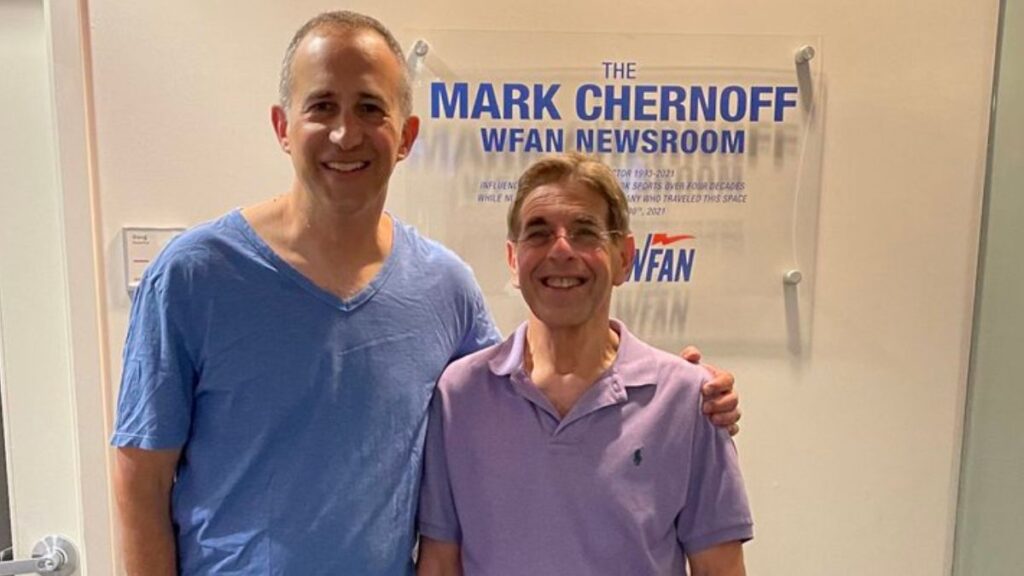
Eric Spitz with Mark Chernoff at the WFAN Studios on Chernoff’s final day as program director

Mark Chernoff responded with equal enthusiasm. “I am very excited that Eric is receiving the Mark Chernoff Award — it’s so well deserved. At WFAN it always felt like we were two number ones. He was an amazing contributor to the station’s success and is doing the same today for SiriusXM. Eric has all the tools — he understands sports radio, has compassion for his on-air talent, pays attention to details, and knows how to work with management, agents, and through any situation. He was a great sounding board for me, and I’m looking forward to recognizing him on July 1st.”

We look forward to celebrating Eric during the Premiere Networks Awards ceremony. That presentation closes out day two of the event.


6 Speakers Join the Summit Lineup

Lee Abrams is one of the most influential executives and consultants in the history of radio, having worked with more than 1,000 radio stations, 12 major print publications, over 20 TV stations and cable networks, and serving as the designer of XM Radio’s programming architecture from the ground up. He is credited with inventing and building Album Rock, designing the first Classic Rock format at San Francisco’s KFOG, and creating the first FM Urban/Dance format at New York’s WKTU — a body of work that has shaped the rules every programmer in the country operates by today. On Thursday, July 2nd, Buzz Knight unites Abrams, Fred Jacobs and Mike McVay for the first time to examine those rules, challenge them, and discuss what programming excellence demands in 2026. Every programming executive in the room will leave with something actionable.

Buzz Knight has accumulated a lifetime of experience in the business of audio. He has served as a media executive for Beasley Media Group, Greater Media, CBS Radio, and Saga Communications. Today he is the founder of Buzz Knight Media Productions, a content creation company committed to storytelling and building audiences. He hosts the popular Taking a Walk Podcast and his company creates some of the most widely followed music podcasts in the United States. At the Summit, Buzz moderates our Consultants Conversation alongside Fred Jacobs, Lee Abrams, and Mike McVay.

John Rosso serves as President and CEO of Triton Digital and President of the iHeart Technology Solutions Group. In this dual role, he leads the development and execution of advertising and measurement technologies across iHeart’s global audio and digital platforms. Triton also provides ad tech services for all iHeart products while expanding those capabilities to serve the broader industry. John joins Rich Tunkel and Cameron Hendrix for our State of Measurement panel on Thursday, July 2nd.

Rich Tunkel was named Managing Director of Nielsen Audio in late 2023. His career includes time at Nielsen, Arbitron, and Scarborough Research, where he joined as VP of Radio Sales in 1999. He then began a 12-year run with Arbitron that carried through the company’s 2013 acquisition by Nielsen. Since joining Nielsen, he has served as Senior Vice President and Sales Director while managing the Advisory Council and co-leading business development initiatives. Under his leadership, Nielsen Audio has expanded partnerships with Triton Digital, Magellan AI, and Edison Research. Rich joins John Rosso and Cameron Hendrix for our State of Measurement discussion on Thursday, July 2nd.

Cameron Hendrix is the Co-Founder of Magellan AI. Since 2016, Hendrix has grown the company from a podcast advertising analytics startup into a powerful attribution and ad intelligence suite. Global brands including iHeartMedia, Spotify, Cumulus, TED, and Gamut rely on the platform today. Prior to launching Magellan AI, Hendrix held roles at Thinkful, Burning Barn Labs, and Goldman Sachs. He joins John Rosso and Rich Tunkel on our State of Measurement panel on Thursday, July 2nd.

Rob Weisbord is the Chief Operating Officer of Sinclair, Inc. and President of Local Media. He oversees operations across 185 television stations in 86 markets and manages revenue for all company divisions including the Tennis Channel. Rob has served as the primary architect of Sinclair’s transition from a traditional broadcaster into a multi-platform content business. He specifically led the launch and expansion of the company’s dedicated podcast division, which includes sports podcasts featuring Urban Meyer, Mark Ingram II, Vince Carter, Tracy McGrady, Matt Leinart, Jerry Ferrara, and more. Rob speaks on Wednesday, July 1st at our Sports Summit.


The 2026 Barrett Media Audio Summit takes place June 30-July July 2 at the SVA Theatre in New York City. The event serves executives, managers, programmers, talent, sales and advertising professionals, digital leaders, and anyone committed to understanding the present and the future of the audio business. Tickets, hotel information, and sponsorship details are available in the Summit section on BarrettMedia.com. We hope to see you there!

Barrett Media produces daily content on the music, news, and sports media industries. Sign up for our newsletters to stay updated and get the latest information right in your inbox.

The Industry According To: Michael Starr, Glassnote Records

Thank you for checking out The Industry According To… This series runs each Tuesday and features radio and record industry executives, managers, programmers, talent, artists, and professionals from all areas of the business world. Today’s guest is Michael Starr, Head of Promotion at Glassnote Records. To be considered as a future guest, email me at keithblackboxgroup@gmail.com.

Today we dig into the mind of a veteran promotion pro with a long history of breaking records and navigating the ultra-political world of artist promotion and development: Michael Starr. He is currently the Head of Promotion at Glassnote Records — home to a diverse roster of great artists like Mumford and Sons, Phoenix, Silvana Estrada, and more. He previously held similar roles at Wind-Up and ran his own shop.

So, let’s dive in.

The New Reality

Keith: What’s the biggest difference between breaking a record in 2026 vs. 2006 — and is the job harder or easier today?

Michael: It depends on how you view it, or which side of the bed you happen to wake up on. I remember working rock records 20 years ago: it would take over 30-plus weeks to move a hit record up the chart. From my 10-year tenure at Wind-up Records in the 00s, I can still see the impact because many of those artists & songs remain in the core libraries of many rock stations. Those bands still have touring careers!

I think my biggest question is how many of today’s artists & hits from this decade will still be in core libraries with steady touring careers 2 decades from now? We are all so distracted these days. So much vies for one’s attention daily. You have to be realistic, patient, and steadfast. Building and sustaining any artist’s career takes more time than it did previously, and it truly takes a village.

The Glassnote Secret

Keith: What’s the internal philosophy or secret that allows a boutique label to consistently break artists at a major-label level?

Michael: Glassnote punches above its weight because of our founder, Daniel Glass, and our GM, Chris Scully. This summer I celebrate my 15th anniversary at the label. Not a week goes by where I don’t learn something from both of them. Daniel is the driving force and the ultimate mentor. The man runs circles around most people, and his enthusiasm and energy are genuine! He relishes not only the music and the biz — Daniel also lives his life to the fullest. Chris keeps me and the staff on the rails. He is the one I turn to anytime I feel stuck. In fact, the screen image on my phone when I call him is a Peanuts comic strip image of Lucy offering therapy for a nickel!

A 10 vs. a 4

Keith: To your ears they’re a 10, but the data says they’re a 4. In 2026, who wins — your ears or the algorithm?

Michael: I believe the ears still win. Sure, I could pontificate about analytics, social media, AI, blah, blah, blah…. At the end of the day, it still comes down to the music at Glassnote, and feeling it in your gut. This explains our diverse roster, which ranges from Mumford & Sons, Silvana Estrada, bby, Phoenix, Jade Bird, Talia Rae, Hamilton Leithauser, Two Door Cinema Club, Patrick Martin, and more. “Our best is yet to come!” is the attitude I’d prefer to carry into the future.

The Importance of Data

Keith: Where does data fit within your role at Glassnote — does it dictate tactics, timelines, singles?

Michael: My most recent example comes from our latest single from MUMFORD & SONS — a collaboration with Chris Stapleton for the single, “Here.” To begin this year, we delivered an 11-week #1 AAA smash and #1 ALT single with “Rubber Band Man (w/ Hozier).” When the album Prizefighter came out on February 20th, some programmers were pressing me on the follow-up single. My stance was, “What’s your rush?” We wanted to spend the first two to three weeks watching the data and streams to see what listeners gravitated to.

It was very easy to identify that “Here (w/ Chris Stapleton)” was the obvious contender. It wasn’t even the DSP focus track. But it continues to be the #1 streaming track on the album, is #1 Americana for multiple weeks, and is now Top 10 AAA. Heck, it’s even in rotation on SXM’s The Highway!

Hacking the System

Keith: How do you use the system to break an artist who isn’t built for the system?

Michael: This is where I tip my hat to the NonComm and Triple A format. Daniel Glass and I were just at NonComm in Philadelphia to connect with our partners from that great group of radio stations. It’s honestly how we initially launched each of those artists. That format’s hunger for music discovery and the camaraderie among stations and their listeners provide an early litmus test of the potential an artist and their music can deliver.

The Real Reason Some Fail

Keith: How often does a song fail not because of the music, but because of politics between labels, DSPs, and radio?

Michael: You tell me! We can argue that it happens all the time or very rarely. Ultimately, we’re all friends and partners working to release the best music for radio and DSPs to share with their listeners. We’re thrilled when it comes together, and we’re disappointed when it doesn’t. All we can do is learn, grow from it, and move forward.

Is Alternative Still Alternative?

Keith: Has Alternative radio become mainstream, or is there a world of Alt music radio is missing?

Michael: In my opinion, there isn’t a one size fits all answer to succeeding at the ALT format. They are vying for the attention of a mass audience and must cast that net appropriately. Ultimately, they must connect with their city and listeners to remain successful, and gain respect by being part of the local scene. It’s about the brand, and creating a feeling of relatability, making listeners want to be a part of it like many of us felt when grunge exploded in the 90s. We all wanted to be in that club & at that show!  

Like all of radio, the bigger challenge is breaking through to the next generation of potential radio P1s who can’t peel their eyes away from 10-second clips on their phones.

I love Alt stations that embody the breadth of the format: loud & heavy, soft & introspective, current & historical—it should really be a journey. I like large, extensive libraries spanning decades. There is so much to cull from. When you blend in all the great music from the present and the past, you offer listeners what ALT truly is, and you keep them tuned in, curious about what will play next.

But can you secure enough advertising to support it and will the PPM meters respond accordingly? That’s where the record store kid in me has to trust the professionals who have been doing this for decades.

AI & Glassnote

Keith: Where do you see AI helping the industry, and what’s your biggest fear?

Michael: If AI can help us all get more accurate information faster and perhaps teach us how to get along again in this crazy world, I’m all for it. Holistically, the more analog we can remain in our personal lives, the better off we’re all going to be regarding our mental and physical health and overall happiness. But that’s just my opinion at this very moment.

The Toughest Call

Keith: What’s the toughest call you’ve ever had to make as head of promo?

Michael: The toughest calls come when I can’t come through on a big ask from any of our partners. You always wish for timing and budgets to align with the goals you set forth with your label, managers, and artists. It just doesn’t always work out, no matter how much you try.

Will The Real Michael Starr Stand Up

Keith: You share the same name as the lead singer of Steel Panther. I can only imagine some of the things that have mistakenly landed in your lap. Care to comment on sharing a name with the other Michael Starr?

Michael: Many years ago at a SxSW in Austin, I remember sitting at Buffalo Billiards hanging with my KROX pals. They were broadcasting live from 6th Street. Steel Panther came to sit down in the booth behind us. My pal, Dave Downey, introduced us; “Michael Starr, meet Michael Starr!” We shook hands and I simply said, “it’s my real name.” His response was, “that’s cool, my real name is Ralph.” Ha!

My IG handle is @michaelstarrrocks, so I’ve been DM’d or tagged more than I care to mention by folks who can’t seem to notice that we look nothing alike.

Even further back (circa 1991), there was Mike Starr from Alice In Chains. I was a massive fan of the ‘Facelift’ album, and a college buddy and I went to the Clash of the Titans tour (Slayer, Megadeth, Anthrax) with Alice In Chains as the opener. After their opening set, I see Mike Starr walking across the floor. I approached him to simply say. “Dude, we have the same name!” He immediately said, “NO WAY!! Show me your ID, what’s your middle name?” We both held our driver’s licenses out and he was so tickled by it that he brought me back to meet the rest of the band. I was 19. It was a cool moment. (RIP, Mike Starr).

Mentorship

Keith: What’s the best advice you have for younger professionals who want to succeed in artist promotion and development?

Michael: Each year for over a decade, I’ve been fortunate to participate in SxSW as a Mentor. I’ll meet with everyone from college students, independent artists and managers, folks pimping ideas and apps, etc..

My best advice comes from a presentation I saw Daniel Glass give to an auditorium full of Sony college reps.

His advice…SHOW UP! Show up each and every day. Show up for work, show up for yourself, show up for your co-workers, your clients, your friends and family. Just keep showing up and good things will come from that!

The Blank Slate

Keith: Blank slate — say anything you want to any sector of the music industry.

Michael: I feel so truly humbled and blessed to be in this industry. This year marks 35 years since I started working at a record store and 25 years doing radio promotion. I want to thank everyone I’ve ever encountered and worked with, from the bottom of my heart. Experiences. Life Lessons. Relationships. Incredible shows. Fantastic music. Personal and professional growth. What a blessing! We’re all in this together. Let’s continue to support each other and lift each other up when needed. Sincerely, thank you for it all!

Barrett Media produces daily content on the music, news, and sports media industries. Sign up for our newsletters to stay updated and get the latest information right in your inbox.
Radio Should Be Asking the Same Question EDM Already Answered

0

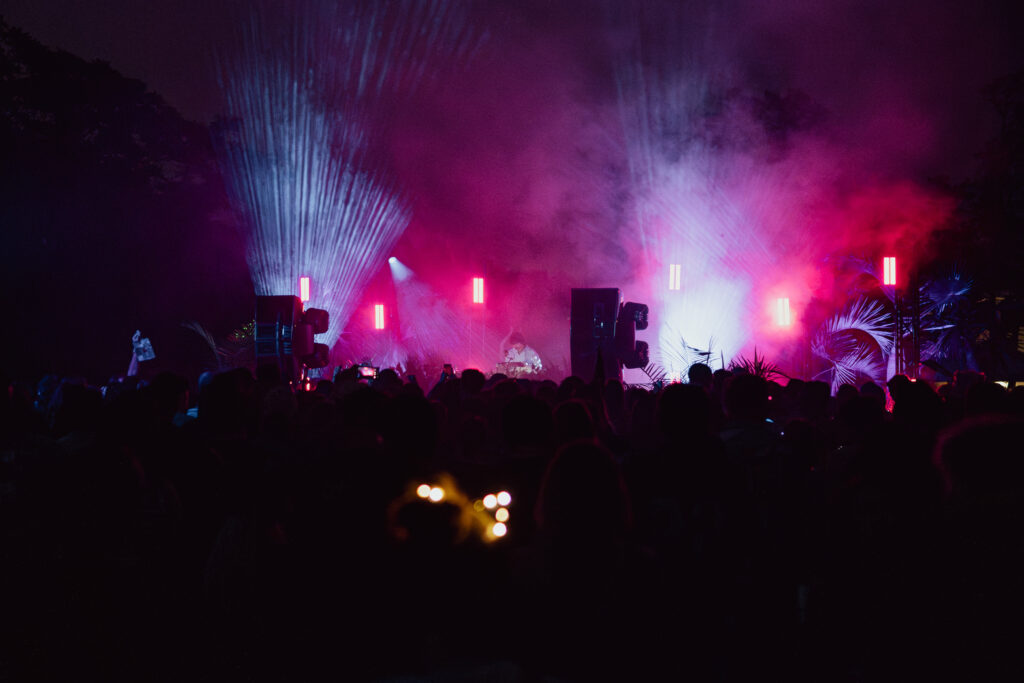
Last weekend I ended up at an EDM festival called Habitat inside the Kansas City Zoo. I know. Bear with me.

Thousands of people descended on the place. And here’s the thing — the zoo was still open. The aquarium was still running. The animals were still there. Nothing about the physical environment had changed. But everything else had.

For one night, a zoo became a cultural event. A community. A temporary world built entirely around music and shared experience. And somewhere between the laser lights and the bass drops, I started thinking about what radio used to be and, in too many places, isn’t anymore.

The music was never the product.

The EDM scene understands something parts of our industry have quietly forgotten: the music is not the product. The feeling of belonging is the product.

Nobody drove to the Kansas City Zoo on a Saturday night because it was convenient. Spotify is convenient. YouTube is convenient. Staying home in your pajamas is extremely convenient. People showed up because they wanted to be part of something larger than themselves.

That is what great radio stations used to manufacture (and some still do) better than almost anyone.

The best stations were never just signal and playlist. They were ecosystems. They had language, attitude, and shared identity. Listeners wore station shirts like jerseys. Morning show bits became inside jokes across entire cities. Big events felt less like concerts and more like reunions. You did not just listen to those stations. You belonged to them.

Walk around any serious EDM festival and you see that same energy alive and thriving. Fans travel for these events. They dress for them. They build real friendships around them. The audience becomes part of the show. The experience does not work without the people.

What struck me about Habitat specifically was the crowd. It was not some narrowly defined demographic slice that a researcher carved out of a focus group. It skewed all over the place. Younger fans. Older fans. Different backgrounds, different energy levels, different everything. All of them there for the same shared moment.

This isn’t a obituary for radio — it’s a reminder of what it’s still capable of

That was always radio’s real competitive advantage combined with its localism. Some stations still have it. This is not a eulogy. But somewhere along the way, pieces of this industry made a quiet pivot. We started thinking about distribution instead of culture. We optimized for efficiency and let identity become optional.

The transmitter stayed. The songs stayed. The personalities stayed. The culture became negotiable.

That is a dangerous trade. Culture is the moat. Culture is the thing an algorithm genuinely cannot replicate. Spotify can tell you what to listen to next. It cannot make you feel like you are part of something. It cannot give you an inside joke with a hundred thousand strangers who all heard the same morning show bit at 7:35 this morning.

A great radio station should feel like a place

Think about what 99X in Atlanta or KROQ in Los Angeles meant to their listeners during their peak years. Those stations were not just playing records. They were building scenes. Creating tribes. Giving people a cultural home.

The EDM world still knows how to do that. And honestly, there is a broader lesson buried in this too. While the rest of media obsesses over audience segmentation and chasing the narrowest possible demographic slice, Habitat drew thousands of people from completely different walks of life and gave them a unified experience. That is not a niche product. That is mass appeal built around emotion. Which sounds a lot like what radio looked like when it was at its best.

The question for every programmer, PD, and market manager right now is simple: are we giving people something worth connecting to?

Radio had what EDM has now. The question is whether it can get it back.

Because song delivery is table stakes now. Every platform does that. The stations and personalities that actually win going forward are going to be the ones that rebuild real emotional connection and community around what they do. That does not require a massive budget or a stadium event, either. Culture starts with smaller things. Local identity. Shared language. Inside jokes. Listener interaction. Personalities who sound like actual human beings instead of something that came out of a compliance meeting.

People still want to belong to something. An EDM festival inside a zoo on a Saturday night proved that to me all over again. Probably not the insight I expected to walk away with. But here we are.

Barrett Media produces daily content on the music, news, and sports media industries. Sign up for our newsletters to stay updated and get the latest information right in your inbox.