There was a time when a casino was defined by its physical presence: velvet carpets, the mechanical rhythm of slot machines, and the quiet tension hovering above a blackjack table. Today, the most influential casinos don’t occupy prime real estate in Las Vegas or Macau. They occupy screen space.
If you explore the ecosystem around online casino google play, you’ll quickly notice how distribution platforms have become central to credibility and growth. Resources such as online casino google play highlight how deeply integrated gambling apps are within the Google Play infrastructure. Being present in the store is no longer just a technical choice — it’s a branding strategy. Visibility equals legitimacy. Legitimacy equals traffic.
And then there’s Central Europe. Markets such as online casinos österreich demonstrate how a tightly regulated environment can coexist with a vibrant digital gambling ecosystem. Austria’s blend of state influence and private operators forces platforms to differentiate not only through bonuses, but through storytelling, UX sophistication, and trust signals.
From Slot Machines to Storytelling Engines
Modern online casinos no longer sell games — they sell experiences wrapped in narrative.
A slot is rarely “just” a slot. It comes with cinematic intros, seasonal themes, character arcs, and progressive jackpot storylines. The mechanics resemble serialized streaming content: keep users engaged, provide micro-rewards, build anticipation for the next “episode.”
In this sense, casinos are operating like digital publishers. Their content ecosystem often includes:
Blog sections with betting guides and strategy breakdowns
YouTube tutorials and live dealer previews
Social media campaigns built around humor and meme culture
Personalized newsletters driven by behavioral data
It’s not an exaggeration to say that some gambling platforms now resemble hybrid entities — part entertainment studio, part fintech startup, part marketing agency.
Mobile-First Is No Longer a Strategy — It’s a Reality
The most dramatic transformation in the industry is mobile dominance.
Desktop platforms feel almost ceremonial at this point. The majority of engagement happens on smartphones. Sessions are shorter, more frequent, and often triggered by push notifications rather than conscious intent.
Google Play plays a critical role here. A casino app in an official store signals a baseline level of compliance and trustworthiness. It also embeds gambling into the broader app economy — side by side with streaming services, games, and productivity tools.
This integration changes perception. When a gambling app sits next to Spotify or Duolingo, it no longer feels like a niche vice. It feels like just another form of digital entertainment.
Gamification as Editorial Strategy
Traditional media companies have long struggled with engagement metrics. Casinos, by contrast, design for them from day one.
Free spins operate like clickbait — but with tangible reward. Loyalty tiers mirror subscription models. Tournaments replicate the urgency of live sports broadcasts.
The interface itself is carefully engineered:
Personalized dashboards
Dynamic bonus pop-ups
AI-driven game recommendations
Real-time notifications about jackpots
These features closely resemble social media algorithms. The difference? Instead of optimizing for likes or watch time, casinos optimize for wagering volume and session frequency.
It raises an uncomfortable question: if casinos borrow engagement tactics from digital media, should they also inherit media-level responsibility?
Transparency around odds, responsible gambling tools, and cooling-off mechanisms are now part of the public conversation. Some operators highlight these features prominently. Others bury them beneath promotional banners.
The Streaming Effect
Another shift that can’t be ignored is the rise of gambling streams.
Casino sessions broadcast on platforms like Twitch and YouTube attract massive audiences. Wins are celebrated theatrically. Losses are reframed as suspenseful setbacks. The chat becomes a digital crowd.
In this environment, gambling morphs into spectator entertainment. The player becomes performer. The casino becomes stage.
This isn’t traditional advertising. It’s participatory storytelling.
And just like reality television, it blurs the line between authenticity and performance.
Localization as Competitive Advantage
One of the most fascinating aspects of the modern gambling industry is how intensely localized it has become.
Language, payment preferences, legal frameworks, and cultural attitudes all shape platform design. A site targeting Turkish players must navigate entirely different constraints than one operating in Austria or Germany.
This localization goes beyond translation. It extends to:
Payment integrations tailored to regional banking systems
Customer support in native languages
Culturally relevant promotional campaigns
Region-specific regulatory disclosures
In effect, each market becomes its own editorial edition of the same overarching brand.
A few scrolls further into international markets, you encounter discussions around Türkische Online-Casinos, where regulatory pressure and user demand create a uniquely dynamic landscape. In Turkey, where gambling laws are restrictive, digital operators have adapted with remarkable agility. Offshore licensing, alternative payment systems, and localized marketing aren’t just compliance strategies — they are content strategies. Each regulatory workaround becomes part of the brand narrative.
The Ethical Crossroads
With innovation comes scrutiny.
Regulators are increasingly attentive to how aggressively platforms push promotions. Payment transparency, advertising restrictions, and app store compliance rules are evolving.
The core tension remains unresolved: casinos monetize risk. Their success depends on users losing more than they win over time.
Yet they present themselves as entertainment providers — sleek, social, and gamified.
That contradiction sits at the heart of the industry’s future.
Conclusion: The Attention Economy’s Most Honest Player?
In a paradoxical way, online casinos may be the most transparent expression of the attention economy.
They openly tie engagement to money. There is no hidden subscription fee disguised as “premium content.” The stakes are explicit.
At the same time, the tactics used to capture and retain users mirror those employed by social platforms, streaming giants, and mobile game studios.
Casinos didn’t just digitize. They evolved into media brands — agile, data-driven, and relentlessly optimized for engagement.
If you want to understand where digital monetization is heading next, don’t just study Silicon Valley.
Watch the casino industry.
Because that’s where attention, psychology, and technology are being stress-tested in real time.
And in this game, the house isn’t just winning chips.
Do you feel anxious seeing the 11:59 university assignment deadline while you have plenty of other work to do? A majority of students in the UK and the US face this problem. Although time management is a primary challenge due to increased living costs and social pressure, students also report other struggles.
A Taylor & Francis Online research suggests that homework is the primary cause of stress among 83.3% students. We have found that these problems are interconnected and can be solved through clear guidance from an expert.
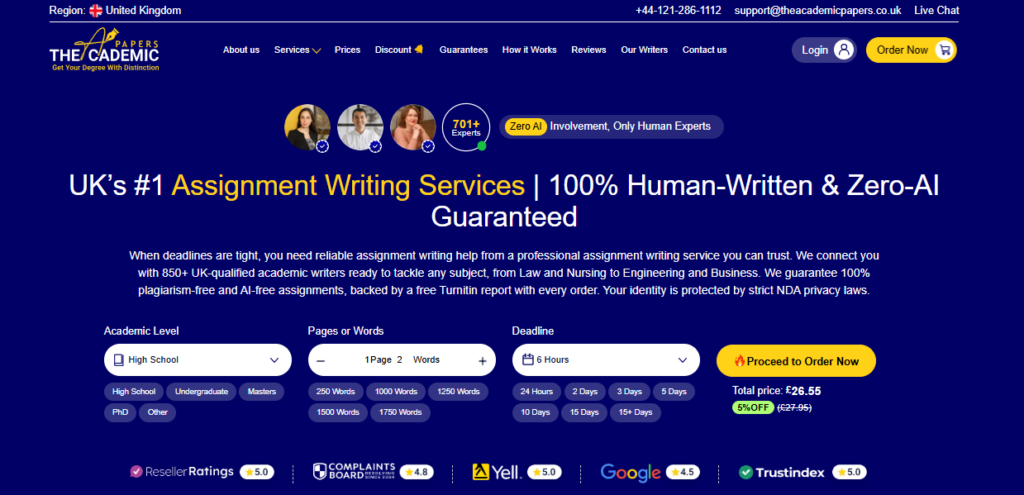
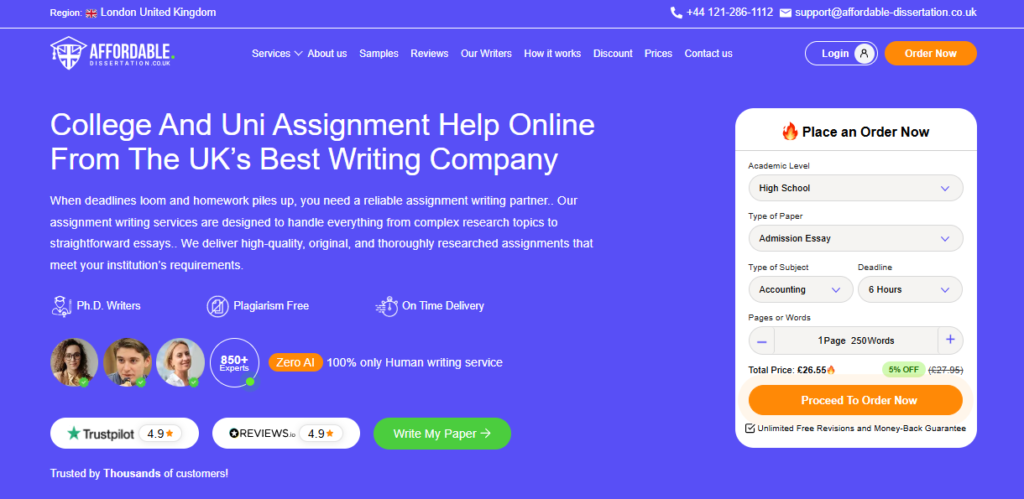
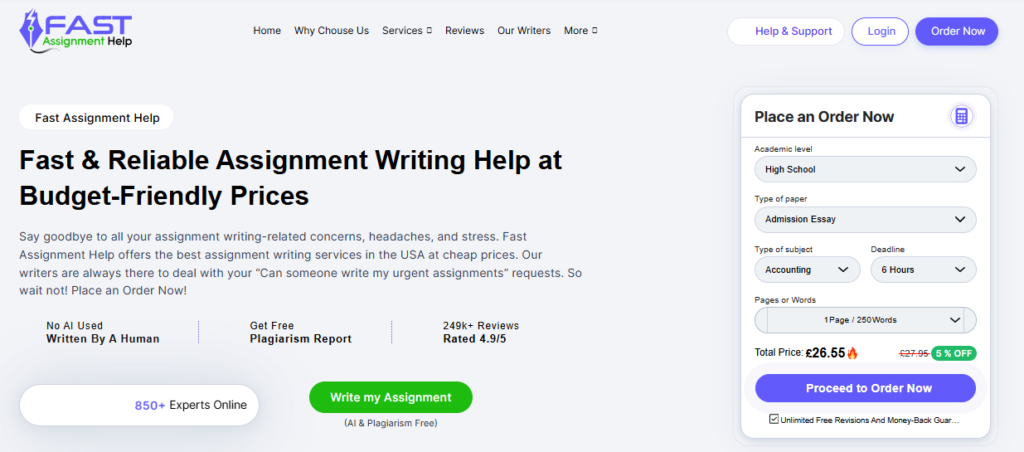
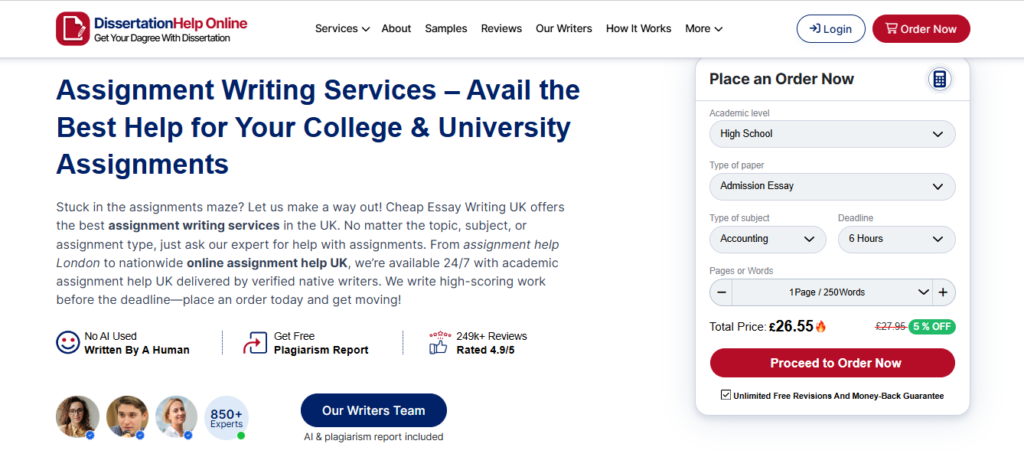
Our team conducted a review of several online assignment writing services that promise high-quality guidance, but student reviews indicate otherwise. To address the confusion, we formed a team of leading UK and US academic experts to review more than 20 assignment writing services. After testing each platform for assignment quality, adherence to deadlines, pricing transparency, and data privacy, only five stood out as authentic assignment help providers: The Academic Papers UK, Affordable Dissertation UK, Cheap Essay Writing UK,Fast Assignment Help, and Dissertation Help Online.
Top Assignment Writing Problems UK and US Students Face in 2026
Why More and More Students Looking for Help with Assignments in 2026?
The pressure of attending classes in the morning, taking paid work in the evening, and completing assignment deadlines at night leaves students with no time to rest. The worst thing is that even after a full day of effort, students in the UK and the US are developing no career skills.
A report by Save My Exams suggests that 85% of students face exam anxiety and pressure.Our team decided to conduct thorough research to analyse the problems that US & UK students are facing in 2026.
Adherence to Current Academic Standards: The UK & US academic landscape is changing as universities have implemented stringent measures against copied and automated submissions. Many students reported a lack of the essential skills required to overcome these complex academic challenges.
Lack of Research Skills and Creativity: Since students find little time to focus on assignments and studies, they rely heavily on AI assistance. A constant reliance has greatly affected their own research and critical thinking skills, which is a major problem in 2026.
Adherence to Formatting Styles: Several university students fail to distinguish among citation styles such as Oxford, MLA, and APA. This results either in minor inconsistencies or in complete failure.
How We Evaluated the Top Assignment Help Services
Our Criteria for Choosing the Top Assignment Help Services
Our expert team evaluated more than 20 top-rated academic writing services, including Assignment Writing Service, Fast Assignment Help, Dissertation Help Online, The Academic Papers UK, Affordable Dissertation UK, EssayPro, and Cheap Essay Writing UK. We have conducted a comprehensive analysis of each assignment writing service on our list, both as customers and as experts.
Our Detailed Audit Process
Audit Step
Purpose
How It Was Conducted
Assignment Ordering
Test the service workflow and delivery
A complex assignment with a 5-day deadline was placed on each platform.
Writer Expertise Verification
Ensure writers are qualified and knowledgeable
Experts requested a brief call or direct chat with assigned writers to assess subject-matter expertise.
Research Quality Check
Confirm use of current and accurate sources
Assignments were examined to verify the use of up-to-date 2026 research relevant to the topic.
Plagiarism & AI Screening
Ensure originality and academic integrity
All submissions were checked with Turnitin to detect plagiarism and AI-generated content.
Deadline Adherence
Evaluate reliability and timeliness
Each assignment writing service was given a 7-day window; actual delivery times were recorded and compared.
Academic Standards Compliance
Verify correct formatting and standards
Assignments were requested in APA style with specific tweaks, then reviewed for proper formatting.
Customer Support Assessment
Check for real human assistance
Support teams were contacted at various times to confirm responses were human-led, not AI chatbots.
Data Security & Privacy
Protect student information
Websites were tested for SSL encryption and secure, verified third-party payment gateways like PayPal and Stripe.
5 Best Assignment Writing Services for UK & US Students – A Detailed Review
We spent hours analysing the best UK & US assignment help services and spoke to their customer support regarding complex queries. After a detailed evaluation of over 20 assignment writing services, these five managed to pass all the tests:
The Academic Papers UK – 9.9/10 – No.1 British assignment writing service with 850+ PhD Writers
Affordable Dissertation UK – 9.8/10 – Most Affordable Assignment Writing Service UK with Native Assignment Helpers
Cheap Essay Writing UK – 9.7/10 – Cheap & Reliable London-Based Assignment Help Online; Best Option for College and University Assignments
Fast Assignment Help– 9.6/10 – Best Option for Complex Assignments With a Quick Turnaround Time.
Dissertation Help Online – 9.5/10 – Error-Free Assignment Help Provider; Top Quality at Competitive Prices
Here is a detailed overview of these top-rated assignment writing services to help you choose the one that best suits your requirements.
The Academic Papers UK
Overall Expert Rating: 9.9/10
The Academic Papers UK is the leading academic writing services provider for British students. The company has been around for over two decades and has developed a great reputation in these years, alongside the following achievements:
A community of over 150k college and university students
More than 250K completed assignments.
Over 2000 expert writers, 95% of whom are PhDs from prestigious UK institutions, including Oxford, Cambridge, and Russell Group universities.
The Academic Papers UK has a large team of PhD-qualified trusted homework helpers to answer the ‘Write My Assignment’ requests. All the writers are native UK and subject experts who understand the current trends in the academic market.
Apart from serving the needs of UK students, The Academic Papers UK provides reliable assignment writing services to students in the USA, Canada, Australia, the UAE, the Middle East, and worldwide.
Core Services Offered
The Academic Papers UK has an answer for every assignment you put forward. The entire team is trained to treat your assignments as their top priority and ensure a timely project delivery.
Top-rated Assignment Writing Services for students
Best Dissertation Writing Services
High-Quality Research Paper Help
Custom Essay Writing Services
A+ Case Study Help
Online Exam Help
Coursework Writing Service
Term Paper Writing Services
Pros
Submit assignments on time
24/7 availability, including weekends
They provide custom-formatted assignments
Cons
High urgency orders can be a little pricier
Minor revisions may be required
Pricing & Discounts
The Academic Papers UK offers assignment writing services in the UK starting at £9.95 per page for high school assignments with a deadline of more than 15 days. The platform provides a range of discounts to make services more affordable.
First-time customers can receive a 20% discount on their first order. For assignments between 250 and 5,000 words, a 5% discount applies, while assignments ranging from 5,250 to 10,000 words receive a 10% discount. Large assignments exceeding 10,000 words are eligible for a 15% discount. This assignment help website regularly launches new promotional offers to further support UK students.
Best Suited For – High-Achieving Students with All Types of Assignments
The Academic Writers UK is ideal for students who want reliable online assignment help across all academic levels, from high school to PhD. They ensure consistently high-quality work for every type of assignment, whether it’s a standard essay, complex research project, or task with unique guidelines. Students also benefit from competitive pricing, making professional support accessible without compromising quality. With clear communication, timely delivery, and expert guidance, this service helps you achieve your academic goals while managing your workload effectively.
Affordable Dissertation UK
Overall Expert Rating: 9.8/10
If you are looking for a service that can solve homework assignments at any level with expert precision, Affordable Dissertation UK is the right answer. The company has been serving UK students for more than two decades and has developed a portfolio of over 750k completed projects.
Affordable Dissertation UK employs over 650 professional academic writers, all of whom are PhD graduates from top British and American universities. This means you will get native excellence at the most consistent pricing.
Core Services Offered
As the name says, Affordable Dissertation UK focuses mainly on dissertation assistance for students, but also prides itself in offering top-grade assignment writing services.
100% original assignments with free Turnitin reports
Specialised experts for complex projects
Cons
No integrated plagiarism checker for instant use
Response times can vary during peak hours
Pricing Structure
The unique pricing structure of Affordable Dissertation UK makes it one of the most cost-effective assignment writing services available to British students.
Service Feature
Details
Starting Price (15+ Day Deadline)
£12.95 per page (Undergraduate)
Urgent Delivery (24-Hour Deadline)
£25.95 per page
Included Free Features
Title Page, Abstract, Bibliography, and Unlimited Revisions
Best Suited For – Assignments on any Academic Level at Affordable Prices
Affordable Dissertation UK is the overall best academic writing service for all types of homework assignments, essays, coursework, dissertations, research papers, and other writing projects. The company help students at every academic level, from high school and undergraduate to postgraduate and doctoral studies.
With a focus on quality and originality, Affordable Dissertation UK ensures every submission meets high academic standards. Students benefit from reliable support and affordable rates, making it a top choice for any academic challenge.
Cheap Essay Writing UK
Overall Expert Rating: 9.7/10
Cheap Essay Writing UK provides high-quality assignment writing services to British students looking for high-quality papers at low prices. In more than 20 years of experience in the industry, the company has completed over 235K assignments and built a community of 1.5 million students. They employ 600+ expert writers, many of whom are PhD-qualified from leading British universities like Oxford, Cambridge, and Imperial College London. Their quick turnaround times come with the best quality and 100% original work guarantee.
Pros
Reliable assignment writing service with consistent quality
Expert input on challenging topics
Direct communication with writers
Cons
No built-in AI assistant for quick questions, only human support.
No mobile app for easy ordering
Core Services Offered
Although the name implies online essay help at affordable prices, Cheap Essay Writing UK also offers the same level of precision for assignment tasks.
Top-Rated Assignment Writing Services
Buy Assignment Online
Master’s Dissertation Help
IB Extended Essay Writing Services
Coursework Writing Help
Buy Essay Online Services
Research Paper Help
Case Study Writing Services
Pricing & Affordability
Category
Pricing / Discount Details
Base Price (15-Day Deadline)
£13.95 per page (Undergraduate)
Urgent Price (24-Hour Delivery)
£25.95 per page
First-Time Order Discount
20% OFF
Bulk Order (250 – 5,000 words)
5% Discount
Bulk Order (5,250 – 10,000 words)
10% Discount
Bulk Order (Over 10,000 words)
15% Discount
Loyalty Program
Surprise 5% to 15% Discount for returning customers
Best Suited For – Students Who Need Fast, Reliable, and Confidential Academic Help
Cheap Essay Writing UK is the best essay writing service for students tackling short-term assignments, including essays, homework, projects, and exam tasks. The company guarantees timely delivery, even for urgent requests with deadlines as short as 3 hours. Whether you are an undergraduate or a master’s student, Cheap Essay Writing UK ensures high-quality work while keeping your personal information fully confidential.
Fast Assignment Help
Overall Expert Rating: 9.6/10
Fast Assignment Help is a US-based academic writing service that has earned a great reputation as a top assignment help provider. The company has been in business for over a decade and has served thousands of students worldwide. This assignment help company serves American students and prides itself on offering the quickest turnaround times for all assignment tasks with tight deadlines. The company employs a large pool of highly qualified writers from top US & UK universities, trained to complete assignments at any level.
Pros
Dedicated project manager for your assignments
Track assignment progress online
Easy online ordering process
Cons
Some rare topics may take longer
Slightly difference in tone from the student’s usual writing
Core Services Offered
Fast Assignment Help stays true to its name by offering the best assignment writing services for students at any academic level in record delivery times.
The base price is $13.95 per page for a 15-day deadline for an undergraduate assignment, increasing to $25.95 for a 24-hour delivery.
Best Suited For – Quick Delivery, Complex Assignments
As the name says, Fast Assignment Help provides the best response to the “Can someone write my urgent assignments?” requests from students. The company has a 100% customer satisfaction rate for assignments on a quick turnaround time. Whether you need to write a quick nursing assignment or a complicated SPSS assignment, they ensure the best commitment to quality.
Dissertation Help Online
Overall Expert Rating: 9.5/10
At a time when many companies rely on AI assistance to produce mass assignments, Dissertation Help Online is known for 100% human-backed academic writing services. The UK-based company has been working in the academic writing industry for more than 12 years. They have a large team of 450 plus PhD-qualified writers who are native subject experts and offer the best assignment writing services to students in London, Manchester, Birmingham, Oxford, Glasgow, and nationwide in the UK.
Core Services Offered
While the name dictates dissertation help expertise, Dissertation Help Online is also a leading provider of assignment writing services in the UK & US.
Some subjects require extensive research, which may extend the time.
Most communication is conducted through chat.
Pricing Structure
Dissertation Help Online starts their pricing for undergraduate assignments at £13.95 per page for a 15-day deadline and rises to £25.95 per page for a 24-hour delivery. They offer a 5% instant discount on every assignment and up to 20% off for first-time customers. You can claim these discounts by contacting their customer support team.
Best Suited For – Students Looking for Well-Researched Assignments
Dissertation Help Online is ideal for students who need well-researched, error-free assignments. It works best for undergraduates, postgraduates, and PhD candidates handling complex dissertations, research papers, or coursework. Students looking for fully human-written content, precise formatting, and high academic standards benefit the most. This top-notch homework writing service is perfect for those aiming to submit top-quality assignments on time without compromising originality or accuracy.
Conclusion
In the rapidly evolving UK & US academic markets, students don’t just need help writing their assignments, but expert guidance that prepares them for the professional market. While several assignment help services promise human-centric expertise with guaranteed quality, only a few could pass our deep analysis. The five homework help services we have reviewed, including The Academic Papers UK, Affordable Dissertation UK, Cheap Essay Writing UK, Fast Assignment Help, Dissertation Help Online, offer the best quality, respect your privacy, guarantee AI-free content, and follow the latest 2026 academic standards.
Choosing the right assignment writing service today can reduce stress and help you secure the grades you have been aiming for.
Frequently Asked Questions About UK Assignment Help Services
1. How do these assignment writing services ensure that my assignment is not flagged as AI-generated?
Since the major UK universities are using advanced tools like Turnitin to detect robotic writing patterns, our top-rated assignment writing services also use the same tools. They only employ human writers who use creative thinking and updated research from 2024 to 2026 in student assignments. By providing a free plagiarism and AI report, they prove that your work is original and meets modern university standards.
2. What happens if I need to change something in my assignment?
Our top 5 assignment help services for US and UK students offer free revisions to ensure that the delivered work perfectly matches your original instructions. If your final draft omits any instructions or needs anything added, you can contact customer support immediately. This allows you to request updates until you are fully satisfied.
3. Is it safe to share my personal and payment information?
Your privacy is a priority for these assignment writing platforms. They use SSL encryption and secure payment gateways, such as PayPal or Stripe, to protect your financial information. They also have strict confidentiality policies to ensure your identity remains private, so your university or peers will never know you used help.
Can I get assignment help with a very tight deadline?
Speed is a core feature of services like Cheap Essay Writing UK. They can handle assignments in as little as three hours while maintaining quality. Even with short turnarounds, the work is handled by subject experts who understand the specific requirements of the UK and US education systems.
Disclaimer: This comparison is based on our independent testing of 20 assignment writing services available to UK and US students. We placed real orders, reviewed delivery quality, and evaluated data security and compliance with 2026 academic standards. The top 5 assignment writing services listed here performed best during our audit process. However, results may vary depending on your subject and specific instructions. University policies also differ, so you should always review your institution’s academic guidelines and carefully assess your own needs before choosing any online assignment help provider.
At first glance, the jump from 99.99% purity to 99.9999% can feel like marketing math – extra decimals meant to impress rather than change anything meaningful. In reality, that difference marks a boundary where purification stops being a refinement process and becomes a structural engineering challenge.
At six-nines purity, contaminants are no longer just unwanted particles. They become system variables. Trace hydrocarbons alter cryogenic behavior. Residual moisture changes thermal transfer efficiency. Microscopic impurities influence pressure stability in ways that ripple through sensitive industrial environments.
This matters because modern applications – semiconductor lithography, quantum cooling platforms, high-precision imaging – operate inside tolerance windows so narrow that impurity behavior becomes measurable at the process level. Engineers aren’t chasing perfection for aesthetics. They’re protecting repeatability.
Achieving this threshold requires a shift in mindset. Instead of cleaning gas at the end of a workflow, facilities must design systems that assume contamination is persistent and opportunistic. Every transition – compression, storage, transfer, cooling – becomes part of the purity equation. Six-nines performance isn’t achieved once. It must be defended continuously.
The science behind rare gas contamination control
Rare gases like neon, krypton, and xenon are chemically stable, but their purification challenges stem from contaminants that behave differently under cryogenic conditions. Trace nitrogen, oxygen fragments, hydrocarbons, and moisture respond unpredictably when temperature and pressure cycles change.
Conventional filtering removes bulk impurities effectively, yet six-nines environments demand molecular discrimination. Instead of blocking contaminants mechanically, advanced rare gas purification methods manipulate thermodynamic behavior to separate impurities based on phase transitions and adsorption affinities.
Cryogenic staging becomes critical. As gases move through temperature gradients, contaminants enter predictable states that allow targeted capture. Adsorption materials are tuned to attract specific impurity classes, while pressure stabilization prevents re-mixing downstream.
The science resembles choreography more than filtration. Each stage narrows the impurity spectrum, forcing contaminants into controlled behavior patterns until only ultra-trace remnants remain. Continuous verification ensures those remnants never accumulate enough to influence performance.
This layered scientific approach transforms purification into an active discipline – one that anticipates contamination rather than reacting to it.
Precision monitoring and the cryoin purity process
At six-nines thresholds, contamination risk never disappears – it’s managed. Precision monitoring systems therefore become inseparable from purification architecture. Instead of waiting for impurity spikes to appear, modern systems track purity continuously, allowing intervention before drift affects performance.
This is where the cryoin purity process intersects with advanced engineering practice. Systems associated with Cryoin Engineering embed real-time spectral monitoring, thermal feedback loops, and adaptive flow control directly into purification stages. Rather than treating verification as an endpoint test, purity is validated throughout the entire cycle.
Micro-adjustments happen automatically. Cryogenic gradients shift to stabilize separation behavior. Pressure transitions smooth out to prevent turbulence. Adsorption modules regenerate proactively to maintain capture efficiency. The system behaves like an intelligent control network, not a passive filter chain.
This continuous vigilance transforms contamination management. Instead of reacting to impurity accumulation, the architecture prevents it from becoming system-level noise. Six-nines purity becomes sustainable because the environment is engineered to resist instability.
The result is a purification ecosystem that protects gas integrity across every transition – compression, cooling, storage, and redistribution. Precision monitoring doesn’t just confirm purity. It enforces it.
Multi-stage purification as a layered defense system
Six-nines purity is rarely the result of a single powerful separator. It emerges from architecture – multiple purification stages designed to reinforce one another. Think of it as layered defense rather than singular protection.
Early stages remove bulk contaminants to stabilize downstream environments. Intermediate stages target trace molecules using cryogenic separation and adsorption refinement. Final stages act as guardians, intercepting residual impurities while validating system integrity.
Each layer reduces the load placed on the next. No component is expected to perform miracles. Instead, the system distributes responsibility, creating redundancy that improves consistency. When one stage experiences fluctuation, the others compensate.
This philosophy also changes how facilities operate. Purification is no longer a discrete event but a circulating process embedded into storage, transfer, and reuse cycles. Gas is continually conditioned rather than periodically cleaned.
The benefit is repeatability. High purity isn’t an occasional achievement – it becomes the default operating state. Facilities gain confidence that every cycle begins under identical conditions, reducing variability in downstream processes.
Cryogenic separation and impurity targeting architecture
Once purification reaches six-nines territory, cryogenic separation stops being an optional enhancement and becomes the structural backbone of the system. At extremely low temperatures, gases reveal subtle differences in behavior – differences that engineers can exploit to isolate contaminants with surgical precision.
Instead of attempting broad filtration, multi-stage cryogenic architecture divides purification into thermal zones. Each zone is tuned to influence a specific impurity class. Early cooling phases destabilize moisture and heavy hydrocarbons, allowing capture before they migrate downstream. Intermediate zones leverage pressure-controlled phase transitions to separate trace nitrogen and oxygen fragments. Later stages stabilize the gas stream, ensuring impurities cannot recombine.
The key isn’t temperature alone – it’s choreography. Thermal gradients are sequenced so contaminants encounter capture mechanisms at their most vulnerable state. Pressure transitions are engineered to minimize turbulence, preventing reintroduction of separated particles. Flow stabilization ensures each purification layer operates under predictable conditions.
Advanced systems developed in collaboration with Cryoin Engineering treat cryogenic staging as modular infrastructure. Facilities can tune purification sequences based on incoming gas composition, adapting impurity targeting without redesigning the entire system. This flexibility turns cryogenic purification into a controllable architecture rather than a fixed pipeline.
At six-nines purity, predictability is everything. Cryogenic architecture provides the structured environment where impurity behavior becomes manageable rather than chaotic.
Adaptive verification and real-time correction loops
Achieving ultra-high purity is only half the challenge – maintaining it is where engineering discipline truly shows. Static verification methods cannot keep pace with dynamic cryogenic environments. Modern purification systems therefore rely on adaptive monitoring frameworks that operate continuously.
Spectral sensors analyze gas composition in real time, detecting impurity signatures long before they approach operational thresholds. Thermal feedback systems respond instantly, adjusting cryogenic gradients to stabilize separation efficiency. Pressure diagnostics smooth transitions that could otherwise introduce microscopic turbulence.
Correction loops function automatically. Adsorption media regenerate when capture efficiency drops. Flow rates adjust to preserve laminar behavior. Micro-fluctuations are neutralized before they influence downstream purity.
This approach turns purification into an active ecosystem. Instead of periodic sampling followed by corrective maintenance, verification and adjustment occur simultaneously. Systems influenced by Cryoin Engineering integrate these loops directly into purification architecture, ensuring that validation isn’t a final checkpoint – it’s a continuous condition.
The benefit is operational confidence. Facilities know that purity remains stable across long cycles, even under variable load conditions. Adaptive verification transforms six-nines purity from a momentary achievement into a sustained operating state.
Neon, krypton, and xenon quality integration
Rare gas purification becomes exponentially more complex when multiple gases share infrastructure. Neon, krypton, and xenon each respond differently to cryogenic environments, demanding tailored purification strategies that prevent cross-contamination without sacrificing efficiency.
Neon purification emphasizes ultra-trace impurity removal to protect semiconductor processes. Krypton workflows prioritize molecular stability during pressure transitions. Xenon systems require precise contaminant targeting to maintain performance in imaging and propulsion applications. Integrating these workflows means coordinating gas-specific purification stages within a shared ecosystem.
This is where cryoin neon krypton xenon quality control evolves into a system-wide discipline. Modular purification zones isolate each gas while maintaining synchronized monitoring. Dedicated adsorption materials prevent molecular crossover. Flow segmentation ensures contaminants captured in one pathway cannot migrate into another.
Rather than treating gases as isolated streams, modern facilities design purification ecosystems that respect their differences while sharing infrastructure intelligently. Quality control becomes architectural – built into pipelines, cryogenic chambers, and monitoring networks.
The result is scalability without compromise. Facilities can process multiple rare gases simultaneously while preserving six-nines standards across every workflow.
The future of ultra-high purity rare gas engineering
Six-nines purity once represented the ceiling of industrial capability. Today, it marks the entry point for next-generation engineering. As semiconductor fabrication tightens tolerances and quantum systems demand greater environmental stability, purification architectures must evolve from high performance to predictive precision.
Future systems will operate with embedded intelligence. Analytical models will anticipate impurity behavior, adjusting cryogenic parameters before drift occurs. Purification stages will recycle thermal energy, reducing operational load while maintaining separation efficiency. Modular systems will scale capacity without disrupting stability.
Organizations like Cryoin Engineering are already nudging the industry in this direction by building purification ecosystems that don’t treat purity as a box to check once and forget about. In their approach, purity is an ongoing engineering objective—something that has to be actively maintained, not periodically verified. It reflects a wider mindset shift: ultra-high purity is no longer a fixed target, but a dynamic condition upheld through constant, layered attention.
As rare gas applications move further into microscopic tolerances, purification systems themselves will start defining the limits of what’s possible. The engineering challenge is changing. It’s no longer about reaching purity one time—it’s about sustaining it, continuously, without interruption, no matter how demanding the application becomes.
Six-nines purification is not a single achievement – it is an engineered condition maintained through cryogenic precision, adaptive monitoring, and layered system design.
Multi-stage purification technology transforms rare gas handling from reactive filtration into proactive environmental control. When cryogenic architecture, verification loops, and integrated quality systems work together, purity stops being fragile and becomes dependable.
And as advanced industries continue demanding tighter tolerances, the systems that preserve gas integrity will shape the limits of performance itself.
NBCUniversal closed its Milan Cortina Winter Olympics coverage with a massive audience Sunday morning, as Team USA’s 2-1 overtime win against Canada in the men’s hockey gold medal game delivered one of the most-watched early start sporting events in American television history.
According to Nielsen Big Data + Panel figures and Adobe Analytics digital data, 20.7 million average viewers tuned in across NBC, Peacock and USA Network for the dramatic finish, with the audience peaking at 26.0 million on NBC and Peacock at 10:52 a.m. ET when Jack Hughes buried the game-winner in overtime.
The window between 10:45 and 11 a.m. ET averaged 26.0 million viewers as play-by-play voice Kenny Albert delivered the decisive call that secured the United States’ first Olympic men’s hockey gold medal since 1980.
Across NBC and Peacock alone, the 8:15-11 a.m. ET broadcast averaged 18.6 million viewers, setting a record as the most-watched sporting event ever to begin before 9 a.m. ET in the United States.
In addition, the matchup now stands as NBC Sports’ second most-watched hockey telecast of all time, trailing only the USA-Canada gold medal game at the 2010 Vancouver Olympics, which drew 27.6 million viewers with a mid-afternoon puck drop that proved more favorable for domestic audiences.
Streaming once again played a significant role in the overall delivery, as NBC Sports recorded its largest hockey streaming audience on record outside of NFL coverage. Peacock led the way with an average streaming audience of 3.7 million viewers, underscoring the platform’s continued growth as a primary Olympic distribution outlet and reinforcing NBCUniversal’s multiplatform strategy for premium live sports.
NBC Sports President Rick Cordella called the gold medal showdown a fitting exclamation point to what the company branded as its “Legendary February,” a stretch that also included coverage of the Super Bowl and the NBA All-Star Game.
Cordella praised the athletes and organizers while highlighting the internal effort required to deliver 17 days of Olympic competition to more than 215 million Americans across NBCUniversal’s portfolio.
The network also extended the momentum beyond the live window, as NBCUniversal quickly made the full replay available on Peacock, scheduled an encore presentation on USA Network later Sunday afternoon, and aired a condensed two-hour version on NBC stations following late local news.
Those additional telecasts combined to reach another 2.1 million viewers, adding to the game’s already historic footprint.
With media rights to the Olympic Games secured in the United States through 2036, NBCUniversal will next turn its focus to the 2028 Summer Games in Los Angeles while preparing for future Winter Games stops in the French Alps and Utah.
GOLDEN FINISH — USA-Canada Olympic Men’s Gold Medal Hockey Game Delivers Audience Milestones
Barrett Media produces daily content on the music, news, and sports media industries. Sign up for our newsletters to stay updated and get the latest information right in your inbox.
KSEV 700 AM in Houston has announced it is adding The Craig Collins Show to its daily lineup.
The program will air from 6-7 PM each weekday. It will take over the first hour of The Joe Pags Show, which previously aired from 6-9 PM on the station.
“How awesome is it to be at the same radio station I remember reading about in The Way Things Ought To Be! I can’t wait to get started,” said Collins. “A big thank you to Bonny, Russell and the entire team at KSEV!”
Previously, Collins has worked at outlets like 93 WIBC and WGN Radio. He’s been a fill-in host for Tony Katz, Dana Loesch, and Chad Benson throughout his career.
The Craig Collins Show will begin airing on KSEV 700 AM on Monday, March 9th.
Barrett Media produces daily content on the music, news, and sports media industries. Sign up for our newsletters to stay updated and get the latest information right in your inbox.
Atlanta sports radio host Steak Shapiro used his Tuesday edition of The Steakhouse on 92.9 The Game to deliver a sweeping endorsement of NBC Sports anchor Mike Tirico, arguing that Tirico’s closing message following Team USA’s overtime win against Canada for Olympic gold elevated him into rarefied air among sports broadcasters.
As Shapiro framed it, the setting could not have been more dramatic. The final athletic moment of the Games came on a sudden-death goal that secured the United States’ 12th gold medal in men’s hockey, before Tirico was tasked with guiding viewers out of NBC’s coverage from Milan.
In Shapiro’s view, what followed was not merely competent hosting, but something approaching broadcast mastery.
“Mike Tirico. The final moment of the Olympic Games in Milan. The final athletic moment was a overtime goal by the United States to capture their 12th, the most gold medals in USA history,” Shapiro said. “And then this guy, who I would say now is the pantheon of the greatest broadcasters ever, and I think he surpassed Costas who did the Olympics for years. Tirico is good at everything.”
Shapiro’s comparison to Bob Costas was deliberate, as Costas long served as the face of Olympic coverage for NBC. However, Shapiro contended that Tirico’s versatility across football, golf and global events has separated him from his predecessors, particularly in moments that require both command and restraint.
While Shapiro acknowledged that extemporaneous commentary is a daily requirement in radio, he emphasized that the Olympic stage magnifies every syllable. Tirico’s remarks, delivered live as millions watched worldwide, struck him as spontaneous yet fully formed, a balance few achieve when attempting to summarize weeks of competition and the broader meaning of sport itself.
“It’s like the Beatles writing a perfect song. Off the cuff. No question. That is extemporaneous,” Shapiro said. “Let’s try to wrap it up. Let’s try to coalesce our thoughts. We do this every day in radio, and we don’t always do it well… We’ve done 10,000 hours of talking off the cuff, but not like that, not wrapping up with millions and millions of people trying to encapsulate not only the Olympic games, but what sports can mean.”
For Shapiro, the most impressive element was that Tirico did not allow the magnitude of the moment to overwhelm his delivery. Instead, he provided what the host described as 58 seconds of flawless broadcasting, combining natural cadence with the gravity the occasion demanded.
“That was 58 seconds of perfect broadcasting that should be held out for any young person that ever thinks about what it sounds like to be natural and speak off the cuff and bring the gravitas of the moment to life,” Shapiro said. “I’ve heard it once or twice listening to it again. That was just brilliant.”
In an era dominated by viral clips and instant analysis, Shapiro suggested Tirico’s sign-off will endure as a teaching tool, not simply a highlight, reinforcing why NBC continues to entrust him with its biggest stages.
Barrett Media produces daily content on the music, news, and sports media industries. Sign up for our newsletters to stay updated and get the latest information right in your inbox.
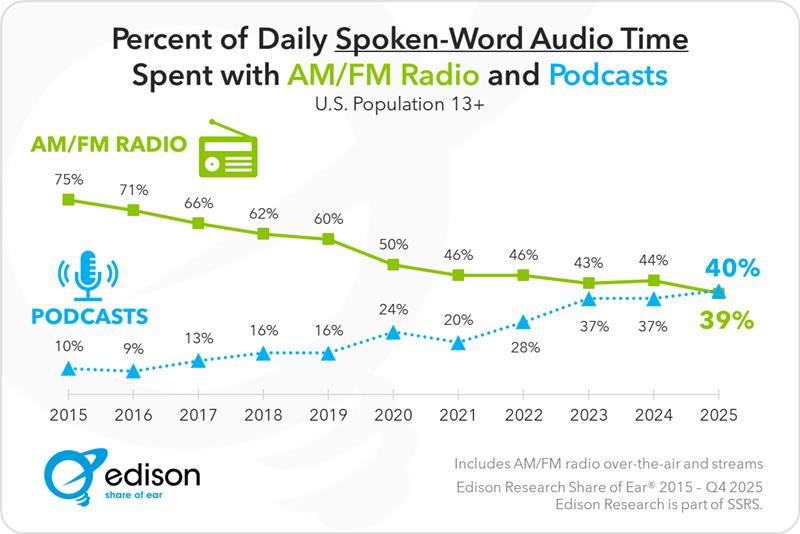
For the first time since it began collecting data, Edison Research figures show that podcast listening surpassed spoken-word formats on AM/FM radio.
In the fourth quarter of 2025, time spent listening to podcasts rose to 40% of all spoken-word listening time. AM/FM Radio spoken word audio time finished the quarter at 39% of listening, according to the Share of Ear study from Edison Research.
When the study first began in 2015, 75% of Americans listening to spoken word audio were with AM/FM Radio. At that same time, only 10% of spoken word audio was spent listening to podcasts.
Those figures have continually inched closer, getting to as close as six percentage points in 2023 before (43% AM/FM Radio-37% podcasts), before the gap widened in favor of terrestrial radio in 2024.
Spoken word audio listening accounts for 25% of all daily time spent with audio, the Edison Research study shows.
The Edison Research Share of Ear study focuses on Americans aged 13+ and their daily, weekly, and monthly listening habits.
Barrett Media produces daily content on the music, news, and sports media industries. Sign up for our newsletters to stay updated and get the latest information right in your inbox.
Scott Van Pelt took a moment on SportsCenter Monday night to honor a friend, offering pointed praise for Mike Tirico’s closing commentary after the United States defeated Canada to capture gold in men’s hockey.
The veteran ESPN anchor, who rarely veers into overt commentary about broadcasters, made it clear that Tirico’s final words on NBC Sports transcended a typical sign-off and instead became part of the moment itself. Speaking directly to viewers, Van Pelt reflected not only on the magnitude of the victory but on the responsibility that comes with narrating history in real time.
“He’s been my friend for decades and he’s been great at what he does for longer,” Van Pelt said. “But what he did on Sunday I believe moves him to a place occupied by one person in our business – him. The message is one thing. How you deliver it is another. And the moment is the truly elusive thing. And this was a singular moment in time.”
Van Pelt emphasized that while many broadcasters can articulate pride or perspective, very few can marry tone, timing and context in a way that feels inseparable from the event itself.
In his view, Tirico accomplished that rare feat as the country absorbed a victory over its most familiar hockey rival.
The United States-Canada matchup already carried decades of tension, history and respect, yet Van Pelt suggested that Tirico understood the broader canvas. Rather than leaning solely into celebration, he framed the outcome within a narrative that resonated beyond the rink, capturing what the win meant on a national stage without losing sight of sportsmanship.
Van Pelt continued by painting the scene that Tirico faced in the closing seconds of the broadcast.
“A Sunday morning in America in winter, with the entire nation watching,” Van Pelt said. “Mike was able to finish telling this remarkable story in a way I truly believe only he could, elevating this craft to its pinnacle and somehow being equal to a moment that will be remembered for all time here in the United States of America.”
For Van Pelt, the significance extended past personal friendship. He framed Tirico’s commentary as an example of what the best in the business strive to achieve: meeting a massive cultural moment with words that neither overshadow nor undersell it. The anchor described the performance as one that stands alone, not because of volume or theatrics, but because of precision and authenticity.
Barrett Media produces daily content on the music, news, and sports media industries. Sign up for our newsletters to stay updated and get the latest information right in your inbox.
Candace Owens has teased a documentary series based on Turning Point USA CEO and the widow of Charlie Kirk, Erika Kirk.
In a post on social media on Monday, Owens shared that she would not host her podcast on Tuesday as regularly scheduled.
Instead, she shared a nearly two-minute-long video of a teaser trailer for a project she’s calling The Bride of Charlie.
In the teaser, a clip of Erika Kirk saying, “My aunt used to tell me, ‘Never do something you don’t want on the front page of the newspaper.'”
Based on clips shown in the trailer, it appears as if Candace Owens will attempt to link Erika Kirk with financial misconduct, as well as potentially linking Kirk to sexual misconduct allegations in Romania.
Following the release of Candace Owens’ teaser trailer, many took to social media to lambast the podcaster for continuing her crusade against Kirk. Many used the term “evil” to describe the actions taken by the former Daily Wire host.
Pure, unadulterated, fucking evil. Who in God's name would put a woman whose husband was brutally assassinated in front of the entire world through this?
I am so upset by this, I am just so deeply sorry Erika and her family have to be put through this. https://t.co/RutcKHVSUQ
This is disgusting behavior. I’m not sorry for her. She’s beyond pity. I’m sorry for those of you who bought into her bullshit and now cannot admit to yourselves how deceived you have been. Untether yourself from this grifter! pic.twitter.com/ci7iVuZDYL
Honored to have been included in the @RealCandaceO documentary/exposé. There is nothing more fascinating and compelling than the truth focused. Onward! https://t.co/TppJxz97pM
Barrett Media produces daily content on the music, news, and sports media industries. Sign up for our newsletters to stay updated and get the latest information right in your inbox.
CBS News has announced its plans for President Donald Trump’s State of the Union address on Tuesday night.
CBS Evening News anchor Tony Dokoupil will anchor the show from Washington on Tuesday night, before leading the network’s primetime coverage of the event beginning at 9 PM ET.
Joining Doukoupil are Margaret Brennan, chief White House correspondent Nancy Cordes, senior White House correspondents Weijia Jiang and Ed O’Keefe, chief Washington correspondent Major Garrett, and chief Washington analyst Robert Costa.
Anthony Salvanto will contribute to the network’s coverage with new polling about President Trump’s speech and his current approval numbers.
On the CBS News 24/7 streaming platform, the coverage will begin at 5 PM ET, with Major Garrett hosting a special edition of his Takeout podcast. The network’s coverage will also include The Free Press senior editor Will Rahn, CBS News contributor Reihan Salam, and reporters Nikole Killion, and Caitlin Huey-Burns.
Michael Wallace will anchor coverage of the event for CBS News Radio. He’ll be joined by Linda Kenyon and Stacy Lyn on Capitol Hill, while other CBS News correspondents and contributors will provide analysis on the radio network.
The network will also provide coverage of the Democratic response from Gov. Abigail Spanberger (D-VA).
Barrett Media produces daily content on the music, news, and sports media industries. Sign up for our newsletters to stay updated and get the latest information right in your inbox.