CBS News Editor-in-Chief Bari Weiss began offering buyouts to CBS Evening News staffers in an effort to reduce costs and reimagine the nightly newscast. One producer, Alicia Hastey, has publicly accepted and called out the direction of the network in her farewell letter.
Hastey — who has worked at the network for the past four years — said that the situation at CBS News had become untenable due to pressures and changes enacted from the top of the network.
“There has been a sweeping new vision prioritizing a break from traditional broadcast norms to embrace what has been described as ‘heterodox’ journalism,” Hastey wrote. “The truth is that commitment to those people and the stories they have to tell is increasingly becoming impossible. Stories may instead be evaluated not just on their journalistic merit but on whether they conform to a shifting set of ideological expectations — a dynamic that pressures producers and reporters to self-censor or avoid challenging narratives that might trigger backlash or unfavorable headlines.”
Hastey’s comments come after CBS Evening News has received criticism for its coverage since Weiss took over the organization and selected Tony Dokoupil to serve as the new anchor of the nightly newscast.
She concluded her message by stationg “Walter Cronkite once said in response to critics: ‘If that is what makes us liberals, so be it, just as long as in reporting the news we adhere to the first ideals of good journalism — that news reports must be fair, accurate, and unbiased.’
“I’ve always taken comfort in the believe that if we hold fast to those first ideals, trust follows,” Hastey added. “But those ideals cannot stand on their own. They require vigilance. They require courage.”
Barrett Media produces daily content on the music, news, and sports media industries. Sign up for our newsletters to stay updated and get the latest information right in your inbox.
A new study from Crowd React Media suggests that while the Super Bowl continues to command massive reach across platforms and generations, advertisers face an increasingly uphill battle when it comes to cutting through distractions and cementing brand memory in a multitasking, multi-screen environment that has fundamentally reshaped how viewers experience live television.
The research division of Harker Bos Group surveyed 512 viewers within 12 hours of the final whistle, an approach designed to measure unaided recall while impressions remained fresh, and found that approximately 67% of adults 18 and older tuned into the game, reinforcing the Super Bowl’s status as a rare mass-reach property in a fragmented media ecosystem where audience aggregation has become more difficult each year.
Traditional television still accounted for the largest single share of Super Bowl viewing, with 53% watching via cable or satellite, yet streaming platforms represented nearly half of total consumption, including 20% who watched on Peacock and another 24% who streamed through the NBC Sports app, YouTube TV, or authenticated cable apps, underscoring how quickly digital distribution has moved from secondary option to central delivery mechanism.
Generational differences sharpened that divide, as 53% of adults ages 18 to 34 streamed the game compared with 42% who watched on traditional television, while 67% of viewers 55 and older remained anchored to linear TV, illustrating how media habits continue to diverge even around tentpole events that historically unified audiences.
Engagement with the Super Bowl itself remained robust, however, as 60% reported watching from start to finish and another 29% said they viewed most of the broadcast, yet strong tune-in did not automatically translate into strong advertising recall.
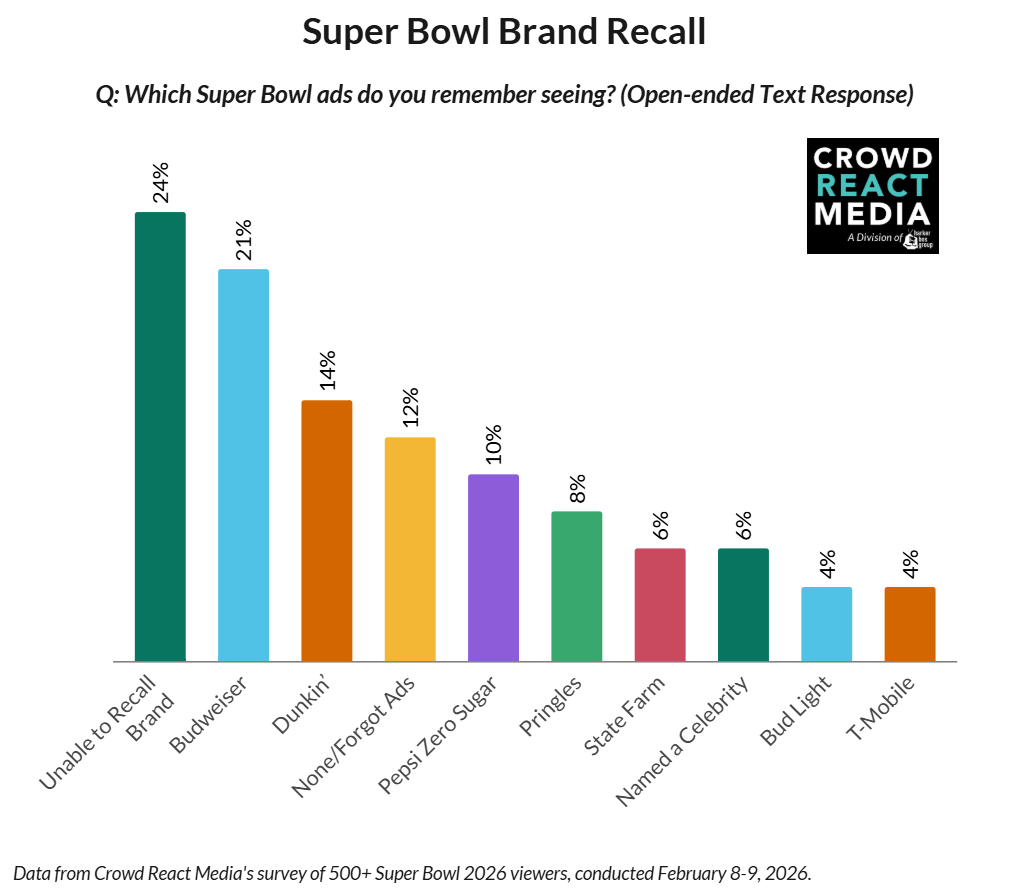
When asked in an open-ended format to name specific advertisers, 24% of respondents could describe a Super Bowl commercial but failed to identify the brand behind it, and an additional 12% admitted they could not remember any ads at all, even though the survey fielded within hours of the game’s conclusion.
Crowd React Media Slide (via Crowd React Media)
Budweiser led overall recall at 21%, though that performance skewed heavily older, with 34% of viewers 55-plus remembering the brand compared with just 18% of adults under 35, while Dunkin’ followed at 14% and Pepsi Zero Sugar posted 10% recall, one of the few brands to align creative buzz with measurable memory.
Celebrity-driven spots generated attention but not always attribution, as 6% of viewers could name a celebrity from a commercial without identifying the sponsoring brand, highlighting a persistent disconnect between star power and brand linkage in cluttered advertising pods.
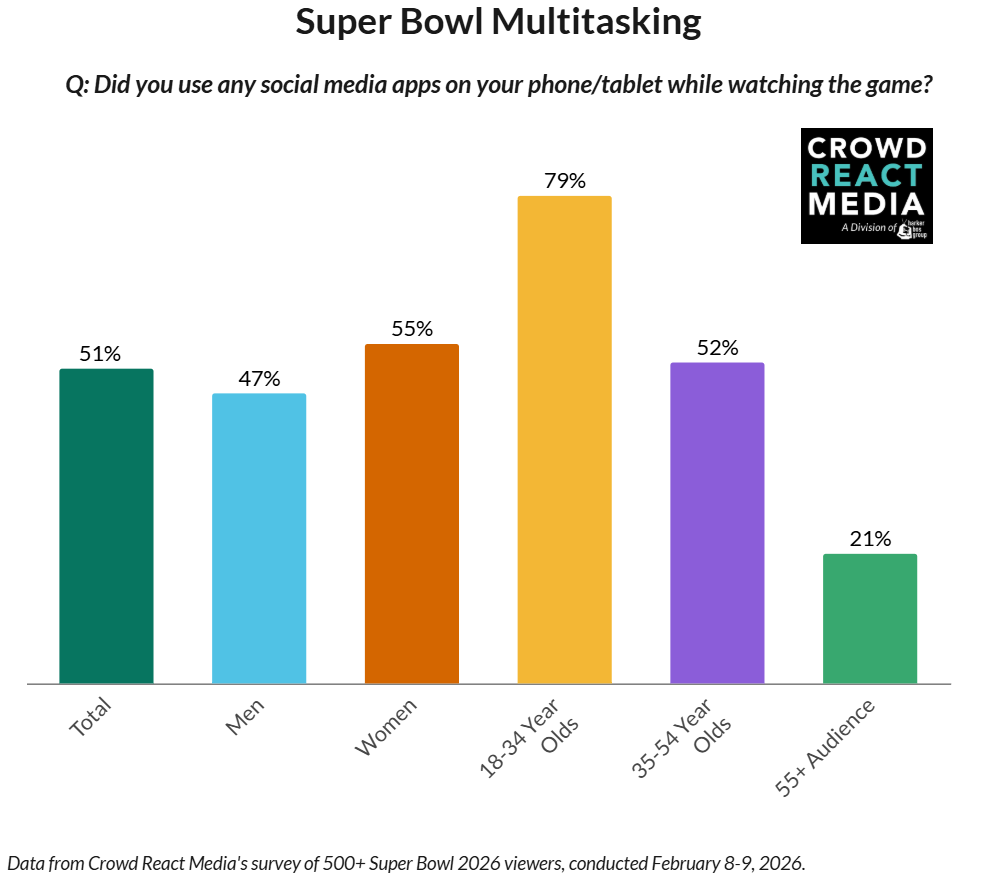
The multitasking Super Bowl environment complicates matters further, with 51% of viewers reporting social media usage during the game and 79% of adults 18 to 34 acknowledging second-screen activity, primarily on Instagram and TikTok, creating competition not only among advertisers but across entirely separate platforms vying for cognitive bandwidth.
Crowd React Media Slide (via Crowd React Media)
Meanwhile, Apple Music emerged as the most effectively recalled brand of the night, as 27% correctly identified it as the halftime sponsor and 34% of younger viewers did so, marking the strongest unaided recall in the study and suggesting that integrated brand moments may outperform traditional 30-second spots in today’s attention economy.
The findings reinforce a clear takeaway for media companies and marketers alike: in an era defined by streaming adoption, generational fragmentation, and constant digital distraction, attention alone does not guarantee memory, and memory remains the metric that ultimately determines return on investment.
Barrett Media produces daily content on the music, news, and sports media industries. Sign up for our newsletters to stay updated and get the latest information right in your inbox.
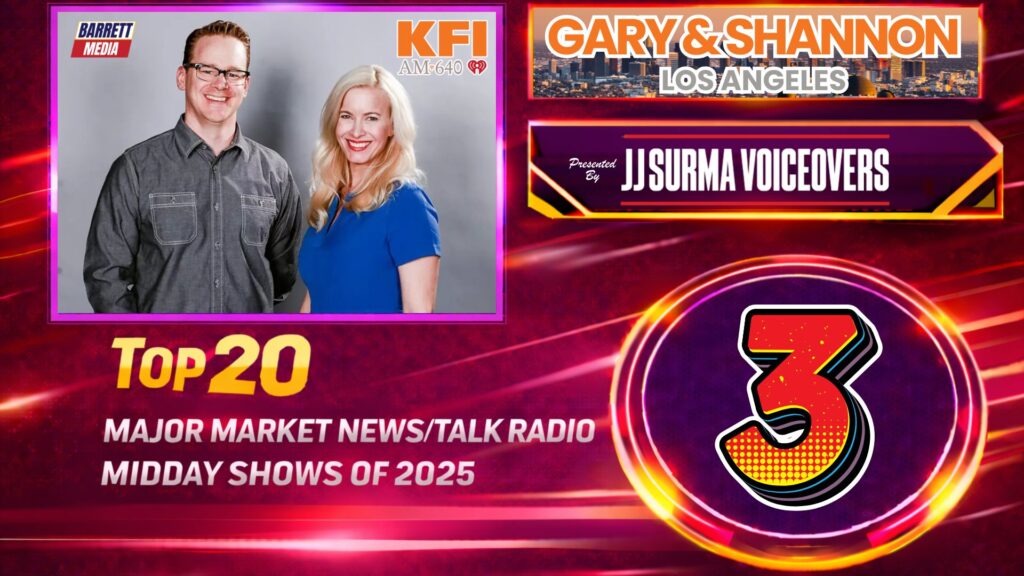
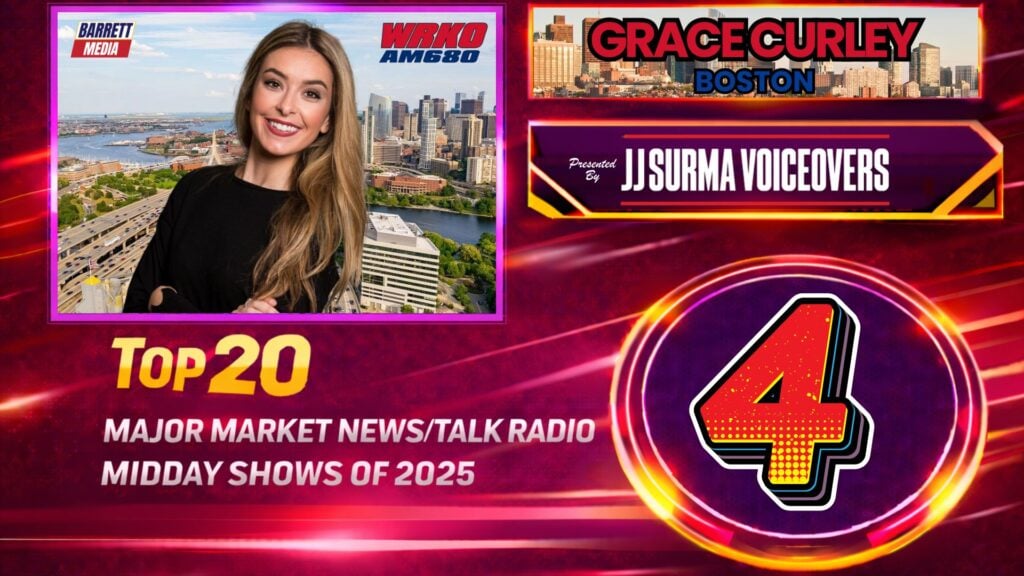
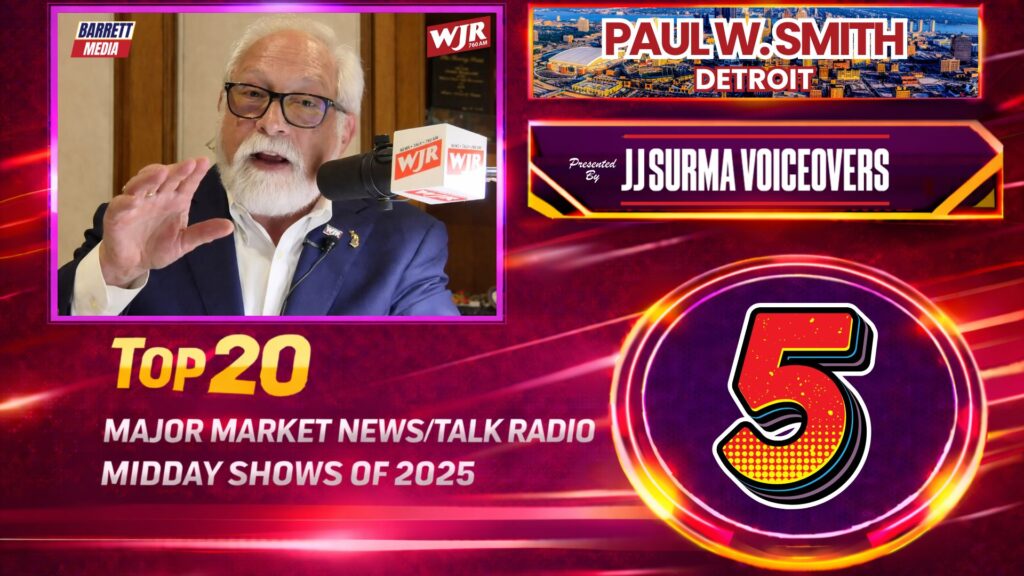
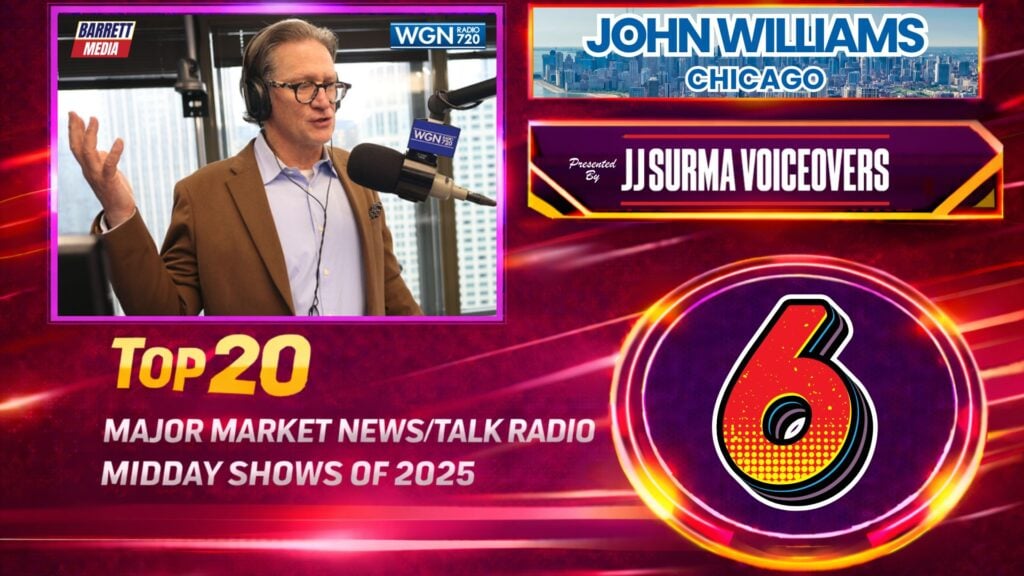
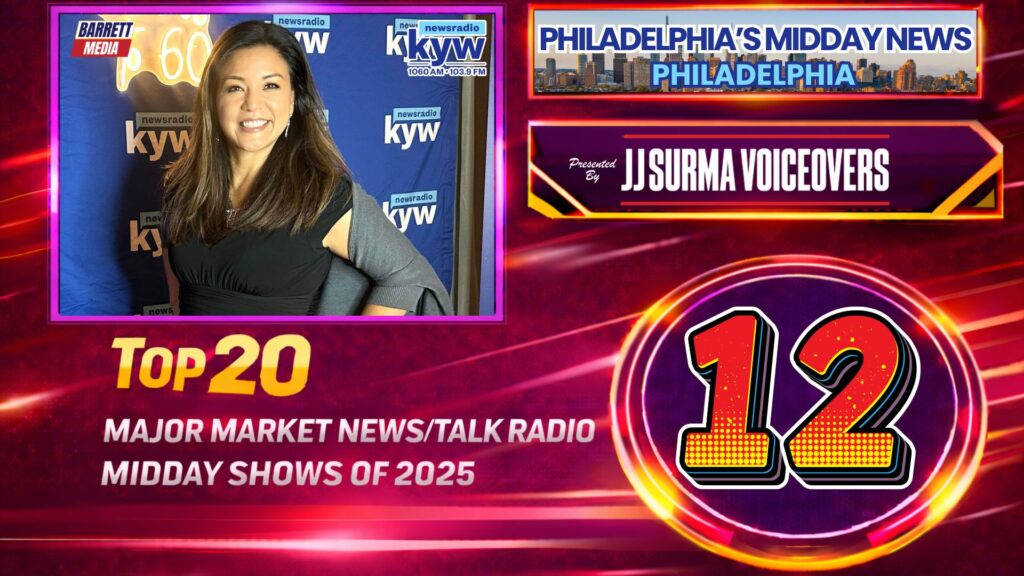
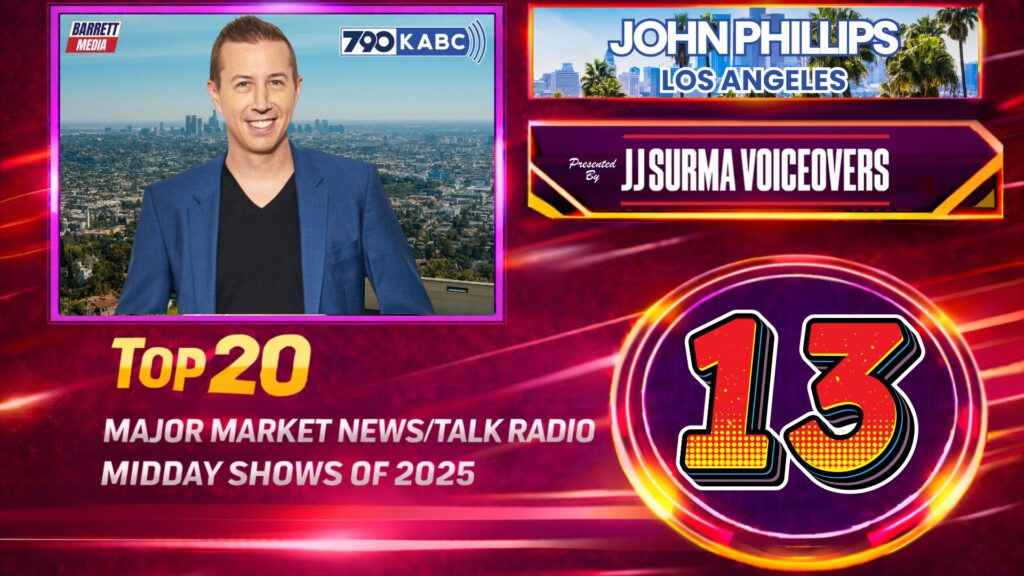
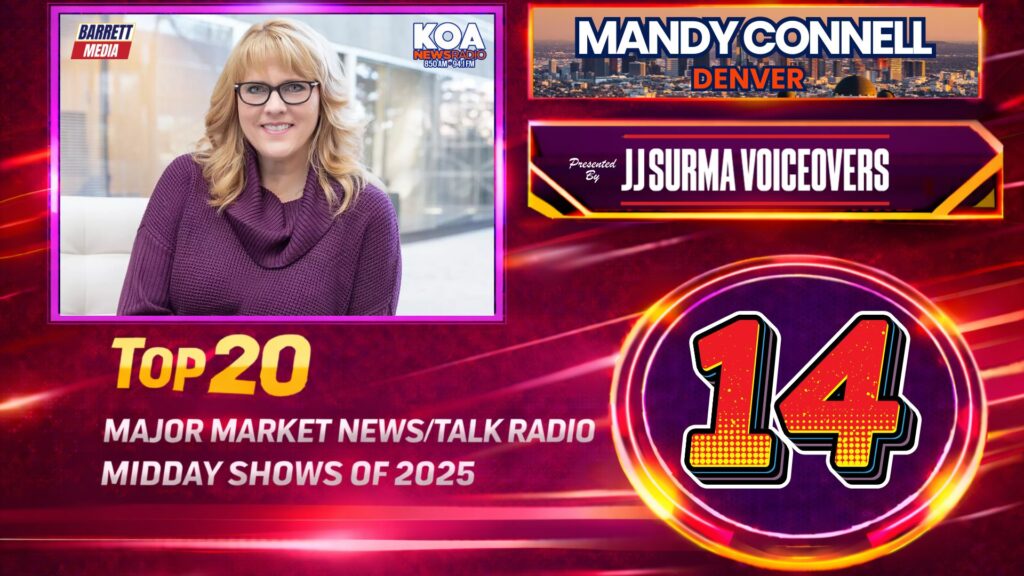
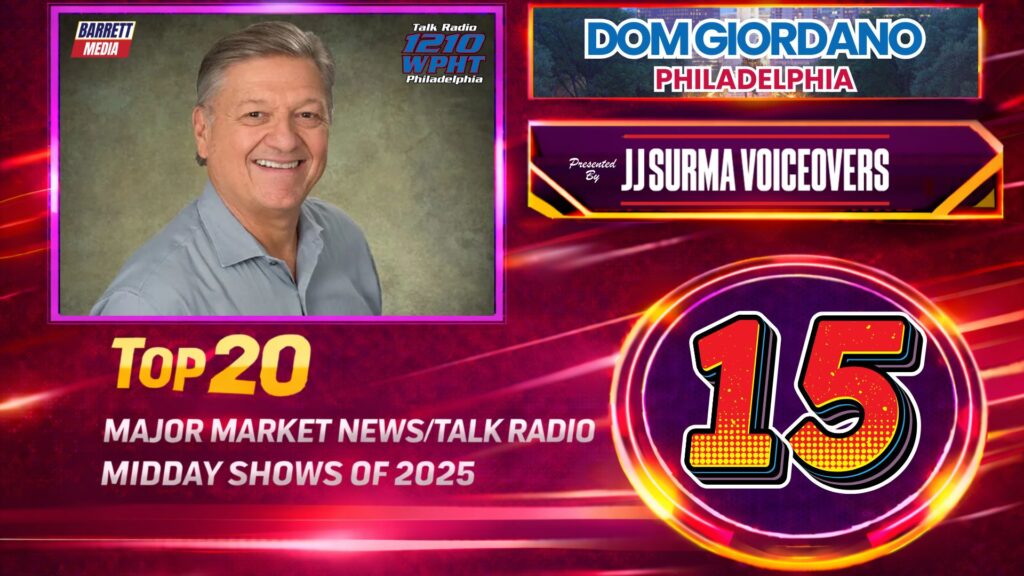
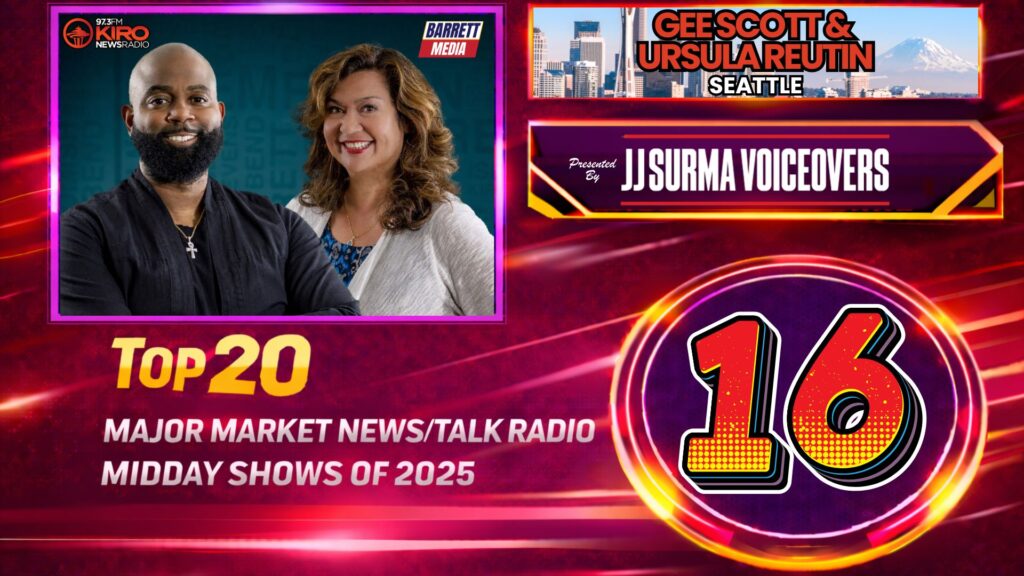
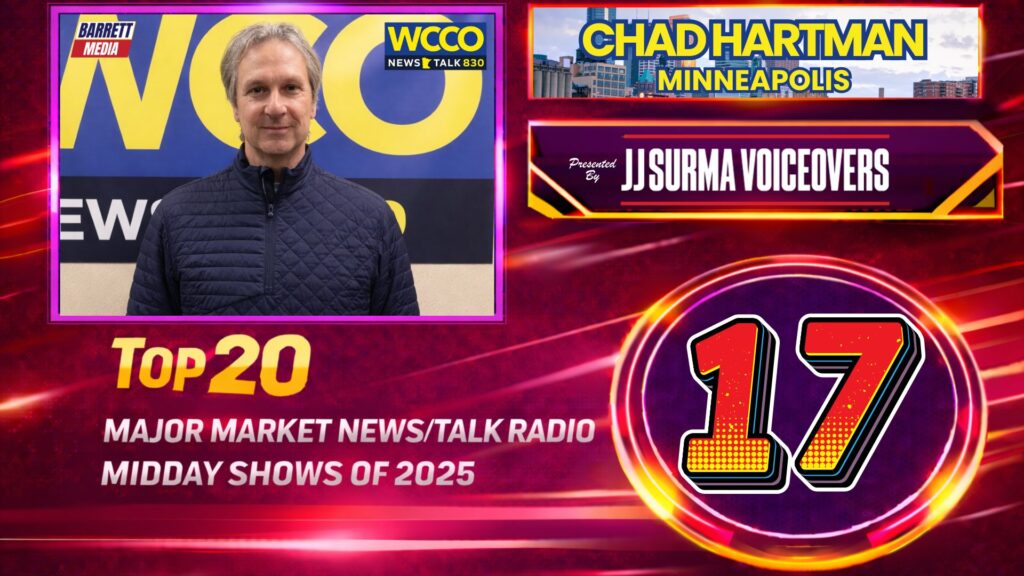
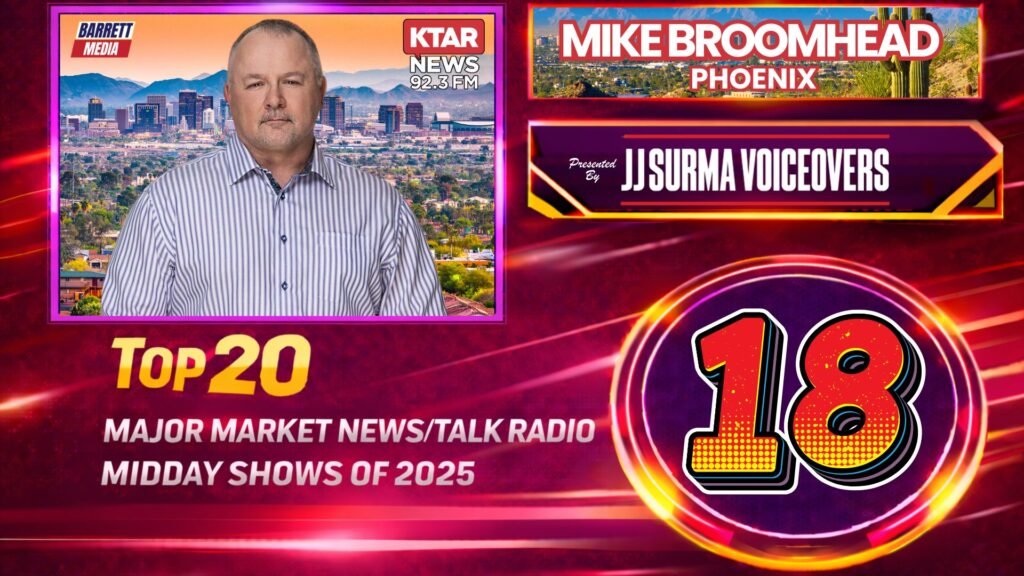
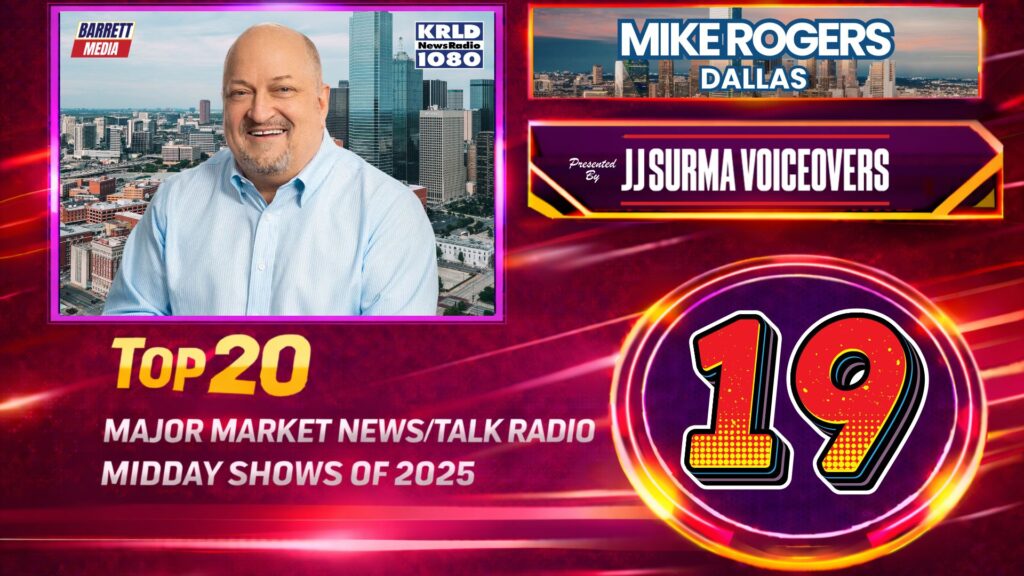
Barrett Media’s Top 20 of 2025 for News/Talk Radio is presented by JJ Surma Voiceovers. Be sure to check out JJ’s work and learn how he can elevate your brand by clicking here.
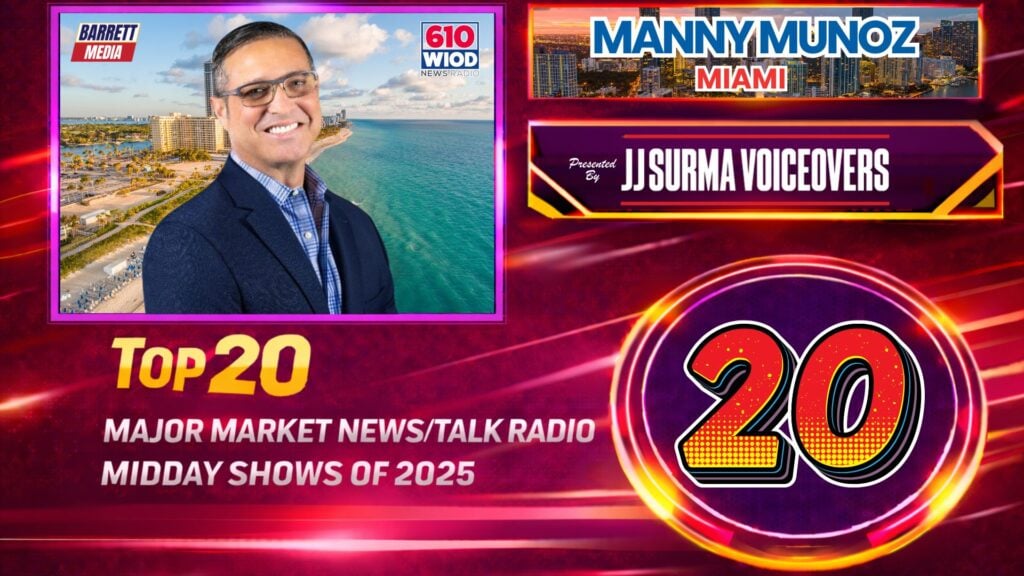
Day 3 of our news/talk series highlights the Top 20 Major Market Midday shows of 2025. To learn of future results, visit our website, newsletters, X, Facebook, LinkedIn, TikTok, and Instagram. The full schedule of upcoming releases is listed down below the images. After the Top 20 series ends in March, I will record a video discussing the entire process. That video will be posted on the Barrett Media YouTube page. Be sure to subscribe so you’re notified once the video goes live.
As you review these results, please remember that they represent the collective feedback shared by our industry voters. Barrett Media does not vote in this process. Our role is to assemble the group, collect the votes, and present the information.
Important Information
#1 – These results are based on 2025’s performance. 2026 changes have no effect on the voting.
#2 – We ask our voters to supply photos and logos to avoid headaches. Some comply, but most don’t. It forces us to spend a lot of time digging for images to highlight everyone. For that reason, there are no photo changes unless it involves a mistake. Thanks in advance for understanding.
#3 – Our executive panel consists of forty (40) program directors and corporate executives from radio’s top broadcasting companies. They include Audacy, iHeart, Cumulus, Cox Media Group, Townsquare Media, Hubbard Radio, Bonneville, Radio One, Nexstar Media, Zimmer Communications, Connoisseur Media, Salem Radio Network, Premiere Networks, Fox News Radio, and a number of independently owned and operated outlets. Our voting group is large because we want feedback from all areas of the country. We also try to make sure the results don’t favor any one company.
#4 – The criteria for our voters included the ear test, originality, multi-platform impact, ratings success, clearance (national shows) and industry buzz. Keep in mind, our voters live in different cities, work for different companies, have different tastes, and value certain factors higher than others. This is not a perfect system but it’s one we feel good about using to showcase the industry’s best.
#5 –A total of 37 shows appeared on ballots submitted for voting consideration in the Major Market News/Talk Radio Midday Shows category.
And the Winner Is…
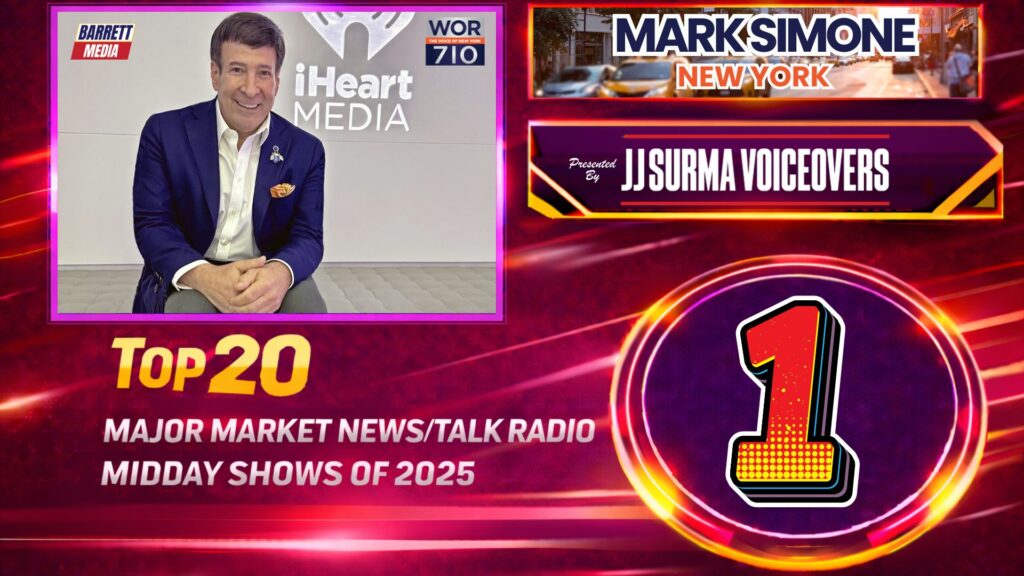
For the second straight year, Mark Simone of 710 WOR in New York claims the top spot. Congrats to Mark, Tom Cuddy and the entire 710 WORC team on the well deserved recognition.
I want to thank Dylan Barrett for creating the artwork, and each voter who participated in the process. Now without further delay, here are Barrett Media’s Top 20 Major Market News/Talk Radio Midday Shows of 2025.
Additional Notes:
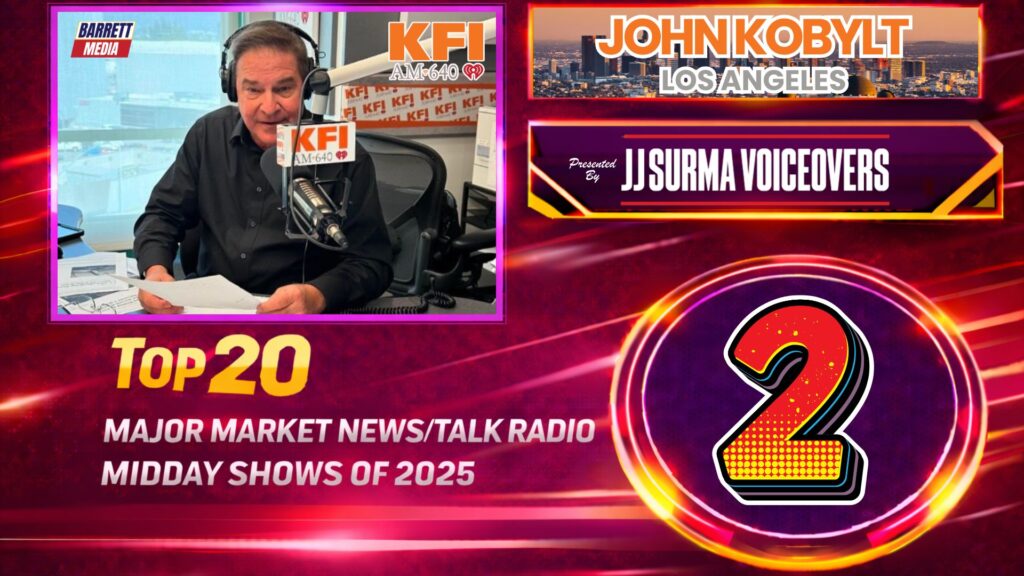
Mark Simone scored a thirty one (31) point win over KFI’s John Kobylt to occupy the top spot. However, Simone and Kobylt finished tied for the most first-place votes in the category with four (4).
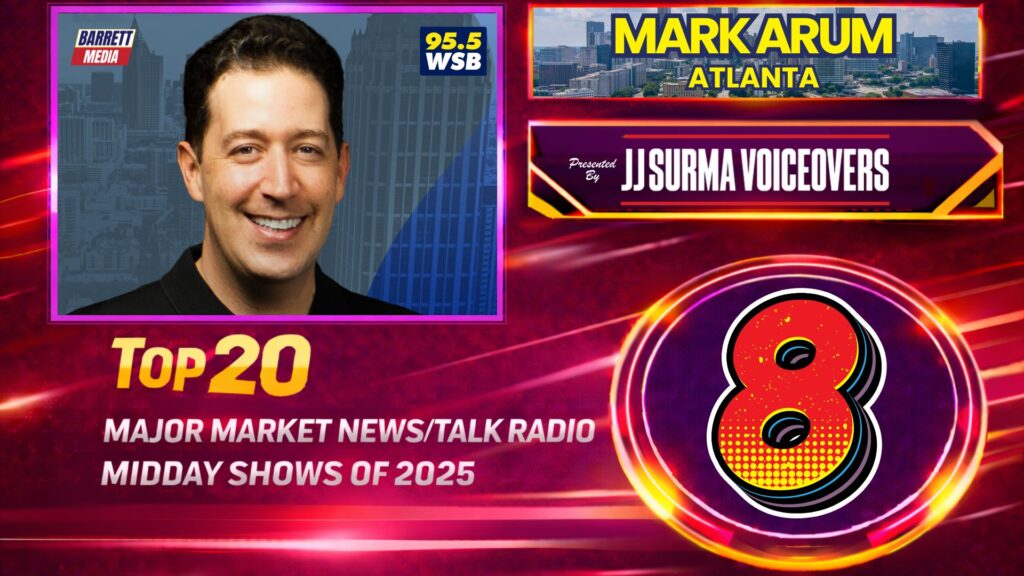
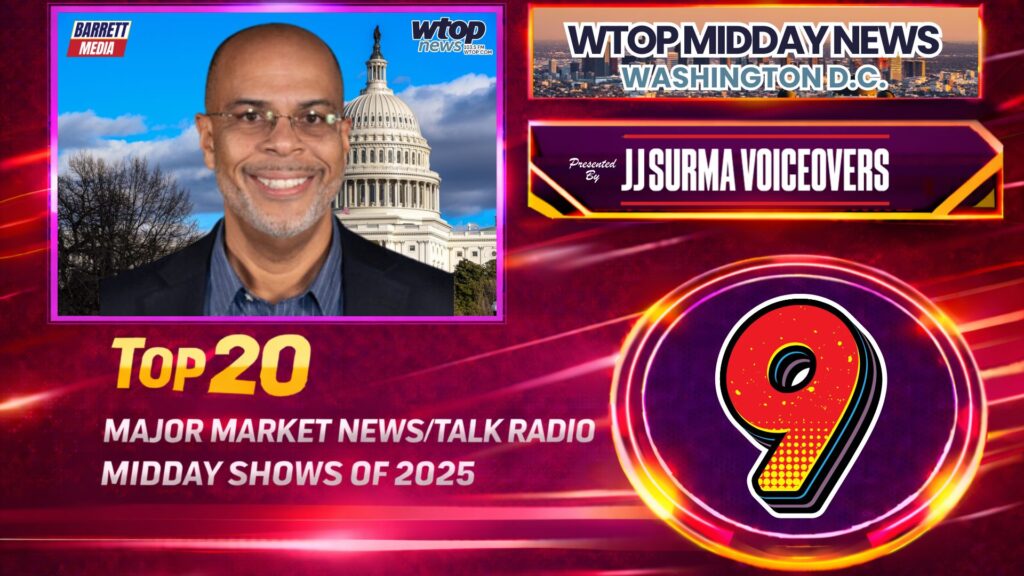
Spots 21-25 were filled by Jackie Page, Chris & Joe, KCBS Midday News, Dawn Stensland, and Jake Skorheim & Spike O’Neill.
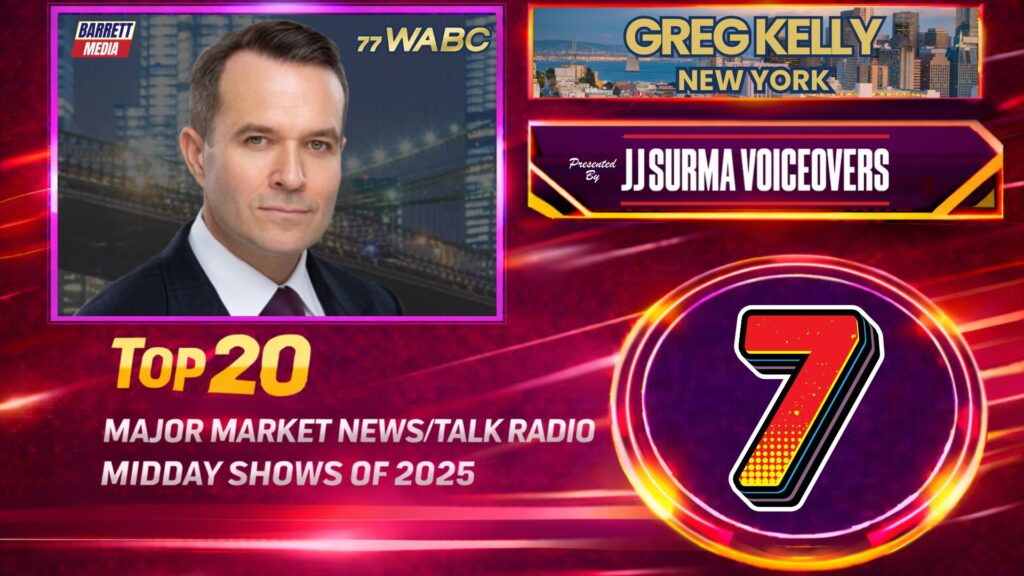
The closest contest was for 6th place where John Williams finished two (2) points ahead of Greg Kelly.
Of the 37 shows to appear on submitted ballots, nine (9) received at least one 1st place vote.
BM Top 20 of 2025 Remaining Schedule:
Friday February 13 = BM Top 20 Major/Mid Market N/T Radio Afternoon Shows of 2025
Monday February 16 = BM Top 20 Major/Mid Market N/T Radio Program Directors of 2024
Tuesday February 17 = BM Top 20 Major/Mid Market N/T Radio Stations of 2025
Wednesday February 18 = BM Top 20 Major/Mid Market News Media Digital Shows of 2025
Barrett Media produces daily content on the music, news, and sports media industries.Sign upfor our newsletters to stay updated and get the latest information right in your inbox.
Barrett Media’s Top 20 of 2025 for News/Talk Radio is presented by JJ Surma Voiceovers. Be sure to check out JJ’s work and learn how he can elevate your brand by clicking here.
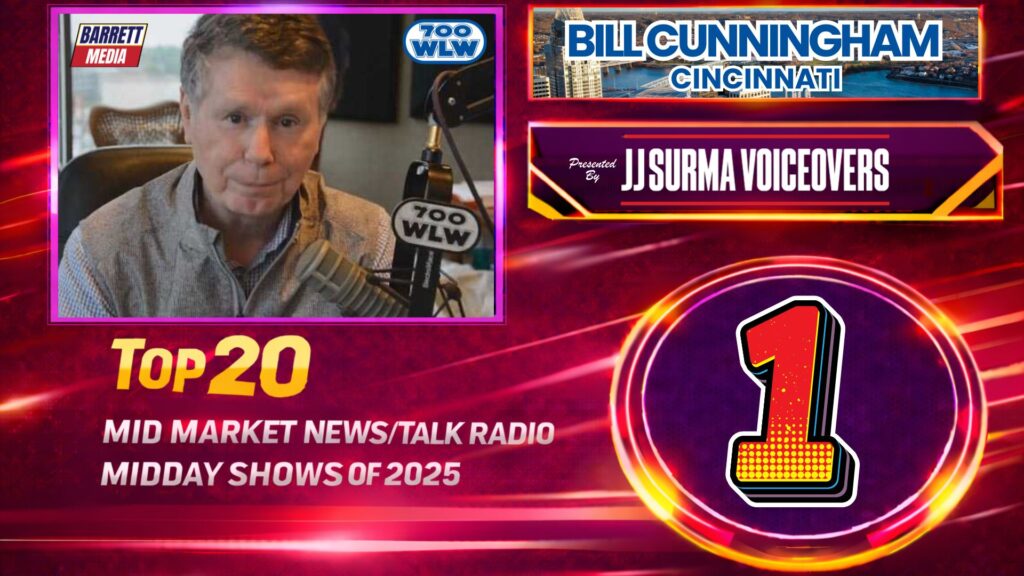
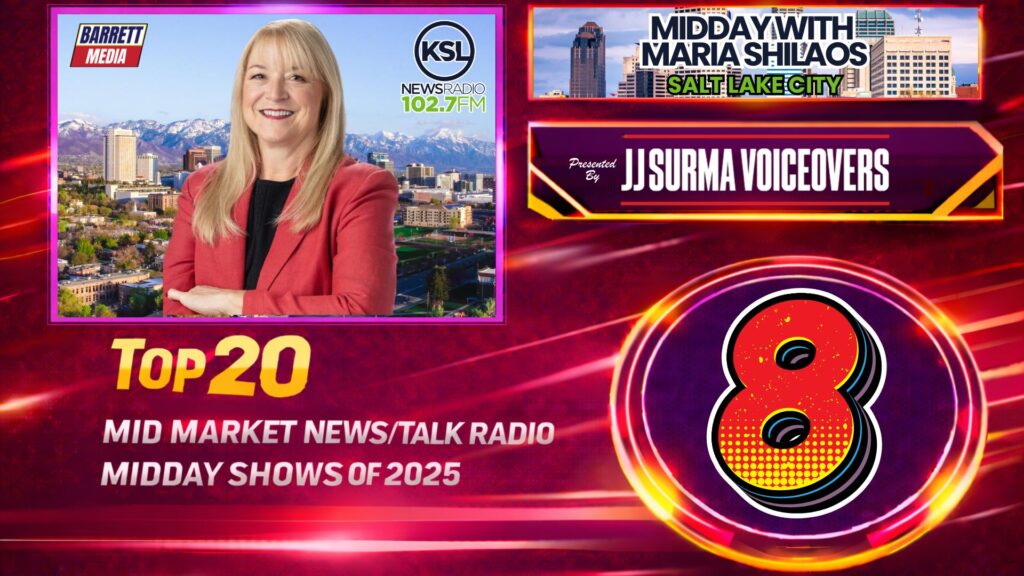
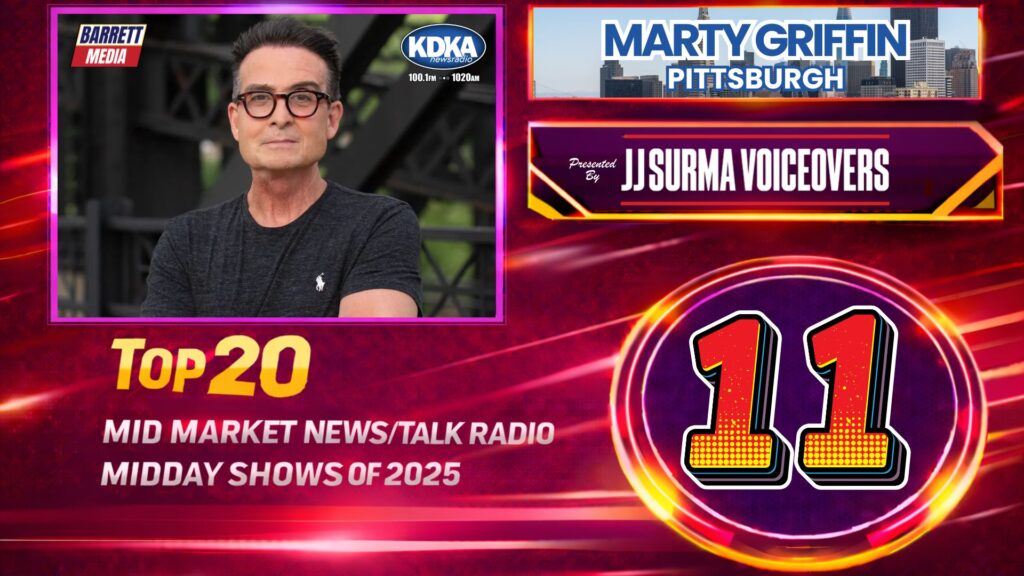
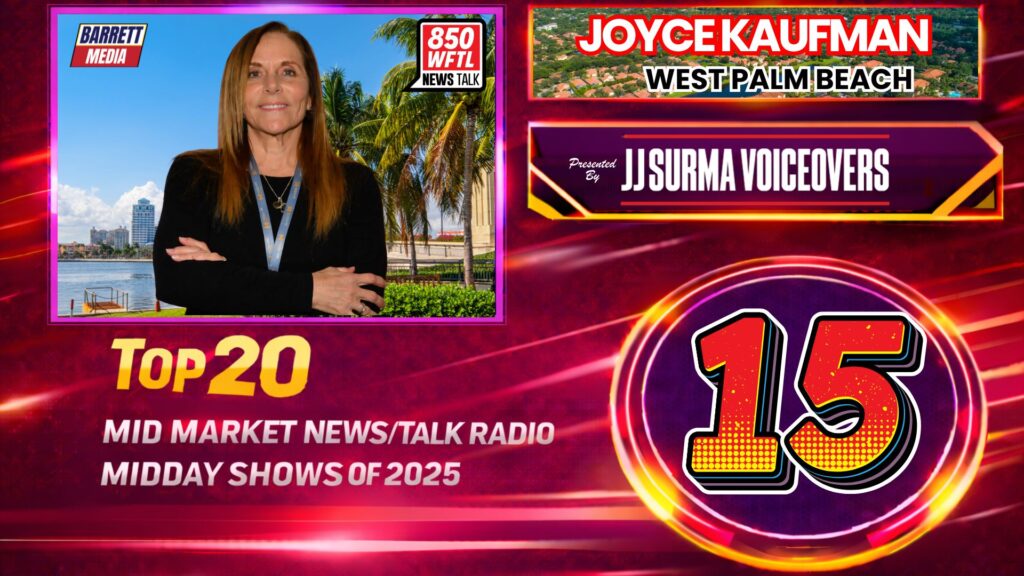
Day 3 of our news/talk series highlights the Top 20 Mid Market Midday shows of 2025. To learn of future results, visit our website, newsletters, X, Facebook, LinkedIn, TikTok, and Instagram. The full schedule of upcoming releases is listed down below the images. After the Top 20 series ends in March, I will record a video discussing the entire process. That video will be posted on the Barrett Media YouTube page. Be sure to subscribe so you’re notified once the video goes live.
As you review these results, please remember that they represent the collective feedback shared by our industry voters. Barrett Media does not vote in this process. Our role is to assemble the group, collect the votes, and present the information.
Important Information
#1 – These results are based on 2025’s performance. 2026 changes have no effect on the voting.
#2 – We ask our voters to supply photos and logos to avoid headaches. Some comply, but most don’t. It forces us to spend a lot of time digging for images to highlight everyone. For that reason, there are no photo changes unless it involves a mistake. Thanks in advance for understanding.
#3 – Our executive panel consists of forty (40) program directors and corporate executives from radio’s top broadcasting companies. They include Audacy, iHeart, Cumulus, Cox Media Group, Townsquare Media, Hubbard Radio, Bonneville, Radio One, Nexstar Media, Zimmer Communications, Connoisseur Media, Salem Radio Network, Premiere Networks, Fox News Radio, and a number of independently owned and operated outlets. Our voting group is large because we want feedback from all areas of the country. We also try to make sure the results don’t favor any one company.
#4 – The criteria for our voters included the ear test, originality, multi-platform impact, ratings success, clearance (national shows) and industry buzz. Keep in mind, our voters live in different cities, work for different companies, have different tastes, and value certain factors higher than others. This is not a perfect system but it’s one we feel good about using to showcase the industry’s best.
#5 –A total of 47 shows appeared on ballots submitted for voting consideration in the Mid Market News/Talk Radio Midday Shows category.
And the Winner Is…
One of talk radio’s most prominent voices, 700 WLW’s Bill Cunningham. This marks the fourth straight year that Bill has earned the top spot. He has never lost the category since we started highlighting News/Talk radio shows in 2022. No other show across any category in this series has done that. Congrats to Bill, Scott Reinhart, and the entire WLW crew on another strong year of industry recognition.
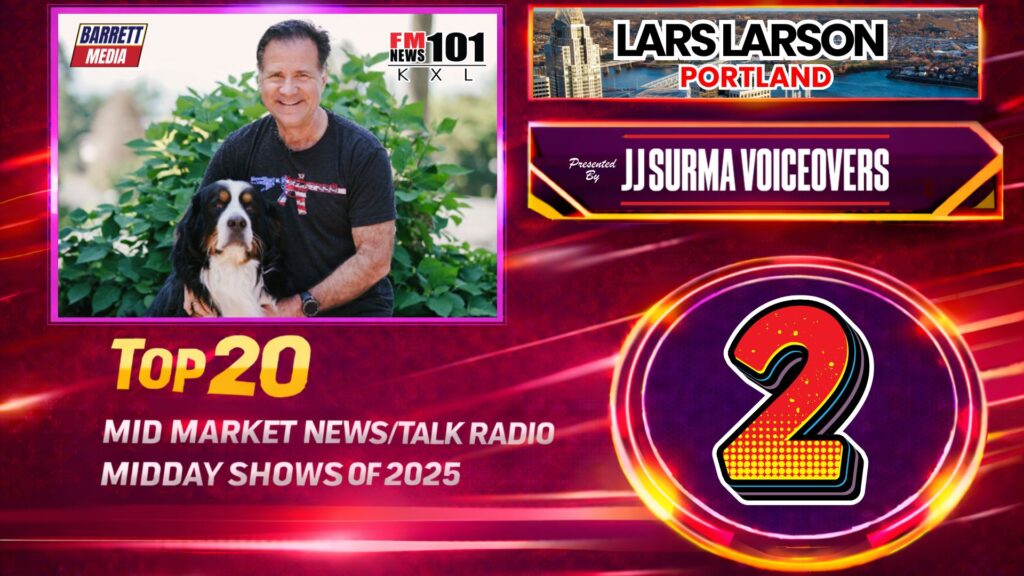
I want to thank Dylan Barrett for creating the artwork, and each voter who participated in the process. Now without further delay, here are Barrett Media’s Top 20 Mid Market News/Talk Radio Midday Shows of 2025.
Additional Notes:
Bill Cunningham cruised to a forty eight (48) point victory over KXL’s Lars Larson. Cunningham also secured the most first-place votes in the category with nine (9).
In spots 21-25 were Midday with Jayme & Weir, Brandon Vogt, Chris & Amy, Chad Benson on SuperTalk 99.7 WTN, and Steve Scaffidi & Kristen Brey.
Our closest battle was for 16th place. Tony & Dwight held off Chris Hand by two (2) points.
Of the 47 shows to appear on submitted ballots, six (6) received at least one 1st place vote.
BM Top 20 of 2025 Remaining Schedule:
Friday February 13 = BM Top 20 Major/Mid Market N/T Radio Afternoon Shows of 2025
Monday February 16 = BM Top 20 Major/Mid Market N/T Radio Program Directors of 2024
Tuesday February 17 = BM Top 20 Major/Mid Market N/T Radio Stations of 2025
Wednesday February 18 = BM Top 20 Major/Mid Market News Media Digital Shows of 2025
Barrett Media produces daily content on the music, news, and sports media industries.Sign upfor our newsletters to stay updated and get the latest information right in your inbox.
The superstars of the basketball world will descend upon the “City of Angels” this coming weekend as Los Angeles hosts the 2026 NBA All-Star festivities. Three nights will be full of highlights, trick shots, gravity-defying slams, mixed with the glitz and glamour the shadows of Hollywood provide. This year, over 200 content creators will mix in with traditional media who cover the sport on a day-to-day basis. Despite the added media presence, Yahoo Sports senior NBA analyst Kevin O’Connor is approaching the opportunity with a keen focus on exclusivity.
“Hopefully I’ll get to interview a good number of people. It’s always busy at All Star Weekend,” notes O’Connor, who joined Yahoo Sports in 2024 after spending eight years with The Ringer. “Hosting my own show for Yahoo Sports has been amazing. They’ve empowered me to bring on different voices both internally and externally of the company. That’s been a big change for me.”
O’Connor is among the growing number of journalists and creators who have made the leap to the Yahoo Sports brand in recent years. Under the guidance of Yahoo Sports Group president Ryan Spoon, the company has continued building its own lane of content creation, from podcasts to newsletters. With the addition of O’Connor in 2024, the goal was to build on the established reputation the brand has carried for generations.
“Last year was about building the podcasts and getting those established. This year we launched our Yahoo NBA YouTube channel. Currently we’re thinking strategically with creative approaches to that. It’s fun and rewarding to see it grow so quickly after launching,” says O’Connor.
Building On Legacy
For years, Yahoo Sports has served as a destination for NBA fans. It was once home to names such as Adrian Wojnarowski and Shams Charania, who both helped build the reputation the brand holds with NBA fans.
For O’Connor, the opportunity presented itself as a challenge to craft his own lane at Yahoo Sports instead of replicating past results.
“I just focus on myself, my team, and the people I work with daily. I’m not Drake Maye trying to replace Tom Brady,” joked O’Connor. “I’m just doing my own thing. We’re all different. I don’t think I do what ‘Woj,’ Shams, or any of the great people who have come through Yahoo have done. I came here to collectively build something great, and I feel we are.”
The creative freedom Yahoo Sports provides was a direct reason O’Connor came aboard. Although the company has been established for multiple decades, its culture allows for the flexibility he values. The connectivity between the editorial and video sides of the company, he says, serves as a major advantage. O’Connor said his eight years working and growing within the walls of The Ringer were an amazing time. However, there are some small changes to his role at Yahoo Sports.
“Coming to Yahoo, it’s just different. It’s the same, but in different ways,” explains O’Connor. “I focus on my podcast day to day. That’s the main thing, but my responsibilities have differed a bit. I don’t write as often as I did in the past, but I pick my spots more than I did before.”
Content For All
O’Connor began his career in sports media in 2013 as a writer for the popular CelticsBlog. His process has always centered on finding angles that no one else is targeting. His guide in that search lies in the perspective of the fan. If an angle interests him, he believes it will interest the broader NBA audience.
Now, with a platform that reaches a worldwide audience, the challenge is identifying those angles across every NBA team while ensuring none is left behind in the content mix.
“I have a spreadsheet where I track topics I talk about on every single podcast. It’s because I never want to go too long without talking about a particular team,” says O’Connor. “There are thirty fanbases that listen to your podcast, plus fans of the league in general. It’s always about trying to hit different teams and not going too long without talking about them.”
O’Connor believes there is power in diversifying content rather than focusing solely on the hit topics most national media outlets emphasize. He sees that approach as a key reason for his growth at Yahoo Sports.
“If you’re going to a concert, sometimes you want to hear that deep cut,” says O’Connor. “Same thing with a podcast… If you’re just playing the hits, it can get a little stale. That’s one of the things I’ve always tried to do.”
Athlete Driven Media
The Kevin O’Connor Show is the top NBA podcast in the Yahoo Sports portfolio. As athletes shift attention away from the court and into podcasting, O’Connor welcomes additional voices into the NBA conversation. While some traditional media members scoff at the rise of athlete-driven podcasts, O’Connor finds it fascinating that so many players are making the leap.
“Athlete hosted podcasts give me more to talk and think about. Personally, I find it fascinating why a player would even want to do this rather than just ignoring it,” said O’Connor. “It’s great to have more voices. Different players have different approaches. It’s overall additive.”
Regarding the growing number of athlete-hosted podcasts, O’Connor says his philosophy remains simple: there is always a new listener somewhere.
“There’s a lot of options for entertainment period,” said O’Connor. “Sports podcasts are competing with a cooking podcast, Netflix show, video games, and reading books. Content is content, and entertainment is entertainment. It’s all competing with each other. People are going to figure out what they want to do anyway. I just look to provide for those with an interest in sports and the NBA.”
NBA Appeal
Interest in the NBA is nearing an all-time high. The league consistently sets new records in reach, engagement, and social metrics. In fact, NBA commissioner Adam Silver last year referred to the league as a “highlight sport” for many consumers. This season marks the first year of the league’s new 11-year media rights agreements with The Walt Disney Company, Prime Video, and NBCUniversal.
O’Connor says the league has done a good job educating audiences on where to find broadcasts, despite criticism from some observers. In particular, the risks taken by both Prime Video and NBC Sports have stood out.
“The broadcasts themselves have been sensational. More than any messaging, it’s about creating a good product. The Amazon one, and I like that NBC experimented with analysts on the benches,” noted O’Connor. “I look forward to seeing what NBC does with All Star Weekend, but overall, it’s been an upgrade.”
As the league turns Los Angeles into its annual basketball carnival, O’Connor will do what he has always done — search for the angle others overlook.
In a weekend built on spectacle, celebrity sightings, and viral clips, his edge is not access or volume. It’s intention. The same spreadsheet that keeps him accountable to all thirty fanbases, the same curiosity that drove him at CelticsBlog in 2013, and the same belief that sometimes fans want the “deep cut” instead of the greatest hit — that’s what he’s bringing to All-Star Weekend.
In an NBA ecosystem overflowing with content, personalities, and platforms, O’Connor isn’t trying to be the loudest voice in the room. Instead, he is focused on being a consistent one. While 200 creators chase moments in the shadows of Hollywood, he is chasing meaning — conversations that last longer than a highlight and analysis that resonates beyond a trending topic.
For Kevin O’Connor, All-Star Weekend isn’t just about the show in Los Angeles. It’s about serving the fan in Orlando, Oklahoma City, or overseas who wants more than flash. In an era where everyone has a microphone, that steady, thoughtful approach might be the most valuable highlight of all.
Barrett Media produces daily content on the music, news, and sports media industries. Sign up for our newsletters to stay updated and get the latest information right in your inbox.
For years, the Super Bowl Halftime Show has been the ultimate pop-culture mirror. It tells us who matters, what resonates, and where attention is flowing. This year, Turning Point USA decided to crash that party with its own alternative programming, and the reaction said more than the show itself ever could. Whether you loved it, hated it, or rolled your eyes, the effort forced you to pay attention. That alone matters.
Turning Point USA didn’t stumble into relevance by accident. The organization understood the moment, the audience fragmentation, and the cultural tension surrounding one of the biggest stages in American TV. It didn’t try to create the party. It tried to create a better party and dared people to pay attention. That’s a lesson news/talk radio should be studying closely.
Some see it as a stunt. Others call it noise. But the industry doesn’t get to complain about shrinking influence while ignoring people willing to challenge the status quo. The halftime counterprogramming wasn’t perfect, but it wasn’t supposed to be. It was designed to be noticed.
Relevance
Here’s the uncomfortable truth. It doesn’t take much to be relevant anymore. You don’t need perfection, mass approval, or even universal praise. You need confidence, clarity, and repetition.
If you continually tell people that something will be big, great, and important, they’re likely to think it’s big, great, and important. That’s how modern relevance works. Attention follows conviction. Algorithms reward insistence. Audiences respond to belief.
That’s the easy part. Anyone can hype something up. Social media has turned hype into a cottage industry. Radio hosts do it daily when teasing segments, guests, or breaking news. Some do it well. Others overpromise and underdeliver.
Turning Point USA leaned into the hype unapologetically. It framed the show as an event, spoke about it like it mattered, and treated it as something audiences should schedule time around. That framing did half the work.
News/talk radio often forgets this lesson. Too many shows undersell their own importance. They treat content as filler rather than as appointment listening. If you don’t sound convinced that what you’re doing matters, why should anyone else believe it?
Relevance doesn’t require universal buy-in. It requires enough people to care. The halftime show didn’t need to beat the NFL. It just needed to insert itself into the conversation. Mission accomplished.
Disruption
Disruption, however, is an entirely different animal. It’s far harder to achieve, and can’t be faked. Real disruption takes time and consistency. Or better said, persistence.
Should Turning Point USA, or anyone for that matter, want to create a true disruption, it can’t be a one-time swing. One show doesn’t change behavior. One broadcast doesn’t reshape habits. One viral moment doesn’t build a movement.
As Glenn Beck said on his show this week, this was a good first step. That framing matters. A first step implies more steps to follow. It acknowledges the work ahead instead of declaring premature victory.
Radio knows this better than most industries. Successful shows aren’t built overnight. They’re earned through repetition, trust, and familiarity. Disruption comes when audiences change what they do out of habit, not curiosity.
That’s where news/talk radio should really be paying attention. The halftime experiment showed what’s possible when someone challenges a sacred media cow. But it also showed how much harder the follow-through will be.
If Turning Point USA wants this to matter long-term, it will need to show up again. And again. And again. The same is true for radio hosts who claim they want to reinvent the format but keep doing the same show every day.
Disruption isn’t loud. It’s persistent. And that may be the biggest lesson of all.
Barrett Media produces daily content on the music, news, and sports media industries. Sign up for our newsletters to stay updated and get the latest information right in your inbox.
Ask yourself this question. If you publicly dared your supervisor to fire you, would they? Typically, asking that type of question would raise an eyebrow and prompt someone to wonder why you would even pose such an asinine query. That’s essentially what Stephen A. Smith did on his Tuesday SiriusXM program while discussing critics of his commentary on Bad Bunny’s Super Bowl LX halftime performance.
About a month ago, I wrote that Stephen A. Smith must reel in the “straight shooter” persona that helped make him a media star. Consistently barking back and punching down from the top of the mountain only hurts his credibility. Why waste your audience’s time when they come to you for content, not controversy?
However, his latest public defiance against unnamed critics attempting to “cancel” him (his words) over his Bad Bunny commentary should raise alarms. Has it reached a point where networks now accept that Stephen A. Smith is bulletproof?
The facts are these. Bad Bunny’s selection for the Super Bowl LX halftime show was controversial. Critics will always find a reason to object to the entertainment act chosen for the biggest stage in the country.
Yes, Bad Bunny is a Latin artist, with the vast majority — if not all — of his songs performed in Spanish.
Yes, Bad Bunny is currently the most popular and most globally streamed artist in the world.
From a business standpoint, it makes perfect sense for the NFL to bring in Bad Bunny as its halftime act as the league continues to market itself to an international audience. There’s a reason the NFL is going overseas nine times next season, a new record. There’s also a reason Commissioner Roger Goodell said last week that he continues to keep international expansion on the table.
Timing, as always, is everything.
On Monday, Stephen A. Smith credited a singular point President Donald Trump made about the halftime performance being entirely in Spanish. Smith referenced Trump’s Truth Social post and agreed that because the majority of the American viewing audience does not speak Spanish, some viewers felt disconnected.
Apparently, those comments fueled calls from some for Smith to be canceled from his role on ESPN’s First Take. Granted, he did not make the commentary on ESPN programming. Smith elaborated on that during his rant on SiriusXM Tuesday.
“They [critics] got me all over the place with pictures pairing me with right-wingers talking about ‘I was against Bad Bunny.’ I was not against Bad Bunny,” Smith said. “I honor my contracts. I’m not going away. I say stuff on my political channel or my YouTube channel. Why are folks calling ESPN? I didn’t say it on their airwaves… They have nothing to do with what I’m saying. I own this show.”
Smith is correct that he did not make those comments on ESPN programming. He is also correct that he owns the IP of his two SiriusXM programs and his YouTube channel. Where Smith misses the point, however, is that no matter where he shares commentary, it still comes from the same person.
One of the first lessons of becoming a public figure is understanding who you represent. Of course, you represent yourself. More importantly, you represent the people and companies who invest in you and your product.
Stephen A. Smith has built his own media empire, and the value of that property may exceed any paycheck he receives from ESPN. However, he remains an ESPN employee. With every word Smith utters, he represents himself, ESPN, his media company Straight Shooter Media, and SiriusXM.
Public figures do not control how companies respond to commentary they deem damaging to their brand. His Bad Bunny commentary did not cross a line; it simply reflected a moment where he credited the president on a singular point. Was it cancelable? Of course not. But presenting himself as untouchable may be the larger misstep.
“I own both my shows, and I own my own YouTube channel. Why [are] you constantly bringing up my day job? ‘Stephen A. of ESPN.’ Because you want to get me canceled. Why don’t you bring up about me on SiriusXM? Because you know there’s no way in hell Scott Greenstein or SiriusXM is going to cancel me,” said Smith Tuesday.
If you publicly dared your supervisor to fire you, would they?
Positioning yourself as too important to a brand for that brand to fire you is not a winning formula. Smith may argue that the statement was part of a hypothetical. Still, the words stand on their own.
Here’s a better question. Would Smith use that same bravado if another Ray Rice–type incident occurred and he delivered similar commentary to what he once did? ESPN suspended Smith for those comments, and he later apologized.
Reading between the lines of Smith’s recent comments, he appears to believe he is untouchable. He suggests certain employers cannot punish him if he keeps controversial commentary on separate platforms. He even dares executives to fire him because, in his view, he already owns the limelight and the IP. The “straight shooter” continues to fire, and major corporations do not blink.
The most dangerous place any media personality can live is in the belief that they are bigger than the brand that platformed them. Corporations protect their interests before they protect their talent. History — inside and outside of sports media — shows that no contract, no ratings number, and no ego makes someone immune from consequences.
This isn’t about whether his Bad Bunny take was cancelable. It wasn’t. It’s about posture, perception, and understanding that when you cash a corporate check, your independence has limits — even if you own microphones elsewhere.
Smith has every right to defend himself. He has every right to clarify his words. But daring the world — and, by extension, your employers — to silence you is not strength. It’s hubris.
And hubris, especially in corporate media, eventually meets reality.
The “straight shooter” persona built the empire. Believing you’re bulletproof is how empires crack.
Barrett Media produces daily content on the music, news, and sports media industries. Sign up for our newsletters to stay updated and get the latest information right in your inbox.
Chris Merrill didn’t need much time to think when the call from KFI came.
For someone who has spent years climbing the ladder in news/talk radio, filling in, grinding weekends, and refining his craft across multiple major markets, the move from KTAR News 92.3 in Phoenix to Los Angeles’ powerhouse KFI-AM 640 felt less like a gamble and more like destiny meeting timing.
As Chris Merrill prepares to take over the KFI midday slot alongside Michael Monks — part of a lineup reshuffle that moves John Kobylt back to afternoon drive and Tim Conway Jr. to nights — the decision came down to one simple decision for Merrill: when KFI calls, you don’t say no.
“Well, anytime KFI calls, it’s the right time,” Merrill said of his reasoning for leaving KTAR. “That’s what it is. But the fact is, I love KTAR, and I love the people there. I think Bonneville is doing some stuff right now that is so ahead of the curve. Their dedication to digital is leaps and bounds ahead of so many other people. They’re really putting an emphasis on trying to grab the listener where the listener is, and that’s something I have huge respect for.”
Still, as much as Merrill loved Phoenix and KTAR, the gravitational pull of KFI was impossible to ignore. In his mind, the comparison was clear and unmistakable.
“Imagine you’ve been floating around, working your way up from high school baseball to college,” the new KFI midday host said. “You get drafted, you’re doing A-league, Double-A, Triple-A, and you love your team. But then the Dodgers call. When the Dodgers call, you don’t say, ‘Yeah, but I really like what’s going on in El Paso.’ The Dodgers called.”
That analogy sums up the emotional weight of the move. KFI isn’t just another station for Chris Merrill. It’s a legacy brand with deep roots, massive reach, and a standard that few others can match. Merrill has long revered the station, not only as an industry observer but as someone who’s already spent meaningful time behind its microphone working as a fill-in and weekend host.
“It makes it a lot more comfortable for me to make the jump,” Merrill said. “Having done the fill-in work and the weekend shift mattered. Honestly, the weekend shift was fantastic because it allowed me to keep my skills up during times when so many of us in radio are waiting for the next break. It let me continue to hone what I was doing to the KFI brand.”
That familiarity wasn’t just about comfort. Merrill believes the years of fill-in shifts, weekend shows, and market-hopping were all quietly pointing him toward this moment. Along the way, he evolved — sometimes painfully — from a hard-charging, rock-style host into a more nuanced communicator.
“I used to come at things really hard,” Merrill shared. “Kind of a rock jock approach. Go hard, go fast, no holds barred, be really raw. Working with Robin Bertolucci changed that. She told me to keep working, keep honing, and do it in our style. It became about taking the edge off without losing who we are. Just being smarter about it.”
That evolution was reinforced by a string of program directors who challenged Merrill to grow rather than coast. Some even fired him — more than once — only to bring him back better prepared than before.
“I’ve been incredibly fortunate with the program directors I’ve worked for,” Merrill said. “They’ve said, ‘Here’s what you’re good at. Let it rip. Here’s where we need to improve. Go to the lab.’ And that’s what I’ve done. The fill-in work especially challenged me to figure out how to talk to everyone, not just one kind of audience.”
That challenge came into sharp focus as Merrill worked across ideologically diverse markets. Feedback from listeners and managers forced him to refine not what he believed, but how he delivered it.
“It pushed me to hone my opinions, not change them,” Merrill shared. “It became less about ‘love him or hate him’ and more about, ‘Here’s Merrill. He’s a good dude. You might not always agree with him.’ That’s a big shift.”
At KFI, that philosophy will be front and center. Merrill’s approach to middays with Michael Monks is rooted in being “smart and fun,” a balance he believes is essential for connecting with today’s audience.
“Everything has to be smart and fun,” Merrill said. “You don’t want people to feel like you’re trying to outsmart them, but you want them to walk away with something. That ‘Oh, I didn’t think of it that way’ moment. That’s the goal.”
He credits influences like Howard Stern’s interview style and Colin Cowherd’s monologues for shaping how he thinks about content, perspective, and storytelling. Add in a deep commitment to local coverage — especially alongside KFI reporter Michael Monks — and Chris Merrill sees enormous opportunity ahead.
“When you’ve got a walking encyclopedia as your partner, you can’t miss,” Merrill said of his new co-host. “Michael knows LA City Hall inside and out. That depth is invaluable.”
Ultimately, the move to KFI is about timing as much as prestige. Merrill believes he’s arriving in Los Angeles as the best, smartest version of himself — shaped by setbacks, mentors, and years of deliberate work.
“Radio isn’t a linear path,” Merrill said. “It’s ups and downs. I’m eternally grateful for everyone who supported me when things weren’t going great, especially my wife and my family. They were there for the downs. I just want to make them proud.”
Barrett Media produces daily content on the music, news, and sports media industries. Sign up for our newsletters to stay updated and get the latest information right in your inbox.
The Seahawks sit on the pinnacle of the sports world, and their defense did the job for them. The Super Bowl was all about defense, but our radio stations and radio shows need to be aggressive to be noticed and win in 2026.
I am not suggesting we abandon research, but we must recognize its limitations. Respondents have difficulty providing feedback on something that doesn’t exist yet. You cannot test a song with a hook no one knows or accurately predict the future of a format that hasn’t been launched.
Radio, and entertainment in general, is a mix of art and science. There’s always an “IT” factor that sometimes can never be researched. Take a journey back in radio history. When Howard Stern’s rock station in Detroit changed format to country, did anyone think that Howard would someday change morning radio?
When Jeff Christie was fired as a DJ on KQV in Pittsburgh in the 1970s, would anyone have guessed he would reinvent talk radio under his given name, Rush Limbaugh? If Jeff Smulyan never took a chance on WFAN, would there even be sports radio and Barrett Media today? And how about politically charged Charlamagne tha God, the new No. 1 adult morning show in New York? Visionaries took chances on Howard Stern, Rush Limbaugh, WFAN, and Charlamagne tha God. If those leaders had played it safe, radio’s AQH would be significantly lower today.
Of course, not every risk pays off — radio shows by David Lee Roth and Whoopi Goldberg are reminders of that. In football terms, only a small percentage of Hail Mary passes connect. But when they do, the results are transformative. iHeart was losing its ass in several different formats at 93.9 in Miami before market programming leader Rob Miller launched WMIA with Hispanic talent and mostly soft music in English. It was an instant success in Miami, while nearly the same format can’t get traction in New York.
There may not be a new format opportunity in your market that you’re willing to take a chance on today. But if the FCC loosens ownership rules and allows companies to buy more stations in each market, innovation could dramatically increase. If you purchase your competitor, you can pursue a new format that enhances the value and revenue of your cluster. I just read about a Yacht Rock format launch. Phil Becker has suggested several new formats in this publication, and you may even have one in your head that is not yet on the air.
But if there’s not a format you want to take a chance on, how about a personality? As a former air talent, I’d love to believe hiring an out-of-work veteran is the emotionally correct path to follow. However, someone who has never run a board or filled in on a snowy Saturday afternoon could be your next star. Look for someone with an active lifestyle that connects with your audience.
You’ll never know where they are. Bobby Bones found co-host Amy Brown in a Culver’s. John Foxx “discovered” Katie Neal in his sales department. Audacy hired Bru as a national talent not only for what he did on the air in Detroit, but for his millions of social media followers. While the intern budget at most stations has vanished, I got lucky years ago in New York. Intern Anthony Malerba was a real summer intern at WNEW who stayed with the station as a producer and co-host on Karen Carson’s morning show, where he remains today, 10 years later.
Your next star might not be an experienced pro, but they might be someone with a lifestyle that connects deeply with your audience. Take a chance, talk to strangers, monitor social media, and take meetings with unconventional candidates. Defense worked for the Seahawks, but our industry needs some great trick plays right now.
Barrett Media produces daily content on the music, news, and sports media industries. Sign up for our newsletters to stay updated and get the latest information right in your inbox.
With NBA All-Star Weekend upon us and the season starting to take shape, I went looking for an entertaining, fun, and wide-ranging pro hoops show to get my hardcourt heart beating. Then I found Basketcast on NBA TV.
Basketcast is a mix of several podcasts and multimedia NBA-themed shows edited together into one extremely informative program. Nearly every commercial break returns to a clip from a different podcast or production.
I caught a recent episode of Basketcast that opened with The Dunker Spot podcast, hosted by Steve Jones and Nekias Duncan. Jones is an NBA legacy, the son of the late Portland Trail Blazers and national color analyst Steve “Snapper” Jones, a true NBA broadcasting legend.
The younger Jones has made his own bones as a Division I player for UNLV and Arizona State, as well as an assistant coach with the New Jersey Nets and a video coordinator with the Grizzlies. He also coached in the NBA Summer League.
Duncan is a fixture on Yahoo Sports and has covered the NBA since 2015 and the WNBA since 2022.
Like many podcasts being developed today, Jones and Duncan present very casual demeanors. However, their analysis and content are anything but lax. This episode started with a recap of the 2026 NBA trade deadline, focusing on the biggest winners and losers.
As Duncan and Jones discussed the Eastern Conference, a Yahoo Sports graphic showed the current conference standings. The Pistons remain on top and are garnering media love for their youth, toughness, and combination of skill and swagger.
In fact, ESPN NBA analyst Kendrick Perkins recently said that he fears three things in life: healthy food, reality shows, and the Detroit Pistons.
As Jones and Duncan spoke, viewers checked out X post graphics highlighting many of the big trades. While discussing the deal that sent James Harden to the Cavaliers, Jones said that there are some questions surrounding the veteran guard but that opponents still must game plan around him. Jones doubled down, saying that Harden has the ability to both start and end a play and that he helps Cleveland control the tempo at which it prefers to play. Duncan questioned whether Harden would fit into Cleveland’s defensive scheme.
I like the way Duncan and Jones interact with each other. The banter is light, but the discussion carries weight. They dish out their thoughts like Nate Archibald dished out passes—very cool and smooth.
Coming back from the first break, Basketcast shifted to SiriusXM NBA Radio with Justin Termine and former NBA player Eddie Johnson.
Termine is a real talent whose voice is unmistakable. This segment offered a much different tone, fueled by Termine’s excited and powerful delivery. David Aldridge, a columnist for The Athletic and veteran NBA reporter, joined Termine to discuss Anthony Davis. He was asked whether Davis is happy with his trade from the Los Angeles Lakers to the Washington Wizards. Aldridge hesitated before answering. He said Davis is OK with the move. However, as an older player, Davis has questions about Washington’s direction. He also still wants to compete for a winning team.
“He has questions [for the Wizards]. He’s going to be 33 next month”@davidaldridgedc on what he took away from his interview with Anthony Davis
NBA Today | Weekdays 4–7p ET on SiriusXM & the @NBA App
Following another break, Basketcast returned to SiriusXM NBA Radio with Frank Isola and Greg Anthony. Isola is a multimedia veteran and the de facto top fill-in host on ESPN’s Pardon the Interruption.
The former New York Daily News scribe has transitioned to television terrifically over the years with his straight talk and pointed opinions. I’ve always liked Anthony as an analyst. He played at a high level and enjoyed several strong seasons as a point guard with the New York Knicks. Isola and Anthony also discussed Jayson Tatum being cleared to practice with the Maine Celtics. Tatum is attempting to return from an Achilles injury suffered during last year’s playoffs.
Anthony said it would be good for the NBA to have Tatum back and boldly stated that he believes Tatum will return by March 1. This return, Anthony added, would give Tatum time to reacclimate to the NBA grind before the playoffs. Isola and Anthony, both with hard-edged New York roots, made a nice combo.
Next up on Basketcast was a clip from The Kevin O’Connor Show podcast with the eponymous host and Tom Haberstroh, a national writer who contributes to Yahoo Sports and runs a Substack at TomTheFinder.com. Haberstroh also works on Portland Trail Blazers television broadcasts as an analytics insider. O’Connor, a producer and writer, went back and forth with Haberstroh, again discussing NBA trade deadline moves.
Haberstroh loved the Knicks’ acquisition of Jose Alvarado, saying he will become a very popular player in New York. He also argued that the Knicks can battle with any contender in the Eastern Conference. O’Connor and Haberstroh both liked the addition of Nikola Vucevic to the Celtics.
Moreover, Haberstroh stressed that Vucevic fills a need for Boston as a frontcourt presence.
In addition to the commentary and commentators, another real strength of Basketcast is its variety.
As the show continued, viewers saw clips of the 2006 NBA 3-Point Shootout. The floppy-haired Dirk Nowitzki won that competition, besting Ray Allen and Gilbert Arenas. A graphic then promoted the upcoming NBA 3-Point Shootout, which will air on Saturday.
I’m happy to say that several established NBA stars are scheduled to compete in this year’s event. The group includes Devin Booker, Damian Lillard, Tyrese Maxey, Donovan Mitchell, and Jamal Murray. They will be joined by Kon Knueppel, Bobby Portis, and Norman Powell.
From the promo, NBA TV’s Stephen Nelson and former players Rudy Gay and Iman Shumpert offered their views on the upcoming three-point showcase. Gay picked Lillard to win the competition, Shumpert chose Powell, and Nelson selected Jamal Murray.
In addition to his work on NBA TV, Nelson also serves as a Los Angeles Dodgers broadcaster. The trio then discussed the news that Golden State Warriors legend Stephen Curry will be out through the All-Star break with a right knee injury. Curry has not played since January 30. Shumpert supported Curry’s decision to use the break to get healthy.
In another segment, Gay and Shumpert talked about their favorite coaches, funniest teammates, and the toughest players they had to guard. Gay picked Tracy McGrady, while Shumpert chose Kevin Durant.
Basketcast is aptly named because it offers viewers a cast of excellent basketball pundits all in one basket. The show has intrinsic value because, through the wingspan of NBA TV, it brings these slick pockets of pro basketball intelligence to a widespread national audience.
Barrett Media produces daily content on the music, news, and sports media industries. Sign up for our newsletters to stay updated and get the latest information right in your inbox.