

Home Blog Page 410

The Industry According To…Todd Sievers, CO5 Music

Thank you for checking out ‘The Industry According To’. This series runs each Tuesday, and features radio and record industry executives, managers, programmers, talent, artists, and professionals from all areas of the business world. To be considered as a future guest, email me at keithblackboxgroup@gmail.com.

Today we hear from Todd Sievers, a veteran who spends his day in the adjoining pool of artists, labels, radio and streaming. As Managing Partner at CO5, Todd sees all sides of the industry. He is tasked with finding different ways to solve very complex puzzles.

So, let’s dive in.

Is This Actually Working

Keith: From your various seats, what part of today’s music industry looks great on paper but is broken and needs a rethink?

Todd: I’ve spent the bulk of my career doing radio promotion starting in the early 90’s. I believe in radio as much as I ever have, radio is local. An artist can have a billion streams and not be able to sell 100 tickets in a major market. Radio can still connect the dots from a hit song to fans. Three things I believe need a rethink.

1: The cost of a promotional campaign is too high.

2: Kids are raging against the algorithm. Many buy vinyl and use film cameras. I believe they would embrace radio (which is free) if they could find a human authority that can help them find what is next. An algorithm cannot do that.

3: Programmers have too many hats to wear to be creative. It is easier to play a song from a proven artist that is 30+ years old like Green Day than to find the next Green Day. If we had listened to songs that were 30+ years old in the 80’s we would have been listening to music from the 40’s!

The Attention Economy Problem

Keith: While everyone can release music instantly, very few break out to any level of high profitability or mainstream level. What is cutting through these days? Do you see any type of trends or patterns that are seemingly more reliable — whether it’s a genre, strategy, platform?

Todd: This is the million-dollar question. The barrier to entry used to be very high. An artist had to get signed, into a recording studio, record analog, mix an album, tour nonstop and maybe break on their third album if the label believed in them.

I think there are too many mediocre artists clogging up the system today. Nothing has really changed except the forms of distribution and the volume of releases. Regardless, hit artists still start with a great song and a great story. They must separate themselves from the pack.
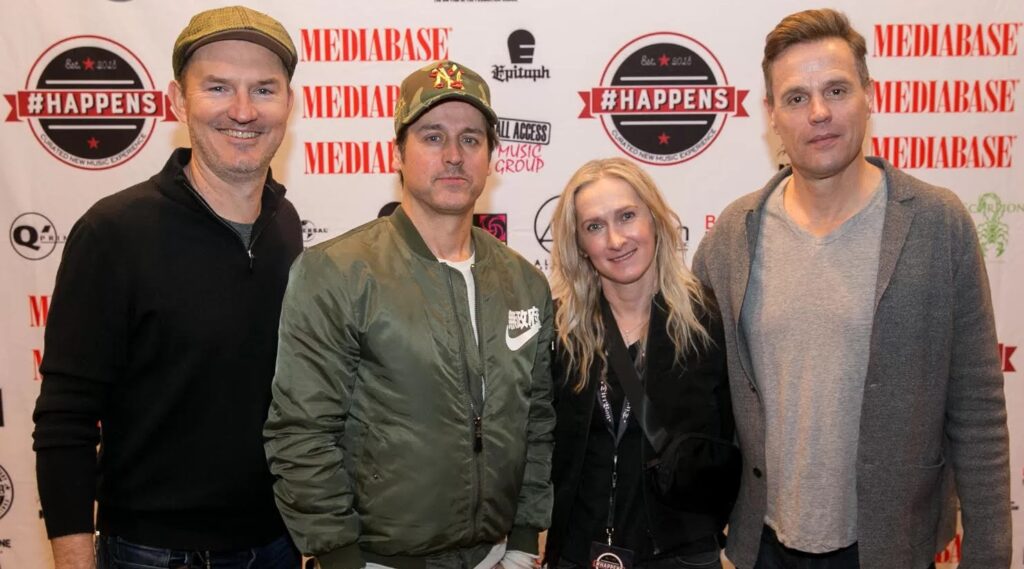
Photo Credit: #Happens

I know a lot of labels are focused on data. In general, everyone wants to see a well-rounded level of reaction and consumption from streams to ticket sales. Research still counts at radio once it gets played. Consistent growth across all platforms is key, that is a tangible metric we watch closely. I’m less moved personally by cultural-moments. Memes are a dime a dozen. Occasionally they translate and become a hit, but most of the time I think it’s about hard work, long term commitment to success and living on the road building a fan base. Career artists have to have the drive to stay in the game and always improve.

Radio on the Totem Pole for Artists

Keith: You have a new artist: great music recorded, socials beginning to blaze, ready to tour. Historically it’s a mad dash to radio, but now there are other viable lanes to consider, and some strategies skip radio altogether. What does radio still do better than other platforms — and where has it clearly lost leverage?

Todd: This is not good for my career, but some of my favorite artists have had minimal radio exposure like The National, Future Islands and The Boxer Rebellion. They all do huge business on the road, and play festivals to diehard loyal fanbases.

I go back to radio is local. It is free in cars and stores. A true radio hit will open a band’s audience wide. A true radio hit will always be the last song played in the band’s set. Radio hits transcend generations. If a song crosses to other formats and is more mainstream, older generations pick it up. It becomes a part of the soundtrack of a decade. When my 80-year-old mother knows about an artist that I worked from day one, that is when I know the music has transcended the cultural zeitgeist.

Radio is often a big part of that journey. But radio has lost some of its leverage because it has aged with its audience. It needs to get back to breaking artists and showing them what is next and why youthful listeners should care. That is a very hard fix with the economics of radio advertising, the demands of Wall Street. It would be like reinventing the wheel including the ratings system. The airwaves are not going anywhere so I am optimistic in radio’s future!

Streaming: The Good & Bad

Keith: Streaming has provided open access for artists and fans — there are no more gatekeepers, but has it actually solved career hurdles for artists? How does the open access model both help and work against artists?

Todd: Streaming is a Catch-22. It doesn’t pay enough to sustain a career like when artists sold vinyl or discs, but it is necessary to show popularity and great for artists to find an audience without a label deal. Streaming is the new version of a record collection. Attention spans are short and artists have to constantly release new music to engage audiences and the algorithm. We call it the waterfall release schedule when an artist puts out a new song every six weeks. There is no breathing room. I liked it when artists used to go away for some time to come back and be missed.

A positive is that viral hits are now a thing. It has helped so many unsigned artists find an audience. As an example, I just learned about ARTEMAS who have 16+ million Spotify monthly listeners and 1.45 billion streams on their biggest song! There are so many artists like that out there. It constantly blows my mind that I live in this industry and find new massive streaming artists every week or month. My first question is can they sell tickets or merch?  Regardless, that kind of consumption could not have ever happened without a label deal before streaming. That is a big hurdle cleared.

Labels: In or Out

Keith: There are more new artist success stories that include labels than don’t, but the path to artist success can be found without the traditional label deal or model. Is there a simple way to determine if a project is best for a label vs. one that should be grassroots?

Todd: This is a great question. Labels and teams all marching in the same direction. They are really good at blowing up hit songs quickly and spreading them to all reaches of media. A big part of my job is building teams that mirror a label’s efforts for independent artists or for management companies or veteran artists that are self-releasing new material. If a grassroots artist has success, labels will come knocking.

Then it is up the artist to decide if they want to give up some control and a piece of earnings to ‘hire’ a team (the label) for the potential to grow their audience globally. Some artists want world domination and massive fame. Others just want to make cool music and pay their bills. It is up to the artist to determine their goals and mindset for success. I find that strong management companies are replacing labels as the traditional marketing partner in an artist’s career more and more today. 

Development Expectations

Keith: With the ability to go viral overnight, it seems the middle class of artist development isn’t disappearing and it’s make or break for a lot of projects. How does CO5 approach the artist development process?

Todd: Most successful artists break through hard, consistent work, always improving until their mass appeal moment hits. CO5 Music lives in the artist development world. We work with a lot of new artists. Our focus is radio promotion. We run #HAPPENS — a live rock and alternative industry showcase event. Every artist I have ever been a part of breaking started by breaking in one market. Playing live and meeting people is critical to this process. 

We do a lot of promotional tours where artists travel from city to city to meet programmers and decision makers, playing live for them. Getting a programmer out to a show is really difficult, so it is our job to bring the show and talent to them. After you prove a song is a hit in one market or win over a programmer, then you must repeat it in another market. If it works in Austin, Indianapolis and Portland, then you start to see a trend. CO5 is really good at spreading reactive stories.

I have decades of relationships, and my job is to have access to decision makers, tell compelling stories and get the artists I represent a shot for exposure in as many big markets nationally as possible. Once they get played then the songs have to react and do the work. After the heavy lifting, hits songs take on a life of their own. Each single can take 4-9 months of heavy lifting depending on the campaign and how quickly the song reacts. It is not sexy, just a lot of passion and elbow grease, but there is nothing better than helping to establish an artist’s career. It can change their life and is very rewarding work.

Your Decision Matrix

Keith: Let’s assume good music is in place — what are the other key drivers that lead you and CO5 to green lighting an artist to work with?

Todd: Great music, a great story, artist dedication and drive. The bands must be able to play live, want to meet everyone and want to win. To be frank, the biggest barrier to entry is being able to afford the marketing budget needed to give a campaign a real shot at success. There are a TON of great and deserving artists that do not have the financial backing to do what it takes to support campaigns with promotion, marketing, publicity and touring. Labels used to provide these services in exchange for recouping the spend from sales, but with streaming generating such little income, the label advances have dried up.

Artists must bet on themselves, including financially. Or they have a management company willing to take the risk or an outside financial team. We look for artists that write great music, crush live, have a great team, and provide us with a story or marketing tools to separate them from the pack.

Data and Gut

Keith: For an artist, it’s all about gut, soul, heart… not data. On the business-end, the industry is very data driven. Where have you seen data kill something you thought would be special and where has ignoring it been a mistake?

Todd:  I have worked many “turntable hits”. These are songs that react on the radio, research as hit songs, but they don’t stream or sell. Data helps get attention, to get a shot, but you either have enough consumption (ticket sales, merch, streams, syncs etc) to payback your investment and do it again or you don’t. Having great streams does not mean you have a mass appeal hit, or that you can sell tickets or merchandise. I’ve worked artists with impressive streaming and data numbers that I could not get arrested with in radio. The sweet spot is both great research and consumption, with solid tangible sales. Some songs are jokes with massive data numbers. You must look at the whole package.

Making It

Keith: “Making it” used to mean radio airplay, MTV spins, some magazine glossies and a good tour. What does “making it” look like today?

Todd:  I think ticket sales are the #1 factor of “making it”. With so many options, if a fan will pay their hard-earned money to see you live and the artist can afford to live making music, then they have made it. There are different levels of making it. I go back to my 80-year-old mother. There were so few artists in the past that if you made it everyone knew who you were. Today, I think being able to say your career is as a musician then you have made it. It is a mindset. If you want to be the next Bowie or Sinatra, then you need to become a global brand. On the flipside, bbno$ is selling out the Palladium in Hollywood, with massive consumption, I think he has made it.

Risk & Reward

Keith: Everyone talks about innovation, but the industry still seems to reward playing it safe. Who is currently taking the right kind of risk, and how are they doing it?

Todd: Recently, I would say All American Rejects is killing it. They went straight to their fans and booked house parties in numerous cities. These shows BLEW UP. It was out of the box thinking that went viral. The gumption it took to do these shows was incredible. It was very bold and brave of the band to do these shows. Plus, it was a lot of hard work coordinating things like confirming venues, online announcements, production, dealing with local authorities with no guarantee of a return.

The experiences felt utterly authentic to the audience. I think these shows brought them back into the fold of current hit artists very quickly. It was the antithesis of an algorithm moving the needle and yet it kicked the algorithm into gear. And Tyson Ritter started an Only Fans page that was hilarious. They are a smart hard-working band.

The Uncomfortable Truth

Keith: If there’s an uncomfortable truth the music and radio industry needs to hear, what is it?

Todd: The industry is not fair. Talent is not enough. Timing and luck are involved in success. No one knows what is next. When a trend hits there is only room for a few artists with a particular sound before it is saturated. Artists have to create what they believe in and build their audience in their local community and be open to change.

The One Story

Keith: Before you go, what’s your best must tell story: success, nightmare, pure absurdity?

Todd: I’m from California. I was born in NorCal and lived there through high school before moving to SoCal for college and a career in the music industry. I’ve never lived in snow. I had to drive Susan Tedeschi and Derek Trucks from Denver to Boulder for a studio C session at KBCO. They had a brand-new infant on the road with them that was still breast feeding.

As I drove the 12-passenger van, the snow flurries started and they were swirling. I started to lose the lines on the road and I was getting dizzy. The van started to slide. It turns out it did not have snow tires on it because it was a freak storm for the time of year. 

The band was clueless and started to partake in some pre-performance cannabis. As they did, they inadvertently hotboxed the van because it was cold and the windows were up. I was absolutely panicking about getting them all there safely. When I finally pulled into the parking lot with about 2 minutes to spare, I literally got out and kissed the ground. The session was amazing! I lost a few years. Thankfully the sun came out melting the snow before we drove back.

Barrett Media produces daily content on the music, news, and sports media industries. Sign up for our newsletters to stay updated and get the latest information right in your inbox.

How SiriusXM Evolved the Traditional Broadcaster to the Satellite Star

0

Hard to fathom that there was a time—not too far back—when Sirius and XM were openly mocked inside terrestrial radio’s hallways. Legacy radio, with its century-old dominance, dismissed satellite radio as a novelty at best and a punchline at worst. “Who’s going to pay for radio?” was radio’s favorite jab, often echoed at national conventions. While legacy radio chuckled, SiriusXM slowly built national reach, fewer rules, and a growing roster of legendary talent that captured the attention of audio consumers everywhere.

When traversing the country on long trips, the void between radio markets is filled with entertaining, real personalities who feel like friends across multiple SiriusXM channels. These industry giants once owned the markets in which they were stationed.

Now free from playlists dictated by research, the stress of weekly ratings, and clocks ruled by stop sets, legendary broadcasters prove that great radio isn’t about frequency or market. Instead, their craft is solely about the voice behind the mic.

I caught up with a few of these personalities who host on gold-based SiriusXM channels to get their thoughts on what’s the same—and what’s different—about being on “the bird.”

Phlash Phelps

Phlash Phelps started in radio at 17 and is a veteran of more than 17 terrestrial radio stations in 17 years, from Baltimore to Washington. In his words, “Employment was based on months at a job and not years.” Best known as the host of The Flash Phelps Funny Farm, Phlash was an early adopter of Sirius XM in 2000 and now hosts mornings on 60’s on 6. He has built a reputation for high-energy humor, unforgettable characters, and parody songs.

Kevin Robinson: What rules don’t apply to SiriusXM that apply to terrestrial radio?

Phlash Phelps: When I started at XM, they only hired the “unhireable”. The rule was, don’t do anything AM and FM radio would do. All had to go through “boot camp” once we started. XM was you had to rethink everything and get rid of everything we knew of AM and FM’s past. Now the latest is you can’t sound like a disc jockey and be a storyteller. They don’t tell us what to say, we have to tell stories and relate. That’s why working here is so much fun still 25 years later.

Kevin Robinson: Do you communicate with listeners like you did in local radio and if so—how?

Phlash Phelps: Those that listen don’t know if it’s local radio or national. I’ve been to all 50 states many times over and over. There are 3,142 counties in the USA and I’m now less than 200 away from completing every county in the country.

I drive 80,000 miles a year and take pictures of everything. When you get to learn all about America because you’ve been there, you can tell local stories. I play “City of the Day” every morning, celebrating big cities to places with just a few people. All based on matching the name of the city back to something in the news.

Not sure how many play a national game like this using your map to learn America while playing and learning. If you listen long enough, you’ll hear some local city mentioned that’s probably by you.

Kevin Robinson: Is there music freedom and content choice at SiriusXM?

Phlash Phelps: Programmers help you by setting up the music so you can concentrate on your content. They also give you the challenge of throwing in songs, and it’s up to you to know why they’re there. It keeps you on your toes and sees if you miss why a certain song was placed.

Sounds great when listeners have stories, then you play their song. It’s one of the greatest places to work if you love radio and being creative. They encourage it for you to just have fun.

Kevin Robinson: What aspects of radio remain the same for you, no matter where you broadcast?

Phlash Phelps: My first 17 years in radio some said, “Your sound doesn’t fit our station sound.” My objective wasn’t to sound like anyone else. A number of great programmers told me they liked my sound, but not all the programmers agreed.

Here we do morning shows around the clock, not just in the morning. Now I do the show remote from anywhere in the country and haven’t seen the studio in six years. My cellphone is now the studio phone that goes on the air for on-air calls. Never thought I’d see a day to do the show from anywhere.

Reach Phlash at Phlash.Phelps@siriusxm.com.

Ron Parker

Ron Parker is a longtime radio personality and one of the familiar voices on SiriusXM’s gold formats like 70s on 7. He spent four decades on radio stations across America, including Atlanta, Phoenix, Chicago, and Dallas. Ron is an encyclopedic savant of 1970s pop culture with a classic listener-first approach to being an air talent. His transition to satellite radio nearly two decades ago allows him to share his folksy, old-school style, making him a perfect fit for fans reliving the music and memories of the ’60s and ’70s.

Kevin Robinson: How does tight AM/FM formatics compare with what you do at SiriusXM?

Ron Parker: One main difference with satellite formats is that we have stripped away certain Top 40 elements from the days of “BOOGIE” high energy to a more toned-down format. Not soft or easy listening, but a more personal conversation with the audience. I like to think of it as more adult sounding.

I work on the “decades” formats with music from 60 and 50 years ago. We’re all grown up now and maybe we are a bit hipper in format to attract some younger folks. On these two formats (60’s & 70’s), we now do not chat on record intros like the Top 40 days. Over the decades, there have been some beautiful intros that people really want to hear in the clear. The approach is definitely a lot less DJ sounding than Top 40 radio.

One big rule that still applies from Top 40 radio to SiriusXM is that no matter where you are, who you are, format or station, some things still work the same. There is a switch that turns a microphone on when you push a button. We get to be personalities. That never has left us.

In a typical hour, we might chat about an interesting fact about an artist or song, plug you into something happening of note, or mention bad weather on the way for 42 million people in the Northeast. We do promotions like a special Valentine’s Day love song feature. We even do shout-outs to our other station formats.

Kevin Robinson: How do you handle localism on satellite radio?

Ron Parker: We have formats that cover across America and also Canada with SiriusXM. I am able to localize with area mentions in many ways. Maybe read some emails that I get from listeners in various locations. “Bob and Susan checked in this afternoon listening at their pool in Tampa, Florida!” We even have shows that take requests.

I love sports, especially college football, and often mention my favorite team, “UGA Bulldogs,” where I went to college. Like the Top 40 era, we as personalities paint the picture for the listener and have fun doing this. Even though there have been changes, I feel the same way I did when younger. There is still fun in it for me.

Kevin Robinson: Tell us about the freedom programmers at SiriusXM give you with music and content.

Ron Parker: There is absolutely some freedom of choice in the music we play on SiriusXM. I simply let the Program Director know what songs I may want to play for a particular reason. After 18 years, I’ve never been turned down to play a song that I asked for with the PDs at SiriusXM.

As far as content choices, nothing has changed for me between Top 40 and Sirius. I find great stories or information and plug you into it. With everyone having internet access, I try to find stories I think nobody has seen or heard yet. Like Top 40 radio, I never get political with my show. The same is true with SiriusXM.

Kevin Robinson: What advice would you give to an emerging broadcaster?

Ron Parker: It doesn’t matter which band of broadcasting you start on. If you have an early interest in radio, try one of the stations near you and become an intern to get your foot in the door.

In the ninth grade, I started hanging out at a big Top 40 station in Atlanta. I became a gopher for one of the DJs and helped with the request lines. Something very important missing today is networking. It certainly helped me early in my career.

If you are a SiriusXM fan and live near one of their facilities, apply to be an intern. Many interns I knew 18 years ago are now Program Directors. Follow your dreams and see where it can take you.

Reach Ron at ronparker@outlook.com.

Jaybeau Jones

Jaybeau Jones is a four-decade veteran air personality and longtime host on SiriusXM’s 70s on 7. His voice has graced legendary terrestrial stations in Boston, Chicago, New York, and Hartford, and he is still heard on Binnie Media’s Frank FM in New Hampshire. Jaybeau is a member of the Rhode Island Radio Hall of Fame and has been involved with the Music Drives Us nonprofit.

Kevin Robinson: What have you discovered about the difference between terrestrial radio and SiriusXM?

Jaybeau Jones: Whether it’s SiriusXM or terrestrial, it’s still all about connection to the listener. It’s about triggering an emotion, whether happy, sad, or even a little mad, for 40 seconds on 70’s on 7 or Frank FM. It’s a fun challenge to make a 20-second break as compelling as a minute-long break. Sometimes the longer break is harder because too many words can create clutter and become a tune-out.

Kevin Robinson: Terrestrial radio lives by localism. How did that shift change your relationship with listeners?

Jaybeau Jones: It didn’t change at all, but it took work and time. After our live all-request New Year’s Eve show, my VP Lou Simon sent me a note saying: “Jaybeau, you were LIVE and LOCAL in all 50 states.” I still am every single night. Listeners contact me daily through social media and email. If you make it compelling and relatable, you can be live and local everywhere.

Kevin Robinson: Is there music freedom and content choice at SiriusXM?

Jaybeau Jones: If I need a special song for a story, they are very accommodating. The music is scheduled, but the content is all mine. We stay far away from politics. As long as we are connecting with listeners, it’s wide open. I balance each hour with real-life stories, humor, pop culture, and sometimes musicology if it’s compelling.

Despite all the technology and platform changes, one thing remains constant: the people behind the microphone.

You might think these legendary personalities would rest on their history and ride off into the satellite sunset. As you’ve read, Phlash, Ron, and Jaybeau are far from finished. At minimum, they seem revitalized by their involvement with SiriusXM.

If you haven’t embraced the idea that what we do is more than just radio, it’s time. Phenomenal audio is generated by talent, not a delivery system. Audio genius isn’t confined by a tower or a market.

It’s now—everywhere.

Barrett Media produces daily content on the music, news, and sports media industries. To stay updated, sign up for our newsletters and get the latest information delivered straight to your inbox.

In Modern Talk Radio, Your Look Has to Match Your Voice

0

We are radio people. One of the attractions over TV was not needing a proper haircut, combing your hair, and looking good. Radio provided artists the ability for anonymity and to create an on-air reality that produced a great radio show.

This is becoming more and more challenging due to the digital reality of our future.

John T. Molloy wrote a huge bestseller called “Dress for Success.” Look good, and people will automatically want to do business with you, and the well-dressed person will be judged more favorably in the office. Gene Simmons of the rock band Kiss has stated that a rock star has to look like it 24/7.

So, what does this mean for those of us who are air personalities?

The often-talked-about Kristi Noem, who is the United States Secretary of Homeland Security, has received some criticism for her performative attire for her position. Generally speaking, most cabinet secretaries wear business suits exclusively. Kristi Noem dresses in a variety of uniforms based on the occasion. Are you dressing for the occasion? Do you have a sartorial uniform?

I used to work in a building with an air personality who dressed like he was in a cheap western because he was on a country station. I have been around rock jocks and CHR jocks who look like they are stars in their formats.

If you are on a news/talk station, how are you supposed to dress in 2026? I have some good news and a warning.

Business casual is exceptionally common. For meeting clients, wearing a polo shirt and khakis is perfectly acceptable. So, if you are the morning personality, you just need to not look like a homeless person. I cannot tell you how many on-air personalities show up looking like they live in a van down by the river. For the sales part of your job — take a shower, look presentable, and you are generally fine. But that is not your only concern.

Your show may be on a video feed. I get it. Most radio people are entering the video-feed era kicking and screaming. A lot of radio people do not desire to be recognized at the grocery store or bar. I hate to tell you this, but you are likely recognized more than you realize. Normal people are simply less likely to come up and chat you up.

So, why did I bring up Gene Simmons? You are a star. You need to dress the role. You need to have a certain look that is recognizable. Being the radio guy or gal who thinks homeless chic is a great look — it is not. You do not need to dress like a rock star in leather pants and a shirt from the ladies department at Macy’s. You should come up with a look that is connected to your position.

I want you to consider this and develop a look that fits you. If there is one person who should not be giving out fashion advice, it is Peter Wilkinson Thiele. Have you ever watched Ancient Aliens? That show has three distinctly different themes of dress. Giorgio Tsoukalos and David Childress usually dress like archaeologists. William Henry wears a distinct outfit with a necklace. Other personalities wear formal business suits.

So, pick something. Be that personality 24/7. Gene Simmons is right. You need to have an image. You are required to post videos of yourself and share pictures of yourself on social media. Your image is your calling card. If you are pumping gas, eating lunch, or at the grocery store, you are performing in public. Your listeners have expectations about how you look, act, and behave. You must deliver — always deliver.

We chose this career for many reasons. For most of us, it is the dichotomy of being recognized, entertaining, and informing an audience while remaining totally anonymous. Truth bomb here — if you are putting yourself out in public, anonymity is no longer a thing. There used to be an ethos, especially among music program directors, to allow the audience to picture the air personality in their minds and protect that image at all costs.

That line of thinking has been gone for 25 years. I have found that radio people pass down the traditions of the past like monks cloistered in a monastery on a remote mountain. We are multimedia personalities who are required to be performing every moment we are not locked in our homes. Anonymity is gone. You are a star.

The toughest thing that needs to be addressed is that our visual and audio images need to match. What is in the minds of listeners when they think about how you look and behave? Are you meeting those expectations?

I am a huge boxing fan. In the 1990s, I was at a party with a great fighter of that era, Sugar Ray Leonard. This was a private invitation-only party hosted by a friend of mine who was also a buddy of Leonard’s. At some point, I found myself near Sugar Ray Leonard and introduced myself. His bodyguard told me that Leonard did not want to speak with me, even though Sugar Ray was talking with everyone all night. My expectations were blown. Sugar Ray’s brand was that he was friendly and likable. That was not entirely true.

Are you meeting the expectations of your listeners in how you look and behave? On-air personalities are always in the spotlight.

Barrett Media produces daily content on the music, news, and sports media industries. To stay updated, sign up for our newsletters and get the latest information delivered straight to your inbox.

Lynn Jones Defends Her Line of Questioning to Jacksonville Jaguars Head Coach Liam Coen

0

Lynn Jones of the Jacksonville Free Press defended her decision to offer Jaguars head coach Liam Coen words of encouragement during Sunday’s postgame press conference, responding to criticism from fellow journalists online.

Jones said she had not initially planned to attend the media availability following Jacksonville’s 27-24 playoff loss to the Buffalo Bills. However, she was encouraged to by another media member following the game.

“This entire city, this town, our team, our city, and our coach. We were overwhelmed,” Jones told WJXT Channel 4. “I really was not going to attend the press conference, but I was talking to a young man… He said, ‘Ma’am, Lisa, you need to go ahead and attend the press conference.’”

The moment that followed quickly went viral. After introducing herself, Jones addressed Coen, who appeared visibly deflated after a heartbreaking season-ending loss. “I just want to tell you, congratulations on your success, young man,” she said. “You hold your head up, alright? You’ve had a most magnificent season. You did a great job out there today… Keep it going, we got another season.”

While some praised the gesture, others criticized it as crossing the line between journalism and fandom. Associated Press reporters John Wawrow and Mark Long publicly questioned the appropriateness of consoling a coach during a professional press conference, while ESPN reporter Brooke Pryor emphasized that postgame sessions are meant to provide clarity and insight, not emotional support.

Former NFL player LeSean McCoy also chimed in on social media, calling the interaction “little league” behavior.

Jones, however, said she took the backlash in stride.

“I really take no offense to it. Listen, I’ve been in this business more than 25 years. I’ve interviewed everyone from Barack Obama to Terry Bradshaw to Tiger Woods. So you can say whatever you want about fake news,” she explained.

The journalist emphasized her intentions behind the line of questioning, noting she wanted to uplift, not interrogate. “He was totally immersed in his feelings. He had tears, and bit his lip,” Jones said. “And the issue is the question, not necessarily a question in the fourth quarter… My question was, ‘Keep your head up, young man.’”

Social media response remains divided, though support poured in for Jones and her decades-long career in journalism. Many highlighted her track record of covering communities often overlooked by larger media outlets. The Jaguars themselves amplified the moment by sharing the clip, prompting fans to praise Jones for her empathy and sincerity.

Barrett Media produces daily content on the music, news, and sports media industries. To stay updated, sign up for our newsletters and get the latest information delivered straight to your inbox.

1040 WHO Names Gregg Henson as Program Director

0

Gregg Henson has been named as the Program Director of 1040 WHO, the iHeartMedia news/talk station in Des Moines.

Henson joins after previously working in Grand Rapids as the Program Director and morning show host at 97 WLAV. He has plenty of news/talk radio experience, working at heritage brands like WOWO (Fort Wayne) and WRVA (Richmond) among others.

“I’m incredibly excited to return to iHeartMedia and work with the legendary staff at NewsRadio 1040 WHO,” said Henson. “WHO’s legacy of trusted news and strong local voices is unmatched, and I’m focused on building on that foundation and continuing to deliver relevant, impactful programming for listeners across Iowa.”

Henson’s first day on the job is Monday, January 12th.

“NewsRadio 1040 WHO is one of the most respected news talk stations in Iowa, built on a strong foundation of trusted voices and programming,” said Steve Geofferies, Executive Vice President of Programming for iHeartMedia. “Gregg’s experience and leadership will support our strong team and help WHO continue delivering the high-quality programming listeners rely on every day.”

“We are thrilled to welcome Gregg to the iHeart team,” said Jen Stocker, iHeartMedia Nebraska/Iowa Area President. “Gregg’s passion, strategic vision and dedication to strong local content perfectly align with our mission to deliver trusted, top-tier programming to Des Moines and surrounding communities.”

Barrett Media produces daily content on the music, news, and sports media industries. To stay updated, sign up for our newsletters and get the latest information delivered straight to your inbox.

ESPN Studio Programming Viewership Reaches New Highs in 2025

0

ESPN’s daily studio programming capped a banner year in 2025, with several shows achieving their highest audience numbers ever and others posting multiyear highs, according to Nielsen data. The success helped make 2025 the network’s most-watched year since 2017.

Leading the charge, Get Up, First Take and The Pat McAfee Show each set new records for viewership. Get Up, hosted by Mike Greenberg, averaged 424,000 viewers, marking a 10% increase from 2024 and extending the show’s streak to four consecutive years of growth.

First Take, featuring Stephen A. Smith as executive producer and commentator, drew an average of 517,000 viewers, up 6% year-over-year. Meanwhile, The Pat McAfee Show, which debuted on ESPN in 2023, posted its most-watched year since launch, finishing up 8% across linear and digital platforms.

Other key studio programs also posted gains. The 7 a.m. edition of SportsCenter reached its highest audience since 2019, rising 5% from the prior year.

The 2–3 p.m. SportsCenter segment achieved a 20% increase, the largest since its debut in 2023 on ESPN. The 6 p.m. broadcast of SportsCenter, a longstanding flagship hour, delivered its best year in a decade, while the 11 p.m. edition posted its highest numbers since 2019.

Late-night SportsCenter with Scott Van Pelt and the 1 a.m. edition also posted year-over-year gains, up 11% and notable in their respective time slots.

Other daily shows contributed to the overall growth.

NBA Today, hosted by Malika Andrews, recorded its best performance since 2018 with a 16% increase, while NFL Live, led by Laura Rutledge, saw its highest audience since 2016, up 18%. The program also experienced strong demographic growth during football season, with viewership among youth (P2-17) up 78% and female viewers rising 48%.

Pardon the Interruption (PTI) averaged 679,000 viewers in 2025, marking its best year since 2019 and a 5% increase over the previous year.

The year ended on a high note in December, with holiday-period viewership reflecting the yearlong momentum. Get Up, The Pat McAfee Show, and the 2 p.m. SportsCenter achieved their best December ratings ever.

First Take, PTI, the 6 p.m. and 11 p.m. editions of SportsCenter all posted notable year-over-year gains for the month, some exceeding 40%. Several of these programs also reached multiyear highs during the holiday period. All metrics were measured using Nielsen Big Data and Panel data.

Barrett Media produces daily content on the music, news, and sports media industries. To stay updated, sign up for our newsletters and get the latest information delivered straight to your inbox.

ESPN New York’s Michael Kay Pushes Back on “Strong” Criticism of Sports Journalists by Pat McAfee

1

ESPN New York host Michael Kay pushed back Monday against Pat McAfee’s recent criticism of sports journalists, offering a measured but pointed defense of traditional reporting while acknowledging McAfee’s growing influence within ESPN’s media ecosystem.

Speaking on The Michael Kay Show, Kay addressed McAfee’s viral comments that followed a widely shared postgame interaction between a Jacksonville Free Press reporter and Jaguars head coach Liam Coen. McAfee had criticized reporters who questioned the exchange, labeling some sports journalists “curmudgeon bums” and suggesting they detract from the joy and unity sports provide.

Kay, a longtime broadcaster and former beat writer, said McAfee represents a powerful force in modern sports media. He said it is a force fundamentally different from traditional journalism.

“Pat McAfee is the new media,” Kay said. “And if you’re going to go up against him in our company, well, you’re committing professional suicide… He kind of went up and in on those that think that that was the wrong time in the wrong place.”

Kay avoided a direct personal dispute with McAfee, but he drew a clear line between their approaches. He contrasted McAfee’s conversational, personality-driven program with reporters’ roles in postgame settings. While praising McAfee’s success and ability to attract high-profile guests, Kay said the format does not translate to every media environment.

“McAfee’s show is there to celebrate sports,” Kay said. “The formula works. It’s perfect. But you couldn’t do that in a postgame scrum. That’s not the place for it.”

Kay also took issue with McAfee’s suggestion that many sports journalists approach their work through a political lens or harbor resentment toward the games they cover. He said the motivation for most reporters is far simpler.

“I never wanted to be a political reporter,” Kay says. “I love sports and I want to be a sports writer. That doesn’t mean you’re against the sport. You’re just trying to get stories.”

Defending the profession more broadly, Kay rejected the idea that questioning decisions or outcomes equals negativity or hostility toward athletes and coaches. He emphasized that accountability and inquiry are essential components of coverage.

“When Pat says we as a society have to stop taking these particular humans seriously — wow, that’s pretty strong,” Kay said. “People want to do their job and ask why you went for it on fourth-and-two. That means they shouldn’t be taken seriously? So it’s all supposed to be rah, rah. Hey, great! Wear my Jaguars gear? No, I don’t agree with it.”

Kay added that sports journalism and sports entertainment serve different purposes, but neither should invalidate the other. While acknowledging McAfee’s ability to connect with audiences and amplify positivity around sports, Kay said eliminating critical questioning would fundamentally alter the role of the media.

“I don’t prey on sports because I saw it was an easier path to make it. I think I’ve done my job in an honorable way,” said Kay.

The exchange highlights an ongoing debate within sports media. As personality-driven programming continues to grow alongside traditional reporting — often blurring the lines between celebration, criticism, and access.

Barrett Media produces daily content on the music, news, and sports media industries. To stay updated, sign up for our newsletters and get the latest information delivered straight to your inbox.

105.7 The Fan Adds Tim Allen for Expanded Milwaukee Brewers Programming

0

105.7 The Fan is reinforcing its position as Milwaukee’s go-to destination for Brewers coverage by bringing a familiar and trusted voice back to the airwaves. Audacy’s WSSP-FM (105.7) and WSSP-AM (1250) announced that Tim Allen will return to the station to host the newly launched Brewers Hot Stove Show.

The weekday program will air at 5 p.m. Eastern beginning January 14 and run through March 25. The show offers fans a daily offseason forum focused on the Brewers as the team prepares for the 2026 campaign.

In addition to the hot stove show, Allen will also resume hosting a Brewers postgame program. This further expands the station’s live and local baseball coverage. The move strengthens a lineup that already includes Tommy Wortz’s Lead Off Show. A staple for Brewers fans seeking in-depth pregame analysis.

Jason Bjorson, senior vice president and market manager for Audacy Wisconsin, said the decision reflects the station’s commitment to serving Milwaukee’s passionate baseball audience.

“To be the top sports radio station in this market, Brewers coverage has to be a priority,” Bjorson says. “Tim has long been synonymous with Brewers postgame radio. Bringing him back underscores how serious we are about delivering content that resonates locally.”

For Allen, the return carries personal significance. He said reconnecting with The Fan and its audience brings his career full circle.

“This postgame show started here more than two decades ago,” Allen said. “Being able to continue that tradition with The Fan and now across the Wisconsin Sports Radio Network is something I don’t take lightly.”

Allen brings nearly four decades of broadcasting experience to the role. He has spent much of the past 20 years as the voice fans associate with Brewers postgame reaction. His background also includes work across multiple radio formats, a decade teaching collegiate broadcasting, and time as a motivational speaker.

Most recently, Allen hosted a Brewers postgame show on 97.3 The Game.

With baseball season approaching, station leadership believes Allen’s return adds credibility and familiarity at a time when fans are hungry for daily Brewers conversation.

Barrett Media produces daily content on the music, news, and sports media industries. To stay updated, sign up for our newsletters and get the latest information delivered straight to your inbox.

Kat Timpf Announces Leave of Absence From Fox News

1

2025 was a tough year for Fox News contributor Kat Timpf. She’s taking some time to reset to begin 2026.

Timpf gave birth to a son in early 2025, but was simultaneously diagnosed with breast cancer in the process.

After undergoing a double mastectomy, Timpf returned to the network in June, sharing that she was cancer-free.

On Friday’s edition of Gutfeld!, though, she revealed that she’ll be stepping away to complete her maternity leave.

“Everything’s fine, but this is gonna be my last show for a while,” Timpf began. “What happened is I was on maternity leave, and then halfway through it, it very unexpectedly switched to cancer leave. So I have six weeks left in maternity leave that I never took.”

Kat Timpf added that she has had “the hardest time” deciding if she wanted to take the leave allotted to her. “I’ve worried about stepping away. People are going to forget about me. Am I not going to sell tickets? I think just a lot of things that we as women can worry about when we become moms about protecting the careers that we built. Honestly, my maternity leave sucked.”

She shared that she’ll be gone for six weeks and when she returns she’s going to “be so back.”


“I’m gonna be on TV, I’m gonna be going all around the country doing stand-up, and I hope I get to meet a lot of you guys,” she told the audience. “This has been such a hard year, and one of the main ways I’ve gotten through it is the support from so many of the people who’ve watched the show and have been so kind towards me. I really appreciate it.”

Timpf has been at Fox News for several years in a variety of roles. After hosting shows on FOX Nation and a Fox News Radio podcasts, she makes regular appearances on the network’s late-night show Gutfeld!.

Barrett Media produces daily content on the music, news, and sports media industries. To stay updated, sign up for our newsletters and get the latest information delivered straight to your inbox.

John Allers Named Brand Manager of Alice 97.3

0

There’s a new leader at Hot AC Alice 97.3 in San Francisco, as Audacy has named John Allers the new Brand Manager of the station.

Allers currently programs Live 105, the classic alternative station, in the market for Audacy. He also programs Alt 103.7 in Dallas for the company.

John Allers fills the shoes vacated when Michael Martin departed to focus on his role as Senior Vice President of Programming and Head of Muisic Initiatives for Audacy.

“He brings deep operational experience, strong leadership instincts, and a track record of guiding brands with clarity and focus,” said Audacy San Francisco Market Manager and Vice President Kieran Geffert. “I have full confidence in his ability to build on Alice’s legacy and help position this iconic brand for its next chapter of success.”

Allers originally joined Audacy in 2021 after previously working for iHeartMedia as the leader of Radio 104.5 in Philadelphia. He also worked in markets like Atlanta, Cincinnati, Providence, and Washington, D.C. during his career.

Barrett Media produces daily content on the music, news, and sports media industries. To stay updated, sign up for our newsletters and get the latest information delivered straight to your inbox.