

Thank you for checking out ‘The Industry According To’. This series runs each Tuesday, and features radio and record industry executives, managers, programmers, talent, artists, and professionals from all areas of the business world. To be considered as a future guest, email me at keithblackboxgroup@gmail.com.
Today we hear from Todd Sievers, a veteran who spends his day in the adjoining pool of artists, labels, radio and streaming. As Managing Partner at CO5, Todd sees all sides of the industry. He is tasked with finding different ways to solve very complex puzzles.
So, let’s dive in.
Is This Actually Working
Keith: From your various seats, what part of today’s music industry looks great on paper but is broken and needs a rethink?
Todd: I’ve spent the bulk of my career doing radio promotion starting in the early 90’s. I believe in radio as much as I ever have, radio is local. An artist can have a billion streams and not be able to sell 100 tickets in a major market. Radio can still connect the dots from a hit song to fans. Three things I believe need a rethink.
1: The cost of a promotional campaign is too high.
2: Kids are raging against the algorithm. Many buy vinyl and use film cameras. I believe they would embrace radio (which is free) if they could find a human authority that can help them find what is next. An algorithm cannot do that.
3: Programmers have too many hats to wear to be creative. It is easier to play a song from a proven artist that is 30+ years old like Green Day than to find the next Green Day. If we had listened to songs that were 30+ years old in the 80’s we would have been listening to music from the 40’s!
The Attention Economy Problem
Keith: While everyone can release music instantly, very few break out to any level of high profitability or mainstream level. What is cutting through these days? Do you see any type of trends or patterns that are seemingly more reliable — whether it’s a genre, strategy, platform?
Todd: This is the million-dollar question. The barrier to entry used to be very high. An artist had to get signed, into a recording studio, record analog, mix an album, tour nonstop and maybe break on their third album if the label believed in them.
I think there are too many mediocre artists clogging up the system today. Nothing has really changed except the forms of distribution and the volume of releases. Regardless, hit artists still start with a great song and a great story. They must separate themselves from the pack.
I know a lot of labels are focused on data. In general, everyone wants to see a well-rounded level of reaction and consumption from streams to ticket sales. Research still counts at radio once it gets played. Consistent growth across all platforms is key, that is a tangible metric we watch closely. I’m less moved personally by cultural-moments. Memes are a dime a dozen. Occasionally they translate and become a hit, but most of the time I think it’s about hard work, long term commitment to success and living on the road building a fan base. Career artists have to have the drive to stay in the game and always improve.
Radio on the Totem Pole for Artists
Keith: You have a new artist: great music recorded, socials beginning to blaze, ready to tour. Historically it’s a mad dash to radio, but now there are other viable lanes to consider, and some strategies skip radio altogether. What does radio still do better than other platforms — and where has it clearly lost leverage?
Todd: This is not good for my career, but some of my favorite artists have had minimal radio exposure like The National, Future Islands and The Boxer Rebellion. They all do huge business on the road, and play festivals to diehard loyal fanbases.
I go back to radio is local. It is free in cars and stores. A true radio hit will open a band’s audience wide. A true radio hit will always be the last song played in the band’s set. Radio hits transcend generations. If a song crosses to other formats and is more mainstream, older generations pick it up. It becomes a part of the soundtrack of a decade. When my 80-year-old mother knows about an artist that I worked from day one, that is when I know the music has transcended the cultural zeitgeist.
Radio is often a big part of that journey. But radio has lost some of its leverage because it has aged with its audience. It needs to get back to breaking artists and showing them what is next and why youthful listeners should care. That is a very hard fix with the economics of radio advertising, the demands of Wall Street. It would be like reinventing the wheel including the ratings system. The airwaves are not going anywhere so I am optimistic in radio’s future!
Streaming: The Good & Bad
Keith: Streaming has provided open access for artists and fans — there are no more gatekeepers, but has it actually solved career hurdles for artists? How does the open access model both help and work against artists?
Todd: Streaming is a Catch-22. It doesn’t pay enough to sustain a career like when artists sold vinyl or discs, but it is necessary to show popularity and great for artists to find an audience without a label deal. Streaming is the new version of a record collection. Attention spans are short and artists have to constantly release new music to engage audiences and the algorithm. We call it the waterfall release schedule when an artist puts out a new song every six weeks. There is no breathing room. I liked it when artists used to go away for some time to come back and be missed.
A positive is that viral hits are now a thing. It has helped so many unsigned artists find an audience. As an example, I just learned about ARTEMAS who have 16+ million Spotify monthly listeners and 1.45 billion streams on their biggest song! There are so many artists like that out there. It constantly blows my mind that I live in this industry and find new massive streaming artists every week or month. My first question is can they sell tickets or merch? Regardless, that kind of consumption could not have ever happened without a label deal before streaming. That is a big hurdle cleared.
Labels: In or Out
Keith: There are more new artist success stories that include labels than don’t, but the path to artist success can be found without the traditional label deal or model. Is there a simple way to determine if a project is best for a label vs. one that should be grassroots?
Todd: This is a great question. Labels and teams all marching in the same direction. They are really good at blowing up hit songs quickly and spreading them to all reaches of media. A big part of my job is building teams that mirror a label’s efforts for independent artists or for management companies or veteran artists that are self-releasing new material. If a grassroots artist has success, labels will come knocking.
Then it is up the artist to decide if they want to give up some control and a piece of earnings to ‘hire’ a team (the label) for the potential to grow their audience globally. Some artists want world domination and massive fame. Others just want to make cool music and pay their bills. It is up to the artist to determine their goals and mindset for success. I find that strong management companies are replacing labels as the traditional marketing partner in an artist’s career more and more today.
Development Expectations
Keith: With the ability to go viral overnight, it seems the middle class of artist development isn’t disappearing and it’s make or break for a lot of projects. How does CO5 approach the artist development process?
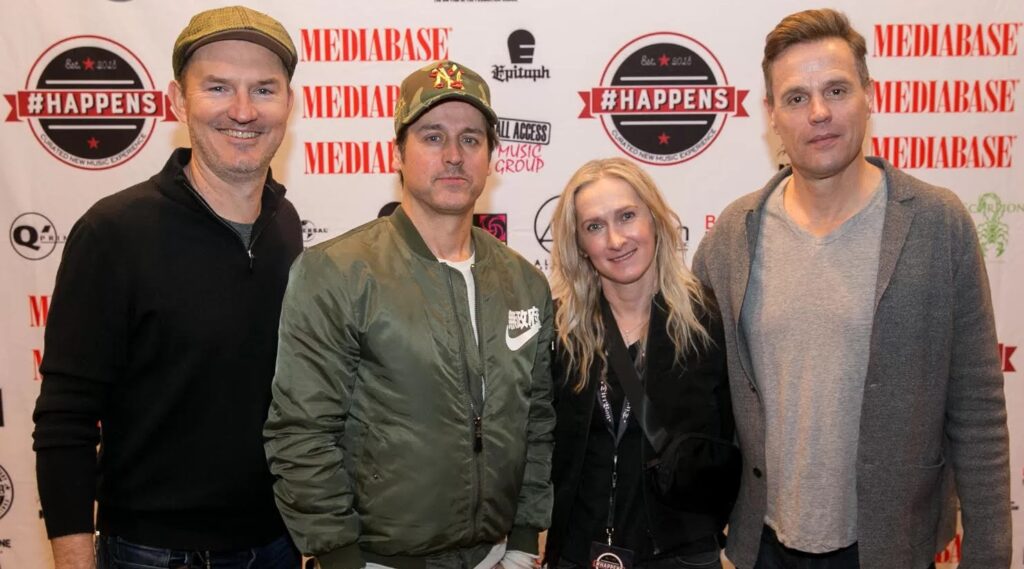
Todd: Most successful artists break through hard, consistent work, always improving until their mass appeal moment hits. CO5 Music lives in the artist development world. We work with a lot of new artists. Our focus is radio promotion. We run #HAPPENS — a live rock and alternative industry showcase event. Every artist I have ever been a part of breaking started by breaking in one market. Playing live and meeting people is critical to this process.
We do a lot of promotional tours where artists travel from city to city to meet programmers and decision makers, playing live for them. Getting a programmer out to a show is really difficult, so it is our job to bring the show and talent to them. After you prove a song is a hit in one market or win over a programmer, then you must repeat it in another market. If it works in Austin, Indianapolis and Portland, then you start to see a trend. CO5 is really good at spreading reactive stories.
I have decades of relationships, and my job is to have access to decision makers, tell compelling stories and get the artists I represent a shot for exposure in as many big markets nationally as possible. Once they get played then the songs have to react and do the work. After the heavy lifting, hits songs take on a life of their own. Each single can take 4-9 months of heavy lifting depending on the campaign and how quickly the song reacts. It is not sexy, just a lot of passion and elbow grease, but there is nothing better than helping to establish an artist’s career. It can change their life and is very rewarding work.
Your Decision Matrix
Keith: Let’s assume good music is in place — what are the other key drivers that lead you and CO5 to green lighting an artist to work with?
Todd: Great music, a great story, artist dedication and drive. The bands must be able to play live, want to meet everyone and want to win. To be frank, the biggest barrier to entry is being able to afford the marketing budget needed to give a campaign a real shot at success. There are a TON of great and deserving artists that do not have the financial backing to do what it takes to support campaigns with promotion, marketing, publicity and touring. Labels used to provide these services in exchange for recouping the spend from sales, but with streaming generating such little income, the label advances have dried up.
Artists must bet on themselves, including financially. Or they have a management company willing to take the risk or an outside financial team. We look for artists that write great music, crush live, have a great team, and provide us with a story or marketing tools to separate them from the pack.
Data and Gut
Keith: For an artist, it’s all about gut, soul, heart… not data. On the business-end, the industry is very data driven. Where have you seen data kill something you thought would be special and where has ignoring it been a mistake?
Todd: I have worked many “turntable hits”. These are songs that react on the radio, research as hit songs, but they don’t stream or sell. Data helps get attention, to get a shot, but you either have enough consumption (ticket sales, merch, streams, syncs etc) to payback your investment and do it again or you don’t. Having great streams does not mean you have a mass appeal hit, or that you can sell tickets or merchandise. I’ve worked artists with impressive streaming and data numbers that I could not get arrested with in radio. The sweet spot is both great research and consumption, with solid tangible sales. Some songs are jokes with massive data numbers. You must look at the whole package.
Making It
Keith: “Making it” used to mean radio airplay, MTV spins, some magazine glossies and a good tour. What does “making it” look like today?
Todd: I think ticket sales are the #1 factor of “making it”. With so many options, if a fan will pay their hard-earned money to see you live and the artist can afford to live making music, then they have made it. There are different levels of making it. I go back to my 80-year-old mother. There were so few artists in the past that if you made it everyone knew who you were. Today, I think being able to say your career is as a musician then you have made it. It is a mindset. If you want to be the next Bowie or Sinatra, then you need to become a global brand. On the flipside, bbno$ is selling out the Palladium in Hollywood, with massive consumption, I think he has made it.
Risk & Reward
Keith: Everyone talks about innovation, but the industry still seems to reward playing it safe. Who is currently taking the right kind of risk, and how are they doing it?
Todd: Recently, I would say All American Rejects is killing it. They went straight to their fans and booked house parties in numerous cities. These shows BLEW UP. It was out of the box thinking that went viral. The gumption it took to do these shows was incredible. It was very bold and brave of the band to do these shows. Plus, it was a lot of hard work coordinating things like confirming venues, online announcements, production, dealing with local authorities with no guarantee of a return.
The experiences felt utterly authentic to the audience. I think these shows brought them back into the fold of current hit artists very quickly. It was the antithesis of an algorithm moving the needle and yet it kicked the algorithm into gear. And Tyson Ritter started an Only Fans page that was hilarious. They are a smart hard-working band.
The Uncomfortable Truth
Keith: If there’s an uncomfortable truth the music and radio industry needs to hear, what is it?
Todd: The industry is not fair. Talent is not enough. Timing and luck are involved in success. No one knows what is next. When a trend hits there is only room for a few artists with a particular sound before it is saturated. Artists have to create what they believe in and build their audience in their local community and be open to change.
The One Story
Keith: Before you go, what’s your best must tell story: success, nightmare, pure absurdity?
Todd: I’m from California. I was born in NorCal and lived there through high school before moving to SoCal for college and a career in the music industry. I’ve never lived in snow. I had to drive Susan Tedeschi and Derek Trucks from Denver to Boulder for a studio C session at KBCO. They had a brand-new infant on the road with them that was still breast feeding.
As I drove the 12-passenger van, the snow flurries started and they were swirling. I started to lose the lines on the road and I was getting dizzy. The van started to slide. It turns out it did not have snow tires on it because it was a freak storm for the time of year.
The band was clueless and started to partake in some pre-performance cannabis. As they did, they inadvertently hotboxed the van because it was cold and the windows were up. I was absolutely panicking about getting them all there safely. When I finally pulled into the parking lot with about 2 minutes to spare, I literally got out and kissed the ground. The session was amazing! I lost a few years. Thankfully the sun came out melting the snow before we drove back.
Barrett Media produces daily content on the music, news, and sports media industries. Sign up for our newsletters to stay updated and get the latest information right in your inbox.
