

Some radio careers span a single format. Axel Lowe‘s has spanned an era. From the earliest days of alternative radio at Power 99 and then 99X in Atlanta, to active rock, to classic hits on 97.1 The River — where he now hosts the morning show — Lowe has quietly accumulated one of the longest continuous runs in Atlanta broadcasting history. Thirty-four years on air in a single market. The guy with the long hair who never expected to be in radio has become, in his own words, a warm blanket for the city he never really left.
The name came first, before any of the rest of it. Andrew — that’s his real name — walked into Power 99 as an intern and walked out as Axel. Program director Rick Stacey simply refused to call him anything else. “He goes, ‘No, you’re Axel. It’s just easier to remember,'” Lowe recalled. When 99X launched out of the ashes of Power 99, Stacey wanted him on air. He asked whether to go by Andy or Drew. The answer, delivered without ceremony: “No, dipshit, you’re Axle.” The name stuck because he had long hair. He looks nothing like the Guns N’ Roses singer. It didn’t matter.
The Accidental Radio Man
Lowe never planned on radio at all. He was studying music business management at the Art Institute of Atlanta — where, he noted, one of his classmates was Speech from Arrested Development, who was putting that band together in those very hallways — and had landed a coveted internship at Arista Records. He spent his senior year working the label’s roster. He was miserable. “I hated Whitney Houston and Tony Braxton,” he said flatly. “I was like, I picked the wrong label.”
A lifeline came from Arista’s country division, a Nashville partnership then home to Brooks & Dunn, Diamond Rio, and Pam Tillis. Country people, Lowe found, were his kind of people. He was set to go into regional promotion. Then the timeline slipped. His boss, Linda Alter, told him the full-time job would take two months to materialize. In the meantime, she had a friend named Leslie Fram over at Power 99 who could use some help on a morning show. Go learn a little radio, she said. We’ll have your job waiting.
Three weeks into the internship, Power 99 flipped to 99X and Stacey came looking for warm bodies to put on the air. Lowe had no idea what he was doing and still had the Arista offer in hand. Stacey told him to at least give it a shot. “That’s what took me off my country course,” Lowe said. “And I feel like I still have a little bit of country I need to do in my lifetime.”
The 99X Years: More Consequential Than Anyone Knew
The 99X years weren’t just a job. They were, in retrospect, something more consequential than anyone in that building fully understood at the time. I sat in those music meetings alongside Lowe, Brian Phillips, Sean Demrey, and Leslie Fram, week by week, as we helped define what alternative rock radio would become nationally — though none of us recognized it as it was happening. Looking back on it now, I told Lowe, none of us understood what was going on at that point. We were just in a meeting and told to be there. But what was happening is we were starting to craft what would become a trend nationally.
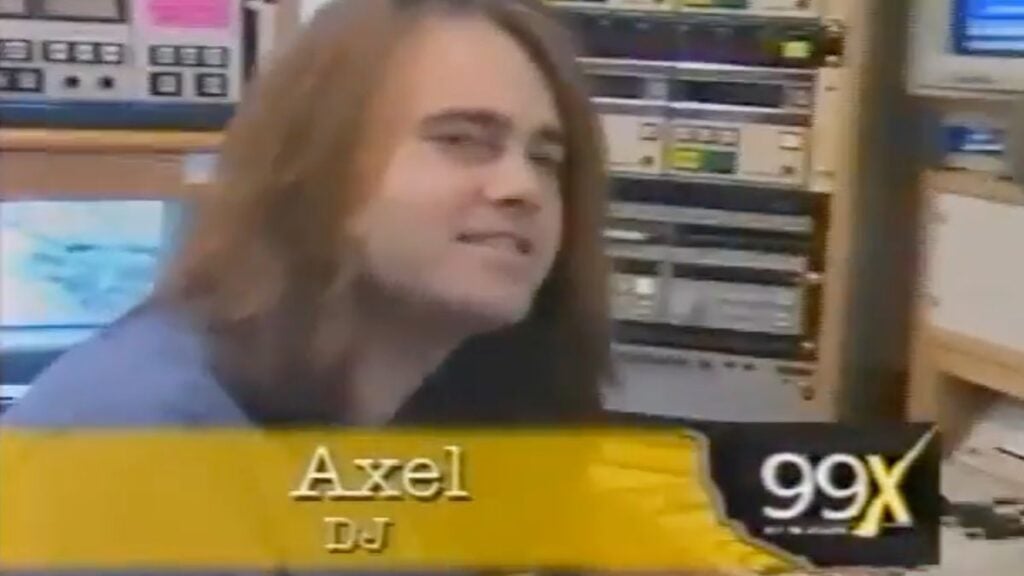
Lowe credits Phillips in particular for shaping his instincts about how a radio station should behave in a market. “When Brian Phillips came in to really set the overall tone on everything — how the station interacts on the streets, the songs we’re playing, the messages we’re saying on the air — I absorbed all that,” Lowe said. It wasn’t just music selection. It was attitude, street presence, the entire identity of the station. Those lessons traveled with him to every stop afterward.
Cincinnati and the Value of Autonomy
The move to Cincinnati in 2014 was a deliberate step outside the Atlanta ecosystem. Cumulus needed someone to revamp a struggling active rock station, 96 Rock WFTK, and Lowe took the job. It was his first true autonomous PD role — no corporate fingers in the pie, no Atlanta market politics, just a station to build. “It was truly 100% autonomy where I could do whatever I wanted,” he said.
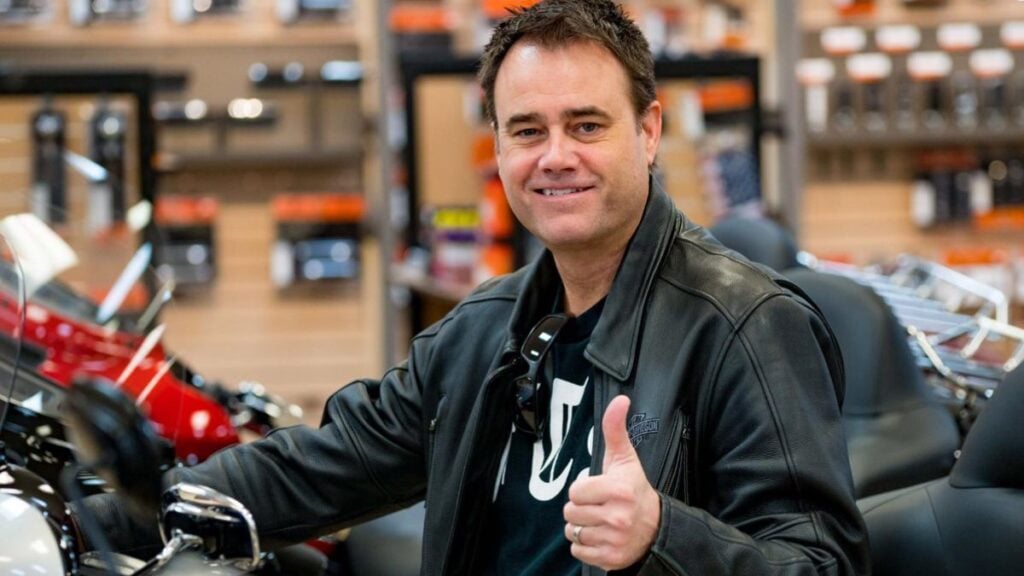
He found Cincinnati to be a different kind of radio town. “Atlanta is a very metrosexual town. Cincinnati — man, they sell more hoodies there than anywhere in the world. Everybody just wears hoodies and they’re angry at their sports teams and they want to hear hard rock.” The competition was WEBN, a heritage station that had owned Cincinnati rock for decades. His team nosed ahead of them in certain monthly and quarterly ratings periods. He called it earning a stripe.
Four years later, Cumulus called him back to Atlanta. The time away had done something useful: it made him miss the city and fully appreciate what it meant to be embedded in a single market for that long. “It gave me a chance to get outside of Atlanta and then truly appreciate and miss all things Atlanta,” he said.
The River and the Audience That Grew Up With Him
The move to 97.1 The River could have felt like a step sideways — classic hits rather than the alternative and active rock that defined his identity. But Lowe says it felt right almost immediately. The River approached him while he was still at 99X, right as that station was preparing to relaunch. He sat with the offer and made a call. The Van Halens, the Guns N’ Roses, the Mötley Crües — that was the music he grew up on, he reasoned. The station was also incorporating more nineties content. And there was a demographic fit he found genuinely compelling.
“The River has a 65-35 male-female audience. I’m not one of those dudes that’s so rock it’s not going to be appealing to women. I’m a guy that’s got a wife and two daughters. I know how to connect with women.” He looked around at the colleagues he was joining — Kaedy Kiely, English Nick, voices that have meant something to Atlanta listeners for decades — and felt the weight of the lineage rather than the pressure of it. “It doesn’t give me an ego stroke. It just makes me feel really connected to the Atlanta audience.”
Morning Drive, Localization, and the Art of the Phone Call
Lowe works the morning show solo, without a co-host, and has developed a clear philosophy about how to fill that space. The audience is the co-host. He picks up phones constantly, not just to reward listeners with prizes but to fish for material — a welder who’s an apprentice, a young dad spending his contest winnings on his daughter’s first birthday party, a guy who’s going to take his wife out to dinner. “I like to put those things on the air,” he said, “and not overpopulate with people that are retired or the 50- and 60-year-olds. I like to have the mixture.”
His two morning segments, Classic Rock News, are built on the same principle: find the contemporary hook in the classic story. A Billy Joel song isn’t just a Billy Joel song — it’s a story about the lawyer fight over an unauthorized documentary. A Whitesnake reunion isn’t a nostalgia act — it’s an Adrian Vandenberg tour that just announced an Atlanta date. He weaves in younger producers, contemporary connections, current events. “Any chance I can bring up something relevant and topical and weave it into something from our format that’s 40 years old,” he said, “it makes it sound current and not dated.”
He’s also attentive to the format’s format evolution itself. The River has moved from a seventies- and eighties-heavy playlist to incorporating one nineties cut per hour and then deepening that library. The shift wasn’t universally embraced at first — roughly ten percent of core listeners pushed back on Pearl Jam appearing on a classic rock station, despite the song being over three decades old. Those listeners, Lowe noted, don’t think twice about it now. “A car is classic at 25 years. So, you know.”
What Comes Next
Ask Lowe what format he’d want to tackle if given the chance and the answer comes fast: country. The road not taken in the early nineties, the Arista Nashville chapter that almost defined his career instead of radio, still has a pull. He’s earned his stripes across four formats and three cities over 34 years. A cowboy hat and some boots, he figures, are not entirely out of the question.
For now, Atlanta mornings on 97.1 The River are where he is, doing what he has always done: connecting people to the music they grew up on, to each other, and to the city itself. “I’ve known this person for 35 years,” he said, describing a listener who called in to remember hanging out with him at a now-gone Atlanta venue. “So it’s kind of a family feeling.”
Thirty-four years in. The warm blanket is still on the air.
Barrett Media produces daily content on the music, news, and sports media industries. Sign up for our newsletters to stay updated and get the latest information right in your inbox.
