Colin Cowherd believes the new partnership between FOX Sports and Barstool Sports is not only a smart move—it’s a necessary one. Speaking on The Colin Cowherd Podcast following the announcement of the multi-year collaboration, Cowherd offered his perspective on why the alignment between the two brands works—and why it wouldn’t have at ESPN.
“I’ve never thought Barstool was a good fit with ESPN,” Cowherd said. “I didn’t think that show [Barstool Van Talk] was going to last 15 minutes. I think it works at FOX because FOX News and the New York Post are owned by the Murdoch family. They have strong convictions on the right. You can call them whatever you want, they don’t care.”
Cowherd, who has long touted the value of independent thought in broadcasting, said that FOX’s structure allows for voices from all angles, while other networks have historically taken a more restrictive approach.
“FOX has never once come to me and said, ‘Hey, slow down on this.’ They don’t care,” Cowherd explained. “Where ESPN—it is documented—they do care. It was pretty stridently left for several years, and it made a lot of people uncomfortable.”
Barstool’s strengths, Cowherd said, directly address weaknesses within FOX Sports’ current offerings—particularly in the digital space.
“They were brought in for digital. They have prowess and a footprint on digital,” said Cowherd. “That’s not necessarily our [FOX Sports] strength. Our digital presence. Barstool is great at it. They solve a FOX Sports problem.”
Beyond social reach, Cowherd noted the energy Barstool founder Dave Portnoy brings—especially around college football—is something FOX executives have been eyeing for months.
“Six months ago, a big exec asked me what I thought about Portnoy on our college football show. I said, ‘Let him be who he is—a personality, a social influencer. He’s not a traditional broadcaster, so don’t hold him to Rob Stone or Tom Rinaldi.’”
Cowherd also suggested that Pardon My Take co-host Dan “Big Cat” Katz has the potential to lead a TV show, which is part of the FOX Sports partnership with Barstool Sports. He regarded Katz strengths in television calling him “very effective” and “phenomenal” at delivering trending, viral content.
Cowherd noted what he’s hearing is the Barstool Sports program on FS1 will air live from 8am-10am, and replay leading into the simulcast of his daily radio program The Herd with Colin Cowherd. While the show’s replay window—airing before The Herd—may not bring big numbers, Cowherd said it’s still a strategic move.
“It makes us younger on FS1, which I’m for,” said Cowherd. “It’s a cost-effective measure.”
Ultimately, Cowherd believes Barstool’s unapologetically opinionated voice fits the FOX Sports culture, one that encourages talent to speak their mind—regardless of political leanings.
“I don’t think companies should be telling you what to say about politics,” he said. “If you’re going to allow political talk, then allow all of it. I think Barstool works at FOX.”
Barrett Media produces daily content on the music, news, and sports media industries. To stay updated, sign up for our newsletters and get the latest information delivered straight to your inbox.
CBS, Barstool Sports, Fox Sports and Saga Communications were involved last week in major news. All four situations required risk taking that may or may not benefit their respective businesses. Given the amount of interest in these particular stories, I’m going to tackle all of them in today’s column.
Saga Communications Leaps First
I wrote three weeks ago that an AI tsunami was about to hit the media industry. Some told me I was nuts, others expressed concern or appreciation for the piece, and a few felt it already happened. Until major moves are made that effect a large number of people though, it feels like noise to many. But now after Chris Forgy confirmed our report of Saga Communications replacing all voice talent with AI replicated voices, the industry is barking loudly.
When Garrett Searight spoke to Saga’s CEO last week, Chris Forgy shared that the move helped the company save 10 jobs. He left out that these moves eliminate more jobs than they save. That implies that Saga values its own employees over independent contractors. Many outside the building won’t like hearing that but most operators share a similar view. Chris has to think about who he employs first before he gets to everyone else. I consult brands and can prove my worth but I understand that some see me as a luxury not a necessity. It’s vital for anyone working with companies in a support role to continually create impact or risk being replaced.
I did some math to see if Mr. Forgy’s numbers lined up. Saga owns 113 radio stations, many of them in mid to smaller sized markets. If each brand spent $500 per month on voice talent, that’d cost 6K per year and 678K for all stations. Boost the cost to $600 per month and it’s 813K annually. Based on those numbers, it suggests that the 10 jobs saved earned an average between 67-81K per year. That math makes sense to me.
Keep in mind, in some cases, the monthly spend on voice talent is lower. There’s also likely some situations where on-air staff inside buildings provide voiceover work to help brother/sister stations. Folks may not consider that a big savings but if Saga felt it could remain important to its local audiences and advertisers while utilizing their own people and technology, it’s hard to say that they’re wrong. Saga reported a 4% decline in revenue in Q1 and it’s Chris’ job to run a profitable business. Love or loathe it, he has to make tough choices to stay ahead.
The bigger issue isn’t that this happened. It’s that it’s only the first. If you think Saga Communications is going to be the only one doing this, you’re not paying attention. This is likely to spill over to sales, digital, production and talent too. I expect to see more national/regional talent on local airwaves in the future, and potentially even licensing agreements to retain quality programming while minimizing expenses. In radio markets 60-109 (under one million people) and 110-250 (under 500K), where 15-25 stations compete to earn audience and advertising dollars, it’s even more likely.
I do hope executives are wise enough to not lump everyone into categories and treat them the same. We don’t do that with talent, sales people, and executives, and shouldn’t with voice talent or other key roles. Some see a line item like ‘voice talent’, ‘consultant’, ‘support staff’ and view it as non-essential. They ignore how much an individual matters to the audience and staff or how they affect the bottom line.
Case in point, in 2020, it’d have been easy for my clients to cut me due to the pandemic. While many were losing 40-60% of revenue each month and struggling to sell anything, I helped three partners earn 5K each in advertising buys. They were stunned to learn that the business they received came from their consultant. It’s why I dread using ‘consultant’ to define what I do. I prefer business partner because I can help the entire organization, not just the programming department. Without knowing that, corporate folks who are detached from local markets would’ve just lumped me in with all consultants. Doing so could’ve cost them more than they saved.
When it comes to voiceover talents, executives tend to discount their importance. They don’t think about the sound or personality of the brand or how quickly credibility gets harmed if mistakes are made. What type of long-term damage is done if a Milwaukee radio station using AI pronounces Giannis Antetokounmpo wrong or a local town or street incorrectly? How big does Westwood One sound if you removed the powerful pipes of David Lee? What happens to 105.7 The Point if the witty delivery of Steve Stone was gone or ESPN NY/LA if it lacked the punch and versatility provided by Jim and Dawn Cutler?
In 2012, I was with Entercom in San Francisco when David Field wanted all stations to drop their voice talent for company production voices in order to save money. We had introduced a campaign (AM vs. FM) which produced a lot of reaction across the market. It featured Steve Stone and Sean King’s clever dynamic, and highlighted the creative brilliance of Jeff Schmidt. I was perplexed that the company wanted to disrupt a big part of a market #4 brand over 3-5K in annual savings, so I pushed back. Thankfully, cooler heads prevailed, and we stayed the course in San Francisco, but other markets weren’t as lucky.
I’ve worked with voiceover talents who are vital to the brands they voice. Good ones grasp the PDs vision, research the local market, and bring the messaging to life. But many up top don’t know what goes into their work. I’ve been at dinners with voice talent who receive copy, and exit the table to duck into a room or car, make sure the acoustics are right, and deliver timely copy for a key issue within minutes. Those same people help programmers, talent, producers and salespeople understand how to use audio to make clients and listeners feel an emotional connection to the brand. AI may turn things around quickly but it lacks emotion, passion, and human connection.
Can AI help? Yes. Should it be utilized? Definitely. Are there voice talents doing the bare minimum who aren’t vital to the station’s they voice? Absolutely. But before deciding that an entire category is expendable, I’d take a closer look at who is and isn’t valuable. Maybe 50% or 75% won’t be, but if 25-50% are, and you mistakenly cut them, how much more will it cost you in the long run?
I believe that Chris Forgy and most executives running radio companies want to retain employees and be profitable. It’s easy for programming people to suggest that sales should sell more and companies should invest in staff and boost rates but many who say that tend to be uninformed on the local advertising picture. Nobody runs a business just to run it. All want to make money, and grow. If radio revenues keep shrinking, and technology can help a few areas improve, then more of these decisions will be made. Now, whether it improves our product, listenership, trust, and revenue, is a very different question.
The Fox Sports-Barstool Sports Deal
John Mamola made some great points in his Friday column referring to the Fox-Barstool deal as a shift from analysis to personality and substance to fun. There’s a lot of truth in that. However, I also think this is about a culture shift and ESPN’s role in redefining the sports media landscape.
It was ESPN that opened the door on licensing content with Pat McAfee. The brand has also partnered with Omaha Productions for the ManningCast, TNT for Inside the NBA, and provided flexibility for Stephen A. Smith, Mina Kimes, Pablo Torre and Rich Eisen to pursue outside projects. They’ve also featured high-profile contributors like Shannon Sharpe and Chris Russo who hold important roles for other media outlets. Fox Sports hasn’t done as much of that with their lineup but now they are. ESPN’s opening the door has paved the way for Fox to present a bigger challenge.
I believe the Fox-Barstool partnership is strategically smart, and competitively brilliant. Dave Portnoy on Saturday’s is the perfect fit for Big Noon Kickoff to counter Pat McAfee and College Gameday. Not only does his passion for Big Ten football align great with Fox, but the back-and-forth battles he’ll have with Urban Meyer, Matt Leinart, Brady Quinn and Mark Ingram will create good television and more importantly, viral social moments. Big Cat making appearances is another outstanding addition. I’m sure Jon Gruden will show up along the way on Fox as well.
In addition, Barstool going live M-F 8a-10a ET opposite GetUp! is the perfect slot to feature the show. Mike Greenberg’s program is built best for the 35-64 crowd. Barstool skews younger, more likely to deliver a strong 18-44 demographic. This gives Fox a shot to close the gap, attract new audience, and turn younger fans on to Colin Cowherd, Nick Wright, Danny Parkins, and others. Ask yourself this, are advertisers more likely to be intrigued spending on FS1 this week or two weeks ago? I think you already know the answer.
I do wonder how Fox will react when Portnoy inevitably comes under fire for something controversial that creates bad corporate PR and potential advertiser pushback. I’m sure Eric Shanks and his team debated and discussed that situation extensively before going down this road. Some media critics will also question why Fox cut six black employees (Joy Taylor, Paul Pierce, Keyshawn Johnson, LeSean McCoy, Emanuel Acho and James Jones) for Barstool, a heavily white crowd. It won’t matter that Craig Carton, Chase Daniel, and Mark Schlereth were also white and let go, because anytime Fox is in the news alongside a brand as polarizing as Barstool, critics find new ways to pick them apart.
I believe this is a homerun for Fox and Barstool. Eric Shanks deserves a ton of credit for taking a risk and recognizing change was needed. FS1 was floundering, parted ways with executive Charlie Dixon, and needed a spark. Colin Cowherd and First Things First featuring Nick Wright were the best two shows on the channel. The company also wisely held on to Danny Parkins, a future TV star. As you look at the Saturday football picture, Lee Corso is exiting College Gameday, Pat McAfee’s contractual situation is always a story, and Big Noon Kickoff is getting stronger. There’s a real shot for Fox to tighten the race.
FS1 didn’t set up Breakfast Ball, Speak and The Facility for success. Danny Parkins, Craig Carton and Mark Schlereth are all talented but they were put together with short notice and placed in roles that didn’t capitalize on their best attributes. The same could be said of The Facility and Speak. I hate seeing Craig Carton, Joy Taylor and Mark Schlereth, three people I’ve interacted with over the years lose work but each will bounce back. I’m especially interested to see if Craig returns to NYC sports radio or SiriusXM and if Joy gets a look from Charlamagne Tha God and The Breakfast Club.
Dave Portnoy also deserves a lot of credit. He gets a ton of attention for his rants and pizza reviews but his business acumen is often overlooked. 5 years ago, Barstool was in strong shape with Erika Ayers-Badan, had a deal with Penn National, and was coming off of a failed ESPN partnership. The brand looked unlikely to be connected to a traditional media operator like Fox, CBS, NBC, etc. anytime soon. When Erika left, it raised eyebrows.
Since then, Barstool hasn’t missed a beat. Now, they’ve been hired as a key strategic partner to help Fox battle ESPN. This move should energize Barstool’s talent, expose the brand to more fans making it even stronger, and most importantly, energize advertisers who have tuned them out to take a second look at working with them. For those who already are, it will convince them to invest even more in the brand. Hardcore stoolies may question Barstool becoming too mainstream the way Pat McAfee fans took aim at him when he joined ESPN but it’s hard to argue that the pros don’t outweigh the cons.
If you’re part of Fox’s ownership group, this is a big test. If Barstool can’t help FS1 and Big Noon Kickoff make a major dent after years of investing significant resources in traditional personalities and programming, eventually you’ll ask, ‘is this fight worth fighting?’ But until that day comes, if Fox and Barstool are going to battle ESPN for sports media supremacy, it’s better to do it united than to go it alone.
The End of ‘The Late Show’ on CBS
Stephen Colbert revealed that CBS is pulling the plug on The Late Show in 2026. Many have since blamed Donald Trump, Colbert’s politics and criticism of his employer, and other issues for the program’s cancellation. In a statement, CBS said the show’s cancellation was not related to performance or any issues at Paramount.
Matthew Belloni reported that Colbert’s show cost more than 100 million per year to produce. Colbert’s salary was a reported 16 million, roughly 100 people worked on the show, and it was losing 40 million dollars per year. I’m not sure what CBS meant when it said the cancellation wasn’t tied to performance. The content and ratings may have been good but losing 40 million annually suggests poor business performance.
The timing and optics are terrible, but Stephen Colbert’s show costs more than $100M a year to produce and is losing more than $40M a year. CBS execs had been mulling for a long time whether to pull the plug. Details ⬇️⬇️ https://t.co/gjSuazpef9
Brian Stelter wrote an excellent article on CNN, which shared that Guideline, an ad data firm, estimated that advertising revenue for late-night shows dropped from $439 million in 2018 to $220 million in 2024. That represents a 50% drop. Audience size has also been flat to down, moving from 2.8 million in September 2015 to 2.4 million during the second quarter of 2025.
Colbert is ahead of Jimmy Kimmel and Jimmy Fallon in the ratings, but trails Gutfeld on Fox News. Success isn’t measured just by ratings and social media impressions, it’s about revenue and profitability too. Folks may not like seeing the show go away but late night television isn’t what it used to be. Losing 40 million dollars annually makes no sense for any media operator in 2025 especially for a 1-hour program that airs weeknights at 11:30pm and requires staffing 100 people.
That said, if you’re a Colbert fan, don’t lose sleep over this. Some TV or streaming company will add him once he’s free. He won’t be homeless and starving anytime soon.
Quick Hits
I hoped to announce a few names last week for the 2025 BNM Summit along with details of a partnership we’re putting together to help attendees save money. Keep an eye out for details tomorrow. News/Talk folks, this conference is for you. If you work in the format, you should be in the big apple on September 3-4, 2025.
Attendance for The Barrett Bash on September 4th is nearing 150. There are a number of prominent names across the industry already registered. If you received an invitation and plan to attend, register asap. It’s first-come, first-served. We can’t accommodate everyone. Brands looking to support the Bash and/or BNM Summit can email Stephanie@BarrettMedia.com to learn what’s available.
One of my favorite videos from the weekend was Jon Gruden opening a box of goodies from WDAE in Tampa. Gruden was entertaining and gave the entire air staff plugs and content to work with on Monday. Great job by Tommy Chuck and the iHeartmedia Tampa team seizing an opportunity to create social buzz.
I sure hope the guys over at @953WDAE are having a good day, even the ones who used to ruin mine! This is a fantastic box! Thank you all for the support over the years, I think… pic.twitter.com/2hxocj78jb
Randy Williams shared a cool video of how to get your radio show syndicated. It covers why it’s smart to syndicate, how it works, and more. Take a moment to click here and check it out.
The Grill Room with Dylan Byers recently featured a great conversation with Adam White of Front Office Sports. If you enjoy learning about the business of sports and brand strategy, click here to listen.
I saw a ton of memes over the past few days related to the Coldplay–Andy Byron kiss cam saga. If any music radio shows did something clever with it, send the audio to Jeff@BarrettMedia.com and myself. We’d love to check it out.
The new Shinedown single Killing Fields is fantastic. As I remarked on Facebook last week, I don’t think they know how to write a bad song….I’ve seen people online praising iPrevail‘s new music but it’s not the same without Brian Burkheiser. Maybe the new tunes will grow on me but I’m not crazy about Rain, Into Hell or Violent Nature.
Barrett Media produces daily content on the music, news, and sports media industries. To stay updated, sign up for our newsletters and get the latest information delivered straight to your inbox.
Content is king. Last week’s decision by FOX Sports was a sign that networks are beginning to wave the white flag on developing sports content of their own to attract a younger audience. Doesn’t this sound like sports radio in a sense?
The recent licensing deals by ESPN and FOX Sports prove that content control no longer matters to network television executives; they just want proven products on their networks. It’s not a bad strategy. The days of talent needing networks are no longer. The networks need talent who produce proven content to sell time to their advertisers.
The question I’m left with is: why don’t more sports radio stations follow the current trend of sports television networks?
It’s hard to compare sports network television to sports radio stations. I understand the difficulties because the budget size is simply not apples to apples. It’s more apples to peanuts. The flip side is that because of those smaller budgets, sports content networks built their own radio brands and licensed out the content for affiliation—using the megaphone of local sports radio to broadcast/promote their national brand to a worldwide audience.
Television networks never planned for this, because they never thought they’d be in this situation.
Sports Radio Can Serve the Local Listener Better
So here we are—television networks signing licensing agreements for proven content creators to “do what they do,” and we’ll give them a network with traditional broadcast reach to market it.
It makes complete sense.
Why aren’t local sports radio brands doing the same or thinking along the same lines?
When I programmed a sports radio station, one of the top findings we received from our listener research was: more local. People in local markets wanted to hear about their local teams in any way, shape, or form from the personalities heard on our brand.
Why would anyone in St. Louis care what Doug Gottlieb thinks about Duke? He’ll never talk Cardinals baseball or a Blues trade.
Why would a Tampa Bay Buccaneers fan care what the crew of Unsportsmanlike feels about the latest with LeBron James? The NBA doesn’t call Tampa Bay home.
It’s not a knock against the topics or talent that syndication networks provide. The fact is syndication talent can’t provide content for every single market they are heard in. They need to play what they consider “the hits.” Often, the hits don’t play well locally, because local content always wins on sports radio.
Thinking Differently Is Key
So why isn’t sports radio thinking like ESPN and FOX Sports when it comes to licensing deals with talent outside their own walls?
Every local market has a slew of podcasts that have their own equipment, their own brand, their own audience, and their own style of content. Yes, not every independent content creator is the same, but they are in one important aspect.
Their content is the content your local sports radio audience wants. Most sports radio stations already bring on local sports content creators as guests to enhance their content. Why allow your local audience to leave you and go find more of it?
Ask yourself: does a Seattle Mariners fan care more about what Dan Patrick has to say about the Travelers Championship, or a breakdown of Cal Raleigh’s home run chase?
Would a Miami Heat fan lean in more for an interview by Colin Cowherd with Joel Klatt, or a breakdown of last night’s performance from Tyler Herro and whether the Heat could add at the deadline?
The entry point to begin creating your own sports content today is easier than ever. Equipment is more affordable, and ease of discoverability plays to a worldwide audience. Professional sports teams are approving access for these digital brands and content creators, so they have access to distribute content surrounding their teams to those new audiences. These creators have just as many access points as your on-air staff, and they are building younger audiences that you’re chasing.
Advertisers are buying into digital, and away from traditional. Take a look around at many of the local sports radio talents who have been cut in recent years and how they have monetized their talents and their own brands.
Some Guidance for Sports Radio Market Managers
Market managers should consider the following:
When you become an affiliate of a syndicated network, you give up units for your affiliation. You lose the opportunity to make money by putting on a product that doesn’t speak to or connect with your local audience. Why would a local client make a buy for a talent that doesn’t connect with their local customer?
Yes, syndication is free content. But is it the right content to keep your brand relevant for years to come?
Instead of doing what’s always been done, think differently. That’s what ESPN did with the signing of Pat McAfee, followed up by the signing of Rich Eisen, and what FOX Sports is now entering into with the partnership with Barstool Sports.
Why can’t local sports radio stations look at (for example) the Locked On Podcast Network, or independent creators in their local markets, to work on licensing deals of their own?
The benefits outweigh the pitfalls. You become more relevant through connection, and you bring the audiences of those creators to your megaphone. If national radio brands see value in promoting podcasts in your local inventory, why not use that local inventory to benefit you—and save your brands from becoming further extinct?
Thinking differently leads to progress. We all know what doing the same thing and expecting a different result leads to.
Content is king. Local is royalty. Go find yours.
Barrett Media produces daily content on the music, news, and sports media industries. To stay updated, sign up for our newsletters and get the latest information delivered straight to your inbox.
New radio formats don’t just pop into existence randomly as the brainchild of some mad genius sitting in a radio laboratory experimenting. While that is part of it, new formats are born out of societal forces that create an opportunity, which is then recognized by a mad genius.
When we started Xtreme Radio in Las Vegas, Alternative music was sliding into a pop-leaning phase, disenfranchising male listeners. At the same time, a wave of heavier music led by Rage Against the Machine and Korn was capturing fans as grunge ran out of steam. That moment didn’t last forever, but the timing was right, and we were able to ride the wave to ratings success.
Classic Rock was born out of a similar set of circumstances. Current Rock music had been taken over by hair metal acts that older fans weren’t attached to. While the Rock music baby boomers grew up on had been left behind. In this case, the mad genius was Fred Jacobs, who saw the power of Rock from the ‘60s and ‘70s to move audiences.
Last week, we spoke with Howard Kroeger, who pioneered Adult Hits with Bob-FM. In that case, he points to Napster as the cultural force that led to a new format. At that time, people who were either older Generation X or younger Baby Boomers didn’t have a station focused on their experience.
At the same time, Napster came along and broke down walls between musical genres. “It altered our taste buds,” says Kroeger. “Everybody was already busy putting mixtapes together, but all of a sudden, with Napster, putting Tom Petty next to the Clash next to ABBA was fine.”
Kroeger also pioneered Hank-FM, which was born out of a time when Nostalgia was running rampant: the Covid pandemic. That interest in comfort food mixed well with a strong body of popular music that was missing from the radio, ‘90s Country, which he says, “was just a rocket waiting to take off.”
Now he’s on to a new project, and while it’s not exactly a new format, it’s more than just a version of Classic Rock. Welcome to The Temple of Rock.
The impetus, Kroeger says, is the continuing cultural interest in Classic Rock music. “This is the 21st-century version of Strauss, Tchaikovsky, and Beethoven. These artists will be around for a long time.” As evidence, he points to artists selling their catalogs for huge sums of money. With the prices being paid for this body of work, Kroeger says, “you know somebody’s planning for a long shelf life for the format.”
He also points out that, thanks to online music services, a seemingly endless stream of biopics and a lack of great new Rock music, new generations keep discovering Classic Rock. “There was a Rolling Stone article about this phenomenon back in 2006,” says Kroeger. “If you were fourteen then, you’re 33 today and know exactly who Led Zeppelin, AC/DC and Jimi Hendrix are.
That’s where Temple of Rock comes in. Described as “a celebration of the music,” it is designed to tap into the ongoing legacy and continue to honor the music for years to come. But more than just a flavoring of the format we know, Kroeger says it’s a full-fledged Rock format built on the sturdy pillars Classic Rock provides.
And the interpretation won’t be narrow, because Kroeger believes that as the music ages, the tribalism mellows. “As we get older, we mellow out, and I actually think Classic Rock is widening,” says Kroeger. “Bands that listeners might once have railed against aren’t so bad today. “The Sex Pistols were there to take the piss out of The Who and these other bands, but now they’re being played on the same format.”
That also creates a chance for discovery of songs and artists that have been lost to the ravages of time and music testing, “There are artists out there that don’t get played anymore, but they should,” says Kroeger. At the same time, he’s also embracing newer artists that have commonalities with Classic Rock. He promises that Alternative music from the ’90s can be found in the temple with Nirvana, Red Hot Chili Peppers and Stone Temple Pilots playing prominent roles.
Also typical of a Kroeger project, imaging plays a big role in the Temple of Rock. The gist, he says, falls somewhere between Wayne’s World and Monty Python and includes Gregorian chants, monks, and dark castles with torches burning in the hallways, “but it’s not macabre, it’s fun.”
Considering the Temple of Rock is built not only on a strong musical foundation but on a career’s worth of lessons learned building the Bob and Hank formats, it sure feels like when the temple opens its doors, a lot of people will stop in to pay tribute to the high priests of Classic Rock.
Barrett Media produces daily content on the music, news, and sports media industries. To stay updated, sign up for our newsletters and get the latest information delivered straight to your inbox.
KOA 850 is in the midst of celebrating its 100th anniversary. And that celebration has helped give Program Director Dave Tepper an appreciation of the station’s rich history.
Hitting the air on December 15th, 1924, the iHeartMedia Denver news/talk/sports station has been a fixture in the market for decades.
Meanwhile, Tepper recently hit his own anniversary with the brand, marking three years leading KOA 850. And while three years is a long time, in the grand scheme of things, it’s a mere blink of an eye almost.
And that point isn’t lost on Dave Tepper.
“It’s funny — at some of the other stations I’ve worked at, which were a lot younger, three years felt like a long time,” said Tepper. “But here, it feels like I’m just getting my foot in the door compared to the experience around me. It’s a humbling place to be. It’s also an incredibly fun challenge that I’m enjoying taking on. We’ve had some really positive things come out of the first three years here, though there’s still plenty of work to do.”
Tepper has worked at stations like ESPN 97.5 in Houston, 1620 The Zone/1290 KOIL in Omaha, and Altitude Sports Radio in Denver. But KOA 850 is a different animal than those stations.
The station features a unique format, with a news-focused show in the morning, conservative talk programs hosted by Mandy Connell and Ross Kaminsky from 9 AM-3 PM, before featuring eight hours of sports talk on the heritage brand.
Hitting the 100th anniversary was definitely a milestone worth celebrating. And for Tepper, looking at what the station had done in the past not only inspired him toward what the 100th celebration should look like, but also gave him a greater appreciation for just how meaningful the brand has been — and still is — to Colorado listeners.
“The heritage of it really speaks for itself. I’ve learned so much about that over the past few months, as we’ve really delved into the history of the station,” he shared. “We even went to the local library and dug up old newspaper articles about the station celebrating its 10th, 20th, 30th, and 50th anniversaries. It’s been incredible to see the various things this station has done and covered.”
If you look at the background of Dave Tepper, you’ll largely see building brands from the ground up. That is obviously the opposite of a heritage brand like KOA 850. And having that new challenge was something he welcomed.
“Instead of starting from scratch, you have the benefit of looking back. And that’s what makes heritage stations so interesting,” said Tepper. “When you’re designing a station from the ground up, you’ve got this open canvas: What’s the vision? Can I get a team to buy in? Can we shape this vision together? That usually starts with the leadership team, and you move forward without much of a historical playbook to reference.
“But with stations like KOA, there’s a rich history to draw from. We can look back and say, ‘Hey, this idea worked before. Can we bring it back in a more modern way?’ Some of those ideas helped tell the most successful stories in the station’s history. So we’re asking: can we revisit those paths while staying present in today’s radio and audio landscape? A new station gives you a wide-open slate to try things. But with a heritage station, you’ve got background — and I’m humbled by that. I’m honored to look back and say, ‘Let’s see if any of this is worth bringing forward.’ And we’ve started doing just that.”
Obviously, in its 100-year history, KOA 850 has made its mark on the AM band. The station features 50,000 watts of power on its Class A signal. But the future of AM radio remains murky, at best. While lawmakers insist their serious about passing the AM Radio for Every Vehicle Act into law, the bill has yet to be signed after several years since its introduction.
But Dave Tepper believes the future of the brand is its long-lasting commitment to excellence, which will be conveyed no matter the distribution platform.
“The frequency we’re on — we’re always aware of that. But it’s the product we focus on. If you’re good at what you do, you’ll have a platform to do it on, and that’s what we focus on,” he admitted. “I see our industry changing all the time. There have always been challenges, and it’s no different now. The entertainment industry is shifting — TV, film, radio. To me, that’s motivating. It reminds us to do what we should always be doing: being the very best product we can be every single day. Generate as much revenue as we can every day. Deliver as much compelling content as we can every day. Stack up enough wins with your listeners and with your revenue to prove that people will come find you, even on the AM dial.
“But if the industry decides that’s no longer a place to be, we’re going to be good enough to be found somewhere else, because the product is that good,” added Tepper. “If you put together the best product you can, you’re going to have a platform. The frequency we’re on isn’t something people in my position—or my staff—have much control over. What we can do is be the best station we can be, and try to make sure those conversations don’t come our way at all.”
Barrett Media produces daily content on the music, news, and sports media industries. To stay updated, sign up for our newsletters and get the latest information delivered straight to your inbox.
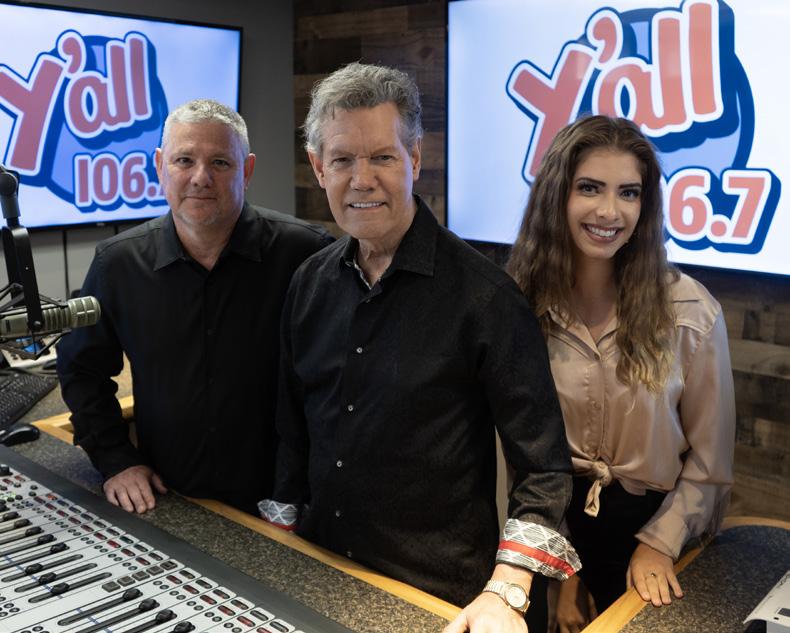
Midwest Communications launched Y’all 106.7, a Nashville ’90s-focused Country station, just over two years ago during CMA Fest.
Led by Brand Manager Ron Allen, the station has employed a mix of nostalgia, relentless street presence, artist buy-in, and an imaginative, fast-cycling imaging strategy to carve out a space in the crowded Country music scene in Music City.
“We launched about two years ago here at CMA Fest, and we felt like there was a lane of underserved great music that wasn’t getting played in the market,” Allen says. “We had this concept to do a ’90s-based Country brand, not what I consider a traditional Classic Country radio station.”
“Matter of fact, I don’t use those words. It’s a ’90s-based Country brand that dips into the ’80s, that plays some early 2000s. But it’s focused on big stars from the ’90s. We felt like George Strait, Garth Brooks, Brooks & Dunn, the list goes on and on, just weren’t getting their due on the radio anymore.”
“They’ve got great brand recognition, and we knew that it was going to be a little bit of an uphill battle to establish ourselves amongst the giants that are here doing Country radio really well. But we did. We just jumped off the cliff and did it. And it’s been really successful to our mind, to our thinking.”
The station launched with the attitude that they weren’t out to beat anyone, just to find its own niche.
“When we launched, I think you and I had a conversation where at one point I said, we don’t have to beat people to be successful. It was true then, it’s true now. But fortunately, we have seen some pretty strong success in the numbers. I think we’re competitive with any of the other three big Country brands in the market.”
And there is more to Y’all 106.7’s story than the ratings that are published in the trades.
“Every time I see those six-plus numbers in the trades, I cringe a little bit. They don’t tell the story at all. But 25‑54, both male and female, we’ve seen some real success. We’re competing with every brand in town. And we do win periodically. We need a little bit more consistency, but we love the position we’re in right now.”
Recently, competitor 95.5 WSM-FM dropped the Nash Icon brand, moving to a current-based format and perhaps making the lane for Y’all 106.7 a bit wider.
“Lots of changes are going on in the market, which we’ll see how that dust settles, but we feel good about those changes, too. We feel like the lane is now a little bit wider for us, and we’re just really excited about the future.”
If you follow the station on socials, it can seem like Allen and Taylor are everywhere at once: Music Valley, The Ryman, fan festivals, artist pop-ups, charity tie-ins. That’s by design.
“I’m an old school radio guy. I believe in shaking hands and kissing babies and burning that shoe leather off the bottom of your feet, and we’re doing that. We have an opportunity here that is so unique because all the artists are here. They have been really gracious in their time and their commitment to us.”
“All these great events are going on in town, and we’ve been invited to participate in so many of them. I’m never going to say no when an artist is doing something cool in town and we can be out in front of our listeners. And have the opportunity to interact with the artists and the listeners. And with new listeners, a lot of young people that are just learning about the brand and just being visible and just doing it the old school ways.”
Photo Facebook
Part of the success of ‘90s Country is that it makes listeners feel like they are in a safe space.
“You’re comfortable in that world. The memories of what used to be. It’s a great space in your brain. Your mind goes to that. You remember those happy times, you remember great, great music, and it just stands the test of time. Good music is always going to be good music.”
One of the surprises has been the younger female demos that have embraced the station.
“I was a little shocked with the success that we have with younger demos, especially younger females, as quickly as we had it. I thought we were going to be a really solid 25-54 radio station, leaning 35-64. And that was really not the case when we launched. It was a lot of 18, 20, 24-year-old women who came to the radio station first and found us more early adopters.”
“There’s the desire to hear these songs, and they haven’t been getting that play. So they’re sort of fresh in everybody’s minds. Many people are discovering them for the first time and saying, ‘Why didn’t I know about this great George Strait?’ We’ve been in a unique position, and I’m thrilled with the outcome so far.”
Allen is also the Brand Manager for sister station 96.3 JACK-FM, and the two stations collaborate to create imaging that keeps both gold-based brands sounding fresh and local.
“There are about five or six of us who write every week. We invite everybody in the building to come in and spend some time with us when we’re writing. I think it’s a great way for salespeople to learn about the brand. But the core is about five or six people.”
“There’s always something going on that’s current and local. That’s one of the keys for both of these radio stations. We are a local radio station. We make every decision in this office. All the music decisions, all the imaging decisions, what promotions we’re going to do, everything comes out of here. And we want that reflected on the air.”
“We write a lot of stuff that has an expiration date. It’s going to be on for two weeks, and then it’s gone. But that also keeps us really engaged, because we’re always looking for something new to write about.”
With headlines swirling about large companies moving imaging reads to AI, I asked Allen for his view.
“AI is a tool like any other tool. Research is a tool. Everything’s a tool. And if used correctly, there’s probably a place for it. AI is scary for me. I probably shouldn’t say this, but I think it can be the lazy way out. The inexpensive way out.”
“Especially with Country, but I think radio in general, we have talked for years about the personal connection to the audience. The closeness of the brands to who we are as personalities. And it’s unfortunate that we’ve started down that path. I’m afraid that it’s going to get out of hand, and I would hate to see that.”
In closing, Allen hints at some surprises on the horizon.
“We have some exciting things that are coming up for Y’all. I think there are some great opportunities. There may be a few surprises in store. We’ve done a great job of holding up our end of the promise that we’re not going to play something unless it’s 20 years old.”
“We’re right on that line now. We’re not going to go in that direction. You’re never going to hear that on Y’all. There’s sort of a demarcation line that we’re coming up to. That’s not who we are.”
“We are going to be a solid ’80s, ’90s, early 2000s radio station. We’re going to be comfortable on that line. We enjoy being here and feel blessed that the audience and the city have given us an opportunity to be successful.”
Barrett Media produces daily content on the music, news, and sports media industries. To stay updated, sign up for our newsletters and get the latest information delivered straight to your inbox.
Jesse Watters Primetime is the latest Fox News juggernaut in the 8 PM ET timeslot. It follows the long history of shows hosted by the likes of Bill O’Reilly and Tucker Carlson in the network’s long history of ratings winners.
It’s clear that Fox News values that window. But does the Watters-led program live up to the billing expected of the timeslot?
I set out to find that out by watching a recent episode of the program to get a feel for why the show is one of the top-rated — and sometimes the top-rated — shows in not just cable news, but cable television as a whole.
Truthfully, I was prompted to review an episode of Jesse Watters Primetime after his bombastic apology to Gov. Gavin Newsom (D-CA) last week. For the uninitiated, Newsom launched a defamation lawsuit aimed at Fox News and host Jesse Watters for what he labeled as lies shared by the network. The lawsuit sought a symbolic $787.5 million from the network, the same figure it paid Dominion Voting Systems to settle a lawsuit about the validity of the 2020 presidential election.
On his show last week, Watters apologized for his remarks after Newsom said he’d consider dropping the suit if he received an on-air apology.
But, in true Jesse Watters fashion, it wasn’t exactly heartfelt.
“We thought the dispute was about whether there had been a call at all, not when,” Watters began. “We thought that the governor was clear when he said — without qualification — that there was no call.
“Now, Newsom’s telling us what was in his head when he wrote the tweet. He didn’t deceive anybody on purpose, so I’m sorry. He wasn’t lying, he was just confusing and unclear. Next time, Governor, why don’t you just say what you mean?”
And that’s why I wanted to watch the program for this review. Because if I have a gripe about the news media — especially cable news television and news/talk radio — it’s that many hosts forget that they’re supposed to be entertaining. That, sometimes, the subject matter is so ridiculous and preposterous that treating it with the seriousness of legitimate news stories or tragedies is a disservice to the viewer or listener.
So, I tuned into Friday’s show specifically because I wanted to see how Jesse Watters discussed the news that CBS was ending The Late Show with Stephen Colbert.
And I didn’t make it through the first sentence of his monologue without saying “Wait, what?”
“Late-night talk shows used to be an oasis for American families to come together at the end of the day and enjoy a laugh with the rest of the country,” Watters said as he began Friday’s show.
Wait, what?
Families came together to watch late-night television? Maybe I’m in the minorty, but I don’t believe moms and dads sat down with little Timmy and Suzie at 11:35 PM ET to see Johnny Carson and Ed McMahon chat it up with the biggest Hollywood stars, just like I don’t believe moms and dads sat down with little Xander and McKinleigh to watch Stephen Colbert or Jimmy Fallon, either.
One sentence in and Jesse Watters is already spitting out poppycock.
As his monologue continued, Watters said that CBS had promised that Stephen Colbert would be a late-night host “for all Americans.” He then played a clip of then-CBS executive Les Moonves…not saying that at all.
Watters then added that the ratings had fallen off for Colbert compared to the final year of David Letterman’s tenure hosting The Late Show. Totally true. Letterman’s final year featured an average audience of roughly 3 million viewers, while Colbert’s show routinely finishes with roughly 2 million viewers.
But comparing network TV ratings from 2014 to 2025 isn’t exactly an apples-to-apples comparison, either. It’s a fallacy to claim otherwise. And I think Jesse Watters knows that. Or at least I hope he does. But why let facts get in the way of a good story, am I right?
Watters did have a poignant point about Colbert’s choice of guests, saying, “If Adam Schiff is a regular, you shouldn’t be shocked when the bosses pull the plug.”
As the monologue continued, I felt struck by the same feeling I get when watching several other cable news shows: that opening segments feature an over-reliance on outside media. This is not an exaggeration: in the first nine minutes of his show on Friday evening, Jesse Watters featured 15 clips from other shows, podcasts, etc…FIFTEEN! 15 times the screen shifted away from the star of the show to give time to the likes of David Letterman, Stephen Colbert, Adam Schiff, Joe Scarborough, Chuck Todd, Joy Reid, and Charlamagne tha God. I’m not sure how the argument can be “All of these libs are unimportant and irrelevant” while simultaneously showcasing their opinions on your highly-rated show.
While I appreciate Watters’ ability to be sarcastic and lean toward satire, because I think there’s a desperate need for that style of show in the cable news ecosystem, I found his opinions to be as expected. Nothing in the show truly made me say, “Holy cow, I can’t believe he just said that.” That’s not a problem in his show, by the way, it’s true for many in the genre.
But when I instinctively know what’s about to be said in any given show, that doesn’t give me much reason to tune into the program now, does it? Jesse Watters Primetime felt by the book. It felt safe. There wasn’t anything groundbreaking, new, or all that interesting about the hourlong show, in my eyes.
And why should there be, truthfully? The formula works. It was your run-of-the-mill cable news show. “My side? Good. The other side? Traitorous.” Millions tune in every night to hear Watters attack half of Americans, the same charges he lobbied against Stephen Colbert. And in spite of that, the show is a cable news giant, whether I left impressed by Watters or not.
But the question I often wonder about Fox News hosts is if their shows are actually good or if you could put anyone on the network and it would perform due to the brand recognition and fan base it has built. Because when I look around at competitors, I often see better monologues, better interviews, and better discussions.
But I don’t see better results elsewhere. Fox News dominates the cable news space. But I think Fox News dominates the cable news space more than Jesse Watters Primetime does. And that makes all the difference in my eyes.
Barrett Media produces daily content on the music, news, and sports media industries. To stay updated, sign up for our newsletters and get the latest information delivered straight to your inbox.
You’re under attack. You’ve been under attack for a long time. It’s not just defunding public media like NPR and PBS, although that’s been a wet dream for conservatives since public media has existed. It’s unfortunate that it took this long for people to notice, but I guess authoritarianism is like that.
I’ve already written about the need for public media, how some rural areas (hello, Alaska) have many towns without any local news coverage other than their tiny NPR and PBS repeaters, how public media — through CPB grants and partnerships — has been at the forefront of some of today’s most relevant news coverage.
Congress has threatened to end all that for decades, but it took an authoritarian President and a truly sycophantic Senate and House to make it a reality. You know all that. You knew all that well before it happened, and you didn’t sound the alarm. And here we are.
But you aren’t protected if you don’t work in public radio or television, either. Whether or not Stephen Colbert got booted for his content or to save money, there are a lot of other examples of how voices are being silenced or shunted off to Substack and Ghost and podcasts and social media, where they can be drowned out for good.
Yes, we have more opportunity to get our opinions in front of people than ever before, but the sheer number of those voices and the dreaded algorithm mean that you’re going to be confronted with far more material than any human can process, all at once, all begging for subscriptions and donations.
It’s one thing traditional media can do that the new media doesn’t do: essentially, curate and digest news and opinion in one easy-to-access package. If something’s happening right now, you can root through a thousand social media posts of varying credibility or you can just turn on the TV or radio and, if they’re doing their job, immediately get the latest.
However, the media can’t do that job if their own jobs are in jeopardy any time their private equity masters need to get someone in the regulatory process off their backs so they can merge or sell or buy. The walls that used to define the media – editorial and sales separated, bosses who protected their staffs – were torn down years ago.
Which is how we got here, along with the rise of blatantly partisan news sources and the excruciating inability of traditional news media to realize what was happening and its stubborn adherence to a false objectivity.
Call it sanewashing, call it both-sidesism, but it’s all part of the same thing. It helped people whose interests are to silence the media so that they can get away with whatever they want. Starving public media because Morning Edition didn’t interview enough Republican congressmen is one way to do it, and if it forces some small market public radio stations to go dark and the big guns like WNYC and KQED to lay off reporters, well, that’s where we are.
Stress the “we.” If you’re in the media, you’re not safe, whether it’s your owner looking to replace you with AI (make no mistake, when they say they’ll never drop live and local programming, they are not being honest) or pressure to follow a partisan path because the administration in charge wants that. None of this augurs well for this industry.
If breaking up the elitist element of newsrooms, the people who attend book release parties for each other and rely on access journalism, is a good thing (it is), punishing those who don’t follow the leader is not. It’s also punishing the public, who will end up being kept in the dark while grifters loot the government for all it’s worth. And because the warning signs were ignored, it’s too late now. It’s here.
Maybe you can put that education and experience to work where the jobs will be. You always wanted to work in the coal mines, didn’t you?
A civil lawsuit filed against former NFL tight end Shannon Sharpe has reportedly been settled outside of court. According to a post on Attorney Tony Buzbee’s Instagram account, he says the civil lawsuit will be dismissed without prejudice following the two sides coming to an agreed resolution.
Buzbee, who represents the woman only known as ‘Jane Doe’ in the civil suit, filed the lawsuit in Clark County, NV, in April, claiming Sharpe sexually assaulted, harassed, and committed battery against ‘Jane Doe.’ Details in the lawsuit stated that ‘Doe’ was in a rocky relationship with Sharpe for nearly two years and was seeking $50 million in damages.
Furthermore, according to Buzbee’s post, after “protracted and respectful negotiations,” the two sides reached a “mutually agreed upon resolution,” with all matters addressed “satisfactorily,” and the matter is now closed.
As a result of the lawsuit, Sharpe decided to step down temporarily from his duties with ESPN. He denied the allegations at the time through his representation and several social media posts. Nevertheless, he decided to step away after making a statement on his social media accounts in April.
“My statement is found here and this is the truth. The relationship in question was 100% consensual,” Sharpe noted. “At this juncture, I am electing to step aside temporarily from my ESPN duties.”
In response, ESPN released a statement following the post made by Sharpe.
“This is a serious situation, and we agree with Shannon’s decision to step away,” said ESPN via a statement.
Meanwhile, Sharpe has continued to produce episodes of his podcasts NightCap and Club Shay Shay throughout the ordeal. However, he has yet to address his potential return to ESPN since stepping away from the network.
There has been much speculation about whether ESPN will continue with Sharpe. For instance, First Take co-host and executive producer Stephen A. Smith told BigBoyTV that he knew the allegations against Sharpe would prevent him from being on ESPN airwaves when they surfaced.
“Although I was hopeful that it ultimately would not lead to him being off the air, I knew it wasn’t going to go down like that because I know Disney,” said Smith. “The court of public opinion is what the Disney’s of the world and others concerned themselves with. That’s a more immediate issue, and unfortunately, that has worked against him at this particular moment in time.”
Additionally, last month, Dan Le Batard of The Dan Le Batard Show with Stugotzquestioned if Sharpe would ever return to ESPN.
To date, ESPN, Sharpe’s attorneys, or Sharpe himself have not publicly made any statement following the revelation from Buzbee via Instagram.
Barrett Media produces daily content on the music, news, and sports media industries. To stay updated, sign up for our newsletters and get the latest information delivered straight to your inbox.
The nationally syndicated Tino Cochino Radio has joined Hip Hop B93 KZBT Midland, TX for mornings.
The position has been vacant since the 2024 departure of long-time morning hosts Leo & Rebecca. Andi Ahne had been filling the role while the station searched for a new permanent show.
“Midland-Odessa has been waiting for over a year for a proper morning show replacement after the departure of Leo and Rebecca in the Summer of 2024. Tino Cochino Radio has filled a hole in morning radio in the 4-3-2, and we couldn’t be more excited!” said Dominique Garcia, B93 Director of Content.
Tino added, “Midland / Odessa has been on my list since we first started syndication. I’m from West Texas, so being on the air in my own backyard has always been important to me. I love that we’ve finally locked in the station that the city truly feels connected to. We can’t wait to wake up the city!”
Barrett Media produces daily content on the music, news, and sports media industries. To stay updated, sign up for our newsletters and get the latest information delivered straight to your inbox.