

Home Blog Page 51

How Sports Radio Can Revive Appointment Listening This NFL Season

0

The most valuable thing we all have is time. Every second of every day has value. People often reflect on how they’re spending their time. Others look for shortcuts to create more of it. In sports radio, everything is based on time. That’s why I was tickled pink when WFAN’s Boomer Esiason contemplated the value of his time live on the air, determining how much it would cost SiriusXM Mad Dog Sports Radio to secure his services on a weekly basis.

Every football season, programmers and talent debate who can best fill airtime to maximize appointment listening. Local beat reporters, columnists and national pundits all put a price on their time. Time is rarely free anymore, just as tickets to attend NFL training camps are no longer complimentary in many markets.

The concept of appointment listening—does it still exist? If it does, are weekly football guest spots still the best way to create it? Using Esiason’s example, would subscribers spend their valuable time listening to Esiason join Chris “Mad Dog” Russo to discuss the latest NFL storylines?

And is it worth SiriusXM paying for that appointment?

Pick Your Spots

There are plenty of ways to draw attention to your program or station during the NFL season. Weekly contests, hot topics, unique promotions, live events and specialty programming are just a few. For as long as I can remember, the weekly paid guest spot has always been a challenge. Especially with budgets consistently shrinking, it has become more difficult each year to identify who is truly worth the investment.

Many times, it’s a giant swing and a miss. Rarely does the fee produce metrics that satisfy programmers, management, and executives. Want to book newsmakers? Think again. Why would someone who breaks news for another company save it for your paid radio appearance in a local market? It’s just not happening.

Instead, sports radio stations need to think differently about who they target for weekly appointment listening this football season.

Using Chris “Mad Dog” Russo’s situation as an example, will the majority of the WFAN audience Esiason attracts switch to SiriusXM instead of tuning in for live and local conversation with Craig Carton and Chris McMonigle? Is that 20 minutes worth the six-figure investment Esiason floated for the NFL season?

Do I honestly think Esiason would demand that amount? No. Would he generate a significant number of new SiriusXM subscribers willing to pay for access to hear the content live or on demand? Not likely.

So, is the juice worth the squeeze? That’s the question many programmers ask when deciding whether to pay for weekly football guests.

Three Step Process

Instead, here are three things every smart programmer should consider before spending budget on paid weekly guests.

The first consideration is return on investment. Time is money, and if it doesn’t make money, it doesn’t make sense. If you’re going to invest in paid talent, there needs to be a sales strategy behind it. The goal is to generate a return on that investment, just as you would with any business decision. If you’re not bringing in at least four to five times what you’re paying for the appointment for the season, it’s not worth the expense.

The second is investing in the relationship with the talent. Every guest has a following. There’s a reason they were interested in appearing on your station, and it isn’t just the paycheck. It’s also the audience they’ll reach.

AM/FM radio continues to be the most widely consumed audio medium in the country. Yes, even in 2026, especially for sports fans during football season. The goal should also be to grow your own audience through social media and on-air promotion. If a guest is appearing, stations should require that paid talent to promote the appearance to their own following on any platform they own. It’s a two-way street. The station provides access to its audience to expand the reach for the paid talent, while the guest expands the station’s reach.

If sharing is caring, make sure the talent knows your brand cares—and that the feeling is mutual.

The third, and perhaps most important, is making the segment worth the listener’s time. Far too often, talent fall into a routine and deliver the same Q&A every week. That’s lazy, boring, and not worth the listeners time.

These should be conversations that create opportunities for listeners to lean in while also involving the audience. Appointment listening only exists if listeners believe the time they invest is worthwhile. It can’t be the same song and dance every week. There needs to be proper teasing, social promotion, planning, execution and a payoff that leaves listeners wanting more.

Then, after the segment airs, remind the audience of the experience that was had and why they should come back. Use on-air promos, social clips and natural conversations between talent throughout the week to reinforce the value of the appointment.

Reviving The Appointment Listening

If appointment listening still exists, there needs to be a steady build toward a crescendo. It isn’t easy, and it’s a challenge every programmer faces.

In an era where listeners have endless options and every second competes with podcasts, streaming, social media and live sports, time has become radio’s greatest currency. The stations that treat it that way—by creating compelling conversations instead of predictable interviews and memorable moments instead of routine segments—will continue to create appointment listening.

Because the truth is simple. It doesn’t matter the guest or the amount of money you pay them, listeners will always invest their time when broadcasters prove it’s worth the investment.

Barrett Media produces daily content on the music, news, and sports media industries. Sign up for our newsletters to stay updated and get the latest information right in your inbox.

Country Radio Contests Became Audio Wallpaper: Here’s How to Fix Them

0

Group contesting on the radio right now? It has become audio wallpaper.

Every spring and fall, the exact same contest with the exact same thousand dollar prize gets run the same way across half the stations in the country. Listeners hear a robotic keyword, text it in, and move on. Ultimately, nobody gets excited, nobody remembers which station gave the money away, and the promos sound like legal disclaimers instead of entertainment. (But do they need to?)

We have taken a thousand bucks and made it mean next to nothing.

If we want contesting to actually drive ratings and build brand loyalty, we have to stop treating group cash like a chore. Instead, we need to start dressing it up.

The 4 Percent Trap and the Jerry Clifton Rule

Promotional mastermind Paige Nienaber recently pointed out a brutal reality that every programmer needs to sit with: radio has historically suffered from a pathetic 4 percent participation ceiling.

Consider this fact — only four percent of our total audience ever bothers to enter our contests. That means 96 percent of our listeners are completely ignoring the biggest promotional budget items in our buildings.

Paige poses a simple challenge: what if we work the problem backward? What if we ask ourselves what it would take to get just 5 percent of the audience to care?

Currently, we are nowhere near that goal because group contests have turned into invisible background noise. Paige shared an example of monitoring a major market in Texas where three competing stations from three different companies were all running “The $1000 Pay Day” at the exact same time. Zero differentiation. Zero creativity. Just three brands shouting the exact same generic phrase into the void.

Paige brought up a golden lesson from his 20 years working with programming legend Jerry Clifton. His core mantra was simple: “The only real reason to do contests is to make promos.”

Think about that. Essentially, contesting is about creating jubilation on the air. Paige points out that The Price Is Right would have been canceled after two episodes if contestants did not jump up and down, scream, and lose their minds when their names were called. Where is that jubilation on the radio right now?

Same Budget, Better Theater: The SRJ Model

This is where Shitty Radio Jock (@shittyradiojock on IG) brought a killer, zero cost concept to the table during our recent DM exchanges.

Notably, SRJ pointed out that jocks and local program directors do not need a bigger budget to fix boring contests. You just need to change the presentation.

Instead of promoting the exact same generic thousand dollar text-to-win contest for ten weeks straight, take that same thousand dollar budget and re-skin it every single week:

  • Week 1: “Every day this week, we are giving you Free Gas for a Year.”
  • Week 2: “This week, win Free Groceries for a Year.”
  • Week 3: “Every afternoon, win a New iPhone Every Day.”
  • Week 4: “Win Free Movies for a Year for You and Your Family.”

As SRJ highlighted, the contest rules, the daily budget, and the official cash payout remain identical. ($1,000 in cash, as stated in the promotional rules.) However, the theater of the mind changes completely.

Instead of hearing a dry corporate announcement about a thousand bucks, the listener immediately pictures something tangible. It fits their actual life. Hearing “Free Gas for a Year” triggers an emotional response that “Win $1000 Cash” simply cannot touch, even though the check written at the end of the day is for the exact same amount.

Getting Weird with Theater of the Mind

Paige Nienaber backs up this exact philosophy with some of the most creative, high engagement contest re-skins in radio history:

  • Mix in Canton took their thousand dollar prize and framed it as “Win $1000 in Pumpkin Spice Lattes.”
  • A Beasley station ran “Win $1000 in Tacos.”
  • Alpha Media’s 99.7 DJX in Louisville set the gold standard by running “Win $1000 in Ceramic Cats… or the cash equivalent.”

Paige wrote the promos for that Ceramic Cats campaign, and it pulled the highest engagement numbers across Alpha Media. Ultimately, why did it work? Because it made people laugh. It stood out on the dial. It gave listeners a reason to talk about the station. The contest cost the exact same grand, but the execution turned generic cash into a memorable station moment.

Real-World Execution: Create an Environment for Ideas

At the radio stations I work with every day, we put this exact philosophy into practice. Rather than running a plain text-to-win keyword contest, we turned it into “What’s in Alan Jackson’s Suitcase?” to give away a trip to his final concert. Similarly, to celebrate the opening of the first local location in our area, another station re-skinned the prize as “Chick-fil-A for a Year.”

The prize budget did not change, but the local flavor and excitement did.

A personality should always feel empowered to pitch creative angles to their program director. Correspondingly, a program director needs the freedom to package those prizes in ways that resonate with their specific community. First, check the overarching contest rules to see what flexibility you have. If the rules do not explicitly allow for a re-skin, pick up the phone and ask.

We can do better than 5%!

Barrett Media produces daily content on the music, news, and sports media industries. Sign up for our newsletters to stay updated and get the latest information right in your inbox.

Tim Virgin Rides Without a Map — And That’s Exactly the Point

0

There’s a moment in every great radio shift where the jock has no idea what’s coming next. No net. No map. Just instinct, momentum, and the hope that the audience is along for the ride. Tim Virgin has been chasing that moment for thirty years. These days, he’s catching it in two cities at once.

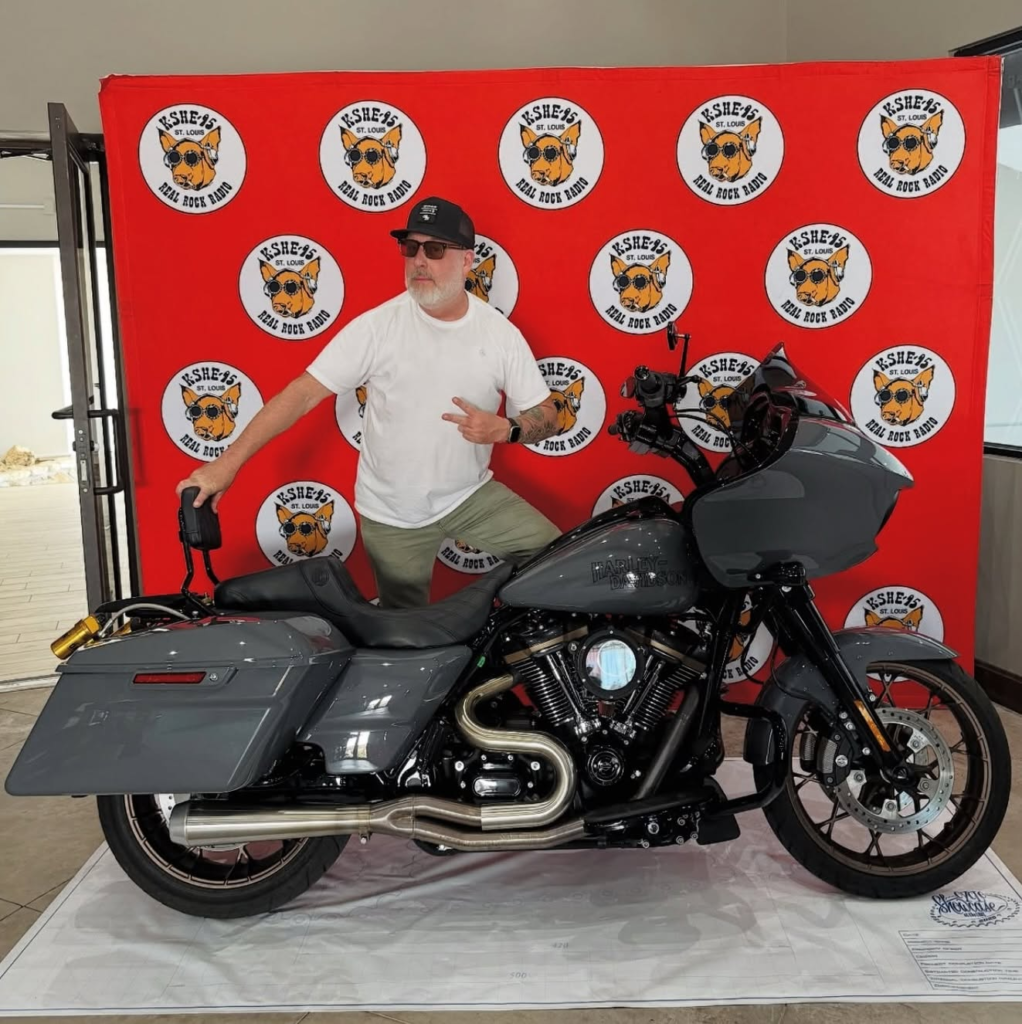
Virgin does afternoons at K-SHE 95 in St. Louis — one of the oldest rock stations in the country — while also handling afternoons at The Drive in Chicago, where Keith Hastings and Keith Lawless oversee operations. It’s the modern version of radio survival: be versatile, be essential, be everywhere. Yet in person, Tim Virgin is completely at ease with the chaos of it all. He doesn’t seem stressed by the juggling act. He doesn’t look burned out. Instead, he looks like someone who finally figured out what he was supposed to be doing all along. The reason became clear the moment I brought up motorcycles.

The Ride That Explains Everything

When Virgin lights up talking about bikes, you understand him as a broadcaster almost instantly. “Having nothing around you when you’re moving — it’s like the no-net thing,” he said. “And I think that’s what I love about radio. I can go down the road and not know what’s about to happen. It’s a freedom.”

He grew up watching his uncles — bikers both — and absorbed something that never left. Going fast without a guaranteed destination isn’t recklessness. It’s a philosophy. On radio, it’s a competitive advantage. Virgin doesn’t script his shifts. He doesn’t believe in exhaustive show prep for its own sake. Instead, he thinks two or three songs ahead, calls audibles fifteen minutes before the break, and relies on instinct to find the story. He admits that when he tries to over-prepare, the magic disappears.

“When I do that,” he said, “I become too… it just sounds like it’s not what I do.”

What he does instead is organized chaos — and he thrives in it. Not many people can do that. Most people’s delivery is so tied to one format’s cadence that changing the channel means changing the person. Virgin changes the channel and stays himself. This distinction sets him apart from countless others in the industry.

“Every station has its own cadence,” he explained. “And your delivery on different kinds of music has to change. But you keep Tim Virgin the same way.”

Navigating Format Changes Without Losing Your Voice

He acknowledged that the adult hits detour cost him something. His rock fans didn’t quite know what to do with him. He didn’t love the format. However, he never stopped being a broadcaster — and when he landed back in rock, the rust came off fast. There’s something to be said for a jock who’s willing to move between formats without losing his voice. Virgin sees it as an advantage rather than a liability. It forced him to understand how music shapes delivery, how audience expectations shape content strategy, and how to adapt without abandoning who he is.

“I think I’m blessed,” he said, “because I did a lot of different formats. I think it’s kept me alive.” Most personalities get locked into one box early in their careers. Rock or top 40, morning drive or afternoons, syndicated or local — Virgin has refused that box. He’s played adult hits and heritage rock. He’s worked mornings and afternoons. Importantly, he’s navigated market changes and format shifts without disappearing. That flexibility has value that extends far beyond any single station or format.

Program director Marty Link and group oversight from Tommy oversee K-SHE now. Virgin credits them — and the entire St. Louis cluster — with giving him permission to be himself again after years of playing it safe.

“I’ve never been this happy in radio,” he said. “I’ve never felt it come so true — if you just show people that you’re the same cool guy they want to have a beer with, it’s funny how that works.”

The numbers back it up. He’s been pulling 25 – 54 male numbers that he describes simply as “wild.”

The Sales Component Nobody Wants to Talk About

Here’s where Tim Virgin says something that every talent in this business needs to hear — and that most program directors are too polite to demand. The motorcycle passion isn’t just a personality quirk. It’s a revenue driver. When Virgin arrived in St. Louis, a Harley dealership — Green Mount Road Power Sports — was already a station relationship, but it wasn’t clicking. A couple of sales reps had taken runs at it. The account was going nowhere.

Virgin went in himself.

“I grabbed a salesperson, Lori, and I said, just let me do this,” he told me. “And I said to the client: I’m not here to sell you. I’m here to be a person who’s asking for a collaboration with you. I want to collaborate. I want to place a home where I can talk about bikes.”

Done. Sold. On the spot.

“You listen to me do those commercials,” he said. “Even I listen back and go, man, I want to go buy a Honda. And it doesn’t even have to be a Harley.”

That’s the power of authentic passion in a live endorsement read. It cannot be faked. A salesperson can describe what a jock is passionate about. The jock can actually make you feel it. And in 2025, in a room where revenue justification is louder than ever, the difference between those two things is an account saved or lost.

Redefining Talent as a Revenue Asset

Virgin is blunt about what that means for air talent broadly: “Personalities really need to get over not going on calls. I gotta sell myself now. A salesperson can’t sell you as good as you can sell you. Eight times out of ten, if I’m there, we get it.”

That’s not a brag. That’s a template. And it’s a conversation that doesn’t happen nearly enough in programming meetings across the country. Too many program directors treat talent as purely on-air assets. Virgin treats himself as a revenue partner. He understands that in 2025, when format fragmentation has made every listener a choice rather than a default, a personality who can walk into a dealership and close an account isn’t just making that station money — he’s making himself indispensable.

The lesson extends beyond automotive. It applies to any client relationship where authenticity matters. It applies to any revenue conversation where a personal connection beats a media kit. Virgin has built a career on understanding that fundamental truth, and he’s willing to put in the work that most talents won’t.

Social Media, Brand Integrity, and Knowing When to Say No

Virgin admits he’s not a natural at social content. He’s working on it. He’s getting help. But what matters more to him is not chasing every trend that crosses his feed or saying yes to every brand deal that hits his inbox just because there’s a check attached.

“I’m very conscious of my brand,” he said. “I’ve turned down money. I’ve turned down a lot of money. Because if it doesn’t feel authentic, it doesn’t matter what the number is. The audience will know.”

That’s harder than it sounds. In an era where every on-air personality is expected to be a personal brand first and a broadcaster second, where Instagram becomes a revenue stream and TikTok becomes a career necessity, the discipline to say no feels almost radical. Virgin has watched colleagues get caught in the trap of chasing sponsorships instead of chasing excellence. He’s watched the quality of their on-air work slide as a result.

Protect the Brand

“If I’m doing something on social that doesn’t align with what people hear in the afternoon, it confuses things,” he explained. “The brand has to be one thing. It has to be clean. It has to make sense.”

His approach is straightforward: be the same person on TikTok that you are on K-SHE 95. If that’s boring to some people, fine. If that doesn’t get a million followers, fine. The audience that matters — the ones tuning in at 2 p.m. on a Thursday, the ones buying Harleys because they believe Tim Virgin believes in Harleys — that’s the only metric that counts.

It’s a philosophy that runs counter to the industry’s current obsession with viral moments and algorithm optimization. But it’s also one that might be exactly what the format needs right now.

Barrett Media produces daily content on the music, news, and sports media industries. Sign up for our newsletters to stay updated and get the latest information right in your inbox.
MLB Now’s Roster Depth Was the Perfect Trade Deadline Call up for Baseball Fans

0

MLB Network has built a rugged and powerful roster of daily programs that cover the game from all angles. One of those shows is MLB Now, hosted by the terrific Brian Kenny. The former ESPN stalwart is one of the network’s true stars. The quintessential analytics guy, all about baseball’s statistics, tendencies, and percentages.

This past week, Jamison Coyle filled in as host of MLB Now, and the program did not miss a beat. Coyle joins analyst and former Major Leaguer Chris Young and New York Post columnist and MLB Network insider Joel Sherman on this episode.

Coyle, Young, and Sherman made for a combination as smooth as Tinkers to Evers to Chance. MLB Now is not a show where you are going to hear many bodacious opinions or controversial bluster. Instead, it is a true discussion show that dives into the intricacies and inner workings of the game while still offering insightful takes on the day’s highlights and headlines.

It is an important time in the MLB season. True contenders are revealing themselves. The “wait till next year” clubs are planning for 2027, and the MLB Trade Deadline is fast approaching on August 3. Baseball has been especially exciting over the past month, led by the always-interesting Boston Red Sox, who have transformed from awful to awesome.

This is a perfect time to sit back and watch Coyle, Young, and Sherman ply their respective crafts on MLB Now.

A Triple Play

Coyle has always delivered, whether serving as the lead host or stepping in off the bench. He is a solid, meat-and-potatoes sports broadcaster who commands attention and runs a show extremely well. Coyle always arrives prepared and gets the very best out of his analysts.

Sherman brings print journalism integrity to the program, but he is hardly a paper-and-ink relic. This cat has been all over MLB Network and the internet recently, reporting on and discussing potential trade scenarios and teams to watch.

Young put this time of year into perspective by noting that every Major League team wants to make deals for a pennant run, but not every club can do it. He said some organizations need to be smart and think long term. Young is really good. He excels at analyzing the statistical side of the game while also bringing the gritty clubhouse experience of a former player. Young enjoyed a solid 13-year career with six teams. He wasn’t a superstar, but that varied experience adds credibility to his analysis.

If you asked me for one word to describe MLB Now, it would be “perspective.”

Coyle brings a savvy media perspective. Young offers the perspective that only a former player possesses. Sherman contributes the outsider’s perspective of a working writer and columnist. The trio is aided by a talented technical crew. The open is a visually vibrant artistic mishmash of baseball statistics and lingo. The lower-third and full-screen graphics constantly display pertinent statistics, while the ever-present crawl provides breaking news and headlines.

Together, they give viewers a colorful, hour-long look at Major League Baseball.

Sherman has the outward appearance of a baseball geek. However, if you listen to him, he is more of a baseball junkie. I like the way he digs beneath the surface and uncovers the real story. After Coyle and Young discussed the surging Texas Rangers winning three of four from the Mariners and taking first place in the AL West, Sherman shifted the conversation back to Seattle. He believes the Mariners were actually the bigger story.

He noted that Seattle was coming off an epic ALCS loss to Toronto and was under tremendous pressure to finally reach the World Series. With the help of a graphic, Sherman also pointed out that the Mariners had used only 10 starting pitchers since the start of the 2024 season. With arm injuries a constant in Major League Baseball, that is a true anomaly.

Coyle also orchestrated a lively conversation about which NL Wild Card contenders face the most pressure. Instead, Young pointed to the Diamondbacks. He said they are viewed as a small-market team but have consistently tried to make win-now moves.

I found myself locked in as a viewer because I genuinely wanted to hear what each panelist had to say. After running through highlights of the Marlins’ walk-off win over the Phillies, Coyle asked whether it was a bigger win for Miami or a worse loss for Philadelphia, which had fallen 5.5 games behind in the NL East.

Baseball Balance

MLB Now combines crunch with hunch. The program acknowledges today’s emphasis on analytics while still respecting the situational instincts of old-school baseball. The amount of information delivered through the hosts and graphics is impressive without becoming overwhelming. The show maintains a comfortable flow while providing thoughtful discussion.

Another telling graphic compared the American League Wild Card standings from July 3 to July 28. While the Yankees remained in front and the Guardians stayed in the top three, the Red Sox climbed from the bottom of the heap into the second Wild Card spot.

As Young alluded to earlier in the program, this is the time of year when Major League Baseball resembles the NCAA men’s basketball tournament, with several teams on the bubble deciding whether to become buyers or sellers. It is not really March Madness. More like July Jitters. Sherman pointed to the Detroit Tigers, who at the time sat six games back in the AL Central and four games out of a Wild Card spot. They were not top contenders, but they were hardly out of the race.

What does a team like that do at the Trade Deadline? Sherman provided an excellent breakdown of Detroit’s options.

MLB Now gets viewers involved through its “Thinking Fan” poll question. On this edition, fans were asked which division lead they believed would change before the end of the season. The results produced a close race among the AL Central, AL West, and AL East. Coyle discussed the results while graphics displayed fans’ social media posts, complete with their reasoning. The show concluded with more game highlights, a trivia question, and closing commentary. Sherman ended the show by arguing that the Baseball Hall of Fame induction ceremonies should move to a different point in the season so they are not overshadowed by marquee games and the Trade Deadline. It was a compelling point.

Major League Baseball is heading into its most exciting two months of the season, and MLB Now has elevated its game while strengthening an already impressive lineup for what should be a terrific stretch run.

Barrett Media produces daily content on the music, news, and sports media industries. Sign up for our newsletters to stay updated and get the latest information right in your inbox.
Michael Wallace Had a Front Row Seat to the Birth of Worldwide News Network

If you wake up with the Worldwide News Network, you’re likely to hear Michael Wallace. Launching in May of this year, Wallace told Barrett Media the whole thing came together in a matter of weeks, all thanks to Radio Hall of Famer Lee Harris.

“He got this whole thing up and running in about three weeks. They gave him the keys and said, ‘OK, we’re going to pay for this. You start it.'”

With 35 years in the business, including time at both WCBS and CBS News Radio as they shuttered the mics, Wallace had no trepidation about taking to the mic once more at a startup network.

Wallace was one of Harris’s first hires, and within three weeks, the network went live with a full staff. “[Lee Harris is] just a radio genius,” Wallace affirmed. “So I knew when they appointed him to run this new network — and, more importantly, to launch it — that he knew what he was doing, and I had full trust that he was going to be able to pull this off.”

Launching a New Radio Network

Calling the launch “really exciting and kind of scary,” Wallace, who was once Harris’s morning show competitor (Wallace on WCBS and Harris on 1010 WINS) for a decade, was elated to be the first anchor to go on air for the network’s launch.

“We went on the air May 23rd at midnight. He wanted me to anchor the first cast. I think I got in there at nine o’clock that night, and I hadn’t even seen the setup, the computer, or the board we were using,” Wallace recalled. “So I had to learn all of that real quick.”

The Worldwide News Network is live 24/7, meaning it is almost always the first to break news from across the world, including the death of Senator Lindsey Graham and the catastrophic flooding that hit Pakistan. “This is a global network. It’s not just the U.S. and Canada, like most of the other radio networks are.”

Wallace went on to note, “The whole world is a really big thing to cram into just three minutes at the top of that cast. There’s a lot of decision-making that has to happen about what we’re covering and how much time we’re giving to each story, because you don’t have a whole lot of time to do it. But that’s kind of the fun part of it.”

Straight News, No Opinion

Most importantly, Wallace stressed there is no opinion on the network. “We’re just giving you a very comprehensive view of what’s going on in the world. As Lee Harris is fond of saying, no opinion. We’re not like some of these other networks that have a slant or a bias. We’re just giving it to you straight, and I think a lot of people appreciate that.”

This may have been his first launch, but it’s not Wallace’s first radio rodeo. From listening to WBZ and WRKO in Boston, he went on to work at legendary stations like KTRH in Houston, WDBO in Orlando, the Wall Street Journal radio network, WCBS in New York, and CBS News Radio.

Of course, that meant learning to drop all the New England “R’s” along the way. “That was not easy. It’s funny — I have some tapes from my early college radio years, and we dug some up a few years ago when we were moving boxes around. I popped in a cassette and played it just to see what was on it,” Wallace recalled. “My wife kind of chuckled and said, ‘Oh, my God, listen to that Boston accent! Who was that?’ And I said, ‘That’s me!'”

From a Kid with a Tape Recorder to the Mic

Long before Michael Wallace had to tweak his accent, he was just Mike Wallace, a 10-year-old kid from Boston with a dream and a tape recorder. “I think it was my ninth or tenth birthday, and my parents got me a tape recorder, so for fun, I started walking around and interviewing people.”

It wasn’t until Wallace arrived in Houston that his news director asked him to go by Michael instead of Mike. “Even as Michael Wallace, when I would call people as a reporter at the time and ask to interview them, people would hang up on me — they still thought I was the tough-guy Mike Wallace, and they didn’t want anything to do with that.”

There is no relation between the two newsmen, and while they never met in person, Wallace was able to build a great rapport with the famed 60 Minutes anchor via email. “When I was at WCBS, I used to get his email all the time,” Wallace recalled. “The standard email at CBS was, you know, first name dot last name at CBS dot com. So that was my email. His email was MW at CBS dot com.”

Most people who were trying to reach the Wallace of 60 Minutes didn’t know about the mix-up. “Sometimes I would get his email, and I’d have to forward it to him. He would reply, ‘Thank you.'” Wallace added, “He was a good sport about it.”

Looking Toward the Future

After all this time, Wallace is still a big believer in the medium. “A lot of people say it’s dying and it’s gone, and they’ve been saying that ever since I joined the business.” He elaborated, “I’ve been doing news radio now for 35 years, and 35 years ago, people were saying people aren’t listening to radio that much. But we’re still going. There are still millions of people who listen to the radio every day, and some young people, too. I think you just can’t beat the immediacy of radio, especially for news.”

For young people who have caught the radio bug, Wallace truly believes, “Radio is here to stay in some way, shape, or form, whether it’s on AM or FM or in some sort of stream or on the internet. There’s always going to be demand for audio content.”

He believes the most important thing for success in radio is to “write, write, write.” He added, “You’ve got to work on your writing — make sure it’s quick, accurate, and concise.” If you have the ability to write well, Wallace believes there will always “be plenty of outlets and opportunities.”

Barrett Media produces daily content on the music, news, and sports media industries. Sign up for our newsletters to stay updated and get the latest information right in your inbox.

WTOP Exits 103.9 FM as K-LOVE Signs Lease Deal with Hubbard

0

WTOP will soon leave 103.9 FM in Frederick. Hubbard has agreed to lease the signal to K-LOVE.

What We Know: Beginning Saturday, August 1, Hubbard will lease the 103.9 WTLP-FM signal to K-LOVE, ending WTOP’s simulcast on the translator after nearly two decades. The move affects WTLP-FM, a 350-watt Class A FM translator, while WTOP’s primary 44,000-watt Class B signal at 103.5 FM will continue serving the Washington, D.C. market. The arrangement runs through December 31, 2029, and will automatically extend for three additional years unless either party provides written notice of termination by March 31, 2029. WTLP-FM has carried a simulcast of WTOP since 2007. Although listeners in Frederick will lose the 103.9 FM simulcast, WTOP will remain available on its full-power 103.5 FM signal.

What They Said: “Our main signal on 103.5 FM covers most of Frederick County’s population. And with the advent of streaming, listeners can get us anywhere in the country.” -Hubbard Washington VP/GM Joel Oxley

What Remains Unclear: Hubbard hasn’t disclosed which Educational Media Foundation brand will ultimately occupy the signal. While the lease is with K-LOVE, the organization also operates Air1, and no programming plans have been confirmed. K-LOVE’s network already reaches portions of the Frederick area via 107.3 WLVW. It is also expected to be available on 100.7 WZBA following that pending acquisition.

What It Means: The lease allows Hubbard to streamline distribution of WTOP while relying on its stronger 103.5 FM signal. Meanwhile, K-LOVE gains another Washington-area outlet to strengthen its regional coverage, even as questions remain about which of its national brands will debut on 103.9 FM.

Barrett Media produces daily content on the music, news, and sports media industries. Sign up for our newsletters to stay updated and get the latest information right in your inbox.

Dan Patrick Shares Concerns About Enjoying Retirement

1

Dan Patrick addressed his upcoming retirement again Wednesday. This time, he detailed the mindset driving it and the concerns that he has surrounding it.

What We Know: Patrick plans to retire from The Dan Patrick Show after Super Bowl LXII in Atlanta 2028. That’s roughly one and a half years away. He’s hosted the syndicated show since 2007, following his run at ESPN. Unlike that ESPN exit, though, Patrick wants this departure to feel earned. He discussed his feelings approaching retirement on Wednesday’s edition of The Dan Patrick Show.

What They Said: (All quotes via The Dan Patrick Show)

Dan Patrick on how he wants to retire from The Dan Patrick Show: “I want to go out where I’m proud of what I’m doing. I left ESPN and I wasn’t proud of what I was doing. Now it had nothing to do with my abilities. It just had to do with a mindset. ESPN had changed. I had changed, and I wasn’t proud of the last couple of years I did SportsCenter. But here, I do love coming in every single day.”Dan Patrick says his wife shares his concerns about being happy in retirement

Dan Patrick says his wife shares his concerns about being happy in retirement: “We’ve had discussions about this. And she said, “Are you going to be happy? Are you going to be able to watch the show? Are you going to be able to find other things to do?” Those are all concerns. Those are legitimate concerns that I have.”

Dan Patrick says he wants to ensure he leaves before his skills falter: “Part of the reason why I got to this point of this was going to be my last contract is I’m going to be close to being 72. Maybe that doesn’t sound ancient, but in this business it is. This is three hours every day, and it’s live. And I want to make sure I’m sharp.”

What Remains Unclear: It’s still unclear how Patrick will fill his routine once the show ends. Producer Seton O’Connor told Barrett Media earlier this year he has pitched several projects to work alongside Patrick following retirement.

What It Means: The vulnerability in Patrick’s remarks show true concerns. As any longtime sports radio talent would show with a devoted audience. There is still plenty to figure out following Patrick’s retirement regarding the future of the radio program and staff. His focus on his own concerns are just part of that process. For once, listeners get a candid look at retirement anxiety near the top of a career. Meanwhile, two seasons remain before Patrick closes one of sports radio’s most enduring runs.

Barrett Media produces daily content on the music, news, and sports media industries. Sign up for our newsletters to stay updated and get the latest information right in your inbox.

Columbus Blue Jackets to Simulcast TV Broadcast on Radio, Bob McElligott Won’t Return

0

The Columbus Blue Jackets will unify their television and radio game coverage next season. Fans will hear the same broadcast on both platforms beginning in 2026-27.

What We Know: The Columbus Blue Jackets announced that every game broadcast will be simulcast across television and radio starting with the 2026-27 NHL season. As a result, the television audio feed will air throughout the club’s radio network, including flagship station 97.1 The Fan in Columbus. Steve Mears will continue handling play-by-play, while former Blue Jacket Jody Shelley remains the color analyst. Additionally, radio listeners will now hear Shelley’s analysis, which has also appeared on TNT and Amazon Prime NHL broadcasts. Meanwhile, the club confirmed it didn’t renew the contract of longtime radio play-by-play announcer Bob McElligott after 17 seasons. Dylan Tyrer will remain part of the radio coverage as host.

What They Said: “Bob McElligott has made significant contributions to the Blue Jackets organization on the air and in the community over the past 17 years. Bob’s voice was at the heart of many of our club’s unforgettable moments and helped shape memories that will live on for years to come. We sincerely thank him and wish him nothing but success moving forward.” -Columbus Blue Jackets Vice President of Business Intelligence & Broadcasting Marc Gregory

What Remains Unclear: The organization hasn’t finalized its television distribution plans for the upcoming season. Consequently, it’s unknown whether any additional broadcast changes could accompany the new simulcast model.

What It Means: The move aligns the Blue Jackets with a growing industry trend of using a single broadcast team across multiple platforms. It also gives radio listeners access to the same analysis and presentation television viewers receive while reducing the need for separate game broadcasts. At the same time, the departure of McElligott closes a lengthy chapter for the franchise after nearly two decades behind the microphone.

Barrett Media produces daily content on the music, news, and sports media industries. Sign up for our newsletters to stay updated and get the latest information right in your inbox.

How News/Talk Radio Covered the Anthony Fauci Testimony Before Congress

0

News/talk radio zeroed in on Anthony Fauci’s congressional testimony Wednesday morning. Hosts quickly reacted as Fauci repeatedly invoked the Fifth Amendment during questioning.

What We Know: Anthony Fauci’s appearance before Congress immediately became one of the biggest topics across news/talk radio. As lawmakers questioned the former public health official, Fauci repeatedly invoked his Fifth Amendment right against self-incrimination rather than answer questions. That decision fueled extensive live commentary from hosts across the country, many of whom interrupted regular programming to discuss the hearing as it unfolded. Several prominent personalities argued Fauci’s testimony raised new questions about his conduct during and after the COVID-19 pandemic. Others focused on the political implications, especially after Fauci previously received significant media attention throughout the pandemic.

What They Said: “Fauci won’t answer. There is this question of whether or not the pardon protects him from things like this. I don’t have a good answer for that yet. I’m going to need to read from some people who know the law better than I to figure out what the argument is here. But in a court of public perception, this dude’s guilty.” – 93 WIBC morning host Tony Katz

“He’s being asked about that today and just taking the Fifth Amendment over and over and over again. And I’ll show you what a weasel this guy is. He agreed to testify. I mean, it’s not a case of agreeing. He had no choice. But he comes before Congress to testify today, he brings six attorneys with him. Now, who’s paying for these six attorneys? Al Capone didn’t bring six attorneys! Six attorneys are with him. Fauci’s taking the fifth and will not answer any questions.” – 710 WOR midday host Mark Simone

“The big news right now is that Dr. Anthony Fauci has invoked the Fifth Amendment at his hearing that is playing out right now with Rand Paul in the Senate. Dr. Fauci pleaded the Fifth during his opening statement and says he will decline to answer questions before Congress today. I was categorically wrong. I have never been happier to be wrong in my life because I’m happy now. I’m ecstatic. Rand Paul has impaled Fauci on his own words, his own journal, his own diary, and that little gray-haired toad that had the audacity to disparage millions of Americans for perhaps wanting a second opinion, and this guy is there invoking the Fifth. It looks like almost universally across the board.” – 1210 WPHT morning host Nick Kayal

“I think one of the things that is a legit question is you were enjoying the adulation of Hollywood and the media and all of the media attention and being interviewed. Remember the ‘Fauci Five’? Where on one Sunday he was on every single weekend show on the networks? He was so enamored with himself and all of the publicity that he was getting, the attention that he was getting. Is it possible, perhaps, that some of the recommendations and the decisions that he was making were designed to get him more media attention? I mean, it wouldn’t surprise me if he did. Because he was intentionally doing everything that he could to get on TV to try to score another Fauci Five. People like Anthony Fauci, that’s what they get excited about.” – SuperTalk 99.7 WTN morning host Dan Mandis

What Remains Unclear: It’s still unknown whether Fauci’s decision to invoke the Fifth Amendment will lead to additional legal or congressional action. Likewise, lawmakers haven’t indicated whether they’ll seek further testimony or pursue additional investigative avenues. Questions also remain about how the hearing will shape broader public opinion as more testimony and evidence emerge.

What It Means: Wednesday’s hearing demonstrated that Anthony Fauci remains one of the most polarizing figures in news/talk radio. Hosts across multiple major markets devoted significant airtime to the testimony, often providing immediate analysis as events unfolded. Their reactions also reflected the format’s continued focus on pandemic-era accountability and government oversight. As additional developments emerge, the hearing will likely remain a major discussion point for conservative news/talk programming and could generate continued audience interest in the weeks ahead.

Barrett Media produces daily content on the music, news, and sports media industries. Sign up for our newsletters to stay updated and get the latest information right in your inbox.

Zimmer Communications, Mid-West Family Merge Springfield Operations

0

Two Missouri media companies plan to merge their Springfield radio operations. Zimmer Communications and Mid-West Family will combine their nine stations pending FCC approval.

What We Know The merger combines Mid-West Family’s four stations with Zimmer’s existing five properties. As a result, Zimmer will operate nine heritage stations across Springfield. Moreover, both companies boast decades of southwest Missouri roots in local broadcasting. Therefore, together they aim to strengthen local news, digital marketing, and advertising solutions.

What They Said Zimmer President John Zimmer emphasized the partnership’s potential. “By combining forces, we’ll offer advertisers more effective marketing solutions,” he stated. Meanwhile, Mid-West Family President Mike Paterson noted the company’s 35-year Springfield presence. He called the merger “incredibly exciting” for building on both legacies.

What Remains Unclear The FCC must approve the deal before year-end 2026. How the companies will integrate operations remains unspecified. Employee retention plans haven’t been announced. Specific programming changes depend on regulatory decisions.

What It Means This merger is a survival blueprint for medium-market broadcasters. Zimmer identified Mid-West Family’s complementary strengths and merged portfolios to eliminate redundancy. Rather than compete directly, combining forces amplifies market power and operational efficiency. Expect similar-sized broadcasters to follow this model. The lesson: understand your weaknesses, find a rival whose strengths offset them. Consolidation lets smaller players compete against national companies. Broadcasters who fail to assess vulnerabilities early risk irrelevance. Those who strategically merge survive.

Barrett Media produces daily content on the music, news, and sports media industries. Sign up for our newsletters to stay updated and get the latest information right in your inbox.