Tino Cochino Radio is heading to afternoons. Audacy CHR 98.5 KLUC Las Vegas is making the move official.
What We Know: Cochino takes over weekdays from 3-7 PM on the Las Vegas rhythmic CHR. Moreover, he succeeds Audacy national CHR host “Bru” in the daypart. The YEA Networks program has aired in the market since August 2019. Initially, it ran mornings on Kemp Broadcasting’s “Q106.9” KVGQ. What’s at Stake: KLUC first added the show to late nights in 2020, then advanced it to 7-11 PM in May 2023. Consequently, afternoons represent Cochino’s third promotion at the station in five years. Additionally, the move completes a full lineup rebuild. Shawn Tempesta now hosts mornings, while Mikalah Gordon anchors middays. What Remains Unclear: Audacy has not detailed Bru’s next assignment, but is still in good shape in the company. Furthermore, the company has not said whether other markets will make similar afternoon changes. Nor has KLUC confirmed a firm start date for the new schedule. Ratings expectations for the daypart also remain unstated. What It Means: Audacy could have promoted a local host into afternoon drive. Instead, the company handed its Las Vegas ride home to a syndicated show. That choice says plenty about where major-market CHR economics sit right now. Still, KLUC is betting on a proven performer rather than an untested local name.
Barrett Media produces daily content on the music, news, and sports media industries. Sign up for our newsletters to stay updated and get the latest information right in your inbox.
I picked one heck of a time to take a vacation, huh? The second I head south to Florida to enjoy a seven day break, the news world is flooded with chaos. ESPN layoffs, the poor handling of notifying employees by multiple companies, Audacy and SiriusXM team up (smart move), so did SiriusXM and the WWE, and sports journalism suffered a black eye with coverage of an NFL story.
The lone bright spot, being on vacation allowed me to watch the 2026 FIFA World Cup last Sunday between Spain and Argentina. Fox Sports did a masterful job with the entire broadcast, halftime included. A tip of the cap to Eric Shanks, Brad Zager, Jacob Ullman and their entire teams. The World Cup deserved world class coverage and presentation, and Fox Sports delivered.
A Bad Week For ESPN
ESPN is exceptional in so many areas that when the company makes a rash of mistakes handling personnel matters it’s surprising. Given how many people work for ESPN in PR and management, a situation like last week should not happen. Jimmy Pitaro, Burke Magnus, Mike Foss, Dave Roberts and their teams don’t need me to point that out. They know this doesn’t meet ESPN’s standards for handling personnel matters. It stains the good work they’re doing and creates doubt about who can be trusted.
I don’t have access to ESPN’s books, an inside view of how each executive values each employee, or knowledge of upcoming transactions that will force bottom line adjustments. I’ve seen the reports of Pat McAfee’s next potential contract, and I get why some want to blame him or Stephen A. Smith, but doing that shows a lack of business knowledge. Just like in professional sports, companies invest in difference makers differently. You can dislike Pat and Stephen A. but they are marquee attractions and proven performers who generate lift and revenue. If both were free agents tomorrow, they’d have larger deals waiting for them. ESPN should absolutely invest premium dollars in premium stars, and both men fit that description. Adam Schefter, Joe Buck, Troy Aikman and others warrant similar treatment.
Bart Scott, Cam Newton, Charles Davis, Andreas Hale, David Lloyd, Stephania Bell, Tom Pelissero, Karl Ravech and Ryan Clark were part of the latest round of cuts. With ESPN’s three billion acquisition of NFL Media assets, some of these moves were not shocking. However, none of these people should have learned their fate from outside sources. Karl Ravech is a true pro who gave over three decades of his life to ESPN. Someone of his caliber does not deserve to learn of his fate like this. I’ve never met anyone during my career who has ever said a bad word about Karl. As a former colleague, he was good to everyone. Karl deserved more respect than he was afforded.
That does not mean others who were let go didn’t deserve better communication too. They did. If I were in Jimmy Pitaro’s shoes I’d be very bothered that someone I trust leaked sensitive news. If executives didn’t like Ryan Clark’s work or style and wanted him out, that’s fine. What isn’t acceptable is the way it was managed. When information gets leaked to Oukick of Clark’s pending exit, it suggests someone wanted to make him look bad. Outkick did their job correctly. This isn’t about Bobby Burack and Dan Zaksheske’s information or process. They were on it. This is about someone internally at ESPN choosing to push news of the move to Outkick, knowing the outlet didn’t have great history with Clark.
In my opinion, ESPN PR is in a tough spot here and doesn’t look good. Clark was notified and pulled off the air mid-show after Outkick reportedly reached out to alert PR that it was going live with the story within an hour. Outkick has accused PR of then rushing to Andrew Marchand of The Athletic to report it first. ESPN PR shared that Marchand already knew of Ryan Clark’s pending termination, had asked for a comment, and did not tip him off on the story. That information was relayed to Outkick, which chose not to believe it. Marchand addressed the issue as well on John Ourand’s Varsity podcast.
ESPN owed Ryan Clark a conversation before NFL Live, not during it or after it. If the management team were aware of the plans to let Clark go that day, he shouldn’t have been on the air. That one key decision affected how the rest of the story unfolded. In addition, if Outkick’s assessment is true, it doesn’t paint PR in the best light. ESPN can dislike that the outlet had the story but if they did tip off Marchand to put the news out, it stains ESPN PR’s image and creates a bigger, future problem with Outkick. But if Outkick isn’t being truthful, it has painted Andrew Marchand unfavorably. Andrew is an excellent reporter whose work I enjoy a lot. This created an impression that he’s a mouthpiece for ESPN PR and management, which isn’t fair.
Only those involved, ESPN PR, Outkick and Marchand know the entire truth. From the outside looking in and judging from various conversations with industry folks the past few days, this looks bad for most.
The last thing I’ll say about the Ryan Clark saga is that I know there are strong, mixed opinions on him. Speaking only for myself, I think Ryan’s work on The Pivot has been more interesting than his work on ESPN. Some of the race fueled conversations on ESPN were not my cup of tea but I also don’t walk in the shoes of a black man who spent years in the NFL. Ryan has had a different life experience than I have. I can respect that. Whether I’ve agreed, disagreed, enjoyed a show or tuned out, I try to remember that the first goal for a talent is to get people to care enough about what you’re saying to generate fans and critics. Clark certainly had both. ESPN will be fine without Ryan Clark. I hope Ryan is able to do the same without ESPN.
There are a number of good people at ESPN. I’ve said many times that I think Jimmy Pitaro has done a great job leading ESPN. Burke, Dave, Mike, Justin Craig and Amanda Gifford are other managers who I like and have great respect for. The same applies to many in the PR department. But covering the industry requires calling out the losses too, not just highlighting the wins. ESPN added gasoline to a raging inferno last week and created a larger mess for an already negative situation. Being dubbed the worldwide leader is often a positive. Not this time.
Ten Observations
The Portland Trail Blazers had an ESPN-week of their own The franchise cut ties with many across their radio and television broadcasts including Neil Everett, who learned of his exit in a Forbes article. Also out are Michael Holton, Travis Demers, Jamie Hudson and Tom Haberstroh. Veteran PXP voice Kevin Calabro exited too, rejecting an offer he labeled as “subprime”. New owner Tom Dundon may wind up being great but today, fans and industry pros are angry and questioning the team’s future in Portland. Broadcasters who gave years of service deserved better than what they received. Fans have less incentive to buy tickets, advertisers have less reasons to buy advertising and employees have less trust in who they now work for than they did a week ago.
49ers Head Coach Kyle Shanahan was in a major car accident on July 14th. The team sought to keep the story quiet until training camp opened on July 25th. A couple of local and national reporters complied. Pro Football Talk’s Mike Florio wrote an outstanding piece on it, which includes a memorable line from Jay Glazer. Jay said, “true journalism in sports involves finding out the stuff they don’t want us to know, not reporting something that’s going to be announced in five minutes.” With ESPN and the NFL aligned, many expect the league and its teams to seek further influence over what gets reported. This story doesn’t help restore confidence.
Speaking of influence, SiriusXM and the WWE have partnered to create WWE Radio. At first glance, it’s a no-brainer. Why wouldn’t SiriusXM want to be in business with the best wrestling company on the planet? Adding audio play by play for WWE events is excellent, and something I called for ten years ago. Bringing it finally to life is exciting. Overall, this is a homerun for both parties, but it raises questions for SXM’s flagship show Busted Open. Hardcore fans of the program are concerned that the show will ignore or severely reduce its focus on AEW and other outside wrestling companies. Dave LaGreca has said the new partnership won’t change how the show operates. All involved should expect tighter scrutiny moving forward. Listeners will be monitoring the content closely.
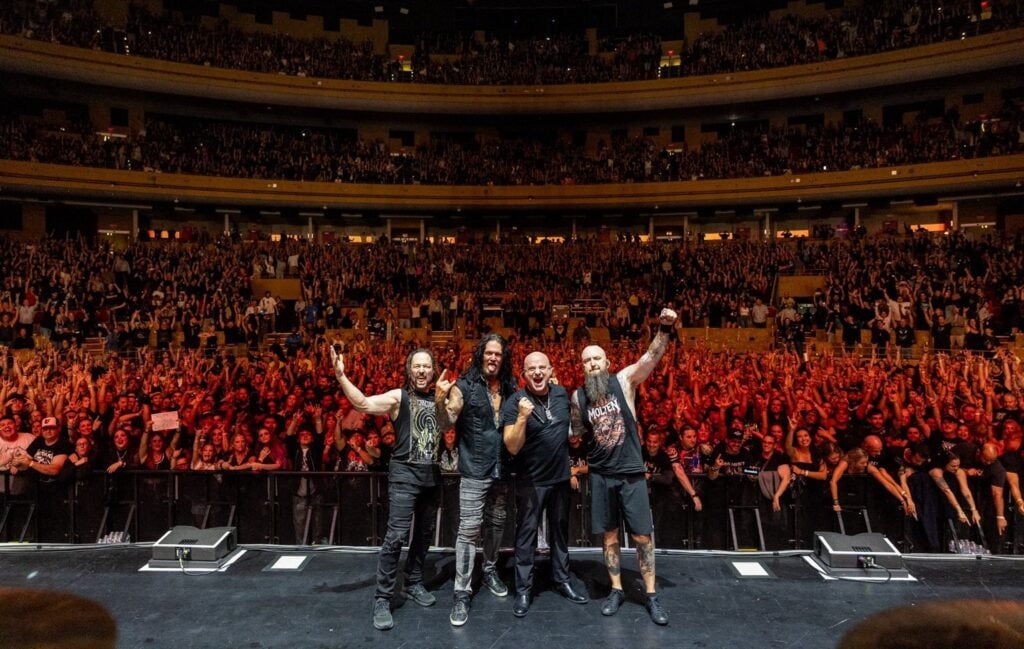
Disturbed put on an incredible show Saturday night at Hard Rock Live at the Seminole Hard Rock Hotel & Casino. This was my fourth time seeing them live. It was their best show yet. Vocalist David Draiman was outstanding from start to finish. The band played nearly every hit, sounded tight and had great energy. They don’t have future shows listed as of now, but if they come to your city, go!
Photo Credit: Disturbed on X courtesy of Britt Bowman
It was sad to learn the news that Jon Bon Jovi had to end a recent show at Madison Square Garden over a sinus infection weakening his voice. By all accounts, fans enjoyed the band’s prior shows. Jon did return last night to MSG with a special appearance by Bruce Springsteen. I’m not the band’s business manager, but Billy Joel created a great blueprint setting up a monthly residency at MSG. Wouldn’t that make sense for a band like Bon Jovi especially in NY or NJ? Assuming that Jon’s voice stays strong and he wants to continue performing.
Thanks to Kurt Kretzschmar of Premiere Networks for the heads up on this. Arizona State is launching the nation’s first bachelor’s degree in Content Creation. The course will teach students how to build an audience, grow a personal brand, analyze social media performance, and graduate with a real online following. Some will see this as long overdue. Others will question if it’s worth four year’s of financial investment when you can learn and do it yourself on social media. What I want to know is, who’s teaching it? If Ryan Hatch, Scott Sutherland, Chris Berry, Aaron Trimmer and Phoenix based on-air personalities are involved, that’s smart. If not, ASU might want to make a few calls.
Barstool Sports has announced it’s adding another Gruden to its operation. Former Commanders Head Coach Jay Gruden is joining his brother Jon Gruden for a new podcast titled Gruden Family Football Show. Kayce Smith will serve as the host. Production for the program will originate out of Tampa. The show is launching this fall.
Red Seat Ventures CEO Chris Balfe recently joined Business Insider’s Peter Kafka for a conversation. In it, Balfe talked about Netflix’s move to challenge YouTube, and the term “podcast” being archaic (agreed), but Balfe’s views on video clipping were what particularly grabbed my attention. He pointed out that the short-form video marketplace last year was over $100 billion: 50 billion with Meta, with YouTube, Snapchat, TikTok, making up the rest. Chris believes media companies and creator economy companies have made a big mistake. He explains the challenges associated with distributing and monetizing long-form and short-form content. Worth your time if you care about business issues.
I want to give a shout out to our own Dylan Barrett. A year ago at this time, Barrett Media was not producing video on a regular basis. I hired Dylan after graduating college and told him, get us out there consistently, expand our presence across most platforms, highlight our speakers, and make the brand look strong. So far, so good. We added the Barrett Media Minute, The 4-Cast, sessions from the Summits, and began clipping great conversations to highlight our Summit speakers so people had incentive to watch the full conversations. One year later, and we just celebrated our first full month of eclipsing over 1 million video views across all platforms. Great job, kid!
And finally, the New York Post featured a story last week on ex-CNN anchor Brooke Baldwin where she openly talked about her sex life. When I first saw the headline I thought it had to be AI or a meme designed to generate attention. Nope. It was accurate. If Baldwin wants to openly discuss her personal life, go for it, but when you’re the same person who acted outraged at Clay Travis for mentioning the word boobs on national television, it creates the impression that the performance on television was less than authentic.
Barrett Media produces daily content on the music, news, and sports media industries. Sign up for our newsletters to stay updated and get the latest information right in your inbox.
The very first opinion column I wrote as news media editor for BarrettMedia.com carried one blunt verdict: Facebook was a dead platform for news media. I told readers that lighting a fire in the kitchen would be a better use of their time than posting content to that blue app. That verdict just changed.
Facebook confirmed last week that it’s testing a video-first experience on its mobile app. Open the app, and instead of the familiar news feed, you’ll land on a full-screen, TikTok-style video player. Meta says the classic feed isn’t disappearing — it’ll simply shift to a second tab, and users can opt back into it whenever they want. Still, the intent behind this test is impossible to miss.
Tom Alison, the head of Facebook, framed the shift around where people already spend their time. He said video is where conversations happen, where communities form, and where commerce is starting to take root. In other words, Facebook wants to own the exact behaviors that used to define its rivals. That’s not just a talking point, either. Reels has grown into a $50 billion-a-year business across Facebook and Instagram, and it now generates more advertising revenue than YouTube does. Meta wants a bigger piece of the short-form video pie, and it’s willing to reshape its flagship app to get there.
Why Creators Should Pay Attention
Meta isn’t testing this out of boredom. The company reportedly lost 20 million users across its apps in the first quarter of 2026 alone, even as TikTok crossed a billion monthly users in record time. Losing cultural relevance while still holding billions of accounts is a real risk, and Meta knows it.
So the company is leaning hard into video discovery, and it’s opening its wallet to make that happen.
Facebook has reportedly been offering creators higher CPMs than YouTube or TikTok pay for similar content. That’s real money, and it’s landing in front of hundreds of millions of users who still open that app every single day.
Nobody can say how long that financial advantage will last. Advertisers chase attention, and once Meta locks creators in, those rates could shift fast. For now, though, the door is open, and it’s worth walking through.
What This Means For News Media
News organizations abandoned Facebook years ago, and for good reason. Referral traffic dried up, engagement cratered, and the algorithm buried anything that looked like a headline. A video-first Facebook, however, changes that calculation. Short-form clips, breaking news explainers, and behind-the-scenes footage all fit naturally into this new full-screen format, and none of them need a click-through to succeed.
Meanwhile, the audience is still massive. Facebook’s Marketplace alone reportedly lists 430 million items every month, which tells you the app remains a daily habit for an enormous number of people. Reaching those people with video content costs a newsroom almost nothing beyond the time it takes to produce it. It’s the kind of math that’s hard to ignore in a media business built on shrinking margins. Meanwhile, the CPMs make testing worthwhile again. For an industry that’s spent years chasing distribution, that combination is hard to overlook.
None of this means news media companies should pour every resource back into Facebook. Caution still matters, and diversification always beats dependence on a single platform. Facebook has burned newsrooms before, and memories like that don’t fade fast. But the era of writing Facebook off completely might be over. If your newsroom or your channel walked away from that platform, now’s a good time to reconsider. The fire I told you to light years ago? Maybe let it burn down a little before you strike another match.
Barrett Media produces daily content on the music, news, and sports media industries. Sign up for our newsletters to stay updated and get the latest information right in your inbox.
Earlier this month, Nielsen released an In-Car Radio Study in cooperation with iHeart under the headline: “Tuned-In: Why Removing AM/FM Radio is a Multi-Billion Dollar Gamble for Automakers.” Over 1,000 recent and prospective new car buyers were surveyed. While I don’t have access to the entire study, let’s consider what has been released for public view.
As you can imagine, both companies have an interest in showing the importance of having radios in new vehicles.
That’s not to question the results. In fact, when advocates put out studies, the surveys are typically better because opponents of their interests love to find flaws and discredit the results. I learned that decades ago working at the NAB, so let’s assume Nielsen did excellent work on this study.
The Purchase Journey Numbers Don’t Add Up
The spin is how important radio is in the new car “purchase journey” (marketer-speak for “I want a new car”). But if you look closely, the results should scare all of us in the industry.
When reviewing Nielsen data with stations in the past, I’d always point out the Persons Using Radio (PUR or PUMM in PPM) estimate. It’s often just a single digit, and if you subtract the PUR from 100, you get the rating for those not using radio in that demo/daypart combination, often over 90%. Yes, weekly cumes are still good, but that’s one quarter hour in a week. At any given time, radio usage is low.
Let’s try that same arithmetic with this study. Nielsen’s results said 51% of those surveyed would not purchase a new car that didn’t have a radio. That means 49% would be willing to purchase a new vehicle that didn’t have a radio. The current set of US vehicles available without any radio consists of the Rivian R2 and the upcoming Slate electric truck. Full disclosure: I made a $100 refundable deposit on a Rivian R2 but haven’t decided whether I want one or not. We’ll see.
Among men, Nielsen reported a majority (54%) would be willing to buy a vehicle that didn’t have a radio. For 18-34s, that rose to 60%! You don’t need to strain your brain to guess that the strongest support for requiring a radio in a new vehicle purchase came from the 55+ crowd, where 67% must have a radio.
Smartphones Beat Radio in the Dashboard
In years gone by, the radio would have been the most important entertainment option in the car. Whatever era, compared to 8-track players, cassettes, and CD players, I’m sure the radio was number one. By using conjoint analysis, Nielsen reported that consumers now place more value on smartphone integration. That’s Bluetooth, CarPlay, Android Auto, etc., so that users can run Spotify, Apple Music, podcasts, etc., through the speakers.
It was no surprise that radio was valued more than SiriusXM, considering that a large majority of vehicle owners don’t use the service (current subscriber base is about 33 million, with over 7 million in the “total trial funnel,” which appears to mean they’re not paying for it yet). With nearly 300 million vehicles registered in the US, some of which can’t receive SiriusXM, most don’t use that service, so a lower value is understandable.
“Built-in subscription music apps” was last in perceived value, but again, that’s not surprising. Most users of music apps know they can listen in a vehicle via Bluetooth, CarPlay, Android Auto, or, for older cars, the good old mini-jack. It’s the same reason there’s little need for built-in Wi-Fi in your car when your phone has unlimited service. I’ve had built-in Wi-Fi available in a couple of my vehicles, but why pay twice?
Further, Nielsen found that four in ten drivers prioritized connecting their phone the moment they step into a car, but only a quarter made the radio the top priority. I must admit that I’m in the first category.
An Industry Wake-Up Call
The last paragraph of the Nielsen release properly stated, “innovation should add to the dashboard, not strip away what drivers already value,” but this study should be yet another wake-up call for our industry. It’s fine that half of those who have recently purchased or are in the market for new wheels require a radio, but half don’t.
Do you remember the best hockey movie ever made, Slap Shot, from 1977? The Chiefs were losing in the championship game, and between periods, the general manager, Joe McGrath (Strother Martin), runs into the locker room and yells, “We’re losing! They’re burying us alive! You’re blowing it!” Perhaps that’s an over-the-top analogy for radio today, but in my view, this is the latest snapshot of an industry in decline.
We all know it, but to paraphrase another famous movie, “Monty Python’s Holy Grail,” “we’re not dead” (and no, the quote “I’m not dead yet” was never spoken in the film). Like the Charlestown Chiefs, can radio come back and win?
Layoffs, cuts, reductions in force. Whatever the term, planning and executing layoffs is difficult for everyone involved. I’ve personally been the one delivering the news, serving as a secondary party to those conversations, and being the one who received it. There’s planning behind every decision. Meetings take place before anyone is notified. Executives decide whether they can eliminate those positions without limiting the company’s future growth. What happened at ESPN last week was no different than any other media organization.
However, last week exposed some cracks in the armor when it comes to how those decisions are executed.
Ryan Clark found out he was being laid off, or fired if you listened to his explanation of the incident, while he was on the air. Karl Ravech learned his 33 years at ESPN were over because Andrew Marchand of The Athletic called him about it. Stephania Bell, who signed a multi-year extension just last October, reportedly learned her time at ESPN was over through social media.
Those are only three examples that we know of. They also illustrate that ESPN’s need to address change extends beyond just its personnel and talent.
Now, I’m not one to compare a local radio station, where my experience lies, to a global network like ESPN. That comparison is like comparing apples to watermelon seeds. ESPN’s roster are larger, the prestige is greater, and the coverage is far more extensive.
However, the process of conducting layoffs is remarkably similar no matter where you work. Every reduction begins with a number. Once leadership sets the target, executives and managers determine who can be let go while keeping the company positioned for future growth. Then, after weeks of planning, the “hey, do you have five minutes?” texts begin to arrive.
It’s a process. It takes time. It requires everyone involved in the planning and execution to operate from the same playbook.
That didn’t happen this time at ESPN.
Patching The Leaks
No talent should ever learn they’re losing their livelihood while performing for a worldwide audience.
That’s what happened to Ryan Clark. The “hey, you got five minutes?” text was followed by a phone call and being pulled off the air. No explanation to viewers about why he suddenly disappeared from an episode of NFL Live.
Although many questioned why Clark was on the air, reports indicated ESPN didn’t plan to begin the layoffs until Tuesday. Clark was working on Monday. He should have been working on Monday because production teams don’t prepare for leaked information to overtake the day’s content. As far as they knew, it was a normal workday, and they treated it accordingly.
The real question is why the leak happened.
The same can be said for Karl Ravech. A loyal ESPN voice for more than three decades and one of the defining figures in the network’s baseball coverage. He also worked Monday, calling the Philadelphia Phillies’ 10-7 victory over the Los Angeles Dodgers on ESPN. Ravech reportedly learned his time at ESPN was ending through a phone call from Andrew Marchand at The Athletic instead of hearing it from his employer.
Again, the real question is why the leak happened.
Stephania Bell reportedly learned through social media that her time at ESPN was over, less than a year after signing a new multi-year extension. Her social media timeline told her the story before anyone at ESPN did.
Once again, the real question is why the leak happened.
Looking Inward
There are many tentacles to covering the sports media business. Like any professional sports team or major news-making organization, there are layers to the industry. Proper sourcing, collaboration, relationships with executives, talent, agents, public relations professionals, and communications departments all play a role. Anyone blaming good reporting for last week’s layoffs is missing the point.
The issue isn’t that journalists got the story. It’s why those leaks were allowed to happen in the first place. There’s a lesson in this for every company.
At the end of the day, layoffs are never clean, but they should always be controlled. Companies should prioritize managing a process that affects lives, families, and the way shareholders, customers, and the public view the organization.
There is a responsibility that comes with making these decisions, not just in who is let go, but in how the news is communicated. When that control slips and information leaks before leadership delivers the message directly, it doesn’t just create headlines—it erodes trust.
Not only inside the building, but outside of it as well.
No one should criticize ESPN for making difficult business decisions. Every company faces those choices. The criticism stems from how those decisions were executed. When talent learns about its future from reporters, social media, or, even worse, in real time while doing its job, it signals a breakdown in process and leadership. It shows the circle of trust has cracks in its foundation during one of the most important responsibilities any executive faces: treating layoffs with the professionalism people deserve while they lose their livelihood through no fault of their own.
This latest example is something to learn from and be better for the next time. Because, there will be a next time.
The bigger question isn’t why these names, among hundreds of others, were part of the cuts. It’s why ESPN lost control of the message.
Don’t lose yours.
Barrett Media produces daily content on the music, news, and sports media industries. Sign up for our newsletters to stay updated and get the latest information right in your inbox.
It goes without saying that Audacy has been the leader in sports radio programming for several decades. The company owns and operates some of the industry’s biggest brands from coast to coast. Over the past 18 months, however, its business strategy has evolved. Rather than relying solely on the strength of its local stations, Audacy has increasingly focused on expanding distribution, turning those brands into properties designed to reach listeners wherever they consume audio.
While many can debate when that shift began, let’s say, for the sake of discussion, it started in June 2025. That’s when Audacy announced a partnership with its biggest competitor, iHeartMedia, making more than 200 of its radio brands available on the iHeartRadio app, the country’s largest streaming audio platform. That move was followed by the addition of full-FM signals for several legacy sports stations in Chicago, Buffalo and Los Angeles, with Houston set to join the list in the coming weeks.
Those moves generated excitement both inside Audacy and among those who closely follow the sports radio industry. The company’s latest investment in its sports portfolio has once again captured the industry’s attention. Beginning in September, 23 of Audacy’s sports radio brands will become available on SiriusXM, giving some of the company’s biggest local stations a national platform beyond traditional terrestrial radio and streaming.
“[Partnerships] are definitely part of our strategy. There will be more partnerships. We have a great team out there with great relationships. There’s lots we can do with other parties and great brands that people want to be associated with,” said Audacy CEO Kelli Turner at the Barrett Media Summit last month.
A Step In The Right Direction
Following the SiriusXM announcement last week, many Audacy sports radio personalities quickly celebrated the news across social media. For many, the partnership represented another sign that the company continues to invest in sports radio and believes the format remains a valuable business.
“I’m a fan of how Audacy has been aggressive in promoting their shows. In the end, we will all benefit from more ears listening and more name recognition,” says WEEI host Rich Shertenlieb.
Others shared the news almost immediately on social media, from 97.1 The Ticket host Marc Ryan to WFAN producer Rami Lavi. Audacy Senior Vice President of Programming Mike Thomas even reposted a recording of a local newscast announcing the partnership.
“On the surface, all the stuff the company is doing is exciting. It’s really cool to be on SiriusXM,” said one Audacy talent in a major market. “It’s a positive to merge with SiriusXM. It is interesting that all these competitors in the arena are now joining forces. That never would happened ten years ago.”
By placing some of its premier sports stations on SiriusXM, Audacy has taken another step in the industry’s evolving approach to distribution. The move reflects a broader reality facing radio companies as audience habits continue to shift. Reaching listeners is no longer about owning a single frequency or app. It’s about making content available wherever consumers choose to spend their time.
Navigating A Changing Model
However, not everyone inside the company views the partnership through the same lens.
For some, the excitement surrounding expanded distribution is accompanied by some uncertainty. The concern isn’t about Audacy’s willingness to evolve. Instead, it’s whether placing only a portion of its sports stations on SiriusXM unintentionally creates competition among teammates rather than reinforcing the company’s traditional focus on winning in local markets.
“It used to feel like the only mission was to maximize the audience for our [station]. Now, interests and habits are splintering so much, that it’s now about getting in bed with all your enemies so you can still reach the maximum audience possible,” said an Audacy talent. “What’s being lost is the team you play for… We’ve gone from competing against everyone else to competing against ourselves.”
Questions remain about how Audacy selected the stations that will join SiriusXM. In total, 42 Audacy brands hit the the satellite radio platform, including 23 sports stations. Those chosen for the partnership have embraced the opportunity.
“I welcome any opportunity to grow our show’s brand,” said Shertenlieb. “With Eric Spitz and Scott Greenstein and their track record at SiriusXM supporting killer sports talk, I know we’re in great hands. Plus, now I can say I’m on the same platform as Hair Nation.”
Another unanswered question is whether SiriusXM will measure listening to the newly added stations. If so, it’s unknown if whether that data will make its way to Audacy. From a talent perspective, many of those I spoke with understand that revenue growth ultimately determines the company’s long-term success. They also hope the partnership creates new revenue opportunities with high levels of listening that extend beyond their local markets.
More broadly, the agreement illustrates how quickly exclusivity is disappearing in the audio business for some. Local brands are no longer confined to the markets they serve. Instead, they’re increasingly being positioned to compete for attention wherever listeners are willing to engage.
“As a host, I’m excited to be on SiriusXM,” said an Audacy talent. “Local stations are now becoming national brands. Some of the intimacy that local brands have is now gone. It isn’t what it used to be. But that’s the evolution of the industry and how people consume us.”
Continue Taking Risks
In the months ahead, more details about the Audacy-SiriusXM partnership will emerge. Those details—and the processes behind them—will help shape how both employees and competitors evaluate the partnership’s long-term success.
Audacy Chief Business Officer Chris Olivero addressed the importance of embracing change while accepting the Jeff Smulyan Award at the Barrett Media Audio Summit last month. His message reflected a philosophy that appears increasingly evident in the company’s business decisions.
“If you’re going to take risks, you’re going to have to be comfortable with failure. You’re going to be criticized, and you’re going to be comfortable with naysayers,” said Olivero last month. “With risk, sometimes you fail but it leads to the success.”
During the past 18 months, Audacy has not shied away from taking risks or pursuing partnerships that would have seemed unlikely just a few years ago. Inside the company, many talent believe the SiriusXM agreement represents another step in that evolution rather than a departure from the company’s identity.
“Audacy’s sports brands are deeply connected to the cities, teams and fan communities they serve, and being able to extend our reach nationally through SiriusXM is a natural fit,” said Turner in the company’s announcement last week.
Whether the partnership becomes a significant revenue driver or simply another distribution channel is unknown. Those answers will come with time, data and whatever additional partnerships Audacy pursues next.
What isn’t up for debate is the company’s direction.
Audacy is no longer treating its local sports stations as products designed to live exclusively on one frequency or one app. They’re becoming brands built to reach fans wherever they choose to listen. That requires a different mindset from executives, programmers, talent, advertisers and even listeners.
The strategy won’t satisfy everyone. Some will miss the days when local stations competed exclusively for hometown listeners and fiercely protected every audience advantage they could create. But in an industry where attention continues to fragment across countless platforms, expanding distribution may be less about abandoning local radio than ensuring it remains relevant.
If the past 18 months are any indication, Audacy has already made its choice.
Rather than protecting the old playbook, the company is betting that the future belongs to the brands willing to be everywhere.
Barrett Media produces daily content on the music, news, and sports media industries. Sign up for our newsletters to stay updated and get the latest information right in your inbox.
A GM once told me something that I’ve never forgotten. “Ya can’t teach give a sh*t.” She was from Arkansas so just imagine it in that accent. For years, I’ve quoted it in polite company and impolite company alike. It’s blunt but it’s also completely true.
You can teach someone to run a board. You can teach copywriting, scheduling software, how to use PromoSuite, or how to sell advertising. What you cannot teach is care. You can’t teach passion. Some people show up wanting the station, the brand, or the team to win. Others just want a paycheck. Both have their place. But the ones who actually give a sh*t are the ones carrying your culture right now, and they need your support now more than ever.
The Quiet Cost of Layoffs
Radio has been through wave after wave of cuts. Consolidation, budget trims, “restructuring.” Anyone who’s lived through it knows the pattern. A team of six becomes a team of four or three or even two. The work doesn’t shrink. It gets redistributed.
The people who give a sh*t absorb that extra work first. They’re the ones who stay late without complaint. They cover a shift, write extra promo copy, or jump on a client call because nobody else will. Management notices the results. Management doesn’t always notice the cost.
Here’s the problem. Those same employees are watching their colleagues get let go. They’re doing more work for the same money, sometimes less, while wondering if they’re next. That combination breeds quiet resentment, and quiet resentment eventually leads to burnout or a resignation letter.
This isn’t just a radio problem, either. Workplaces nationwide have been navigating a “quiet quitting” moment, with employees increasingly prioritizing their own well-being over stress and disengagement. According to the U.S. Chamber of Commerce only about a third of U.S. employees report feeling genuinely engaged at work. That number should worry every GM and PD in this industry.
Build Growth Plans That Actually Mean Something
Praise alone won’t hold onto your best people forever. They need to see a future, not just a thank-you note. Helping passionate employees grow means giving them stretch projects, offering continuous learning, and setting clear career paths.
Indeed’s Employer Guide identifies continuous learning and development as a core element of any high-performing workplace culture. A generic training module doesn’t cut it. A growth plan built around one specific person, with real milestones and a clear timeline, does.
Personalized growth plans work because they lay out shared goals between the employee and the employer, along with realistic milestones and the resources to hit them. Attainable growth paths as a direct driver of loyalty and retention. That tracks with anything I’ve seen in radio. An employee who knows what the next two years could look like is far less likely to start browsing job boards.
Flexibility and Transparency Build Trust
Flexibility doesn’t have to mean fully remote. For plenty of radio jobs, that’s not even realistic. But mutually agreeing on which days someone comes into the building, or trusting them to manage their own schedule, sends a message. Amy Sharp, a talent acquisition manager, said “providing flexibility fosters a sense of trust and balance, leading to greater focus and efficiency.” Employees will stop feeling like they need to sneak time away to recharge.
Transparency matters just as much. Nothing erodes morale faster than employees hearing about a format change or a layoff secondhand. Open-door policies and honest feedback loops go a long way.
Culture Starts With Leadership
None of this works if leadership doesn’t model it. If GMs and PDs treat their teams as replaceable, employees will act replaceable right back. But if leadership treats effort as valuable, people notice, and they tend to rise to meet that standard.
A healthy culture protects its most engaged people instead of quietly exploiting them. It creates space for honesty about workload. It rewards initiative without punishing people for having limits.
The Bottom Line
You can’t teach someone to care. So when you find people who do, protect that. Pay attention to them. Ask what they need. Give them room to grow. Don’t wait until they’re burned out or halfway out the door to show you noticed.
The industry has lost a lot of talented people to layoffs that arguably nobody on the local level could control. Let’s not lose good people to a culture we could have fixed.
That GM was right all those years ago. You can’t teach give a sh*t. But you can absolutely build a culture that keeps it around.
Barrett Media produces daily content on the music, news, and sports media industries. Sign up for our newsletters to stay updated and get the latest information right in your inbox.
This past weekend, I was lucky enough to attend one of the Rush Fifty Something tour shows here in Chicago. As a fan of classic rock, I’ve been to a lot of these reunion tours. They give me the chance to relive concerts from when I was younger. In other cases, they let me see a band I love but never caught back in the day.
Too often, these tours are tough to watch. That’s not because the artists have gotten older. Instead, it’s because it’s clear they don’t really want to be there. The audience still gets to hear the songs they love. However, what little interaction there is between members feels forced. As a result, you quickly sense they are just there for the money.
A Show That Turned Back the Clock
This particular show, however, was nothing of the sort. Both Alex Lifeson and, especially, Geddy Lee looked like they were truly having fun on stage. They turned back the clock, jumping around, smiling, and reminding everyone what great performers they are. In addition, I’m happy to join the legions of fans impressed by Anika Nilles. She does a great job stepping in for the band’s legendary drummer, Neil Peart.
The Tribute That Stayed With Me
Speaking of which, the band paid tribute to Peart twice during the show. I want to talk about one of those moments. Consider this a bit of a spoiler. It isn’t a huge giveaway. Still, if you’re heading to an upcoming date, fair warning — I’m sharing a bit of the show.
With that out of the way, the band showed a video that resonated with me. It was a clip of an interview where Peart talked about his drumming. As I listened, it struck me how similar his thoughts on his art were to what great radio hosts do. In fact, the best hosts use those same ideas to make their shows successful.
Here’s what he said:
My music, my drumming, is very much a reflection of my character, the way I am. I like to be well-planned, but at the same time I like to be spontaneous. Don’t leave spontaneity to chance.
I like to be organized, but at the same time I’m restless, for change, for movement, for learning, for traveling. That’s my essential contradiction; that’s my yin and yang.
My ideal of life is not a well-ordered environment, not a quiet room with everything in its place, but rather my dream is to have a well-packed suitcase and to be on my way somewhere interesting.
In drumming, as in life, it’s the same. You want to have a well-packed suitcase or a well-stocked toolbox and then set off on a journey to somewhere strange and beautiful.
Breaking Down What Peart Said
Let’s break that down:
He likes to be well-planned but also spontaneous. This is an important lesson that the best hosts take to heart. Their shows are well-planned, which in turn creates room for spontaneity. Too many hosts think planning kills spontaneity. In reality, the opposite is true.
Despite being organized, his ideal life is not a well-ordered environment. An organized approach to your show matters. However, reading liner cards or reciting facts is boring. That’s the equivalent of a well-ordered environment, and no one wants to listen to that.
He wants a well-packed suitcase or a well-stocked toolbox. That way, he’s ready to head off on a journey someplace strange and beautiful. That’s the equivalent of a show that is well thought out. Such a show has benchmarks and other standards that help listeners engage. All of which, in turn, allows the host to take the audience on a journey to strange and beautiful places.
The Contradiction at the Heart of It
The theme throughout his commentary is that inherent contradiction. Peart is organized and prepared with the right tools. Because of that, he’s free to confidently explore unique and exotic places with his drumming. Likewise, a great radio host does the same with their show. It will have a rhythm that’s easy for the listener to follow. At the same time, it will take the audience places they never expected to go.
That’s the true spirit of radio.
Barrett Media produces daily content on the music, news, and sports media industries. Sign up for our newsletters to stay updated and get the latest information right in your inbox.
Some songs live in my head on a loop. I could tell you what is coming before the next drumbeat lands.
Depending on the format, it might be “The Boys Are Back in Town,” “Livin’ on a Prayer,” or “I Want It That Way.” It might also be any monster record parked in a station’s safest category for 20 years.
When you work in programming, however, you do not hear those songs the way a listener does.
You hear them while monitoring the station. You see them on the music log. Then you hear them again during an aircheck. You debate their rotations in meetings. Meanwhile, the competition is playing them too. Eventually someone drops the song into a music test and plays you the hook one more time.
By the time a listener hears the song once, you may feel as though you have heard it 10 times.
That creates one of the most dangerous occupational hazards in music programming. In short, we confuse staff fatigue with listener fatigue.
What Miami Taught Me About “Piano Man”
I learned this firsthand while programming in Miami. “Piano Man” was regularly a bone of contention. Did it belong on the station? Was it too old? Was it too slow? Had Billy Joel become too predictable?
Of course, there were legitimate programming questions involved. Looking back, though, I believe another factor was at work.
I was tired of hearing “Piano Man.”
Other people inside the building were probably tired of Billy Joel, too. But that did not mean the listener shared our exhaustion.
The Listener Hears a Memory
Recent consumer research offers an interesting parallel. A March 2026 Illinois Institute of Technology report examined why consumers keep choosing familiar brands, even when better alternatives exist. Researchers found that familiar choices deliver an immediate, dependable reward. Exploring something unfamiliar, by contrast, requires uncertainty and effort.
In many ways, that describes much of music consumption.
A familiar song is not necessarily an uninspired choice to the person listening. Instead, it may be a guaranteed emotional payoff. They know the chorus. They remember where they were when it was popular. Above all, they know exactly how it will make them feel.
The programmer hears inventory. The listener hears a memory.
“A Hit Is a Hit” Is Not a Strategy
Still, that does not mean stations should play 300 songs on repeat and call it strategy. “A hit is a hit” should never become an excuse for lazy programming, suffocating rotations or a library that sounds identical every day.
Songs can burn. Listeners can get tired. Repetition can absolutely become irritating.
But frequency alone may not be the entire problem.
Optimove’s 2026 Marketing Fatigue Report found that consumers do not automatically reject brands for communicating frequently. Instead, the greater problem arrives when the messages feel irrelevant or disconnected from the customer’s needs. Relevant communication can hold engagement even as message volume climbs.
Ultimately, radio should think about music fatigue the same way.
Context Matters More Than Count
Maybe the problem is not simply that you played Van Halen again. Maybe it is that you played Van Halen beside the same four artists, in the same part of the hour. Maybe nothing around it offered personality, surprise or context.
As a result, the song becomes part of a predictable pattern rather than an individual experience.
Radio also remains a remarkably resilient part of the audio environment. Nielsen’s first-quarter 2026 listening report found that AM/FM radio still commanded the dominant share of ad-supported audio time in America. That is happening while listeners have nearly unlimited access to music elsewhere.
They can ask for almost any song ever recorded. Yet millions continue choosing programmed audio.
Stop Listening Like a Programmer
This week, I listened to a major-market morning show. I heard several songs I once would have described as beaten to death by classic rock radio.
Then Van Halen kicked in.
Instead of rolling my eyes, I turned it up.
I have stepped away from listening only to classic rock. These days, I spend far more time moving among different formats. That distance changed the experience. The record had not changed — my exposure to it had.
Programmers listen unnaturally. We accumulate quarter-hours in offices, cars and studios while analyzing every element of the station. The listener, meanwhile, may spend 20 minutes with us on the way to work and another 15 heading home.
We should never assume those two people hear the same amount of repetition.
So before eliminating a proven record because everyone in the building groans, step away from the log. Stop listening like a programmer. Try hearing it like someone who just turned on the radio.
The song may not be burned.
Maybe you are.
Barrett Media produces daily content on the music, news, and sports media industries. Sign up for our newsletters to stay updated and get the latest information right in your inbox.
Ryan Clark has addressed his departure from ESPN for the first time. The former NFL Live analyst said he never believed the network would let him go.
What We Know: Clark shared his first public reaction during The Pivot Podcast, which he co-hosts with former NFL players Fred Taylor and Channing Crowder. While ESPN eliminated multiple positions this week, Clark’s dismissal became the defining story because of the unusual on-air timing of his exit. The longtime analyst had become one of the network’s most recognizable NFL personalities through his work on NFL Live, Monday Night Countdown, and other football programming. Clark said he never expected to lose his job despite the company’s broader cost-cutting efforts. Instead, he believed the quality of his work and his standing within ESPN made him indispensable. His remarks also suggested he questioned the timing of the decision with ESPN set to televise this season’s Super Bowl.
What They Said: “There were signs, but I truly thought — for the first time in my life — that I had worked so hard at something. I was so good at it. And everybody acknowledged that I was. So I didn’t think they could fire me. I didn’t think they would fire me. I also didn’t think a company that is going to have the Super Bowl this year, that truly wants to put its best foot forward to the entire world and have the best people talking about football, would fire what is, in my opinion — and seemingly the opinion of many others — the best football analyst in the world.” -Ryan Clark
What Remains Unclear: Clark didn’t reveal whether he plans to pursue another television role immediately. ESPN also hasn’t detailed why Clark’s position was eliminated while retaining other NFL analysts. It’s also unknown whether his departure will lead to additional changes on NFL Live before the football season begins.
What It Means: Clark’s comments underscore the personal impact of ESPN’s latest round of layoffs, even for one of its highest-profile football voices. Moreover, his confidence in his work reflects the reputation he built during his tenure at the network. Whether Clark returns to television quickly or expands his digital presence through The Pivot Podcast, his first public remarks ensure his departure will remain one of the week’s biggest sports media stories.
Barrett Media produces daily content on the music, news, and sports media industries. Sign up for our newsletters to stay updated and get the latest information right in your inbox.