Home Blog Page 65

Good Karma Brands Expands Partnership With Wisconsin Athletics For Football, Basketball In Milwaukee

0

Badger sports are switching Milwaukee homes. Good Karma Brands has signed a multi-year renewed partnership to broadcast Wisconsin Athletics events, starting this fall. In addition, this includes football and men’s basketball.

What We Know: Wisconsin Athletics and Learfield’s Badger Sports Properties announced the partnership Thursday. Good Karma Brands takes over Milwaukee broadcasts from iHeartMedia, moving Badger games to 620 WTMJ-AM and simulcast on 94.5 ESPN Milwaukee. Football coverage begins September 6 against Notre Dame at Lambeau Field. Madison-market broadcasts remain with iHeartRadio’s 1310 WIBA, FOX Sports 1070 and 101.5 WIBA FM.

What They Said: Greg Scalzo, Vice President and Milwaukee Market Manager, Good Karma Brands: “We’re thrilled to partner with the University of Wisconsin-Madison and Badger Sports Properties to welcome the Badgers back to WTMJ and to ESPN Milwaukee. The passion for Badger Athletics runs deep across Wisconsin, and brings together UW, Badger Sports Properties and two iconic Wisconsin media brands to create the perfect home for Badger fans across southeast Wisconsin. We’re excited to deliver the coverage, access and game-day experiences fans deserve while connecting them to the teams and traditions that make Badger Athletics such an important part of our state.”

Matt Lepay, Director of Broadcasting for Badger Sports Properties: “We are excited to expand our partnership with Good Karma Brands to bring Badgers broadcasts to fans in Milwaukee and the surrounding areas. WTMJ has a long and proud history with the University of Wisconsin. On a personal note, one of my favorite memories was working with the legendary Jim Irwin. For a young announcer, it was a priceless learning experience. Together, 620 WTMJ and ESPN Milwaukee will be a great home for the Badgers.”

What Remains Unclear: The release doesn’t specify deal length or financial terms. Moreover, it’s also unclear whether the iHeartMedia-to-Good Karma transition affects any existing sponsorship agreements.

What It Means: Following the format flip of iHeartMedia’s 97.3 The Game last year, the future of the Badgers was in limbo following signing a multi-year agreement with iHeartMedia Milwaukee in May of 2024. Consequently, Milwaukee fans gain simulcast access alongside traditional AM radio. In addition, longtime voices like Lepay, Jon Arias and Brian Posick remain in place, preserving continuity. Ultimately, the deal strengthens Good Karma’s regional sports footprint significantly.

Barrett Media produces daily content on the music, news, and sports media industries. Sign up for our newsletters to stay updated and get the latest information right in your inbox.

YouTube Ad Revenue Tops $11 Billion in 2026’s 2nd Quarter

0

YouTube’s advertising business kept its growth streak alive. Alphabet also delivered another blockbuster financial quarter.

What We Know: YouTube generated $11.1 billion in advertising revenue during the second quarter of 2026. That marked a 13% increase from the same period last year and represented another strong performance for Google‘s video platform. Meanwhile, Alphabet reported $120 billion in total quarterly revenue, up 24% year-over-year. Google Search remained the company’s largest advertising business at $63.3 billion, while total advertising revenue reached $81.6 billion. Additionally, subscriptions contributed $12.9 billion, and Google Cloud added nearly $25 billion as Alphabet easily exceeded Wall Street expectations.

What the Numbers Show:

2026 2nd Quarter2026 1st Quarter% Change
YouTube Advertising Revenue$11.1 billion$9.9 billion🟢 ↑ 12.1%
2026 2nd Quarter2025 2nd Quarter% Change
YouTube Advertising Revenue$11.1 billion$9.8 billion🟢 ↑ 13.3%

What They Said: “Our AI investments are redefining what’s possible across every part of our business. Q2 was an amazing quarter, with Alphabet revenues growing 24% year-over-year and Google Cloud revenues accelerating to 82% growth, driven by demand for AI infrastructure and AI solutions. It’s great to see wide adoption of Gemini Enterprise, with nearly 90% of the Fortune 100 using it. We have exciting momentum across the board. Our popular AI features are driving Search query growth. Gemini models now process 22 billion API tokens per minute and the Gemini App has 950 million monthly active users. We are seeing strong demand for our security solutions, and our new Gemini 3.5 Flash Cyber delivers highly cost-efficient performance at the frontier.” -Google CEO Sundar Pichai

What It Means: Although YouTube posted another record advertising quarter, Alphabet’s earnings underscored how diversified the company has become. AI, cloud computing, search, and subscriptions all fueled growth alongside YouTube. However, the video platform remains one of digital media’s most important advertising businesses. Its continued double-digit gains should encourage publishers, creators, and advertisers that premium video demand remains healthy even as AI dominates the industry’s conversation.

Barrett Media produces daily content on the music, news, and sports media industries. Sign up for our newsletters to stay updated and get the latest information right in your inbox.

FOX Sports CEO Eric Shanks: Alexi Lalas Grew Into An Obsession During FIFA World Cup 2026

0

FOX Sports CEO Eric Shanks isn’t worried about the noise that network analyst Alexi Lalas created during the FIFA World Cup 2026. He says it means Alexi Lalas is working.

What We Know: Lalas has served as FOX Sports’ lead soccer analyst since January 2015, following years at ESPN. During the 2026 FIFA World Cup, he held a prominent studio role and drew heavy criticism online for his commentary style and information. Despite that, Shanks tells Variety that Lalas’ profile has grown well beyond the sport’s core fanbase. A month ago, per Shanks, Lalas was known mostly to soccer die-hards. Now, he’s an obsession for many casual viewers.

What They Said: FOX Sports CEO Eric Shanks (via Variety): “That is what everybody hopes for when you produce television. The worst thing in the world is showing something and finding out that people didn’t care…. [A wider crowd is now] obsessed with him. That’s incredible.”

What Remains Unclear: Whether that wider attention converts into long-term goodwill for Lalas is unclear. FOX’s soccer rights also carry uncertainty beyond this year. The network’s FIFA contract is now expired, and 2030 negotiations haven’t begun.

What It Means: Shanks is reframing backlash as proof of engagement, not a problem. Despite heavy online criticism towards Lalas performance, Shanks says reaction was the goal. In expanding the audience during the FIFA World Cup, Lalas’ profile has reached a new level. For FOX, provoking a reaction beats being ignored entirely. For Lalas, criticism appears to be raising his profile, not threatening his job.

Barrett Media produces daily content on the music, news, and sports media industries. Sign up for our newsletters to stay updated and get the latest information right in your inbox.

Audacy’s Sports Talk Playbook Extends Beyond Frequencies Building for the Future

0

It’s been a busy year for Audacy’s sports radio’s shift to the FM dial. First came The Score in Chicago, then WGR in Buffalo. That was followed by the launch of 97.1 The Fan in Los Angeles, and yesterday Sportsradio 610 announced it will rebrand as 95.7 The Fan beginning August 13.

Make no mistake about it, Audacy has been very intentional about putting sports talk radio on the FM dial in 2026. The company owns some of the format’s most heritage brands, from WFAN in New York City to WIP in Philadelphia. Both have called the FM dial home for years.

I’ve said previously that the additions to FM in Chicago and Buffalo were long overdue. They were, and both stations have produced encouraging results since making the move. But another Audacy announcement this week carried far greater significance than simply moving another sports radio station to FM.

Beginning September 1, 23 of Audacy’s sports talk brands will make another shift. The company announced SiriusXM will begin carrying the broadcasts of many of Audacy’s top sports radio properties to a nationwide audience. From 105.1 The Fan in Portland to WEEI in Boston and most Audacy sports stations in between.

For Audacy, the strategy is simple: get its content in front of as many listeners as possible, wherever they are. It’s no longer just about owning a strong FM signal in a single market. It’s about nationwide distribution across every platform available. That’s also why the company set aside traditional competitive boundaries and partnered with iHeartMedia to place Audacy’s sports stations on the iHeartRadio app.

Living Everywhere

Audacy has heard the message loud and clear because it’s willing to listen. Sports talk on the radio is no longer the only destination for the medium. It hasn’t been for quite some time. Podcasts started that evolution. Moving away from AM and streaming apps accelerated it. Expanding beyond local markets with satellite radio distribution is the next step.

Winning in sports radio is no longer about who beat whom in the Nielsen ratings. Those battles are dead and gone long ago. Today, it’s about making your content available wherever audiences choose to consume it.

Think of it from a sales perspective. Beginning in September, WFAN and the rest of Audacy’s sports portfolio can now offer advertisers over-the-air radio, streaming, podcasts and satellite distribution. Video could easily become the next piece of that equation if it isn’t already.

If you’re an advertiser, you want your message everywhere, and you’re willing to pay a premium for that reach because it’s everywhere. Literally. That’s the formula Audacy is chasing. Right now, it’s putting the company in position to lead sports radio’s next evolution.

The Era Of Licensing

It also should serve as a wake-up call for sports radio talent that hasn’t begun building a brand beyond the station they work for. What Audacy and SiriusXM are arranging is a licensing deal. A satellite radio distributor is paying Audacy like a content creator with a network of content options for its platform.

That same reality applies to talent. The companies creating the most opportunities today aren’t just looking for hosts. They’re looking for brands with built-in audiences that can travel across radio, streaming, podcasts, video and social media.

It’s no secret that companies such as ESPN, SiriusXM, FOX Sports, iHeartMedia and Netflix are increasingly licensing proven content creators instead of building every show themselves. Pat McAfee didn’t start at ESPN. Wake Up Barstool isn’t owned by FOX Sports. iHeartMedia partners with established podcast creators across its iHeartRadio app. Netflix doesn’t own The Breakfast Club, and SiriusXM doesn’t employ Rich Shertenlieb.

SiriusXM wanted more content, so it turned to companies already creating it, including Audacy.

The era of exclusivity is over.

Root For The “Competition”

Funk Flex said it best on stage at the Barrett Media Audio Summit in the days after iHeartMedia made another round of nationwide roster cuts.

“Listen, it’s never going to return. There was a time in the NBA you could be a carpenter and play NBA basketball. That’s no longer true with radio,” said Flex. “We could look at the iHeart cuts as other companies snicker. But I’m going to tell you something. iHeart is the big 100-pound gorilla. If they don’t make it, nobody makes it. They believe in it like we believe in it.”

Without question, you can say the same about Audacy and the future of sports talk. The company owns many of the format’s biggest brands in the nation’s largest markets. The risks it takes and the partnerships it forges will help determine where sports radio goes next.

Audacy isn’t simply betting on FM. It’s betting on the future of sports audio itself.

FM is just one distribution point in a much larger ecosystem that includes streaming, podcasts, satellite and whatever comes next. The goal is no longer to own a frequency. It’s to own every moment a sports fan wants to listen, whether that’s live, later, at home, in the car or on demand.

That’s a much bigger vision than moving from AM to FM, and every sports talk talent around the country should celebrate these initiatives. It’s a strategy built on making sports talk available everywhere, all the time. In today’s media landscape, the broadcasters that win won’t necessarily have the strongest signal.

They’ll have the strongest presence wherever sports fans choose to listen.

Barrett Media produces daily content on the music, news, and sports media industries. Sign up for our newsletters to stay updated and get the latest information right in your inbox.

Why Radio Personalities Must Share More Personal Stories

0

While listening to radio shows last week, I heard personalities reveal lots of interesting things. I heard about a nose piercing, a speeding ticket, potty training that resulted in poop on the floor, a dog adoption, a weight-loss situation, a relationship breakup, and a move to a new apartment. As a morning show coach, I love to hear these personal life details. The more hosts reveal about themselves, the better the chance of a listener relating to them.

When the voice on the radio talks about a situation similar to someone in the audience, they lean in to hear the resolution — just like at a social gathering. For example, you see someone who just lost 20 pounds, and you want to know how they did it. Someone is having trouble potty training their child, and you are about to go through the same thing, so you want to hear those stories. Suddenly, the person on the radio is just like you.

I’ve seen countless research studies where long-time market personalities score poorly. That’s because they never made a connection with the audience. They talked about station events, topical news, pop culture, and perfectly hit the post on the intro. However, they did not live their lives on the air and provide points of relatability. Let’s travel back in the time machine to when Howard Stern was on the air with a new show five days a week. He talked about everything in his life — even his small member. Consequently, the less-endowed listeners felt validated and became fans.

Take It Further Than the Conversation

Now I’m going to push you one step further. It’s not enough to simply have a conversation with your co-host about your life. As my friend Steve Reynolds always says, it’s topic, treatment, and tone. What is the treatment you give the aspects of your personal life on the air? It may start with a conversation with a co-host, but then do you bring in the listeners? How far can you take the situation?

Moug and Karla at B96 in Chicago took the nose-piercing dilemma to the audience. The listeners told their piercing stories, and a vote was taken. A nose will be pierced, and I want to make sure I’m listening when Karla comes into the studio with her new look. Will her co-host buy her new jewelry to celebrate? Will it add new spice to her life with her partner? Will her mom call into the show to protest? Topic treatment could turn a small life event like this into a multi-day story arc. Furthermore, the possibilities are endless. Call an expert, maybe hold a contest to find the person with the most piercings, or even have the actual piercing live in studio on the air and on Instagram.

Your Reach Is Bigger Than Social Media

Chances are your listeners are sharing details of their lives every day on social media. That’s their channel. You, however, have a much bigger reach — use it. The more you share, the deeper the connection you build with your listeners.

Barrett Media produces daily content on the music, news, and sports media industries. Sign up for our newsletters to stay updated and get the latest information right in your inbox.


Why Radio Talent Needs to Stop Playing It Safe

0

OK, let’s call it out right from the jump: last week’s column rubbed some people the wrong way (perhaps understated, HA).

Anyone who knows me knows my target was never air talent — creators navigating layoffs who often have the least opportunity to speak up. It was directed squarely at armchair PDs and internet trolls, or anyone who practically makes a career of tearing the industry down without offering a single idea to fix it.

That said, if that distinction got lost in translation, that’s on me. I own it.

However, friction can lead to real dialogue. Instead of retreating defensively, that post opened up a direct line of communication with one of the most vocal IG accounts in our business: Shitty Radio Jock (@shittyradiojock on IG).

Ultimately, we wound up with an unfiltered DM exchange. And guess what? We quickly realized we are driven by the exact same thing: an unshakeable passion for radio, a deep frustration with the state of the industry, and a desire to see talent win. I’m happy to take a few punches based on the result, knowing that if we do the right thing, the audience will champion everything we do.

Overcoming the Old-School Hangover

During our conversation, SRJ and I discussed why so many personalities feel hesitant to speak up. We kept circling back to a legacy hangover in our industry — a lingering leftover from an old-school corporate mindset that installed a culture of myopic, top-down management. I have a name for it, but we’ll save that for another time.

For years, talent was conditioned to believe that keeping their heads down was the only way to survive. Pitching an out-of-the-box idea felt like a career risk, and corporate leaders mistakenly thought hoarding control gave them job security.

The result? A generation of brilliant, creative air talent who feel like their voices don’t matter inside their own buildings.

So, if we want to build a real future for this medium, that dynamic has to die. Leaders need to stop managing out of fear, and talent needs a safe, structured runway to bring their wild, unvarnished creativity back into the building. NOW!

The 10 Idea Challenge

That’s where SRJ brought a simple, brilliant concept to the table.

SRJ pitched an idea centered on bottom-up ideation: Give every jock on your staff the floor to submit 10 raw, unfiltered ideas.

Not polished pitch decks. Not sanitized station promos. Just 10 raw thoughts on making the show/station better, engaging the community, executing a local feature, or causing localized chaos on social media.

Under SRJ’s framework, the PD reviews every submission and identifies the 10 strongest ideas across the staff but does not act as a gatekeeper. Every submitted idea goes up the chain, with the PD’s top 10 listed first. An idea that misses with a local PD might resonate higher up or ignite a much larger concept.

That transparency matters. Strong leadership isn’t threatened by talented people; a good leader creates opportunities for employees to shine and gives them credit. Strong leaders show they can build strong teams.

The complete list goes to upper management, but the process requires a real monthly feedback loop: which ideas could realistically move forward; which ones won’t work, and why; and which ideas aren’t possible right now but deserve to be revisited in a few months. That follow-through turns the exercise into something meaningful. The most demoralizing outcome is asking talent for creativity and then letting their ideas disappear into a corporate black hole.

Here is why this concept works, and why every Program Director reading this needs to steal it immediately: In real ideation, there is no such thing as a “dumb” idea.

The wildest pitch is often the seed from which the next game-changing show element or station event grows. But that magic only happens if leaders commit to rule number one: You never shoot down an idea at the whiteboard.

If a personality brings 10 ideas to your office, your job as a leader isn’t to play lawyer and list 15 reasons why constraints won’t allow it. Your job is to look at idea #7 — the crazy one — and say, “OK, how do we shape this into something legendary?”

Common Ground and the Way Forward

It is easy to throw rocks online. It is much harder — and far more productive — to sit down with someone you supposedly disagree with, drop the egos, and ask, “How do we make this better?”

My talk with SRJ proved that even when starting on opposite ends of the room, people can come together to create positive momentum. We don’t need fewer opinions in radio; we need better conversations. Furthermore, we need to stop treating critique as an attack, start using it as fuel to fix the machine, and realize a coaching session isn’t just listing everything talent did wrong. That’s stifling.

So, let’s turn this into an immediate, actionable challenge for every cluster in the country:

  • To the Talent: Sit down this week and write out your 10 ideas. Don’t self-censor. Don’t worry about rules. Focus purely on what would make your show magnetic, local, and impossible to ignore.
  • To the Leaders: Open the door. Ask for those 10 ideas, put away your red pen, and listen. Create the psychological safety your team needs to take big swings. Perhaps most importantly, give credit where credit is due when you present an idea. That makes you a stronger leader, as it shows you know how to develop a team. (My PDs and talent will be getting an advanced copy of this article.)

A final note to talent reading this: you may take a few punches from time to time. Don’t let that deter you from creating and sharing. At the end of the day, SRJ and I had a great conversation.

Also, NO, I don’t know who SRJ is.

Barrett Media produces daily content on the music, news, and sports media industries. Sign up for our newsletters to stay updated and get the latest information right in your inbox.

The Odyssey Proves News/Talk Radio Needs a New Playbook

0

Christopher Nolan’s The Odyssey isn’t just a movie right now — it’s a cultural event. And news/talk radio hosts have a rare shot at proving the format is more than outrage on a loop. Instead, most of them are blowing it.

The numbers don’t lie. This film posted a bigger opening weekend than The Dark Knight and Oppenheimer, and both of those were considered can’t-miss cultural moments in their own right. Some 70mm IMAX screenings have been sold out for months. I watched it on a Tuesday night in my small town, and the theater was as packed as I’ve seen it in years. I had to park two blocks away in a downtown that’s only four blocks long.

People aren’t lining up because they hate this movie. They’re showing up because it’s a familiar story told in a way that still feels new, and that tension between the two is exactly why everyone’s talking about it.

The Wrong Conversation

The problem is so much of the news/talk commentary I’ve seen boils down to three topics: DEI, race, and gender identity. Elliott Page, the actor formerly known as Ellen Page, is a trans man, and he’s in this three-hour film for roughly five minutes. Five minutes doesn’t deserve to define an entire conversation, yet that’s exactly what’s happening across the format.

Then there’s Lupita Nyong’o playing Helen of Troy. Critics on the right have framed her casting as historically inaccurate, since Helen is traditionally depicted as white. But accuracy arguments get shaky real fast when you remember Helen’s father was Zeus, who took the form of a swan to conceive her. Nyong’o is stunningly beautiful, talented, and every bit as compelling as the character she’s playing. Focusing only on her skin tone misses the point entirely.

Being a contrarian can absolutely work for a host. It grabs attention, and it can build a brand. But real skill shows up when a host takes a popular topic somewhere unexpected instead of somewhere predictable. Hand me a list of news/talk hosts right now, and I’d guess their The Odyssey opinions with something close to 90% accuracy. That’s not talent. That’s a format stuck on autopilot.

A Better Way Forward

When an audience loves something, tearing it down just to be different doesn’t make a host look sharp. It makes them look grumpy and disconnected. Nobody wants to spend two hours with someone who’s grumpy and disconnected, so why would a radio audience feel any different?

There’s so much untapped material here. Where does this rank among the best films of the decade, or even the century? How does Nolan stack up against history’s greatest directors? Which stories from our own era will still matter 2,500 years from now, the way Homer’s story has? The production spanned six countries — which one would a host or the audience actually want to visit, and why?

None of that requires abandoning opinion or edge. It just requires curiosity instead of a script everyone’s already read. Audiences crave discovery, and hosts who can deliver it will separate themselves from a pack that’s currently indistinguishable.

The perception of news/talk radio is that it’s a bunch of old guys angry for hours at a time. And honestly, the genre has earned plenty of that reputation fairly. The Odyssey was — and still is, by the way — a chance to challenge it. Instead, most hosts reached for the same three grievances before the opening score even hit the silver screen.

Hosts don’t need permission to enjoy something. They don’t need a political angle attached to every cultural moment, and they certainly don’t need to force a three-hour epic into a culture-war box it was never built for. Sometimes the smartest move on the air is just enjoying the ride, and letting the audience enjoy it too.

That’s a test this format keeps failing. The Odyssey offered an easy pass, and somehow, radio still found a way to flunk it.

Barrett Media produces daily content on the music, news, and sports media industries. Sign up for our newsletters to stay updated and get the latest information right in your inbox.

Why David Haugh Believes Journalism Is the Foundation of His Success at 104.3 the Score

0

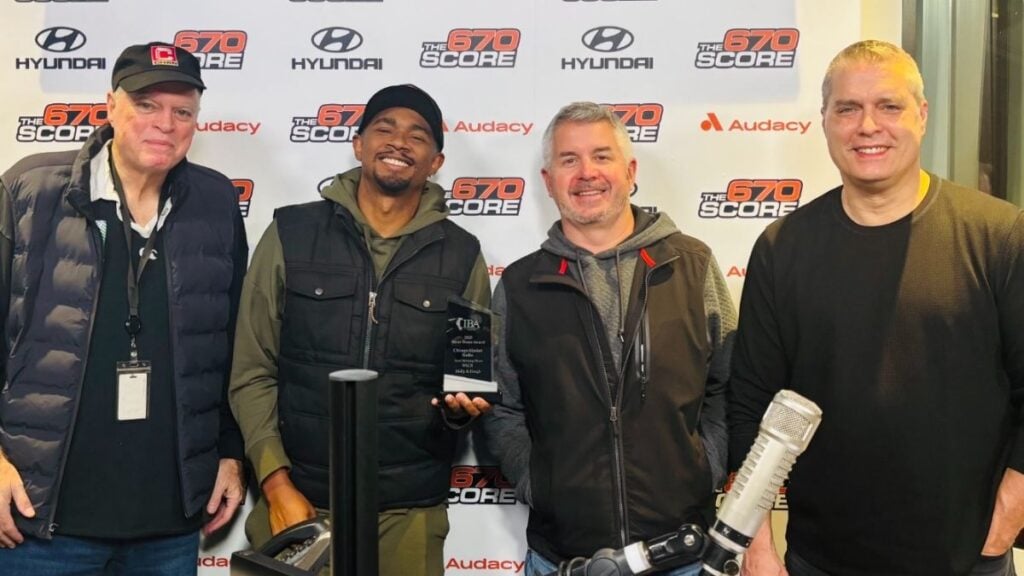
The past year has been an eventful one for 104.3 The Score morning host David Haugh. In June 2025, Haugh was inducted into the Indiana Football Hall of Fame for his record-setting performance at North Judson High School. Then, in November, Haugh and Score co-host Mike Mulligan earned Morning Show of the Year honors from the Illinois Association of Broadcasters.

This October, Haugh will be recognized again. The Indiana Journalism Hall of Fame will welcome the former beat reporter and columnist this fall. An honor that came unexpectedly after more than two decades away from his home state.

“Being from Indiana is something I haven’t shied away from. It’s something I’ve been proud of. I’m a small-town kid in the big city,” says Haugh about receiving the call informing him of his upcoming induction. “It was very surprising, because I feel like I’m still in the midst of my career. Having this recognition is appreciated. But it did catch me off guard.”

Before entering radio and television, Haugh began his journalism career by spending several summers at the South Bend Tribune as its first-ever collegiate sports department intern. After earning his master’s degree in journalism from Northwestern University, he joined the Chicago Tribune full time. There, he quickly honed his writing and reporting skills across a variety of sports while developing the distinctive voice that would define his work as a columnist.

The Pivot To Broadcasting

For 17 years, Haugh became one of Chicago’s most respected sports voices at the Tribune. Offering insight on everything from Notre Dame football to Ozzie Guillen and beyond. Yet a move from newspapers to sports radio was never part of his career plan.

“It [radio] was always something I considered a fun addition to the role of a columnist and widen the reach,” says Haugh. “I never really looked at radio as a means to an end in terms of a full time job. The longer I was here in Chicago, I wondered if it could but never really pursued it.”

While many would consider a columnist position in the nation’s third-largest media market enough, Haugh saw value in broadening his reach. He rarely declined invitations to appear on radio or television and studied both mediums from a distance. As sports fans increasingly consumed content across multiple platforms, he recognized that the industry’s future would require journalists to do the same.

That Midwest work ethic eventually led to a full-time role in 2018 alongside longtime 104.3 The Score morning host Mike Mulligan. A former beat reporter himself, Mulligan teamed with Haugh to continue building one of Chicago’s most successful sports radio brands.

“I’ve always considered myself a writer who sits behind a microphone. I’m always going to be that guy,” explains Haugh. “You want to crystalize the story as fast as possible. Cut through the fat. Don’t waste time when you’re on the air, just like you don’t waste space when you’re writing… The reporting background frames everything we do.”

For the past eight years, Mully & Haugh has remained one of Chicago’s premier destinations for sports conversation during morning drive. Being the first voice many Chicago sports fans hear each day is a responsibility Haugh doesn’t take lightly. He says the show’s focus has always been on serving the audience by discussing the topics that matter while ensuring everyone on the team contributes.

While Haugh never envisioned radio as his full-time destination, he has grown comfortable in the role. He admitted he didn’t pursue the move and initially doubted it was the right career decision.

“With me, I came here and wasn’t quite sure if it was the right move at the time. I loved newspapers, but I was trying to read the industry,” says Haugh. “I was given an opportunity I didn’t seek. What I had to do was approach the challenge like I approached every other one. That’s just by being myself.”

A Journalistic Approach Works

The dynamic Mully & Haugh share has become increasingly rare in sports radio. Both hosts built their careers covering beats, cultivating sources, and reporting the news. Many stations around the country no longer feature that type of pairing. Instead relying on influence, engagement, or larger-than-life personalities to attract audiences.

Haugh contends their success proves there is still room for credibility over performance.

“When you are trained in journalism like Mully [Mike Mulligan] and I are, you’re trained that you’re not the story,” said Haugh. “Radio shows are great up until the point where the hosts think the shows are about them. I believe that. I know sports talk radio is all about personality. You can be that. But I also think you can get too much of that.”

Haugh agrees entertainment value remains important in sports talk radio. He added that he has occasionally received feedback to loosen up on the air.

As a student of the industry, Haugh has watched the profession evolve. Traditional opportunities have become more limited while digital media has expanded and earned greater credibility in the eyes of consumers.

Journalism remains at the heart of everything Haugh does through his roles with 104.3 The Score and Chicago Sports Network. Yet with today’s media landscape allowing virtually anyone to publish content, he wonders whether the industry’s growing number of voices has translated into better journalism.

“I’m not sure that the quantity [of platforms for journalists] is reflected by the quality. The quality could improve in terms of the responsibility to the news story. There are ways you could look at an industry that is ailing in terms of credibility at times, but healthy in the ways of opportunity,” explained Haugh.

Regulations are something Haugh hopes will continue to evolve alongside the profession as it prepares the next generation of journalists. He believes today’s standards need clearer definition. He also acknowledges that his instincts toward certain topics, angles, and questions likely differ from those of today’s journalism school graduates.

Hall of Fame Worthy

Still, he believes the profession demands the same commitment to hard work and professionalism that shaped his own career. Those principles have guided Haugh for more than three decades. In his view, they should remain the standard regardless of how dramatically the media business continues to change.

Whether writing columns for the Chicago Tribune, hosting mornings on 104.3 The Score, or appearing on Chicago Sports Network, his approach has remained remarkably consistent. Report thoroughly, respect the audience, and never become bigger than the story itself.

That philosophy may not always generate the loudest headlines or the biggest social media moments, but it has earned something far more valuable: the trust of listeners, readers, colleagues, and peers.

In an era when the lines between journalism, opinion, and entertainment continue to blur, Haugh has never felt the need to chase trends. Instead, he has built a career by staying true to the fundamentals that first drew him into the profession as a small-town kid from Indiana.

When David Haugh enters the Indiana Journalism Hall of Fame this October, the honor will celebrate far more than a successful career. It will celebrate a journalist who successfully adapted to an evolving media landscape. While not compromising the values that made him successful in the first place.

For someone who still considers himself “a writer who sits behind a microphone,” there may be no more fitting recognition than that.

Mully & Haugh Show (X Screengrab)

Barrett Media produces daily content on the music, news, and sports media industries. Sign up for our newsletters to stay updated and get the latest information right in your inbox.

How Don Anthony Turned Morning Show Boot Camp from a Dream Into An Annual Event

0

Don Anthony didn’t stumble into Morning Show Boot Camp. Instead, he chased it for a decade before it even existed.

“I wanted to do it for years, even back when I was on the air,” Anthony recalls. “Seven, maybe ten years before I actually did it, I always dreamed of doing an event built around radio’s biggest stars.” His vision was specific from the start — a high-end event built around talent, primarily morning shows and the programmers who championed them. When the moment finally arrived in 1988, he didn’t cut corners. He hired one of Atlanta’s top ad agencies, designed a classy brochure, and spent a small bundle making the launch look top-notch. Then he lost $20,000 for his efforts.

“We had about 135 people show up, roughly half of them comped,” he says with the calm of someone who’s had decades to laugh about it. “But I read the room at the end of that event and just knew it would work. I knew we had something that had a unique place in the business. I knew radio’s top personalities had an event they could finally call their own.”

That first Boot Camp in 1989 launched with conviction — and a share of skepticism from the industry — and has since grown into one of the premier talent and programming gatherings in the country. The 2026 edition, MSBC 38, convenes August 5–7 in Cleveland, and hotel rooms in the official block sold out early. The overflow hotel, Anthony notes, will likely sell out fast as well.

So what changed between 135 half-comped attendees and a sold-out convention? His answer is simple and unyielding: it’s all about the show.

A Room Full of Show People

Anthony has heard every version of the “How is Boot Camp different?” question, and his answer doesn’t require much setup. The difference, he argues, is in the room itself — it’s their amazing community.

“The majority of people at Boot Camp are personalities — performers,” he says. “They can exhibit humor and emotion in ways that a lot of people can’t. Their ability to stand up and speak, get on stage, admit things people can relate to, including a few expletives — it’s just different.”

Furthermore, the program itself has evolved in recent years, with shorter sessions, more timely topics, and the addition of more breakouts. Four years ago, Anthony brought in Marie Lemaitre, founder of The Radio Fam, into the event. She has been a catalyst for fresh ideas and honest feedback, and has helped sharpen the overall direction and appeal.

Moreover, the culture on the floor matches the energy in the sessions. Conversations tend to circle back to the show — new technology, new gizmos, new people to work with, ideas to steal and make better. “Of course they talk shop, but it always circles back to how to do a better show,” Anthony says. Again: it’s all about the show.

Beyond the panels, some of those conversations have changed careers entirely. JohnJay and Rich — the duo who became one of the most recognized morning brands in the country — met at a Boot Camp in New Orleans. Both were exploring new directions. They wound up in someone’s hotel room talking late into the night, realized they had chemistry, decided to try something together, and the rest became radio history.

When the Event Becomes Personal

“A number of shows have connected at Boot Camp,” Anthony says. Additionally, this year, for the first time, a couple who met there is getting married in November. He declines to name them — “It’s not for me to share” — but he clearly delights in the milestone.

The Farm League Problem

Ask Anthony about his biggest worry for the industry, and he doesn’t hesitate: the dwindling farm league.

“Where do we find the next generation of talent? That’s one of my biggest concerns — the farm league, the bench.” Boot Camp, he believes, has always played a role in addressing that — specifically through the moments when a newcomer gets unexpected face time with someone who’s been doing this for twenty years.

He tells the story of a young woman — a UGA grad who was working for a radio station in Atlanta — who showed up at a Boot Camp in Chicago where Bobby Bones was in attendance. Somehow she got his ear, and the two of them talked for well over an hour.

“She said it was the greatest moment in her career,” Anthony recalls. “Being able to talk to someone who had achieved that level — it gave her the desire to do the same, and an idea of how to get there.”

Talent Isn’t Enough Anymore

There’s a harder conversation that runs beneath the nostalgia, and Anthony doesn’t avoid it. Radio’s disruption — consolidation, streaming, podcasting, now AI — has changed life as a radio talent. As a result, Boot Camp’s curriculum has evolved accordingly.

“I don’t think it’s wise to rely on just one stream of revenue anymore,” he says. “As a host, you have to be able to create more inlets of revenue. Whether it’s endorsements, a podcast, public speaking, or branding — you have to think of yourself as a commodity, a supplier. Somebody who’s going to make money for both you and the station.”

A panel Anthony is running this year — moderated by Molly Cruz from Chicago — addresses what he calls “managing your show (and sanity) in times of uncertainty,” designed not to dwell on the industry’s problems but to surface real strategies for getting through them.

The Hardest Conversation in Radio

Beyond the disruption itself, the hardest part of the current environment, he says, is watching talented, hard-working performers get cut despite doing everything right. “Someone can be a model employee, produce great ratings, all the things they were hired to do, and still be let go. That’s a very hard thing to deal with. And it’s the hardest conversation I have with people.”

The modern reality, as both Anthony and I agreed, is that being great on the air is a necessary condition but not always a sufficient one. “It’s not just about being funny anymore,” I said during our conversation. “It’s a business. You’ve got to sell yourself as the commodity.”

Anthony nodded in agreement.

The Lorne Michaels Comparison

Greg Stressell of Hubbard Radio has taken to calling Anthony “the Lorne Michaels of Boot Camp” — a comparison that Fred Jacobs picked up and ran with in his industry blog. Anthony’s reaction is typically self-deprecating: “I wish I made his money. Be assured, I’m flattered, but I’m well in the shadow of Michaels.”

However, the comparison gets him talking about the one guest he’s always wanted at Boot Camp but never landed.

“Of all the people I could name, the one I’d most want to sit down with is Lorne Michaels — not because of celebrity, but because I want to know what he looks for in talent, when he knows they have it. In my opinion, he is the greatest talent finder in the history of media. The show’s been running for fifty years, turning over new people and stars constantly. That’s a fascinating career.” So, Lorne, if you’re reading this…

Cleveland, August 5–7

Morning Show Boot Camp 2026 (MSBC 38) takes place August 5–7 at the Hilton Cleveland Downtown. The official hotel block is sold out, but overflow accommodations remain nearby, and tickets are still available.

For more information, visit morningshowbootcamp.com.

Barrett Media produces daily content on the music, news, and sports media industries. Sign up for our newsletters to stay updated and get the latest information right in your inbox.

Christine Williamson Is Becoming One of the Future Faces of ESPN’s SportsCenter

0

It was an extremely difficult week at ESPN. Corporate layoffs resulted in the departures of Karl Ravech, Ryan Clark, Jay Bilas, Bart Scott, Cam Newton, Stephania Bell, David Lloyd, Tom Pelissero, Charles Davis, and many others in the on-air, creative, and technical fields. It’s a new age in Bristol, Connecticut, with personalities such as Laura Rutledge, Mike Greenberg, Stephen A. Smith, Pat McAfee, and Malika Andrews etched in stone as foundational talents.

Another ESPN star well on her way to joining this group is SportsCenter anchor Christine Williamson. Perhaps more than anyone else, she represents the future of the network. A broadcaster with heart, soul, and boundless talent.

When she is at the anchor desk, Williamson owns SportsCenter and makes it her own. This past Monday, she anchored the 6 p.m. ET show solo and completely dominated, conducting several interviews covering an array of sports and stories.

Williamson’s animated voice pierces the screen right from the jump. She is bold, confident, and prepared. As the network continues making on-air personnel changes, it might one day look back at Williamson as the personality who set the tone for a new generation.

She communicates with her audience as well as any SportsCenter anchor today. Drawing you in and keeps you there. She asks the key questions and rips through highlights with confidence and aplomb.

Bring The Energy

On this particular edition of the show, Williamson jumped right in with a fervent, “SportsCenter, let’s go!” — perhaps a new battle cry for ESPN if ever there was one. She opened the show by discussing LeBron James and where he may end up playing this upcoming NBA season. The show also included a clip of LeBron’s agent, Klutch Sports CEO Rich Paul, appearing on Max Kellerman’s Game Over podcast.

Williamson’s first interview on the program was with ESPN Senior NBA Writer Dave McMenamin. From basketball, she segued to SEC Media Days while looking ahead to the college football season. Interview No. 2 featured ESPN College Football Senior Writer and College GameDay Insider Pete Thamel, live from SEC Media Days.

The SportsCenter production staff must love working with Williamson. She doles out information and insight while playing exceptionally well off the graphics supplied by the technical crew. Williamson and Thamel offered a quick preview of the SEC with a focus on perennial champion Georgia.

In another effortless segue, Williamson then moved to baseball and the streaking Boston Red Sox, who have miraculously gone from one of the worst teams in the American League to a Wild Card playoff position.

Interview No. 3 on this edition of SportsCenter featured ESPN Senior MLB Insider Jeff Passan. The duo discussed the Red Sox’s shift from seller to buyer ahead of the Aug. 3 trade deadline. They also talked about Houston Astros slugger Yordan Alvarez and his Triple Crown pursuit.

Keep The Pace

Today’s ESPN SportsCenter is not about long-form, drawn-out discussions, nicknames, or even witty repartee. It is about pacing. The evening show, as currently constructed, moves from one sport to another like Joey Chestnut rips through chicken wings. This style is perfect for Williamson, who seems to thrive in the rapid-fire run-through of topics.

Coming back from a break, it was on to football with a graphic showing the top Super Bowl LXI favorites according to DraftKings Sportsbook. Interview No. 4 featured ESPN NFL analyst Jason McCourty in the studio. Following the recent layoffs, McCourty is definitely one to watch for an expanded role at ESPN. He brings the same kind of verve and vitality that Williamson possesses. McCourty gave his early Super Bowl prediction, picking the Rams and Bills to meet at SoFi Stadium on Feb. 14, 2027.

Heading back to college football, Interview No. 5 was with Jordan Rodgers, college football analyst for ESPN and the SEC Network. The younger brother of Steelers quarterback Aaron Rodgers is an underrated analyst who has earned more airtime and exposure heading into this season.

He reminds me a lot of Jesse Palmer — a broadcaster who knows the college game and communicates that knowledge in a compelling manner.

As Williamson and Rodgers spoke, viewers watched video of several SEC teams while hearing coaches’ comments from Media Days. Today’s ESPN is about variety, and so is today’s SportsCenter. Interview No. 6 returned to football and the New England Patriots’ chances of repeating as AFC champions. ESPN.com writer Bill Barnwell joined Williamson to discuss the Patriots’ challenging schedule and how it could hinder another Super Bowl run. Barnwell and Williamson used New England’s Sept. 9 opener at Seattle as the launching point for their discussion.

LeBron James returned to the forefront as Rich Paul was once again featured in an interview clip, this time from The Pat McAfee Show. More hoops followed with Interview No. 7. NBA analyst Kendrick Perkins, another of ESPN’s definite keeper talents, joined Williamson at the desk. The always glib Perkins discussed the LeBron James situation and also touched on veteran guard James Harden.

Guiding The Ship

Speaking of keeper talents, Williamson then introduced a feature from ESPN NFL Insider Adam Schefter. With Schefter on board, it was always going to be difficult for similar reporters like Tom Pelissero to carve out a larger niche, especially now that The Walt Disney Company, ESPN’s parent company, owns NFL Network.

Schefter has become darn near bigger than ESPN itself, breaking NFL stories like Liam Neeson broke necks in Taken. His feature on this edition of SportsCenter focused on the reunion of Aaron Rodgers and head coach Mike McCarthy with the Steelers.

Williamson and McCourty then returned for a discussion of Pittsburgh’s AFC North rival, the Cincinnati Bengals. Of course, this is today’s sports media, where the promotion of betting lines often takes center stage. Interview No. 8 featured ESPN betting analyst Erin Dolan. The two examined the AFC North odds for the 2026 season.

Williamson brought the program to a close with the “6@6” segment, highlighting the best MLB winning streaks since 2000. From the anchor desk, she ended the show by saying, “We’ll be back tomorrow, just me.” That’s just fine for this SportsCenter viewer. Williamson works exceptionally well alongside a co-anchor, but she certainly does not need one to make the program tick.

Williamson has been favorably compared to Elle Duncan, who recently left ESPN for Netflix and USA Sports. She does not possess Duncan’s comedic flair, but I see the similarities in both overall talent and upward career trajectory. Like it or not, change is a constant in big-time media, and ESPN will continue moving forward. Entertaining and energetic talents like Williamson are helping forge that new path.

Barrett Media produces daily content on the music, news, and sports media industries. Sign up for our newsletters to stay updated and get the latest information right in your inbox.