Magellan AI says shorter podcast commercials delivered stronger campaign performance. The findings could influence how advertisers buy digital audio inventory.
What We Know: New data from Magellan AI suggests 30-second podcast commercials can outperform traditional 60-second spots on key performance metrics. Working with audio agency Direct Results, the company analyzed campaign results at equal impression levels. It found that shorter ad units consistently produced stronger business outcomes. The findings come as advertisers increasingly demand better attribution and more transparent campaign measurement.
What the Numbers Show: In a consumer technology campaign, 30-second commercials generated 41% more website sessions and 43% more purchases than 60-second ads while delivering the same number of impressions. Because of those results, Direct Results shifted 100% of campaign delivery from 60-second units to 30-second spots. That improved efficiency and increased return on investment. Additionally, stronger attribution gave a home improvement advertiser enough confidence to increase its digital audio investment by 45%. Magellan AI also reported its aircheck technology reduced creative review time from days to hours. It also identified live-read and promo-code errors that helped recover thousands of dollars through makegoods and credits.
What Remains Unclear: The research highlights performance from select campaigns rather than a broad industry sample. It also doesn’t indicate whether every advertiser, content category, or creative strategy would experience similar gains. Future studies may determine how consistently shorter commercials outperform across different audiences and objectives.
What It Means: The report strengthens the case that shorter podcast commercials can improve efficiency without sacrificing results. If additional campaigns produce similar outcomes, advertisers may rethink the value of 60-second creative. At the same time, better attribution could encourage brands to commit more dollars to digital audio.
Barrett Media produces daily content on the music, news, and sports media industries. Sign up for our newsletters to stay updated and get the latest information right in your inbox.
Scott Coker’s new MMA venture just landed a media titan. Steve Bornstein has joined the promotion’s Advisory Board ahead of its planned 2027 launch.
What We Know: Bornstein will advise on media strategy, distribution, technology, fan engagement, and commercial development. He built his reputation at ESPN, becoming the network’s youngest President and CEO while overseeing major growth in television, digital, and live events. Later, he led NFL Network and served as the NFL’s EVP of Media, launching NFL.com, the NFL App, and NFL RedZone. Today, he’s President, North America at Genius Sports — squarely aligned with the promotion’s tech and distribution needs.
What They Said: CEO,Scott Coker: “Steve Bornstein is one of the great builders in the history of sports media. Throughout his tenure as CEO of ESPN and later the NFL Network, Steve set the bar for excellence in sports television and was instrumental in bringing the culture of global sport into the world’s living rooms. Steve has consistently been ahead of where sports, media and fans are going. His experience connecting fans to premium live sports is invaluable as we continue to build.”
Steve Bornstein: “Scott Coker has spent his career building real trust with athletes, fans and partners around the world. The opportunity to advise his new global MMA league at this stage is incredibly exciting. MMA is a global sport with enormous potential, and this group is approaching it with the right combination of ambition, respect for art and the athletes and a long-term vision.”
What Remains Unclear: Specific media and distribution deals haven’t been finalized. Additionally, the league hasn’t confirmed further advisory board additions or a launch beyond stating 2027. The promotion says more details are reportedly coming soon.
What It Means: Bornstein’s addition signals serious media-industry backing for Coker’s new MMA promotion. Moreover, his track record building ESPN and NFL Network suggests real distribution muscle behind the newfound promotion. For a startup league chasing credibility, that experience matters — especially as it competes for eyeballs against established MMA brands.
Barrett Media produces daily content on the music, news, and sports media industries. Sign up for our newsletters to stay updated and get the latest information right in your inbox.
Cumulus Media just became Xperi’s first commercial partner for AutoStage Broadcaster Portal Premium. The deal brings near-census-level, in-car listening data to America’s radio industry.
What We Know: Cumulus signed on as the flagship licensee for Xperi’s audience intelligence platform. The company operates 393 stations across 84 markets and will roll out Broadcaster Portal Premium nationwide. Meanwhile, AutoStage already reaches 16 million vehicles and tracks tens of millions of monthly AM/FM listening hours across 300 U.S. markets. As a result, broadcasters gain access to share-of-listening, audience flow, and near-real-time station rankings.
What They Said: Joe D’Angelo, Senior Vice President, Commercial Strategy and Partnerships at Xperi: “This agreement with Cumulus marks a major step toward deterministic measurement in broadcast radio. By leveraging large-scale, aggregated in-car listening data, broadcasters can move beyond traditional sample-based measurement toward large-scale data-driven audience insights. Enabling better programming decisions, stronger advertiser accountability, and more competitive positioning in a data-driven media landscape.”
Bob Walker, President of Operations, Cumulus Media: “We’re proud to be the first broadcaster to deploy AutoStage Broadcaster Portal Premium as part of our broader effort to bring new sources of audience insight to radio. The platform gives us access to a level of audience intelligence that hasn’t previously been available. It creates new opportunities for content creators, sales teams, and advertisers alike. The AutoStage heat maps are a particularly compelling example. Visually illustrating where listening is concentrated, on an aggregated basis, relative to advertiser locations. By giving advertisers a richer understanding of audience distribution and listening trends, the platform helps them plan more effective campaigns, optimize audience-level planning, and maximize the impact of their radio investments.”
What Remains Unclear: Xperi hasn’t disclosed a rollout timeline for Cumulus’s markets. Additionally, it’s unclear whether other major broadcasters will follow with similar licensing deals.
What It Means: Radio measurement is shifting from survey samples toward observed, deterministic data. Consequently, advertisers get sharper planning tools and broadcasters gain leverage to prove ROI. Cumulus Media is currently suing Nielsen, alleging that it operates a monopoly by forcing broadcasters to buy local ratings data in order to receive national ratings. This partnership with Xperi could set the template for how connected-car data reshapes audio analytics industry-wide.
Barrett Media produces daily content on the music, news, and sports media industries. Sign up for our newsletters to stay updated and get the latest information right in your inbox.
Today, it was announced that I am joining Cox Media Group as Vice President of Audience.
I am grateful for this amazing opportunity, but this is not an article about me. I write those for fun and post them on my fridge.
This is an article about a word in my new title: Audience.
The Department Problem
Radio has spent years building departments: programming, digital, promotions, marketing, sales, research, engineering, and production.
The audience does not care about any of them — at least, not consciously.
They don’t know which team owns the app, who schedules the music, or why someone posted, “What’s your favorite song?” for the 400th time.
They experience one brand — at least, they’re supposed to.
Too often, what they actually experience is a collection of departments completing assignments. A great moment happened on the morning show, so programming did its job. Someone clips it, so digital did its job. The clip was posted, so social did its job.
Then it disappears into the feed without creating new listening, new followers, more sharing, or any meaningful relationship with the audience.
“But Phil, everyone did their job.”
That is exactly the problem. We measured the work, not whether it worked. Fifth Harmony also tried to explain this, but we were distracted by whether “Work from Home” tested with men 35–44.
Creation to Discovery
The first question should not be “was this good on the air?” Instead, it should be “how will someone find it who was not listening?”
“We’ll post it” is not a strategy. Without a hook, a headline, and a reason to care, it’s just content sitting online and waiting to be discovered. Basically, my podcast during its first year.
Discovery to Sampling
Radio can be guilty of creating content for people who already understand the station. We assume they know the personalities, the format, the benchmarks, the brand, and the backstory.
This is going to sound like something you’d hear on your first day at Slytherin, but… new people know nothing!
The industry talks constantly about attracting younger audiences, yet we often present content in a way that requires years of prior listening to understand. Then we wonder why “hey, everyone, it’s [insert interchangeable DJ name here] with some big news” doesn’t stop the scroll.
The only thing it stops is any chance the video had of being watched.
Sampling to Action
After someone enjoys a piece of content, what should they do? Listen live? Watch the full interview? Follow the personality? Subscribe to the podcast? Download the app? Attend an event? Put a Hot Rockin’, Flame-Throwin’ 92 Jamz bumper sticker on their car for the Fantastic Plastic Payoff?
The job is to get attention and move it somewhere — which still requires a memorable presentation between the “stacks of wax.” TM Studios’ new TRIL service is timely proof that sampling starts with real voices, strong writing, and producers who turn sampling into action. Plus, as I make my move to Atlanta, TRIL sounds close enough to Trillville to feel right at home and, fittingly, they deliver “Some Cuts.”
Action to Return
What reason did we give them to return?
People return to patterns: a recurring feature, a useful promise, a personality they know, a story that continues, or a reason to wonder what happens next.
They do not return because we posted “what’s your favorite song?” for the 401st time (honorable mention to “is a hot dog a sandwich?”).
Return to Advocacy
The strongest audience members do more than consume. They recruit.
Hang on. Someone is at my door. Be right back.
Sorry, it was the Jehovah’s Witnesses. Where were we?
Oh, yeah. Recruitment.
They tell a friend, “you need to hear this.”
People don’t advocate for “today’s best music” or “the most variety.” Best is a subjective adjective, and unless you have more songs than Spotify, you do not have the most variety.
Mapping the Full Journey
Here is a useful exercise for every station: choose one strong piece of content from last week and follow its entire path.
Programming cannot end at the speaker. Digital cannot end when the post goes up. Marketing cannot stop at awareness. Promotions cannot stop at the entry form. Research cannot stop at measurement.
Ultimately, audience growth is built by understanding what happens next and making sure someone owns it.
Today, “audience” became part of my title, but it should become part of everyone’s job description.
To those who have told me these articles helped renew your belief in radio, thank you for giving me your time, your attention, and your willingness to consider a different point of view. To those who were never quite sure what to make of them, thank you for continuing to read and, when necessary, choosing to grin and Barrett.
Phil Becker
Barrett Media produces daily content on the music, news, and sports media industries. Sign up for our newsletters to stay updated and get the latest information right in your inbox.
Howard Stern laid off roughly a dozen staffers from his SiriusXM program on Monday, and the cuts arrive alongside a jarring new reality: new episodes will air just once per week. Employees learned of the layoffs during a Monday Zoom call before being sent home with severance packages based on tenure. The show plans to lean on archive material and reruns to fill the rest of the schedule once the change takes effect after Labor Day.
It’s a stunning turn for a program that once defined appointment radio five days a week. Stern signed a new three-year deal with SiriusXM in December, and he described it at the time as offering “more flexibility.” Few outside his inner circle likely expected that flexibility to mean a single new show per week.
So here’s the question worth asking: if that’s all Stern can muster at this point, is it even worth it? He’s the King of All Media. He’s an absolute legend, and nothing about one new show a week changes that. But calling it “The Howard Stern Show” at this point feels like a stretch. If he doesn’t want to create that much content anymore, that’s fine — no one can knock him for the career he’s had. If he wants to ride off into the sunset, then he should just do it. Right now, though, it’s a masquerade.
A Familiar Pattern, Minus the Drama
Cutting back gradually isn’t new for Stern. He stopped hosting five days a week years ago, and he’s gone live less frequently as his career has progressed. Still, this latest reduction lands differently. Last September, rumors swirled that SiriusXM planned to force him out entirely, sparking a “Will he or won’t he” saga that included a prank involving Andy Cohen and a fake takeover of Stern’s channel. Listeners panicked. Shares dipped. Stern eventually confirmed he was staying, and the drama died down.
Given that backdrop, it’s hard to believe SiriusXM is thrilled about dropping down to one day a week so soon after fighting to keep him. Meanwhile, the company has been in the middle of serious belt-tightening, targeting $200 million in annualized savings and trimming staff across multiple departments. Consequently, laying off a dozen more employees tied to Stern’s show fits a broader cost-cutting pattern rather than existing in isolation.
I don’t have insight into what his revamped contract actually entails, and neither does the public. But it’s reasonable to question whether SiriusXM’s leadership is genuinely comfortable with this arrangement, or whether they simply don’t have leverage to push back against one of the platform’s most valuable — and expensive — names.
One Day a Week Isn’t Rare, But Stern Isn’t a Podcaster
Plenty of podcasters release new content once a week, and audiences don’t punish them for it. That model works fine for creators without decades of daily-radio history behind them. Stern, however, built his entire brand on being unavoidable — five mornings a week, unfiltered, unpredictable, and everywhere. Reducing that to a single new episode strips away the very thing that made him must-listen radio in the first place.
Additionally, subscribers who signed up specifically for Stern’s daily presence may not stick around for reruns disguised as programming. SiriusXM has leaned on his gravitational pull for subscriber retention for nearly two decades. Once that pull weakens, the company’s math around his contract gets a lot harder to justify.
What’s long been rumored as the slow fade of Stern’s career appears to have finally arrived. This isn’t retirement, and it isn’t cancellation. It’s something murkier — a show that still carries his name but no longer resembles the show that earned it. At some point, legacy and output have to align, and right now they don’t. This truly does look like the end of The Howard Stern Show as anyone has known it.
Barrett Media produces daily content on the music, news, and sports media industries. Sign up for our newsletters to stay updated and get the latest information right in your inbox.
The current artists making rock roll are the hardworking bands who consistently put out solid music. They define their sound, bust their asses touring, and connect with fans on socials. They are always on my radar. The perfect example of one of those bands is From Ashes to New. Formed in Lancaster, PA in 2013 by Matt Brandyberry — or Matt B — the band’s impactful brand of active rock conveys a message without being preachy. It injects just enough rhythmic vocals to catch rap and Nu-Metal fans, while hitting hard enough to grab the bangers.
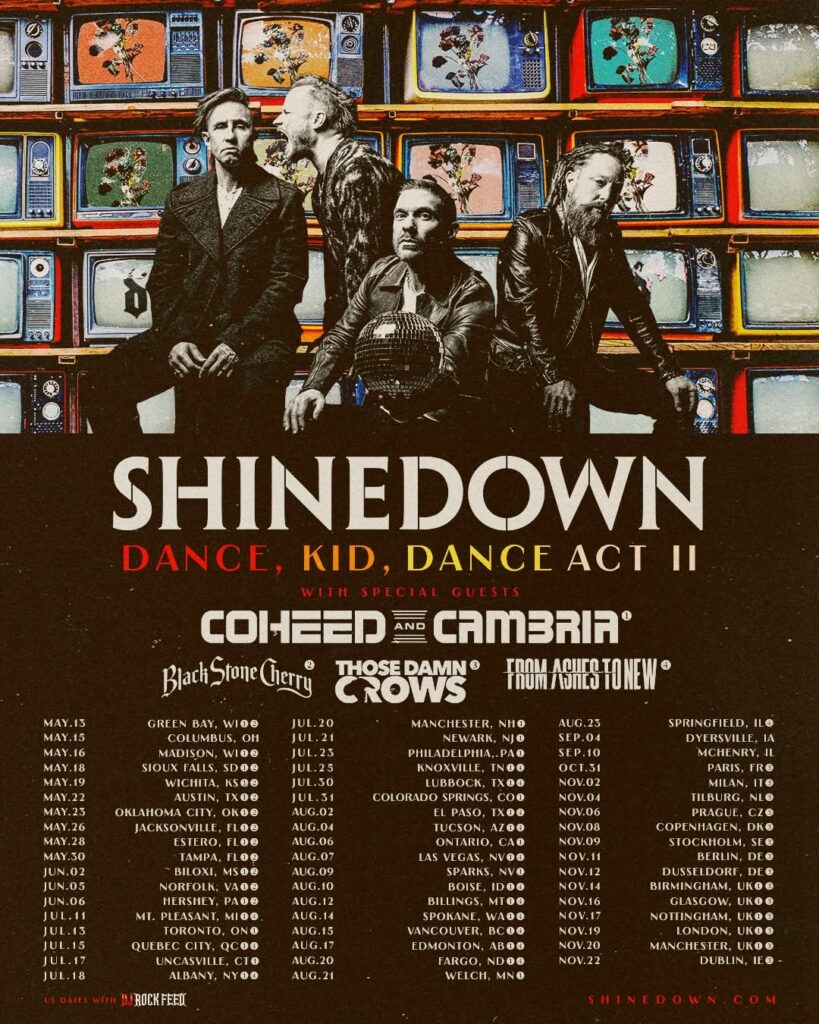
The band’s fifth release, Reflections, is out now. Their single “Drag Me” is their first number one on the Billboard Mainstream Rock Charts. They hit the road this week as support for friends and former tourmates Shinedown, along with Coheed and Cambria. Life is good for this PA band.
Ten Years In: Still Grinding, Still Growing
Matt B joins me this week. In this episode, we discuss ten years of making records, how being negative isn’t always a negative, the “One Day Song” that fuels creativity, and Matt’s growth as an artist, vocalist, and member of the music community.
I really enjoyed having a conversation with Matt Brandyberry. He is passionate, insightful, and reflective — the real deal. Reflections is a record the band can be proud of.
*Editor’s Note: Answers have been edited for clarity and length.*
Terrie Carr: Matt B in the house! From Ashes to New is coming to New Jersey, and I’m really super excited about it. I’m going to get to see you guys in a couple of weeks. 2026 has been a freakin’ amazing year for you. Reflections has been out for a couple of months. Let’s talk about record one to record five. How is it different, and how are you different as an artist?
Matt B: Well, I’m about 12 or 13 years older! I’ve grown, and I’ve learned a lot. I wouldn’t say I’ve learned a lot more in the way of music theory — I still ignore a lot of that because I write based on emotion and how I’m feeling. I’ve learned how to hone in on my skill, what I’m good at, and what I’m not good at. I think I’ve done that with producing, writing, performing — everything. I’m definitely a more seasoned artist. Back then, I was just an emotional kid who had something to say. I’m still an emotional person, and I still have something to say. I think I’m just a little bit better at saying it now.
The band has obviously grown a ton. We went from being a new band selling 20 to 50 tickets to now selling thousands. We’ve grown quite a bit, and our catalog has grown extensively — our fan base as well. We’re still growing, still getting stronger, still getting bigger. As I’ve said in previous interviews, people still consider us a “new” band, and I’m really grateful for that. I think that’s amazing. I love it.
Motivated by Fear: The Mindset Behind the Music
Terrie Carr: Slow and steady wins the race. You guys have been out for a while — five records in. The last record did really well for you, so this was a tough follow-up. I think the band has always had a very significant sense of self. There’s always been a self-awareness and an evolution in your sound. And being thought of as a “newer band” with a younger fan base? That is the best of every world. It doesn’t get better than that!
Matt B: It doesn’t really. I’m so grateful for it because we could be considered something else and never have reached our pinnacle. I just think that we are not there yet. I post all the time on my personal Facebook page about the new upcoming band. People tell us we are new, and I’m like, “oh, thank you for telling me that we’re gonna blow up and thank you for this and thank you for that.” And people are like, “have you not?” From an outside perspective, maybe yes, but from an inside perspective, it’s still a grind, still a climb, and you still feel the same.
I am the end-of-the-world guy. We were at an airport about a year ago, and Danny Case — our vocalist — said to me, “Everything is such a live-or-die situation for you.” He’s like, “You’re always worried that failure is right around the corner.” I was like, “Yeah, because if I don’t think that way, then I get complacent. And if I think that everything is okay, that leaves me susceptible to failure.”
If I’m constantly worried about it, if I’m constantly aware of what could happen, it pushes me to do better things. It pushes me to be greater and not get lazy, because a lot of people — especially artists — will procrastinate. You always hear people say they never finish a piece of art because they’re never satisfied with it. If I were like that, I would have nothing to say. I can’t be like that. I’m just like, “Hey, we’ve got to do this because if not, tomorrow you’re gonna lose your house. Do you want to lose your house?” I don’t think so!
“Drag Me” and the Road to Number One
Terrie Carr: “Drag Me!” Wow — as soon as I heard that song, I was like, “this song is a number one.” Did you know it? Did you think, “this could be our first number one”?
Matt B: No! I didn’t. Typically, I can hear a song and go, “that’s the one.” But I’m conditioned to believe that rap and screaming can’t work. Over the years, I’ve gotten phone calls, emails, and text messages saying, “Hey, get rid of the screaming, get rid of the rapping.” And it’s like, “Well, okay, so get rid of our DNA?! Get rid of who we are?!” That sounds silly. Do we want to present ourselves to people as something that we’re not? That doesn’t sound like a good idea, regardless of whether it helps us climb charts or not.
I want to be genuine to who we are. I don’t want to be fake. We’ve actually created songs I hate — I can’t stand some of them because we were told, “Hey, create this, create this, create this.” So with Reflections, it was just — no. Blackout, the band’s 2023 release, was the first step toward that. There was one song on Blackout — and I won’t tell you which one — that was created not for an algorithm, but for the format. I don’t like that song. I’m not a fan of it for that reason. Blackout was the first time that we were more focused on doing what we wanted, and we saw the success of that.
On Tour With Shinedown: Brothers on the Road
Terrie Carr: Changing the mainstream! You are getting ready for tour — just a few days away from the Shinedown run. I love this tour, and I’ll tell you why. I’ve worked on radio shows for more than half my life. There’s something about this bill that I can’t wait to see in my neck of the woods in the New York/New Jersey area.
Shinedown, From Ashes to New, Coheed and Cambria. I think of you guys as the young band bringing in that younger crowd — the fan under 30, a little bit over 30. Then I think of Coheed — I’m such a Coheed fan. They’re going to bring in some of those prog folks. They have a diehard, amazing fan base. And then Shinedown — I remember playing Shinedown more than 20 years ago for the first time on the radio, having the guys at a tiny little barbecue joint playing for seven people. Their fan base is a bit older now, and they’re getting their kids to Shinedown shows. This is not a bill where every band sounds and looks the same. This is a fantastic rock-and-roll bill of catalog, musicianship, and showmanship.
Matt B: We love the Shinedown guys. They are brothers to us now. Matty and Zach are best friends. We kind of knew ahead of everybody that they were looking at putting us on the tour. 2022 was so good that maybe we should run it back — it’s been four years. It not only helps us plan out our year, but we know that we’re gonna have a great time. We know it’s gonna be a fun tour.
Those guys are the best of the best in so many different avenues. They’re such good people — a class act. Every single one of those guys is just a good person. The reason why they are where they are is because they’re good people. So to tour with people in such big venues, in front of so many new people, and to know that it’s just gonna be a comfortable tour — that’s everything, because it’s a hard life.
When you go out there for five or six weeks and leave everything behind, it’s tough. The first couple of years you’re doing it, wet behind the ears, you’re like, “okay, this is cool, this is sick, this is the life!” Some people never get past that, and that’s fine for them. But once you do, you get it — it’s gotta be good. It’s gotta be fun in other ways. There has to be good chemistry, good vibes — everything’s gotta be great. And Shinedown brings that. That’s the best thing about hearing you’re gonna do a tour with Shinedown. You know you’ll have a great time.
What’s a “One Day Song?” Would Matt recommend being a rockstar to his kids? Check out our full hang below!
Barrett Media produces daily content on the music, news, and sports media industries.Sign upfor our newsletters to stay updated and get the latest information right in your inbox.
Netflix has more than 325 million subscribers worldwide. The streaming giant has also made no secret of its ambition to become a player in the live events space, especially when it comes to sports. In recent years, the company has invested heavily, securing deals with MLB, the NFL and FIFA. It has also become the home of MVP boxing promotions and WWE’s flagship program, Monday Night Raw.
However, the strategy behind Netflix’s entry into live sports is still evolving. During an appearance this past April, Chief Content Officer Bela Bajaria explained that the goal is to make everything on the platform great, including live events. She also acknowledged the challenge of shifting viewers from an on-demand mindset to appointment viewing. That may prove to be the company’s biggest obstacle and could ultimately determine whether sports remain a long-term priority.
Habits are hard to change.
For much of my childhood, television revolved around appointment viewing, just as sports do today. I remember gathering with my family to watch ABC’s T.G.I.F. lineup or tuning in for Tom Brokaw and NBC Nightly News.
Today, we live in a much different media environment. Audiences have traded appointment viewing for the convenience of watching on their own schedule. Millions continue to cut the cord because they can find their favorite programming whenever they want. That’s the experience platforms like Netflix were built to deliver: premium programming available whenever and however the viewer chooses.
What Matters Most
Sports remain television’s last true appointment-viewing experience. That’s why networks continue to pay enormous rights fees for live sports. They aren’t just buying games. They’re buying one of the few forms of programming that still compels audiences to show up at a specific time.
Peter Kafka, chief correspondent at Business Insider, recently remarked that CBS and FOX primarily exist today to broadcast football.
He’s not wrong.
🚨2025 NFL Regular Season Viewership🚨
🏈18.7 million avg. viewers per game — 2nd highest season avg. on record
🏈Up +10% vs. 2024
🏈@NFL programs rank as 89 of the top 100 shows on TV since the start of the 2025 regular season pic.twitter.com/BVWlO6fKxq
During the 2023 season, 93 of the 100 most-watched broadcast telecasts were NFL games. That number dipped to 72 in 2024 because of the presidential election, but the NFL still dominated the rankings. Last season, the league climbed back to approximately 83 of the 100 most-watched telecasts.
That reality helps explain why broadcasters continue investing billions in sports rights. But for Netflix, which has chosen a more selective approach, is the investment accomplishing what the company hopes?
Juice Worth The Squeeze
Take, for example, the agreement it signed with MLB last winter. Netflix reportedly paid $60 million for Opening Day, Monday night’s Home Run Derby and the upcoming Field of Dreams game. That’s roughly 25% of what NBC pays annually for MLB rights while receiving only a fraction of the inventory.
Of course, that’s by design. Netflix isn’t trying to become a full-time sports network. For now. But if sports are meant to drive subscriber growth or increase engagement, the early returns raise legitimate questions.
Viewership wasn’t overwhelming for Netflix’s MLB debut. Approximately 3 million viewers watched the New York Yankees face the San Francisco Giants on Opening Day. Considering Netflix has more than 325 million subscribers, that represents less than 1% of its global audience. If each of those three events carries an approximate value of $20 million, is that level of engagement enough to justify the investment?
That’s the challenge Netflix is trying to solve.
Sports become outdated faster than any sitcom, feature film or documentary Netflix produces. If the objective is to change consumer behavior, the company may eventually need to become far more aggressive in creating an environment where sports fans naturally turn to Netflix first rather than simply sampling a handful of marquee events each year.
So far, year one of Netflix’s MLB agreement is two-thirds complete. While the presentation of the Home Run Derby improved noticeably from Opening Day, it’s fair to ask whether it actually moved the needle. Did it convince the average consumer to subscribe? Did it generate enough interest to make a glorified exhibition feel like must-watch television? And did Netflix do enough to promote the event on its own platform?
Can Netflix Win The Habit Battle?
We’ll find out over time. But the real battle isn’t how much Netflix is willing to spend on live sports. It’s whether the company can persuade millions of subscribers to change habits it spent nearly two decades creating.
Netflix can always write a bigger check. It has the resources to compete for almost any sports property it wants. What money can’t buy, however, is decades of consumer behavior. Convincing millions of subscribers to abandon the on-demand habits that made Netflix the world’s biggest streaming service may prove far more expensive than any rights agreement it ever signs.
Sooner rather than later, Netflix will have to decide whether becoming a true sports destination is the mission. If it is, dabbling in a few marquee events each year probably won’t be enough to change viewing habits. And if it isn’t, the company risks spending millions on sports rights while chasing an audience that never changes its routine.
Barrett Media produces daily content on the music, news, and sports media industries. Sign up for our newsletters to stay updated and get the latest information right in your inbox.
Great opportunities often come to those who wait. For the last eight years, Myron Medcalf and Matt Jones have occupied the same timeslot on ESPN Radio’s Sunday morning lineup. The show grew into a steadfast and reliable pairing, but rumors about a move to weekdays surfaced for years whenever ESPN Radio adjusted its daytime lineup.
So when the network announced another shakeup earlier this year, the rumor mill started again. After waiting so long for an opportunity to join the weekday lineup, could Matt & Myron finally earn a spot in the main event?
“It starts with rumblings and a maybe,” said Medcalf about hearing the rumors for years regarding Matt & Myron making the move from weekends to weekdays. “It felt real in the last six months. Then in the last three months, it felt very real. Until I got the call that it was official, I didn’t do my celebration till then.”
Beginning August 3, Medcalf and Jones will join ESPN Radio’s newly reshaped weekday lineup in the 3-5 p.m. timeslot. The revamped schedule, which also includes the return of Mike Golic Sr. and Mike Golic Jr., is the network’s latest programming adjustment following Clinton Yates’ departure in March.
An Opportunity Worth Waiting For
Medcalf has loved radio his entire life. He grew up in a family of nine and said radio was a constant in his household. The son of a preacher, he said car rides with his father sparked his interest in pursuing a career in the medium.
Since joining ESPN in 2013, Medcalf said he sought opportunities with ESPN Radio while continuing to cover college basketball for the network. He never approached the work with a specific destination in mind. Instead, he focused on appreciating every opportunity while navigating his path through the industry.
Dream come true! Excited to join @ESPNRadio’s daily lineup from 3-5p ET with @KySportsRadio and the rest of the incredible talents across the board. Want to thank all of our listeners and the folks at @MAXX. Can’t wait to get started! https://t.co/CqvXgFFOTK
“I got an opportunity to be a part of my childhood dream job on the weekends and loved it,” explained Medcalf. “I was happy to have an opportunity to tell the world about what’s coming up on Sundays. I’ve always been happy with being in the mix.”
Over the past eight years, as he and Jones continued building the show’s foundation, Medcalf said being passed over for previous weekday openings never bothered him.
“I didn’t look at it like the call may never come. Instead, I looked at it as what’s for me will be for me. I knew we had a good show and people believed in us,” said Medcalf. “I don’t know enough to know what happens behind the scenes. Therefore, I don’t know enough to worry about it. Every day, I’m just a dude that’s happy to be a part of this. If they would have told me Sundays is where it’s at, I still would have been happy.”
Medcalf said the call came after he and Jones received a text asking if they had five minutes to speak with ESPN Radio executives. While the pair initially feared what might come from that brief conversation, the result was “the best news we ever heard,” Medcalf said.
Working With Matt Jones
He considers his relationship with Jones one that has grown into a brotherhood. Covering college basketball, Medcalf said the following Jones built with Kentucky Sports Radio is among the most impressive accomplishments he has seen in the audio business. The two share mutual respect, both personally and professionally.
“Matt deserves this at the end of the day. He’s built himself and KSR from the ground up. There’s not a grassroots operation that you can compare it to,” explained Medcalf. “He didn’t just show up to ESPN and say give me a shot. This is a guy that deserves everything he has and everything he’ll get in the future.”
Moving from weekends to weekdays presents a new challenge for a show that has occupied the same timeslot for years. Medcalf plans to balance the weekday program with his college sports coverage and regular appearances across ESPN platforms.
As August 3 approaches, Medcalf believes having an established formula will ease the transition. Meetings with management, staff, sales and digital teams become much easier when the show has already proven it works.
“A lot of times when you’re putting a group together and hoping it works, you’re spending so much time on the chemistry element,” explains Medcalf. “How many shows need six months to a year to develop before the chemistry is there? That’s not Matt and I, and that’s what ESPN Radio wants. We were told they love that we’re already a show and don’t have to build our show. I don’t feel pressure about doing something new, it’s just doing something I enjoy more frequently.”
The increased workload represented Medcalf’s biggest concern when he accepted the role. Over the years, he said radio talent were often “siloed” into their radio responsibilities. With little opportunity to contribute elsewhere across the network.
However, ESPN assured him he would continue providing the same quality journalism and productivity while adding weekday radio duties.
“We’re in an era where people really support versatility in our business. That wasn’t always the case,” said Medcalf. “You see so many people doing multiple things across the network under the ESPN umbrella. I’ve certainly benefitted from that… The fact that people believe I can do this in addition to everything else, that to me why I feel so validated.”
The Power Of ESPN Radio
Over the years, many throughout the industry have questioned whether ESPN still valued its radio and audio division the way it once did. At one point, ESPN Radio featured programs hosted by Dan Patrick, Colin Cowherd, Dan Le Batard and Mike & Mike, among others. More recently, however, the network has welcomed back Rich Eisen. While also elevating Freddie Coleman and investing in Evan Cohen, Chris Canty and Michelle Smallmon.
When August 3 arrives, both Golics will return, while Medcalf and Jones move into afternoon drive. As a longtime consumer of ESPN Radio, Medcalf believes the new lineup reinforces the company’s commitment to the audio platform, especially as the competition between traditional and digital media continues to evolve.
“ESPN definitely believes in radio, audio, and the future,” said Medcalf. “You have this great combination of established giants of the industry. Add in shows that are continuing to grow with amazing people. All I see is that ESPN is still all in on the radio side and investing big resources into it. You feel it internally. This is a company that goes for it, and the lineup makes that undeniable.”
Beginning August 3, Matt & Myron plan to bring the same energy and approach from weekends to weekdays. Medcalf compared the move to taking the Sunday show into the main event. Drawing on shared experiences from the nation’s biggest cities to its smallest towns, the duo hopes to welcome even more listeners into the show’s family.
“Success would be getting response, engagement and all the stuff that matters with these things without giving up our show,” explained Medcalf. “We do our show, and it hits. I just want to make people feel something.”
In an industry often driven by constant change and immediate results, Medcalf’s journey serves as a reminder that not every opportunity arrives on your preferred timetable. Sometimes the biggest break comes after years of preparation, persistence and the belief that your chance will come.
On August 3, Matt & Myron won’t introduce a new show. They’ll simply bring one that’s been waiting for its moment.
Barrett Media produces daily content on the music, news, and sports media industries. Sign up for our newsletters to stay updated and get the latest information right in your inbox.
Prior to November 2022, AI was just a 2001 Steven Spielberg movie about a robotic boy. Twenty-five years later, artificial intelligence is no longer some futuristic, pie-in-the-sky notion. AI has rapidly become part of everyday life—faster than even the internet took hold. In just a few years, its tentacles have reached countless industries. From internet searches and customer service to healthcare, research, transportation, and, of course, broadcast and digital media.
Behind it all, however, are massive data centers consuming enormous amounts of electricity to process immeasurable volumes of information. For the media, this isn’t just another tech story. It’s become a local story that affects many suburban and rural communities.
While residents are justifiably concerned, community leaders are competing to attract these data centers. They represent billions of dollars in investment and expanded tax bases. Local governments gleefully celebrate them as economic victories, and in many ways, they are. These projects generate jobs, from construction workers to operational employees. Their goal is to benefit local workforces and increase tax revenue for municipalities. Of course, homeowners are concerned about the value of their own investments.
But that’s not exactly the whole story.
How To Present The Story
In truth, when construction is complete, most data centers employ relatively few people. In fact, it’s often just a few dozen trained technicians, engineers, and security personnel. So, while the facilities may be economic assets, they don’t necessarily represent the long-term employment many envision.
Perhaps the biggest issue broadcasters should be discussing is infrastructure. Here are some facts to consider:
These AI data centers require extraordinarily large amounts of energy. Utility companies across the country are investing billions in upgrading substations, transmission lines, and overall capacity to support these new demands. In some areas, those investments may influence the rates paid by businesses and residents. That doesn’t guarantee higher bills, but it does suggest that planning has become a major community conversation rather than just a utility issue.
Water usage is another topic that has generated significant community concern. The media should be addressing it on behalf of consumers. Some planned facilities will consume substantial amounts of water to keep systems cool. The understandable concern is how these projects could affect local resources. Especially in regions prone to drought and extreme heat.
To address that challenge, newer facilities have begun incorporating recycled water, closed-loop cooling systems, and advanced air-cooling methods that can dramatically reduce water consumption. In the end, the reality appears less absolute than either critics or investors suggest. It’s a clear example of having “two sides to every story, with the truth being somewhere in the middle.”
Broadcast media has a unique position to offer that explanation and perspective.
The Questions To Ask
For whatever reason, we tend to reduce every story to either “AI is destroying jobs” or “AI will save the economy.” Local media has an opportunity to ask the questions listeners and consumers care about.
Will this project truly improve the tax base?
How will it affect my home’s value?
Will it affect the reliability of electricity?
What about utility costs?
What incentives and backroom deals are being made to attract the company?
How many permanent jobs will remain after construction?
What environmental safeguards are in place?
How will all of this affect personal finances? The list goes on.
Ironically, our industry is experiencing AI’s impact in different ways. Some organizations have begun experimenting with AI-assisted research, transcription, video editing, copywriting, voice-over work, and audience analytics. Radio is already using AI to automate production tasks and generate content.
While these tools can improve efficiency, they also raise important questions about authenticity, staffing, and maintaining the local connection that has always been at the core of local broadcast media. We have recently seen the importance of the human element as iHeart laid off many employees over the past few weeks.
The opportunity today for broadcasters is to lead rather than react.
Great broadcasters have always examined and unpacked complicated issues so local communities can understand them. It should be no different when AI data centers are involved. Instead of focusing solely on fear or cheerleading new development, broadcast media can serve as a trusted guide. Explaining both the economic opportunities and the challenges these projects bring.
AI is transforming the way we all work, communicate, and consume media. The communities that understand both the benefits and the trade-offs will be better prepared for whatever comes next.
Local broadcasters, perhaps more than anyone else, are in the best position to help them get there.
Barrett Media produces daily content on the music, news, and sports media industries. Sign up for our newsletters to stay updated and get the latest information right in your inbox.
Here’s a question worth sitting with. After thirty years of technological advancement, billions of dollars in platform development, and more music available to more people than at any point in human history, why is music discovery still so hard?
Spotify just rolled out new session controls for Release Radar. Users can now filter their weekly new music feed by genre, focus exclusively on unfamiliar artists, or dial in personalized picks. It’s a smart move. But it’s also a tacit admission that the algorithm alone isn’t enough.
That matters. And not just for streaming platforms.
The Algorithm Promised Everything
When Discover Weekly launched in 2015, it felt like the future arriving early. A playlist that actually knew you. Thirty songs every Monday, tuned to your taste, surfacing artists you’d never heard of but somehow already loved. People lost their minds over it. Meanwhile, the music industry declared the discovery problem solved.
It wasn’t.
More than a decade later, Spotify is still tinkering. Discover Weekly now lets listeners select up to five genre filters based on their streaming history. Release Radar, which reaches nearly nine million listeners weekly, just got session controls so users can shape what they hear. Additionally, New Music Friday added editor-led video recommendations last month. And Fresh Finds still relies on more than thirty human editors to curate its genre-specific playlists.
Notice a pattern? Every algorithmic system eventually reaches for a human hand.
Radio Didn’t Solve It Either
Before anyone in radio starts feeling smug, pump the brakes.
Radio had decades — and an uncontested platform — to be the definitive answer to music discovery. At its best, it was. A great program director, a trusted DJ, or a station with a genuine curatorial point of view could introduce an artist to a city and change careers overnight. That was real. That was powerful.
But radio also narrowed. Playlists tightened. Research took over. The same thirty songs cycled endlessly while new artists piled up with nowhere to go. Over time, discovery became a byproduct of popularity rather than the engine that created it. Radio stopped taking risks and called it strategy.
The result? Listeners went looking for discovery somewhere else. They found Spotify. They found TikTok. They found YouTube rabbit holes and Reddit threads and friends texting them SoundCloud links at midnight.
Radio gave up the discovery mandate. The DSPs picked it up — and they’re still figuring out what to do with it.
The Trust Problem Nobody Talks About
Here’s what both sides miss: discovery isn’t just a technology problem or a programming problem. It’s a trust problem.
People discover music they love when they trust the source recommending it. That trust is built over time, through taste, through context, and through the feeling that whoever is pointing you toward something actually cares whether you like it.
Algorithms optimize for engagement. That’s not the same as taste. An algorithm that keeps you listening isn’t necessarily helping you find music that matters to you. In fact, it might just be feeding you more of what you already know, dressed up as something new.
And radio, for all its human element, let consolidation strip out the voices listeners actually trusted. When a station sounds like it could be anywhere, listeners stop believing it knows them.
So Where Does That Leave Us?
In an uncomfortable middle ground.
Spotify’s moves are encouraging. Leaning into editorial curation through Fresh Finds, adding human video context to New Music Friday, and giving listeners more control over their own discovery experience — these are all steps in the right direction. They suggest the platform understands that personalization alone isn’t enough.
But these are refinements. They’re not a solution.
Radio still has something DSPs can’t manufacture: the feeling of shared experience. When a station breaks a record and a whole market hears it together, that’s discovery with community attached. That’s a powerful thing — if anyone is still willing to do the work to make it happen.
The Opportunity Is Still Out There
The honest answer is that nobody has solved music discovery. Not Spotify. Not Apple Music. Not radio. Not TikTok.
The opportunity is still there for the taking. The question is who wants it badly enough to actually go get it.
Barrett Media produces daily content on the music, news, and sports media industries. Sign up for our newsletters to stay updated and get the latest information right in your inbox.