The Daily Wire has expanded Ben After Dark, the late-night series from Ben Shapiro, with 30 to 40-minute episodes.
The show expanded to its new length on Friday, with Ben After Dark adding new content each Friday ahead of the weekend. This past week, the first expanded program featured Ambassador to Israel Mike Huckabee.
The program will continue to feature Shapiro’s opening monologue for free, but the full-length episode is available exclusively to DailyWire+ subscribers.
The Daily Wire describes Ben After Dark as “what happens when you give Ben Shapiro a late-night show and absolutely no supervision.”
The announcement that Shaprio would expand his late-night series to full-length episodes comes on the heels of an expansion for The Ben Shapiro Show. That podcast expanded by 30 minutes per episode last week, which The Daily Wire says reaffirms “the company’s commitment to delivering more in-depth and exclusive content from its flagship voices.”
Previously, the daily podcast has routinely lasted between 45-60 minutes of daily content. Now, the program from The Daily Wire is set to expand to roughly 90 minute episodes.
Barrett Media produces daily content on the music, news, and sports media industries. To stay updated, sign up for our newsletters and get the latest information delivered straight to your inbox.
Tyrone Johnson returned to the Philadelphia airwaves this past Friday as the former 97.5 The Fanatic host took the mic on New Jersey 101.5. Filling in for Dennis Malloy on his midday program Dennis & Judi, he worked alongside co-host Judi Franco as they discussed non-sports topics, since Johnson said he has a non-compete clause in his contract with The Fanatic.
To begin the program, Johnson opened by expressing his thanks for the opportunity to host on the show on Friday.
“I’m very excited to be on here for the first time in fourteen years,” said Johnson. “I started here literally in May of 2004, and now I’m back.”
Johnson’s appearance comes three weeks after his last show and dismissal from 97.5 The Fanatic in Philadelphia. He was let go as the third piece of The Best Show Ever? to be replaced, after the program launched in 2022 as a foursome between Johnson, Ricky Bottalico, Hunter Brody, and Jennifer Scordo. However, cuts at Beasley later led to Brody’s departure in 2023. Furthermore, in 2024, Scordo left when she was also cut from the program. Notably, Brody has since landed at rival station 94WIP.
Meanwhile, Johnson lists that he was an assistant chief engineer for New Jersey 101.5 on his personal LinkedIn page and shared stories of his past with the station.
“This is a big deal, I love this place,” said Johnson. “I have such fond memories of this place. Time goes on, you get distance away from things and then you appreciate things even more because of how kind you (Franco) were and a lot other people taught me a lot early on not just about radio but about life.”
Although the fill-in was just for the day, Johnson noted at the end of the program that he hopes to have another opportunity with the radio station to fill in.
“This, to me, I am overjoyed to be here,” said Johnson. “I’m a little tired, I didn’t sleep at all last night, but other than that I’m rolling.”
Barrett Media produces daily content on the music, news, and sports media industries. To stay updated, sign up for our newsletters and get the latest information delivered straight to your inbox.
ESPN revealed its name and pricing for its upcoming direct-to-consumer model last week. Many across the media industry seemed fine with the name replicating the brand’s 4-letter identity. The cost however produced different reactions.
The company’s DTC model will launch with a few different options. The Unlimited package will cost $29.99, the Select package will be $11.99, and a Bundle featuring Hulu, Disney+ and ESPN will be $34.99 but begin with an introductory offer at $29.99. Prices are higher if viewers prefer an ad-free experience.
The Unlimited package includes ESPN, ESPN2, ESPNU, SEC Network, ACC Network, ESPNEWS, ESPN Deportes, ESPN on ABC, ESPN+, ESPN3, SEC Network+, and ACCNX, essentially everything ESPN offers. The Select package is the current ESPN+ offering. The Bundle gives you the ESPN Everything package along with Hulu and Disney+.
After the news broke, personalities hit the airwaves and social media to complain about the price. I expected some to take issue with it but some of the logic I heard made no sense.
For starters, what did you think the price would be? If ESPN+ is $11.99 by itself, and services like Hulu and Disney+ cost $9.99 per month and higher if you choose the ad-free model, did you think it was going to cost $10-$15 per month? If you did, you didn’t do your homework. $25-$30 is what many expected. This was not a surprise.
Secondly, if you’re up in arms over $29.99, were you going to buy the package at $24.99 or $19.99? Unless they charged $4.99-$9.99, you were likely going to complain about it anyway.
Next, what does Netflix charge per month for its content? I’ll answer that for you, $17.99 to $24.99 per month. What does Amazon charge for a Prime Video subscription? $8.99 for video content, which gives you Thursday Night Football and a slew of movies that cost extra. Most who subscribe to Amazon opt for the Amazon Prime subscription, which includes FREE shipping on Amazon products. That bumps the price to $14.99 per month.
Have you looked at what the NBA, MLB or regional channels like YES, SNY, and MSG charge to watch their teams? YES and SNY cost $24.99 per month with a few special deals during baseball season. MSG costs $29.99, and MLB TV and NBA TV both feature packages between $24.99-$29.99 per month.
Which of those options deliver more sports content worth watching than ESPN? They offer thousands of games from every major league, the most recognized shows in the industry, and a talent roster that includes Stephen A. Smith, Pat McAfee, Nick Saban, Kirk Herbstreit, Jason Kelce, Scott Van Pelt, Mike Greenberg, Adam Schefter, Shams Charania, Chris Russo, Chris Berman, Shannon Sharpe, Peyton and Eli Manning, Mina Kimes, Laura Rutledge, Joe Buck and Troy Aikman, plus Rich Eisen and Inside The NBA are on the way. You can easily add another 10-20 top names to the list too.
If sports fans could only keep ESPN, Netflix or Amazon, guess which one they’re taking? I’ll help you out, the answer isn’t Netflix or Amazon. Both of those outlets know it too. It’s why they’re aggressively locking up sports rights to compete at a larger scale.
Fans and media folks in their 40’s, 50’s, 60’s and older aren’t going to like the idea of 25-30% of their TV bill going to one sports network. We’ve grown up with sports being affordable on television so the idea of it becoming too costly to watch is concerning.
But therein lies the problem.
Did you know that 85% of sports fans would rather watch sports on television than in person? If more people stay home to watch games, resulting in declining attendance, where do you think the revenue is going to be made up? If you guessed television, you win a left handed screwdriver. Congrats.
The television world you knew ended a decade ago. Cable television was a better bargain than we realized, but companies now want to control distribution, the consumer relationship, and first-party data. Take a look around, FOX, CBS/Paramount, HBO/MAX, NBC/Peacock, ESPN/Disney/Hulu have all built DTC models to stay competitive against the Amazon’s, Netflix’s and YouTube’s of the world. There’s going to be more not less of this in the future.
I understand some will say ‘but ESPN is charging more than anyone else’. That’s fair. If you polled most people in America though and asked them which brand is synonymous with sports, they’d pick ESPN. It would also be listed as one of the most important networks/channels to have in any television package. When you’re the most powerful brand in sports broadcasting, you’re going to cost more than everyone else.
I heard media folks bitch about $29.99 per month, and in the next sentence, say they were ok spending $750-$1000 for a ticket to attend an NBA playoff game. Huh? Make it make sense, folks. Have you looked at the rise in prices for tickets to big events? Costs have soared 5-6X more than a decade ago, yet people chalk it up as ‘well, that’s the market, you just have to accept it.’
Meanwhile if a TV company offers an option to view their programming, one that you don’t have to buy (you can still get ESPN and many of its channels through YouTube TV, cable/satellite, etc.), you’d think that they asked for a kidney by charging $29.99 per month. This is simply another option if you wish to move away from a cable/satellite subscription or purchasing TV thru Sling, YouTube TV, Hulu Live, etc..
I’d prefer lower TV prices too, but the days of TV being simple and cheap are over. Compared to the rest of the marketplace, ESPN offers more than any other sports outlet. I’m not sure how many channels you watch per month, but most people view 20 or less. Is it better to pay $100-$150 per month for what you watch or $100-$150 per month for what you consume and options you never look at?
I have no issue with ESPN’s price. My only concern is that I don’t think these rates will be the same a year from now. YouTube TV has made it a regular practice to boost rates. The monthly subscription has jumped from $39.99 when I signed up in 2017 to now $84.99. I’ve reached the point that I’ve considered cutting the chord on the chord. I suspect others feel the same.
ESPN Executives last week at the company’s media briefing in New York City
The bigger concern and question is when does the bubble burst? If leagues continue to charge record rates for broadcasting their games, and ESPN and other entities keep paying those prices, the costs eventually get passed along to the consumer. At what point do sports fans say, enough is enough?
I’m not saying there isn’t a reason to be concerned. But I think we’re nearing a point where fans will have to choose which networks and programs matter most if they want to stay within their budgets. You may want to watch Monday, Thursday and Sunday Night Football, the NBA, MLB, WWE, UFC, and College Football, but to do so may cost too much. So, you’ll have to pick which sports are vital to watch, and which aren’t.
Fans are not like media people. They just want to enjoy the games or shows, and do so affordably. If they feel cable TV, YouTube TV, satellite or another service costs too much, and ESPN, Netflix, Peacock, and Amazon provide enough value collectively, they’ll accept less to pay less. The difficulty is having less choice, and having to study which outlets provide specific programs so you’re getting your money’s worth.
I dislike what the NFL has done to fans. This season alone there will be 10 different outlets carrying NFL games. The product is oversaturated, and the owners are so focused on profit that they don’t seem to care about inconveniencing fans or pricing them out.
How does that affect fandom over the next decade or two when fans who grew up on their phones watching minutes rather than hours of games, start choosing which events/sports to purchase? Will the next generation care less about sports due to leagues making it unaffordable? Does sports betting drive more or less viewing in the future? The shift to international markets makes sense for leagues because it attracts new fans and revenues, and if we reach a tipping point in the United States, growth has to come from elsewhere.
Some in media may not like ESPN’s DTC price, but given how much content they offer and what they’ve secured in rights in future years, it’s hard to argue that they haven’t earned the right to command a few extra dollars. If you’re a traditionalist, you can still receive ESPN how you always have. But younger people are going to buy TV differently, and ESPN is entering that pool just like the others.
The only way to avoid the pricing surge is to stop consuming and caring about sports. It’s going to cost more to watch sports on television moving forward. The only question is which networks will thrive, which ones won’t, and will you consume content via cable/satellite or individual apps?
Understand that there is another option. You could spend hundreds of dollars on tickets to attend each game. I don’t recommend it, but some in the media say it’s not a bad deal. I’d prefer $29.99 per month.
A Proud Dad Moment
My son Dylan graduated from Hofstra University on Sunday. Commencement speaker Heather Cohen did an awesome job during an exceptional ceremony. Those of you who’ve followed my career and journey know how important my son is to me. As I watched him cross the stage, I couldn’t help but think of the ten years of bi-weekly flights during my programming career, and what Stephanie Eads and I gave up to get to New York to gain custody. Raising him, showing him what can be achieved through persistence and hard work, and preparing him for this next chapter of his life is the best work Stephanie and I have ever done.
Dylan Barrett at Hofstra University on Graduation Day
Dylan plans to enter the industry. During school, he interned for Omaha Productions, The Volume, ESPN New York, and Elvis Duran and the Morning Show in addition to producing sports television, and doing radio and social media for WRHU and the Heat Network at Hofstra. He also spent his own time shadowing social teams at WWE, Jomboy Media, ESPN, FOX Sports and others.
Four years ago he entered college treating it like 13th grade. Today, he’s a graduate, far more mature. and ready to blaze his own trail. I can’t wait to see what the future has in store for him. Find him on LinkedIn here.
2025 BNM Summit Update
Glenn Beck and Chris Ruddy were announced as speakers last week. I have more names to share this week starting with a talent announcement tomorrow morning. Tickets to the September 3-4 show in NYC can be purchased at BNMSummit.com for $224.99. That sale price remains in effect until June 30th. Prices increase to $324.99 on July 1st.
2025 BSM Summit On-Demand
2025 BSM Summit attendees and speakers will get an email later today with instructions on how to log in to view the sessions from our recent conference in Chicago. Folks who missed the show can purchase on-demand tickets for just $75. Just log on to BSMSummit.com to check out the show. Those who joined us in Chicago, keep an eye on your inbox.
Barrett Media produces daily content on the music, news, and sports media industries. To stay updated, sign up for our newsletters and get the latest information delivered straight to your inbox.
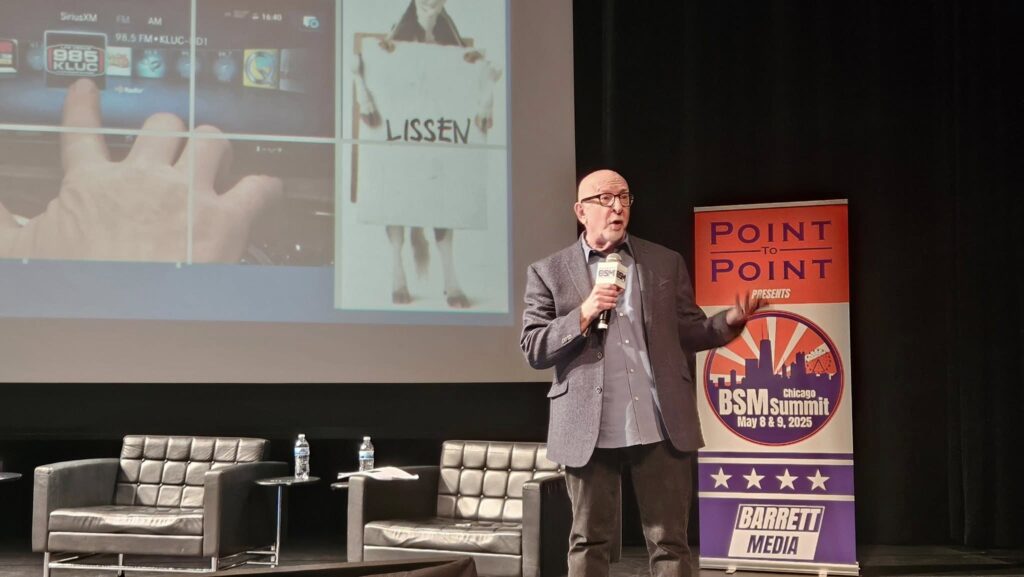
Yay Sportsball! Last week, I got to be a fish out of water at the Barrett Sports Media Conference. They left the side door open, and the Classic Rock guy slipped in quietly when no one was looking to watch the panelists speak in the foreign language of Sports.
Well, not exactly. Actually, I’m a huge sports fan and a Sports Radio fan, and I really appreciated the opportunity to sit in on two days of panels and presentations talking about best practices for the format.
Always thinking about my column for Barrett Media, I set out to capture any lessons from the convention that I could relate to the world of Classic Rock. It turns out I’m better at stealing ideas than journalism.
I wrote down several great quotes, but didn’t always remember to write down who said what. So, my apologies to anyone whose words of wisdom I reference but fail to credit.
Quote #1: The Sports audience is aging.
This one came from my other boss, Fred Jacobs, as he went through the results of the 2025 Jacobs Media Tech Survey. He pointed out that the core audience for sports radio is getting older, much like it is for Classic Rock.
We know a lot of our listeners are sports fans, but we don’t always look for ideas and best practices we can appropriate from Sports Radio. It’s a good reminder to look beyond music-based competitors when it comes to finding ways to invigorate Classic Rock stations.
Fred Jacobs
Quote #2: You get people to care about things they otherwise wouldn’t care about by storytelling.
This comes from the “Meeting the Moment in Women’s Sports” panel that featured four very dynamic female sports talents. I don’t know who said it, but it reminded me that telling the stories behind the music is still incredibly valuable.
It’s easy to think these songs are older and everyone knows the backstories, but that’s simply not true. Compared to a boring streaming channel, when we tell the stories of Classic Rock artists and songs, it’s a great way to get listeners to care.
Quote #3: There’s nothing that substitutes for being connected to the community.
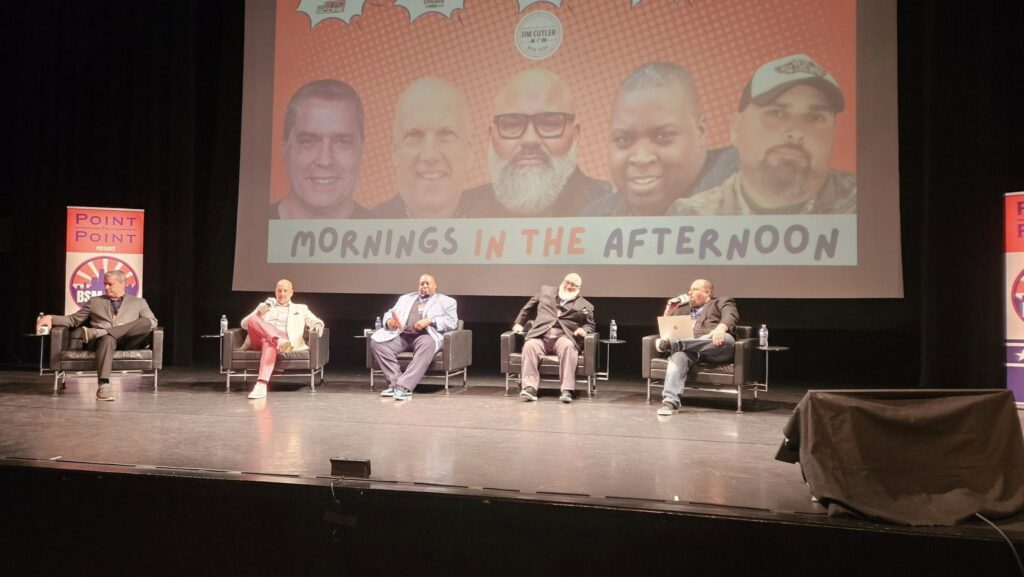
Coming out of the “Mornings in the Afternoon” panel that featured some great Sports Radio morning hosts, this quote is true on two levels. First, it’s important to undertake campaigns to help people in your market. Many Classic Rock stations have solid plans for community service, but if your station doesn’t, or you aren’t getting credit for the effort, it needs to be a priority.
You could also define community as Classic Rock fans, and how you connect to them is an important piece of building and maintaining your audience. Look for ways to bring fans together and help them find others who share the same passion for the music you play.
Mornings in the Afternoons BSM
Quote #4: Are you trying to do an interview or have a conversation? Interviews are memorable.
This one comes from Jason Barrett himself in a presentation about effective interviewing. It’s a great reminder for the hosts at your station. Many of the Classic Rock acts that are still touring have been interviewed by the same hosts many times. It’s to the point where it’s extremely comfortable for both parties, but, as Jason points out, comfortable is not always compelling.
Quote #5: It’s hard to get people out of the house.
This comes from Demetri Ravanos’ presentation on connecting and profiting through live events. It’s also probably the truest statement made at the convention. No one wants to leave their house, and the older your audience is – like Classic Rock listeners, for example- the tougher it gets.
That means thinking about how you connect with listeners in public. It’s time to consider new types of events, new incentives for coming to remote broadcasts, and even new approaches to the on-air promos you run. It’s a tough but rewarding exercise to look at whether the events you are hosting and promoting are interesting enough to get listeners off their couch.
Quote #6: Most revenue success comes from ideation and custom programs.
This quote from the “Hitting Homeruns from the Corner Office” panel hosted by Mike McVay could apply to every radio station. I chose to include it here because Classic Rock Program Directors are more likely than most to be old enough to remember when the PD’s job was primarily saying “no” to salespeople.
Today, one of the best uses of a PD’s time is meeting with clients, learning about their needs and helping develop custom solutions that fit your brand and bring in revenue.
Quote #7: We need to have fun. Fun is #1
Let’s wrap this up by going back to the “Mornings in the Afternoon” panel for one more notable quote. I realize it’s harder to have fun in radio today than it used to be. Shrinking staff, revenue pressures, and annoying consultants – I get it. But radio is still an entertainment medium, and if we aren’t having fun, our listeners aren’t either, and then we are no better than a Spotify stream. You may have corporate constraints, but creativity is always available.
Let’s have some fun. Let’s go Sportsball!
Barrett Media produces daily content on the music, news, and sports media industries. To stay updated, sign up for our newsletters and get the latest information delivered straight to your inbox.
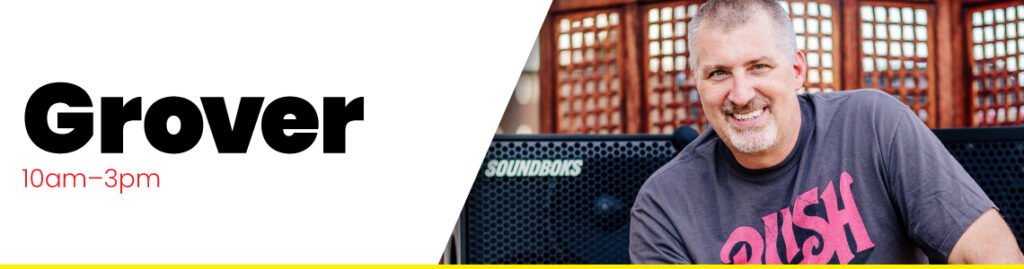
Grover Collins is Program Director for B-105.1 Cincinnati and New Country 103.1 West Palm Beach. Collins arrived in Cincinnati in 1997 and has been the B-105 Program Director since 2009.
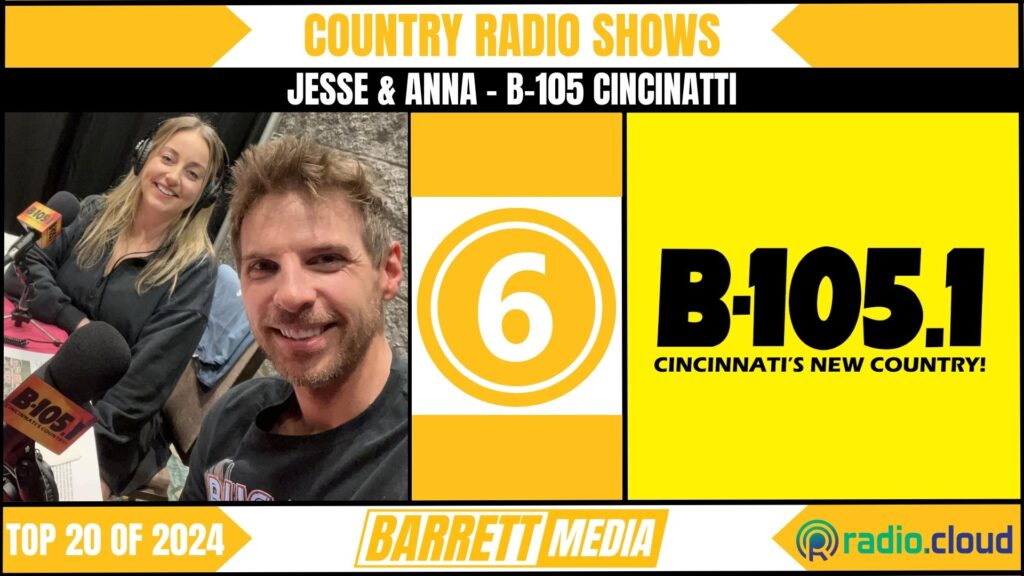
The B-105.1 morning show, “Jesse & Anna,” was peer-voted as one of the best Country Radio Morning Shows in the 2024 Barrett Media Top 20.
So that seemed a natural starting point for our discussion.
“Anna is a very free spirit. She was born with the ability to be an open book and was very vulnerable on the radio. That is a gift I am convinced you have to be born with. I don’t believe you can be taught that, or everybody could do what we do. Everybody could be a stand-up comedian, actor or actress. She is wonderful.”
“Jesse is also very, very good, but he is much more the yang to her ying. He is very specific. He is very detail-oriented, and he has a very specific vision. Think about him like a director of a movie. He sees it in his mind, or this case, hears it in his mind. How he wants something to sound, or how to have a bit go.”
“He loves technology, he loves the advancements of toys. Things that he can use for production value. Everything about the advancement of technology, he is all about. He teaches himself. Quite honestly, he could be an engineer. He could also be a production director. He loves imaging, and he loves producing imaging for his show.”
Vulnerability seems to be something that every successful on-air talent discusses and considers an essential element for success.
“Because of the changes of the landscape over the years, with the ability to listen to Morgan Wallen on more ways than I can count on your phone. You have to offer something more than this is, that was that, and this is this, and blah, blah, blah.”
“What is the connection? What is something that is going to endear you to the listener that is going to make them consciously think, I have to listen to ‘Jesse & Anna’ again tomorrow to see what happened?”
Outside, morning drive, how do you carry that through the rest of the day?
“We have conversations about how you are going to relate to the listener today? What are you going to talk about that we can all relate to? It’s the same thing as stand-up comedy. Nate Bargatze is a master at it.
“He talks about his wife. I’m laughing because I see my wife in his stories. So it is relatability, authenticity, and the ability to be vulnerable about that story. That is telling stories that will put you in a poor light on many occasions because that’s going to be real. It is going to endear you to the listener more. Even though they might not be able to verbalize it themselves, they are going to have a deeper connection with our on-air talent because they talked about something that they didn’t know. And it’s not necessarily a pretty story. But it’s also a relatable story.”
I asked if Collins had seen any early trends developing around Nielsen’s 3-minute qualifier.
“Some formats are seeing more of a lift. We have seen a modest lift. It hasn’t changed the landscape completely, but if you’re a Classic Rocker, more than not, those listeners are there for the day anyway because that’s their jam. That’s what they want to hear. They want to hear Barracuda for the millionth time.”
“I guess the only thing we have tried to do is get back into music a few minutes before the top or bottom of the hour. I don’t have any evidence to prove that that is going to make a difference or not. I think it’s a theory at this point. I don’t think we have enough data to put a flag on it.”
A lot of new music is constantly coming out of Nashville. How does Collins handle all of it?
“I am definitely on the slower side at UBE. I am fortunate to be in a position where I can be. I also have the research that backs up that. My listeners are a little older on average. They’re not aggressive new music consumers overall.”
”I can’t say this verbatim, but my gut tells me they’re happy with it. When B-105 plays it, that’s when I need to pay more attention to it. I can never compete with the streamers. They immediately have everything instantly.”
“And they are younger. 20% of all streamers drive all the trends. So, it’s the classic 80-20 rule. I might even back that down to 15%. I know it’s not a word, but I use the word newish. I’m going to play newer stuff, but I can’t oversaturate my playlist with new music where it becomes so unfamiliar that it becomes a turnoff to the people that still want to hear Luke Bryan from 15 years ago.”
With that thought in mind, how important is ‘90s Country?
“I play a smattering of ‘90s, the real big bangers. I have an era category that is ‘90s, and it goes up to probably ’04. Anything that’s over 20 years old is in that category. I don’t even think a listener could tell me, is Kenny Chesney, ‘I Go Back’ from the ’90s or the 2000s. Because it is from the 2000s, but it feels like it could almost be a ’90s song.”
“Remember back in the day when ‘Heart of Glass’ by Blondie was technically a ’70s song, but everybody thinks it’s an ’80s song? Everything gets a little foggy, and they just know they like it. So, it’s not a lot. Now, I do a jukebox lunch where it’s not a full hour of ’90s, but I play more ’90s just as a little flavor for the hour.”
“It can be really polarizing. I’ve got to be careful. There are some younger listeners who don’t really have a connection with the ‘90s. Some do. Don’t get me wrong, my daughter loves ’80s pop music, and she’s 26. But they still want to hear Morgan Wallen.”
So, when Morgan Wallen drops a new album with 30 or more songs, how does B-105.1 handle it?
“We played some of the new music from the new album that aren’t the singles every hour on the morning show. We’re playing the song’s verse or hook and not every song in its entirety. There are just too many. But we went through and highlighted ones we liked or thought would be unique.”
“We did the whole Post Malone album back to back. We looked at Post through a different filter. This is a guy who is extremely well-known and extremely popular in a completely different genre who has come into the Country world authentically. There’s that word again, and kicked it through the goalposts.”
Collins recently added New Country 103.1 West Palm Beach to his programming duties. How does he approach two markets that are not remotely geographically close?
“I’m about a month, maybe five weeks in on West Palm. When I was first given the reins to program IRK, I had to immerse myself in everything West Palm. I’ve never programmed a station that was on a coast before. I’ve always been inland.”
“I’m learning about the differences. This is why you have to do research. You can’t just have a rubber stamp for research in any market. It is very different in West Palm. A lot of transplants from New England, New York, Newark, New Jersey. They have different flavors of what they like, and that’s probably 40% of IRK’s audience.”
Collins credits his West Palm APD with helping him get up to speed.
“I have Nick Rivers, my APD/MD there. I believe he is in his fourth year. He is invaluable to me. He is helping me learn as much as I can, as fast as I can, about the market. So I can speak with a level of not expertise by any stretch, but a level of awareness of the market.”
“I’ve been in Cincinnati since 97. I know the market like the back of my hand. But it’s fun. It’s a challenge. It’s making me use parts of my brain I haven’t used in a long time in radio, quite honestly.”
In closing…
“Keep your head down. Bust your ass. Work hard. Hold yourself accountable. Always learn. Always try to improve. Be positive.”
“I’m at the age now where I’m teaching. I’m mentoring. I’m the old guy in radio now. I remember people taking me under their wing and making me feel good about my talent, pumping me up, and getting me excited about radio.”
Barrett Media produces daily content on the music, news, and sports media industries. To stay updated, sign up for our newsletters and get the latest information delivered straight to your inbox.
Although the Morning Juice franchise has retained its name despite recently becoming an offering exclusive to digital platforms, there is a noticeable difference with its previous iteration on the terrestrial airwaves. Bobby Carpenter, the former Ohio State University linebacker who played seven years in the National Football League, was slated to remain in the daypart concurrent with other recent lineup alterations at 97.1 The Fan as the station works to augment its presence beyond the FM dial. The move, however, separated Carpenter from his longtime co-host Brandon Beam, a duo that attained strong ratings and success amid its run for parts of five years.
Carpenter himself does not seem to know exactly what the end goal of this endeavor is going to be despite conversations with management. Determining what is considered success, he explained, is somewhat unclear, contextualizing such by outlining how the terrestrial morning show utilized a visual livestream of the show on YouTube. Even so, Carpenter did not have conversations comparing the impact of the streaming platform, nor did he notice an reduced emphasis on the traditional ratings measurements. Nonetheless, the show is now available primarily on YouTube with new co-host Jeff Thitoff, along with the HD3 channel and replayed in middays on the 10TV+ application.
“Moving to the digital side probably would have been a little less jarring had it been with Brandon and then him continuing to stay with it,” Carpenter said. “There’s a lot of growth going on in the digital space, and looking at broadcast television, terrestrial radio, there’s maybe shrinking markets as people consume. I understand that, but we were doing a great job, I think, on YouTube with the simulcast of basically what were doing before, and people have said, ‘This is kind of the future,’ so I really didn’t have a choice in the matter”
While Carpenter acknowledges that he could have left the station entirely, he decided to stay put because of his avidity for the craft and content towards his occupation. In fact, he had been talking about the future with those at the station in contract negotiations and was told about some television elements and potentially working in a sideline role with LEARFIELD. Carpenter explained that this part was “constantly omitted” and that the one thing he sought to continue doing was hosting morning drive with Beam.
“The day that I’m not having fun there anymore and enjoying doing my job and who I’m doing it with will be the day that I walk out of there,” Carpenter articulated. “That’s been the case ever since, and that’s a fine line that’s being walked.”
Navigating Through Unexpected Changes
As a weekday radio host, Carpenter tries to keep his audience both informed and entertained. Even though he knows it is important to have fun on the air, he also seeks to convey information in a comprehensible manner. On top of that, he is also discerning in his analysis and wants listeners to come away from the program having gained knowledge and feeling as if they had a good time.
“Over five years, you talk to somebody for three hours consecutively every single day, you learn about their families, what their likes [and] their dislikes [are], their personality, their cadences, and Beam’s a real easy guy to get along with in this job,” Carpenter said. “And so it was one of the true joys that I had was getting a chance to walk in there every day with a guy who I really respected and a guy who I really liked to be able to do that job.”
With robust experience as an athlete in the Columbus marketplace, Carpenter recognizes how those in the locale regard Ohio State as a professional sport rather than relegating it to a level subservient to other teams. The Buckeyes recently won the College Football Playoff National Championship with a victory over Notre Dame, and Carpenter is thankful that he was not aware of the digital plan until after the fact. That being said, he flew around the country on his own dime to cover and follow the team, leveraging access to personnel and relationships in the business.
“I played with a lot of the coaches, I’m friends with a lot of the players now, and just being able to bring that insight, bringing on some of the guests that I know,” Carpenter said. “I don’t know if it will be possible to bring them in studio now just with the current setup and the space, so I don’t know if that’s going to happen quite in the same way, but we’re going to have a lot of our same, great guests, and it’s going to have a very similar feel.”
While Carpenter was previously working with a younger co-host in Beam, he is now paired with someone older in Thitoff. Both of their sons play on the same sports teams, something that helps foster a common knowledge, and they have also paired together in previous instances when Beam was out. Yet there are significant differences between their life experiences, challenging Carpenter to adjust to the new dynamic, but he feels that they are getting along well as the duo commences this new chapter.
“I didn’t really want to create a new identity with it at all,” Carpenter said of the show. “We had built a strong brand, following and connection, and despite massive technical issues the first couple days, our streaming numbers and YouTube numbers have been very strong, as strong or stronger than they were before, so I didn’t really want it. There was no rebranding that I ever wanted to do. We had built this, and there’s a following, I think, with it, and hopefully that following will continue.”
Bumpy Beginnings With First Impression
The audio for the first edition of the program, which officially aired last Monday, did not start playing until several minutes into the show. Part of the rationale for these errors, Carpenter surmised, came from the show being launched with haste and realizes that the enterprise only had one chance to make its first impression. Additionally, he stated how there was “not really any” testing before the show debuted outside of one test episode where things ran smoothly outside of camera placement.
“We didn’t have the correct sound equipment and stuff that we had asked for, and frankly, the engineers, who have been great, they’ve been busting their butt at it, but some of the management people that made these decisions were not there,” Carpenter said. “And so coming on this right off of the conference, no one was there to kind of execute and to get it done.”
Matt Fishman, the program director and operations manager of 97.1 The Fan, previously worked at ESPN Cleveland and helped build The Land on Demand, a subscription website with exclusive sports content for the audience. Fishman is approaching two years in his current job, and Carpenter feels that he has an understanding of what he is about and is curious to see how this strategy plays out. The station is currently counterprogramming its terrestrial offering in the morning drive timeslot hosted by Jonathan “T-Bone” Smith and Tyvis Powell.
“It’s an interesting concept they’re trying to do, and I guess some of the YouTube stuff, there’s things that are kind of evergreen in there that they kind of live forever, and so you’ll be able to kind of consume that à la carte when you’re able to,” Carpenter said. “There’s a lot of different mechanisms to be able to consume this. They’ll be able to handle the terrestrial radio, and after that on the digital side, maybe you’re capturing more than you were before, maybe you’re cannibalizing some of it.”
Despite 97.1 The Fan presenting both content offerings, Carpenter tries to keep his circle tight and simply arrives to do his job and walks out. One of the messages he heard about the lineup changes, which also dropped Bishop & Friends by an hour to begin airing at 9 a.m. EST, was to discover “congruency between morning drive and afternoon drive.”
The station is owned by TEGNA, a media conglomerate with an array of audio and visual brands in different marketplaces as there is growing association between the methods of dissemination in recent years. Carpenter explained that he was told his television experience was the main thing said to him regarding why he was selected to move on the digital platform.
“TV is more obviously sound bites and stuff that’s snipped, and then you’ve kind of got the podcasting, which lays in the middle now kind of between both in the videocasting that goes on,” Carpenter said. “When you play in big markets with big teams, it forces you to be in front of the camera a lot, and something my dad always told me is that, ‘Every time you go out there, you’re representing yourself and our family and your team as well,’ and so it’s always an opportunity then to kind of polish your skills as a speaker.”
Carpenter realizes how people would point out the ratings success associated with the previous version of Morning Juice, stating that the station secured top finishes among key demographics. In being a digital presentation going forward, he is trying to show what the level of support is going to be and how everything is going to work. Aside from the digital offering, Carpenter is also the host of a podcast with Anthony Schlegel where they discuss the Buckeyes, a project that exists outside of the purview of 97.1 The Fan. As he moves forward, he is not sure whether he would end up forsaking the outlet to work on this venture full time.
“I guess that’s kind of up to the station of how much they want me around and what they want me doing,” Carpenter said. “I’ve always done a lot of different things, and so when you do a lot of different things, you have a lot of options, and it allows you to kind of devote your energy to what you’re enjoying, and so that’s up to them.”
While Carpenter is encouraged by the infatuation the public has with sports, specifically football, he has genuine concerns about the shifting within the market and trusting those making decisions that they are doing so in the right manner. Whereas he previously told Beam that he hoped they would be doing so well to where they can evaluate if they want to keep doing the show in the future, perhaps 10 or 15 years down the road, the equation has somewhat shifted.
“Maybe those analyses are coming more frequent and maybe a little sooner – just to always do an inventory of what I am doing in my life,” Carpenter notes. “I always try to balance a little bit as far as how you spend your time because that’s the most precious commodity that you have.”
In addition to his media ventures, Carpenter is going to continue working in several other occupations, including the HVAC and plumbing company he co-founded and teaching finance at his alma mater. As he has navigated the industry as a media member with ambitions spanning beyond the business, he is a versatile professional with a diverse portfolio and range of interests towards which he has pursued.
Carpenter remembers listening to the radio growing up in central Ohio, and some of the hosts have left an indelible impact on him. Being afforded the platform on the other side of the microphone has been rewarding, but he is always trying to push the boundaries and see what else is in the greater domain.
“The reality is, like, ‘Do I need to do this?,’” Carpenter reflected. “Maybe not, but I’ve always really liked it, and it’s been a fun platform to have to promote positivity and to be able to bring awareness to things, and hopefully, I enjoy impacting people in a positive way. If that can still be the case, then hopefully that’ll continue.”
Barrett Media produces daily content on the music, news, and sports media industries. To stay updated, sign up for our newsletters and get the latest information delivered straight to your inbox.
What are you doing, anyway? Are you doing a radio show or a podcast? Or is it a streaming video show? Or maybe a social media account?
This comes to mind as practically every podcast is now a video production on YouTube, too. That’s not new, but it’s gotten to the point that if you don’t have cameras in the studio for your podcast or radio show, you might as well shut it all down. It’s a case of going where the audience is expecting you. Nothing wrong with that. Necessary, in fact.
But…
One of the charms of podcasting was how anyone could start a podcast for practically nothing. Got a laptop and a couple of USB mics? That’s all you needed, and it spawned countless “two comedians talking about random stuff with a guest” podcasts, and it had that “hey, kids, let’s put on a show” feel to it. Video was a separate thing, with the exception of a few crossovers. The visual aspect was too much trouble to do right.
Radio, however, never learned that lesson; to this day, radio shows stick cameras in their studios and stream the excitement of hosts in bulky headphones talking into mics for a few hours. This creates content that — let’s face it — nobody wants to see unless they’re truly bored. Or you can do things that require visual elements and thus blow off the audio-only audience you have. It’s not enough to have static shots of a studio. The video version should be a show, not surveillance footage.
Or maybe not, because most of the video podcasts are pretty much the same thing. It got worse with Zoom, and I could explain why, but you’ve all experienced the split-screen, low-res, latency-riddled Zoom video, not just on podcasts but in interminable work “meetings.” It might work for now, but it’s really annoying for your audience. If you’re going to do video, you should be doing it right.
What’s “right”? Simple: Give the audience something to look at. A plain studio isn’t enough. It’s never been easier (or cheaper) to do things that make a show look like a show, from chyrons to green screens. You can do broadcast-quality graphics, or something approaching that level, on your laptop. You can insert video clips (brush up on those copyright laws) and do things that have to be seen to be understood. In short, you can do a TV show.
Wait, didn’t I say you can’t do that without abandoning your audio listeners? Yeah, and that’s an important reminder: Video isn’t radio with pictures. Video is another medium. Radio and podcasting are separate media as well. You can’t get away with doing a half-assed job on any of them. A lousy video version does nothing for your radio show or podcast.
Broadcasting history is riddled with the bones of radio shows that thought just running cameras in the studio with no compelling visual material would be enough. Podcasts are consumed in an entirely different way in audio form than they are in video form, and the material needs to take that into account. You should be on every platform, but you have to approach them as individual entities. Doing what most shows do – static shots of the hosts and mics, or grainy split-screen Zoom calls – isn’t good video. Everything you produce should be tailored to the medium, not an afterthought.
That, of course, costs more and takes up more time, and if that’s a problem, pick one platform and stick to it. Don’t do things because you “have to.” Do them right.
Barrett Media produces daily content on the music, news, and sports media industries. To stay updated, sign up for our newsletters and get the latest information delivered straight to your inbox.
Larry O’Connor is a busy man. He hosts O’Connor & Company in morning drive on 105.9 WMAL in Washington D.C. He also has a podcast with Salem Podcast Network, which airs on Salem News Channel, and is a regular on primetime shows on Newsmax.
And while many of those are in the similar vein, there are distinct differences between a podcast, radio, and television interview.
So, I decided to check in on O’Connor & Company on WMAL to see how someone who has to be skillful at all three mediums conducts an interview.
On Friday, Larry O’Connor welcomed Morgan Ortagus — Deputy Special Presidential Envoy to the Middle East — to his morning show. As you may have heard, things aren’t exactly stable in the Middle East, so having someone like Ortagus on the show is a great get by the WMAL host. Additionally, President Donald Trump
The first question from O’Connor to Ortagus was…wordy.
“Listen, for those who don’t remember, you worked in the State Department when the Abraham Accords had been crafted,” O’Connor began. “And that was a huge triumph for the first administration. A lot of people are watching this trip and seeing all of the great imagery, great projection of American power and diplomatic skills with these Arab nations — a place that we need to have a great relationship — and we need to be able to forge these relations, especially after the neglect from the prior administration.
“There is concern, though, about our greatest ally there. I know you care deeply about the state of Israel, and potentially messages being sent by the president with regard to deals with Syria, deals with Iran. These are countries that, historically, I don’t think you can really make a deal with them. How could we possibly? So what’s happening there?”
To me, this is a textbook example of one of the deadly sins of interviewing. Larry O’Connor is a smart dude. He knows his stuff. But that can be a detriment during an interview. Because he doesn’t have to show the guest — or his audience — how much he knows. They agreed to come on the show — or listen to the show, from the audience’s perspective — because they know that you know your stuff.
The whole point of the question is to get an answer from the subject. To share information with your listeners. O’Connor already has credibility with the guest and the audience. So, instead of taking almost a minute to showcase his knowledge on the topic, I think O’Connor would have likely been significantly better served by a much more succinct question.
Compounding the problem is that long questions often lead to long answers. Which isn’t exactly great radio. Ortagus spoke for more than three minutes following O’Connor’s long question, and it wasn’t all that illuminating of an answer.
The next question from the interview came from co-host Patrice Onwuka. She asked the Deputy Special Presidential Envoy to the Middle East a question about where peace talks between Ukraine and Russia stand. It’s an important question, and one that’s likely of high importance to WMAL listeners. But read that sentence again: the envoy to the Middle East was asked about a European war. That feels like a self-explanatory criticism.
O’Connor’s second question of the conversation regarded the status of the conflict in Gaza between Hamas and Israel. He asked if President Trump could foresee a peaceful resolution that involved Hamas continuing to function. It’s a good question, because — like what we’ve seen in Ukraine — this conflict could continue for quite a while if the goal isn’t “completely eliminate the enemy.” This was a much better-framed and much more succinct question by the WMAL host.
It led to a firm answer — the best answer that Ortagus gave, frankly — because of the direct nature of the question. I actually am really impressed by the framing of the question by the O’Connor & Company host because it is an open-ended question, but it almost boxes the respondent into a close-ended, yes or no, answer.
In my time doing these interview dissections, I don’t know that I’ve come across such an effectively worded question. He nailed down the interview subject to give a direct, no-nonsense answer that required her to actually answer the question. That’s the goal, right?
Those were the only questions asked during the just-under-seven-minute interview. Obviously, Ortagus is busy. That, coupled with being up against a commercial break, led to a short conversation, which was largely hampered by the first question from Larry O’Connor, which led to the long answer.
Overall, I think it’s clear O’Connor came in with a mission and a prioritization of what questions he wanted to get across. There really wasn’t an opportunity to deviate from the plan, due to Ortagus giving largely expected answers — “President Trump? Greatest to ever do it. Joe Biden? Idiot.” — which didn’t warrant vacating the script.
Like every interview, it wasn’t perfect. But the last question was especially effective and impressive.
Barrett Media produces daily content on the music, news, and sports media industries. To stay updated, sign up for our newsletters and get the latest information delivered straight to your inbox.
T-Bob Hebert will be stepping away from his role as co-host of The After Hour with Jim Rome. According to a source with knowledge of the situation, Barrett Media has learned Hebert will be stepping down from the program featuring the longtime radio host, which airs on Rome’s FAST channel and is available on platforms including Amazon Freevee, DirecTV, LG Channels, Plex, Samsung TV Plus, Sling Freestream, and VIZIO WatchFree+.
Significantly, the news of his departure comes just days after Hebert’s announcement that he has taken a position with Barstool Sports and is leaving his morning show duties with 104.5 ESPN in Baton Rouge.
As a result of Hebert’s departure, Rome will now be tasked with finding another co-host for the role. Hebert had replaced Will Blackmon in March, who had been the original co-host of The After Hour since its debut in September 2024.
Furthermore, Hebert—son of former NFL quarterback Bobby Hebert—announced on Wednesday that he would be stepping away from hosting Off The Bench on weekday mornings for 104.5 ESPN Baton Rouge. He joined the station in 2017 to co-host the program with Jordy Culotta initially, but since 2021 he has been working alongside Jacob Hester.
When addressing the listening audience on Wednesday, Hebert shared an emotional message of gratitude for those who have supported him throughout his career.
“I do not take any of this lightly, and I’m very grateful to all of you,” noted Hebert. “I’m also very grateful to Dave (Portnoy) and Dan (Katz) for bringing me in and giving me this opportunity. I’m going to try to make the most out of it, but I’m going to miss this place terribly.”
In addition to his radio work, the former LSU Tigers offensive lineman has also co-hosted a popular YouTube show, Snaps, alongside former Georgia Bulldogs quarterback and ESPN analyst Aaron Murray.
At this time, Hebert has not revealed what his exact role with Barstool Sports will be, nor has he announced when he is scheduled to begin working for the digital sports company.
Barrett Media produces daily content on the music, news, and sports media industries. To stay updated, sign up for our newsletters and get the latest information delivered straight to your inbox.
iHeartMedia’s 105.3 WDAS, Power 99 and Rumba 106.1 Philadelphia have announced the date for their eighth annual “Sista Strut” walk, which benefits Breast Cancer Research through the American Association for Cancer Research.
The date is June 21 at the Wells Fargo Center parking lot, beginning at 8 am.
Derrick Corbett, Senior Vice President of Programming for iHeartMedia Philadelphia, said, “Sista Strut is more than a walk—it’s a movement of strength, sisterhood, and survival. We’re honored to stand with the women and families impacted by breast cancer, especially in communities of color where awareness and early detection are critical. This year marks our eighth year of walking with purpose, power and pride.”
Personalities from the three participating stations, including Frankie Darcell, Patty Jackson, Mimi Brown, Loraine Ballard Morrill, Roxy Romeo, Cappuchino, and Johanny, will gather onsite to launch the walk. They will also serve to educate participants on the critical importance of breast cancer awareness within the community.
Barrett Media produces daily content on the music, news, and sports media industries. To stay updated, sign up for our newsletters and get the latest information delivered straight to your inbox.