July 22 marks one year since Ozzy Osbourne’s passing. Full Metal Jackie and Radio Resources are responding with a free, two-hour syndicated tribute special available to rock stations nationwide.
What We Know: The special, titled “The Legacy Lives On,” airs the weekend of July 24-26. It features Black Sabbath classics, Ozzy solo favorites, cover versions, and archival interviews with Rob Halford, Scott Ian, and Zakk Wylde. Full Metal Jackie provides exclusive commentary throughout. Radio Resources distributes the program at no cost, with zero production lift required from participating stations.
What’s at Stake: Rock radio rarely gets ready-made, high-quality tribute content tied to a culturally significant moment. Ozzy Osbourne remains one of the most recognizable names in the history of heavy metal. Stations that pass on this miss a meaningful connection point with their core audience. Furthermore, the one-year anniversary of his death gives this moment real emotional resonance for rock fans everywhere.
What Remains Unclear: The release does not confirm how many stations have already committed to airing the special. It also leaves open whether Radio Resources plans any additional Ozzy-related programming around the July 22 anniversary date. No on-demand or streaming availability is mentioned.
What It Means: For rock stations, this is a low-effort, high-impact programming opportunity. Full Metal Jackie carries decades of credibility in the heavy music space, and that authenticity matters. Tribute content tied to a specific anniversary drives listener tune-in. Ultimately, this special gives rock radio a timely reason to rally its audience around a shared moment of remembrance.
Barrett Media produces daily content on the music, news, and sports media industries. Sign up for our newsletters to stay updated and get the latest information right in your inbox.
Mike Missanelli no longer faces criminal charges in Montgomery County. Prosecutors withdrew the assault case after reviewing additional information.
What We Know: The longtime Philadelphia sports radio personality had faced simple assault and harassment charges following his April arrest. Prosecutors declined to move forward with the case during a preliminary hearing last month. Then, on Wednesday, the Montgomery County District Attorney’s Office confirmed it had formally withdrawn the charges after conducting additional review. Police had alleged Missanelli slapped his fiancée during an argument at the couple’s Lower Merion home. According to the affidavit of probable cause, officers responded to a 911 hangup call shortly after midnight and documented injuries they believed were consistent with the allegation.
What They Said: “After reviewing additional information, the office made the determination that it would withdraw the charges. In every case, we are always continuing to investigate after charges are filed.” -Montgomery County DA Kevin Steele
What Remains Unclear: Prosecutors haven’t disclosed what additional information prompted the decision to withdraw the charges. It’s also unclear whether investigators uncovered new evidence or if witness cooperation changed after the initial filing. The decision ends the criminal case but doesn’t resolve other legal matters involving Missanelli. He remains involved in separate litigation against JAKIB Media and owner Joe Krause over alleged unpaid compensation.
What It Means: The withdrawal removes a significant legal cloud over one of Philadelphia sports radio’s most recognizable personalities. However, Missanelli’s career has included multiple high-profile controversies, including previous departures from 94 WIP and 97.5 The Fanatic. While the criminal case has concluded without prosecution, questions about his future media opportunities remain.
Barrett Media produces daily content on the music, news, and sports media industries. Sign up for our newsletters to stay updated and get the latest information right in your inbox.
Eric Cain is headed to afternoon drive on 99.1 The Sports Animal. He’ll join Tyler Ivens beginning Monday, July 13.
What We Know: 99.1 The Sports Animal has named Eric Cain as its new afternoon drive co-host alongside Tyler Ivens. The duo will anchor Tyler & Cainer weekdays from 3-7 PM, replacing the previous pairing of Ivens and Will West. West departed the station last month after accepting the role of Digital Sales Manager for Cumulus Knoxville. Cain arrives with strong familiarity among Tennessee sports fans. He has built a following through his coverage of Volunteers athletics and now moves into one of Knoxville’s most prominent sports radio timeslots. As a result, the station is pairing an established on-air host with a personality already well-known to the local audience.
What’s At Stake: Afternoon drive remains one of radio’s most valuable dayparts, especially for sports stations serving passionate college fan bases. Consequently, the success of Tyler & Cainer could strengthen 99.1 The Sports Animal’s position during the afternoon commute while reinforcing its connection with Tennessee fans. Replacing a longtime co-host also creates expectations. Although listeners already know Cain, chemistry with Ivens will ultimately determine how quickly the new show establishes its identity.
What Remains Unclear: It’s not yet known whether the new program will feature significant format changes beyond the updated hosting lineup. Likewise, the station hasn’t detailed whether recurring segments introduced during the Ivens and West era will continue under the new show. Audience reaction also bears watching during the first several weeks. Ratings and listener engagement will provide a clearer picture of how the transition resonates.
What It Means: The move signals the station’s confidence in promoting familiar local talent instead of looking outside the market. Meanwhile, Cain’s promotion gives 99.1 The Sports Animal continuity following West’s departure while creating an opportunity to refresh one of its signature programs without dramatically changing its afternoon schedule.
Barrett Media produces daily content on the music, news, and sports media industries. Sign up for our newsletters to stay updated and get the latest information right in your inbox.
ESPN is preparing for a key leadership transition. John Lasker will retire after 27 years with the company.
What We Know: John Lasker, ESPN’s Senior Vice President of Direct-to-Consumer, plans to retire at the end of September after helping shape the company’s streaming strategy for nearly three decades. His decision was voluntary, and he’ll remain with ESPN through the end of the month. Afterward, Vice President of Sports Products & Strategy Brian Marshall will oversee the direct-to-consumer team on an interim basis. Throughout his tenure, Lasker helped guide the evolution of ESPN’s digital platforms from ESPN Broadband in 2001 through ESPN360, ESPN3, WatchESPN, ESPN+, and the recently launched flagship direct-to-consumer service.
What They Said: “Throughout his career, John has been at the forefront of nearly every major iteration and evolution of our streaming business, shaping how fans access and experience ESPN content in the digital age. His vision, strategic thinking and willingness to embrace innovation and risk-taking have helped ESPN meet sports fans wherever they are, and however they choose to watch.” -ESPN Executive Vice President of Programming and Acquisitions Rosalyn Durant
What Remains Unclear: ESPN hasn’t announced a permanent successor for Lasker’s role. It’s also unknown whether Marshall will become a candidate for the position or if the company will conduct a broader search. Additionally, ESPN hasn’t outlined whether the retirement will alter its direct-to-consumer roadmap.
What It Means: Lasker leaves behind one of the most influential digital legacies in ESPN history. His work helped transform the company’s streaming business across multiple generations of products before culminating in its direct-to-consumer launch. Meanwhile, Lasker has also been open about his health journey, including his diagnosis of Factor V Leiden, a genetic blood-clotting disorder, and previous issues involving blood clots. His departure marks the end of a significant chapter as ESPN continues expanding its streaming future.
Barrett Media produces daily content on the music, news, and sports media industries. Sign up for our newsletters to stay updated and get the latest information right in your inbox.
Devan Kaney is headed to FOX 32 in Chicago. The former Philadelphia Eagles sideline reporter will cover the Bears for the station.
What We Know: Kaney announced her move Tuesday, marking her latest career stop after departing Philadelphia earlier this year. She spent three years with Audacy-owned WIP, joining the station in 2022 before moving into the Eagles sideline reporter role in 2024. She also worked as a sports anchor at Fox 29 in Philadelphia beginning in 2023. However, Audacy eliminated her position during a round of layoffs in April. Now she’ll shift her focus to Bears coverage for FOX 32 as Chicago prepares for the 2026 NFL season. Kaney also plans to continue hosting her Phillies-focused podcast, “Werth Talking About.”
What’s At Stake: FOX 32 gains a reporter with extensive NFL experience at a time when interest in the Bears continues to climb. Chicago enters the season with heightened expectations after an 11-6 campaign and a trip to the Divisional Round. As a result, the station adds another recognizable sports personality to help cover one of the NFL’s most scrutinized franchises.
What Remains Unclear: FOX 32 hasn’t outlined the full scope of Kaney’s responsibilities or how her reporting will fit into the station’s existing sports coverage. Additionally, no details have emerged about whether she’ll contribute beyond Bears reporting or appear in other programming.
What It Means: Kaney quickly found a prominent television opportunity after an unexpected exit from Philadelphia. Meanwhile, FOX 32 strengthens its local sports coverage ahead of another season expected to generate significant fan and advertiser interest. Her move also underscores how experienced sports broadcasters continue to find new opportunities despite ongoing workforce reductions across the media industry.
The FOX Chicago sports team introduced its newest member on Wednesday. Welcome to the team, @Devan_Kaney! We welcome her to Chicago as FOX Chicago's new Bears beat reporter, as she shares her background. pic.twitter.com/Tp9BRgZRY4
Barrett Media produces daily content on the music, news, and sports media industries. Sign up for our newsletters to stay updated and get the latest information right in your inbox.
Last week, we united the media industry at the 2026 Barrett Media Audio Summit in New York City. Executives, talent, programmers, measurement and tech experts, business leaders, advertising professionals and consultants all graced the stage. A total of 21 hours of content was produced. That included 27 sessions, 98 speakers, and 3 awards ceremonies over a three day stretch that focused on issues that matter to news media, sports media, and music radio pros.
All sessions from the show are now available on our YouTube page. That includes all three days of awards ceremonies. Subscribing to the channel is the easiest way to stay notified of anytime we add new content.
We will host a Summit in 2027. Where and When? I’m not sure. Stephanie, Dylan and I are taking a South Florida vacation soon, and will start looking at next year later this Summer or in the early Fall. Suggestions are welcome at Jason@BarrettMedia.com. As I stated in Monday’s column, we have a few options to consider. We can stick with the current three-day model or expand music to two-days and separate it from sports and news. Another possibility is building a 4-day super show. Whichever direction we go, we will make it count.
When you log on to our YouTube channel, search 2026 Barrett Media Audio Summit under our videos followed by the name of each session. To make searching easy, the full listings from all three days are listed below. If you love the business, and enjoy learning how others view it, this is worth making time for. Please check out the content and let me know what stood out. A special thank you to every single partner who played a role in helping us bring this show to life. We greatly appreciate your support.
News Media (Day 1) – 2026 Barrett Media Audio Summit
A Few Good Brands:Chris Berry of iHeartMedia with Ken Charles of 95.5 WSB, Mary Sandberg Boyle of WGN Radio, Ben Mevorach of 1010 WINS, and Drew Anderssen of NewsRadio KRLD 1080
Evolution of Influence:John Sylvester of Fox News Audio, Hank Fuerst of Ramsey Network, Phil Boyce of Salem Radio Network, and Pete Mundo of KCMO Talk Radio 95.7/710 and Cumulus Media
Are You Not Entertained?: Buck Sexton of Premiere Networks, Adam Carolla of PodcastOne and Jimmy Failla of Fox News Radio with Barrett Media’s Jason Barrett
News/Talk’s Front Seat Advantage:Juan Galdamez of Xperi
The Keynote Conversation:Kelli Turner of Audacy with Barrett Media’s Jason Barrett
Playing The Trump Card:Sid Rosenberg of 77WABC, Mark Simone of 710 WOR, and Larry O’Connor of Salem Radio Network with Erick Erickson of Compass Media Networks
Dollars on the Dashboard:Fred Jacobs of Jacobs Media
Managing the Magic:Ann Thomas of WJR, Dave Tepper of KOA Newsradio, Ryan Gorman of WFLA/WIOD, and veteran Talk Radio host Chris Krok with Barrett Media’s Garrett Searight
Getting Serious:Stephen A. Smith of ESPN and SiriusXM
Premiere Networks News Media Awards Ceremony: WorldWide News Network’s Lee Harris, Red Apple Media/77WABC President Chad Lopez, Salem Radio Network’s Mike Gallagher and Phil Boyce, and 710 WOR’s Tom Cuddy and Mark Simone
Sports Media (Day 2) – 2026 Barrett Media Audio Summit
39 Strong: Scott Shapiro of Fox Sports Radio, Justin Craig of ESPN Radio, Armen Williams of Westwood One and Mitch Rosen of 104.3 The Score with Barrett Media’s Jason Barrett
Winning Back The Wallet:Christine Travaglini of Katz Radio, Dan Seeman of Hubbard – Media That Connects in Minneapolis, Natalie Marsh of Lotus Communications Las Vegas, Michael Spacciapolli of Audacy Pittsburgh and Front Porch Media’s Lee Davis
The AI Advantage:Daniel Anstandig of Futuri
Setting The Standard:Craig Carton, Boomer Esiason and Gregg Giannotti of WFAN with and Barrett Media’s Jason Barrett
Transfer Portal of Sports Media:Paul Finebaum of ESPN, Josh Pate of Yahoo Sports/On3/ESPN, and Kevin Clark of Omaha Productions and ESPN
Field of Streams:Kraig Riley of 93.7 The Fan, Rod Lakin of Sports Radio WIP, Matt Moscona of 104.5 ESPN, Paul Mason of 104.5 The Zone, and Barrett Media’s John Mamola
Raising The Stakes:Damon Amendolara of SiriusXM’s Mad Dog Sports Radio with Brandon Tierney, Joon Lee and Jake Asman
Sports Talk’s Front Seat Advantage:Juan Galdamez of Xperi
Sports Without Borders:Mike Foss of ESPN, Ryan Spoon of Yahoo Sports, and Pete Gianesini of Sinclair with The Volume’s Chad Millman
Premiere Networks Sports Media Awards Ceremony: Emmis CEO Jeff Smulyan, Chris Oliviero of Audacy, former WFAN PD Mark Chernoff, SiriusXM’s Eric Spitz, and Paul Finebaum of ESPN
Music Radio (Day 3) – 2026 Barrett Media Audio Summit
The Consultants Conversation:Fred Jacobs of Jacobs Media, Mike McVay of McVay Media, and Buzz Knight of Buzz Knight Productions
The State of Audio Measurement: Nielsen’s Rich Tunkel, Triton Digital’s John Rosso, and Magellan AI’s Cameron Hendrix with NEW 102.7 PD Rob Miller
Act Like a Talent, Think Like An Owner:Murphy, Sam and Jodi of Premiere Networks
Appetite For Disruption:James Kurdziel of Q101 and Cumulus Media, Justin Johnson of 98ROCK, Chris Lloyd of 102.3 WBAB/106.1 BLI and Cox Media Group and Frank Kramer of The Heidi & Frank Show on 95.5 KLOS and Superadio with Barrett Media’s David Hill
Learning From Legends:Jim Kerr of Q104.3, Broadway Bill Lee of WCBS-FM, Scott Shannon of True Oldies Channel with Barrett Media’s Jim Ryan
The Eras of Radio:Sharon Dastur of Dastur Venture with Mark Adams of Z100 and iHeartMedia, Steve Salhany of Mix 104.1 and Audacy, Sean Copeland of B101 and 97.1 HANK-FM and Anna Zap of The Anna & Raven Show distributed by Compass Media Networks and Connoisseur Media
Choosin’ Country:Andie Summers of Beasley Media and 92.5 XTU, Mark “Hawkeye” Louis of New Country 96.3, and Tim Roberts of Audacy and 99.5 WYCD/104.3 WOMC with Country consultant Joel Raab
Straight Outta Hip Hop:Funk Flex of Hot 97, Angela Yee of Premiere Networks, Skip Dillard of Audacy and 94.7 The Block, Devin Steel of Hot 107.9 and Damion “Damizza” Young of SynerG Marketing with special guest host Andre Yancey of 94.7 The Block
The Final 40: iHeartMedia’s Jon Zellner, Audacy’s Jeff Sottolano, Connoisseur Media’s Keith Dakin, and Greg Strassell of Hubbard – Media That Connects with Barrett Media’s Jason Barrett
Premiere Networks Music Radio Awards Ceremony: McVay Media’s Mike McVay, Majic 102.1/97.9 The Box PD Yonni Rude, Radio Hall of Famer Scott Shannon, and 97.9 WRMF’s Kevin Rolston of the KVJ Show
Barrett Media produces daily content on the music, news, and sports media industries.Sign up for our newsletters to stay updated and get the latest information right in your inbox.
As we look back at the holiday weekend, the energy across the country was locked into Seattle Stadium. Let’s start by giving some massive, well-deserved love to the U.S. Men’s National Team. Under Mauricio Pochettino, this squad didn’t just play soccer — they generated an incredible wave of national pride and made program history. They put up the most goals ever scored by a U.S. team in a single World Cup campaign. They fought with pure heart and absolute tenacity, proving that when you have a deeply committed roster, you can inspire a nation.
When star striker Folarin Balogun was handed a highly controversial red card in the previous round, it triggered an automatic suspension that threatened to derail the team’s momentum. That’s when the executive level stepped in. Rather than simply accepting a bad call from the refs, the president picked up the phone and called FIFA President Gianni Infantino directly, fiercely advocating for a review. He used his influence to fight for his player, arguing that the dismissal was fundamentally unfair to the athlete and the game.
Political opinions aside, look at the core action: it was a leader stepping up to aggressively advocate for the U.S. Men’s National Team when the system went sideways. And right now, radio needs that exact same brand of fierce advocacy.
The Power of “Us VS The World”
On the other side of the pitch, Belgium’s coach Rudi Garcia saw this massive display of advocacy and did exactly what an elite tactical manager is supposed to do. He locked the locker room door, looked at his squad, and painted a definitive picture: It is us VS the world.
He took the external media frenzy, spun it on its head, and used it as high-octane motivation to build an unshakeable, hyper-focused bunker mentality. And on Monday night, that exact mindset carried Belgium to a hard-fought victory.
The “Us VS The World” framework is one of the most effective tools in a leader’s arsenal because it instantly filters out the noise. It tells a team to stop stressing over external variables they cannot control and channels every ounce of their collective energy into execution. In short, it transforms an organized group into a unified, defensive wall.
Should radio be taking this exact same approach right now? You bet your life we should!
Tuning Out the Negative Hype
Our medium is in a permanent state of battling outside narratives. We are constantly caught in a crossfire of negative media hype, layoffs, and critics writing our obituaries. If we sit around waiting for the outside world to validate us — or for listening on your device of choice to suddenly become “fair” on its own — we are going to lose the field.
We have to stop listening to the noise. The negative headlines only have power if we let them infect our locker room culture.
So, who is the coach in our industry fighting to overturn the bad calls being made against radio? Who is standing up to the critics and demanding that our medium gets the respect it deserves?
It’s us.
We are the coaches. The Program Directors, the Brand Managers, the Market Executives, and the operational leaders in the trenches every single day — we have to put on the captain’s hat. To overcome the negative narrative, a great coach doesn’t play passive defense or hide behind data. Instead, a great coach steps up, manages the corporate weather, and acts as a relentless advocate for their staff and the power of the medium.
Elite Talent Settles the Score
The U.S. squad didn’t back down for a second during that match. When the lights were brightest, Malik Tillman stepped up and fired an absolute rocket of a free kick past Thibaut Courtois to tie the game, sending 66,000+ fans into an absolute frenzy. It was a moment of pure, individual brilliance that proved why human talent remains our ultimate, irreplaceable competitive advantage.
That is what happens when you pair great coaching with world-class talent. When you cultivate an unshakeable, protected culture, your people don’t get paralyzed by the chaos — they get hungry.
Our personalities and our local connections are radio’s primary engine against every ounce of noise out there. But those creators need leaders who will back them to the hilt. They need coaches who will shield them from the industry noise and give them the green light to take creative risks, be vulnerable, and forge relentless local connections on our platforms.
The Final Whistle
It is officially us VS the world. Haters gonna hate hate hate… (nod to the wedding I didn’t write about).
Let them talk.
Our playbook for the rest of this year is simple: stop overthinking the fallout and start coaching with absolute tenacity. Build an ironclad locker room culture, fight fiercely for your people, and act as the primary advocate for your brand. When you pair the right “Us VS The World” mindset with elite talent, the external nonsense doesn’t stand a chance.
Drop the excuses.
You won’t get it right every time, and that’s OK. Make swift decisions until you reach the right one. We didn’t get here overnight, and it won’t get fixed tomorrow. So just remember that word — tenacity — and cue up “Everybody Wants to Rule the World” for a little extra oomph.
Barrett Media produces daily content on the music, news, and sports media industries. Sign up for our newsletters to stay updated and get the latest information right in your inbox.
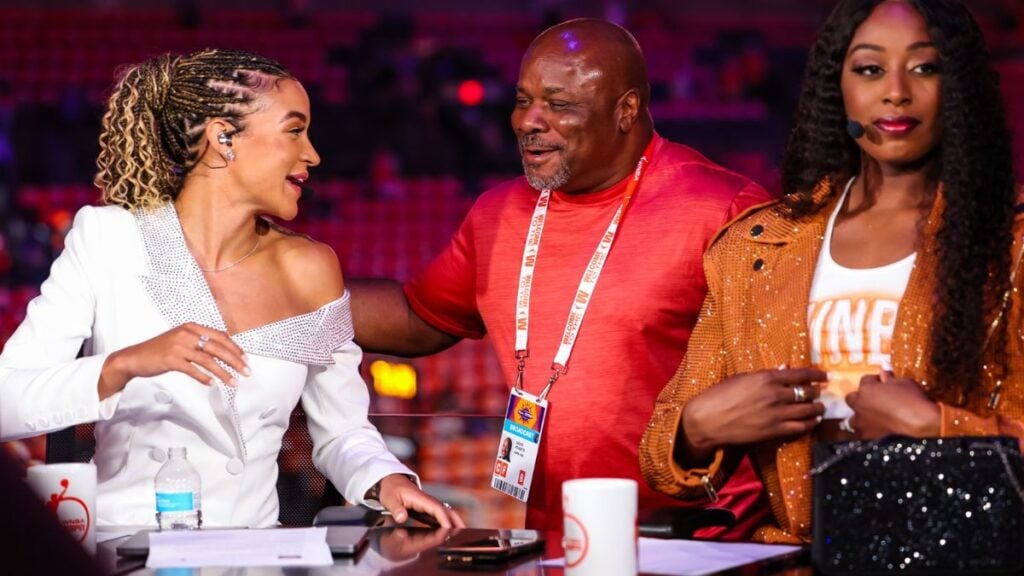
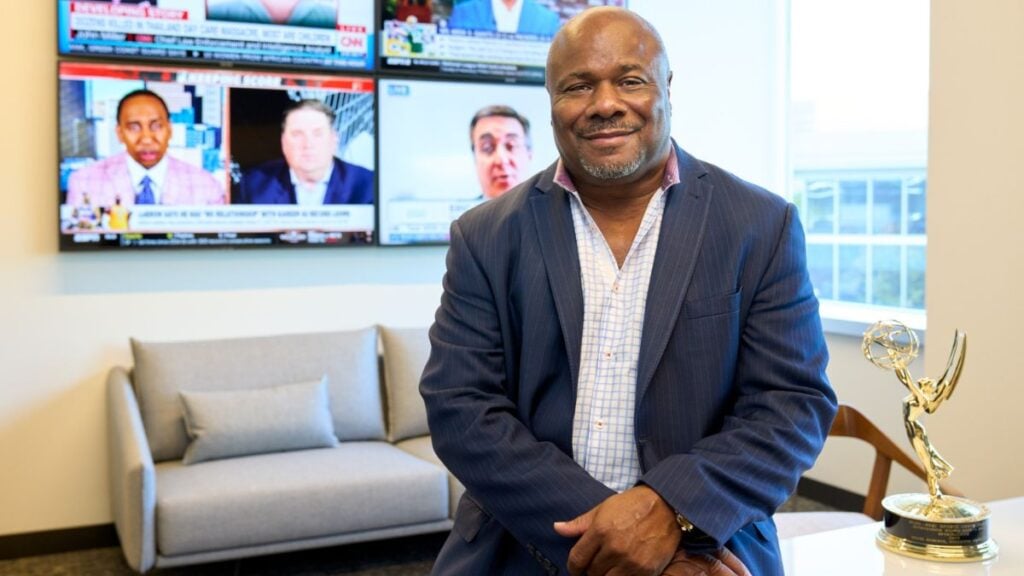
Few executives in sports media share a legacy similar to the one crafted by David Roberts. The ESPN Executive Vice President and Executive Editor of Sports News and Entertainment confirmed in May that he was retiring at the end of August. After nearly 50 years in media, Roberts decided now was the right time to close this chapter of his career and begin a new one.
The decision to walk away is never easy, no matter what level of achievement you earn over a career. However, Roberts believes every position in every line of work has a beginning, middle, and end. With every ending comes an opportunity for a new chapter to begin.
“You just know when you know,” says Roberts on how he made the decision to retire from ESPN. “You’re always planning for the next chapters in your life and career. You can’t work forever… I’m just appreciative that this company allowed me to be who I am.”
The identity Roberts built was one defined by guidance, drive, and mentorship. He has mentored some of ESPN’s biggest names and hired a diverse group that will help guide the network’s future. With a keen eye for identifying talent, Roberts has assembled an impressive mix of personalities across every program he oversees, placing the best people in each role while ensuring opportunities for individuals of all backgrounds.
When news of his upcoming retirement became public, many celebrated Roberts’ accomplishments. They celebrated a career built on staying true to the mission while helping elevate ESPN to a new standard of excellence.
“It was a nice feeling. It made you appreciate the group of people that we work with. But also take stock of what was accomplished and who you accomplished it with,” said Roberts. “Working at ESPN, you’re working with arguably the best people in the industry. Because of that, a great deal of our goals were accomplished through collective effort and teamwork. It’s nice to sit back and reflect on the things we accomplished as a team together.”
A Diversity Mission
Roberts’ career story has many chapters. Before his rise at ESPN, he began his career as a reporter for WGPR-TV in Detroit, the first African American-owned television station in the country. In addition, he became news director at WDTN-TV in Dayton, Ohio in 1987, where he became the first African American news director in the state’s history. He then moved to WBAL-TV in Baltimore in 1991 as news director before joining WXIA-TV in Atlanta in 1996 in the same role. Once again, he became the state’s first African American news director.
Dave Roberts ESPN (Courtesy ESPN Press | Andy Hall)
Roberts joined ESPN in 2004 as a coordinating producer and will leave overseeing one of the largest news operations in sports media. Yet his greatest impact on the industry will likely be his commitment to building a diverse and talented roster, both on camera and behind the scenes.
“The lack of diversity is still a problem in the industry. The fact that I was put into some very important positions and allowed to have the kind of input I had in a lot of the major decisions at ESPN is representative of the kind of positive diversity that is sorely necessary across the industry,” explains Roberts.
Even after a nearly 50-year career in media, Roberts remains optimistic the industry will continue moving toward a level playing field. Most importantly, he believes diversity is good for business. Moreover, that successful organizations thrive through representation, varied perspectives, and a deep understanding of their audience.
Roberts credits the executive leadership at The Walt Disney Company and ESPN President Jimmy Pitaro for embracing that philosophy and allowing him to create a level playing field in his talent acquisitions.
“We have Malika Andrews, Monica McNutt, Amina Smith, Chiney Ogwumike, Andraya Carter, and Christine Williamson. Those names represent where we are right now at ESPN. They’re all going to have an impact long into the future. That’s a big part of the legacy that I’m really proud of,” said Roberts. “There’s also Rich Eisen, JJ Reddick, and Bob Myers as well. Those people brought a diversity of thought, but also different types of talent that made us better. At the end of the day, it’s recognizing who your audience is, and recognizing who’s talented and who’s not.”
Belief In Journalism
When Roberts made the pivot from news to sports in 2002, he never imagined his run at ESPN would include the level of success and longevity it ultimately produced. Before making that career move 24 years ago, he noticed local television news was receiving less commitment and investment.
He says the transition to ESPN was a natural one. Moreover, Roberts viewed ESPN as a credible news organization that consistently adapted to the platforms where sports fans consumed news.
Over the years, ESPN’s operations have grown dramatically. Most recently, the network reached an agreement with the National Football League to acquire NFL Network in exchange for the league receiving a 10 percent stake in ESPN. Critics have questioned how the NFL’s ownership stake could affect the independence of ESPN’s award-winning investigative journalism.
Even in his final days with the network, Roberts pushed back on concerns that ESPN’s NFL coverage could become compromised.
“All of our league partners, we have great relationships with them. They understand what we do. The commitment to journalism should never be questioned in a serious way,” said Roberts, who referenced ESPN’s recent hiring of six Washington Post reporters who were laid off by their former employer. “The commitment to journalism at ESPN is as strong as it’s ever been. The NFL Network is now part of the fabric of what we are here at ESPN. That will not change [our approach at ESPN]. I can assure you of that.”
ESPN Strength In Numbers
Dave Roberts ESPN (Courtesy ESPN Press | Andy Hall)
Currently, Roberts has ESPN in a strong position. Viewership for many of the network’s studio programs is at levels not seen in years. He credits those results to a clear vision from ESPN’s leadership and a talented staff that continues pulling in the same direction.
“People are not afraid to take chances. There’s a big push for innovative thinking, and smart risk-taking underway,” said Roberts. “ESPN has the best events on television. That makes it pretty easy for any studio show to come on before and afterwards. That speaks to the strategy of the company leadership top to bottom. I’ve never worked with more talented people in my career.”
That momentum will likely continue building toward ESPN’s first Super Bowl broadcast in February 2027. Roberts noted he has helped plan for that moment over the past several years. However, he isn’t sure whether he’ll be enjoying it from the sidelines in Los Angeles or at home alongside hundreds of millions of viewers.
As Roberts departs ESPN, he’s excited to watch his successor grow into the role. For the past seven years, Mike Foss has served as Roberts’ right-hand man. Roberts believes Foss is the ideal choice to lead one of the network’s most important departments into its next chapter.
“Without question, his strengths will help continue to grow this operation. It’s going to be fun to watch him in action as he takes on this even bigger challenge,” said Roberts. “He knows what he’s doing. He’s more than prepared to do what he has to do to continue to evolve the product and the people who work on the product. He’s a winner, and I already know he will continue to win.”
Roberts says he doesn’t expect to serve ESPN in an advisory role after his final day on Aug. 31. Instead, he plans to enjoy celebrating the accomplishments of a nearly 50-year career as a trailblazer in media before deciding what comes next.
“I don’t know if I’ll be doing anything outside of the media business. The one thing I can tell you is I’m not going to be sitting around playing golf five days a week,” said Roberts.
The Final Days….
For nearly five decades, David Roberts has helped shape the way audiences experience sports. Not by appearing in front of the camera, but by identifying the people who should. His fingerprints are on countless broadcasts, careers, and editorial decisions that have defined ESPN for a generation of viewers.
When he walks out of the company’s Bristol headquarters for the final time on Aug. 31, he’ll leave behind more than an executive title. He’ll leave behind a culture that values journalism, embraces innovation, and understands the strongest teams are built through diversity of talent, thought, and experience.
Retirement may close Roberts’ chapter at ESPN, but it won’t lessen his influence. The anchors he hired, the executives he mentored, and the standards he established will continue shaping the network long after he’s gone. Moreover, in an industry often measured by ratings and headlines, David Roberts’ greatest accomplishment may ultimately be the people and principles he leaves behind.
“The last day at ESPN will just be like every day,” pondered Roberts. “The one good thing about this business is you never really say goodbye. I’ll be around somewhere, no matter how the next chapter unfolds.”
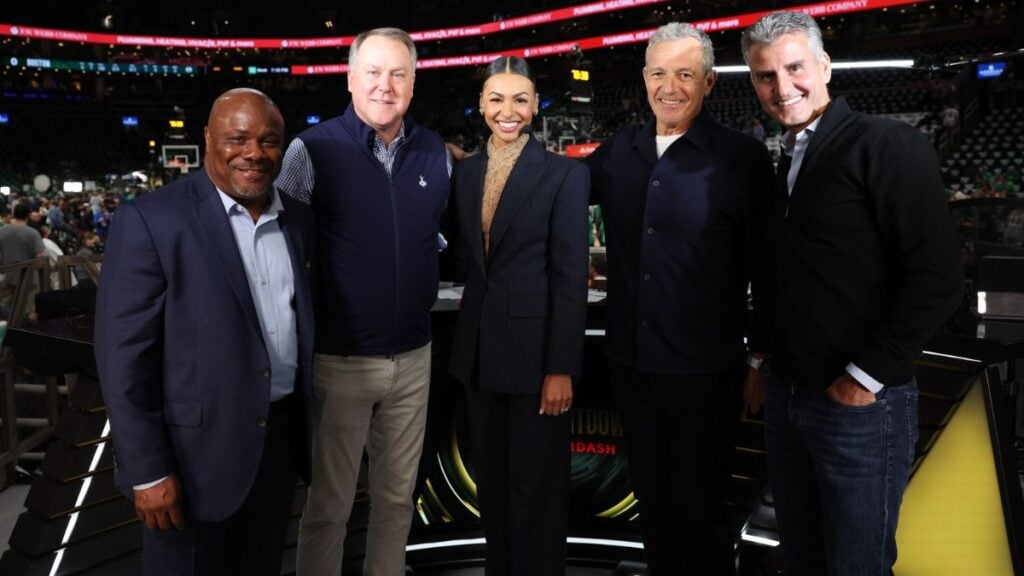
Dave Roberts, Burke Magnus, Malika Andrews, Bob Iger, Josh D’Amaro (Courtesy ESPN Press | Andy Hall)
Barrett Media produces daily content on the music, news, and sports media industries. Sign up for our newsletters to stay updated and get the latest information right in your inbox.
If you spend five minutes talking to Tanner, the morning host at 105.9 The Brew, KFBW in Portland, Oregon, two things become immediately clear. First, this is a guy who genuinely loves radio in a way that feels almost old-fashioned by today’s standards. Second, he is absolutely, positively not going to let you call him a star.
“I don’t think radio people can be stars,” he told me when I pushed him on it. “I feel like we’re more part of the community than we are above them.”
That’s a pretty grounded perspective for someone who has been one of the most consistent morning voices in a top-25 market for over a decade. But that’s Tanner. He’d rather talk about the grind than the glory.
The Long Way Home
Tanner’s path to Portland is the kind of radio career arc that used to be standard and is increasingly rare. He grew up in Portland after moving there as a kid, started in the business at sixteen, and quickly realized that if he wanted to do “real radio,” he’d need to leave.
“You needed to move away, get fired a couple of times, and then come back to where your home is,” he said. “That was kind of my goal.”
So he packed a hand-me-down Ford Focus from his mom and headed to Eugene, where he hosted his own show. He planned to stay a year and a half. He stayed eight years — and left on terms he didn’t choose.
“I got let go,” he said with a laugh, “and that was me officially in the business.”
From Eugene, he did a two-year stint in afternoons at 106.7 The D in Detroit — a station he said he was initially “exiled” to but ended up loving. He made his way back to Portland in 2014, landing at KFBW, and he’s been there ever since.
The Little Station That Could
When Tanner came back to Portland, KFBW wasn’t exactly the flagship of the building. The station shared space with some heavy competition — including what was the market’s number-one station KKCW — and wasn’t initially expected to challenge anyone.
“Originally they just wanted to be a thorn in the other rock station’s side,” he told me. “They didn’t have any expectation that it was gonna do too much.”
What changed the trajectory, Tanner said, was the decision to put live talent in the building. When he was given the morning show and was able to bring back his longtime co-host from Eugene, Drew — someone listeners in both markets already knew — the show had a running start that momentum could build on.
“It was exciting for a lot of people because they hadn’t heard us in two years,” he said. “And from there it just kind of took off.”
Today, Tanner Lauren and Casey is one of the more established morning brands in the Portland market. The show has survived lineup changes, including the loss of a longtime co-host to what Tanner called “basic corporate nonsense,” and has kept moving. He speaks about Lauren and Casey the way anyone would talk about family — the kind you actually want to see.
“If I go on vacation, I start to miss them a little bit,” he said.
Adapt or Die
If there’s a single phrase that defines Tanner’s philosophy, it’s one he offered right out of the gate when I asked what he’d learned over the course of his career.
“You have to adapt or you die.”
He said it without any drama, like it was just the weather report. He remembers when next-gen automation first hit the studios during his early days in radio. It registered as a signal, not a crisis. Things were changing. Okay. Keep up.
That mindset has served him as the industry has contracted around him. When I brought up the wave of layoffs and the friends and colleagues he’s watched disappear from the business — people he’d call family — he didn’t pretend it was easy.
“It is very tough,” he said. “Not just colleagues, but longtime people I would call family friends have lost their jobs. I don’t know what I can expect from the industry in the next five years.”
But then the pivot, almost immediately: “I have to adapt and offer as many things as possible.”
It’s not bravado. It’s almost matter-of-fact. He also tracks morning shows in Seattle and Charlotte, which gives him a broader view of markets beyond Portland. He sees the country getting smaller with technology, and he’s thinking accordingly.
His long-term dream, articulated with genuine enthusiasm, is a regional footprint — a small network of Northwest markets where the show can air. Portland, Seattle, Eugene, Spokane, Bend. He mentioned his friend Mojo in the Morning, syndicated across several Midwest markets, as a model worth admiring.
“I just want to have a little network,” he said. “I want to grow and be as useful to this company as possible. Because again — adapt or die.”
What Actually Made Him
Tanner grew up listening to Loveline obsessively — Adam Carolla and Dr. Drew on KLOVE 91.1. He described a kind of unconscious alignment with Carolla’s rhythm, where he’d think of a question or a bit and then hear Carolla pull it a few seconds later.
“Once I kept coming up with things that Adam would almost end up doing right then, I started thinking, maybe this is something I might be kind of good at,” he said.
He also cited Stern, Opie and Anthony — the national shows that felt larger than any single city. That’s always been part of his orientation. Even as a local talent deeply embedded in the Portland market, Tanner has a national-show mentality about scope and reach.
His creative philosophy is refreshingly simple: you being you is the product. He makes his own music. He’s drawn to improvisation, to the acting element of live radio. He never wanted to be one of those boss jocks who thought they had it all figured out and acted like the rules didn’t apply to them.
“After this, it’s public access,” he said, laughing. “So just be humble and appreciate it.”
The best radio advice he’s received? A line from Mojo: Make them laugh, cry, or angry — but make them feel something.
Still Portland, Still Grinding
More than ten years at one station in one major market is genuinely rare these days. Tanner hasn’t just survived the churn — he’s become part of the fabric of Portland radio in a way that can’t really be manufactured.
He’s the first to resist any romanticized framing of that. “When you say it like that, it sounds pretty grandiose,” he told me. “To me it’s just the grind, the love for it.”
He wakes up early and does the show. He self-grades — and he’s a tough critic. If the show is a six out of ten, he says so to his crew.
“If you have a bad show,” he said, “guess what? You got four more this week. You can fix it tomorrow.”
That’s it. That’s the whole philosophy. Show up, adapt, keep getting better, don’t act like you’ve arrived. For a guy who hates the word “star,” Tanner has built something most broadcasters would envy.
He just won’t admit it.
Barrett Media produces daily content covering the business of radio. To stay updated, sign up for our newsletters and visit BarrettMedia.com.
Celebrating five years in the Premiere Network lineup, host Jesse Kelly says it still feels surreal.
“Across the country, everyone dreams of that phone call from Julie Talbott, saying, ‘Hey, you want to come work for me?’ Everybody dreams about that phone call,” he said.
Now serving over 260 stations across the nation, Jesse Kelly went from construction worker to conservative radio host, a journey we covered in a 2024 interview. Now he has given us a surprising new feat, offering his new booklet, Jesse Kelly’s Little Red Book, for free.
“After I was done writing the anti-communist manifesto, which they had to talk me into, I swore I was never writing anything else again. Like, that’s it. It was a one-shot book,” Kelly insisted.
Kelly is open about his disdain for writing. “I actually hate writing. Like, I really, really hate it. I wish I liked it.” However, he was hit with a writer’s brain blast and felt there were still one or two more chapters left in him for the manifesto. “There was at least a chapter or two that I kind of wanted in that book, in the original book, and I thought, oh, I mean, maybe I should jot some of it down.”
Reaching out to his co-author, Nick Rizzuto, the pair decided to write just a little bit more. “And a little more turned into this booklet. But I never intended to sell it. I wasn’t trying to make a buck on it,” Kelly said. “It was just some random, stupid thoughts that go through my stupid head, and I decided, let’s just email it out to everybody. So there you go. I’m the worst businessman in the world, apparently.”
Despite the free price tag, Kelly assures his listeners he won’t be turning into a socialist any time soon. It is instead a sign of gratitude and goodwill for the listeners he’s gained over the last five years.
Show Prep Is His Whole Life
Kelly, who served as an infantry Marine during the Second Gulf War, keeps his show fresh for listeners by reminding himself, “[My] entire life is show prep. Every bit of it.”
The Marine went on to say, “You don’t sit down for two hours before the show and go through some news articles. But when you go to the gas station and help somebody with a flat tire, that’s show prep. When you get in a lighthearted argument with your wife, that’s show prep.”
It is one of the many lessons he learned from Michael Berry. “[Your audience] will genuinely enjoy it, because people go through all these same things,” Kelly said, paraphrasing an early-career conversation he had with Berry.
“So it’s easy to stay fresh if you just live life,” Kelly asserted. “If you hide yourself in a bubble or something like that, then you’re never gonna have anything new. But if you are out there living whatever life you happen to live…”
“Calls Are a Crutch”
His show structure has also evolved, as Kelly no longer takes live listener calls. “Calls suck,” Kelly said cheekily. “They’re just the worst thing in the world, and I always hated them. Calls are a crutch.”
Kelly vociferously opined, “Calls are when you run out of things to say. Let’s go to Bob in Sheboygan. Nobody tuned in to hear Bob in Sheboygan. Nobody, whatsoever.”
The radio host went on to say, “And then when you go to Bob in Sheboygan, you know what’s brutal for everyone in the United States of America? ‘Hi, how you doing? Hey, I’m good, how are you tonight? First time, long time.’ The guy who’s stuck in traffic needs some form of entertainment or infotainment, and now he wants to drive his car off a bridge. That is awful. And I won’t do it anymore.”
It is a sentiment he felt well before he was behind the mic and instead behind the wheel. “I was a radio listener a long time before I did it. The second it was, ‘Let’s go to the phones,’ I couldn’t change the channel fast enough. So I just don’t do it.”
Not taking calls is also something Michael Berry taught Kelly early on. “When I first got a show, it was a one-hour show, late at night in Houston. [Berry] basically banned me from taking calls. And he said, ‘You need to learn — it’s a skill you have to learn. You need to learn how to sit behind a microphone and entertain.'”
Connecting Through Letters and Emails
And entertaining is what Kelly, who also hosts a show on the TV network, The First, does best. His “average guy from the year 2000” mentality resonates with listeners from around the country. Although he won’t take their calls, he does have another way to connect with them — reading their emails on the air.
“It makes for a great jumping-off point for a segment or something like that, so I’ll read it and kind of just get the people’s voice out there,” Kelly stated. “Plus, I like being able to share, you know, to give someone else a platform. I don’t mind telling the country what that person had to say.” He went on to say, “All human beings, you know, we feel forgotten and ignored from time to time, and it’s nice to not be ignored every now and then.”
Some of the most meaningful listener notes Kelly receives are very personal. One example he gave was a letter from a World War II veteran. “I had a guy who had a World War II dagger, and he didn’t have any kids, and he sent it to me, because he wanted my kids to have it.”
Kelly has also received letters from people who are struggling with addiction. “They say stuff to me like, ‘Hey, your show is helping me stay clean,’ which I don’t have any idea why, but that’s awesome. I mean, to find out [I am] actually helping somebody by being an idiot on the radio, it’s awesome.”
“What blows me away [about receiving these letters] is that it’s all across the spectrum,” Kelly said.
While Kelly sometimes offers self-deprecating humor about his human capabilities, his passion for his radio, podcasting, and TV audience — whether intentionally or not — is always at the forefront of his mind. “I have a very limited brain, and I can’t focus on multiple things at once. I’m really serious. I can’t — like, you’ve never met anybody more incapable of focusing on multiple things, or multitasking, whatever,” he said.
“So, as far as ratings, and podcast numbers, and this, and all the other minutiae of it, I ignore all of that. I have no interest in it whatsoever.” Instead, Kelly puts his singular focus on this: “I sit down and try to make each segment as good as I can, because maybe that’s as long as I have [one of my listeners] for. And I assume that if I do that right, then everything else will work out in the end.”
Barrett Media produces daily content on the music, news, and sports media industries. Sign up for our newsletters to stay updated and get the latest information right in your inbox.