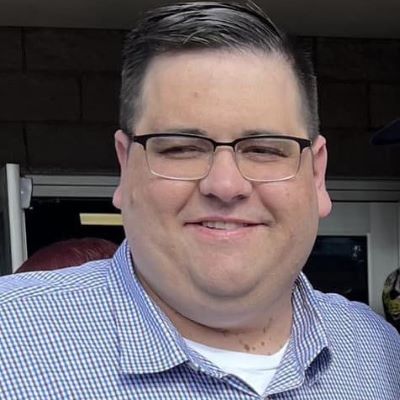
For nearly five decades, Paul W. Smith would wake up in the middle of the night to begin preparing his morning radio show, including for 27 years at WJR 760 in Detroit.
That can — and did — take a toll. To the point that Smith decided he no longer wanted to work in the daypart.
But that can be a tricky situation to navigate: wanting to leave your current daypart, but not leave the station — or radio, for that matter — either.
A talent like Paul W. Smith is worth the effort, though. So in June 2023, the station announced that after hosting mornings since 1996 — when he replaced legendary host J.P. McCarthy in morning drive– Smith would move away from morning drive and instead host in the newly created 12-2 PM window on the Great Voice of the Great Lakes.
“It’s been great to sleep in, I can tell you that,” Smith said of his move, with a chuckle. “Not having to get up at four in the morning now is spectacular.”
While he admits that hosting his new show, Focus, from 12-2 PM doesn’t compete with the “different kind of feeling doing a morning drive show” provides, the quality of life is significantly better.
“I think that I did buy myself a few more years of being on the air,” Smith said, noting that he also hosted mornings in Philadelphia and also worked at 77 WABC in New York City, too, leading to a little more than 50 years in mornings.
“I begrudgingly thought there were two ways to go: retire, which I did not want to do. I’ve interviewed too many people who have worked their lives real hard at a great job or a job they loved, and they have to retire because they’re aged out — I’m talking about other businesses — and they died,” Smith shared. “It’d be a great study, because it’s like, within two years, a lot of these guys die. So I thought, ‘Well, I sure don’t want to do that,'” he said with another laugh. “I love being on the air. So it’s worked out well for me. I am appreciative.”
Paul W. Smith gave credit to leaders at Cumulus Detroit and WJR 760 for finding a solution to his conundrum, adding that the timeslot has worked out well for him.
“When I told the radio station I was pretty much done — as I thought it was going to kill me if I kept going — they were kind enough to say, ‘Well, would you work another time period?’ And I said, ‘Well, as long as it’s not in the morning, I would certainly look at it.’ They came up with the noon to two, and I was happy to take that. It’s a really good time period for me. I’m enjoying it very much.”
In addition to shifting dayparts, Smith credited something else with adding to his career longevity: being able to host the show from home.
“It bought me years of being on the air to now do it from home,” he said of his show. “The quality is exceptional. You cannot tell the difference. I like to say my audio is better because it’s not digital. They put in some new digital studios, and there’s a little reverb and a little weirdness that I don’t like. They said ‘Well, your ears will get used to it. Your brain will get used to it.’ I don’t want my brain to get used to it,” he stated. “I want it to sound the way it sounds. That’s what I have with my home studios.”
Paul W. Smith added that the flexibility that doing the show from home provides is an unbelievable bonus. He and his wife, Kim — who he joked works as an unpaid producer for his program — now have the ability to spend winters away from the harsh, bitter cold climate the Detroit metro area provides.
The 72-year-old has had an impressive staying power in the news/talk radio world. At a time when some stations prioritize younger, less expensive talents, Paul W. Smith has remained the preeminent voice in the Detroit market. And he believes his understanding of the sales aspect — including his time as a radio account executive himself, which he said he loved — has aided that longevity.
He shared an anecdote that two former Detroit radio hosts had finished atop the market on an FM station, but didn’t see their contracts renew.
“And I thought, ‘What the hell?’ Then I found out they didn’t do what I do as a normal course of business: meet with clients or go to lunch or dinner with clients,” Smith — who joked that managers have called him “The Franchise” for his willingness to go above and beyond with current and prospective advertisers — said.
“I’ve always understood how important sales are, because I’ve been a salesman, and I know how hard it is to make a sale. And why it’s so important for those of us on the air to make sure we get those commercials in the way we’re supposed to.”
Barrett Media produces daily content on the music, news, and sports media industries. To stay updated, sign up for our newsletters and get the latest information delivered straight to your inbox.