

Welcome to the first installment of ‘The Industry According To’. This series will run each Tuesday, and feature radio and record industry executives, managers, programmers, talent, artists, and professionals from all areas of the business world. To be considered as a future guest, email me at keith90405@gmail.com.
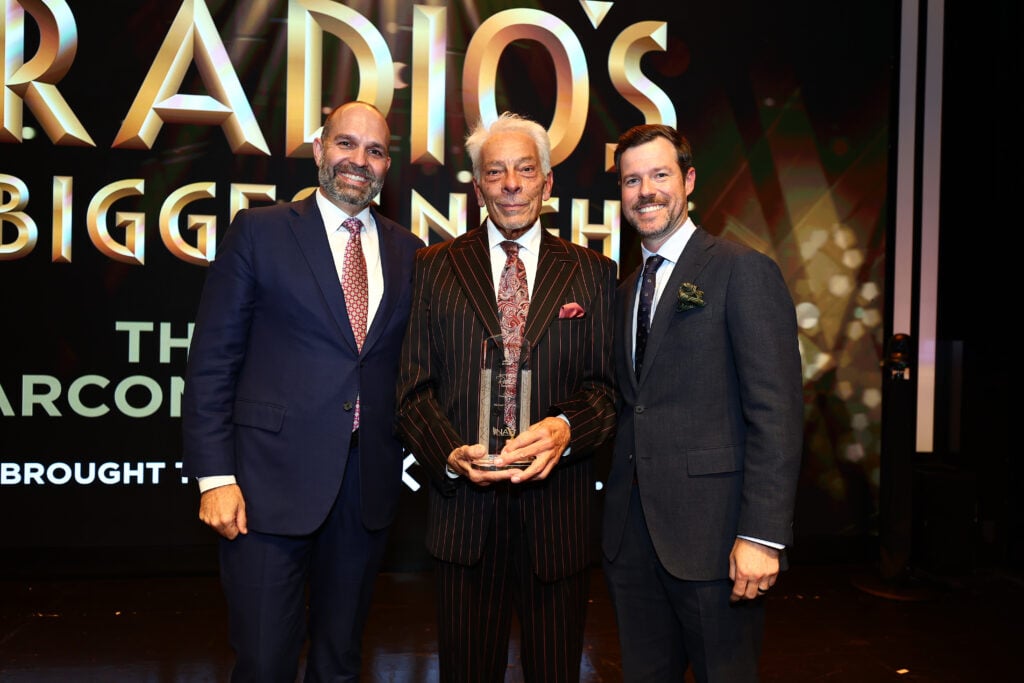
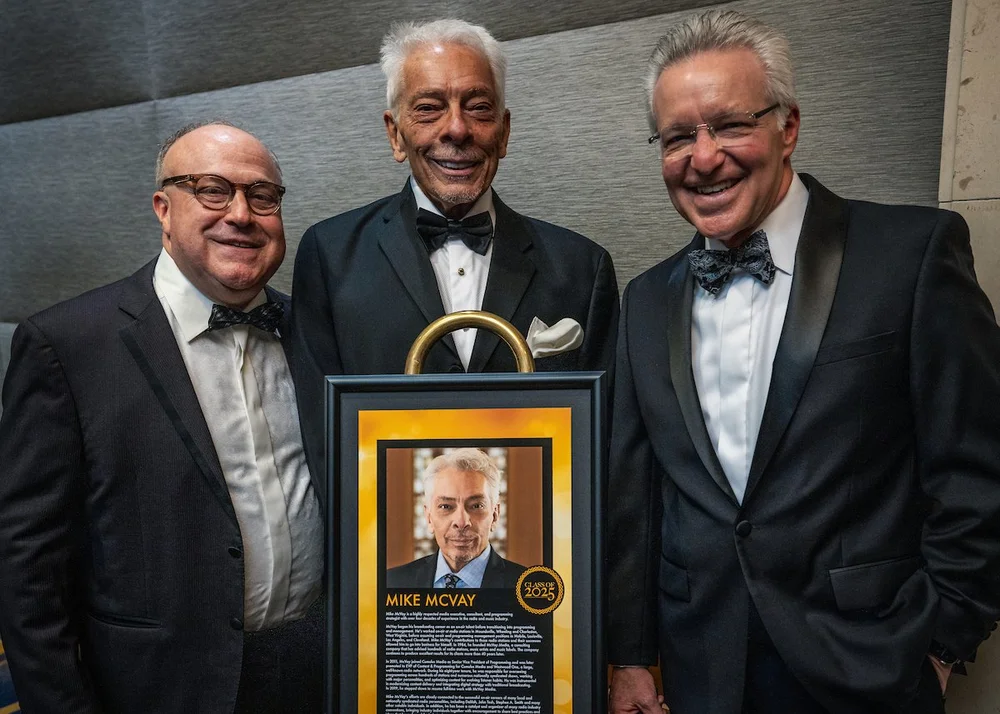
The music industry is massive. Thousands of jobs, companies, brands, and artists, all chasing different goals. Mike McVay knows the business well. Just a few nights ago, he was inducted into the Radio Hall of Fame. While many look at him as being a lifelong radio guy, his work far transcends radio. His resume needs a separate server for storage.
We’re lucky enough to get some hard-hitting thoughts from him on both radio and the music industry itself, so let’s get to it.
- Title: President
- Company: McVay Media
Omni-Platform
Keith: You’ve had a hand in every sector of the business — on-air, exec roles, ownership, labels, talent, brands. In looking back, what’s the single shift that truly surprised you, and how did it change how you advise clients today?
Mike: “Surprise” may be a more dramatic word than necessary, but radio’s slow acceptance of digital and multi-platform distribution has been concerning for me and somewhat difficult to understand. I learned a lot from having had Daniel Anstandig (Founder & CEO of Futuri) on the staff at McVay Media years ago when he had recently graduated from high school. His continual mantra of “What would radio be like today if the Internet was invented before it” has stayed with me from those days.
The surprising thing to me is that businesses outside of radio realized the strength of being a legacy platform, like radio is, and made adjustments in their model to harness the attributes of radio. A significant part of my clientele could be identified as Radio Adjacent. The shift in how I do business today is to view radio as the creative driver of multiplatform content distribution. I’m ignoring the towers and transmitters in favor of everything else that distributes content. Not diminishing the strength of OTA distribution, but looking at it as one of many places listeners can hear and see content.
That leads to an approach of using every part of the cow. Audio and video that’s distributed on OTA, across podcasts, streaming, social media, YouTube, smart speakers, and on apps that use multiple channels to segment content to unique audiences. This technology exists.
Distribution & Disruption
Keith: Everyone still talks about “radio” vs. “streaming” or “TikTok” vs. “YouTube,” but you’ve argued it’s less about the medium, and more about the content and experience. “Legacy media” like radio, newspapers and linear TV still produce good content, so what mistakes are keeping them from being as disruptive as the platforms trying to replace them?
Mike: Newspaper is getting there with digital distribution. We cancelled the physical paper a decade or more ago. The types of stories you want to read can be selected by topic. Customization is key. Social media allows me to watch the bits of what I want to watch when I want to watch it. How many times do you punch the Down button on an elevator thinking it will help it come more quickly? That’s how most people are with content on demand.
The fallacy of legacy media is thinking that they’re competing with digital. They should be owners of it, driving it, and dominating it. Niche media needs mass media to drive it. We are Mass Media. Own your own niche media and drive that. We have the perfect vehicle to market what we do across all platforms.
Niche media needs legacy media because legacy media has resources and established credibility that niche media can leverage, while niche media provides a way for legacy media to reach new, more engaged audiences and stay relevant in the modern media landscape. They are increasingly interdependent, with legacy media providing raw content like news and data, and niche media using it to create more engaging, specialized content.
How Should Artists Use Radio
Keith: You’ve consulted both artists and labels — in 2025, if an artist came to you and asked: “How should I use radio; what’s the best way?” — what would you tell them, given how radio’s role has changed, and many artists see it as optional rather than essential?
Mike: My friends at the top of the record label food chain view radio as less important to launch a song today, but critical to making a song (or an artist) a huge hit. The DSPs are the equivalent of the bricks & mortar record stores of the past. Labels watch what’s streaming and resonating with an audience. They look to see what social media is drawn to as well. Then they invest there. That’s the song they promote to radio. When radio plays a current, each exposure is a commercial for the song and the artist.
Radio, for the most part is no longer the discovery vehicle it once was, and as such we should be watching streaming, social media, and pay attention to platforms like TikTok and YouTube.
Radio tends to watch the trends of similar stations for what they’ll play. That is akin to following lemmings of a cliff. Pay attention to the consumer (listener) more than each other.
The Monetization Crisis
Keith: Some sectors have pivoted to address new revenue challenges — labels with digital and 360 deals, artists with brand collabs and deeper merch, but Radio’s model hasn’t truly evolved. With your view across platforms — what does radio need to stop talking about and start doing to turn the tide?
Mike: This is a tough one as radio doesn’t control the advertising market. Radio should focus on total impressions and create advertising packages that have all of their platforms tied together. When you advertise with “us” you receive Over The Air, online, in Podcasting, on demand, and as a part of Reels on social media. There was a time when radio sale reps did the “Consultant Sell.” They asked the client what they wanted to accomplish, and then they put together a marketing plan, with the price being the last thing discussed.
We need to get back to focusing on selling the advertisers product, services, and wares & goods. Stop selling “commercials.” Several of my radio clients do it the right way and focus on giving their clients what they want, because when the client gets what they want the station gets what they want.
Talent
Keith: Many don’t know you’ve coached a long list of talents like Stephen A. Smith, Soledad O’Brien, Donny Osmond, Reba McEntire, John Salley, Zach Sang and you’re also responsible for launching big, syndicated shows like Delilah and John Tesh. Give us the name of a relatively undiscovered talent we should know about?
Mike: Andy Beckman & Kat Blair do a great show on WAJI/Fort Wayne. I cannot really say that they’re undiscovered as they’re #1 in the ratings and Marconi award winners, but they’re not nationally known because of the market they’re in. Hannah Lane at WUSJ/Jackson, MS is growing as a Co-Host on a morning show. Will David at WFKN/Franklin, KY is another talented young personality who is building a career.
Keith: What separates good coaching from bad coaching with talent at that level?
Mike: My belief is that you have to know who the talent is and what they believe in before you can start coaching them. What interests them. What do they see as their strengths and weaknesses. Do they understand the goals of the station, show, network. Are they coachable. How badly do they want to win. Once you know who they are and what they want to do to be a success, and the strategy is aligned, you can help them become successful. Good coaches are all about giving the talent the win. Not about the coaches ego. I do not believe coaching is a “My way or the highway” situation. It’s about alignment and collaboration, but it’s most importantly about giving the talent a win.
Bad coaches are the opposite of everything I just said. If you define the parameters with negatives, it becomes scary for a talent to venture outside of them, and that’s not a recipe for success. It becomes a situation where the talent thinks “it’s better to do nothing than try something and get into trouble.” That’s not good. That’s the result of bad coaching.
The Format Future
Keith: We haven’t seen a successful new Radio format emerge and last, arguably since the dawn of JACK. I won’t ask for ideas you want to keep under your hat, but look ahead to 2035: will the radio dial still be filled with the same genre-focused music, news, sports and talk formats we know today, or will the terrain sound a lot different?
Mike: We’ll have a lot of the same formats that are out there today, still out there. I believe that some existing formats will become significantly bigger over the next 10 years. Contemporary Christian AC will keep growing. We’re seeing a young conservative movement in the flyover states and the southeast and southwest. That’s where the format is strong now. I expect that movement to grow.
Don’t count out bilingual formats. We’ve seen Spanish/English perform well in Miami, Houston, and Orlando. I’m involved as a part of the consulting team for that format in New York City and Las Vegas where it’s growing nicely since their early year launches. Spanish language air talent and imaging is what you’ll hear. English AC music with a couple Spanish hits hourly. The commercials are in English or Spanish. It’s a format I was first exposed to in the late 90s at WFID/San Juan. iHeart scored with it first in Miami. The diversity of America will feed this format. The audience is bilingual.
AI
Keith: Everyone is using AI for the basics: writing copy, one sheets and decks, graphics, and even gimmicks like turning Slayer into a Jazz band — but have you seen anyone in the industry using this tech in a way that made you say, “OK, this changes everything”?
Mike: Don’t underestimate the strength AI brings to writing copy. It’s also a great source for research and delivers information that heretofor may have been unaffordable. The weakness is that you have to safely check the information you receive as AI sometimes hallucinates.
I do not want to see AI replace talent, but voice duplication can help nationally syndicated shows to provide more localized liners & sweepers, promos and other content that they might not have time to record and update as frequently as affiliates desire. That’s a benefit.
Today’s Endless Research
Keith: You believe in research and today it’s metrics mania — more data than we know what to do with. For sectors like podcasting or streaming, real-time impressions make decisions a little easier, but when it comes to radio, what’s the data you advise leaders to rely on most?
Mike: Nielsen is what we have that is most accepted by national advertisers at this point. There is also Eastlan Ratings which some stations prefer because of the methodology and sample size. Nielsen provides a lot of information as to audience demographics, use of radio, etcetera. I’d like to see encouragement from the industry to have Nielsen increase and better balance their sample size. It would be most helpful if they could do a better job of measuring digital listening. A station with an app can show a number that’s very different than what Nielsen captures, but that comes back to sample and not methodology.
The PPM meter design, being tested to determine better ways to have panelists carry them and accurately capture audio, and the change to a 3 minute qualifier (3 individual minutes in any quarter hour count as a full quarter hour) are helpful to showing radios real audience.
I remain a believer that radio should show ALL audience from ALL platforms and note that their may be duplication among listeners. It’s commonly held that the more times a listener hears a commercial message, the more likely it is that they will retain that information. Why not combine impressions and note duplication as a benefit.
What Does Future Success Look Like
Keith: If everything is going to look differently 10-years from now — what does success look like 10-years from now? Forget the revenue part, what’s the “win” every great brand will be chasing?
Mike: It’s impossible to dissect success without including revenue. I’ve been a consultant to stations that hit #1 in demo and a sales team couldn’t sell the ratings because the demo was A35-64 and not A25-54. One manager once told me “What good is it if the best I can be is #5 with Adult 25-54? The older 35-64 means nothing to me.” We changed to a more conducive format to attract A25-54 … and suddenly being 5th was a distant memory.
My view of success is for radio to return to being a dominant marketing machine. It starts with understanding how to succeed by dominating narrower demographics and how to generate revenue from them. Advertisers cry that they don’t need the “waste” that radio delivers, and that’s why they invest in digital for marketing. If that desire is what advertisers want, why do we continue to invest in growing waste and not in focusing on a 20 year cell with a 10 year core in the middle, that is sold to advertisers who desire that core because that’s their target customer.
The Uncomfortable Truth
Keith: What’s the uncomfortable truth you wish all radio Execs, GMs and PDs would just admit?
Mike: Our commercial loads are too heavy. We air too many units in every stop-set. Radio has great distribution. The reach (Cume) of radio is greater than SiriusXM, Pandora, Spotify, Amazon, and the rest of the DSPs. They wish they had radio’s distribution. If we could simply figure out how to generate more money per/message, and reduce our Spotload, we’d see an increase in audience. It’s not about where you can hear radio, because you can hear it everywhere, but rather it’s about the downgrading of the listening experience.
Radio did this to itself.
The One Story
Keith: Before you go, what’s your best story: success, nightmare, or pure madness.
Mike: I have so many stories. Many fall into different categories. I’ll share this one which I closed my Radio Hall of Fame induction speech with on last Thursday night:
I acknowledge the greatest influence for me getting into radio. That was my brother Jim. I am the youngest of 5 children. Born late in my parents lives. Twenty years between the oldest and me. The others are all gone now, including Jim, who was 7 years older than me. When I was only 10, he inspired me to become a disc jockey. It’s true.
Because our father worked on the Pennsylvania Railroad, we could ride the train for free. Jim and I used to take the train from Greensburg, PA into Pittsburgh and run around for the day. The train station was next to WHJB Radio. They had a showcase studio, and we’d stand outside and watch Cowboy Phil do his morning show. Sometimes when the records were playing Phil would get up and leave the studio. I remember asking Jim “Where do they go while the music plays?” He said, “They go in the back room and smoke, drink, and play cards.”
That is the moment that I decided I wanted to go into Radio.
Barrett Media produces daily content on the music, news, and sports media industries. To stay updated, sign up for our newsletters and get the latest information delivered straight to your inbox.
