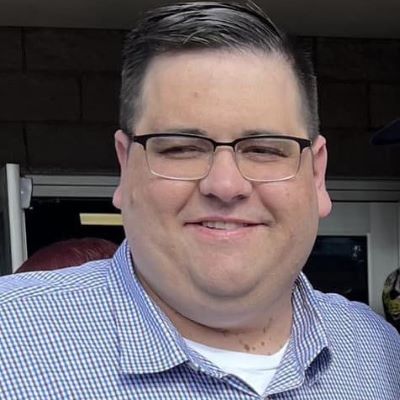
As winter weather threatened the Atlanta area over the weekend, preparation at 95.5 WSB began days before the first drop of precipitation fell, driven by a careful, deliberate plan led by Director of Branding and Content Ken Charles.
The effort was not about reacting in the moment, but about anticipating every possible outcome in a sprawling and unpredictable metro area.
“So we started planning officially at 9:30 Tuesday for a storm that was targeted for Saturday,” said Charles. “We had daily 9:30 meetings that included my news director, our meteorologist, morning anchor, assistant program director, and, honestly, anybody else who happened to be floating around and wanted to join. We started then. But we were not panicking the world like TV was. Nothing gave us an indication it was going to be catastrophic, but we knew we were going to get something.”
From the outset, Charles emphasized measured realism rather than alarm, even as forecasts varied widely. The goal was to prepare for the worst without overstating the threat to listeners who rely on the station for calm, accurate information. That balance was especially critical in a region where a slight change in geography or temperature can produce vastly different results.
“This was definitely a storm for Atlanta,” Charles said. “Two degrees and 25 miles was the difference between what Athens and Gainesville got, which was an inch and a half of ice, and what we got, which was rain, some ice, some disruption, some power outages, but nothing major and nothing catastrophic. Still, we had to prepare for the worst and hope for the best. So we had daily meetings every morning at 9:30.”
That uncertainty shaped every layer of planning, particularly because the Atlanta metro spans dozens of counties with distinct microclimates. WSB’s reach extends well beyond the city, and Charles said that responsibility weighed heavily in decision-making.
“If it’s going to be North Georgia, look, there are 20 counties that comprise the Atlanta metro, which is a really big area,” the 95.5 WSB leader shared. “You can have Cherokee, Forsyth, North Gwinnett having one thing, and then the southern part of the metro outside the perimeter getting nothing. We had to be prepared for everything. Because of how big the metro is, and also the responsibility of WSB, that 750 AM signal gets everywhere, and we’re the only station that’s going to be covering whatever was going to happen 24/7 around the clock.”
Charles framed that responsibility not as added pressure, but as a core part of the station’s identity and culture. Serving as a lifeline for communities inside and outside the metro is something WSB’s team expects of itself, long before severe weather arrives.
“Spider-Man said it right: with great power comes great responsibility,” Charles continued. “It’s what we do, it’s what we’re designed to do, and it’s what we train to do. Is it a responsibility? Absolutely. Is it more pressure? No. It’s what we signed up to do.”
Experience also played a role in shaping preparations. Charles pointed to lessons learned from past disasters, while acknowledging that no two storms are ever the same.
“Whether it’s an earthquake, a tornado, a hurricane, or in this case an ice storm, there are lessons you learn from the ones you covered before,” Charles said. “Still, each one is different because each one is going to throw different things at you. The areas are going to be different. The effects are going to be different. Every storm is different, and you have to be ready and take account for that in your planning, preparation, and execution.”
Beyond programming decisions, Charles said his responsibility extended inward to the safety and well-being of the staff expected to deliver wall-to-wall coverage. Staffing plans were built around shifting weather conditions, freezing temperatures, and the realities of travel after long shifts.
“We had to plan who was going to be here Saturday, Sunday, and Monday, and when they were leaving,” Charles said. “Those who came in for the next shift overnight, we knew regardless of how much precipitation we got, it was going to freeze. I had to make sure they had a hotel because the last thing I want is somebody to work eight hours and then go out into freezing rain or icy roads and jeopardize their safety. If they’re worried about that, they can’t do their best work.”
On the air, the plan centered on clearly defined thresholds that would determine how aggressively the station covered the storm. News, not talk, drove every decision.
“It’s strictly news,” Charles continued. “If the metro hit 100,000 power outages, we were committed to doing big tops and bottoms 24/7. If we hit 250,000 or it looked like it was rising fast, we would go into continuous coverage. We were live and local from 5 a.m. Friday morning and didn’t go off the air with local news until 11 p.m. Monday night.”
Even familiar talk voices were used in service of that mission, integrating listener reports and official information into a news-first framework.
“We used our talk talent to add a talk element by integrating calls from listeners about power outages and conditions in their neighborhoods,” said Charles. “They would also do interviews with Georgia DOT, Georgia Power, the governor, and the mayor. Those big tops and bottoms became 15 minutes instead of six or seven. We’re a news station that does talk, and news came first regardless.”
Inside the building, Charles worked to remove as many distractions as possible so staff could focus on serving listeners. That meant flexibility, compassion, and turning the station into a temporary home.
“I’m proud of our team. Not one person shied away,” Charles said. “One team member had a dog and didn’t want to leave it home alone in case of power loss, so we made that work. Family is part of the team. I don’t want people worrying about their family while they’re here taking care of other people’s families.”
Drawing on memories from previous disasters, Charles said the approach was simple: take care of the people doing the work.
“We turned the station into a little village,” Charles continued. “Air mattresses, offices, conference rooms, people with spouses, kids, pets. We brought food in because you don’t know what’s going to happen. Everything to make sure our staff was covered and able to do what we needed to do.”
In the end, Charles said the motivation behind every decision came down to trust and service.
“Regardless of what you do, when the weather is at its worst, we have to be at our best,” Charles said. “People depend on us when trees are falling and when power is out. If we let them down once, they’ll never trust us again. That’s what we do.”
Barrett Media produces daily content on the music, news, and sports media industries. Sign up for our newsletters to stay updated and get the latest information right in your inbox.