

Online casino gaming in the United States is expanding quickly, but the story is not national. A small cluster of states is responsible for most revenue and tax growth, and that concentration is driven by legislation, not a uniform wave of consumer demand. For media and broadcasting executives, knowing which states matter is increasingly central to forecasting advertising budgets, sponsorship demand, and affiliate revenue connected to gambling.
Online Casino Gaming vs Online Sports Betting
Online casino gaming refers to digital versions of slots, blackjack, roulette, and similar table or live dealer games delivered via websites or mobile apps. It differs from online sports betting, which is built around wagering on real-world sporting events and typically follows a different pattern of seasonality, margin, and risk management.
In practice, online casino products are always on, with high-frequency play and a broad catalog of games. Sports betting is more calendar-driven, spiking around the NFL, March Madness, and other tentpole events.
A Seven-State Map
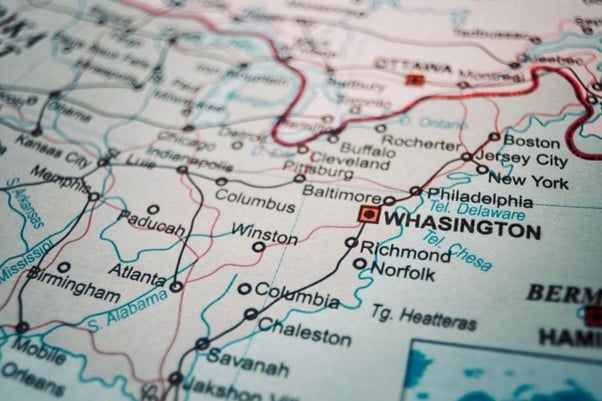
Despite national marketing, real-money online casino play is legal in only seven states: New Jersey, Pennsylvania, Michigan, Connecticut, Delaware, West Virginia, and Rhode Island. Nevada remains an outlier, permitting online poker but not full iCasino.
A national iGaming revenue rollup across these seven states reported combined online casino revenue of about $835.6 million in November 2025, up from roughly $714.4 million in November 2024 (CDC Gaming, U.S. iGaming Revenue Report, November 2025).
Why New Jersey, Pennsylvania, and Michigan Lead
Within this seven-state group, New Jersey, Pennsylvania, and Michigan are the clear heavyweights. All three combine large or dense populations, established land-based casino brands, and competitive licensing structures that support multiple skins per property.
Industry analysis frequently points to New Jersey surpassing $2 billion in annual iGaming revenue, with Pennsylvania and Michigan operating at a similar scale. In particular, performance trends around Online Casino in PA are often used as a practical benchmark for how operators balance always-on spend across local television, regional sports networks, and digital audio, because the market is large enough to matter but regulated tightly enough to produce stable planning assumptions.
For media companies, these three states are where online casino operators have both the regulatory permission and the economic incentive to run sustained, high-value campaigns across broadcast, sports media, and digital audio. These markets also matter because online casino advertising tends to be less event-dependent than sportsbook advertising. In iCasino states, operators can run always-on acquisition and retention campaigns that support inventory beyond live sports, including news, entertainment, podcasts, and off-season schedules.
Connecticut, West Virginia, Delaware, and Rhode Island’s Contribution
The remaining four iCasino states are smaller in population but still meaningful in revenue and market design.
Connecticut operates a tightly controlled model tied to the state’s tribal operators and lottery. That limits the number of brands but can support strong per-capita monetization. Delaware and Rhode Island use lottery-led structures, including Rhode Island’s single-operator model where Bally’s holds exclusive iCasino rights. West Virginia, while demographically small, is more open, with multiple online casino brands tethered to existing casinos.
For broadcasters and digital publishers, these states will not match New Jersey or Pennsylvania in absolute spend, but they can deliver incremental revenue and targeted regional campaigns that matter for local television, radio clusters, and digital outlets.
Regulation, Tax, and Market Structure: Why Growth Is Uneven
The uneven growth of online casino gaming is less a function of consumer appetite and more about which legislatures authorize iGaming and how they structure it. Tax policy, licensing design, and political comfort with expansion determine whether a state opens its market and how attractive that market is to operators.
Tax rates on iGaming gross gaming revenue vary widely across the seven legal states, but most sit in a band designed to generate meaningful public revenue while still leaving room for operator marketing budgets. Where rates climb too high or licensing is limited, operators may respond with more controlled spending and fewer long-term media commitments.
Regulation also shapes how operators can advertise. States with tighter responsible gambling rules, bonus restrictions, and content guidelines require more careful media planning. At the same time, stable frameworks can encourage larger, multi-year sponsorships once operators trust that rules will not change abruptly.
Why iCasino Growth Matters More Than Headline Sports Betting
Numbers
In states where both online sports betting and online casino gaming are legal, iGaming revenue often outpaces sports betting revenue. Casino margins are typically stronger and less volatile than sports betting, whose hold can swing sharply with results and promotional cycles.
For media organizations, that means the most durable gambling-related revenue opportunities are often anchored in iCasino markets rather than sports-betting-only states. Sports still provides the most obvious environment for sportsbook advertising, but online casinos support year-round demand and can fill inventory in non-sports programming and digital audio where live-odds integrations are less central.
States on Deck for Potential Expansion
Several large states that already generate substantial sports betting handle are being watched as potential iCasino markets.
New York lawmakers have introduced multiple bills, including proposals such as S2614 and a broader S8185 framework, that would authorize online casinos, live dealer games, and other iGaming verticals, though none have yet passed. Illinois has also seen renewed legislative pushes for online casino and poker, with analysts projecting significant upside if legalization advances. Industry coverage often cites additional candidates such as Indiana and Maryland as potential next-wave adopters.
For media and advertising stakeholders, the takeaway is that the seven-state map is not static. But expansion is likely to be incremental and tied to state budget pressures, tax policy debates, and evolving views on responsible gambling.
What Media and Broadcasters Should Watch in 2026 and Beyond
For U.S.-based media and broadcasting professionals, a few indicators matter most:
- Legislative calendars and budget debates, where iCasino bills often surface
- Regulatory tightening around payments, bonuses, and player protections, which can reshape creative and channel mix
- Shifts in operator economics and profitability expectations, which influence sustained marketing spend in high-return states
In short, the media impact of online casino gaming will remain concentrated in the same states where regulation and operator economics align. Executives who treat iGaming as a national opportunity risk overestimating the addressable market for high-value campaigns.
The Future of iGaming in the U.S.
Online casino growth in the U.S. is being driven by a compact group of states that chose early, and deliberately, to regulate and tax iGaming. New Jersey, Pennsylvania, and Michigan sit at the center of that story, with Connecticut, Delaware, West Virginia, and Rhode Island adding depth to a concentrated revenue base.
For broadcast, sports, and digital audio professionals, the right approach is to build strategy state by state, not on a generalized assumption of national demand. Until new bills pass in large sports-betting-only states, the biggest growth in online casino-related media spend will continue to flow from the same limited group of jurisdictions that already define the iGaming map.
