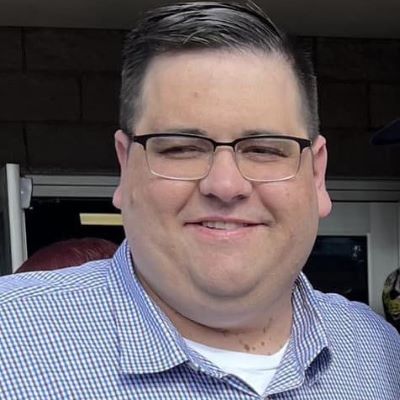
Moon Griffon didn’t build his career the way radio is supposed to work. From the start, The Moon Griffon Show grew outside the traditional model you might expect.
For more than three decades, Griffon has done something most broadcasters wouldn’t even attempt: he’s never been paid by a radio station. Not once. Instead, he bartered his time, sold his own advertising, and turned a statewide talk show into a business he owned rather than a job he worked.
What started out as an insanely short trial run turned into a 33-year career.
What started as curiosity turned into opportunity, then momentum. The early shows kept getting renewed in short bursts — 13 weeks at a time — and Griffon noticed something important: nobody was paying him, but nobody was stopping him either. He wasn’t an employee. He was a renter.
“I had an hour, and then things took off from a local level,” he said. “When I started in radio with no experience, I probably sounded pretty raw. It just started to grow, and once we got going pretty well, I got a wild idea. I looked all over the state of Louisiana and noticed there was not a syndicated program covering state issues.”
That realization became the foundation of The Moon Griffon Show. Griffon didn’t want to be another local host talking about hyperlocal issues that limited growth. He wanted something scalable inside Louisiana, a statewide conversation that could live on multiple stations without being trapped by city lines.
“This is my 33rd year. I’ve done over 8,400 programs, and I’ve never been paid by a radio station. Not one check. I always bought my time. I don’t blame them — I listen to me, and I wouldn’t pay me either,” he said with a laugh. “And I realized quickly that if you wanted to make it in this business, it was better to own it than work for somebody.”
Owning it meant everything fell on him. If the show failed, there was no safety net. If it succeeded, the reward wouldn’t come from a station’s payroll department.
“I formed a company and started traveling to radio stations,” Griffon said. “When someone took us, I’d go into the market and help them sell advertising. That’s how the program grew — one station at a time — by helping them make money. We covered national issues, but we focused heavily on state issues nobody else was covering.”
That approach was strategic. Moon Griffon knew stations didn’t need another host asking for a salary and talking about national topics. They needed revenue and relevance.
“I would go say ‘Here’s what I’m going to do: You put me on, buy the time, and I’m going to help you make money. If I don’t make you money in a year, fine, don’t keep me.’ And they’d say it sounded great — and still wouldn’t move. That never made sense to me.”
Still, he kept pushing. He paid his own producer, sold his own ads, and traveled market to market, sometimes getting fired, sometimes getting traction, but always refining the model.
“I do my own research, I do my own show, I pay a producer — right now that’s my son — and I sell the advertising,” Griffon said. “I created a business model where stations buy the time, make money locally, and I help them. And I make money selling the network.”
The on-air product followed the same logic. Statewide issues made listeners feel included, no matter where they lived.
“When you cover a state issue, you make sure it affects everyone,” he said. “Roads, bridges, taxes, the governor. I very seldom touch local issues. It’s always state or national, so everyone feels included. Nobody taught me radio. It’s trial and error.”
That trial-and-error education took time. He admitted it took quite awhile before he was confident in the craft.
“It took about 20 years before I felt like I knew what I was doing,” Griffon said. “When nobody teaches you anything, you learn the hard way. I learned as I went. I was a big fan of Rush Limbaugh. Now, I didn’t try to copy him, but I believed God gave me the ability to entertain and laugh at myself.”
The grind wasn’t just on the air. It was personal.
“I’ve fallen down as much as I’ve succeeded, but I kept getting up,” he said. “My wife, Tanya, has been great behind me, always telling me to keep going.”
Today, The Moon Griffon Show airs on 10 stations across Louisiana. Recently, he earned 10th place in the Mid-Market News/Talk Midday Show category in our Top 20 series. Griffon says Baton Rouge has become one of his strongest markets, while New Orleans remains the toughest, a reminder of how much scale still matters in radio.
“If I were on one of the big stations there, it would make a huge difference,” he said. “But we’re known across the state. I travel all over — small towns, big cities. I’ve met so many people and built real relationships.”
While there are challenges to running his own show and syndicating it himself, Moon Griffon says there are good sides, too.
“It’s been very rewarding financially and in other areas because I own it. I don’t have to wait on somebody to bless me with permission.”
Still, Moon Griffon wants more. He’s open about that. The dream was never just Louisiana. He has his eyes set on expansion
“My goal was to cover about 13 southern states,” he said. “I haven’t made that, and that’s my biggest disappointment. If someone helped me get stations, I’d do the work. I’m not asking for a paycheck. I’ll make my own money. I just need help promoting and getting stations.
“I always thought I could do it on my own, but at some point you can’t move the needle alone anymore,” he admitted. “I’ve had a blast doing this and would love to do 10 more years, but I want to expand. I’m hoping a syndicator conversation helps, because I don’t think I can do it alone anymore.”
Barrett Media produces daily content on the music, news, and sports media industries. Sign up for our newsletters to stay updated and get the latest information right in your inbox.