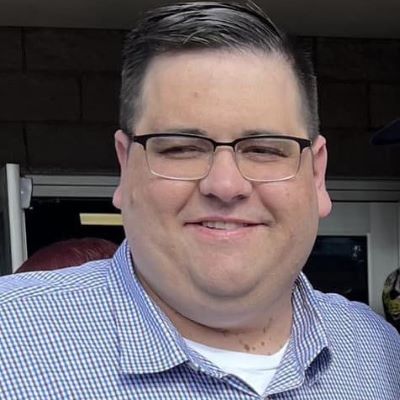
In 2019, Chris Stigall departed 1210 WPHT in Philadelphia. As he sat at a card table in his home, attempting to start a podcast, he didn’t know if he had a future in radio.
Now he’s on hundreds of stations across the country.
The Salem Radio Network host recently surpassed his first full year in national syndication. And the path to get there was far from guaranteed.
The terms of his original deal tell the real story.
“Salem thought enough of the show and the audience was receptive enough in the early going,” Stigall said. “When I signed, a tentative start was six months. That’s not something we made public, but it was effectively, ‘Hey, we’re going to try the show for six months and see how it goes. If it’s a dud, then we’ll agree to part as friends.’ I got a call six months in, and they said, ‘Let’s just go ahead and extend this thing to the full three years that they had the right to pick up.”
Rethinking Talk Radio
Stigall’s now in year two of that three-year deal, reflective about how it’s grown and honest about what he didn’t expect. Decades of instincts built as a local Philadelphia host needed rethinking the moment he went national.
“You mentioned things like the weather or traffic or the game last night — things that I would instinctively come in and talk about as a shared local experience,” he said. “You kind of have to think now more along the lines — and here’s an honest criticism I got — ‘he’s too Philly centric.’ I thought that was so funny because as a non-native Philadelphian who worked a long time in Philadelphia, trying to become ingratiated to the city of Philadelphia, to launch a nationally syndicated show, only to hear criticism that I was too Philadelphia-centric, was hilarious.”
He’s not entirely surprised by the challenge. Stigall spent years as a local host who was always drawn to national topics. He credits Rush Limbaugh as an early influence on his thinking.
“I remember he always used to say that doing local just for the sake of being local bored him, and I felt the same,” Stigall said. “There is a belief — and I think it’s still a healthy belief — that talk radio has to be local in order to be relevant or survive. I am more along the lines of what Rush used to say: if you do talk in an entertaining way, people will listen with a tin can and a string. I don’t know that it’s necessarily about being local or national or whatever. It’s just about being entertaining, hopefully.”
Going National
Still, building a national audience takes time. Chris Stigall’s candid about that reality, too.
“Conventional wisdom has always been, at least since I’ve been in this business, that it takes a show two years to really get its sea legs and feel familiar and comfortable to the audience and to the hosts,” he said. “We’re just wrapping up our first year and entering year two.
“It feels more comfortable than last year. But clients and audience members still don’t really know who this Chris Stigall guy is yet. It’s very hard. You’ve been doing something for 25 years, only to start a syndicated show and realize there are people that have never heard of you in their lives. You’ve got to prove yourself all over again.”
He found comfort in something Dave Ramsey once told him. “I’m a 15-year overnight success,” Ramsey said. Stigall laughed, recalling it. Ramsey’s point was simple — years of work often look like sudden arrival to outside observers.
Dealing with Digital
Beyond the audience, another adjustment has taken hold. Salem’s push into digital and video now has Stigall broadcasting on the Salem News Channel alongside his radio show. He didn’t seek the transition — but he’s embraced it.
“I’ve always been in love with radio. I’ve always loved audio most, and so to be conscious of a camera and lighting and how you look — that sort of thing is not my favorite, I won’t lie,” he said. “But I also understand that it’s absolutely crucial. Salem is not sitting back resting on their laurels, saying, ‘Well, we came all this way as a broadcast company and that’s the horse we’re going to continue to ride.’ They recognize that along with broadcasting, you have to have a complementary digital strategy. They’ve really poured their heart and soul into trying to figure out how to thread that needle and coexist.”
Remembering where he started has kept his footing through it all. He remembers when a card table in a spare room and a fading career were all Chris Stigall had.
“I lost my job a few years ago in Philadelphia. I thought I was done. And I thought I’d seen my best days. My career was over. And God had other plans,” he said. “When I really became repentant and thoughtful about my journey, and why it worked, and how I got here, and actually really started to hand it over spiritually — that’s when good things started to happen.
“Something I’d always hoped for — syndication and to be heard on a platform like this — I didn’t think there was a possibility. And yet, he made a way,” said Stigall. “I’m just eternally grateful. I don’t want to say proud of it because I don’t really see it as my doing. It’s a real gift. It’s a special gift, and I don’t take it for granted.”
Barrett Media produces daily content on the music, news, and sports media industries. Sign up for our newsletters to stay updated and get the latest information right in your inbox.