

A new study from iHeartMedia and Omnicom Media Group delivers a clear message to advertisers. Audio isn’t background noise — it’s a performance engine.
The study, titled Turning Volume into Value, tested five ad formats across 3,521 U.S. listeners aged 18 and older. Researchers used controlled experimental design to measure brand lift across CPG, beauty, and insurance verticals. The results give audio sales teams some of their strongest ammunition in years.
Standard audio ads drove significant gains among listeners likely to purchase soon. Unaided ad recall jumped 22 points. Brand favorability, search intent, and purchase intent each climbed five to six points. Furthermore, audio’s reach doesn’t stop at the headphones.
The study documented what it calls an “audio multiplier effect.” When consumers hear a brand message first through audio, social performance improves by 83%. Digital and social engagement rises 109%. Branded search activity increases 47%. Consequently, audio amplifies every other channel in the media mix — not just its own.
The Host-Read Advantage
Trusted voices change the equation entirely. Host-read ads outperformed standard audio ads across every brand metric tested. Specifically, listeners familiar with the host were 76% more likely to say the narrator made the brand’s message feel personal — compared to 61% for standard ads. Emotional connection jumped from 33% to 44%.
The trust variable matters most at the bottom of the funnel. Among listeners likely to purchase within a week, trusted host-read ads drove a 20-point lift in immediate purchase intent. Standard ads produced just a two-point lift in the same window. Additionally, the study found that 80% of listeners consider audio hosts a trusted friend — making them genuine influencers at scale.
Motion-activated units — interactive ads that prompt listeners to shake their phone — delivered a 16-point lift in search intent among in-market audiences, compared to nine points for standard ads. Purchase intent rose 11 points versus five. Gen Z and Millennials engaged at the highest rates, with 42% and 36% shaking when prompted respectively. Meanwhile, 88% of likely purchasers called the format “an easy way to get more information.”
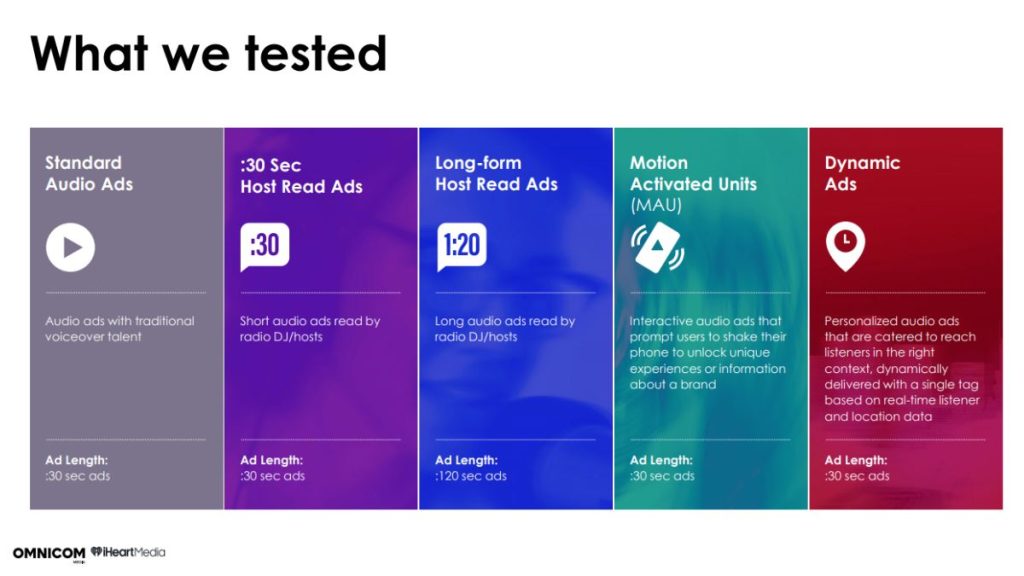
Dynamic ads personalized by time-of-day also outperformed standard formats. Eighty percent of listeners found dynamic ads felt relevant to them. Search intent lifted 11 points — nearly four times the standard ad result.
Key Takeaways
This study hands audio sellers a data-driven argument against budget cuts and media mix skeptics. The combination of recall strength, social amplification, and host credibility makes audio one of the most efficient buys available. For broadcast and digital audio professionals, the directive is direct: push for adequate weight in the media mix, lead with trusted voices, and layer interactive formats for audiences already close to purchase. The volume is there. Now the industry has proof that it converts.
Barrett Media produces daily content on the music, news, and sports media industries. Sign up for our newsletters to stay updated and get the latest information right in your inbox.
