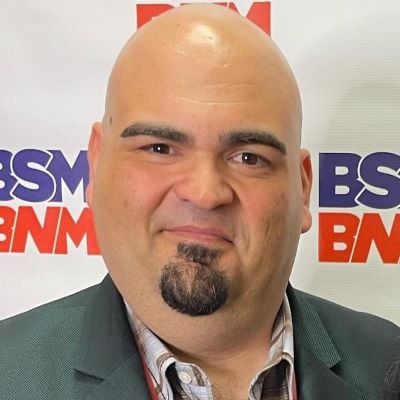
When I was in the editor’s role at BSM and would talk to producers or college students that wanted to figure out how to position themselves for a hosting job, I would always ask them to tell me what they are into outside of sports. Honestly, it was shocking how often I would hear, “Nothing really.” I would always answer that assertion by saying, “Then you are too boring to work for me.”
Anyone can start a show now. Sports talk radio has been an institution since before the parents of some of the kids in college to study sports broadcasting were even born. YouTube and podcasts have been around since before a lot of those kids were born. This is a viable career path that you can train for and get educated in now.
The specialization is good—to a point. What I have noticed when I talk to men and women in their 20s in this space is that so few of them have ever had a reason to develop a personality and interests outside of sports.
I can name a lot of people that are 30 or under who can do the Xs and Os of sports talk very well. What I cannot name is a lot of people in that age group who sound like someone I would want to hang out with.
There is nothing wrong with knowing what you want to do and where you want to be and focusing on it. For those of us born in the ’80s and before, even if you knew you wanted to talk about sports for a living, the path to a job like that was winding. Now that the path is a straight line, I fear that young talent are missing out on the conversations and experiences that teach you how to go from a sports talk radio guy to a guy on sports talk radio.
No One Has Paid Their Dues
Overall, I think it’s a good thing that you can launch a YouTube channel and just start talking about sports. Practice makes perfect, right? If your goal is to grow into a star, there is no better practice.
But becoming a viable sports talk radio talent used to involve being exposed to all kinds of things. Maybe you took an on-air shift at a music station to get more mic time. Maybe you started out as a writer, learning to tell stories and develop sources. Maybe you rose through the various levels of producer positions and learned to think about entertainment over information.
All of those experiences build a more well-rounded talent. I fear without those pit stops, a man or woman who has only been focused on talking about sports arrives at their destination incomplete. They can talk, but struggle to connect with the audience on a human level.
There’s No Lane To Stay in Anymore
The other day, I came across the very first thing I ever wrote for Barrett Media. This was before I was a columnist—before JB even hired a single columnist.
It was about the importance of letting your audience know about you as a person. They know you like sports. They expect you can tell them every stat and have an opinion on every game. A lot of them can probably do that too. Being able to talk about everything else is how you make a real connection.
Live in the sports world, but don’t be afraid to travel. That has always been my advice to shows and talents that I work with. Being a living sports encyclopedia has value, but when was the last time you read an encyclopedia for fun?
ESPN knows it’s true. Go look at an episode of SportsCenter from this week versus one from the same week 25 years ago. There is so much less sports talk. Even if the talent isn’t Kenny Mayne or Stuart Scott, the current version of SportsCenter is prioritizing entertainment—maybe too much sometimes—but there is ball-busting, talk about music and movies, and focus on the truly absurd parts of sports.
Sports fans can handle so much more than we give them credit for. I worry that the people who have been laser-focused on the sports world throughout their entire career don’t think about that, and risk their shows turning into a recitation of facts instead of big, personality-driven affairs.
Who Is Giving You Feedback?
It makes sense that seasoned radio and TV talent are attracted to podcasting and YouTube when they’re thinking about their next move. A lot of them have been micromanaged by their boss and constrained by rules from their boss’s boss.
If you know how to do a show, YouTube and podcasts make sense for a next move. They make sense for getting reps too, but if you’re a young person trying to build up tape, those reps mean a little bit less unless you are actively seeking out coaching and feedback. Hosts of these digital shows have to be proactive in seeking that out. Some are; I have spoken with plenty of them.
Plenty are not, though. It doesn’t mean that you’re seeing a bunch of morons prone to mistakes. It means no one is pushing them in new directions and encouraging them to find new angles or try new ways of presenting their content.
Struggle, rejection, and setbacks are important in the media business. They are the fires that harden and shape people who want to be on the air in TV and radio. Suffering struggle, rejection, and setback can force someone to reevaluate their approach and assess what really matters to them—and what they do best.
No one likes going through it, and I guess I applaud the young people who have found a way around it. I’m not totally sure it’s good for us as an industry, but in a world where the entry-level positions in radio are being replaced by AI and columnists are going the way of the dodo, I don’t know that there is an alternative. It’s up to the people who hire these young men and women to make it clear that there is a whole social—and I don’t mean social media—education that they missed out on. That means there is work to be done before they can truly reach their ceiling.
Barrett Media produces daily content on the music, news, and sports media industries. To stay updated, sign up for our newsletters and get the latest information delivered straight to your inbox.