Ask anyone in the radio industry what separates their medium from the competition, and you’ll hear the same answer almost every time: “We’re local.”
It’s the rallying cry, the differentiator, the reason broadcasters argue radio remains relevant in a world drowning in streaming options and on-demand content.
But a closer look at new data from Pew Research raises an uncomfortable question — are radio stations actually delivering on that promise, especially when it comes to local news?
The numbers don’t lie, and right now, they’re not flattering.
In February 2016, 37% of Americans said they followed local news very closely. By December 2025, that figure had dropped to 21%. That’s a 16-point freefall over less than a decade. Radio didn’t cause that decline entirely on its own, but the industry also hasn’t done much to stop it.

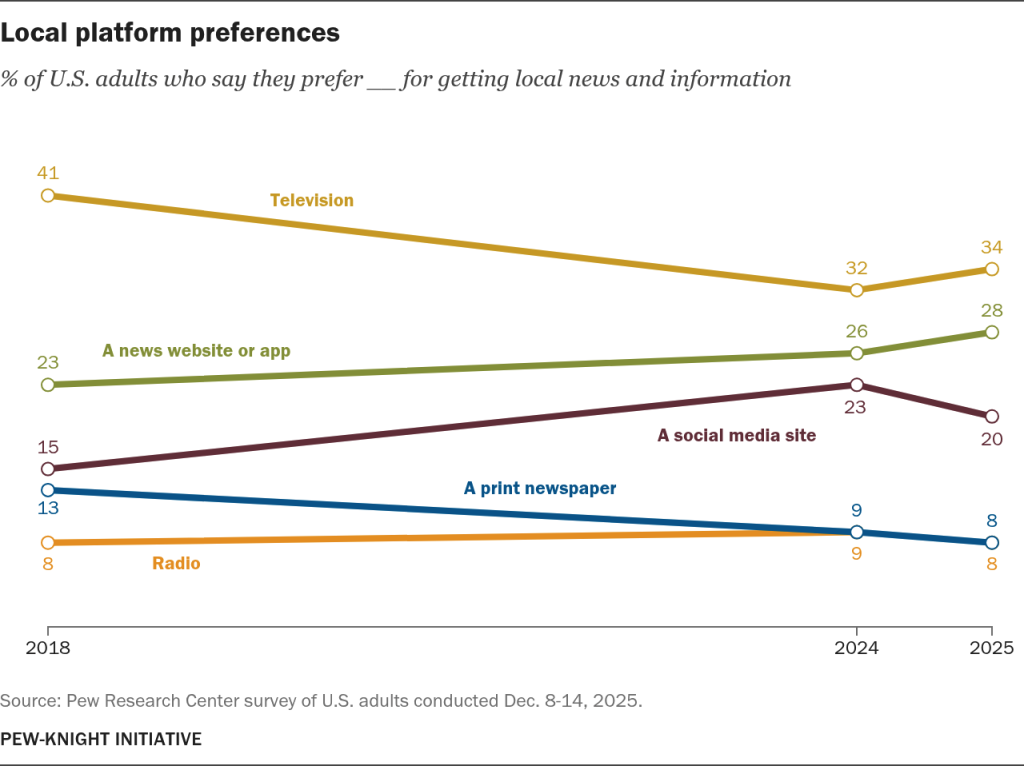
Consider where radio stands in the platform preference conversation. Only 8% of Americans say they prefer radio for getting local news and information. That’s the same as print newspapers — a format the industry has spent years calling obsolete. How many people under 55 do you personally know who still subscribe to a physical newspaper? Does being on par with that number give you confidence about where radio stands?
It shouldn’t.
Television still leads at 34%, followed by news websites or apps at 28%, and social media at 20%. Radio sits at 8%, flat from 2024, and essentially unchanged since 2018. The industry has had years to close that gap. It hasn’t.
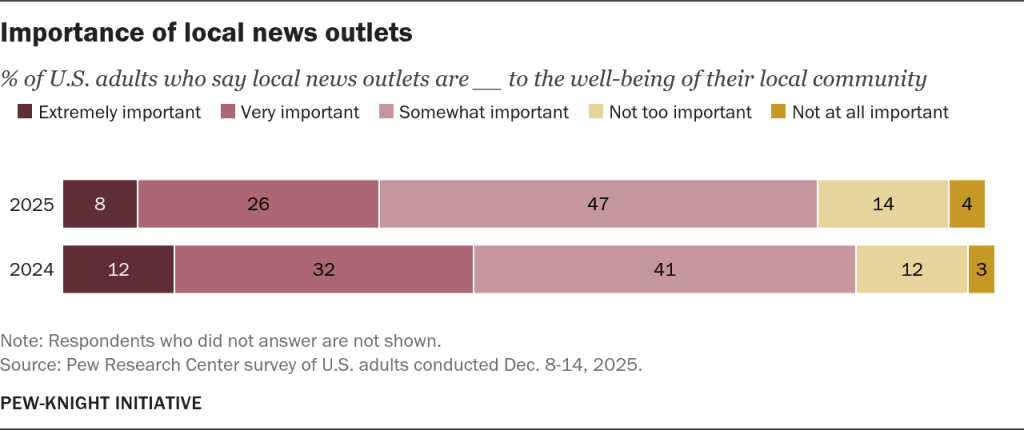
Here’s what makes this especially difficult to accept: the audience radio needs isn’t going anywhere. The Pew data shows that 81% of Americans consider local news outlets either extremely important, very important, or somewhat important to the well-being of their community. People still care about what’s happening in their towns. They still want someone to cover it.
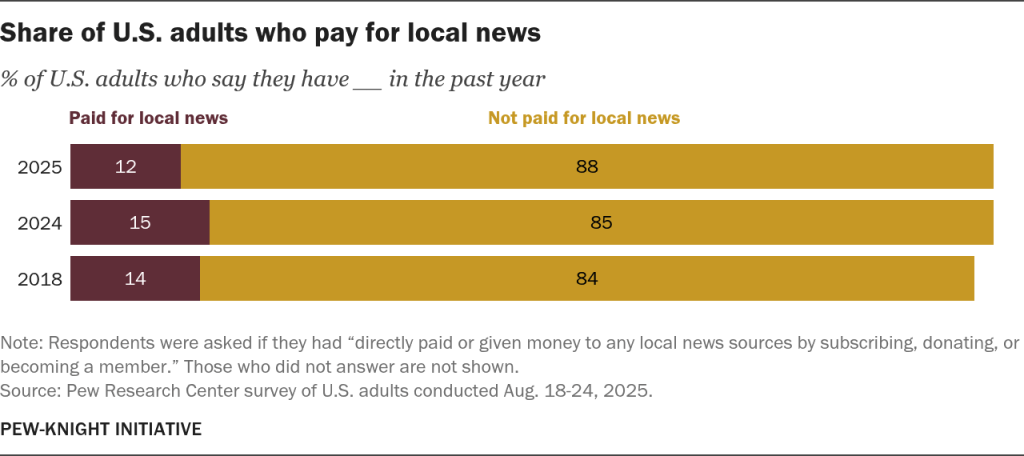
They also don’t want to pay for it. According to Pew, 88% of U.S. adults didn’t pay for local news in the past year. That should be radio’s greatest competitive weapon. The information people value is available for free — on a medium that’s already in their car, their kitchen, and their workplace.
Radio doesn’t need to convince anyone to download an app, create an account, or enter a credit card number. The barrier to entry is essentially zero.
And yet, radio still isn’t winning. In 2018, 56% of Americans said they often or sometimes got local news from radio. Today, that figure sits at 52%. That’s the same percentage as Facebook Groups and the Nextdoor app.
Think about that for a moment. Neighborhood social platforms, many of which are little more than digital complaint boards, are keeping pace with an industry that has been broadcasting local content for over a century.
That’s a crisis.
The path forward exists, but it requires honesty about how the industry got here. Years of consolidation gutted local newsrooms. Syndicated programming replaced hometown voices. Cost-cutting decisions, individually defensible, collectively stripped radio of the very thing it claimed to offer. Local became a marketing tagline more than an operational reality.
Reversing that trend won’t happen overnight, and it won’t be cheap. Rebuilding local news infrastructure takes investment, commitment, and a willingness to accept that short-term margins may suffer in pursuit of long-term relevance. But the alternative is worse — continuing to cede ground to Facebook neighborhood groups and hyperlocal apps while insisting radio is still the community’s trusted source.
Whether you’re in New York City or New Bern, North Carolina, being outperformed by whatever the local “(Insert Town Name Here) Bitch Page” is posting on Facebook should be considered unacceptable. Radio has the reach, the credibility, and the infrastructure to own local news. It just has to decide that owning it actually matters.
The audience is still out there. They still care about their communities. It’s time radio started acting like it does, too.
Barrett Media produces daily content on the music, news, and sports media industries. Sign up for our newsletters to stay updated and get the latest information right in your inbox.